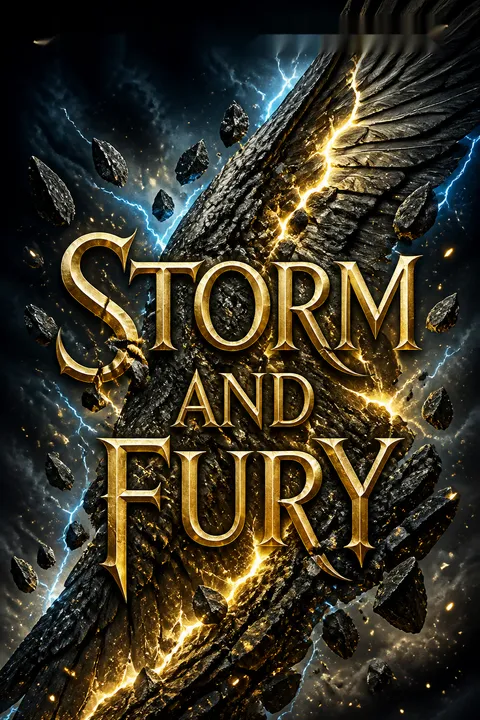


Plot Summary
A Kiss Turns Violent
Eighteen-year-old Trinity Marrow has spent most of her life sheltered inside a fortified Warden community, where the gargoyle-shifters protect humans from demons and few people know she can see the dead. When trainee Clay Armstrong pushes beyond the kiss she agreed to, Trinity throws him through a window and Misha, her lifelong friend and bonded Protector, punches him for ignoring her refusal.
The frightening part is not Clay's bruises. Trinity is far stronger than a human should be, and every display risks exposing the secret her guardians have kept. The next night she senses demons beyond the wall and slips outside with iron daggers, determined not to let other Wardens die while she stays safely hidden.
The opening makes Trinity's confinement tangible through two opposing acts: she refuses Clay's entitlement, then refuses the community's expectation that she remain protected. Her strength grants immediate agency, but it also confirms why the adults fear exposure. Misha's defense is loving and physical, yet their bond makes protection difficult to separate from control. Trinity's decision to cross the wall grows from a specific moral wound: previous attacks left Wardens dead while she remained untouched. Her rebellion is not simply a hunger for danger. It is an attempt to make her safety answerable to other people's lives.
Ravers at the Wall
Misha catches up with Trinity in the woods just as dozens of Ravers, ratlike demons that should not be aboveground, swarm the clearing. They fight together until Matthew, the community's second-in-command, arrives with reinforcements and orders Misha to take Trinity home. The attack confirms that something is wrong: Ravers usually signal the presence of a more powerful demon.
Soon three Wardens from Washington arrive, led by Nicolai, the new head of their clan. They report that Upper Level demons have vanished while Wardens and demons alike are being killed. Zayne, a striking young Warden, notices Trinity watching from behind a curtain. When he follows her outside, their sharp first meeting leaves both curious and unsettled.
The Ravers turn Trinity's private sense of danger into evidence that the community's defenses may not be enough. Her skill in the fight challenges the assumption that she is merely a human dependent on Warden protection, while Matthew's intervention restores the hierarchy she has crossed. The Washington delegation widens the threat beyond one compound: the usual categories of predator and protector no longer explain the deaths. Zayne's arrival adds a different pressure. He sees Trinity when she is trying to remain unseen, beginning a relationship through mutual scrutiny rather than rescue or courtship.
The Warden Who Sees Her
Trinity and Zayne keep encountering each other, trading challenges as he tries to understand why a supposedly human girl lives among Wardens and trains like one. She learns that he lost his father, the former leader of Washington, but Zayne refuses to explain why he did not inherit the position. Their brief moments of candor feel oddly familiar to both of them.
At the same time, Trinity finds a confused ghost named Wayne Cohen near the Great Hall. Wayne remembers being attacked by a winged creature beside a nearby fire tower, and Trinity helps him accept the light waiting for him. His account sends her and Misha to warn Thierry: an Upper Level demon has killed someone close to their supposedly secure home.
The section binds two forms of recognition. Zayne senses that Trinity does not fit the explanation supplied for her, while Wayne's ghost gives Trinity a practical use for a gift that isolates her from the living. Her care for Wayne is not spectacle; it turns an encounter with death into actionable intelligence. Zayne's bereavement also creates a point of contact without dissolving their guardedness. Both carry losses they cannot easily explain, and their attraction begins beside a mystery rather than in safety. The fire tower makes the danger local, not merely a report from distant Washington.
A Mask in the Dark
After reporting Wayne's death, Trinity is struck from behind while walking back from the Pit. Her masked attacker shifts into Warden form and claws her shoulder, drawing blood. Pain and fear release the power she has been trained to suppress: white fire forms a sword in her hand, and she burns the attacker to ash before he can strike again.
Trinity reaches Zayne and Nicolai, badly hurt and unable to explain what happened. At home, Matthew stitches her wound while Thierry orders the blood cleaned away. The attacker is missing from the community, and Clay is the leading suspect. Trinity lets the others believe her weapons caused the death, keeping the truth of her power hidden.
The attack collapses Trinity's distinction between training and actual violence. Her secret power saves her, but its use leaves blood behind, and blood is precisely what could identify her to demons. The incident also complicates the community's version of safety: the threat wears a Warden's body and may already live among them. Trinity's concealment is partly strategic, yet it repeats the pattern that has shaped her life, with adults deciding what she may reveal and when. Her survival therefore offers no uncomplicated triumph. It brings a scar, suspicion, and a secret that becomes harder to contain.
Masks Beneath the Accolade
At the Accolade, where new Warden warriors are celebrated, Trinity notices a spirit but cannot follow him for long before the ceremony erupts. Masked attackers fire rifles into the garden, then a blast tears a hole through the Great Hall. Zayne shifts to shield Trinity from the bullets.
When another masked gunman approaches, she knocks his weapon aside with the stone sword from a nearby statue and kills him in the struggle. The attacker is human, not a demon, and bodies lie among the wreckage. Misha reaches Trinity through the smoke, while Zayne keeps her from crossing the exposed garden. The alarms sound again, signaling a larger breach, and Trinity senses demons gathering beyond the walls.
The attack breaks the community's ceremonial image of protection with a coordinated use of human weapons and explosives. Trinity's disability matters in the immediate danger: smoke, darkness, and the loss of clear sight make the garden harder to navigate, while Zayne's wings temporarily shut out the world she cannot see. Her killing of a human is a different moral injury from fighting demons, even though the attacker is armed and dangerous. The masked assault also links the missing Warden, Wayne's death, and the Ravers into a pattern. What looked like separate incidents now threatens the whole compound.
Bael Takes Misha
Trinity and Misha defend the main house when the next alarm confirms demons have crossed the perimeter. She kills a Nightcrawler with an iron dagger, then helps Misha fight a powerful female demon. A larger demon, wrapped in shifting darkness and able to wield fire, smashes through the entrance.
Zayne arrives, but the intruder attacks Misha and carries him into the night before anyone can stop it. The searchers find no trace of the Protector. Zayne recognizes the demon as Bael, a King of Hell he has pursued in Washington. Trinity knows Misha is still alive through their bond, but the group cannot tell whether Bael took him as bait, for information, or for some other purpose.
The attack turns Trinity's fear for the community into a personal emergency. Misha is not merely the person assigned to protect her; he is the childhood companion around whom her daily life has been organized. The bond offers one certainty, that he is alive, but gives no access to what is happening to him. Bael's ability to enter a supposedly guarded home makes every earlier defense feel provisional. Zayne's recognition supplies a direction, yet not a solution. Trinity is left confronting a cruel imbalance: she can sense Misha's continued existence, but she cannot reach him without leaving the only home she knows.
The Trueborn Bargain
When Thierry and Nicolai plan to search later, Trinity refuses to wait while Misha remains captive. She summons her grace in front of the leaders, forming the fire sword and revealing that she is a Trueborn, half human and half angel. Demons prize her blood and body, believing that consuming a Trueborn could bring them closer to Heaven.
Trinity offers to help the Washington clan solve its own mystery, the killings of Wardens and demons, if it takes her to find Misha. Thierry reluctantly allows her to go. She packs her mother's photograph and favorite book, says goodbye to Jada and Ty, and leaves for Washington with Zayne's clan. Peanut, the ghost who has followed her for years, insists on accompanying her.
Trinity's revelation changes secrecy from a shield maintained by others into a tool she chooses to use. The fire sword makes visible what the community has treated as a future weapon, but Trinity frames her power as a means to recover a person she loves. Her bargain is emotionally precise: she will help strangers because they can help her reach Misha. Leaving her mother's keepsakes in her bag preserves a private history as she enters a city where she has never been. Peanut's decision to follow provides a small, eccentric continuity between the enclosed home and the unfamiliar world ahead.
Hell's Unlikely Allies
Zayne brings Trinity to a mansion occupied by Layla, his childhood friend, and Roth, the Crown Prince of Hell. Layla is half Warden and half demon, while Roth's affection for her is unmistakable. Trinity arrives expecting enemies and instead finds demons who offer information and treat one another with tenderness.
Cayman, another demon, helps them assess the danger around Bael. Trinity learns that Layla can see souls, including the strange mixture of light and darkness surrounding Trinity, though Layla does not identify exactly what she is.
Zayne's willingness to trust the household unsettles Trinity's black-and-white lessons about demons. Their help gives her a chance to pursue Misha, but the alliance forces her to question who deserves to be called a monster.
The meeting challenges Trinity through observed behavior rather than argument. Roth's care for Layla and the group's willingness to assist her make the inherited rule that demons are uniformly evil difficult to maintain. Yet the danger remains real: Trinity is still a coveted being in a home full of powerful supernatural figures. Layla's perception of Trinity's soul foreshadows the complexity of her identity without fully explaining it. Zayne's trust is also a character revelation. He is not simply a Warden who has crossed a line; he has begun to doubt the moral certainty of the institution that trained him.
Hellions Know Her
While patrolling a Washington subway, Trinity and Zayne encounter a Hellion, a creature that should not be walking the human world. It fights with unnatural speed and tries to capture Trinity, claiming that its master knows where to find her and is making her Protector suffer. Zayne helps drive it off, but the creature kills itself rather than reveal Bael's location.
Trinity understands that Bael knows she has come to Washington and is using Misha to draw her closer. The fight also pushes her and Zayne into intimate proximity when a passing train traps them against a wall. Their attraction deepens, but Zayne remains careful, and Trinity still does not know what the bond between them might mean.
The Hellion makes the threat personal and deliberate: Trinity is not simply caught in a citywide conflict but is being sought. Its death denies her the information she needs, turning victory into another dead end. The subway setting compresses danger into a narrow space where Zayne's protective instincts become physical, while the approaching train turns their closeness into a matter of survival. Their attraction grows alongside fear rather than replacing it. This pairing matters because Trinity's desire for intimacy has long been entangled with confinement; now she wants closeness, yet cannot know whether it is freely chosen or shaped by the strange familiarity she feels with Zayne.
The Rooftop's Near Fall
Nicolai's clan spots Bael near Franklin Square, giving Trinity and Zayne a place to begin their search. On a rooftop patrol, Trinity explains how retinitis pigmentosa narrows her vision and how looking for stars has become a way to measure what she may lose. She proves her courage by leaping between buildings, but later an imp snatches her from a rooftop.
Zayne catches her before she falls and is clawed in the chest. While removing the broken claw, Trinity and Zayne admit their desire and become physically intimate. Their tenderness offers Trinity a rare sense of being wanted for herself, though neither has resolved the grief and history surrounding Zayne's relationship with Layla.
The rooftop scene ties Trinity's bodily vulnerability to her appetite for freedom. She jumps because the roof is as close as she can come to flying, even while her deteriorating sight makes the gap genuinely dangerous. Zayne's rescue does not erase her agency; she chooses the leap, and he chooses to catch her. The intimacy that follows answers her longing to be desired, but it also creates emotional stakes before she knows Zayne's full past. His injury exposes the cost of divided attention, while the stars make the scene a negotiation with loss: Trinity wants beauty without pretending it will remain.
The Senator's Witch
Roth takes Trinity to Faye, a witch whose coven supplied a spell used to control human attackers. Faye admits that Senator Josh Fisher requested the enchantment and promised the coven a Trueborn in return. He claimed to possess the Trueborn's Protector, confirming that Misha is central to the scheme. Afterward, Roth tells Trinity that Zayne has loved Layla for years and that their relationship ended painfully.
Trinity confronts Zayne, who says he still cares for Layla and has not understood what his growing feelings for Trinity mean. He later explains the history: Layla chose Roth, and her powers once took part of Zayne's soul. Trinity hears his honesty, but refuses to become a substitute for a love he has not finished grieving.
The witch's confession gives the rescue plot a human political hinge: a senator has purchased supernatural violence with the promise of a rare body. Faye's willingness to participate despite foreseeable harm makes complicity more important than intention. In parallel, Roth's revelation forces Trinity to reinterpret the intimacy she shared with Zayne. His history does not make his feelings false, but it shows how little she knew when she trusted them. Trinity's refusal to accept a place shaped by someone else's unresolved attachment is a new form of self-protection, distinct from the physical defenses she has trained to use.
A House Full of Demons
Trinity, Zayne, Roth, and Layla enter Fisher's empty Maryland home, hoping to find the senator or Misha. Instead, they discover plans for a school with dormitories and a nursery, marked with the company name Cimmerian Industries. Before they can understand the design, a fog of demons surrounds the house.
Aym, a Grand Duke of Hell, identifies Trinity as the prize and offers to spare the others if they surrender her. They refuse, and the demons surge forward. Trinity runs outside when Aym claims Misha is waiting nearby, while Zayne attacks to protect her. The trap has achieved its purpose: it draws Trinity into an open battle against Bael's forces and leaves no safe way back inside.
The empty house replaces the expected rescue with evidence of a larger operation. A school containing both classrooms and a nursery is unsettling precisely because its purpose remains uncertain; the design makes the senator's bargain look institutional, not impulsive. Aym's approach makes the cost of Trinity's identity explicit, as he treats her as property to be delivered. His claim about Misha exploits the bond's emotional force, and Trinity's rush outside shows how love can be used to steer her even when she recognizes the danger. The scene shifts the story from investigation to siege.
Misha's Hidden Master
As Trinity fights the demons, she cuts her palm so they will attack her instead of the wounded Layla and Roth. Her fire sword kills demon after demon, while Zayne battles Aym. When Aym falls, Misha appears, not as a captive but as the hidden ally of the Harbinger. He admits he manipulated Ryker into killing Trinity's mother and says he has spent years waiting for this moment.
Misha intends to break their bond by killing an innocent, then take Trinity for the Harbinger. He attacks her and nearly kills Zayne. Trinity summons her sword again and burns Misha to ash, ending his life and their bond. The victory leaves her standing over the loss of her oldest friend.
The climax makes Trinity's deepest wound inseparable from her most intimate relationship. Misha's betrayal recasts memories she had trusted, especially his role in the death of her mother, and his explanation that he felt overlooked identifies resentment as a motive without excusing his choices. Trinity's blood draws the demon army away from Layla and Roth, a deliberate sacrifice that turns her most dangerous vulnerability into protection for others. Her final act saves Zayne, but it cannot restore the person she thought Misha was. The bond's sudden absence makes killing him a physical as well as moral severance.
Michael Corrects the Bond
Zayne lies badly burned after shielding Trinity from Aym's fire. As luminous lights gather, Roth recognizes that a powerful celestial being is coming and leaves before it arrives. Michael, the archangel and Trinity's father, steps into the ruined yard. He reveals that Zayne, not Misha, was meant to be Trinity's Protector from birth; Zayne's father was supposed to bring her to Washington.
Michael admits that Thierry and Matthew made a mistake when they bonded her to Misha, and that he allowed it to continue. Zayne accepts the new bond, and Michael's power heals his injuries as their connection settles into Trinity's body. Before departing, Michael warns that the Harbinger has arrived and humanity's end is near.
The celestial intervention repairs one structure while exposing the damage caused by another. Zayne's bond to Trinity feels more immediate than her former connection with Misha, but it is not a clean romantic reward: it arrives through an imposed cosmic order, after betrayal and grief. Michael's admission that he watched the mistaken bond continue makes divine authority morally unsettling. The people who protected Trinity acted with incomplete knowledge, yet their error shaped Misha's life and Trinity's loss. The Harbinger warning denies the characters a pause for recovery, converting a personal catastrophe into the opening of a still larger crisis.
Grief Beneath the Stars
At the Washington compound, Trinity tells Jada, Thierry, and Matthew what happened, then leaves the others to discuss Fisher's plans and the Harbinger. Alone near a treehouse, she finally breaks down, grieving both her mother and the Misha she loved before his betrayal. Zayne finds her and holds her until the grief eases enough for her to breathe.
Their new bond lets them feel one another's emotions, but Trinity cannot tell where its pull ends and her own yearning begins. She still wants to see the stars while she can. Zayne shifts into his gargoyle form and offers to fly her toward them. Trinity takes his hand, and the story closes with her accepting the ride into an uncertain future.
The ending gives grief its own scene rather than treating survival as emotional recovery. Trinity's breakdown gathers losses she had kept separate: her mother's murder, her mistaken understanding of Misha, and the fear that her vision will continue to narrow. Zayne's comfort is both intimate and newly complicated because the bond transmits feeling as well as protection. The flight offer answers the book's recurring image of stars without curing Trinity's disease or resolving the apocalypse. It provides movement, not certainty. Her acceptance is a modest act of trust made after a year of trying to endure loss without letting anyone see it.
Analysis
Storm and Fury makes protection an unstable virtue. Trinity is hidden because her existence invites violence, but that secrecy also deprives her of ordinary choices and leaves her uncertain whether the people around her see a person or a weapon. Her resistance to confinement is therefore not adolescent rebellion detached from consequence. She has watched Wardens die in her place, and she chooses action because safety purchased by other people's sacrifice feels morally intolerable.
The novel's supernatural categories are repeatedly tested against behavior. Wardens can abuse power; demons can form loyalties and show tenderness; humans can be manipulated into violence while political leaders profit from the arrangement. These reversals do not make every group morally equivalent. They make ancestry an inadequate substitute for judgment. Zayne's willingness to question Warden doctrine grows from his experience with Layla, while Trinity's encounter with Roth and Layla gives that doubt an immediate human shape.
The story also gives bodily vulnerability more than symbolic weight. Trinity's failing sight changes how she fights, moves through cities, and imagines her future. Her search for stars is not a cure or a sentimental denial of loss. It is a practice of attention under uncertainty. Likewise, the bond between a Protector and a Trueborn turns intimacy into a political structure: affection, duty, dependence, and coercion can occupy the same relationship.
The ending refuses to let rescue solve grief. Trinity kills Misha to stop him, then learns that their bond should never have existed and that the celestial order allowed the mistake to continue. Zayne's new bond offers closeness, but it arrives amid unresolved love, mourning, and an impending apocalypse. The final flight toward the stars is thus a small chosen pleasure inside a crisis too large to master. Trinity cannot control what she will lose or what is coming, but she can still decide to look up and accept someone's hand.
Review Summary
Storm and Fury received mostly positive reviews, with readers praising the engaging plot, well-developed characters, and disability representation. Many found the romance between Trinity and Zayne compelling, and appreciated the return of characters from the Dark Elements series. Some criticized the slow pacing and predictable elements, but overall, readers enjoyed the world-building and action scenes. The book's exploration of Trinity's eye condition, which mirrors the author's own experience, was particularly well-received.
People Also Read







Characters
Trinity Marrow
The guarded fighterTrinity is an eighteen-year-old raised inside a Warden stronghold, trained to fight while being told that her safety must come first. She can see ghosts and spirits, and her failing vision requires her to compensate through memory, sound, and relentless practice. Her wit and impulsiveness make her hard to contain, but beneath them is a sharp fear of being useful only as a weapon. She wants ordinary experiences, including romance, independence, and a chance to see the world beyond the walls. Her mother's death and her complicated ties to Misha deepen her instinct to take responsibility for losses she cannot control. Trinity's courage comes with a cost: she must learn that accepting help does not make her less powerful.
Zayne
The questioning WardenZayne is a young Warden from Washington, a skilled fighter shaped by the death of his father and by the community's response to his childhood friend Layla. He is observant, guarded, and often dryly funny, but his restraint conceals a deep capacity for loyalty. Unlike many Wardens, he questions whether every demon deserves to be hunted simply for what it is. His attraction to Trinity grows alongside a strange sense of recognition, while his unresolved history makes him cautious about promising more than he understands. Zayne's central tension is between inherited duty and personal judgment. He is protective without being entirely comfortable with the role, and Trinity's independence forces him to distinguish care from control.
Misha
Trinity's lifelong ProtectorMisha is Trinity's childhood companion and bonded Warden, trained beside her from early childhood. He is quick to defend her, familiar with her habits, and often exasperated by her refusal to follow instructions. Their closeness gives Trinity a sense of home, but the Protector role also ties his future to hers in ways neither chose as children. Misha wants to be more than a shadow assigned to her safety, though he rarely gives that desire room in their everyday teasing. His relationship with Trinity is built from affection, obligation, and shared history, making it both a source of comfort and a source of pressure.
Thierry
The fortress's DukeThierry leads the Potomac Highlands Wardens as Duke and has helped raise Trinity since she arrived as a child. He is stern about security because he knows how quickly a secret can become a target, yet his authority is tempered by deep affection for her and by his marriage to Matthew. Thierry believes protection sometimes requires withholding choices, a conviction that clashes with Trinity's need to act. He is responsible for a community, a regional network, and a young woman whose true nature could endanger all of them. His strength lies in discipline; his blind spot is the cost of deciding for others.
Matthew
The steady second-in-commandMatthew is Thierry's husband and the community's second-in-command. He is warm, practical, and skilled at easing conflict without pretending danger has disappeared. He treats Trinity as family, patches her injuries, and understands that her drive to fight grows from grief as much as courage. Matthew often softens Thierry's strictness, but he also participates in the decisions that keep Trinity hidden. His affection makes him a refuge; his role in the community means he must balance that tenderness against responsibilities that can hurt her.
Layla
The soul-seeing outlierLayla grew up alongside Zayne and remains bound to him by a long, complicated friendship. She is perceptive, emotionally direct, and capable of seeing souls in a way that makes hidden qualities visible to her. Her relationships challenge the assumptions that govern both Wardens and demons, and she understands what it means to live between communities that distrust her. Layla is devoted to Roth, but her past with Zayne still carries tenderness and strain. She is not a passive symbol of divided identity; she makes choices, fights alongside others, and insists on being judged by what she does rather than by her ancestry.
Roth
Hell's disarming princeRoth is the Crown Prince of Hell, a powerful demon whose irreverent humor and fondness for ordinary comforts sit beside genuine danger. He loves Layla openly and offers Trinity help despite her angelic nature. His confidence can look like arrogance, but he is attentive to those he cares about and understands how power is used to bargain, threaten, and protect. Roth's willingness to work with Wardens and aid Trinity complicates the categories she has inherited. He does not become harmless because he can love; his value lies in being both dangerous and capable of moral choice.
Peanut
The ghostly roommatePeanut is a teenage ghost from the 1980s who attached himself to Trinity after discovering she could see him. He refuses to move on and fills her secluded life with pop-culture references, meddling, and comic complaints. His presence is more than a joke: he is one of the few companions who can share Trinity's unusual perception without making her feel like a case to be guarded. Peanut is nosy, affectionate, and loyal, even when his idea of personal boundaries is appalling.
Jada
Trinity's clear-eyed friendJada is Thierry's niece and one of Trinity's closest friends. Stylish, practical, and emotionally perceptive, she sees through Trinity's jokes when they conceal loneliness or fear. Her relationship with Ty gives Trinity a nearby example of the love she wants, while her friendship offers a steadier kind of belonging. Jada also understands the limits imposed on female Wardens and is frustrated by the restrictions that keep her from fighting beside the people she loves.
Ty
Jada's devoted partnerTy is a young Warden close to Trinity and Jada, whose easy affection for Jada gives their friends a model of mutual commitment. He is protective without being domineering and treats Trinity as part of their circle. His future training and assignment are shaped by Warden customs, but his loyalty to Jada gives him a personal stake in the limits those customs impose.
Nicolai
Washington's new clan leaderNicolai leads the Washington Wardens after the death of the previous clan leader. He is measured, politically aware, and willing to ask another community for help when his own warriors are dying. Nicolai becomes a careful ally to Trinity, balancing the urgent search for Misha against the danger of exposing her. His authority is newer than Thierry's, but he is not careless with it.
Dez
Zayne's trusted comradeDez is a Warden from Washington and one of Zayne's close allies. He is experienced, good-humored, and willing to acknowledge Trinity's skill rather than dismiss it. Dez helps bridge her into the Washington community and supports the search while respecting the need for secrecy. His family life with Danika and their children reveals the ordinary attachments that Warden duty is meant to protect.
Cayman
The demon dealmakerCayman is an Upper Level demon who brokers bargains with humans seeking something badly enough to risk part of their souls. He is theatrical, self-interested, and more useful than reassuring, yet he follows rules that distinguish him from demons who hunt indiscriminately. His friendship with Roth gives Trinity access to information outside Warden networks and shows that supernatural politics have their own codes.
Bael
The fire-wielding KingBael is an ancient and powerful demon known to Zayne from Washington. He can influence human minds and command dangerous forces, making him a threat well beyond a single encounter. Bael operates through intermediaries and keeps his intentions difficult to read. His presence connects the attacks on Warden communities to Trinity's personal danger.
Aym
The talkative Grand DukeAym is a high-ranking demon who arrives with an army and a polished manner that makes his threats more unnerving, not less. He commands fire and treats human and demonic lives as expendable tools. Aym is an antagonist with strategic purpose: he wants Trinity alive, and his concern with capturing rather than simply killing her signals a larger plan.
Clay Armstrong
The entitled traineeClay is a young Warden trainee whose charm initially appeals to Trinity. He expects attention and struggles to respect boundaries when she refuses to go further. His behavior exposes the gendered assumptions tolerated within the Warden community, and his resentment reveals how quickly entitlement can turn punitive.
Wayne Cohen
The lost travelerWayne is a recently deceased traveler who appears near the Warden compound confused and unable to understand his own death. Trinity helps him recognize the light and move on. His brief encounter gives her a way to turn compassion for the dead into a warning for the living.
Michael
The distant archangelMichael is an archangel whose authority reaches into the supernatural order that governs angels, Wardens, and humanity. He is severe, remote, and more concerned with a larger plan than with the emotional consequences of the choices made around him. His presence carries enormous power, but his certainty does not make him easy to trust.
Faye
The coven's uneasy witchFaye belongs to a coven willing to provide forbidden magic for a price. She is wary of Roth and reluctant to disclose what her group has done, yet she is not entirely comfortable with the coven's choices. Her guarded honesty gives Trinity and Roth a lead while exposing how profit can soften a group's sense of responsibility.
Josh Fisher
The polished senatorJosh Fisher is a prominent senator known publicly for charitable work, religious observance, and a respectable family history. His carefully maintained public image makes him an unlikely figure to draw into supernatural affairs. He represents the power ordinary institutions can wield when hidden interests use them.
Danika
The independent WardenDanika is Dez's sister-in-law and a Warden who moves through her community with unusual independence. She is warm toward Trinity and openly amused by the people around her. Her confidence suggests that the rules governing Wardens are not accepted equally by everyone.
Jasmine
The practical Warden motherJasmine is Dez's wife and the mother of Izzy and Drake. She is patient with her children's very different temperaments and welcoming to Trinity. Her family provides a glimpse of the daily life the Wardens defend, beyond training, hierarchy, and combat.
Ryker
The trusted former WardenRyker was once trusted by Trinity's mother and by the adults who raised Trinity. His betrayal left Trinity with a lasting suspicion that danger can hide inside familiar relationships. He remains a defining figure in her history even when absent from the present action.
Plot Devices
The Protector bond
A living tetherA Trueborn is paired with a Warden Protector, whose duty is to guard the charge and whose life is tied to theirs. The bond gives Trinity a way to know whether Misha is alive, but it also makes her safety inseparable from another person's freedom and risk. Because it can be imposed, the bond embodies the tension between care and control that runs through the story. Its later replacement changes Trinity's emotional and supernatural connection in a way that exposes how much the characters' lives have been shaped by choices made for them.
Trinity's grace
A white-fire weaponTrinity can call on a celestial power that forms a burning sword capable of destroying demons and Wardens. She has been trained to suppress it until the time she is summoned, because using it exhausts her and may reveal her identity through her blood. When danger leaves her no alternative, the grace becomes both her strongest defense and a visible sign of what she is. The weapon's power does not spare Trinity from consequences: it drains her, attracts enemies, and forces her to decide when hiding is more dangerous than acting.
Ghosts and spirits
The unseen warning systemTrinity can see ghosts who remain confused after death and spirits who have crossed over but returned for a reason. She helps ghosts accept the light and listens when the dead remember how they died. Wayne's account of a winged attacker gives the Warden leaders evidence that a demon is operating near their compound. The ability also distinguishes Trinity from the people around her: it makes her compassionate toward the dead, but often leaves her alone with information no one else can perceive.
The witch's enchantment
Humans turned into weaponsA coven supplies a forbidden enchantment that can make humans act under supernatural influence. Senator Josh Fisher obtains the spell and offers the coven a Trueborn in exchange, linking political respectability to occult violence. The enchantment helps explain how masked human attackers could assault a Warden settlement alongside demons. It also turns the investigation away from a simple demon hunt: Trinity and her allies must trace the spell through human institutions, witches, and the powerful beings directing the attacks.
Trinity's failing sight
A narrowing field of visionTrinity's retinitis pigmentosa limits her peripheral vision, makes depth perception difficult, and may eventually take away her remaining sight. She compensates through training, familiarity with terrain, and disciplined movement, but darkness and abrupt changes in light can leave her disoriented. The condition affects the action concretely, from navigating an unfamiliar city to assessing danger on rooftops. Her recurring search for stars gives the disease an emotional measure: she cannot know when a particular view will be the last, so she tries to notice it while she can.
The Harbinger Series Series

About the Author
Other books by Jennifer L. Armentrout





Download PDF
Download EPUB
.epub digital book format is ideal for reading ebooks on phones, tablets, and e-readers.








