

Plot Summary
Prologue
As a child, Chloe Davis runs the lonely road home and trusts her father’s arms to make the shadows harmless. At twelve, when girls begin disappearing from her Louisiana town, she learns that fear can have a familiar face. The woods are not the only place where danger hides, and the person who once made her feel safest becomes the one she must learn to fear.
The opening establishes Chloe’s central confusion: the body remembers safety even when the mind has evidence of danger. Her father’s embrace is not simply a false comfort. It is a real childhood memory that coexists with what he has done, making later acts of trust psychologically credible rather than foolish. The dark woods provide an early image of the mind’s limits: Chloe senses a threat before she can identify it, then runs toward the very home that may contain it.
Twenty Years Return
In May 2019, Chloe is a Baton Rouge psychologist preparing for a July wedding while treating teenagers whose pain feels uncomfortably familiar. One new patient, Lacey Deckler, tells her about anger and self-harm; Chloe arranges a medication referral. After work, Chloe also calls in Xanax under Daniel Briggs’s name, concealing her own reliance on medication.
Then reporter Aaron Jansen reaches her about the twentieth anniversary of the Breaux Bridge murders, which sent her father to prison. Chloe refuses an interview, but the call shakes the life she has built around avoiding her family’s past. A new disappearance is about to make that past feel less like history than a warning.
Chloe’s professional identity gives her language for distress, but not mastery over her own. She can interpret Lacey’s wounds and arrange treatment while disguising her pill use and avoiding her father. That split between competent clinician and frightened daughter is the novel’s engine. The anniversary call turns private avoidance into an active problem: Chloe’s past is not merely remembered, it is about to become relevant to a new case.
Aubrey Disappears
At Chloe’s surprise engagement party, her older brother Cooper helps prepare the food but warns her that Daniel may not know her as well as she believes. Chloe dismisses the concern, and Daniel’s easy affection steadies her.
The next morning, while Daniel leaves for a work conference, the news reports that fifteen-year-old Aubrey Gravino has vanished near Cypress Cemetery. Chloe recognizes the familiar shape of the story from her childhood: in 1999, six girls disappeared around Breaux Bridge, including Lena Rhodes, the charismatic teenager Chloe admired.
Chloe’s father was convicted after she identified the girls’ jewelry among his belongings. Now another missing girl, close to Chloe’s home and office, reopens the fear she has spent twenty years trying to contain.
The party places Chloe between two forms of intimacy. Daniel offers ease and reassurance; Cooper offers skeptical knowledge rooted in their shared childhood. Chloe chooses the comfort she wants, while the news introduces a danger that makes the brother’s warning newly charged. The old case also complicates the idea of family as refuge. Chloe’s understanding of her father is built from both tenderness and evidence, a contradiction the new disappearance will force her to examine again.
The Cemetery Earring
Unable to sit at home while searchers look for Aubrey, Chloe drives to Cypress Cemetery and joins the volunteers. A woman spots a small earring in the dirt; Chloe picks it up before an officer can stop her. It matches the pearl and diamond jewelry in Aubrey’s missing poster, and the discovery changes the search party’s mood from hope to dread.
Chloe leaves shaken, carrying the image of Lena and the other Breaux Bridge girls into her present. She has crossed into an investigation without telling the police who she is or why this particular kind of evidence matters to her. The earring is a clue, but Chloe’s touch will also make her part of the scene.
The earring converts memory into material evidence. Chloe’s connection to the old murders is no longer an interior burden; she has physically handled an object tied to a new victim. Her failure to disclose that she was at the cemetery reflects a familiar survival strategy: control what others know, and perhaps control what can happen next. Yet the evidence resists that strategy. It will draw official suspicion toward her even as it helps her recognize a pattern.
Lacey Leaves No Trace
On Monday, Chloe learns that Lacey is missing. Lacey left Chloe’s office after their first session and never reached the friend she was meant to visit, making Chloe the last person known to have seen her.
Detective Michael Thomas and Officer Colin Doyle question Chloe, who withholds the confidential details of the session. Their questions pull her back to 1999: as a child, she found a box containing jewelry belonging to the missing girls and brought it to the sheriff.
The evidence led to her father’s arrest and guilty plea, though the bodies were never recovered. Chloe also remembers her mother’s collapse after the trial. The familiar investigation now surrounds Chloe’s own office, and her patient’s disappearance turns professional responsibility into personal terror.
Chloe’s silence about Lacey is ethically defensible, but it also mirrors her broader habit of withholding information when exposure feels dangerous. The flashback shows that she once broke that habit and changed the course of a murder investigation. This history burdens her with an impossible standard: she expects herself to recognize danger before anyone else can. The present case therefore activates not only trauma, but the belief that any failure to act may become another permanent consequence.
The Missing Bracelet
Lacey’s body is found behind the dumpster in the alley outside Chloe’s office. The coroner identifies strangulation, restraint marks, and Diazepam in her hair. Chloe knows she had prescribed Lacey Prozac, not the sedative found in her system. Examining the body, Chloe remembers the wooden-bead bracelet with a silver cross that Lacey wore to cover a scar on her wrist.
It is gone. Aubrey’s earring and Lacey’s missing bracelet suggest that someone is taking personal keepsakes, just as Chloe’s father did. Aaron, now pursuing the case rather than the anniversary story, argues that a copycat may be recreating the old murders. Chloe reluctantly considers the possibility and begins looking for someone who could know about the stolen jewelry.
The absent bracelet matters because it transforms resemblance into a specific behavioral pattern. Chloe is no longer responding only to a familiar victim profile or anniversary date; she sees a repeated act that connects the old case to the new one. At the same time, medication becomes a disturbing bridge between her professional world and the crimes. Her prescription pad, meant to help patients, may have supplied the very drug used to incapacitate Lacey.
Bert Comes Home
Chloe identifies Bert Rhodes, Lena’s father, as someone who might know how the old murders were documented. Bert now lives in Baton Rouge and has a record of violence, including an assault on his wife.
Daniel sees a security-company webpage open on Chloe’s laptop and arranges an urgent home visit from Bert, who installs alarms. Once inside, Bert reveals that he recognized Chloe from an old newspaper profile and resents the life she has built while Lena’s remains are still missing.
His anger makes him frightening, but he does not confess to the murders. After he leaves, Chloe reports him to Detective Thomas and explains her theory. The detective agrees to investigate Bert, though his questions leave Chloe unsure whether he trusts her account.
Bert’s visit gives Chloe a tangible suspect and a tangible threat, but it also exposes how little she can distinguish between justified fear and proof. His grief has hardened into hostility, while Chloe’s family history makes her expect that violence will arrive through a familiar face. The detective’s cautious response is frustrating, yet necessary: a person’s rage and past conduct create a lead, not certainty. Chloe is beginning to investigate by intuition, a method that may reveal patterns but can also trap her in them.
Aubrey’s Necklace
After a night of drinking and taking Xanax, Chloe wakes to an alarm and finds Daniel at home. Searching the closet for a gun, she discovers a necklace matching Aubrey’s missing jewelry. Daniel later takes her kayaking near Cypress Stables, where Chloe recognizes Aubrey as the granddaughter of the venue owner and remembers seeing her during the wedding tour.
The location ties Daniel’s world to Aubrey’s last known life, while the necklace raises the possibility that he has access to a killer’s trophies. Chloe’s unease grows, but she still has no proof and has been misled by suspicion before. She begins arranging time away from Daniel so she can investigate his travel and belongings without alerting him.
The necklace places evidence inside the space Chloe has treated as safest, while the kayaking trip lets Daniel lead her calmly through a landscape now marked by a victim. His kindness remains persuasive precisely because it is intimate and ordinary. Chloe’s difficulty is not simply deciding whether Daniel is dangerous. It is deciding whether her own perceptions can be trusted when trauma and medication have repeatedly blurred the boundary between inference and fact.
The Old False Alarm
Chloe invents a bachelorette weekend to create time for her investigation, but Detective Thomas visits her office before she leaves. He raises her college history with Ethan Walker, her first boyfriend. When Chloe’s roommate Sarah disappeared for several days, Chloe found blood on Sarah’s mattress and suspected Ethan of a crime.
She broke into his apartment and found Sarah alive with him; Sarah had suffered a miscarriage and had been hiding it. Ethan obtained a restraining order against Chloe. The episode explains why police now question her judgment, even as it sharpens her fear of being dismissed. Thomas warns her to stop pursuing unsupported theories, but Chloe leaves for her trip convinced that this case has evidence her past did not.
The college episode prevents the reader from treating Chloe’s instincts as automatically reliable. Her suspicion grew from real observations, but she arranged them into a murderous explanation before checking the facts. The same psychological process may be operating again, especially under stress and medication. Yet the warning also has a cost: authorities’ awareness of her past may cause them to discount valid evidence. The novel makes uncertainty reciprocal. Chloe doubts herself, and the institutions around her doubt her too.
Sophie’s Ring
Chloe and Aaron visit Dianne Briggs, whose daughter Sophie disappeared twenty years earlier. Dianne describes a violent household and admits she once suspected her son Daniel, then a teenager, knew more than he admitted.
Upstairs, Chloe finds an old newspaper clipping about Richard Davis and the missing Breaux Bridge victims, hidden in Daniel’s childhood book. Dianne then recognizes Chloe’s engagement ring as the family ring she gave Sophie before her disappearance.
Chloe leaves without explaining her identity, but the connection is unmistakable: Daniel knew about her father’s crimes long before he claimed otherwise. The discovery turns their romance into a question of history and concealment, while Dianne’s account gives Chloe a reason to suspect Daniel’s past without yet knowing what it means.
The ring is an intimate object whose ownership crosses generations and relationships. Dianne’s recognition punctures Chloe’s assumption that Daniel’s life began when they met. The newspaper clipping does the same intellectually: Daniel has lived beside the story Chloe thought she was choosing when to tell him. Dianne’s suspicion is not proof, but it gives Chloe an alternative account of Daniel’s character, one shaped by the household he escaped and the sister whose disappearance defines his family.
Receipts from Angola
Back at the motel, Chloe shows Aaron receipts she copied from Daniel’s locked briefcase. They record repeated visits to Angola, home of the prison where her father is held, along with drug samples including Diazepam. Chloe believes Daniel may be tied to the killings, and Aaron urges her to go to the police. Instead, she takes two Xanax and sleeps through nearly a day.
When Shannon calls, Riley Tack, her teenage stepdaughter, has vanished after climbing out her bedroom window. Daniel has told Shannon that Chloe is away with friends, though the bachelorette trip is false. His voice message says he is leaving. Chloe returns to Baton Rouge, watches their home camera footage, and sees Daniel pack a suitcase and take Aubrey’s necklace.
The receipts turn Daniel’s travel into a map, but Chloe’s interpretation remains uncertain. Angola could connect him to her father, while the sedatives could connect him to the victims. Her decision to medicate herself instead of contacting police costs her time and leaves Riley exposed. The camera provides the first visual confirmation that Daniel has handled the necklace, but it does not reveal why. Chloe’s need to act now collides with the same impaired judgment she has tried to hide.
The Reporter Was Nobody
Chloe realizes Daniel is heading for the abandoned Davis home in Breaux Bridge, where his family’s history and her childhood have become entangled. Carrying a gun, she enters through the back door and finds Riley unconscious but alive. The man who arrives is not the New York Times reporter he claimed to be.
His press badge is fake, and his real name is Tyler Price, a Breaux Bridge local who has been watching Chloe and inserting himself into the investigation. Tyler claims the police are coming, but Chloe sees through the performance and asks whether he killed Aubrey and Lacey. When he moves closer, she shoots him. Riley is taken for medical care, and Chloe finally learns that the apparent journalist who guided her was part of the danger.
Tyler’s false identity makes the story’s central problem literal: Chloe has been reading a person through the role he designed for her. His performance worked because it offered the ally she needed, validating suspicions that others dismissed. The old house then reverses Chloe’s childhood position. Once she watched danger from a window and could not intervene; now she enters the place herself and rescues Riley. Her use of the gun is both an act of protection and a consequence of being isolated from trustworthy institutions.
Daniel’s Sister Lived
Police identify the dead man as Tyler Price and recover Diazepam and stolen keepsakes, including Lacey’s bracelet. Daniel returns to Chloe’s house and says he did not kill Sophie.
As a teenager, he watched their abusive father attack Sophie and their mother; using Richard Davis’s case as a model, he arranged Sophie’s disappearance so she could escape and build a life in Hattiesburg. He kept the truth from Chloe because he knew her history and feared being mistaken for a murderer.
His visits to Angola were attempts to learn what really happened in Breaux Bridge. At Riverside, Chloe’s mother spells Daniel’s name with Scrabble tiles, confirming she has understood more than Chloe knew. Chloe now has to ask what Daniel discovered about the old murders.
Daniel’s confession revises the meaning of the evidence without erasing his deception. His use of a false disappearance was an act of rescue, but it depended on secrecy and on borrowing a killer’s methods. Chloe must hold two truths together: Daniel hid a grave family history, and his concealment did not make him the murderer she feared. Her mother’s spelling restores a long-denied voice, demonstrating how Chloe’s habit of assuming silence has kept her from receiving information.
Cooper’s Darkness
Chloe confronts Cooper with what Daniel uncovered and what their mother tried to communicate. She realizes Cooper, not Richard, killed the Breaux Bridge girls; their father accepted the blame to protect his son. Cooper admits his crimes and asks Chloe to keep the family secret. When he grabs her wrist, she slips away after drugging his wine, then signals the police officers watching through Bert’s security camera.
Cooper is taken into custody, and the evidence allows Richard to retract his false confession. The truth also explains Tyler’s role: Cooper had drawn him into repeating the murders. Chloe’s brother, long cast as her protector, was the person directing her suspicions away from himself.
The final reversal is not that Chloe’s intuition was useless, but that it was repeatedly steered by the person she trusted most. Cooper’s protectiveness and charm were real behaviors, yet they also served as instruments of control. Richard’s false confession becomes a parental act distorted by love, while Mona’s earlier silence shows the cost of protecting a child at any price. Chloe’s decision to summon police breaks the family’s cycle of concealment, even though she has had to use deception and drugs to do it.
Epilogue
On her wedding day, Chloe visits Sophie in Hattiesburg and returns the family ring that Dianne recognized on her finger. Sophie wears it again, and Chloe learns that she and Daniel have remained close.
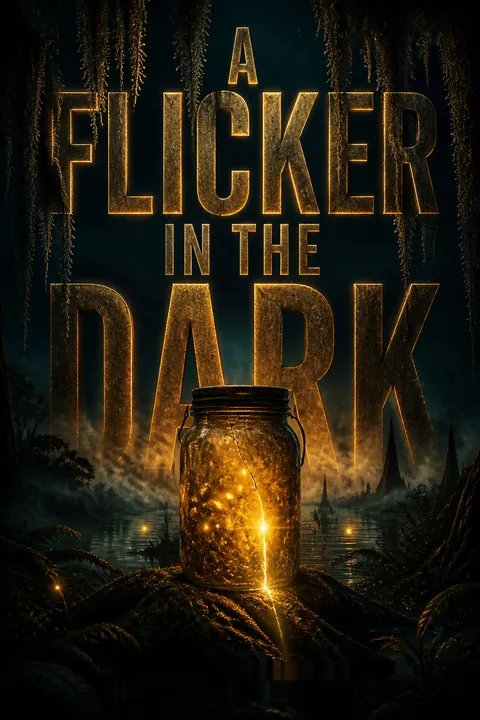
Richard is due to leave prison after admitting that he took the blame for Cooper’s crimes. Chloe cannot yet decide what kind of relationship she wants with her father. Before leaving, she catches a firefly, remembers Lena, and releases it rather than keeping it trapped in her hands.
The ending offers repair without pretending that the family can return to its former shape. The ring goes back to Sophie, restoring an object to the person from whom it was separated, while Chloe’s father’s release does not erase his decision to conceal the truth. The firefly completes Lena’s memory with an action opposite to capture. Chloe cannot undo the deaths or the years of silence, but she can refuse to turn remembrance into possession.
Analysis
The novel’s central mechanism is misrecognition. Chloe has learned to scan faces, rooms, and gestures for danger, but that skill cannot guarantee accurate conclusions. Her father’s tenderness coexisted with his apparent crimes; Daniel’s concealment masks an attempt to save his sister; Cooper’s protectiveness makes his betrayal harder to see. The thriller therefore asks not whether intuition is useful, but what happens when trauma trains intuition to expect the wrong pattern.
The repeated missing-girl cases also expose the difference between evidence and story. A necklace, a familiar method, an anniversary, and a shared location can form a persuasive narrative before they establish who acted or why. Chloe and the police each construct explanations from partial facts, though with different costs. Her history makes her vulnerable to self-doubt and institutional dismissal, while her certainty can also harm innocent people. The book treats psychological distress as neither a supernatural insight nor a reason to disregard someone; it is part of the evidence that must be interpreted.
Family loyalty is the deeper source of concealment. Richard accepts blame for his son, Mona cannot openly name what she knows, and Chloe repeatedly chooses the comfort of trusting people she loves over the fear of what they may be hiding. Cooper’s crimes reveal the danger in confusing protection with goodness. Daniel’s rescue of Sophie complicates that lesson: secrecy can preserve a life, but it can also leave others without the truth they need. By the end, Chloe acts without waiting for perfect certainty, yet she brings the police into the room rather than trying to hold the whole truth alone. Her recovery is not the absence of fear. It is a willingness to let other people witness what she sees.
Review Summary
A Flicker in the Dark received mostly positive reviews, praised for its suspenseful plot and atmospheric Louisiana setting. Many readers found it gripping and enjoyed the unreliable narrator, Chloe. Some criticized the predictability of certain plot twists and Chloe's poor decision-making. The writing style divided opinions, with some appreciating the prose while others found it cliché-ridden. Despite mixed feelings about the ending, most reviewers considered it a strong debut thriller and looked forward to more from the author.
People Also Read








Characters
Chloe Davis
The vigilant psychologistChloe is a psychologist whose skill at reading distress grows out of a childhood defined by fear, loss, and public scrutiny. She wants to offer clients the understanding she rarely received herself, yet she handles her own anxiety through rituals, concealment, and medication. Her father’s crimes have made intimacy difficult: she searches for danger even in people she loves, then doubts herself when evidence appears. Chloe is perceptive but not infallible, and her determination to protect others can become an attempt to control every uncertainty. Her deepest conflict is learning to distinguish intuition from trauma without surrendering either.
Cooper Davis
The protective brotherCooper is Chloe’s older brother and, after their childhood family collapses, her closest remaining relative. He is sociable, physically confident, and quick to defend Chloe, but he also carries the emotional withdrawal that followed the murders and their parents’ breakdown. His protectiveness can feel both tender and suffocating. He resists Chloe’s quick engagement and worries about the people she lets close, partly because he has spent much of his life seeing himself as responsible for her safety. He represents the bond that can comfort Chloe while also making it difficult for her to question family loyalties.
Daniel Briggs
The reassuring fiancéDaniel works in pharmaceutical sales and wins Chloe over through practical kindness, humor, and a gift for making social situations feel easy. He is attentive to her fears and shares the pain of having lost a sister, creating an immediate emotional bond. His travel-heavy work and distance from his family leave gaps in the life Chloe thinks she knows. Daniel appears comfortable moving between strangers and private spaces, while his affection gives Chloe a rare sense of safety. His character tests how much intimacy can be built on care when important parts of a person’s past remain unspoken.
Richard Davis
The imprisoned fatherRichard, often called Dick, is Chloe and Cooper’s father and the man publicly held responsible for the Breaux Bridge murders. Chloe remembers a gentle parent who taught her ordinary skills and comforted her at night, memories that sit uneasily beside the crimes attributed to him. His case becomes the source of the town’s hatred and the family’s long isolation. Richard’s public confession and imprisonment shape how his children understand guilt, love, and danger. He remains a powerful presence in Chloe’s mind even when she tries to treat him as absent.
Mona Davis
The silent motherMona is Chloe and Cooper’s mother, a woman whose life changes radically after the murders and her suicide attempt. A severe brain injury leaves her minimally conscious and unable to speak, though her children visit her in assisted living. Chloe carries guilt over keeping her at a distance, while also remembering the family’s collapse as something her mother could not repair. Mona’s gestures matter because Chloe has learned to interpret them imperfectly, making their communication both intimate and uncertain.
Lena Rhodes
The magnetic first girlLena is a fifteen-year-old from Breaux Bridge whose confidence fascinates twelve-year-old Chloe. Outspoken and rebellious, she treats Chloe kindly and introduces her to small acts of risk, including makeup and alcohol. Chloe admires her independence without understanding the loneliness beneath it. Lena’s vivid presence survives in Chloe’s memory as more than a missing poster, shaping how Chloe thinks about adolescence, danger, and the way a person can be reduced to the circumstances of her disappearance.
Aaron Jansen
The probing reporterAaron presents himself as a New York Times reporter interested in the anniversary of the Breaux Bridge murders. He is persistent, observant, and willing to cross personal boundaries to secure an interview. His attention shifts toward the new Baton Rouge disappearances, and he draws Chloe into conversations about patterns she would rather avoid. He offers both investigative focus and apparent empathy, qualities that make him difficult for Chloe to dismiss. His professional role makes trust an explicit issue between them.
Bert Rhodes
The grieving fatherBert is Lena’s father and a security-system installer who carries the loss of his daughter into adulthood. His grief has become anger, and his history includes violence that makes Chloe uneasy when he reappears in her life. He resents the public attention given to the Davis family and the apparent ease with which Chloe has built a future. Bert’s story shows how bereavement can become entangled with guilt, resentment, and the wish to make someone else feel the same pain.
Sophie Briggs
Daniel’s missing sisterSophie is Daniel’s younger sister, a thirteen-year-old who disappeared from her family’s life twenty years earlier. Her absence shapes Daniel’s sense of responsibility and his connection to Chloe, whose own family history involves missing girls. She appears in the story first through other people’s memories, a school photograph, and a family heirloom. Sophie’s life before her disappearance is overshadowed by the violence and neglect in her home, while her identity remains central to understanding Daniel.
Aubrey Gravino
The first new missing girlAubrey is a fifteen-year-old Baton Rouge student whose disappearance brings the old Breaux Bridge case back into Chloe’s daily life. She comes from a family connected to Cypress Stables, the venue Chloe and Daniel choose for their wedding. The public sees her first through a missing poster and news coverage, while Chloe slowly recognizes a personal link. Aubrey’s story exposes how quickly a missing teenager can become an image circulated by strangers rather than a person remembered in detail.
Lacey Deckler
Chloe’s vulnerable patientLacey is fifteen and comes to Chloe for help managing anger connected to her father’s absence. She self-harms and wears a beaded bracelet to cover a scar, giving Chloe a glimpse of the pain she does not easily express. Their first session is meant to begin a therapeutic relationship, but Lacey’s disappearance makes Chloe the last person known to have seen her. Lacey’s trust in the office raises difficult questions about professional responsibility and what a therapist can know in one hour.
Riley Tack
The restless teenagerRiley is Shannon’s fifteen-year-old stepdaughter, a teenager who feels out of place among the adults at Chloe’s engagement party. Her sneaking out and use of a makeshift bedsheet rope signal a desire for independence, though the risks are obvious to her parents. Riley’s age recalls the girls Chloe lost in childhood, making her later absence especially difficult for Chloe and Shannon. She is not simply a symbol of danger; she is a young person trying to claim space in a family still learning how to understand her.
Michael Thomas
The careful detectiveDetective Thomas leads the investigation into the Baton Rouge girls’ disappearances. He asks practical questions, protects the integrity of the case, and remains wary of Chloe’s theories because her past includes a serious mistaken suspicion. His skepticism frustrates her, but it is rooted in the need to separate evidence from inference. Thomas must decide when Chloe’s history makes her a useful witness and when it makes her account harder to assess.
Shannon Tack
Chloe’s loyal colleagueShannon is Chloe’s former coworker and close friend, a physician who refers patients to Chloe and shares in her wedding preparations. She helps create the engagement party and is Riley’s stepmother. Shannon is affectionate and socially confident, but her bond with Riley is strained by the ordinary friction of raising a teenager. When Riley disappears, Shannon’s fear makes the stakes immediate and personal for Chloe.
Melissa
The steady receptionistMelissa manages Chloe’s office and keeps its appointments running while Chloe’s attention is increasingly pulled toward the missing girls. She notices Chloe’s distress and tries to support her without prying. Her reactions also show how Chloe’s private crisis becomes visible to the people who work beside her.
Ethan Walker
The college boyfriendEthan is Chloe’s first serious boyfriend at college. Their relationship moves quickly, but it ends amid Chloe’s suspicion that he knows why her roommate has disappeared. His response leaves Chloe with a restraining order and a painful lesson about acting on incomplete evidence.
Sarah
Chloe’s college roommateSarah shares an apartment with Chloe and is more socially assured, often pursuing what she wants without hesitation. Her temporary absence becomes the center of Chloe’s first major investigative mistake. Sarah’s private crisis is hidden from Chloe, illustrating how concern can become intrusion when uncertainty feels unbearable.
Dianne Briggs
The grieving motherDianne is Sophie and Daniel’s mother, living in a poor and unstable household marked by her husband’s violence. She remembers Sophie as a bright girl who might have escaped their circumstances. Dianne’s account of her children is shaped by regret and uncertainty, especially about what Daniel knew when Sophie vanished. She has lived for years with questions that no official investigation answered.
Plot Devices
The stolen jewelry
A repeated killer’s signatureThe jewelry taken from the Breaux Bridge girls once gave Chloe a concrete way to identify her father’s crimes. In the new case, Aubrey’s missing necklace and Lacey’s absent bracelet suggest that someone knows this private detail. The objects link victims across decades, while also inviting false conclusions about who has access to the family history. A necklace eventually found in Chloe’s home becomes a crucial piece of evidence and a source of suspicion.
Medication and memory
A blurred line of evidenceChloe’s access to prescription drugs gives her a way to manage panic but also undermines her confidence and judgment. She secretly uses medication, mixes it with alcohol, and handles prescriptions in ways that compromise her professional boundaries. Diazepam later appears in the victims’ bodies, connecting a familiar drug to the crimes. The device makes readers weigh Chloe’s observations carefully without treating her distress as proof that she is wrong.
The abandoned Davis home
The past becomes a crime sceneChloe and Cooper leave their childhood house empty after their family’s collapse. Its isolation, the surrounding swamp, and its association with the original murders make it a place they avoid rather than resolve. The house later provides a concealed location connected to the new crimes. Its rooms hold evidence of several competing histories: Chloe’s childhood, her father’s conviction, Daniel’s knowledge, and the brother she has always regarded as her protector.
The firefly
Memory held, then releasedLena’s firefly belly ring introduces the image of a living creature caught and displayed. Chloe’s memory of Lena is tied to the insect’s glow and to the thrill of holding something fragile in her hands. The firefly returns at the end as Chloe chooses to open her palms and let it go. The image shifts from fascination with possession toward a form of remembrance that does not require keeping the past captive.
FAQ
Synopsis & Basic Details
What is A Flicker in the Dark about?
- Haunted by the past: The story follows Chloe Davis, a psychologist whose childhood was marred by her father's arrest as a serial killer. Now, as an adult, she grapples with her past while new murders eerily mirror her father's crimes.
- Seeking truth and safety: Chloe finds herself drawn into the investigation, questioning her own sanity and the motives of those around her, as she tries to protect herself and others from a potential copycat killer.
- Unraveling family secrets: The narrative explores themes of trauma, deception, and the enduring impact of family secrets, as Chloe confronts her past and the possibility that the real monster might be closer than she ever imagined.
Why should I read A Flicker in the Dark?
- Psychological suspense: The novel offers a gripping psychological thriller with a complex protagonist, exploring the depths of trauma and the lingering effects of a dark past.
- Twisting plot: Readers will be captivated by the intricate plot, filled with unexpected twists and turns, as Chloe navigates a web of lies and betrayal to uncover the truth.
- Exploration of themes: The book delves into thought-provoking themes of family secrets, the cyclical nature of violence, and the struggle to reconcile love and loyalty with the harsh realities of the past.
What is the background of A Flicker in the Dark?
- Small-town Louisiana setting: The story is set in the humid, swampy landscape of Louisiana, a place where secrets and shadows seem to lurk around every corner, creating a sense of unease and isolation.
- Historical context of serial killings: The narrative draws on the real-life fear and paranoia surrounding serial killers, exploring the lasting impact of such crimes on communities and families.
- Psychological exploration of trauma: The book delves into the psychological effects of childhood trauma, exploring the ways in which past experiences can shape an individual's present and future.
What are the most memorable quotes in A Flicker in the Dark?
- "No, the real monsters move in plain sight.": This quote, from the prologue, encapsulates the central theme of the novel, highlighting the deceptive nature of evil and the way it can hide in the most unexpected places.
- "I have a darkness inside of me. A darkness that comes out at night.": This quote, attributed to Richard Davis, reveals the chilling nature of the killer and his inability to control his violent urges, leaving a lasting impact on Chloe.
- "All I'm saying is we're different from them, Chloe. You and I are different. We've been through some shit.": This quote from Cooper highlights the shared trauma between him and Chloe, emphasizing their unique perspective on the world and their struggle to connect with others.
What writing style, narrative choices, and literary techniques does Stacy Willingham use?
- First-person perspective: The story is told from Chloe's point of view, allowing readers to experience her internal struggles, anxieties, and paranoia firsthand, creating a sense of intimacy and suspense.
- Non-linear timeline: The narrative shifts between the present and Chloe's childhood memories, gradually revealing the events that shaped her life and the secrets that haunt her.
- Foreshadowing and red herrings: Willingham uses subtle clues and misdirection to keep readers guessing, creating a sense of unease and uncertainty as the truth is slowly revealed.
Hidden Details & Subtle Connections
What are some minor details that add significant meaning?
- The recurring mention of the color red: Red appears in various forms, from the headline of the newspaper to the blood on the floor, symbolizing danger, violence, and the lingering presence of the past.
- The description of the house as "dead": Chloe's perception of her home as lifeless and devoid of light reflects her own emotional state and the way her past has cast a shadow over her present.
- The use of specific scents: The recurring scents of Old Bay and spiced deodorant are associated with Daniel, creating a sense of familiarity and comfort that is later revealed to be deceptive.
What are some subtle foreshadowing and callbacks?
- The mention of fireflies: Lena's fascination with fireflies and her description of squishing them foreshadows the darkness and violence that will later be revealed, as well as the way she is ultimately treated.
- The recurring phrase "See ya later, alligator": This childhood phrase, used by both Cooper and Chloe, serves as a reminder of their shared past and the way their lives have been shaped by trauma.
- The description of the swamp: The swampy landscape of Louisiana, with its hidden dangers and murky depths, mirrors the hidden secrets and dark truths that Chloe is trying to uncover.
What are some unexpected character connections?
- The connection between Chloe and Lacey: Chloe sees a reflection of her younger self in Lacey, highlighting the cyclical nature of trauma and the way it can be passed down through generations.
- The connection between Daniel and Sophie: The revelation that Daniel's sister, Sophie, went missing in the same year as the Breaux Bridge girls creates a parallel between their lives and adds a layer of complexity to their relationship.
- The connection between Chloe and Bert Rhodes: The shared trauma of losing a loved one to violence creates an unexpected bond between Chloe and Bert, even as she suspects him of being involved in the recent murders.
Who are the most significant supporting characters?
- Cooper Davis: Chloe's brother, whose presence serves as a constant reminder of their shared past and the trauma they endured, and whose actions ultimately reveal the true nature of the evil that has haunted their lives.
- Shannon Tack: Chloe's friend and coworker, who provides a sense of normalcy and support, but whose connection to Daniel adds a layer of complexity to the narrative.
- Melissa: Chloe's receptionist, whose presence in the office provides a sense of routine and stability, but whose observations and actions also contribute to the unraveling of the truth.
Psychological, Emotional, & Relational Analysis
What are some unspoken motivations of the characters?
- Chloe's need for control: Chloe's desire to control her environment and her emotions stems from her childhood trauma and her fear of the unknown, driving her to seek answers and solutions to the mysteries surrounding her.
- Daniel's desire for validation: Daniel's need to be seen as a hero and a protector stems from his own past trauma and his desire to escape the shadow of his abusive father, leading him to manipulate and control those around him.
- Cooper's need for attention: Cooper's desire to be the center of attention and to be seen as the protector stems from his own insecurities and his need to feel powerful, leading him to commit acts of violence and manipulation.
What psychological complexities do the characters exhibit?
- Chloe's anxiety and paranoia: Chloe's lifelong struggle with anxiety and paranoia stems from her childhood trauma, making her constantly question her own sanity and the motives of those around her.
- Daniel's manipulative charm: Daniel's ability to charm and manipulate those around him hides a dark and violent nature, revealing the complexities of his personality and the depths of his deception.
- Cooper's narcissistic tendencies: Cooper's need for attention and control, coupled with his lack of empathy, reveals a narcissistic personality that drives him to commit acts of violence and manipulation.
What are the major emotional turning points?
- The discovery of Aubrey's body: The discovery of Aubrey's body in the cemetery triggers Chloe's past trauma and forces her to confront the possibility of a copycat killer, setting her on a path of investigation and self-discovery.
- The encounter with Bert Rhodes: Chloe's encounter with Bert Rhodes intensifies her fear and anxiety, forcing her to confront the possibility that someone from her past is seeking revenge.
- The revelation about Daniel: The discovery of the jewelry and the truth about Daniel's past shatters Chloe's trust and forces her to confront the possibility that the man she loves might be a monster.
How do relationship dynamics evolve?
- Chloe and Daniel's relationship: Their relationship evolves from a seemingly perfect romance to a chilling tale of deception and manipulation, as Chloe uncovers the truth about Daniel's past and his connection to the murders.
- Chloe and Cooper's relationship: Their relationship is marked by a complex mix of love, loyalty, and resentment, as Chloe grapples with her brother's dark secrets and the betrayal that has shaped their lives.
- Chloe and Aaron's relationship: Their relationship evolves from a professional partnership to a complex bond of trust and understanding, as they navigate the dangers of the investigation and the shared trauma of their pasts.
Interpretation & Debate
Which parts of the story remain ambiguous or open-ended?
- The extent of Daniel's involvement: While Daniel is revealed to be a liar and a manipulator, the full extent of his involvement in the murders remains ambiguous, leaving readers to question his true motives and the depth of his deception.
- The nature of evil: The novel leaves readers to ponder the nature of evil and the way it can manifest in seemingly ordinary people, challenging the notion of clear-cut villains and heroes.
- The possibility of healing: While Chloe finds a sense of closure, the novel leaves open the question of whether she can ever truly escape the shadows of her past and find lasting peace.
What are some debatable, controversial scenes or moments in A Flicker in the Dark?
- Chloe's relationship with Daniel: Some readers may find Chloe's relationship with Daniel to be controversial, given his manipulative behavior and the way he uses her past to control her.
- Chloe's use of medication: Chloe's reliance on medication to cope with her anxiety and trauma may be seen as controversial, raising questions about the ethics of self-medication and the role of mental health professionals.
- The ending: The ending, with its focus on Chloe's personal journey and the ambiguity surrounding the future, may be seen as controversial, leaving some readers wanting more closure and resolution.
A Flicker in the Dark Ending Explained: How It Ends & What It Means
- Cooper's confession: The ending reveals that Cooper, Chloe's brother, is the real killer, having manipulated events to frame others and conceal his own crimes, highlighting the theme of deception and the darkness that can hide within families.
- Daniel's deception: Daniel's true nature is revealed, as he is shown to be a manipulator who used Chloe's past to control her, highlighting the theme of betrayal and the dangers of trusting too easily.
- Chloe's journey of self-discovery: The ending emphasizes Chloe's personal growth and resilience, as she confronts her past and seeks to protect those she loves, ultimately finding a sense of closure and a new beginning in the shadows of her haunted past.
About the Author
Other books by Stacy Willingham

Download PDF
Download EPUB
.epub digital book format is ideal for reading ebooks on phones, tablets, and e-readers.








