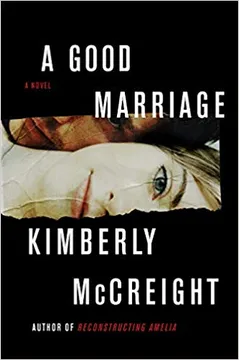


Plot Summary
Prologue
A prisoner in solitary addresses someone they love, insisting that the crime was never intended and that they did not kill anyone. The speaker admits to lying, selfishness, and causing deep hurt, then traces how marriage can begin in mutual admiration and turn into a mirror neither partner wants to face.
The confession offers no name or clear account of the crime. It instead plants a question over the story: whether a person can recognize the harm they caused before it is too late.
The prologue makes intimacy sound like both refuge and exposure. Its jailed speaker wants to be trusted, but offers only remorse and a theory of marriage, not facts that could prove innocence. That imbalance teaches the reader to distrust declarations of love as evidence. The appeal to a beloved listener also frames the novel’s central test: partners may know one another deeply, yet still misunderstand what the other is capable of. Solitary confinement becomes a stage for self-narration, where guilt can be examined, reshaped, or evaded.
A Call from Rikers
Lizzie Kitsakis, a corporate defense lawyer and former federal prosecutor, is working late when Zach Grayson calls from Rikers. His wife, Amanda, has been found dead at their Brooklyn home, and he has been jailed after accidentally striking an officer who tried to move him from her body. Zach wants Lizzie, his law school friend, to represent him.
She visits, hears his account, and tries to refer him elsewhere, but her boss, Paul Hastings, urges her to take the case and agrees to supervise. Lizzie’s own life is already strained: her husband Sam’s drinking cost him jobs, a crash left them with heavy debt, and she has left her prosecutor career to earn more.
The call draws Lizzie into the case through a bond she has not tended for years, but the appeal works because it flatters her identity as a determined, loyal person. Her first instinct is to refuse; Paul turns that hesitation into a question of professional courage and the right to a defense. Meanwhile, her silence about Sam’s drinking and their debt establishes the private cost of her public competence. Lizzie is practiced at managing crises for others, yet postpones naming the one in her own home. The murder case does not interrupt a stable life. It exposes a life already held together by omissions.
Park Slope's Polished Surface
In the days before the murder, Amanda adjusts to Park Slope after moving east with Zach and their ten-year-old son, Case. She runs the scholarship foundation Zach created and leans on new friends Sarah Novak and Maude Lagueux, while worrying about Case’s move and his distant summer camp. Unknown callers breathe into her phone, and she suspects someone from her past has found her.
At Brooklyn Country Day, a data breach has parents fearing that private family information is exposed. Amanda’s marriage gives her little space to share her fear: Zach controls the household’s privacy and schedule, and she has learned to avoid asking him for attention. Sarah urges her to claim a voice of her own.
Amanda’s carefully curated life is not simply a disguise for wealth or status. It is a survival structure built by someone who learned early that safety depends on reading other people and minimizing her own demands. Sarah’s bluntness and Maude’s warmth offer different models of intimacy, but Amanda still treats friendship as temporary shelter rather than a right. The hacked school records sharpen the irony: a woman who cannot confide in her husband lives amid a community suddenly afraid of exposure. Her fear has both an external source and an internal history, though at this point neither she nor the reader can separate them cleanly.
Blood Behind the Front Door
To find Case’s camp information, Lizzie uses the emergency key Zach says is hidden under a planter. Inside, she avoids the bloodied staircase and searches Amanda’s desk, but a crash from the kitchen reveals that someone has just fled through the back door. The responding officers treat the incident as a likely burglary and show little urgency about collecting evidence.
Lizzie notices a possible handprint in blood on a stair tread and calls Millie Faber, a former police sergeant who knew Lizzie’s late mother and now works as a private investigator. Millie arranges independent forensic help. In Amanda’s bedroom, Lizzie finds old journals hidden beneath the bed, along with a florist’s card and a test strip she cannot yet explain.
The break-in changes Lizzie’s role from reluctant defense counsel to investigator. The police have an obvious suspect and therefore little institutional incentive to search for another; Millie recognizes that this is not necessarily misconduct but a predictable consequence of limited resources and a settled theory. The house itself resists easy interpretation: its staged family photographs promise order, while the blood and hidden journals expose what the images omit. Lizzie’s decision to gather private records is legally useful but ethically uneasy. She is beginning to defend a client by entering the intimate life of a dead woman who cannot consent or correct her conclusions.
A Journal's Missing Past
Lizzie reads Amanda’s journals and finds a childhood shaped by poverty, an addicted father, and repeated sexual abuse. In newer entries, Amanda records anonymous calls and moments when she believes someone is following her.
She also describes a friend, Carolyn, as alive and nearby, and repeatedly fears that her father is closing in. The entries give Lizzie a possible alternative suspect, but they also reveal how little Zach knew about his wife’s history.
Lizzie interviews Sarah and Maude, who confirm Amanda was guarded and that she had mentioned a friend from home, though neither knows the full story. The prosecutor, Wendy Wallace, builds a case around the husband, the golf club, and the party, leaving Lizzie to determine whether Amanda’s fears point to a real person.
The journals make private writing function as both testimony and trap. Amanda records specific times and sensations, which lend her account credibility, but her belief that dead people remain present will later complicate the evidentiary value of those pages. Lizzie initially reads the entries as a route to a living stalker because that would help her client. The reader sees a harder problem: trauma can preserve accurate emotional knowledge while distorting who, exactly, is feared. Zach’s ignorance is not proof of violence, but it is evidence of a marriage organized around selective attention. Amanda’s secrecy and Zach’s disinterest have left her inner life legible only after her death.
The Bail Hearing
At Lizzie’s emergency hearing, she argues that Zach was held without bail on an assault charge because the judge saw prejudicial crime-scene photographs. Wendy Wallace counters with the sex party, Zach’s wealth, his son already in California, an old loitering warrant, and a possible trip to Brazil.
The judge questions the prosecution’s tactics but keeps Zach jailed after Wallace announces a first-degree murder indictment. She says witnesses saw Amanda head upstairs with a lover, giving Zach a possible motive, and cites his fingerprints and Amanda’s blood on the golf club.
Lizzie learns the prosecution has not established who the alleged lover was. Zach remains at Rikers, where he is repeatedly injured, and Lizzie must begin building a trial defense rather than simply challenging his detention.
The hearing shows how procedural decisions can harden into a story before the facts are fully tested. Wallace’s account is persuasive because it joins vivid details, sexual suspicion, wealth, and flight risk into a coherent narrative. Lizzie knows that coherence is not the same as truth, having once prosecuted cases herself, but that knowledge does not blunt its force in court. The judge can recognize unfair tactics and still be constrained by the new indictment. Rikers makes that gap bodily: Zach suffers while the legal system waits for trial. The scene also reveals Lizzie’s former comfort with selective evidence, now experienced from the vulnerable side of the table.
The Sleepaway Soiree
Amanda attends Maude and Sebe’s annual party with Zach, hoping the evening will let her speak to him about her fear. Instead, he dismisses her concerns and leaves early. Messages from an unknown caller tell Amanda that the sender is nearby.
She retreats upstairs, where Sebe finds her distressed and offers help; she does not have sex with him. When another message arrives, she escapes through the crowded house and runs home.
Meanwhile, Maude, alarmed by evidence that Zach may be behind the school hacking and blackmail, enters the Graysons’ home with the spare key to search for emails. She hides in Zach’s office closet when someone arrives. From inside, she hears a struggle, then sees a masked man flee and Amanda gravely injured at the foot of the stairs.
The party turns the novel’s two forms of danger into one crowded, misleading setting. Amanda is genuinely frightened, but her interpretation of the threat is shaped by memories she cannot consciously access. The guests’ casual sexual freedoms give the prosecution a ready-made motive, while the actual encounter upstairs is a distressed conversation, not an affair. Maude’s decision to investigate Zach is also driven by real concern, especially for her daughter, but her secrecy leaves her in the house at the worst possible moment. The sequence shows how incomplete observation breeds confident error: guests see fragments, investigators assemble them into motive, and the person who witnessed the attack initially hides her own presence.
A Fingerprint, Not an Alibi
Millie’s lab compares the print in Amanda’s blood with marks on the golf bag and finds a match that does not belong to Zach. The result appears to support Lizzie’s search for another person at the scene. Maude then admits that she entered the house, held a golf club while hiding in the closet, and tried CPR after Amanda fell.
Her prints explain the apparent evidence of an unknown visitor, but not the masked man she says escaped. Maude had earlier offered Zach an alibi, implying they were together at the party; when she withdraws it, she admits she had been trying to protect Case. Zach exploits Lizzie’s financial-disclosure lie to force her to remain his attorney, even as his own finances prove far less secure than he claimed.
The fingerprint solves one question and deepens another. It confirms that someone besides Zach touched evidence at the scene, but the matching prints belong to a frightened witness, not necessarily the attacker. The novel resists the convenient logic that one exculpatory fact automatically produces innocence. Maude’s false alibi arises from compassion and guilt, yet it could have damaged both the defense and the search for the killer. Zach’s blackmail makes the professional relationship coercive, exposing how legal ethics can be compromised by a lawyer’s private vulnerability. Lizzie is no longer merely choosing to help him. He has made her employment, reputation, and self-respect part of the case.
The Dead Man in St. Colomb
Following the name Lynch, Lizzie drives to St. Colomb Falls and meets Xavier Lynch, who turns out to be Amanda’s uncle, not her father. He explains that Amanda’s father died twelve years earlier after attacking Carolyn, Amanda’s childhood friend.
Amanda intervened, and both her father and Carolyn died. The clerk’s records confirm Xavier’s account, overturning Lizzie’s theory that the father stalked Amanda in Brooklyn. Amanda’s journals and recent memories had kept the dead pair alive in her mind.
The discovery unsettles Lizzie, whose own father is serving a prison sentence for killing a man while committing fraud. She has told nearly everyone he is dead. Millie, now seriously ill with metastatic cancer, presses Lizzie to stop using distance as a substitute for facing the past.
This revelation reframes Amanda’s fear without dismissing it. Her father’s violence was real, and the danger she sensed in the present was psychologically continuous with it, even though the person she named could not have been there. Trauma here does not simply create falsehood; it makes the past persist as an active environment. The parallel with Lizzie’s family is precise: both women have converted unbearable history into a story that allows daily functioning. Millie’s illness makes postponement newly visible as a choice with a cost. Lizzie can understand this intellectually, but must now decide whether she will keep treating emotional truth as something that can be filed away indefinitely.
Sam's Unremembered Night
Lizzie finds a silver earring in Sam’s bag and confronts him. Sam cannot remember how he acquired it; he had been drinking heavily on the night Amanda died and may have blacked out. He recalls drinking with men from a basketball group, then waking with a head wound after a fall.
Lizzie later matches the earring to one missing from Amanda’s belongings and finds a bloodlike streak on Sam’s sneaker. The clues make him a plausible suspect, though he insists he never knew Amanda.
Lizzie searches for another explanation by tracing an anonymous bouquet Amanda received. The florist identifies the handwriting as that of a customer who ordered lilacs for a secret admirer, but the buyer’s identity remains unknown. Lizzie’s loyalty to Sam now has to survive genuine uncertainty.
The earring collapses the distance Lizzie has maintained between her legal investigation and her marriage. Unlike Zach’s shifting story, Sam’s uncertainty may be honest, yet his alcoholism makes honesty insufficient: he cannot account for what he did while unconscious to himself. The evidence also reverses Lizzie’s usual role. She has built a career from interpreting other people’s facts, but now every conclusion threatens the person she loves. Her impulse to protect Sam resembles her broader habit of preserving marriage by withholding questions. The planted clues force a distinction she has avoided: loving someone does not make them innocent, and believing them is not the same as knowing.
Red Shoes at the Door
Maude tells Lizzie that the masked man who fled Amanda’s house was tall, broad, and wearing red high-tops. Sarah identifies the distinctive shoes as belonging to her husband, Kerry Tanner, a former Young & Crane partner.
Lizzie learns from Paul that Kerry was fired after evidence of stalking women, taking covert photographs, and keeping pornography on his work computer. The florist’s teenage employee recognizes Kerry’s round face as the customer who ordered lilacs for Amanda and asked for a false secret-admirer card.
Maude finally explains that she went to the house to confront Zach about the hacking, hid in the closet, and witnessed the attack. She had tried to shield Kerry by giving Zach a false alibi, but now reports what she saw. Police arrest Kerry, and Zach is released from Rikers.
The investigation resolves through small, ordinary recognitions rather than a single dramatic forensic breakthrough. Shoes, face shape, a handwritten card, and a prior workplace complaint become meaningful only when placed together. Kerry’s public role as attentive husband and helpful friend made him easy to overlook, while his prior pattern of stalking supplies a behavioral context that the murder scene alone could not provide. Maude’s confession is essential because the same fear that once made her conceal the truth had allowed the wrong man to remain jailed. The resolution depends on people correcting their own protective stories, not merely on technology extracting an answer from the evidence.
The App Behind the Blackmail
Once released, Zach tells Lizzie what he had concealed. He was not as wealthy as his reputation suggested: ZAG’s board had bought him out for far less after discovering questionable business practices, leaving his new venture short of money.
He had arranged the breach of Brooklyn Country Day families’ data to test a cybersecurity subscription service and attract publicity. Contractors used stolen information to blackmail parents, including Maude’s daughter, Sophia, who was coerced into live sexual acts.
Zach had also hacked Lizzie’s computer and used the information to threaten her job if she quit his defense. He believes attorney-client privilege protects his confession. Lizzie explains that the fraud is ongoing, so the crime-fraud exception applies. His murder charge is gone, but his freedom may be temporary.
Zach’s scheme extends the novel’s concern with intimacy into the digital realm. He treats a family’s searches, purchases, and private images as data to be harvested, then treats the resulting harm as a manageable cost of product development. His self-justification is not a lack of intelligence but a moral system in which winning validates whatever means were used. Lizzie’s final leverage comes from legal knowledge rather than personal loyalty: privilege has limits when a client is still committing a crime. Yet her threat is not a clean triumph. She has spent the case compromised by fear and still must decide how to use what she learned without reproducing Zach’s own instrumental view of people.
Truth Without Guarantees
After Kerry’s arrest, Lizzie tells Paul that she deliberately omitted Sam’s debt from her firm’s financial disclosure. Paul directs her to correct the record rather than dismissing her outright.
Sam, facing the damage his drinking has caused and unable to promise instant change, arranges a ninety-day rehabilitation program; his mother agrees to pay. Lizzie tells him that her own family history is not what she has claimed and that he has a right to know the truth, though she does not explain every detail before he leaves.
They part with uncertainty about whether their marriage can recover. Lizzie no longer offers reassurance she cannot guarantee. She gives Sam hope, but insists that honesty, treatment, and the difficult conversation ahead must replace the silences that kept them stuck.
The ending refuses the easy reward of a solved murder restoring a marriage. Lizzie’s professional confession and Sam’s decision to seek treatment are beginnings, not proof of repair. Their exchange matters because neither promises that love will erase consequences. Lizzie has learned that concealment can preserve appearances while quietly transferring risk to another person; she begins correcting that pattern by telling Sam he has been denied part of her history. At the same time, she does not confuse disclosure with instant healing. The novel’s title remains a question rather than a verdict: a marriage becomes better not through perfection, but through the repeated willingness to face what each partner would rather hide.
Analysis
A Good Marriage builds its mystery around the gap between what people do for one another and what they are willing to know about one another. Lizzie and Amanda occupy different positions in that gap. Lizzie has legal training and a talent for testing stories, but she protects her marriage by hiding Sam’s drinking, the debt, and her own family history. Amanda has made a life by anticipating what Zach wants, yet the arrangement leaves her without a reliable way to tell him what frightens her. Their omissions are not equivalent to the violence done to Amanda, but they create the lonely conditions in which danger can go unrecognized.
The book treats evidence as something more complicated than a clue that points straight at a culprit. A bloody fingerprint is genuine but belongs to a witness. Amanda’s detailed account of a stalker accurately records her terror while misidentifying its source. Sam’s earring and stained sneaker look damning because he is unable to remember his own actions. Grand jury transcripts show how these fragments become persuasive when arranged by a prosecutor. The mystery therefore asks not only who did it, but who is authorized to turn partial knowledge into certainty.
Its marriages are neither uncomplicated ideals nor interchangeable failures. Sarah and Kerry’s teasing, Maude and Sebe’s negotiated openness, and Lizzie and Sam’s devotion under strain all offer different bargains. Yet affection does not automatically make a relationship safe. Zach’s pursuit of success reduces people to resources, while Kerry’s apparent helpfulness conceals entitlement to Amanda’s attention. Both men violate the boundary between care and possession, though in sharply different ways.
The ending refuses to treat revelation as repair. Kerry is identified, Zach’s murder charge collapses, and Lizzie finally begins to correct the lies that protect her career and marriage. Sam seeks treatment, but their future remains uncertain. The novel’s answer to its title is procedural rather than sentimental: a good marriage is not one without secrets or injury. It is one in which partners accept the cost of telling the truth and allow the other person to respond.
Review Summary
A Good Marriage is a domestic thriller/legal thriller that has garnered strong praise, averaging 3.9 stars. Most readers enjoyed the slow-burn mystery, well-developed characters, and surprising twists. Many compared it to Big Little Lies, appreciating its exploration of flawed marriages and legal proceedings. Common critiques include a slow start, an overly large cast, and occasional plot holes. However, most readers found it ultimately gripping and unpredictable, with particular praise for the dual-narrator structure following Lizzie and Amanda.
People Also Read








Characters
Lizzie Kitsakis
Reluctant murder defense lawyerA former federal prosecutor now working at the prestigious firm Young & Crane, Lizzie is disciplined, intelligent, and wary of emotional disorder. The deaths of her parents and the collapse of her family’s small business shaped her faith in work as a route out of helplessness. She is unusually capable at reading evidence and unusually practiced at avoiding her own. Her marriage to Sam has become a private burden she conceals from colleagues and friends, while her connection to Zach carries old guilt and unresolved pride. Lizzie’s central tension is between the lawyer who can name the truth in other people’s lives and the woman who has survived by editing her own.
Amanda Grayson
Guarded foundation directorAmanda is Zach’s wife, Case’s devoted mother, and the director of the scholarship foundation Zach established. She is beautiful and polished, but her confidence is fragile around the wealthy, intellectually assertive world she has entered. A childhood marked by poverty and loss taught her to adapt, read rooms, and avoid provoking those with power over her. Books and running give her private sources of steadiness. Amanda wants to protect her son and sustain her friendships, yet often mistakes silence for safety. Her manners are not emptiness: they are skills built around fear, loyalty, and an enduring wish to believe that people can be kind.
Zach Grayson
Driven startup founderZach is Amanda’s husband and Case’s father, a self-made entrepreneur whose success grew from an intensely competitive drive. Abandoned as a child and raised through foster care, he came to regard achievement as proof that he could not be discarded. He is clever, observant, and direct, but his interest in other people often turns into a calculation of their usefulness or vulnerabilities. His marriage to Amanda is orderly from the outside and emotionally distant within. Zach’s ambition has given him money and status, but it also narrows his understanding of loyalty: he can recognize what another person wants without accepting that their needs carry equal weight.
Sam
Alcoholic writer and husbandSam is Lizzie’s husband, a former journalist whose warmth, idealism, and talent once made him feel like a partner in her hopes for a more just world. His drinking has damaged his career and their finances, but he remains capable of tenderness and sincere remorse. Lizzie loves the generous man she remembers and is exhausted by the instability he brings into their home. Sam’s difficulty is not a lack of affection; it is the distance between wanting to change and consistently acting on that desire. His struggle gives the novel a second, intimate inquiry into what commitment means when good intentions repeatedly fail to prevent harm.
Kerry Tanner
Affable neighborhood lawyerKerry is Sarah’s husband, a former lawyer, and a familiar presence among Park Slope families. Large, soft-spoken, and quick to joke, he seems content to help with errands and take part in the neighborhood’s social life. His relationship with Sarah has the ease of a long partnership, full of teasing and established routines. Kerry is also a friend to Maude and a member of the same broad circle that surrounds Amanda. His outward agreeableness makes him easy to trust, while the novel’s wider portrait of marriage asks readers to consider how much of any partner’s private life can remain unseen.
Sarah Novak
Blunt PTA power brokerSarah is Amanda’s closest new friend in Brooklyn, Kerry’s wife, and a forceful PTA leader with a gift for managing anxious parents. Raised without wealth, she is comfortable challenging the affluent community around her and says what Amanda struggles to voice. Her teasing can cut too deep, but it also gives Amanda permission to stop performing perfection. Sarah values candor and loyalty, while her own marriage contains tensions she does not readily share. She works with Amanda at the scholarship foundation and wants to protect her friend, though her confidence can sometimes make her assume she understands more than she does.
Maude Lagueux
Art dealer and attentive motherMaude is an art dealer, Sebe’s wife, and the mother of fifteen-year-old Sophia. Her annual summer party makes her home a social hub, but her deepest attention is fixed on her daughter, whose distress she struggles to interpret. Maude is affectionate and socially assured, yet capable of panic when she believes a child is in danger. She and Amanda grow close through their shared experiences of motherhood and the pressure to appear composed. Maude’s loyalty is sincere, but it can lead her to intervene impulsively and to conceal facts while trying to protect the people she loves.
Sebastian Lagueux
Doctor and Maude's husbandKnown as Sebe, he is Maude’s husband, a doctor, and a calm presence in their family’s social circle. His French accent, good looks, and practical attentiveness make him memorable, but he is not simply a charming party host. Sebe tends to approach conflict with the measured habits of a physician, which can frustrate Maude when she wants more visible outrage. He cares about Sophia and tries to support Maude without intensifying her fear. His steady manner gives Amanda a glimpse of a marriage where disagreement need not sever connection.
Millie Faber
Investigator and family friendMillie is a former police sergeant, a private investigator, and an old friend of Lizzie’s late mother. She has spent years helping Lizzie’s family, partly from affection and partly from guilt over the tragedy that befell them. Forthright and practical, she understands both the limits of police work and the value of independent evidence. Millie’s care for Lizzie is generous, but she is not indulgent: she challenges Lizzie’s avoidance and expects her to take responsibility for her choices. Her own long history of grief gives her urgency without making her sentimental.
Case Grayson
Amanda and Zach's sonCase is ten, away at a California sleepaway camp during the murder investigation. Athletic and outgoing, he is also an introspective artist who loves drawing jaguars. The move from California to Brooklyn has been difficult, and his parents’ different ways of responding to his needs expose the imbalance in their household. Though he is absent from most of the action, Case gives the adults a concrete responsibility beyond their own grief and self-interest. His well-being influences Lizzie’s defense work and Maude’s decision to intervene.
Carolyn
Amanda's childhood confidanteCarolyn is Amanda’s oldest friend, a Manhattan advertising executive whose confidence contrasts with Amanda’s careful self-effacement. She has long urged Amanda to resist Zach’s control and offers her a rare space to discuss the past. Carolyn’s loyalty is fierce and sometimes confrontational; she would rather provoke a difficult decision than watch Amanda endure another quiet compromise. Their friendship reaches back to adolescence, giving Carolyn a place in Amanda’s identity that her newer Park Slope friendships cannot yet occupy.
Paul Hastings
Exacting defense mentorPaul is a former federal prosecutor and Lizzie’s senior colleague at Young & Crane. An intense, highly disciplined lawyer, he holds himself and others to demanding standards, especially on ethics and preparation. He encourages Lizzie to defend Zach even though she lacks homicide experience, then supports her through the early legal fight. Paul’s personal history with the prosecutor gives him insight into the case but also complicates his judgment. He respects competence more readily than vulnerability, making him a demanding mentor for a lawyer who is already hiding too much.
Wendy Wallace
Ambitious homicide prosecutorWendy is the chief homicide prosecutor assigned to Zach’s case and a contender for the Brooklyn district attorney’s office. Elegant, controlled, and strategically forceful, she understands how to shape evidence into a story that jurors can follow. Her ambition does not make her careless; she is formidable precisely because she knows procedure and public perception. Wendy and Paul share a personal history that adds tension to their professional conflict. Her certainty about Zach tests Lizzie’s ability to separate a persuasive prosecution from a reliable conclusion.
Xavier Lynch
Link to Amanda's hometownA large man living in St. Colomb Falls, Xavier is connected to Amanda’s family history and becomes an important point of contact when Lizzie investigates her past. He speaks openly about the troubled people he once knew and presents himself as someone trying to live more responsibly. Lizzie has reason to question his account, so his plain-spoken manner does not immediately settle what happened.
Teddy Buckley
Foundation accountantTeddy is the accountant responsible for the Hope First Initiative’s books. Careful and nervous about professional boundaries, he tries to alert Amanda to serious financial irregularities after Zach stops responding to him. His disclosures help expose how little Amanda has been told about the foundation and Zach’s finances.
Plot Devices
Grand jury testimony
Competing versions of eventsTranscripts of witnesses at the party and police at the scene interrupt Lizzie’s first-person investigation. Their testimony supplies exact times and sharply limited observations, but the questioning also reveals how a prosecutor can frame those fragments toward a preferred conclusion. Each witness knows only a portion of the night: who left first, who went upstairs, or how Zach behaved after Amanda was found. The transcripts create suspense by placing testimony beside events the reader has seen from Amanda’s perspective. They also expose the distance between an observation and the interpretation that a courtroom attaches to it.
Amanda's journals
Private memory as evidenceLizzie finds Amanda’s journals hidden beneath her bed and reads them for possible leads. The entries span childhood, motherhood, and the weeks before her death. They reveal abuse and fear that Amanda never shared with Zach or most of her friends, making the journals both a source of investigative clues and a record of her isolation. Their reliability is complicated by Amanda’s inability to recognize that people from her past are dead. The journals therefore do not offer a simple truth; Lizzie must distinguish what they accurately preserve from what trauma has altered.
The bloody fingerprint
An unknown hand misleadsA partial print in blood on the staircase appears to show that someone besides Zach was present during Amanda’s death. Independent forensic analysis finds the same print on the golf bag, strengthening the possibility of another person. The clue does not identify the killer, however. It belongs to Maude, who entered the house, handled a club, and tried to help Amanda. The print advances the defense while showing why physical evidence requires context: a true match can still answer a different question from the one investigators are asking.
The earring and sneaker
A planted trail implicates SamAmanda’s missing silver earring turns up in Sam’s clothing, and a brown streak appears on one of his sneakers. Because Sam was drinking heavily and cannot remember the critical hours, Lizzie fears he may have been involved in the murder. The clues are planted by the actual killer to redirect suspicion toward a vulnerable, blackout-prone man. Their force comes from the genuine uncertainty of Sam’s condition: the evidence seems plausible because it fits what Lizzie already fears about her marriage.
The school data breach
Privacy becomes a business testBrooklyn Country Day parents receive phishing messages and threats involving intimate data, including affairs, pornography, and a teenager’s images. The breach first appears to be a separate neighborhood scandal, then connects Amanda’s circle to both her murder and Zach’s new business. Zach used the compromised families to test a cybersecurity product and generate attention, while hired operators inflicted real harm. The device makes the novel’s domestic secrets literal data while demonstrating that technical ingenuity offers no moral justification for exploitation.
Download PDF
Download EPUB
.epub digital book format is ideal for reading ebooks on phones, tablets, and e-readers.








