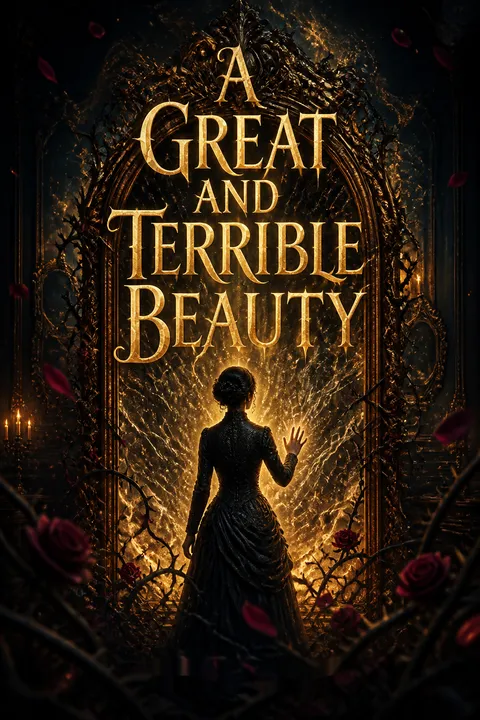


Plot Summary
A Birthday Turns Fatal
On her sixteenth birthday in Bombay, Gemma Doyle quarrels with her mother, Virginia, over being kept from London. A cloaked stranger warns Virginia that Circe is near, and Gemma runs away in anger. Lost in the streets, she encounters Kartik, a young man connected to the stranger, and collapses into a vision: a shadow creature attacks Virginia, who kills herself rather than be taken.
Gemma wakes to find Kartik holding her, then discovers her mother's body in the street, with the same fatal wound she saw in the vision. Her last cruel words to Virginia become inseparable from her grief. Within weeks, Gemma leaves India for England, carrying her mother's amulet and the secret of what she witnessed.
The catastrophe is both supernatural and painfully ordinary: Gemma's adolescent desire for independence collides with a mother's concealed fear, and their last exchange leaves Gemma with a guilt that looks, to her, like causation. The vision makes her private anger appear to have summoned the danger, though she has no way to know what truly happened. Her journey begins not with a chosen quest but with an unanswered question about responsibility. The amulet, given as a farewell gift, becomes a physical remnant of love that Gemma is not yet able to receive as love.
Spence's Locked Doors
In London, Gemma arrives with her brother Tom, who insists the family keep Virginia's murder secret and calls it cholera. On the way to Spence Academy, another vision pulls Gemma into a Whitechapel alley, where a little girl warns her that a dark creature is tracking her. At the school, Gemma meets her roommate Ann Bradshaw and the formidable Felicity Worthington, who leads a circle of privileged girls.
Felicity's midnight initiation prank locks Gemma inside the chapel, where Kartik appears and confirms that the vision of her mother's death was real. He says his brother Amar was also killed, warns Gemma not to speak of her visions, and claims an organization called the Rakshana is watching her.
Spence appears to offer the social order Gemma once longed for, but its rules reproduce the same silencing she encountered at home. Tom protects the family name by denying what Gemma saw, while Kartik protects his own organization by demanding obedience. Neither offers her an account she can trust. Her visions instead give the excluded girl a form of knowledge that the adults and institutions around her refuse to recognize. The locked chapel is an early model of Gemma's position: others put her inside a dangerous situation, then expect her to accept their explanation of it.
Mary's Buried Diary
After Kartik leaves, a glowing child guides Gemma to a cave, where she finds the diary of Mary Dowd, a Spence student from 1871. Mary's entries describe visions, a door into another world, and a close friendship with Sarah Rees-Toome.
At school, Felicity's friends accuse Ann of stealing a sapphire ring, and Gemma protects Ann by inventing a face-saving explanation rather than letting the scholarship student be punished. Later, Gemma surprises Felicity meeting Ithal, a young Gypsy man.
She helps Felicity evade discovery, and Kartik helps Ithal escape. A scrap of blue silk from Gemma's vision appears afterward, convincing her that Virginia reached her through the strange power. Felicity then agrees to form a secret club with Gemma, provided Ann can join.
The diary turns haunting into evidence: Gemma's visions belong to a history at Spence, not merely to private grief. At the same time, her defense of Ann shows a new use for her anger. Rather than simply lash out, she reads the social trap and gives Ann a way to resist it. Felicity's secret romance introduces the gap between her public command and her private vulnerability. Gemma's protection gives the girls a bond, but it also leaves Felicity indebted to her, so friendship begins with a complicated mixture of care, leverage, and mutual concealment.
The Order Reborn
Felicity, Pippa Cross, Ann, and Gemma meet in the caves and name their club the Order, borrowing from Mary's diary. They read of the realms, a beautiful place where wishes can take form, and of a dangerous Winterlands inhabited by dark spirits. The girls make a blood pact with Virginia's amulet and declare their deepest wishes: love, beauty, power, and self-understanding.
Their attempt to summon Mary and Sarah brings only a brief flare of strange light. Soon afterward, Gemma's uncontrolled vision sweeps Pippa into it, and Pippa suffers a frightening seizure when they return. Mrs. Nightwing identifies it as epilepsy and orders the girls to keep it secret. In a later conversation, she confirms that Sarah and Mary died in Spence's 1871 fire.
The girls' club gives them a provisional freedom, but their vows reveal how differently each understands the promise of power. Their wishes are not interchangeable: Pippa wants to be loved, Ann wants to be seen, Felicity wants influence, and Gemma wants to understand herself. The blood ritual turns that private longing into a group identity before any of them understands the cost. Pippa's seizure is especially consequential because it makes Gemma's gift affect someone else physically. The school's demand for silence about epilepsy echoes its suppression of Spence's past, binding social respectability to the concealment of inconvenient bodies and histories.
Warnings in the Woods
At the caves, Miss Moore, whom Gemma later calls Hester, explains that ancient women used the site for rituals and that the crescent eye on Gemma's amulet is associated with the Order. The diary describes Sarah losing her ability to enter the realms and seeking forbidden power in the Winterlands.
Hoping to learn more, the girls visit Mother Elena, a Gypsy fortune-teller who mistakes Gemma for Mary Dowd. She warns that Sarah craves power and may bind a dark spirit to herself through a sacrifice.
When Mother Elena recognizes Gemma and blames her for a past disaster, Gemma flees, shaken. Pippa's recovery and her secret epilepsy give Gemma a reason to seek answers beyond the school's silence, so the girls plan to attend a Spiritualist demonstration.
These clues make the past more than a gothic curiosity: Sarah's story offers a precedent for what happens when fear of losing status turns into a hunger to control power. Mother Elena's confusion also unsettles Gemma's sense of identity, hinting at a connection to Mary without explaining it. Hester provides an alternative to the school's narrow instruction, treating women's history and anger as subjects worth studying. Yet the girls still approach the supernatural partly as entertainment. Their curiosity is real, but it has not yet become disciplined judgment.
A Door Opens
At Madame Romanoff's London séance, Felicity gets Gemma chosen to contact the dead. Gemma recognizes the medium's performance as fraud and, in anger, pulls her into a vision of a misty realm filled with restless spirits. Leaving the terrified medium, Sally Carny, briefly behind, Gemma finds Virginia in a temple of lilies.
Her mother says Gemma has inherited the power to reopen the realms and that Circe wants it. Gemma also meets the ghost of Reginald, Mademoiselle LeFarge's dead fiancé, and carries his message back to his grieving Polly. The medium returns safely, but Kartik confronts Gemma afterward. She rejects his orders and decides to explore her power rather than submit to the Rakshana's fear.
Gemma's first deliberate crossing changes the visions from a passive affliction into a capacity she can choose to exercise. The experience brings her mother close, but it also lets her help someone who is not central to her own grief: Reginald's message gives LeFarge a small chance to move forward. Gemma's rejection of Kartik is not yet mastery; it is a necessary refusal to let fear dictate her choices. The scene also distinguishes genuine contact from commercial performance, though Gemma's power remains unpredictable and the spirits she encounters are not all benign.
The Garden Between Worlds
Gemma tells Felicity, Pippa, and Ann the truth about her visions, then brings them through the door of light into the realms. There, Virginia explains that the Order once used the world between worlds to develop its magic, and that Gemma is a conduit to its power.
Gemma learns that the creature killed Virginia's guardian Amar and that Virginia chose death rather than be captured. The girls discover that imagination can reshape their surroundings: Ann's singing becomes astonishing, Pippa summons a knight, and Felicity begins training with a huntress.
Virginia warns them not to touch the Oracle's runes or carry their magic into the ordinary world until they understand it. The girls leave enchanted, already tempted to use their new abilities.
The realms initially function as a corrective to the girls' constrained lives: Ann can sing without shame, Pippa can imagine a lover who listens, and Felicity can practice strength denied to daughters. But the landscape is not simply a fantasy of escape. Virginia's warning insists that power changes the person who uses it, not only the world around her. Gemma's new authority rests on trust from her friends, yet the girls' delight makes restraint feel like deprivation. The gap between liberation and responsibility is now the story's central danger.
Power Crosses Over
Despite Virginia's warning, Gemma touches the Oracle's runes while her friends hold on to her, and the girls carry magic back to Spence. Gemma suddenly excels in French, Ann's voice astonishes her music teacher, and Pippa can alter a grass stain.
They use their new abilities for increasingly reckless pranks. Pippa tells Mr. Bumble about her epilepsy and ends their engagement, believing she has saved herself from a marriage arranged for her family's finances. In the great hall, however, the girls release the tiny magical beings carved into its columns.
A satyr grows monstrous and attacks them until Gemma forces the creatures back into the marble with a spell. Ann then uses the fading magic to humiliate Cecily and Elizabeth, leaving the group exhilarated but unsettled.
The first rewards are precisely tailored to each girl's wound, which makes the magic feel like justice rather than temptation. But the living statues expose the limits of their competence: Gemma must threaten one creature to learn how to undo the harm, and the group only barely restores order. Their pranks also reproduce the power imbalance they resent, especially when Ann turns humiliation outward. Pippa's broken engagement briefly suggests that truth can free her, but the social world has not changed enough to make that victory secure. Their agency has expanded faster than their foresight.
The Fire of 1871
Miss Moore reads the final pages of Mary's diary to the girls. Mary recounts how she and Sarah lured Mother Elena's daughter Carolina into the East Wing by promising her a new doll. Sarah tried to summon a dark spirit, while Mary held Carolina down; the spirit rejected the sacrifice because the child was not intact and claimed Sarah instead.
Mrs. Spence entered the Winterlands to save Sarah, sacrificing herself so Mary could escape with Sarah and close the realms. Sarah, changed by the creature, set the East Wing ablaze, and Mary disappeared into a new life. Soon afterward, Brigid recalls Sarah's chosen name: Circe. Gemma and her friends realize that the figure hunting them is tied to the girls in the diary, but not yet how closely.
The diary turns the school's old fire from an accident into a moral catastrophe built from desperation, complicity, and a failed attempt to bargain with violence. Mary does not present herself as innocent: she participated in Carolina's death, then escaped carrying the burden of what she had done. Sarah's fall grows from fear of becoming ordinary and losing her place in the Order, motives that echo the present girls' anxieties. The story refuses a simple division between victim and villain. It asks whether love can excuse betrayal, and whether a person can build a new life without confronting the harm that made it necessary.
Mother in the Missing Portrait
Searching for the class photograph removed from Spence's hallway, Gemma finds it hidden behind the 1872 portrait. The 1871 image identifies Mary Dowd as Virginia Doyle, her own mother.
In the realms, Virginia admits that she once belonged to the Order, helped kill Carolina, and concealed her past to protect Gemma from Circe. Gemma, furious at the betrayal, leaves before she can accept her mother's explanation. Back at school, the friends' secret activities unravel: Pippa's parents reverse her release from Mr. Bumble, and Mrs. Nightwing takes Mary's diary.
Felicity and Ann let the headmistress blame Hester for their occult excursions, and Hester is dismissed. A burned Gypsy poppet bearing Brigid's hair appears, suggesting Circe has reached Spence.
The portrait makes family history literal: Gemma's mother is not merely connected to the past but is one of its surviving participants. Virginia's concealment was meant as protection, yet it repeats the same paternalistic silencing Gemma has resisted at school. Gemma's anger is therefore not simply a refusal to forgive; it is a demand to distinguish love from control. Meanwhile, the girls sacrifice Hester to preserve their own position, repeating the very pattern of evasion that Virginia's secret embodies. The poppet brings the buried past into the present as a threat, not just a revelation.
The Deer in the Ravine
With Pippa once again promised to Mr. Bumble and the group facing punishment, Felicity persuades Ann and Pippa that a sacrifice will let them enter the realms without Gemma. She claims the huntress has offered them power in exchange for a token. The girls strip off their clothes and chase a deer to the ravine, where Felicity, Ann, and Pippa kill it with a rock.
Their attempt to summon a doorway fails. Kartik arrives, and Felicity wounds him with a sharpened stick before Gemma stops her by promising to take them through herself. The girls dress and follow Gemma, carrying the guilt and blood of the sacrifice into the realms. Their desire for freedom has now made them vulnerable to the creature they hoped to command.
The deer killing is the point where metaphor becomes action. The girls have treated sacrifice as an abstract key to power, but the animal's suffering makes their desire materially irreversible. Felicity's persuasion works because she gives the others a story in which Gemma is withholding freedom; their resentment supplies the opening for the false promise. Kartik's wound shows how quickly the group's imagined rebellion can become real violence. Gemma's decision to lead them into the realms is not trust restored, but damage control: she accepts responsibility for a danger she cannot yet understand.
The Winterlands Take Pippa
The realms look unchanged when the girls arrive, but the huntress tastes Felicity's blood and directs them toward the Oracle's runes. There she reveals that her mistress, not the girls, will receive the power. The dark creature rises in the huntress's place and attacks. Felicity is briefly possessed, Ann sees her reflection transformed into a diseased stranger, and Pippa flees onto a boat in the river.
The creature drives the others back, and Pippa jumps into the water rather than be captured. Gemma pulls Felicity and Ann through the doorway to safety, leaving Pippa behind. Back in the cave, Pippa's body convulses with another seizure. Gemma understands that the earlier vision of Pippa drowning was a warning, not a memory.
The attack makes the girls' earlier fantasies of control collapse at once. The creature does not need to invent new vulnerabilities; it magnifies the shame, fear, and longing already present in each girl. Gemma's escape with two friends is defensible as an immediate survival choice, but it leaves her with the knowledge that Pippa is beyond the doorway. The vision's delayed meaning sharpens the cost: foreknowledge did not give Gemma control, only a chance to recognize what she could not prevent. The creature's deception also turns the huntress, once a teacher and ally, into an instrument of predation.
Forgiveness Breaks the Curse
With Pippa unconscious and Kartik helping carry her back to Spence, Gemma prepares to return alone. She gives Felicity the amulet and asks her to find the remaining Order members if Gemma fails. In a ruined, frozen realm, Virginia appears to guide Gemma to the runes, but the creature is wearing her mother's shape.
It attacks Gemma and tempts her with power in the mortal world. Gemma resists by choosing to return, then weakens the creature by forgiving Virginia and smashing the Oracle's runes.
The creature is driven away, but the magic and Virginia's presence vanish with it. Gemma breaks the river ice and pulls Pippa out. Pippa chooses to remain in the realms with her knight rather than return to the marriage awaiting her, and her body dies in the ordinary world.
Gemma's victory does not come from overpowering the creature on its own terms. She refuses the promise that power can erase grief, and forgiveness breaks the emotional leverage the creature uses against her. Destroying the runes is costly: it ends the threat by ending the source of magic and her remaining access to Virginia. Pippa's choice complicates rescue. Gemma can recover her friend but cannot decide what kind of life Pippa must accept afterward. The ending treats agency as real but not painless, especially when the available choices have been narrowed by family, class, and illness.
A Beginning After Loss
At Pippa's funeral, Gemma sees Kartik watching from the trees and admits that she let Pippa choose her fate. He offers comfort without excusing the loss, and his brief touch leaves their connection unresolved but newly honest. Felicity worries that the creature has damaged her; Gemma links arms with her and acknowledges that none of them is untouched.
Gemma gives Kartik her father's cricket bat, a gesture of trust that replaces their earlier threats with a fragile alliance. She returns to her lessons, determined to master French and pursue the Order's unfinished work. Near the ravine, she follows a deer through the trees, not to hunt it but to discover how far she can travel under her own power.
The final movement does not repair the world Gemma has lost. Her father remains ill, Pippa is gone, Virginia cannot return, and the danger around the realms has not been neatly resolved. Instead, Gemma chooses a life that includes grief without allowing it to dictate every future action. The cricket bat carries family memory into her tentative relationship with Kartik, while her renewed studies suggest discipline rather than escape. Following the deer reverses the ravine's earlier violence: movement is now exploratory, not possessive. The ending makes self-forgiveness a practice, not a clean absolution.
Analysis
The novel's central conflict is not simply between magic and ordinary life. It is between forms of power that expand a person's choices and forms that promise freedom by making other people controllable. Gemma, Felicity, Ann, and Pippa each enter the realms carrying a specific deprivation. The garden answers those needs with almost perfect precision, which is why its pleasures are persuasive. But the runes also reveal that desire is not self-justifying. When the girls bring magic into Spence, they gain real capacities before they have developed the judgment to use them well.
The book links supernatural secrecy to Victorian respectability. Spence conceals the 1871 fire, the headmistress suppresses Pippa's epilepsy, Tom insists on a false account of Virginia's death, and Virginia herself hides her past. These silences protect reputations and relationships in the short term, but they also leave younger people unable to understand the forces shaping their lives. Gemma's visions are disruptive because they make the suppressed past visible, not because they offer immediate wisdom.
The female friendships are both refuge and danger. Felicity gives Ann access to a circle that once excluded her, but the club's equality remains fragile; Pippa can wound Ann without noticing, and Gemma can assume that protecting someone gives her the right to decide for them. Their friendship becomes meaningful not because it eliminates conflict, but because each girl's private need becomes legible to the others. Still, affection cannot erase class, illness, or family pressure.
Gemma's final victory depends on accepting complexity rather than escaping into an ideal image of her mother. Forgiveness does not declare Virginia innocent, restore her, or undo Carolina's death. It releases Gemma from the creature's use of her anger as a means of control. The closing emphasis on continuing to move, study, and choose makes maturity less a passage into perfect independence than a willingness to live with regret while remaining responsible for what comes next.
Review Summary
A Great and Terrible Beauty receives mixed reviews. Many praise its Victorian setting, magical elements, and exploration of female friendships. Critics appreciate Bray's writing style and character development. However, some find the plot predictable and characters unlikable. Concerns are raised about racial stereotyping, anachronistic dialogue, and heavy-handed feminist messages. The book polarizes readers, with some loving its blend of historical fiction and fantasy, while others find it lacking depth and originality. Overall, it's considered an entertaining but flawed young adult novel.
People Also Read

Characters
Gemma Doyle
Reluctant realm keeperA sharp-tongued, perceptive sixteen-year-old raised in India, Gemma longs for independence but is also fiercely attached to her family. Her mother's sudden death leaves her with guilt and a secret vision no one will validate. At Spence, she resists the school's demand for meekness, yet her instinctive defiance can hurt people or push her toward reckless choices. She is drawn to hidden histories because they offer a language for experiences she cannot explain. Her central psychological struggle is learning that self-command is not the same as obedience, and that wanting power does not automatically teach her how to use it.
Virginia Doyle
Protective, guarded motherGemma's mother is elegant, intelligent, and accustomed to managing both household appearances and her daughter's unruly will. She and Gemma once shared a close life in India, but secrecy and fear have made their relationship strained. Virginia's protective instincts are genuine, though her habit of withholding information leaves Gemma feeling controlled rather than cared for. She represents the difficult adult truth that love can coexist with shame, imperfect judgment, and choices children may later question. Her presence in Gemma's memory is warm but not uncomplicated, which gives their bond emotional depth beyond idealized maternal devotion.
Kartik
Guarded Rakshana messengerKartik is a young member of the Rakshana, a brotherhood committed to keeping the realms closed. He follows Gemma from Bombay to England because he believes her visions could endanger both her and the wider world. His warnings are often delivered as threats, and his secrecy makes it difficult for Gemma to distinguish caution from control. He is grieving his brother Amar, whose fate binds him to the same supernatural conflict he hopes to contain. Beneath his severity, Kartik shows loyalty and practical courage, but he has been trained to treat knowledge as something to ration rather than share.
Felicity Worthington
Commanding schoolgirl rebelBeautiful, confident, and socially powerful, Felicity rules her circle at Spence through wit and calculated nerve. Her sharpness protects a deep fear of being abandoned or dismissed, especially by a mother who lives far away and a father whose approval matters greatly to her. She enjoys testing boundaries, but her rebellion is not purely selfish: she wants a life in which women can choose, act, and be taken seriously. Felicity can be generous and loyal, yet she also has a talent for turning insecurity into pressure on others. Her desire for power makes her both an energizing friend and an unpredictable force.
Ann Bradshaw
Scholarship girl with a hidden voiceAnn is a scholarship student at Spence, an orphan being trained for a future as a governess. Careful, self-effacing, and often painfully literal, she expects little kindness from girls who have money and family connections. Her stutter and plain appearance feed an entrenched belief that she is easy to overlook. Ann also has a keen capacity for observation and a strong artistic and musical self that she rarely trusts enough to show. Her wish to be beautiful is not mere vanity; it expresses a longing to be treated as someone whose desires matter. Friendship gives her moments of confidence, but does not instantly erase her learned self-doubt.
Pippa Cross
Romantic debutante under pressurePippa is lovely, sociable, and prone to romantic daydreams, but her charm conceals the strain of living under constant scrutiny. Her mother treats marriage as a practical answer to the family's financial troubles, while Pippa hopes for affection and a choice of her own. She can be thoughtless, particularly toward Ann, because privilege has kept her from noticing how casually she wounds others. Yet she is capable of remorse and surprising courage when a decision finally belongs to her. Her epilepsy makes the pressure to appear flawless more than a social inconvenience, exposing the cruelty of a marriage market that treats illness as a defect.
Miss Moore, Hester
Unconventional art teacherMiss Moore teaches drawing at Spence but asks her students to interpret art, history, and their own responses rather than copy pretty objects. She speaks candidly about women's power and gives Gemma a rare adult example of curiosity without condescension. Her warmth is balanced by clear judgment, especially when she helps Gemma face grief without accepting false blame. Miss Moore's independence and intellectual appetite make her an important counterweight to the school's strict finishing-school ideal. She is also careful about what can safely be said in a place where authority values obedience more than inquiry.
Tom Doyle
Grieving, dutiful brotherGemma's older brother is studying to become a doctor and tries to hold the family together after their mother's death. He values order, propriety, and the family's reputation, often repeating the explanations that make painful events easier to manage. His briskness toward Gemma can feel like rejection, though grief and fear sit beneath his self-control. Tom is not naturally skilled at emotional intimacy; he offers practical protection where Gemma wants understanding. His complicated loyalty reflects a young man trying to maintain the role of responsible son while his father is becoming increasingly fragile.
Mrs. Nightwing
Keeper of Spence's rulesThe headmistress of Spence is stern, formal, and protective of the academy's reputation. She believes discipline and conventional feminine training can prepare girls for security, but her concern for order often turns into suppression of uncomfortable truths. Mrs. Nightwing can show practical care, particularly in moments of illness or crisis, yet she expects students to defer to adult judgment. Her authority is strengthened by a school culture that treats scandal as more dangerous than injustice. She is not simply cruel; she is a guardian of a system whose respectability depends on girls learning not to disrupt it.
Mother Elena
Gypsy seer and warning voiceMother Elena is an elderly Gypsy woman who reads fortunes and understands more about Spence's buried supernatural history than the students expect. Her memory and judgment are inconsistent, and she can mistake the present for the past, but her warnings carry genuine weight. She is protective of her daughter and distrustful of the girls who once sought knowledge from the Order. Mother Elena's mixture of insight, grief, and apparent confusion makes her difficult to dismiss. She stands outside the academy's polished authority, preserving knowledge that the school would rather classify as superstition.
Brigid
Spence's sharp-eyed housekeeperBrigid manages the daily life of Spence with a blunt tongue and a watchful eye. She scolds Gemma for unruly behavior but also notices more than the girls assume, including traces of the school's past that official accounts leave out. Her stories come slowly, with digressions and practical demands, yet they preserve crucial memories of Sarah and Mary. Brigid's kindness tends to arrive indirectly, through discretion or a small act rather than sentiment. She represents the servants whose labor and knowledge sustain the institution while its formal authorities control the story told about it.
Circe
Hidden threat to the realmsCirce is the name attached to a dangerous occult adversary seeking access to the realms and the power associated with them. For much of the story, Gemma knows her only through warnings, old records, and the harm surrounding her pursuit. That distance gives Circe an almost mythic quality, but the clues suggest a person whose ambition is rooted in fears of powerlessness and exclusion. Her methods exploit the longings of others, turning desire into a route for control. She functions as a warning that a wish for liberation can be manipulated into a wish to dominate.
Ithal
Felicity's Gypsy sweetheartIthal is a young Gypsy man who is involved with Felicity despite the social dangers their relationship creates for her. He is direct about his affection and stubborn when threatened, which contrasts with Felicity's instinct to hide what she wants. His presence makes class prejudice and the unequal risks of romance concrete: the same encounter could ruin Felicity's reputation and expose Ithal to punishment.
Reginald
LeFarge's absent fiancéReginald is Mademoiselle LeFarge's fiancé, a soldier whose tintype remains on her desk. He represents a private attachment that the school knows only through a photograph and its teacher's guarded tenderness. His remembered promise gives LeFarge a life beyond her role as an instructor, while his story allows Gemma to use her unusual ability to bring comfort to someone else.
Madame Romanoff, Sally Carny
Fraudulent Spiritualist mediumMadame Romanoff is the stage identity of Sally Carny, a performer who uses the grief of séance audiences to earn a living. Her act is fraudulent, but her fear when Gemma pulls her into the spirit world is genuine. Sally is opportunistic rather than monstrous, and her poverty helps explain why she sells comfort she cannot truly provide. Her encounter with Gemma forces her to carry a real message to a mourner.
Carolina
Mother Elena's young daughterCarolina is Mother Elena's young daughter, remembered as a lively child who longs for the doll she has lost. Her innocence and trust make her especially vulnerable to promises from older girls. She is central to the buried history surrounding Spence, and her presence exposes the human cost hidden beneath grand claims about power and destiny.
Bartleby Bumble
Pippa's wealthy suitorMr. Bumble is a prosperous older barrister whom Pippa's parents consider a suitable match. He measures marriage in terms of respectability and advantage rather than mutual affection. His polished manners conceal a transactional view of Pippa, making him a concrete expression of the future her family is willing to arrange for her.
Plot Devices
The Crescent Eye Amulet
A link across worldsVirginia's silver amulet bears a crescent and an eye, a symbol associated with the Order. It is both a keepsake from Gemma's mother and a practical marker connected to passage into the realms. Gemma wears it close to her body, so its meaning shifts with her understanding of Virginia: first a treasured inheritance, then evidence of a concealed history, and finally an object entrusted to her friends. It binds family memory to magical access, making the personal and supernatural plots impossible to separate.
Mary Dowd's Diary
The past's unreliable recordA diary hidden in a cave gives Gemma and her friends a first account of the Order, its access to the realms, and the conflict between Mary Dowd and Sarah Rees-Toome. Its entries begin as tantalizing clues, then become evidence of a terrible act and the collapse of the Order. The diary is not neutral history: it records Mary's guilt and limited understanding, while the girls read it through their own hopes and fears. Its eventual discovery by the headmistress also turns private curiosity into institutional danger.
The Realms
Desire made tangibleThe realms are a world between the ordinary world and death, where imagination can alter the landscape and personal wishes can take visible form. The garden allows the girls to experience freedoms denied to them at Spence, but it also contains lost spirits and the dangerous Winterlands. Crossing the threshold is possible through Gemma's emerging ability, while the Oracle's runes connect the realm's magic to the ordinary world. The device makes inner desire physically consequential, revealing both what the girls want and how easily those wants can be exploited.
The Oracle's Runes
Power with a priceThe crystalline runes are the source of the Order's magic. Touching them lets Gemma carry power into the ordinary world, where it improves abilities and allows the girls to change their surroundings. Virginia warns that using the runes without training risks opening the realms to dangerous forces. The girls ignore that warning and discover that magic can produce petty amusement, genuine help, and uncontrolled harm. The runes therefore work as more than a magical instrument: they test whether the characters can distinguish liberation from the desire to control others.
The Blood Sacrifice
A false promise of entryThe diary describes an earlier attempt to secure supernatural power through the death of a child, and Felicity later believes the huntress offers the girls power in exchange for a new sacrifice. Their killing of a deer repeats the logic they have read about without understanding it. The ritual does not grant them independent access to the realms; instead, it leaves them vulnerable to the creature that has been manipulating their desires. The repeated pattern connects the past disaster to the present crisis and shows how easily a wish for freedom can be recruited into violence.
FAQ
Synopsis & Basic Details
What is A Great and Terrible Beauty about?
- Victorian Girl's Supernatural Awakening: A Great and Terrible Beauty follows Gemma Doyle, a rebellious sixteen-year-old in 1895, who is sent to a strict English boarding school, Spence Academy, after her mother's mysterious death in India. There, she discovers she possesses the power to see visions and travel to a mystical realm, the Realms, a place where thoughts become reality.
- Unraveling a Secret Society: Gemma and her new friends, Felicity, Pippa, and Ann, form a secret society, delving into the diary of a former Spence student, Mary Dowd, which reveals a hidden history of a magical Order and its connection to the Realms. This discovery pulls them into a dangerous world of ancient magic, prophecies, and a looming dark entity.
- Confronting Personal and Ancient Evils: As Gemma grapples with her burgeoning powers and the secrets of her own family's past, she must navigate complex friendships, societal expectations, and the sinister forces of Circe, a powerful sorceress who seeks to control the Realms and Gemma's abilities. The narrative explores themes of identity, power, and the allure of forbidden knowledge.
Why should I read A Great and Terrible Beauty?
- Rich Victorian Gothic Atmosphere: Readers seeking an immersive historical fantasy will appreciate the meticulously crafted 1895 setting, blending the rigid social constraints of Victorian England with a dark, enchanting supernatural world. The contrast between Spence Academy's strict decorum and the wild magic of the Realms creates a captivating tension.
- Deep Exploration of Female Empowerment: The novel offers a profound look at young women grappling with identity, societal expectations, and burgeoning power. It delves into the complexities of female friendships, rivalries, and the universal desire for agency in a world that seeks to control them, making it highly relevant for discussions on feminism and self-discovery.
- Intricate Mystery and Symbolism: Beyond the surface plot, the story is rich with symbolism, hidden clues, and psychological depth. Readers who enjoy unraveling layers of meaning, from character motivations to the significance of recurring motifs like mirrors, gardens, and ancient goddesses, will find a rewarding and thought-provoking experience.
What is the background of A Great and Terrible Beauty?
- Late Victorian England's Social Fabric: The novel is set against the backdrop of 1895, a period of rigid social hierarchy, strict gender roles, and burgeoning industrialization in England. Spence Academy embodies these societal pressures, preparing girls for marriage and domesticity, while the underlying narrative subtly critiques these limitations, highlighting the era's hypocrisy and the stifling of female ambition.
- Spiritualism and Occult Fascination: The late 19th century saw a widespread fascination with Spiritualism, the occult, and the supernatural, often as a response to scientific advancements and a desire for meaning beyond the material world. Lady Wellstone's Spiritualist demonstration and the girls' exploration of ancient magic tap directly into this cultural context, reflecting a societal yearning for the mystical.
- Colonial India's Lingering Influence: Gemma's upbringing in Bombay, India, provides a crucial cultural and geographical contrast to England. Her initial alienation and the lingering presence of Indian characters like Kartik and the Gypsy community highlight the British Empire's global reach and the clash of cultures, subtly influencing Gemma's perspective and the story's magical elements.
What are the most memorable quotes in A Great and Terrible Beauty?
- "I am half sick of shadows.": This quote, taken from Alfred, Lord Tennyson's "The Lady of Shalott" and used as an epigraph, perfectly encapsulates Gemma's initial yearning for a life beyond the confined, reflected existence she feels trapped in. It foreshadows her desire to break free from societal expectations and embrace the direct experience of the world, even if it leads to danger.
- "Your mind is not a cage. It's a garden. And it requires cultivating.": Miss Moore's profound statement to her art class challenges the girls to think beyond prescribed roles and nurture their inner selves. This quote is a pivotal thematic declaration, emphasizing intellectual and emotional growth as a form of liberation, directly contrasting the restrictive "Spence motto: Grace, charm, and beauty."
- "There are no safe choices, Miss Temple. Only other choices.": Miss Moore delivers this line during an art class discussion about Eve's apple, directly addressing the illusion of safety in conformity. It underscores the novel's central theme that every decision, even inaction, carries consequences, pushing Gemma and her friends to confront their agency and the inherent risks of self-determination.
What writing style, narrative choices, and literary techniques does Libba Bray use?
- First-Person Narrative with Intrusive Visions: Bray employs a first-person perspective through Gemma Doyle, allowing intimate access to her thoughts, fears, and burgeoning powers. This is uniquely enhanced by Gemma's involuntary visions, which often interrupt the narrative, blurring the lines between reality and the supernatural, and creating a sense of disorientation and urgency for the reader.
- Gothic Tropes and Victorian Sensibility: The novel masterfully blends classic Gothic elements—a secluded, imposing boarding school (Spence Academy), hidden passages (East Wing), dark secrets, and a pervasive sense of foreboding—with the rigid social decorum and language of the Victorian era. This juxtaposition creates a rich, atmospheric backdrop that both grounds and elevates the fantastical elements.
- Symbolism and Intertextual Allusion: Bray heavily utilizes symbolism, from the recurring crescent eye amulet to the contrasting imagery of gardens and barren landscapes in the Realms, to deepen thematic meaning. The frequent allusions to literature, particularly Tennyson's "The Lady of Shalott," serve as intertextual anchors, providing layers of commentary on female agency, confinement, and the pursuit of knowledge.
Hidden Details & Subtle Connections
What are some minor details that add significant meaning?
- Brigid's Hex Doll and Hair Lock: Brigid's account of Sarah Rees-Toome (Circe) taking a lock of her hair for a hex doll (poppet) is a seemingly minor detail that foreshadows Circe's manipulative nature and her use of dark magic. It subtly reveals that Circe's power extends to personal, intimate forms of control, making her a more insidious threat than a mere sorceress.
- The Missing 1871 Class Photograph: The absence of the 1871 class photograph in the Spence Academy hallway, initially explained as "out of respect for the dead," is a crucial hidden detail. It symbolizes the deliberate erasure of Mary Dowd and Sarah Rees-Toome's history and the Order's existence, highlighting the school's complicity in suppressing uncomfortable truths and the girls' magical legacy.
- Miss Moore's Pocket Watch and Chiaroscuro Lesson: Miss Moore carrying a man's pocket watch, an unusual accessory for a woman of her time, subtly hints at her unconventional nature and perhaps a hidden past or independence. Her art lesson on "chiaroscuro" (the play of light and dark) directly mirrors the moral ambiguities and complex choices Gemma faces, suggesting that true understanding requires embracing both good and bad, not just the "pretty."
What are some subtle foreshadowing and callbacks?
- Gemma's Mother's Necklace and the Crescent Eye: Virginia Doyle's silver medallion with an all-seeing eye atop a crescent moon, initially presented as a "good-luck charm," is a powerful piece of foreshadowing. It's later revealed as the symbol of the Order, directly linking Gemma's mother to the magical society and hinting at Gemma's own inherited powers and destiny, a callback to ancient protective symbols.
- The Organ-Grinder's Monkey's Recurring Appearances: The organ-grinder's monkey, first seen in Bombay and later in Gemma's visions, acts as a subtle, unsettling motif. Its presence in the vision of Virginia's death and later in the temple realm, sitting on the Buddha's shoulder, suggests a watchful, perhaps mischievous, observer from the magical world, hinting at the thin veil between realms and the constant surveillance of the Order's activities.
- Pippa's "Lady of Shalott" Allusion: Pippa's suggestion to name their club "The Ladies of Shalott" is a poignant piece of foreshadowing. The poem's themes of confinement, longing for the outside world, and tragic death resonate deeply with Pippa's own fate, trapped by societal expectations and ultimately choosing a different, fatal escape into the Realms.
What are some unexpected character connections?
- Miss Moore's Connection to the Order's Lore: Miss Moore, initially appearing as a progressive art teacher, reveals an unexpected depth of knowledge about ancient goddesses and the Order's legends. Her casual familiarity with these myths, coupled with her cryptic advice, subtly positions her as a potential, albeit distant, inheritor of the Order's wisdom, suggesting a hidden lineage or understanding beyond her role as a teacher.
- Kartik's Brother, Amar, as Virginia's Guardian: The revelation that Kartik's brother, Amar, was Virginia Doyle's guardian and died protecting her from Circe's tracker creates a profound and tragic connection between Kartik and Gemma. This shared loss and the intertwined fates of their families underscore the deep, ancient conflict between the Rakshana and the Order, making their personal animosity a reflection of a larger, mystical war.
- Mademoiselle LeFarge's Deceased Fiancé, Reginald: The seemingly minor detail of Mademoiselle LeFarge's tintype of her fiancé, Reginald, and his subsequent appearance as a lost spirit in the Realms, creates an unexpected emotional connection. It humanizes the stern teacher, revealing her hidden grief and longing, and provides Gemma with a tangible, compassionate reason to use her powers for good, bridging the gap between the mundane and the magical.
Who are the most significant supporting characters?
- Miss Moore: The Unconventional Mentor: Miss Moore stands out as a significant supporting character, offering Gemma intellectual and artistic freedom within the rigid confines of Spence. Her progressive views, deep knowledge of mythology, and encouragement of critical thinking provide Gemma with an alternative perspective to Mrs. Nightwing's strictures, subtly guiding her towards understanding her powers and the complexities of the world.
- Kartik: The Reluctant Protector and Moral Compass: Kartik, initially an antagonist, evolves into a crucial, albeit conflicted, supporting character. As a member of the Rakshana, he represents an opposing force to the Order, yet his warnings and actions often serve to protect Gemma. His personal loss and his struggle with his duty make him a complex figure, offering a moral counterpoint to Gemma's burgeoning power and the allure of the Realms.
- Brigid: The Keeper of Spence's Dark History: Brigid, the housekeeper, is more than just a stern authority figure; she is a living archive of Spence's hidden past. Her gossipy anecdotes and firsthand accounts of Mary and Sarah's actions, including the hex doll and the fire, provide vital clues to Gemma. Brigid's fear and superstition underscore the real-world consequences of the magical events, making her a grounded, if unwitting, informant.
Psychological, Emotional, & Relational Analysis
What are some unspoken motivations of the characters?
- Felicity's Deep-Seated Insecurity and Need for Control: Beneath Felicity's charismatic and manipulative exterior lies a profound insecurity, stemming from her mother's abandonment and her father's emotional distance. Her relentless pursuit of power and control within the Order, and her desire to "own Spence," are unspoken motivations driven by a desperate need to prove her worth and avoid being left behind or ignored again.
- Ann's Desire for Validation and Escape from Invisibility: Ann's self-harm (cutting her wrists) and her longing to be "beautiful" in the Realms reveal an unspoken motivation: a desperate need for validation and to escape her perceived invisibility and low social status. Her quiet determination to belong, even if it means enduring cruelty, stems from a deep-seated fear of being utterly forgotten or dismissed.
- Virginia Doyle's Guilt and Atonement: Virginia Doyle's (Mary Dowd's) initial reluctance to reveal her past and her attempts to shield Gemma from the Realms are driven by an unspoken, profound guilt over her role in Carolina's death and the subsequent closure of the Realms. Her motivation is atonement and a desperate desire to protect her daughter from repeating her own tragic mistakes, even if it means lying.
What psychological complexities do the characters exhibit?
- Gemma's Struggle with Identity and Moral Ambiguity: Gemma exhibits significant psychological complexity, grappling with her dual identity as a proper Victorian lady and a powerful sorceress. Her guilt over her mother's death, her attraction to forbidden power, and her internal conflict between duty and desire create a morally ambiguous protagonist. She constantly questions her own goodness, fearing she might be a "monster," reflecting the chiaroscuro theme of light and dark within herself.
- Pippa's Internalized Societal Pressure and Escapism: Pippa's psychological complexity lies in her internalization of rigid societal expectations, particularly regarding marriage and beauty, which clash with her romantic ideals. Her epilepsy, a hidden "flaw," exacerbates her vulnerability, leading her to seek escapism in the Realms and in the fantasy of a perfect champion. Her ultimate choice to remain in the Realms highlights the psychological toll of a life lived under constant scrutiny and without true agency.
- Kartik's Conflict Between Duty and Empathy: Kartik's character is complex due to his internal conflict between his duty to the Rakshana (to keep the Realms closed and Gemma's powers suppressed) and his growing empathy and attraction towards Gemma. His initial harshness and warnings are rooted in a protective instinct, but his actions, like burying the deer and his lingering touch, reveal a deeper, more human connection that challenges his rigid adherence to his brotherhood's mission.
What are the major emotional turning points?
- Gemma's Vision of Her Mother's Suicide: The most significant emotional turning point for Gemma is witnessing her mother's suicide in a vision. This traumatic event not only triggers her powers but also burdens her with immense guilt and a desperate need for answers, setting her on a path of self-discovery and confrontation with the supernatural.
- Pippa's Seizure and the Revelation of Her Epilepsy: Pippa's seizure during the dance lesson is a major emotional turning point, exposing her hidden affliction and the vulnerability beneath her vain exterior. It forces Gemma to confront the real-world consequences of her powers and the harsh societal judgments faced by her friends, deepening her understanding of their struggles.
- Virginia Doyle's Confession as Mary Dowd: Virginia's confession to Gemma in the Realms, revealing her past as Mary Dowd and her role in Carolina's death, is a devastating emotional turning point. It shatters Gemma's idealized image of her mother, replacing it with a complex, flawed reality, and forces Gemma to grapple with forgiveness and the inherited burden of her family's secrets.
How do relationship dynamics evolve?
- Gemma and Felicity: From Rivalry to Complex Alliance: Their relationship evolves from initial rivalry and Felicity's manipulative pranks (locking Gemma in the chapel, the sapphire ring incident) to a complex alliance. Felicity's vulnerability after her father's abandonment and Gemma's secret-keeping create a bond of mutual dependence, though Felicity's ambition and desire for power continue to test their loyalty.
- Gemma and Ann: From Pity to Mutual Support: Gemma's initial interactions with Ann are marked by pity and a sense of Ann's social awkwardness. However, as they share the secrets of the Order and Ann's self-harm is revealed, their relationship deepens into one of mutual support and understanding. Gemma's defense of Ann and Ann's quiet loyalty forge a genuine friendship, highlighting Ann's growth in confidence.
- Gemma and Kartik: From Antagonism to Unspoken Connection: Their dynamic shifts from initial antagonism and suspicion, rooted in their families' opposing magical factions (Rakshana vs. Order), to an unspoken, intense connection. Kartik's warnings and protective actions, coupled with their shared experiences in the Realms and the charged kiss, reveal a deep, complicated attraction that transcends their ideological differences, hinting at a future alliance.
Interpretation & Debate
Which parts of the story remain ambiguous or open-ended?
- The Full Extent of Circe's Power and True Nature: While Circe is revealed as Sarah Rees-Toome and her creature is defeated, the full extent of her power and her ultimate fate remain somewhat ambiguous. The narrative suggests she is a formidable, ancient force, but her origins and the precise nature of her connection to the dark creature are not fully detailed, leaving room for future exploration or reader interpretation of her enduring threat.
- The Future of the Reborn Order and the Realms: The ending establishes Gemma's intention to rebuild the Order and protect the Realms, but the specifics of this future are left open-ended. How will the Order function? What new challenges will they face? The narrative concludes with Gemma embracing her path, but the journey of restoring balance to the Realms and integrating magic into the world is clearly just beginning.
- Kartik's Role and the Rakshana's Future: Kartik's final interaction with Gemma, where he acknowledges "no going back" but his exact meaning is unclear, leaves his future role ambiguous. Will he fully abandon the Rakshana to support Gemma, or will he remain a conflicted figure? The future of the Rakshana brotherhood and their relationship with the newly emerging Order is an open question, suggesting a potential for continued conflict or an uneasy alliance.
What are some debatable, controversial scenes or moments in A Great and Terrible Beauty?
- The Sacrifice of the Deer and Its Moral Implications: The scene where Felicity, Pippa, and Ann hunt and brutally kill a deer as a "sacrifice" to gain power is highly controversial. Readers debate whether this act is a necessary evil for their empowerment, a descent into darkness, or a commentary on the corrupting nature of unchecked ambition. It forces a confrontation with the moral cost of magic and the girls' willingness to commit violence.
- Mary Dowd's (Virginia's) Murder of Carolina: The revelation that Gemma's mother, Mary Dowd, actively participated in the murder of the young girl, Carolina, as a sacrifice, is a deeply controversial moment. It challenges the reader's perception of Gemma's mother as a purely benevolent figure and forces a debate on the nature of forgiveness, inherited guilt, and whether past atrocities can ever truly be atoned for.
- The Girls' Reckless Use of Magic for Petty Revenge: The girls' initial use of magic to silence Cecily, give a cupid breasts, or make Ann beautiful raises questions about the ethics of their power. This controversial aspect highlights the fine line between empowerment and abuse, prompting readers to consider the responsibility that comes with extraordinary abilities and the temptation to use them for selfish or vindictive purposes.
A Great and Terrible Beauty Ending Explained: How It Ends & What It Means
- The Climax: Forgiveness as the Ultimate Weapon: The ending of A Great and Terrible Beauty culminates in Gemma's confrontation with Circe's creature in the Realms. She discovers that the creature is sustained by the unresolved guilt and pain of Mary Dowd (her mother). Gemma's act of forgiving her mother ("Mother… I forgive you. I forgive you, Mary Dowd.") weakens the creature, allowing her to destroy the runes that tether it to the Realms and free her mother's spirit. This signifies that true power lies not in control or revenge, but in emotional release and acceptance.
- Pippa's Choice and the Cost of Escapism: Pippa, overwhelmed by her forced marriage, chooses to remain in the Realms, consuming the forbidden berries that bind her to that world. This decision, while granting her a fantastical escape, results in her death in the mortal world. Her choice highlights the novel's theme that escaping reality, even into a beautiful dream, comes at a profound, irreversible cost, and that true freedom requires confronting one's circumstances
Gemma Doyle Series
Download PDF
Download EPUB
.epub digital book format is ideal for reading ebooks on phones, tablets, and e-readers.








