

Key Takeaways
Read Tolkien and Lewis as veterans' answer to modern war, not escape from it
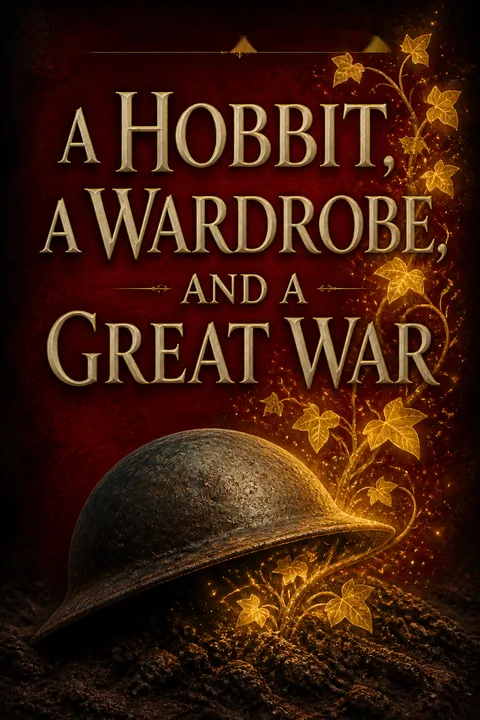
Fantasy with battlefield roots. Joseph Loconte argues that the First World War helped shape the moral imagination of J. R. R. Tolkien and C. S. Lewis. Both served on the Western Front, lost close friends, and carried the war's fear and grief into their writing. The conflict killed more than nine million soldiers and wounded roughly thirty-seven million, while leaving much of Europe physically and spiritually scarred.
A truce, then a catastrophe. The book opens with Christmas 1914, when soldiers along parts of the front spontaneously stopped fighting, sang, and met in No Man's Land. The moment of shared humanity did not end the war. Loconte sees Tolkien and Lewis responding to that contradiction: people can be capable of cruelty and self-sacrifice, and hope must face both facts.
What's striking is the book's refusal to treat imaginative writing as evidence of a sheltered life. Tolkien and Lewis turn the distance of fantasy into a way of examining experiences that ordinary description can struggle to hold. The contrast between the Christmas truce and industrial slaughter also resists a simple story of humanity as either noble or monstrous. The link between war and particular literary choices is persuasive, though it is better understood as influence than as a single cause. Their stories also grew from scholarship, religious conviction, and older literary traditions.
Question progress whenever new tools promise to perfect human nature
A story of inevitable ascent. Loconte calls the prewar faith in steady human improvement the Myth of Progress. Industrial inventions appeared to confirm it, while thinkers such as Herbert Spencer extended evolutionary ideas into claims about society's advancement. Some advocates expected commerce to make war obsolete. Instead, railways and industrial production helped move enormous armies and weapons into battle at unprecedented speed.
Progress applied to people. Eugenics, the effort to improve the population through controlled reproduction, was promoted by prominent scientists and some religious leaders. It supported coercive policies, including compulsory sterilization. Tolkien's suspicion of machinery and Lewis's criticism of progress measured only by duration or efficiency reflect a shared concern: tools designed to enlarge human control can also diminish human dignity.
The useful distinction here is between technical capacity and moral progress. A railway can carry food or soldiers; its moral significance depends on the system directing it. Modern debates about data-driven governance and genetic intervention echo the book's warning that efficiency can disguise decisions about whose lives count. Yet the argument should not collapse science into menace. The deeper target is the belief that technical mastery solves moral problems, especially when experts claim authority to redesign other people without their consent.
Keep faith and patriotism from turning your nation into God
A sacred war story. Christian nationalism is the fusion of religious purpose with national identity. During the First World War, clergy in several countries described their own nation as God's chosen instrument and the conflict as a holy struggle. Such language made military goals sound like divine commands and cast the enemy as evil beyond negotiation. British and American leaders also framed intervention in moral and religious terms.
A more chastened response. Loconte distinguishes just resistance to aggression from the claim that a nation is righteous by definition. Tolkien and Lewis did not portray themselves as holy warriors. Their work allows that force may be needed to defend others, while treating battle as tragic rather than glorious. The Christmas truce offers a counter-image: enemy soldiers could recognize one another's humanity even amid a war their leaders continued.
The danger is not public moral language itself, since injustice sometimes requires collective resistance. It is the removal of limits: once a state claims divine endorsement, compromise can look like betrayal and civilians can disappear behind abstractions. Political theory calls this a problem of accountability, while religious traditions have resources for criticizing rulers as well as supporting them. Loconte's distinction is valuable because it neither excuses aggression nor grants a nation moral purity. It invites readers to ask what a cause protects, and what its methods destroy.
Keep war's mud, corpses, and ruined forests visible in heroic stories
The landscape records the cost. Tolkien reached the Western Front in 1916 and served during the Battle of the Somme. The first day alone left 19,420 British soldiers dead and about 40,000 wounded. Trenches meant mud, disease, lice, shellfire, and bodies left in the open. The conflict also tore up forests and fields, making environmental destruction part of the soldiers' daily experience.
Memory transformed into setting. Tolkien later acknowledged that the Dead Marshes and the approaches to Mordor drew on northern France after the Somme. Lewis's Narnia books, written for children, are less graphic, but their battles still bring injuries, exhaustion, frightened civilians, and bad decisions. Loconte's point is that fantasy can represent war's physical reality without becoming a combat memoir or pretending that victory is painless.
These landscapes do more than create atmosphere. They show how violence outlives the moment of combat, marking soil, memory, and the communities that must return to damaged places. Environmental history helps extend this insight: war is not only a contest between armies, but also a transformation of habitats and livelihoods. The distinction between Tolkien's harsher imagery and Lewis's restraint matters, too. Children's fiction can acknowledge danger without reproducing every horror, though selective depiction always shapes what readers understand about war.
Treat ordinary people's steadfastness as world-changing courage
Small people matter. Tolkien saw courage among the ordinary soldiers and batmen he served beside, many of them working-class privates. He later said Sam Gamgee reflected those men, whom he considered more impressive than himself. The hobbits' small stature makes their moral strength, not physical power, the point. Their choices can affect the fate of entire peoples.
Friendship under fire. Tolkien's school circle, the Tea Club and Barrovian Society, lost members Robert Gilson and Geoffrey Smith to the war. Their deaths sharpened his sense of how fragile friendship was and how much courage could be found in uncelebrated people. In Middle-earth, heroism is not reserved for kings or famous warriors. A loyal companion who keeps going despite fear can matter as much as a commander.
This account shifts heroism from spectacle to reliability. Social psychology often distinguishes status from contribution: groups depend on people whose work is easy to overlook until it is absent. Sam's importance fits that pattern, as does the soldier's duty to maintain communications or care for a companion. The idea also guards against making courage seem like a rare personality trait. Still, celebrating ordinary sacrifice should not erase the institutions that sent ordinary people into needless danger. Admiration for soldiers and scrutiny of command belong together.
Use myth to make reality legible, not to flee it
Myth as a way of knowing. Tolkien used mythopoeia, or the making of mythic worlds, to explore truths about human nature, loss, and moral choice. Lewis initially treated myths as beautiful inventions without factual truth. In their 1931 conversation at Oxford, Tolkien argued that myths could carry fragments of truth, and that Christianity was distinctive because its central story had occurred in history. Lewis later credited the conversation with helping him embrace Christian belief.
Fantasy can clarify. Tolkien's Middle-earth and Lewis's Narnia are not thin disguises for specific historical events. Their invented worlds let readers encounter familiar problems at a revealing distance: temptation, grief, loyalty, and the desire for power. Their stories push back against postwar cynicism without denying suffering. Loconte presents this as a return to reality, not an escape from it.
A story can make an abstract moral conflict emotionally graspable, which is one reason fiction often changes attention before it changes belief. Tolkien and Lewis also show how myth can preserve questions that a culture's fashionable explanations dismiss. But emotional force is not proof that a religious claim is true. The encounter matters as intellectual history and as a turning point in Lewis's life, while readers can still disagree about its theological conclusion. The broader lesson is that imaginative form can open inquiry rather than settle it.
Distrust power that claims clean motives and unlimited control
Good intentions can be recruited. The Ring in Tolkien's story promises strength against Sauron, but using it would extend the same domination it was meant to defeat. Boromir thinks noble motives can control it; Saruman believes he can cooperate with rising evil and later steer it. Both misunderstand how power reshapes its user. Lewis dramatizes similar compromises in characters tempted by status or pleasure.
Responsibility remains personal. Loconte connects these stories to political projects that justified coercion in the name of progress, including eugenics and authoritarian rule. Tolkien and Lewis resist explanations that erase individual moral choice. Their characters are influenced by circumstance and temptation, yet still answer for what they choose. The danger often begins with a small concession that makes the next one easier.
The Ring is a compact model of institutional capture: a tool created for control does not remain neutral when its use depends on domination. Political ethics calls attention to means as well as ends, because methods can form habits and institutions that survive the original crisis. The argument is strongest when it warns against unchecked power, not when it assumes every exercise of authority is corrupt. Emergencies sometimes require decisive action. The question is whether safeguards, accountability, and respect for persons remain in place.
Build courage with companions, because no serious quest is solitary
Friendship is practiced loyalty. Lewis promised his friend Paddy Moore that he would care for Moore's mother if Moore died. Moore was killed in 1918, and Lewis kept that promise. Tolkien, meanwhile, lost close friends from his school circle. The war made companionship a practical form of care, not simply an agreeable feeling.
Stories preserve the bond. Frodo's journey depends on Sam's loyalty, and the Fellowship brings together people who distrust one another but learn to share danger. At Oxford, Tolkien and Lewis helped sustain each other's work. Lewis encouraged Tolkien to finish The Lord of the Rings, while Tolkien's arguments and friendship helped Lewis reconsider Christianity. Their literary circle, the Inklings, gave members a place to read drafts, challenge one another, and keep working.
The book's account of friendship resembles the idea of a learning community: trust makes criticism bearable, while shared effort gives abstract commitments a test. This applies beyond creative work. People often sustain demanding moral choices through relationships that provide candor, practical help, and a sense of belonging. Yet fellowship can also become an echo chamber if loyalty discourages dissent. The Inklings' value was not merely that members encouraged one another, but that they listened to work still unfinished and offered judgment before it reached the public.
When even Frodo fails, leave room for help beyond human strength
Victory exceeds the hero. At Mount Doom, Frodo cannot bring himself to destroy the Ring. Its power defeats the will that carried it so far. The Ring is destroyed only after Gollum takes it and falls into the fire. Loconte reads the unexpected turn as eucatastrophe, Tolkien's term for a sudden reversal that rescues a story from apparent catastrophe through grace.
Hope does not erase grief. Lewis gives a related pattern in Narnia: Aslan accepts death in Edmund's place, then returns to life. Neither story promises that human effort can build a perfect world or prevent every loss. Instead, both place hope in a gift that the characters cannot manufacture or command. Their endings are consoling, but they do not make the suffering that came before unreal.
This ending challenges the modern appetite for heroes who solve every problem through superior skill. Its alternative is not passivity, since Frodo and his companions still endure immense labor and danger. Rather, it distinguishes effort from control: people can act faithfully without owning the outcome. The theological account of grace will not persuade every reader, but the narrative insight travels further. A meaningful response to catastrophe may depend on help, luck, or solidarity that no individual can claim as a personal achievement.
Analysis
Loconte's central argument is that the Great War supplied Tolkien and Lewis with more than dramatic material. It confronted them with a contradiction: modern societies celebrated reason, science, and moral improvement, yet used advanced organization and technology to kill at industrial scale. Their fiction answers not by denying the horror or by treating war as automatically ennobling, but by restoring a moral vocabulary in which courage, corruption, sacrifice, and mercy remain intelligible.
The book's strongest move is to connect biography with form. Tolkien's battle-scarred landscapes, his esteem for ordinary soldiers, and Lewis's ambivalence toward combat help explain why their fantasy is so often anxious, bodily, and morally complicated. The friendship between the authors also matters as more than a charming anecdote. Their intellectual disagreements and mutual encouragement show how belief and creative work can develop through sustained conversation rather than solitary revelation.
The argument is less conclusive when it treats Christian belief as the uniquely adequate answer to postwar despair. The text establishes that this was the answer Tolkien and Lewis embraced, not that every reader must accept its theological premises. Nor should the catastrophe be reduced to a morality tale about misplaced faith in progress. National rivalry, military planning, imperial interests, and political decisions also shaped the war. Loconte's own account includes these factors, though the spiritual lens remains dominant.
That lens still yields a useful test for public life: does a proposed improvement enlarge human dignity, or make some people easier to manage as instruments? The book's answer is expressed through small, fallible characters rather than perfect champions. Its enduring claim is that realism need not end in cynicism, and hope need not pretend that human beings can save themselves by power alone.
Review Summary
Reviews of A Hobbit, a Wardrobe, and a Great War are generally positive, averaging 4.08 out of 5. Many readers praise its fascinating exploration of how WWI shaped Tolkien and Lewis's masterpieces, highlighting vivid historical context and moving literary connections. However, critics note the book's over-reliance on speculation, repetition, and a perceived religious bias that may alienate non-Christian readers. Some feel there is insufficient depth about the authors' personal experiences and friendship. Most recommend it, particularly to those unfamiliar with Lewis and Tolkien's wartime backgrounds.
People Also Read

Glossary
Myth of Progress
Belief in inevitable human improvementLoconte's name for the prewar cultural conviction that civilization, morality, and human nature were steadily advancing toward improvement or even perfection. Scientific and industrial achievements seemed to confirm the belief. In the book's account, it also encouraged overconfidence that commerce would prevent war and that scientific methods could redesign society and human beings.
Christian nationalism
Nation joined to religious missionThe fusion of national identity with Christian purpose, so that a state or people is treated as specially chosen by God. Loconte uses the term to describe wartime rhetoric in which governments' political aims acquired sacred authority. This framing could turn national loyalty into religious duty and portray an enemy as an embodiment of evil.
mythopoeia
The making of mythic worldsTolkien's term for the creative making of myths. In Loconte's account, mythmaking is not merely inventing falsehoods or escaping ordinary life. It can express partial truths about human longing, loss, moral conflict, and the divine. Tolkien regarded imaginative creation as a way to reflect, however imperfectly, a reality that human beings did not create.
chronological snobbery
Assuming newer ideas are superiorA phrase associated with Lewis for the assumption that an idea is more credible simply because it is modern, while older beliefs are dismissed as outdated. Owen Barfield challenged Lewis's habit of treating contemporary intellectual fashions as decisive. The challenge encouraged Lewis to assess older religious and philosophical ideas on their arguments rather than their age.
Will to Power
Drive to dominate and controlLoconte uses this term for the recurring human temptation to exploit, command, and control other people. In Tolkien's fiction, the Ring embodies power that seeks domination, even when its user claims benevolent motives. The danger is not limited to openly evil characters: possession of power can reshape intentions and turn a proposed defense into another form of tyranny.
eucatastrophe
Sudden reversal toward joyTolkien's term for a sudden, joyful reversal that turns an apparent catastrophe toward rescue or redemption. It does not mean that suffering was unreal or that characters can guarantee a happy outcome through willpower. In Loconte's reading, Frodo's failure at Mount Doom is followed by an unexpected event that destroys the Ring, revealing hope as a gift beyond the hero's control.
Myth as Fact
A sacred story made historicalThe idea Tolkien presented to Lewis that Christianity resembles myth in its themes of sacrifice, death, and renewal, but differs because its central events are claimed to have occurred in history. Lewis had regarded religious stories as imaginative inventions. This distinction helped him understand how mythic patterns could convey truth without making the Christian story merely one fictional legend among many.
About the Author
Other books by Joseph Loconte
Download PDF
Download EPUB
.epub digital book format is ideal for reading ebooks on phones, tablets, and e-readers.








