

Key Takeaways
Treat Christianity as global from its birth, not Western before it spread.
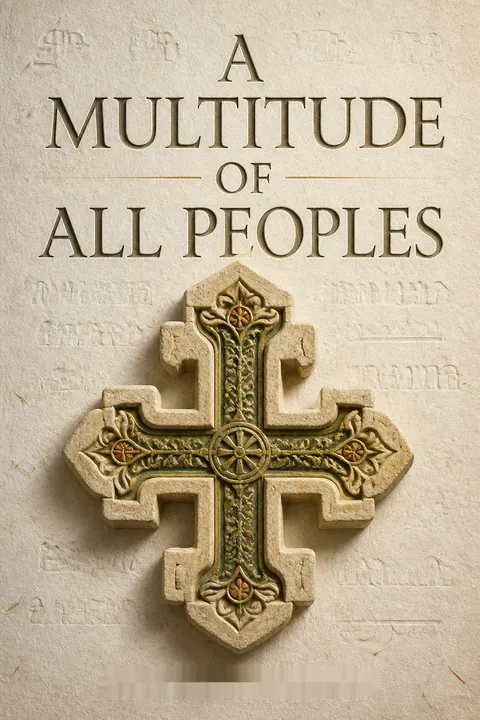
A wider origin story. Christianity began in a Jewish setting in Palestine, then spread in several directions. By the second century, Egyptian Christians were copying biblical and theological texts. By the fourth century, Ethiopia had a Christian ruler, and Syriac-speaking communities had carried the faith into Persia. The book’s central correction is not that Europe had no important Christian history, but that European history is not the whole story of Christianity becoming global. Africa and Asia were not simply late recipients of a religion formed in Europe.
Why the story matters. The familiar timeline can make Christianity seem like a Western cultural possession. That perception has helped make the faith appear alien to people whose communities experienced European Christian power as oppressive. Recovering ancient African and Asian histories offers a more accurate account and a different point of entry.
What's striking is that historical memory functions here as more than a record of the past: it shapes who can imagine belonging in the present. The correction is strongest when it restores neglected evidence without replacing one cultural center with another. Ancient Christianity was not a single, evenly connected global church, and the surviving sources are unevenly distributed. A plural history should therefore resist both the old European monopoly and the tempting counterclaim that one region can stand for all non-Western Christianity.
Watch imperial patronage turn a universal faith into a Roman identity.
Faith and statecraft. Christianity had long used Greek language and ideas, but its identity was not yet synonymous with Rome. That changed under Constantine, who ended persecution, restored church property, and gathered bishops at Nicaea in 325. The council addressed theological disputes, while the emperor also sought a united empire. Eusebius of Caesarea presented Constantine as God’s chosen guardian of the church, strengthening the image of Christianity as a partner of Roman rule.
A borderland cost. Persian Christians could now look like Roman allies to their own rulers. Some did express loyalty to Constantine, while others remained loyal to the Persian shah. During conflict, Persian authorities treated Christian identity as a possible security threat. The shift shows how imperial sponsorship could protect Christians in one territory while making them suspect in another.
The episode resembles a recurring political problem: when a state endorses a religion, it can provide institutions and protection while making religious belonging look like national allegiance. That mechanism helps explain why the same faith can be welcomed by a court and distrusted across a border. Constantine’s motives remain debated, so the transformation should not be reduced to a cynical political scheme. The more defensible point is that imperial power changed the public meaning of Christianity, regardless of the emperor’s private sincerity.
Read Chalcedon as theology entangled with imperial power, not a simple split.
A dispute over Christ. At the Council of Chalcedon in 451, church leaders defined Christ as existing in two natures, divine and human, united in one person. Many Christians in Egypt and, over time, Syria and Armenia rejected that formula. They preferred language describing one united incarnate nature, while insisting that Christ was fully divine and fully human. These Miaphysite Christians saw the council’s wording as dividing Christ; Chalcedonians feared that one-nature language could diminish his humanity.
Power deepened the divide. Byzantine emperors backed Chalcedonian leaders and repeatedly displaced local opponents, particularly under Justinian. Resistance had theological force, but it also grew amid regional rivalries and the imposition of outside authority. The result was not one tidy split between Europe and everyone else. The Persian Church of the East developed a distinct position, while churches in Africa and Asia differed among themselves.
This account avoids two easy reductions: treating the dispute as merely technical theology, or treating it as nationalism wearing theological clothing. The arguments mattered to believers, and imperial appointments shaped who could teach, worship, and lead. Similar disputes today show that specialized language can carry different implications across languages and intellectual traditions. Still, linguistic difference alone does not explain the conflict. The careful reader must hold doctrine, translation, institutional rivalry, and coercion together rather than selecting a single cause.
Egyptian manuscripts, Ethiopian kings, and Nubian churches predate European missions.
African roots run deep. Egypt preserves Christian manuscripts from before 200 CE and had an organized church hierarchy by the late second century. The tradition that Mark founded the church in Alexandria is important to Coptic memory, though its historical details are uncertain. In the fourth century, the Ethiopian ruler Ezana embraced Christianity after Frumentius helped establish a church there. Nubian Christianity developed through contact with Egypt, probably by the fifth or sixth century, and later formed distinctive Christian kingdoms.
Africa was not one church. North Africa produced the early Christian writer Tertullian, the martyr narrative of Perpetua and Felicitas, and the theologian Augustine. Donatist communities, especially in rural areas, disputed the dominant church’s treatment of Christians who had renounced their faith under persecution. These histories show both the antiquity and the internal diversity of African Christianity.
The examples do more than rebut the claim that Christianity arrived in Africa with European colonialism. They show African Christians shaping institutions, theology, and public life in their own settings. The term Africa can itself blur major differences between Egypt, the Nile kingdoms, and Roman North Africa, so the specific places matter. There is also a source problem: elite texts and surviving monuments tell more about some communities than about ordinary believers. The historical correction is essential, but it is not a complete social history.
Recognize Syriac Christianity as a theological center, not a Greek periphery.
A different way to think. Syriac-speaking Christians built communities in places such as Edessa and Nisibis, on the frontier between Roman and Persian power. Ephrem the Syrian, a fourth-century teacher and poet, defended Nicene belief through madrāshe: structured teaching poems intended for communal singing, often in call-and-response. Instead of relying chiefly on fixed philosophical definitions, Ephrem used images from Scripture and the natural world to approach divine mysteries. His style was an indigenous theological practice, not a lesser version of Greek theology.
Distinct traditions endured. The Persian Church of the East developed its own institutions and adapted the Nicene Creed at the Synod of Isaac in 410. Its theology cannot be reduced to the label Nestorian, which the book calls misleading. These histories show that Christian communities outside the Roman center could formulate and sustain their own accounts of doctrine.
Ephrem’s work illustrates that intellectual rigor does not require one universal academic style. Poetry, music, and symbolic interpretation can carry complex arguments while drawing a congregation into them. This insight applies beyond theology: knowledge is shaped by the forms through which a community shares and tests it. Yet celebrating a local mode should not turn it into an untouched alternative to Greek influence. Syriac Christians also borrowed selectively from neighboring traditions, making cultural exchange, rather than purity, the more useful model.
Follow Persian Christian routes from India to China, centuries before colonial missions.
Mission traveled by trade. Syriac-speaking Christians carried the faith east through Persian networks and along the Silk Road. The apostle Thomas’s mission to India is a powerful tradition, but its details are disputed. The presence of Christian communities in India is better documented by the fourth century, including migrants from Persia. In Central Asia, Persian church leaders appointed bishops among the Hephthalites by the sixth century. Merchants and monasteries helped connect scattered communities across vast distances.
China had its own Christian vocabulary. In 635, the Persian Christian Alopen arrived at the Tang court. A monument erected in Xi’an in 781 describes Christianity, called jingjiao, or the illustrious religion, in Chinese terms. Chinese Christian art placed crosses above lotus flowers or clouds, linking Christian symbols with familiar local imagery. These communities later declined under persecution and political change, but their history predates European missions to China.
The Silk Road makes Christianity’s global history concrete: ideas moved through commercial routes, multilingual communities, and political permissions, not just through formal missionary campaigns. The Chinese monument is especially revealing because its local vocabulary challenges the assumption that contextualization began in modern mission work. At the same time, the book notes that many Asian church leaders came from Persia or Sogdiana. Cultural translation can be impressive while leadership remains foreign, a tension that helps explain why contextual language alone may not secure a community’s long-term independence.
Treat Muslim conquest as a turning point, not a Christian consensus.
Local Christians responded differently. After Arab Muslim armies conquered Egypt in the seventh century, the exiled Coptic patriarch Benjamin returned and restored churches. Some Coptic accounts portrayed the conquest as punishment for Byzantine oppression of Miaphysites. That interpretation did not mean Christians generally welcomed Muslim rule: John of Nikiu condemned the new taxes and described fear and violence. Other Christian accounts praised particular Muslim officials who protected churches. The evidence points to changing relationships, not one common Christian response.
The West changed too. As Byzantine power contracted, Frankish rulers increasingly presented their European territories as a Christian empire. Charlemagne’s rule included forced conversions in Saxony, including the execution of thousands of captives who resisted. The book connects this imperial competition with the later habit of treating Western Christianity as the central or normative form of the faith.
The contrast between Coptic accounts and later European political identity underscores how conquest is remembered from different positions of power. A community might condemn one ruler, appreciate another’s protection, and still resist the terms of its subordination. Chronicles are often polemical, however, and cannot be read as transparent reports of what an entire population believed. The broader lesson is methodological: historians should distinguish a writer’s theological explanation from evidence of popular behavior, especially when explaining why an empire rose or fell.
Build Christian belonging through local languages, art, and institutions.
Local forms shaped identity. In Armenia, Mesrop Mashtots created an alphabet in the fifth century so Scripture and Christian teaching could be expressed in Armenian. In Ethiopia, Ge’ez became a language of biblical manuscripts and worship. Nubian Christians developed distinctive church architecture and art, while Chinese Christians used local visual symbols such as the lotus. These were not simply decorative changes. Language, liturgy, and institutions helped communities experience Christianity as part of their own lives.
Autonomy matters. Armenian church leaders built an independent tradition, while Ethiopian Christians resisted a seventeenth-century effort to impose Catholicism through foreign missionaries. These cases show how local forms can support communal continuity. They also caution against assuming that a European style is culturally neutral, or that a community must abandon its language and inherited symbols to become Christian.
Language and art are not superficial packaging. They shape what a community can remember, teach, and pass to children. The Armenian alphabet is a striking case because a religious commitment helped produce a durable literary infrastructure. Still, local ownership should not be confused with uncritical preservation of every custom. The strongest contextualization is neither cultural surrender nor cultural museum-making. It gives a community the resources to interpret its own inheritance, while allowing its beliefs and practices to be examined and changed.
Translate the gospel into culture, while letting it challenge culture.
Two movements belong together. The book draws on Andrew Walls’s indigenizing principle, the idea that Christians receive and express faith through the culture they inhabit, and his pilgrim principle, the reminder that faith can also place believers at odds with their society. Lamin Sanneh’s idea of translation describes communicating the gospel through local languages and frameworks. He contrasts this with diffusion, the transfer of a religious message bundled with foreign cultural assumptions. Together, these ideas reject both cultural erasure and automatic cultural approval.
Culture itself is formed. Bantu calls the process cultural sanctification: allowing the gospel to take root in a community while also reshaping its values and practices. The Jerusalem Council’s decision not to require Gentile converts to adopt Jewish customs offers an early model of belonging without cultural uniformity. The principle is practical: local forms need not be discarded, but they need not be beyond critique.
This framework has an important advantage over the familiar choice between assimilation and relativism. It treats culture as both a resource for understanding and a field of moral discernment. That perspective also resembles good translation: meaning must travel through local idiom, yet no translation is identical to its source. A difficult question remains: who gets to decide which customs require transformation? The answer cannot be an outside missionary alone. It requires accountable conversation within communities, including people whose interests are poorly represented by local authorities.
Let indigenous leaders shape mission, and make outsiders answerable to them.
Support is not control. Bantu argues for strategic indigeneity: outsiders should support local Christian leaders and enter a community only when invited and when their presence can help rather than obstruct. This goes beyond training local people to take over a project designed elsewhere. The book points to the repeated appointment of imperial bishops over local opposition in Egypt and Syria, and to the foreign leadership of many medieval Chinese Christians, as warnings about the limits of outside direction.
Follow local judgment. Paul’s visit to Jerusalem offers a model in which he accepts the direction of James and the local church leaders rather than insisting on his own authority. In contemporary mission, local leaders should guide how teaching, worship, and institutions take shape. Outsiders can contribute resources and relationships, but their role should be defined by the community they hope to serve.
This proposal connects mission with a broader principle of subsidiarity: decisions should be made as close as possible to the people who live with their consequences. It also shifts the test of a mission from the visitor’s intentions to the community’s agency. Local leadership is not automatically representative or free of internal power struggles, so accountability still matters. Strategic support needs transparent expectations, room for dissent, and genuine control over resources. Otherwise, invitation can become a polite word for dependence.
Analysis
The book’s central contribution is not simply to add overlooked African and Asian episodes to a familiar church timeline. It asks readers to reconsider the timeline’s organizing logic: Christianity did not begin as a European possession and then become global. Roman imperial support, the Chalcedonian disputes, and the rise of European Christian kingdoms helped make one strand appear universal, while ancient churches elsewhere were increasingly described as peripheral, foreign, or heretical.
That argument gains force from its varied evidence. Egyptian manuscripts, Ephrem’s Syriac poetry, Ethiopian biblical traditions, Armenian writing, Nubian architecture, and Chinese Christian monuments show different ways communities made the faith their own. The case studies also resist a simplistic opposition between Western and non-Western Christianity. Syriac communities could be marginalized in one context and culturally dominant in another. Christian life under Muslim rule ranged from persecution to cooperation. Disagreements over Christ were sincere theological disputes, even as imperial authority determined which positions received institutional force.
The book’s strongest contemporary implication is that historical recognition and local agency belong together. A community cannot fully claim a faith if it is told that its language, music, or inherited symbols are obstacles to belief. Yet contextualization is not a guarantee of justice or longevity. Nubian Christianity’s decline and the loss of Christian institutions in China had multiple political and social causes; the degree of cultural rootedness alone cannot explain them. Nor does indigenous leadership eliminate hierarchy within a community.
That qualification strengthens rather than weakens the book’s call. Contextualization is best understood as a continuing negotiation, not a checklist of local symbols. It requires historical humility from outsiders, theological discernment among insiders, and institutions that distribute real authority. The result is not a collection of isolated cultural Christianities, but a more accurate picture of a faith whose unity has always been lived through difference. Its history becomes more credible when no single region is permitted to stand for the whole.
Review Summary
A Multitude of All Peoples is praised for its comprehensive exploration of early Christianity's global identity, challenging the notion of Christianity as a Western religion. Readers appreciate Bantu's detailed historical accounts of Christianity in Africa, Asia, and the Middle East, highlighting indigenous expressions of faith. The book is commended for its academic rigor and paradigm-shifting perspective, though some find it dense and challenging to read. Critics note its limited scope and occasional lack of clear connections between historical evidence and conclusions. Overall, it's considered an important contribution to understanding Christianity's diverse roots.
People Also Read







Glossary
Western cultural captivity
Faith framed as WesternThe association of Christianity with Western cultural norms, political power, and historical experience, as though these were the faith’s universal form. Bantu argues that this association obscures Christianity’s ancient African, Middle Eastern, and Asian histories and can make the gospel seem culturally foreign to communities that do not identify with the West.
Miaphysite
One united incarnate natureA Christological position associated especially with the Coptic, Syrian Orthodox, Armenian, and Ethiopian churches. It describes Christ as one united incarnate nature, fully divine and fully human. The term distinguishes these churches from Chalcedonian Christians, who confess Christ in two natures united in one person. It should not be treated as a denial of Christ’s humanity.
Church of the East
Persian-rooted Syriac churchAn ancient Christian communion centered in the Persian Empire, with its own hierarchy, theological tradition, and Syriac liturgy. It developed independently of the Roman imperial church and later sent missions across Central Asia, India, and China. The book cautions against the common label Nestorian, which oversimplifies its history and theology.
madrāshe
Syriac teaching poemsA Syriac literary form used prominently by Ephrem the Syrian. Madrāshe are structured poems intended for singing, often in a communal call-and-response setting. They teach theology through rhythm, imagery, and symbolic interpretation rather than relying only on abstract definitions. Their musical form made theological reflection part of communal worship.
indigenizing principle
Faith takes local formAndrew Walls’s term for the way Christian faith is received and expressed within the culture of a particular community. People do not leave their language, social habits, or inherited ways of making meaning at the church door. The principle explains why Christian traditions take distinct local forms, without implying that every cultural practice must be preserved.
pilgrim principle
Faith critiques local cultureAndrew Walls’s term for the tension between belonging to a culture and following Christian commitments that may challenge it. The principle prevents contextualization from becoming simple endorsement of existing customs. Alongside the indigenizing principle, it describes how Christian communities can both inhabit a culture and question aspects of it.
diffusion
Gospel bundled with foreign cultureLamin Sanneh’s term for spreading Christianity while also transmitting cultural assumptions that are not essential to the gospel. Diffusion differs from translation, which communicates the faith through a community’s own language and cultural frameworks. In Bantu’s account, diffusion can make Christianity appear foreign and weaken local ownership.
strategic indigeneity
Invited, locally led missionBantu’s proposal that outside missionaries primarily support indigenous Christian leaders rather than directing communities from outside. Outsiders should enter a community only when invited and when their participation is likely to be useful. Local leaders should shape contextual theology, worship, and institutions, while outside partners remain accountable to them.
cultural sanctification
Culture formed through faithBantu’s description of the two-way work of contextualized Christian life. The gospel takes shape through local languages, customs, and systems of meaning, while also challenging and transforming cultural values that conflict with Christian commitments. The term rejects both the imposition of a foreign cultural package and the assumption that every local practice is beyond critique.
jingjiao
Tang-era Chinese ChristianityThe Chinese name used for the Christian tradition introduced to Tang China by East Syriac missionaries. Often rendered as the illustrious religion, jingjiao communicated Christian teaching through Chinese concepts and imagery. The Xi’an monument, erected in 781, records the tradition and illustrates how early Christians framed their faith for a Chinese audience.
Download PDF
Download EPUB
.epub digital book format is ideal for reading ebooks on phones, tablets, and e-readers.








