

Key Takeaways
Treat fear as a public-health intervention requiring evidence, limits, and consent.
Fear became policy. Laura Dodsworth’s central question is not whether Covid was real or dangerous, but whether government should deliberately heighten fear to secure compliance. On 22 March 2020, the Scientific Pandemic Influenza Group on Behaviour, or SPI-B, advised that perceived personal threat should be increased among people it considered complacent. The prime minister’s stay-at-home address followed the next day, using stark language about death and danger.
The ethical cost matters. Dodsworth argues that fear can help people respond to genuine threats, but intentional escalation demands scrutiny: Was the message proportionate to people’s actual risk? Were its likely harms considered? Did the public have a say? Her book follows those questions through policy, media, psychology, and first-person accounts.
The strongest framing is to treat communication as an intervention with benefits, risks, and side effects, rather than as a neutral wrapper around policy. That makes proportionality and informed consent relevant even when the goal is public protection. Fear can focus attention and prompt action, but the message may outlast the immediate threat or undermine confidence in future warnings. The key question is not whether officials may communicate urgency, but how they distinguish candid urgency from deliberate exaggeration, and who independently checks that distinction.
Demand context when headlines turn uncertain numbers into imminent catastrophe.
Attention followed alarm. The book begins its media critique with dramatic videos from China, published in British outlets in January 2020. They showed people collapsing and medics in protective suits, but their provenance and authenticity were unclear. Dodsworth argues that such images helped establish an apocalyptic frame before the virus was well understood. Later, repeated death counts, frightening headlines, and ominous graphs kept Covid at the center of public attention.
Missing comparisons distort risk. The book notes that reports often emphasized deaths and hospital admissions while giving less prominence to recoveries, discharges, or deaths from other causes. It cites a survey in which Britons estimated that 6 to 7 percent of the population had died, far above the official death rate at that point. Dodsworth calls this an availability effect: repeated examples become easier to recall and can feel more common than they are.
A reader can separate a story’s emotional force from its evidential weight by asking what is known, what remains uncertain, and which comparison would change the interpretation. That is especially useful when dramatic images arrive before verification. Yet balance does not mean giving every claim equal prominence: a false or unsupported claim should not receive the same status as well-established evidence. The harder task is to report uncertainty without either sensationalizing it or falsely reassuring the audience.
Audit the behavioral cues used to secure compliance, not just the rules.
Influence can be quiet. Nudging is the use of behavioral insights to shape choices without relying on direct orders. The book discusses MINDSPACE, a government-facing framework for considering influences such as who delivers a message, social expectations, attention, and emotional associations. Examples include authoritative spokespeople, slogans, public praise for rule-following, floor markings, and face coverings that visibly signaled danger and group membership.
Purpose changes the ethics. Dodsworth argues that ordinary cues can become troubling when used to make people feel more threatened or ashamed without public debate. The SPI-B advice to increase perceived threat is her clearest example. She also describes the risk of escalating requests: an initial short lockdown can make later restrictions seem like extensions of an accepted first step, even when their costs and rationale have changed.
Behavioral design is not inherently coercive. Clear signs can help people navigate a crowded place, and reminders can support choices they already endorse. The ethical distinction lies in transparency, proportionality, and meaningful alternatives. A useful test is whether people could recognize the influence attempt, understand its purpose, and reasonably refuse it. Without those conditions, a nudge can quietly shift from making a choice easier to steering people toward an outcome they never agreed to pursue.
Separate unequal medical risk from moral blame and blanket messaging.
Risk was uneven. The book emphasizes that Covid’s danger varied substantially by age and health. It cites a World Health Organization analysis reporting a median infection fatality rate of 0.05 percent for people under 70 across the locations studied, while older and medically vulnerable people faced greater danger. Dodsworth argues that public messaging often blurred these differences by presenting the threat as personal and universal.
Guilt had consequences. Campaigns that framed ordinary contact as potentially killing a grandparent could place a heavy burden on children and young adults. Interviews show people shielding for months, fearing the air and other people, or struggling to leave home. A 15-year-old interviewed through her grandmother began self-harming during isolation and felt better after returning to school. These accounts illustrate the human cost of messages that connect compliance with virtue and rule-breaking with blame.
Public messages need to describe both population-level danger and the variation within it. When risk is unequal, one-size-fits-all language can obscure who most needs protection while making everyone feel personally endangered. Moral pressure may also produce shame rather than informed cooperation. At the same time, individual risk is not the only relevant concern: people can take precautions to protect others. Good communication makes that shared responsibility intelligible without assigning children or other groups a crushing sense of personal culpability.
Make every metric auditable before it becomes a policy alarm.
Numbers need definitions. Dodsworth challenges the use of daily deaths, cases, and hospital admissions as self-explanatory measures. She notes that reported deaths could include registration delays, creating sharp day-to-day changes that did not correspond to deaths occurring that day. Hospital admission totals could include patients diagnosed after arrival, not only people admitted because of Covid. Positive tests also did not necessarily establish that someone was ill or infectious.
Models are conditional. The book examines the Imperial College model’s projection of more than 500,000 UK deaths without suppression measures and questions its assumptions and public presentation. Its broader argument is that forecasts should be treated as scenarios, not certainties, and that policy should include other health and economic indicators. Dodsworth disputes the evidence for lockdown effectiveness, a claim that remains contested and should not be confused with the narrower point that metrics require context.
A model is a structured way to explore what could happen under stated assumptions; it is not a photograph of the future. Decision-makers should publish definitions, uncertainty ranges, and the consequences of alternative assumptions, then update the analysis as evidence changes. This does not make modeling useless. It makes its limits visible. The book’s skepticism is a useful prompt for scrutiny, though criticisms of one projection or metric do not, by themselves, establish that a policy had no effect.
Count the harms of restrictions alongside the harms they aim to prevent.
Protection has trade-offs. Dodsworth brings together reported effects of restrictions on mental health, education, medical care, family life, and livelihoods. Interviewees describe anxiety, isolation, delayed appointments, and bereavement without ordinary contact. A hospital doctor recounts a patient whose cancer became inoperable after delayed care, and a woman whose suicide attempt caused irreversible brain damage. The book also cites surveys and estimates of increased depression and disrupted healthcare, though the scale and causes require careful assessment.
Stories reveal what totals miss. A teenager’s self-harm, an older man’s fear of leaving home, and a family unable to visit a care-home relative show how policy reaches intimate daily life. Dodsworth argues that the public accounting of Covid deaths was not matched by equally visible accounting of collateral harms. She calls for quantitative assessment and for listening to the people affected.
Human stories make abstract costs concrete, but they cannot alone show how common an outcome is or prove that one policy caused it. A sound evaluation pairs testimony with reliable population data and compares plausible alternatives, including what might have happened without restrictions. That comparison is difficult during a crisis, but ignoring it does not remove the trade-offs. It simply makes some harms easier to overlook than others.
Make emergency powers expire under law, not merely political reassurance.
Rules need legal clarity. The book describes how emergency restrictions affected movement, worship, education, protest, and family contact. It highlights confusion between government guidance and enforceable law: people were told they must follow rules before the relevant regulations had come into force. Barrister Kirsty Brimelow recounts wrongful arrests and prosecutions, including cases where police treated guidance as law.
Oversight protects everyone. Dodsworth argues that emergency powers require parliamentary scrutiny, proportionality, and clear limits. She describes large fines and provisions allowing detention and testing, as well as concerns that rights were curtailed through executive action. The book does not deny that emergencies can justify temporary restrictions. It asks whether these measures were lawful, necessary, and subject to adequate review, and warns that powers granted in a crisis may be difficult to reclaim.
Emergency law is most defensible when its scope is precise, its duration is limited, and its renewal requires public justification. Clear distinctions between advice and legal obligation also protect citizens and police from arbitrary enforcement. Speed can be necessary, but speed need not eliminate review. A durable democratic response makes it possible to act quickly while preserving ways to challenge mistaken rules and restore ordinary rights once the reasons for exceptional powers have weakened.
Protect dissenting expertise with adversarial review, not public shaming.
Consensus can narrow. Dodsworth describes advisory groups whose members were largely hidden from the public early in the crisis and whose remit could exclude questions about whether a policy worked. She reports that some experts felt dissent was unwelcome, while scientists and doctors who challenged prevailing views faced public criticism or online removal. The book connects this to groupthink, political homogeneity, and weak scrutiny of assumptions.
Challenge should be organized. The proposed remedy is not to dismiss expertise, but to make advice contestable. The book recommends panels with varied disciplines and perspectives, transparent evidence, and structured red-team review, where an independent group tests the case against a policy. This could expose blind spots before advice becomes public policy and give dissent a role in improving decisions rather than treating it as disloyalty.
Expert disagreement is not evidence that all positions are equally sound; it is a reason to make the basis for decisions more inspectable. A well-designed review can distinguish good-faith criticism from unsupported claims while keeping uncertainty on the table. Publicly humiliating dissenters risks turning technical disagreement into identity conflict, where changing one’s mind becomes costly. Structured challenge is therefore not a demand for endless debate. It is a method for finding errors before they harden into institutions.
Investigate suspicious patterns without mistaking suspicion for proof.
Fear invites explanations. Dodsworth compares aspects of the pandemic response with cult induction and coercive control: isolation, repeated messages, unfamiliar rules, shame, and shifting promises of normality. She uses these as interpretive parallels, not as proof that the government deliberately created a cult. The book also explores conspiracy theories through interviews with people who believed the crisis served hidden economic or political agendas.
Opacity deepens mistrust. The author raises questions about apparently rapid grassroots campaigns, government communications, and the promotion of vaccine messages. She sometimes finds circumstantial clues but acknowledges that she cannot establish government orchestration in these cases. Her larger point is that when official explanations are incomplete and requests for information go unanswered, speculation finds room to grow. Claims of covert coordination still require evidence, not just suspicious timing or resemblance.
Analogies can expose patterns that ordinary language conceals, but they can also overstate similarity. A government’s use of fear-based messaging is not equivalent to cult membership or imprisonment, and the distinction matters. The book is most persuasive when it separates documented recommendations from hypotheses about hidden coordination. That separation helps readers take concerns seriously without treating every unexplained event as proof of a single plan.
Demand an independent inquiry before fear becomes the next crisis playbook.
Build safeguards now. Dodsworth calls for an inquiry into how behavioral science was used, alongside a wider review of pandemic planning, media conduct, expert panels, and emergency law. She argues for public consultation on the ethics of behavioral interventions, transparent evidence, and independent challenge to official advice. She also urges readers to reduce exposure to sensational coverage, check sources, and discuss risk with other people rather than letting a single information stream define reality.
Preparation is not panic. The book’s final warning is that temporary responses can become familiar tools. If fear-based communication helped establish a policy, the same techniques may be tempting in a future emergency. The proposed defense is not to reject all authority or public-health guidance, but to demand honesty, proportionality, accountability, and a clear route back to ordinary life.
The lasting contribution is an institutional question: who audits the people and systems that shape public emotion during emergencies? An inquiry should assess both whether communication was accurate and whether it produced the intended behavior, unintended harms, and durable loss of trust. The review should not begin with the assumption that officials acted maliciously or that every restriction failed. Independence matters precisely because conclusions should be able to challenge both comforting narratives and accusatory ones.
Analysis
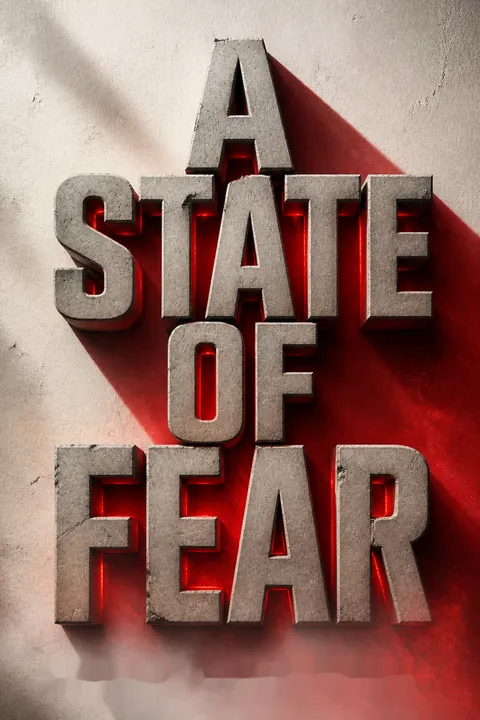
A State of Fear is a 2021 work of investigative journalism, social criticism, and personal testimony. Its organizing claim is that fear was not merely a public reaction to Covid, but also a governing instrument: behavioral advisers recommended heightened threat perception, media coverage amplified danger, and emergency policy constrained ordinary life. Interviews with people affected by isolation and anxiety supply the book’s emotional center, while its historical analogies place the crisis within a longer argument about propaganda, crisis powers, and democratic consent.
The book’s most durable contribution is its insistence that communication itself belongs in policy review. A warning can alter behavior, mental health, trust, and the perceived legitimacy of later measures. That makes transparency, risk calibration, and exit planning substantive public-health concerns, not cosmetic choices. Its reporting also usefully asks whether governments can rely on psychological techniques without public permission or independent ethical oversight.
The work is openly skeptical of lockdowns and often frames ambiguous evidence in support of that position. Readers should therefore distinguish several levels of claim: the documented SPI-B recommendation to heighten perceived threat; the author’s interpretation of particular messages as manipulative; and speculation that some campaigns were covertly coordinated. Those claims do not carry equal evidentiary weight. Personal accounts reveal meaningful experiences but cannot establish their prevalence or isolate causes. Likewise, errors or limitations in individual models and statistics do not prove that all restrictions were ineffective.
The strongest reading is neither automatic endorsement nor dismissal. The book is a case for scrutiny under uncertainty: publish assumptions, invite adversarial review, count competing harms, protect lawful disagreement, and set democratic limits on emergency authority. Its caution is most valuable when paired with the same evidentiary discipline it asks of officials and journalists.
Review Summary
A State of Fear received mixed reviews, with many praising its in-depth research and thought-provoking analysis of the UK government's use of fear during the Covid-19 pandemic. Supporters found it well-researched and eye-opening, while critics argued it was biased and premature. Some readers appreciated the book's examination of psychological manipulation and ethical concerns, while others felt it lacked objectivity. The book sparked discussions about government policies, media influence, and the balance between public health measures and personal freedoms during the pandemic.
People Also Read


Glossary
Scientific Pandemic Influenza Group on Behaviour (SPI-B)
Government behavioral advice groupA UK scientific advisory group that provided behavioral and social-science advice during the Covid-19 response. Its stated role was to advise on how people might respond to recommended interventions and how adherence could be supported. In Dodsworth’s account, SPI-B advised government on behavioral strategy, but did not itself assess whether the medical or epidemiological interventions were effective.
MINDSPACE
Behavioral influence checklistA behavioral-science framework discussed in the book for identifying influences on decisions and actions. It covers factors such as the messenger, social norms, default choices, attention, emotional associations, commitments, and self-image. Dodsworth uses it to show how public messages and environmental cues can shape behavior, while questioning whether such influence is transparent, proportionate, and ethically acceptable.
psychocracy
Rule shaped by psychology expertsDodsworth’s term for a style of policymaking in which psychological expertise strongly shapes public behavior, often through subtle or covert techniques. The term emphasizes that such influence may be difficult for the public to notice, discuss, or refuse. It is the author’s critical label for behavioral influence operating within government, rather than a formal constitutional category.
Biderman's Chart of Coercion
Framework describing coercive tacticsA framework developed from Albert Biderman’s study of coercive interrogation, outlining methods such as isolation, threats, exhaustion, and enforced small demands. Dodsworth compares some pandemic restrictions and communications with elements of the chart. The comparison is an interpretive analogy in the book, not a claim that public-health policy was equivalent to prisoner interrogation.
controlled spontaneity
Staged appearance of grassroots responseA phrase used in the book for planned communications or public gestures designed to appear spontaneous. Dodsworth discusses this idea in relation to government crisis messaging and campaigns that enlist outside groups or prominent figures. She raises questions about whether some pandemic-era initiatives received hidden official support, while acknowledging that particular cases remain unproven.
About the Author
Other books by Laura Dodsworth

Download PDF
Download EPUB
.epub digital book format is ideal for reading ebooks on phones, tablets, and e-readers.








