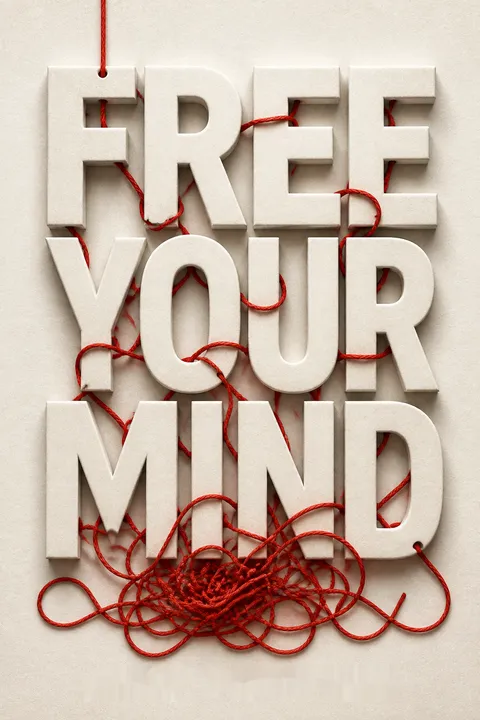


Key Takeaways
Treat your attention as contested territory, not an unlimited resource
Attention has limits. The book casts modern life as a contest for your mind, not because every message is sinister, but because advertisers, institutions, politicians, and people close to you all try to shape what you notice and do. The authors cite estimates that Americans took in the equivalent of 174 newspapers of information a day in 2007, while only a small fraction of sensory information reaches conscious thought.
Notice the pressure. In interrogation training, a soldier named James kept track of tactics and time to preserve a sense of control. Ordinary life is less extreme, but the practical lesson carries over: recognize when a message is competing for your attention, then decide whether it deserves it.
The battlefield metaphor is memorable because it makes attention feel valuable and finite. It also risks turning ordinary communication into a threat. Influence is part of teaching, friendship, and public life, not automatically an attack on autonomy. A useful test is to ask whether the message is transparent, whether refusal is genuinely possible, and whose interests it serves. The authors apply this scrutiny to their own book, admitting that it too aims to influence readers. That honesty offers a better starting point than the impossible goal of being untouched by influence.
Spot the small yes before it becomes a much larger commitment
Small steps accumulate. The authors describe farmers luring wild hogs into a corral by first scattering bait nearby, then gradually moving it inside. The animals become comfortable with each step before the gate closes. Human persuasion can work similarly. In a classic experiment discussed in the book, people who first agreed to a small request were more likely to accept a larger one later.
Track the sequence. The term radical incrementalism describes how a series of modest changes can add up to a substantial shift. Salespeople, campaigners, and institutions may ask for an easy first commitment, then build on it. The authors apply this pattern to public policy, while acknowledging that a sequence of changes does not, by itself, prove deliberate manipulation.
The key skill is noticing the path, not assuming every gradual change conceals a trap. A small request can be a reasonable first step, and policies often evolve through debate, new evidence, or practical necessity. The book's strongest advice is procedural: pause when one commitment seems to make the next feel automatic. Ask what the original choice was, what has changed, and whether the next step still deserves a fresh decision. That preserves the insight without treating every policy shift as a coordinated plan.
Learn persuasion tactics before pressure turns recognition into an argument
Name the technique. Familiarity with common appeals can make them easier to spot. A hotel booking page might suggest that many people have booked the room, imply that only one deal remains, and display authority badges and customer praise. Each cue can add urgency or trust without proving that the offer suits you.
Rehearse before the pitch. Pre-bunking means encountering a weakened or general example of a misleading tactic before facing it in a real situation. In studies described by the authors, short videos explaining online manipulation techniques made viewers less likely to trust or share some misleading posts. A banking intervention that warned customers about fraud reportedly reduced the share falling for it from 22 percent to 10 percent. Ask where a claim comes from, what is missing, and how it makes you feel.
Preparation is more useful than trying to fact-check every message in real time. The book is especially persuasive when it recommends learning techniques, such as urgency cues or social proof, rather than memorizing a list of approved conclusions. That distinction matters because pre-bunking can itself become persuasion if it teaches people to distrust only one side. A durable form of media literacy asks how a message works, then checks its evidence and source, including sources that seem trustworthy or ideologically familiar.
Use intelligence to test your beliefs, not merely defend them
Smart minds rationalize. In the Cottingley Fairies hoax, two girls used cut-out images to make photographs of fairies. Arthur Conan Doyle, the celebrated creator of Sherlock Holmes, accepted them as evidence and used elaborate reasoning to support his belief. The book calls the gap between intelligence and sound judgment dysrationalia: a person can reason well in general and still reach irrational conclusions.
Put certainty on trial. In a study described by the authors, researchers secretly replaced some participants' survey answers with opposing answers. About half then confidently explained why they had chosen views they had never selected. The authors recommend pairing analysis with awareness of emotion, humility, and willingness to reconsider. A strong argument can explain a belief without proving that the belief is true.
Reasoning is not only a search for truth; it can also serve identity, belonging, and emotional needs. That makes self-scrutiny more valuable than simply acquiring more facts. A useful question is not just, 'Can this position be defended?' but, 'What would change my mind?' Gut feelings can help flag discomfort or danger, but they are not reliable verdicts. The book's best counsel is to treat both intuition and analysis as fallible inputs, then compare them with evidence and perspectives that challenge one's preferred answer.
Notice how images, symbols, and settings steer feeling before argument
Design shapes experience. The book describes casinos built to keep visitors absorbed: clocks and windows are scarce, winning sounds draw attention, and comfortable surroundings make it easy to stay. Retailers likewise use scents and music to create associations with a brand. A cake-mix story illustrates symbolic persuasion: requiring the cook to add eggs gave users a sense of personal contribution, not just a quick product.
Give images context. The authors cite a memory study in which participants recognized 98 percent of pictures, compared with 90 percent of words. Images can make an event vivid while leaving out what happened before or after it. Reading, writing down a claim, and taking time to compare sources provide more room to inspect that missing context.
The important distinction is between a message's explicit claim and the feelings its presentation invites. A scent, logo, soundtrack, or photograph can make an idea easier to remember without making it more accurate. Yet sensory communication is not inherently deceptive: images can make information accessible, and setting can support reflection as well as sales. The practical question is not whether a message uses design, since all communication does, but whether its emotional force is being mistaken for evidence.
Treat repeated sexual media as a force that can train desire
Repetition can shape association. The authors examine how sex has been used in propaganda and psychological operations, and argue that sexual arousal can weaken ordinary inhibitions while rewarding whatever cues accompany it. They cite an experiment in which men who repeatedly saw boots alongside erotic images later showed arousal to boots alone. This illustrates how a preference can be conditioned, though it does not establish that pornography has the same effect on everyone.
Judge the effect in your own life. The book presents personal accounts of porn use affecting body image, relationships, and sexual function, but also notes that research on harms and benefits is contested. Its practical concern is whether repeated viewing feels compulsive or conflicts with a person's wellbeing, expectations, or consent. The claim is about possible influence, not a universal rule about sexuality.
This chapter is strongest when it treats media as an environment that can reinforce associations, rather than as a simple cause of behavior. Personal testimony can identify questions worth studying, but it cannot establish how common an effect is or what caused it. Sexual expression also varies widely. A careful reader can take the possibility of conditioning seriously without assuming that all pornography is harmful, that abstinence is a cure, or that a person's identity can be inferred from the material they view.
Delay important choices when hunger, anxiety, loneliness, or fatigue distort judgment
Vulnerability has a timing. The book uses the term blip for a disruption that weakens ordinary judgment, whether a passing spell of exhaustion or a major life change. Its practical check is HALT: hungry, angry or anxious, lonely, and tired. A person who is grieving, frightened, or sleep-deprived may be more open to pressure or quick relief.
Create a pause. The authors recount how US forces used loud music and disruption to pressure Panama's Manuel Noriega into surrendering after he took refuge in a Vatican embassy. In a less extreme example, Darren, a cancer patient, describes how pandemic warnings intensified his fear of leaving home. The book also calls self-haunting the way people complete frightening stories from suggestive fragments. Eat, rest, seek perspective, and postpone high-stakes decisions when possible.
HALT is useful because it turns a vague warning about vulnerability into a quick check of physical and emotional state. It does not imply that someone in distress is irrational or that a danger is imaginary. Fear may be proportionate to real risk, while repeated alarming messages can still intensify it. The skill is to separate the underlying problem from the pressure to respond immediately. Slowing down creates space to seek reliable information, support, and a decision that fits the actual stakes.
Treat your feed as an editor, not a window onto reality
Platforms shape visibility. Social media feeds and search results are arranged by systems that predict what users will notice or engage with. The book describes how this can amplify emotional or divisive material, obscure other content, and build a detailed picture from ordinary digital activity. It cites research in which a small number of social media likes helped predict personality, illustrating how seemingly trivial actions can reveal patterns.
Make the stream less revealing. The authors suggest sharing less personal information, engaging more selectively, using chronological feeds where available, and comparing search results across services. They also discuss government messaging, online bots, and the fictional Ghost of Kyiv, a wartime hero later acknowledged by Ukrainian officials as a collective legend. No single source, official or unofficial, should be treated as infallible.
The feed is not a neutral window because ranking determines what becomes visible, but an observed outcome does not prove a hidden motive. Commercial incentives, design choices, political preferences, and mistakes can all shape what appears. The reader's task is to distinguish the effect from an explanation of intent. This chapter's most durable recommendation is modest: diversify sources and understand the interface. Blanket suspicion can be as distorting as blanket trust, especially when a claim cannot be checked against independent evidence.
Question the menu before choosing from its limited options
Options are designed. Choice architecture is the way options are arranged and presented, which can make one feel easier, more normal, or more urgent than another. A magician can steer a spectator toward a particular choice while preserving the feeling of freedom. In the book, an exercise asks readers to select a number, with 37 as the intended result. Everyday versions include default settings, a sales offer framed as two alternatives, or a website that makes refusal harder than acceptance.
Look beyond the screen. Before choosing, ask which options are missing, whether waiting is possible, and whether declining is allowed. The authors warn that a formal option to opt out does not always mean that refusal is clear or easy. Their point is not that every choice is fake, but that the menu can shape the decision before the decision feels like yours.
Freedom is not measured only by the number of options on display. The ease of finding, understanding, and rejecting them matters too. This insight applies to websites and sales, but also to public policy: no arrangement of choices is perfectly neutral, and some defaults can help people avoid costly mistakes. The sensible standard is transparency and reversibility. When an option is difficult to find or costly to refuse, the person should have reason to ask who designed the menu and why.
Speak early when a group is wrong, before silence becomes consensus
Silence can mislead. In Hans Christian Andersen's story, courtiers pretend an emperor's imaginary clothes are real because they fear looking foolish. A child says what everyone can see, and the crowd follows. The book connects the story to Solomon Asch's line experiments, in which people sometimes gave an obviously incorrect answer to match a group. People conform both because they assume others know better and because they want to belong.
Make disagreement possible. A first dissenting voice can help others express doubts they already hold. The authors recommend practicing independence, noticing fear of exclusion, and speaking when evidence or principle demands it. But being the first to object does not make someone correct. The point is to keep a group capable of testing its assumptions instead of treating apparent agreement as proof.
Dissent is valuable not because outsiders are automatically wiser, but because groups can confuse social agreement with independent confirmation. A dissenting voice can reveal information that others have withheld, and can help a group notice a mistaken assumption. At the same time, disagreement can spread errors as well as correct them. The best protection is a norm that welcomes challenge and requires reasons from everyone, including the dissenter. Courage opens the discussion; evidence still has to settle the question.
Choose durable commitments before a crisis sells you belonging
Belonging fills a need. Drawing on Ernest Becker and other thinkers, the book argues that fear, loneliness, and awareness of death can make people seek security in groups, ideologies, or leaders. A strong sense of purpose may reduce the pull of movements that promise instant certainty. The authors point to family, work, faith, creative pursuits, and community as possible anchors, rather than prescribing one acceptable source of meaning.
Make room for reflection. In one personal account, Laura spends a day away from social media at a convent. The silence brings sadness and tiredness to the surface, but also helps her notice what she wants to give more attention to. The lesson is to know what matters before urgency, fashion, or a powerful group supplies an answer. Chosen commitments can steady judgment without requiring isolation.
The argument connects psychological resilience with a positive source of meaning, rather than relying on suspicion alone. That is important: refusing every influence can leave a person lonely and directionless, which may make belonging more tempting, not less. Yet a commitment can become a shield against criticism if it is treated as unquestionable. Durable values are most useful when they are strong enough to guide action and open enough to be examined. Independence does not mean having no ties; it means choosing ties with awareness.
Analysis
Free Your Mind works as a practical field guide built around a striking paradox: people cannot avoid influence, but they can become more deliberate about which influences they accept. Its strongest insights concern ordinary mechanisms that readers can observe directly: incremental requests, attention-grabbing design, social conformity, emotional vulnerability, and the way interfaces arrange choices. The book's best advice is procedural rather than ideological. Slow down, notice the appeal being made, identify what is omitted, and decide when calm.
Its evidence, however, varies considerably in strength. Controlled experiments, historical episodes, interviews, and speculation about institutional motives do not support identical conclusions. The book sometimes moves from showing that influence is possible to implying that a specific social change is the result of intentional coordination. Those are different claims. Algorithmic ranking can shape visibility without proving a unified political purpose, and a sequence of policy changes can arise through adaptation as well as strategy. Readers should preserve the distinction between documented technique, plausible interpretation, and conjecture.
The same caution applies to the authors' immersive case studies. A brief experience on an online forum may expose persuasive dynamics within that forum, but it cannot establish why people across a population adopt an identity or how representative a particular community is. The book is most useful when its examples prompt questions rather than settle them.
Its central contribution is therefore not a promise of immunity. It is a shift from asking whether one is influenced to asking how, by whom, under what conditions, and with what opportunity to refuse. That framework supports personal habits such as digital restraint and delayed decisions, while also pointing toward public standards of transparency and accountability. The reader can learn to resist manipulation without treating every institution as an enemy or every disagreement as proof of a hidden hand.
Review Summary
Free Your Mind explores manipulation techniques used by governments, media, and corporations. Readers found it insightful but controversial, praising its analysis of propaganda and mind control while criticizing its biases on topics like COVID-19 and gender identity. Some appreciated the practical advice for resisting manipulation, while others felt it contradicted itself or pushed its own agenda. The book's comprehensive coverage of psychological tactics and emphasis on critical thinking resonated with many, though its political leanings and handling of sensitive topics polarized opinions.
People Also Read






Glossary
cognitive misers
limited conscious attentionA term for the human tendency to conserve mental effort by relying on shortcuts rather than carefully evaluating every choice. The book uses it to explain why people cannot consciously process all the information around them and may be influenced by repetition, social cues, or the way options are presented.
radical incrementalism
small changes that accumulateA label used in the book for the cumulative effect of modest, gradual changes. Each step may seem acceptable by itself, while the sequence produces a much larger shift. The term is associated in the book with behavioral policy, but gradual change alone does not establish that a coordinated persuasion plan exists.
persuasion knowledge model
recognizing persuasion attemptsA model of how people learn about persuasion tactics, recognize when someone is trying to influence them, and use that knowledge to respond. For example, noticing a salesperson's artificial deadline may make a customer more skeptical and more likely to compare alternatives before deciding.
pre-bunking
practicing resistance in advanceA preventive approach that exposes people to a weakened example of a misleading argument or tactic before they encounter a stronger version. The aim is to help them recognize the technique and respond more critically. The book notes that focusing on general tactics can reduce reliance on contested judgments about which specific claims are false.
MINDSPACE
behavioral policy influencesA UK public-policy framework discussed in the book that organizes psychological factors that can affect behavior. It includes social cues, incentives, defaults, attention, emotion, commitments, and identity. The framework is used to design communications and interventions, making it relevant both as a guide to behavior change and as a prompt to ask who chose the intervention's goal.
HALT
a vulnerability checkAn acronym for hungry, angry or anxious, lonely, and tired. Used in recovery settings and presented in the book as a quick check before important decisions. These states can make a person more vulnerable to impulse, pressure, or the promise of immediate relief, so postponing a consequential choice may help.
self-haunting
completing a frightening storyThe process of filling gaps in a message with one's own fears, memories, and assumptions. A communicator may supply suggestive fragments, while the audience constructs the alarming conclusion. The book uses the term to explain how people can intensify a message's emotional effect without being given a fully explicit claim.
choice architecture
the arrangement of optionsThe way available choices are organized and presented. Order, defaults, visibility, and the effort required to refuse or switch options can influence what people select. The concept helps explain how a person may retain a formal choice while the surrounding design makes one answer substantially easier or more likely.
temporary autonomous zone
a space beyond ordinary rulesA concept discussed in the book for a temporary setting in which familiar structures and constraints seem suspended. The authors apply it to some online and ritualized environments, where imagination and symbols can feel more powerful than ordinary physical reality. The term is not presented as a clinical diagnosis.
dysrationalia
intelligence without sound judgmentA term used in the book for the gap between having adequate intelligence and reasoning well in a particular situation. A person may be highly capable yet still accept implausible claims, overlook bias, or use reasoning to defend a preferred conclusion. The term underscores that intelligence alone does not guarantee good judgment.
mass formation
intense group identificationA theory discussed in the book that describes people becoming strongly attached to a shared group narrative, with dissent treated as threatening and collective purpose experienced as relief from isolation or anxiety. The authors connect the idea to social upheaval and group behavior. It is an interpretive framework, not a settled explanation for every mass movement.
About the Author
Other books by Laura Dodsworth


Download PDF
Download EPUB
.epub digital book format is ideal for reading ebooks on phones, tablets, and e-readers.








