


Plot Summary
Prologue
An unnamed speaker remembers a time before the world was broken, when God, the speaker, and others existed together. God’s moods found expression in a mysterious Book, until one furious act shattered the world into separate fragments.
The speaker hated the Book without yet understanding the bond connecting them to it, and loved God despite his cruelty and indifference. The account offers no names or explanation of what the Book contains. It begins instead with a personal wound and a catastrophe whose consequences shape the world Ophelia is about to enter.
The fragment frames the fantasy’s history as both cosmic disaster and intimate betrayal. The speaker’s love for God survives alongside disgust at the Book, making affection and mistrust coexist from the opening page. The Book is not merely an artifact: it is tied to authorship, power, and a relationship the speaker does not yet comprehend. The world’s fragmentation therefore feels less like neutral lore than the aftermath of an act of creation gone wrong. Because the speaker withholds their identity and knowledge, the prologue turns the novel’s mysteries into part of its structure.
The Doyennes' Winter Betrothal
Ophelia, a quiet museum curator on the ark of Anima, visits her great-uncle in the Family Archives after learning that the Doyennes have arranged her marriage to a man from the distant Pole. She has never met him, and her mother knows little beyond the match being politically approved.
Her great-uncle warns that the Pole’s Dragon clan is feared and violent, but Ophelia asks for historical records rather than help resisting the engagement.
In the sealed lower archive, she studies an old register of survivors from the world’s Rupture and finds courage in the fact that they rebuilt their lives after catastrophe. She also encounters an unreadable Book that resists her gift for reading objects, then leaves the Archives resolved to face the unknown.
Ophelia’s response to coercion is neither instant rebellion nor passive consent. She seeks evidence, then borrows resolve from the records of people who survived a world-ending rupture. That choice establishes her characteristic method: she steadies herself by observing what others leave behind. Her museum work also gives her an identity separate from family expectations, making the threatened loss of that work concrete rather than symbolic. The unreadable Book quietly links her private expertise to the larger mystery, while its refusal to yield complicates the assumption that careful attention can explain everything.
A Promise at the Observatory
Ophelia’s fiancé arrives at Anima in a storm, dressed in animal furs and more interested in reaching the family spirit than greeting his future bride. The family’s crowded welcome ends with Ophelia colliding with the towering stranger, Thorn.
He orders the carriage to Artemis’s observatory, where he presents a sealed casket sent by Farouk, the Pole’s family spirit. Artemis accepts it and formally acknowledges the alliance between the two arks. Ophelia’s mother objects to Thorn’s treatment of her, but the Doyenne makes clear that neither family can withdraw without causing a diplomatic crisis.
When Ophelia asks why she was selected, the Doyenne warns that failure could mean permanent exile from Anima. The marriage is no longer a rumor or arrangement: it is a binding political obligation.
The meeting makes the imbalance of the engagement visible. Thorn and Ophelia are both trapped by family duty, but he moves through the scene with institutional authority while she is hurried from one decision to the next. The casket functions as an opaque contract: its contents are unknown, yet its acceptance has immediate political force. The Doyenne’s threat converts family belonging into leverage, sharpening Ophelia’s fear of losing her only home. Her growing resolve is therefore not simply courage against a rude suitor; it is a response to a system that treats her consent as expendable.
The Airship Leaves Anima
Thorn announces that he and Ophelia must leave Anima that very day, before her younger siblings return from school. Ophelia objects only faintly, then packs while her family scrambles to accommodate the sudden departure.
Her great-uncle reminds her that mirror travel cannot bridge the void between arks and urges her to trust her own resilience. On the airship, Ophelia’s chaperone, Aunt Rosaline, criticizes her airsickness and insists that the family’s honor depends on her conduct.
Ophelia instead studies the maps and watches Anima vanish behind clouds, realizing how small a home looks from outside. When she reads a medal for the ship’s first mate, she uncovers its unromantic history and embarrasses him. Thorn stays distant, but his warnings about the Pole begin to sound less like bluster.
The rushed departure strips Ophelia of the ordinary rituals that might have helped her accept change. Her family’s hurried preparations cannot replace the goodbye she misses, and the vanished ark makes separation visible as geography. Yet she immediately resumes her own practice of looking closely: the medal’s history punctures the polished story its owner preferred. That act is a small assertion of professional ethics in an unfamiliar setting. Aunt Rosaline’s concern with appearances contrasts with Ophelia’s interest in facts, while Thorn’s warning leaves uncertainty rather than comfort. The journey begins by making her both displaced and observant.
A Citadel Above the Snow
The airship lands in a snowstorm, and Ophelia nearly falls from the gangway before a sleigh carries her through the dark. Thorn takes her and Aunt Rosaline to a gamekeeper’s lodge, then drives them across the frozen landscape toward the Citaceleste, a city suspended above the forest.
He insists that they enter by hidden routes and keeps their arrival from the public. At his aunt Berenilde’s estate, Ophelia finds an artificial summer garden concealing the cold, shabby city beyond it. Berenilde welcomes her warmly, but Thorn explains that the women must pose as foreign companions rather than announce the marriage.
Over dinner, Berenilde reveals the Pole’s rival clans and the danger attached to Thorn’s position. Ophelia realizes that the beautiful estate is a refuge, not a home, and that someone may be trying to kill them.
The journey from blizzard to manufactured summer introduces the Pole as a place where protection and deception are difficult to separate. Thorn’s secrecy initially looks like contempt, but the hidden route and Berenilde’s account recast it as a survival measure. Ophelia has little information and must judge people by partial evidence, a condition that will recur throughout the court. The artificial garden also sharpens her outsider’s perspective: where others accept the illusion, she notices what does not fit. Her first lesson in the Pole is that appearances are not simply decorative. They control movement, safety, and knowledge.
The Mirage in the Garden
After Thorn leaves for his work as the Pole’s treasurer, Ophelia explores Berenilde’s estate and discovers that the garden is an illusion. She slips out through a door she has gradually coaxed open, determined to see the real Citaceleste for herself.
Lost in the foggy streets, she wanders into a masked ball and catches the attention of Archibald, the Mirage ambassador. He recognizes her as Thorn’s fiancée, though she invents a cousin’s identity to conceal herself. Archibald takes her to an illusory summer garden and admits that he had hoped to seduce Thorn’s bride for amusement and political provocation.
Ophelia rebukes his vanity and learns that Mirages can impose thoughts on others. On the way back, Thorn’s half-sister Freya finds her, strikes her with invisible force, and warns her against marrying Thorn.
Ophelia’s escape is an attempt to reclaim agency through direct experience, but it exposes how little control she has over the risks around her. Archibald’s charm is dangerous precisely because he is candid about treating other people as entertainment. Ophelia’s refusal to flatter him marks a moral instinct that survives intimidation, even while she is forced to lie about herself. Freya’s attack makes the marriage’s political cost bodily: Ophelia is punished for belonging to a relationship she did not choose. Her curiosity has not been a mistake, but she now understands that knowledge in this court can be purchased with injury.
A Servant's Borrowed Face
After Freya injures Ophelia, Thorn and Berenilde restrict her movements to keep her out of reach of the Dragons and the Mirages. Berenilde trains her in courtly behavior, sometimes using her invisible claws to punish mistakes, while Thorn cautiously explains the clans’ powers and his own illegitimate position among the Dragons.
Their guarded conversations show Ophelia that he is more than a brutal stranger, but neither reveals the marriage’s full purpose. When Archibald orders Berenilde to stay at his embassy so Thorn can return to the Treasury, Berenilde disguises Ophelia as a mute male valet named Mime.
Aunt Rosaline becomes a lady’s companion, and Berenilde’s elderly mother joins them. At Clairdelune, Ophelia meets Fox, a valet who explains the servants’ hierarchy and the sandglasses they earn as leisure tokens.
The disguise gives Ophelia access to a new social layer, but it also makes her body and voice instruments of concealment. She is required to perform an identity that denies her actual expertise and gender, even as the servant corridors reveal how the court runs. Fox’s practical explanations contrast with aristocratic evasions, offering knowledge without prestige. Berenilde’s instruction is similarly double-edged: she protects Ophelia while disciplining her, making care hard to distinguish from control. The false face becomes a useful vantage point, but it cannot make Ophelia safe or erase the cost of being hidden.
Farouk's Unreadable Book
At Clairdelune, Ophelia adapts to a castle whose rooms and corridors shift through the architect Hildegarde’s manipulation of space. While seeking a book for Berenilde, she discovers Archibald examining a convincing copy of the strange Book she saw in Artemis’s archive.
He wants the family spirit Farouk’s Book deciphered, and mentions a female rival who may reach it first. Ophelia recognizes the object’s skinlike material and understands that the Book is not unique to Anima. Later, Thorn summons her to the Treasury after her family’s telegram reveals that their letters have been intercepted.
Ophelia reads the telegram and confirms Thorn did not steal the correspondence. He then explains that their wedding includes a Gift ceremony that will join their powers, a fact he had withheld. Ophelia questions the trust between them and leaves without resolving it.
The Book turns Ophelia’s specialized skill into a resource other people want to control. Her discovery that Farouk’s copy resembles Artemis’s links the political marriage to the unreadable object introduced in the archive. At the same time, the missing letters show how information itself is vulnerable to the court’s systems. Thorn’s disclosure of the Gift comes too late to feel like partnership; he tells her what the marriage will do without first asking what she wants. Ophelia’s suspicion is not mere temperament. It is a rational response to being treated as a future instrument while crucial facts are withheld.
The Orange Basket
At Madam Frida’s funeral, Gail, a mechanic, asks Ophelia to deliver oranges to Hildegarde. Before Ophelia can explain the errand, Hildegarde collapses and her hand swells black. The crowd accuses Mime of poisoning her, and the police beat Ophelia before locking her in Clairdelune’s dungeons.
The corrupt head butler Gustave visits and offers protection in exchange for a future favor: Ophelia must ensure Berenilde loses her baby before the Spring Opera. Ophelia cannot refuse before he leaves.
Hildegarde then sends a statement taking responsibility for the incident and claiming an allergic reaction, which secures Ophelia’s release. The accusation is dismissed without a real inquiry, and Ophelia returns battered and unsure who is safe. She knows the orange basket was deliberately poisoned, but not yet who arranged it or why.
The orange basket turns a seemingly modest errand into a test of how quickly the court converts suspicion into punishment. Ophelia is denied a hearing because the servant’s identity carries little weight, and Gustave exploits that vulnerability by attaching a private threat to her survival. Hildegarde’s statement frees her, but the convenient explanation leaves the underlying danger intact. This episode exposes the gap between formal rules and actual protection: the embassy forbids murder, yet its officers can beat and imprison a person without evidence. Ophelia leaves the dungeon alive, but now understands that innocence alone offers no defense.
Trust Bought in the Treasury
Ophelia visits Thorn in the Treasury and tells him that his grandmother poisoned Hildegarde’s oranges to frame her. She also reveals Gustave’s demand that she cause Berenilde to miscarry. Thorn believes her, explaining that his grandmother once tried to kill him as an infant and that he will remove her from the city.
He also promises to deal with Gustave through the courts. Ophelia is shaken by the violence of Thorn’s childhood and by the fact that he takes her accusation seriously, despite his earlier insistence that she trust only Berenilde.
She tells him she trusts him now. Back at her room, however, the Knight appears and threatens to harm Berenilde’s baby unless Ophelia fulfills Gustave’s demand. He reveals that he has read her letters and knows Mime’s identity, then erases her memory of their meeting.
Trust becomes an action rather than a feeling when Ophelia brings Thorn evidence that implicates his own family. His belief gives her a rare experience of being taken seriously, while his account of childhood makes his hostility toward his grandmother intelligible without excusing his secrecy. The Knight’s intervention immediately destabilizes that fragile security. His power lets him attack not only bodies but the continuity of memory, removing Ophelia’s ability to explain what has happened. The plot therefore makes trust structurally difficult: even a truthful exchange can be erased from the person who needs to remember it.
The Dragons at the Opera
Gustave is found dead before the Spring Opera, officially disgraced by evidence of corruption, and Ophelia returns to duty with Fox’s gift of a day-off sandglass. The Dragons arrive at Clairdelune while Berenilde prepares to sing.
Their patriarch, Father Vladimir, insists that she join the next day’s dangerous Beast hunt, despite her pregnancy, and threatens Thorn for claiming a place among the family. Freya and her husband treat Thorn’s position as a threat to their children’s inheritance. At the opera, Ophelia watches Farouk respond to Berenilde’s performance, while Thorn sits nearby in the box of honor.
Ophelia forgets her prop and draws laughter from the audience, but Berenilde recovers smoothly. During the act, Aunt Rosaline becomes trapped in confused memories, leaving Ophelia to abandon the performance and seek help.
The Dragons’ visit reveals the family’s central contradiction: they claim honor through tradition while using that tradition to pressure a pregnant woman and exclude Thorn. Their threat makes the coming hunt more than a ritual. It is a political demonstration of who counts as kin. At the opera, Berenilde’s command of performance contrasts with Ophelia’s visible awkwardness, but Ophelia’s attention shifts quickly from public embarrassment to Rosaline’s distress. Her priorities are relational rather than reputational. The court sees a stage; Ophelia notices the person whose mind is slipping away behind it.
No Love in the Station
Unable to leave Aunt Rosaline alone, Ophelia finds Thorn in an abandoned railway station reached through his administrative keys. She reports that Rosaline is speaking as though she has returned to the past, but Thorn initially attributes the behavior to exhaustion and opium.
He then asks Ophelia to stop Berenilde from attending the hunt, fearing the Dragons intend to use it against her. The conversation turns to their own marriage. Ophelia tells Thorn plainly that she does not love him and will not share his bed or bear his children.
The admission gives him legal grounds to repudiate her, but Thorn refuses to expose her to the consequences and agrees to keep the marriage. He insists that she never repeat the confession. Ophelia returns to the opera knowing that his protection does not erase the emotional distance between them.
The station gives the pair temporary privacy, but it cannot make their relationship equal. Ophelia’s confession is a demand for truth and bodily autonomy, not a romantic test. Thorn’s decision to protect her preserves her safety while also keeping the arrangement intact, so care and power remain entangled. His acceptance is meaningful because he could legally reject her, yet it does not answer the question of why the marriage was arranged. Ophelia’s honesty changes the terms between them, but she remains unsure whether he values her as a person or for what her abilities can provide.
The Reader's Hidden Price
After the opera, Ophelia finds Rosaline imprisoned in a Mirage illusion and takes her back to Clairdelune. Berenilde, angry over the evening’s embarrassment, strikes Ophelia, but Ophelia retaliates by throwing water in her face and demanding an explanation.
Berenilde admits the Knight caused Rosaline’s condition and that the servant used as Ophelia’s decoy has died. Ophelia then confronts her about the Book. Berenilde explains that Farouk wants it read, that Ophelia’s ancestors tried and failed, and that the wedding’s Gift will combine Ophelia’s reading with Thorn’s extraordinary memory.
She also admits that Thorn sought a reader and that the marriage serves their political survival. Berenilde confesses that her children were murdered, and that Farouk’s attention and the child she carries became her reason to keep living. Ophelia forgives her grief, but not Thorn’s concealment.
The revelation transforms the marriage from a vague political alliance into a precise extraction of ability. Ophelia’s hands are wanted because they can read; Thorn’s memory is intended to carry that reading further. Berenilde’s confession complicates judgment without canceling the harm she has caused. Her manipulation emerges from grief and terror, not simple appetite, but it still recruits Ophelia without consent. Ophelia’s response is psychologically important: she can forgive the bereaved woman while remaining angry at the man who let her mistake ambition for affection. Compassion and accountability do not have to cancel each other.
Gail's Unmaking Eye
Ophelia returns to Clairdelune in disguise and seeks Gail, the mechanic who sent the oranges. Gail reveals that she never intended to poison Hildegarde and that she recognized Ophelia beneath Mime’s illusion.
She is a Nihilist, able to cancel other people’s powers, and the last survivor of a clan the court claims vanished in an epidemic. Ophelia asks her to free Rosaline from the Knight’s implanted memory. Gail removes her monocle and directs her power at Rosaline, calling her back until the old woman’s body settles into rest.
Gail warns Ophelia not to become one of the court’s oppressors, then leaves before the police can find them. Ophelia sleeps beside Berenilde and Rosaline, finally able to stop guarding the door. The help she receives comes from someone the court has rendered nearly invisible.
Gail’s intervention gives Ophelia practical rescue while also opening a new interpretation of the court’s hierarchy. A power that can undo other powers has been suppressed along with the people who carried it, and Gail survives by remaining unseen. Her choice to help is not sentimental: she insists on reciprocity and keeps her own boundaries. That makes her a model of solidarity without self-erasure. Restoring Rosaline also counters the Knight’s assault on memory with a different use of power, one that returns a person to herself rather than overwriting her. Ophelia’s sense of possible allies expands beyond noble families.
Two Dice in Thorn's Coat
While recovering in Berenilde’s rooms, Ophelia finds two handmade dice hidden in the lining of Thorn’s coat. A hole in her reader’s glove lets her touch them, and she unexpectedly reads fragments of Thorn’s childhood: his attachment to Berenilde, his bond with Freya and Godfrey, and his longing to win approval through games.
The memories complicate the harsh man she has known, but Ophelia warns herself not to confuse his past with her own feelings. Rosaline wakes after Gail’s intervention, restoring a familiar presence to the room.
Berenilde then argues that Ophelia should become Farouk’s official ward, since concealing her is no longer safe. Before they can decide what to do, Thorn calls from the court with news that the Dragon hunters, including Freya and Godfrey, have all been killed during the hunt.
The dice reveal Thorn through an object rather than through confession, fitting Ophelia’s instinct to understand people by attending to what they have handled and kept. The childhood memories do not absolve him, but they unsettle her simple division between the cold treasurer and the person beneath him. Her caution matters: empathy can inform judgment without obliging affection. Rosaline’s return provides a counterweight to the memory’s intimacy, reconnecting Ophelia to someone who knows her outside the court’s political uses. The sudden report of the massacre cuts off reflection and makes private knowledge collide with public catastrophe.
The Hunt's Angel
At Clairdelune, the gamekeeper reports that the Dragon family was overwhelmed during the hunt by Beasts that suddenly attacked from every direction. He survived because a golden-haired child appeared and calmed the animals, an account Berenilde recognizes as pointing toward the Knight.
Archibald warns that the accusation cannot be made openly without evidence, then offers Berenilde an alliance by proposing to become godfather to her child. He will extend protection to Thorn only if Ophelia asks for it herself.
Thorn orders her to refuse, but Ophelia chooses to accept Archibald’s counsel, insisting that she must make her own decisions. She then confronts Thorn with what she knows about the Book and the marriage’s purpose. Berenilde explains that the Gift could combine her reading with Thorn’s memory, while Thorn admits no regret for concealing the plan.
The massacre turns the political stakes into a sudden vacuum of power, but the scene refuses a clean solution. The Knight’s role is suggested through testimony, not proven, and Archibald’s alliance offers protection with its own conditions. Ophelia’s choice to accept is the first overt exercise of authority in a room where others have repeatedly decided what she must do. Her confrontation with Thorn also marks a shift from suspicion to knowledge: she can name the transaction taking place. His lack of apology hurts because it confirms that his secrecy was purposeful, not merely a failure of communication.
The Mirror Visitor
As the court prepares to present Ophelia to Farouk, Berenilde and Aunt Rosaline give her conflicting advice about how to behave. Ophelia sees her gloves as the part of her everyone else wants to claim: Farouk wants her ability, Thorn needs it for the Book, and the families treat her as a diplomatic asset.
A sudden lift malfunction jolts her out of this despair. Looking into a mirror, she recognizes that her identity cannot be reduced to her reading gift or to the marriage arranged for her. She decides that her scruples and choices are what keep her belonging to herself.
Ophelia names herself the Mirror Visitor, takes up her parasol, and prepares to face the court on her own terms. The lift doors open onto Farouk’s brilliant world, leaving her presentation and the Book’s consequences unresolved.
The ending does not grant Ophelia freedom from political power; it gives her a basis from which to meet it. Her self-definition emerges through a mirror, the instrument of her rare ability, but she uses it to recognize more than her talent. Scruples become an ethical boundary against being made into a tool. The lift’s mechanical pause creates a brief interval in which she can revise the story she tells herself about her own worth. The unresolved meeting with Farouk preserves danger, while Ophelia’s changed stance makes the next encounter less one-sided than the first.
Epilogue
The postscript fragment returns to the unnamed speaker from the opening. The speaker recalls that God was punished and that, after that moment, they never saw him again.
The sentence offers no account of the punishment or the Book’s fate, but it changes the opening’s image of God from an unchecked destroyer into someone subject to consequence. The fragment closes the frame on separation and absence rather than explanation.
The postscript introduces consequence without supplying closure. God’s punishment suggests that power is not identical to immunity, while the speaker’s inability to see him again leaves grief and uncertainty in place. That unresolved absence echoes the novel’s own ending: Ophelia reaches the threshold of the court, but the larger forces surrounding her remain unexplained. The fragment also retrospectively sharpens the opening’s emotional tension. Love for a powerful figure does not erase the need to judge what that figure has done, and punishment does not automatically repair what was broken.
Analysis
A Winter's Promise makes the politics of marriage inseparable from the politics of knowledge. Ophelia is not merely sent to a foreign court; she is selected because her gift can be combined with Thorn’s memory to pursue a family spirit’s unreadable Book. The arrangement recasts intimacy as infrastructure. A wedding is expected to transfer capacities between people, while the woman whose ability is wanted is told little about the purpose. Ophelia’s resistance begins not in grand declarations but in her insistence on evidence, ethical limits, and the right to name what is being done to her.
The novel’s elaborate magic gives concrete form to problems of perception and authority. Objects retain histories, mirrors preserve images, and illusions can disguise streets or enter a person’s mind. Yet none of these powers guarantees truth. Ophelia must interpret partial traces, while the Knight can alter memory and the Mirages can make false surroundings feel complete. The result is a world where attention is a survival skill, but certainty remains political. Those who control what others see can control where they go and what they believe has happened.
The family structures sharpen that uncertainty. The Dragons make kinship a test of blood and obedience; the Web turns shared perception into collective intimacy and surveillance; Anima’s matriarchs use family honor to enforce a diplomatic decision. Berenilde’s grief explains why she clings to power and to the child she carries, but explanation does not absolve her manipulation. Thorn’s protection is real, yet his secrecy makes it difficult for Ophelia to tell care from instrumental calculation. Relationships here are neither pure refuge nor simple threat. They are negotiated under unequal conditions.
Ophelia’s emerging independence is therefore ethical before it is triumphant. She cannot yet escape the marriage, the court, or the demand surrounding Farouk’s Book. She can, however, refuse to reduce herself to her useful hands. Her final self-naming does not solve the political crisis; it establishes the standard by which she will meet it. The novel’s memorable promise is not that a perceptive heroine can see through every illusion, but that she can choose what kind of person she will be when appearances and institutions try to choose for her.
Review Summary
A Winter's Promise receives mixed reviews. Many praise its unique worldbuilding, atmospheric writing, and complex politics. Readers appreciate Ophelia's character development and the slow-burn romance. However, some criticize the slow pacing, underdeveloped characters, and perceived misogyny. The book's inventive magic system and intricate plot intrigue many, while others find it confusing or problematic. Despite polarizing opinions, most agree the series has potential and are eager to continue reading.
People Also Read








Characters
Ophelia
The observant mirror travelerOphelia is a reserved young curator from Anima, gifted at reading the histories of objects and traveling through mirrors. Her clumsiness, quiet voice, and old-fashioned clothes make her easy for others to underestimate, but she notices inconsistencies that more confident people overlook. Objects give her a way to understand the past without demanding social performance, while her deep attachment to her museum and family makes separation especially painful. Ophelia is not naturally confrontational; she tends to observe, test, and endure before acting. Her central tension is between being valued for a useful power and insisting on the moral judgment that makes that power hers.
Thorn
The scarred Dragon treasurerThorn is a towering, severe official who manages the Pole’s Treasury and treats time, numbers, and duty as safer than conversation. His scars and tense movements suggest a life shaped by violence, while his illegitimate standing among the Dragons leaves him politically exposed. He is habitually secretive, convinced that information must be managed to prevent danger, and this instinct often makes him appear cruel or indifferent. Ophelia challenges his belief that protection justifies withholding the truth. Thorn’s guarded conduct makes it difficult to distinguish care from calculation, a difficulty that becomes central to their arranged marriage.
Berenilde
The beautiful Dragon favoriteBerenilde is Thorn’s aunt, a powerful Dragon widow whose beauty and social skill help her navigate a court ruled by rivalry. She is affectionate toward Thorn and capable of genuine tenderness, yet she can also be manipulative, vain, and sharp with those under her protection. Her attachment to Farouk and her need to preserve her place at court shape the choices she makes for Ophelia and Thorn. Berenilde’s polished manners conceal a person accustomed to surviving through influence and performance. Her contradictions make her neither a simple villain nor a safe guardian: she can care for someone while still treating that person as part of a political design.
Aunt Rosaline
Ophelia's stern chaperoneRosaline is Ophelia’s aunt and godmother, a widow who restores damaged paper and values discipline, propriety, and practical work. Her manner is sharp, and she often criticizes Ophelia’s appearance or choices, but her loyalty is steadfast. She accepts an uncomfortable role at court to remain beside her niece, and her plainspoken presence offers Ophelia a connection to home that neither Thorn nor Berenilde can provide. Rosaline is not emotionally demonstrative, yet her actions repeatedly reveal care. She represents a form of protection built from companionship and persistence rather than political power.
Archibald
The candid Mirage ambassadorArchibald is the Pole’s ambassador, a charming and erratic Mirage whose lack of conventional seriousness masks his influence. He speaks with unusual candor and treats social rules as material for amusement, especially when other people’s reputations are at stake. His honesty does not make him harmless: he can be provocative, self-indulgent, and intrusive. He is deeply protective of his sisters, revealing a more responsible side beneath the disorderly exterior. Ophelia is drawn to his willingness to speak plainly, but she must decide whether candor is enough to make him trustworthy.
Gail
The defiant Nihilist mechanicGail is a blunt mechanic who works for Mother Hildegarde and sees through the court’s polished surfaces. Her black monocle filters her power to cancel other people’s abilities, and her hidden identity reflects the danger faced by those outside the dominant clans. Gail distrusts aristocrats and refuses to offer help without limits, but she recognizes Ophelia’s isolation and responds to it. Her rough humor and guarded generosity make her an alternative to the court’s bargains. She values self-determination and warns Ophelia against becoming what has harmed them.
The Knight
The child who alters mindsThe Knight is a young Mirage with an unnerving power to impose illusions directly on another person’s consciousness. His small stature, manners, and obvious attachment to Berenilde make him easy to mistake for a harmless child. In reality, he is possessive, curious, and capable of treating other people’s minds as toys. His age unsettles the adults around him, who struggle to hold him responsible or contain his influence. The Knight’s power turns childhood vulnerability into a form of authority, making him one of the court’s most unpredictable presences.
Fox
The red-haired valet guideFox, whose given name is Foster, is an experienced valet who explains Clairdelune’s servant customs to Ophelia. He is sociable, practical, and eager to benefit from the sandglass system, but he is not simply a self-interested hustler. His easy familiarity gives Ophelia access to knowledge she cannot obtain from nobles, and his concern for her becomes apparent through small acts of assistance. He is also persistent in his pursuit of Gail, whose independence resists his charm.
Mother Hildegarde
The blunt architect of spaceHildegarde is a foreign architect whose mastery of space shapes Clairdelune’s impossible rooms, lifts, and shortcuts. Her coarse manners and conspicuous appearance set her apart from the court, even though its most powerful people depend on her work. She is proud of her craft and unwilling to flatter nobles merely because they outrank her. Her practical authority makes her an important counterweight to the Mirages’ control of appearances.
Artemis
Anima's distant family spiritArtemis is the ancient spirit of Anima and the distant ancestor of Ophelia’s family. She is beautiful, powerful, and largely detached from the daily lives of her descendants, having delegated family responsibilities to the Doyennes. Her memory does not hold people or events as ordinary human memory does, leaving her rooted in an eternal present. Ophelia’s interest in Artemis is historical as much as familial: the spirit is a living connection to the origins of Anima and the Rupture.
Farouk
The Pole's capricious spiritFarouk is the ancient family spirit of the Pole, a being whose attention can shape status and whose whims influence the court. He is surrounded by favorites and courtiers who seek his regard, yet he often appears bored by the machinery of power built around him. His relationship to memory, desire, and the Book makes him difficult to understand from a distance. Berenilde’s devotion to him gives his presence emotional force long before Ophelia meets him.
Freya
Thorn's hostile Dragon half-sisterFreya is a proud Dragon and Thorn’s half-sister, fiercely protective of her children and her family’s standing. She interprets political uncertainty as a threat to her household and responds to perceived disrespect with immediate force. Her confidence is rooted in the Dragon clan’s traditions and its power to injure others from a distance. Freya’s hostility makes clear that Ophelia’s marriage places her inside a family conflict that predates her arrival.
Godfrey
The genial Dragon hunterGodfrey is Thorn’s half-brother, a celebrated hunter whose open laughter and athletic ease contrast with Thorn’s restraint. He can be warm in company while remaining shaped by the Dragon clan’s harsh standards. His teasing treatment of Thorn reveals how family intimacy and cruelty can coexist. Godfrey’s social confidence makes him seem approachable, but Ophelia learns to look beyond charm when judging the people around her.
Father Vladimir
The Dragons' rigid patriarchFather Vladimir is the Dragon clan’s patriarch, an imposing elder who treats hunting and bloodline continuity as measures of worth. He expects obedience from the women and men of his family and publicly shames those who do not satisfy his standards. His authority is backed by tradition rather than tenderness. Through him, the Dragons’ ideal of family appears as a demanding institution that can exclude its own members.
The Archivist
Ophelia's protective great-uncleOphelia’s great-uncle is an old archivist who taught her to read objects and shares her solitary temperament. He repairs broken things with his Animist power and worries that her betrothal will take her away from the work that gives her purpose. Though gruff and suspicious of the Pole, he ultimately helps her investigate its history. His advice about mirror travel encourages Ophelia to confront herself rather than hide behind a role.
Agatha
Ophelia's polished elder sisterAgatha is Ophelia’s glamorous older sister, confident in social conventions and eager to make her younger sibling presentable for Thorn. She believes charm and appearance can give women influence, a philosophy that clashes with Ophelia’s reserve. Her attention is genuine, even when it feels intrusive.
Hector
Ophelia's questioning younger brotherHector is Ophelia’s younger brother and roommate, a calm observer who habitually asks why. His questions make him less easily swept up in the family’s assumptions than the adults around him. Ophelia’s affection for him makes leaving Anima feel especially costly.
The Doyenne
Anima's marriage-making matriarchThe Doyenne is an elderly representative of Anima’s matriarchal authority. She determines that Ophelia will marry Thorn and treats the alliance as a matter of diplomacy, not individual preference. Her gentle appearance can shift into formidable command when challenged. She believes the family’s stability justifies decisions that leave little room for a young woman’s consent.
Gustave
Clairdelune's corrupt head butlerGustave is Clairdelune’s head butler, a socially agile servant who uses his access and authority to humiliate those below him. His polished deference toward nobles conceals a talent for intimidation and private deals. He represents the way corruption can thrive inside a system that loudly insists on decorum.
Pistache
Ophelia's familiar maidPistache is a young maid assigned to Ophelia at Berenilde’s estate. She is friendly and curious, but understands that open disobedience could cost her position. Her brief conversations give Ophelia a glimpse of how servants negotiate loyalty and fear in a powerful household.
The Gamekeeper
The surviving hunt witnessThe gamekeeper guides Thorn’s party through the Pole’s frozen landscape and knows the forests and Beasts firsthand. His rough manner and strong accent make him easy for courtiers to dismiss, but his practical knowledge gives him a perspective their polished accounts lack.
Adelaide
The unfinished family journalAdelaide is Ophelia’s ancestor, known through a travel journal that records an earlier visit to the Pole. Her account offers a partial historical echo of Ophelia’s journey, but stops before explaining the contract she and her brother made with Farouk’s court.
Plot Devices
Object reading
History held in objectsOphelia can touch an object and trace impressions left by its makers and owners, moving backward through its history. The ability supports her work as a curator and gives her a method for testing claims, as when she reads the first mate’s medal and investigates the poisoned orange basket. Ethical rules limit her access to private histories, and gloves can block the power. Object reading is not omniscience: it reveals traces, not complete explanations, so Ophelia must interpret what she finds and decide what evidence to share.
Mirror travel
Passage through remembered reflectionsOphelia can travel between mirrors that have already captured her reflection, allowing her to move around a building or escape a locked room. The gift works over limited distances and depends on recognizing herself rather than adopting a false identity. Mirrors therefore serve both as practical routes and as tests of self-confrontation. Her ability creates mobility in a world where other people restrict her movements, though its limits prevent it from bridging the void between arks.
The family Books
A mystery that binds the marriageEach family spirit possesses a strange Book that resists ordinary reading. Ophelia encounters Artemis’s Book in Anima and later sees a copy of Farouk’s Book at Clairdelune. The novels’ political arrangements converge around the question of whether the Book can be deciphered. The marriage’s Gift ceremony is meant to combine Ophelia’s reading ability with Thorn’s exceptional memory, making a private relationship into an attempted instrument of research and state power.
Illusions and altered space
A court built from unstable appearancesMirages create convincing sensory illusions, while the architect Hildegarde manipulates space itself. Gardens can imitate summer, rooms can contain more space than their exteriors allow, and routes can connect distant locations. These abilities shape the Pole’s architecture and its social life: appearances conceal poverty, protect guests, and obscure danger. Ophelia’s attentiveness to inconsistencies helps her distinguish a surface effect from a material fact, but even she cannot always tell where illusion ends and genuine space begins.
Sandglasses
Leisure as servant currencySmall, sealed sandglasses function as rewards and tokens within Clairdelune’s servant system. Their colors correspond to different forms of leisure, from time off in the city to more intense, engineered experiences. Because they are scarce, valuable, and easy to counterfeit, they bind servants to a hierarchy that presents compensation as a game. Fox explains their practical worth to Ophelia, while their trade reveals how the court turns workers’ rest into a controlled commodity.
FAQ
Synopsis & Basic Details
What is A Winter's Promise about?
- Arranged marriage, hidden powers: The story centers on Ophelia, an archivist with the ability to read objects, who is betrothed to Thorn, a mysterious man from the Pole, as part of a political arrangement.
- Navigating a treacherous court: Ophelia is thrust into the dangerous and deceptive world of the Pole's court, where she must navigate complex social dynamics and hidden agendas.
- Self-discovery and resilience: As Ophelia grapples with her arranged marriage and the challenges of her new environment, she embarks on a journey of self-discovery, learning to harness her powers and assert her independence.
Why should I read A Winter's Promise?
- Intricate world-building: The novel presents a unique and richly detailed world with its own history, culture, and magic system, drawing readers into a captivating and immersive experience.
- Complex characters and relationships: The story features well-developed characters with hidden depths and complex motivations, exploring the nuances of power, manipulation, and personal growth.
- Intriguing blend of genres: A Winter's Promise seamlessly blends elements of fantasy, mystery, and romance, creating a compelling narrative that keeps readers engaged and guessing until the very end.
What is the background of A Winter's Promise?
- Post-Rupture world: The story is set in a world fragmented into arks after a cataclysmic event known as the Rupture, each with its own unique culture and family spirit.
- Animist powers: The characters possess Animist powers, which allow them to interact with objects in unique ways, such as reading their past or repairing them.
- Political intrigue: The Pole is a world of political intrigue and power struggles, where families vie for influence and control, often through arranged marriages and strategic alliances.
What are the most memorable quotes in A Winter's Promise?
- "You won't survive.": This quote, spoken by Thorn to Ophelia, foreshadows the dangers she will face in the Pole and highlights the stark contrast between her world and his.
- "There is no mistake whatsoever... The families have spoken.": This quote, from the Doyenne, emphasizes the lack of agency Ophelia has in her arranged marriage and the rigid social structures of her world.
- "You have the strongest character in the family, my child. Forget what I said to you last time. Here, before you, I predict that your husband's will is going to shatter against yours.": This quote from Ophelia's great-uncle foreshadows her inner strength and her ability to challenge the expectations placed upon her.
What writing style, narrative choices, and literary techniques does Christelle Dabos use?
- Third-person limited perspective: The narrative primarily follows Ophelia's point of view, allowing readers to experience the world through her eyes and understand her internal struggles.
- Foreshadowing and symbolism: Dabos uses subtle foreshadowing and recurring symbols to hint at future events and deepen the thematic layers of the story.
- Descriptive and evocative language: The author employs rich and descriptive language to create a vivid sense of place and atmosphere, immersing readers in the unique world of the arks.
Hidden Details & Subtle Connections
What are some minor details that add significant meaning?
- The three-colored scarf: Ophelia's old scarf, initially presented as a simple accessory, is revealed to be a golem, a magical object with a will of its own, symbolizing her connection to the past and her unique abilities.
- The broken glasses: Ophelia's glasses, which change color with her moods, are often cracked or damaged, reflecting her emotional state and the challenges she faces.
- The recurring motif of mirrors: Mirrors are not just a means of travel for Ophelia, but also a symbol of self-reflection, deception, and the distorted realities of the court.
What are some subtle foreshadowing and callbacks?
- Augustus's sketches: The sketches of the Pole by Ophelia's ancestor, Augustus, foreshadow the harsh and brutal nature of the land and its inhabitants, contrasting with the refined court life described by Agatha.
- Adelaide's journal: The journal of Ophelia's forebear, Adelaide, provides subtle hints about the political intrigue and social dynamics of the Pole, foreshadowing the challenges Ophelia will face.
- The mention of the Book: The mysterious Book in the archives, which Ophelia cannot read, foreshadows the central role it will play in the larger conflict and the true nature of her powers.
What are some unexpected character connections?
- The Doyennes and the Pole: The Doyennes' decision to arrange Ophelia's marriage to Thorn, despite the Pole's reputation, reveals a hidden connection and a strategic alliance between the two arks.
- Berenilde and the old world: Berenilde's knowledge of the old world and her interest in its artifacts suggest a hidden connection to the past and a desire to understand the forces that shaped her world.
- Ophelia and her great-uncle: The close relationship between Ophelia and her great-uncle, the archivist, highlights their shared love for history and their unique abilities to connect with the past.
Who are the most significant supporting characters?
- Aunt Rosaline: Ophelia's godmother and chaperone, Aunt Rosaline, provides a grounding presence and a source of loyalty, offering a counterpoint to the manipulative forces of the court.
- Fox: A fellow valet at Clairdelune, Fox becomes an unexpected ally to Ophelia, offering her guidance and support in navigating the treacherous world of the Pole.
- Mother Hildegarde: The architect of Clairdelune, Mother Hildegarde, is a powerful and enigmatic figure who possesses a unique understanding of the world's illusions and the forces that shape it.
Psychological, Emotional, & Relational Analysis
What are some unspoken motivations of the characters?
- Thorn's desire for control: Beneath his stoic exterior, Thorn is driven by a desire for control, seeking to use Ophelia's powers to further his own ambitions and maintain his position at court.
- Berenilde's fear of losing power: Berenilde's manipulative behavior stems from a deep-seated fear of losing her influence and status at court, leading her to use Ophelia as a pawn in her schemes.
- Ophelia's yearning for belonging: Despite her initial reluctance, Ophelia yearns for a sense of belonging and connection, which she seeks to find in her relationships with her family and her new environment.
What psychological complexities do the characters exhibit?
- Ophelia's internal conflict: Ophelia struggles with her duty to her family and her desire for autonomy, leading to an internal conflict between her obligations and her personal desires.
- Thorn's emotional repression: Thorn's inability to express his emotions and his reliance on logic and strategy reveal a deep-seated emotional repression stemming from his past.
- Berenilde's manipulative charm: Berenilde's ability to mask her true intentions behind a facade of charm and grace highlights her complex psychological makeup and her willingness to use others to achieve her goals.
What are the major emotional turning points?
- Ophelia's realization of Thorn's true intentions: The moment Ophelia understands that Thorn is using her for his own gain marks a significant emotional turning point, shattering her trust and forcing her to reevaluate her situation.
- Ophelia's encounter with the Doyennes: The Doyennes' chilling words about banishment force Ophelia to confront the reality of her situation and the high stakes involved in her arranged marriage.
- Ophelia's discovery of the truth about the Book: Ophelia's realization that the Book is not what she thought it was, and that she is being used to unlock its secrets, marks a turning point in her understanding of her own powers and her role in the larger conflict.
How do relationship dynamics evolve?
- Ophelia and Thorn's strained relationship: The relationship between Ophelia and Thorn evolves from one of mutual apprehension to one of reluctant respect, as they are forced to confront their shared circumstances and their individual ambitions.
- Ophelia and Berenilde's complex dynamic: The relationship between Ophelia and Berenilde is characterized by a mix of manipulation and genuine affection, as Berenilde seeks to control Ophelia while also offering her a form of protection.
- Ophelia and Aunt Rosaline's bond: The bond between Ophelia and Aunt Rosaline deepens as they navigate the challenges of the Pole's court, highlighting the importance of loyalty and support in a world of deception.
Interpretation & Debate
Which parts of the story remain ambiguous or open-ended?
- The true nature of the family spirits: The origins and motivations of the family spirits, such as Artemis and Farouk, remain ambiguous, leaving readers to question their role in the world and their influence on the characters.
- The purpose of the Book: The true purpose and power of the Book, which Ophelia cannot read, remain a mystery, leaving readers to speculate about its significance and its potential impact on the future.
- The long-term consequences of the marriage: The long-term consequences of Ophelia's arranged marriage to Thorn remain uncertain, leaving readers to wonder about the future of their relationship and their individual destinies.
What are some debatable, controversial scenes or moments in A Winter's Promise?
- Thorn's treatment of Ophelia: Thorn's cold and dismissive behavior towards Ophelia, particularly in the early parts of the story, raises questions about his true intentions and his capacity for empathy.
- Berenilde's manipulation of Ophelia: Berenilde's manipulative tactics and her willingness to use Ophelia for her own gain spark debate about the ethics of power and the lengths to which people will go to achieve their goals.
- The nature of the family spirits: The portrayal of the family spirits as powerful but flawed beings raises questions about their role in the world and the extent to which they should be revered or challenged.
A Winter's Promise Ending Explained: How It Ends & What It Means
- The ending of A Winter's Promise is not a traditional resolution: The book concludes with Ophelia and Thorn still bound by their arranged marriage, but with a deeper understanding of each other and the forces that seek to control them.
- The ending emphasizes the ongoing struggle for autonomy: Ophelia's decision to embrace her identity as the Mirror Visitor and to challenge the expectations placed upon her highlights the ongoing struggle for autonomy and self-determination.
- The ending sets the stage for future conflicts: The unresolved mysteries and the complex relationships between the characters leave readers eager for the next installment, as the story is far from over.
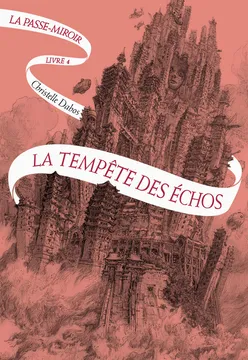
La Passe-Miroir Series

About the Author
Other books by Christelle Dabos

Download PDF
Download EPUB
.epub digital book format is ideal for reading ebooks on phones, tablets, and e-readers.








