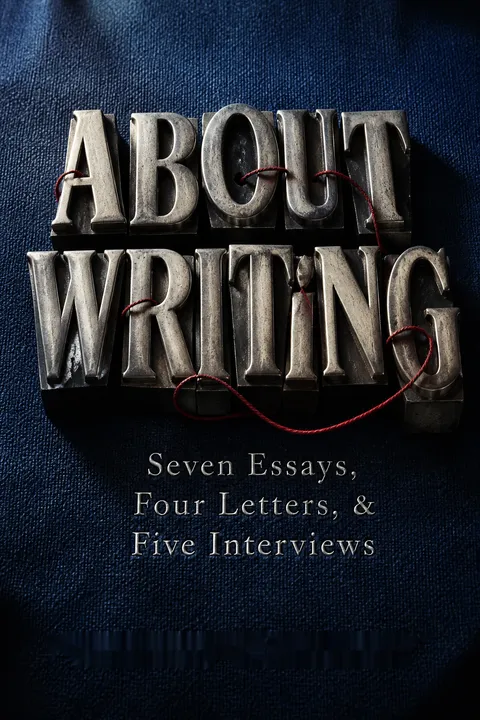


Key Takeaways
Polish makes prose clear; talent makes readers see what they had missed.
Clarity is the floor. Delany distinguishes good writing from talented writing. Good writing avoids confusion and clutter through precise words, strong sentences, and fewer clichés. But clean prose can still tell a banal story. He estimates that dullness is the chief weakness of 85 to 95 percent of fiction. Talent is the extra force that makes language vivid, surprising, and energetic in a reader's mind.
Specifics do the work. A description of a market can announce that it is busy, or show workers raising tent poles and laying out produce, letting the reader infer the bustle. The second approach carries more information and gives the sentences their own movement. Yet clarity and vitality can conflict: editing away every irregularity may remove the very detail that makes a passage live.
What's striking is that this distinction separates proofreading from artistic judgment. Automated editing can catch many errors, but it cannot reliably tell whether a detail is merely clear or newly perceptive. The same distinction appears in music: correct notes are necessary, but correctness alone does not create phrasing or surprise. Delany's standard is demanding because freshness depends on the reader's experience of other writing. Still, novelty is not automatically valuable. A familiar observation can matter if its placement or emotional context gives it a new charge.
Draft by looking closer, because the words can change the scene.
Writing is a feedback loop. Delany calls the ongoing exchange between imagining a scene and putting it into words the story process. The writer begins with a partial mental picture, describes what can be seen or heard, then finds that the chosen words sharpen or alter the picture. A vague room may gain a particular light, surface, or sound as the writer searches for an accurate description. An action also advances: describing a character reaching for something may reveal what happens next.
Accuracy keeps it moving. If an imprecise phrase stands, it can distort the image and send the next action in a different direction. The writer therefore does not simply execute a finished synopsis. A rough idea can guide the work, but the developing scene often supplies discoveries the outline could not.
This account treats writing as a form of external thinking. A phrase placed on the page becomes an object the writer can inspect, revise, and use to generate another thought. That resembles the way sketches help designers discover a shape that was not fully present in mind beforehand. The comparison also highlights a limit: close observation is not a substitute for knowledge or research when a scene depends on unfamiliar facts. But even researched material must be selected and arranged, and Delany's loop explains how that composition can become discovery rather than transcription.
Make the sentence enact its meaning, not merely report it.
Sentences carry two messages. The explicit account of an event is the text. Its rhythm, word choice, and arrangement create a second layer, the countertext, which shapes the reader's sense of emotion and emphasis. In a tense scene, a sentence about panic can undermine the feeling if its language is slow, abstract, or clinical. Delany's lesson is to ask both what a sentence says and what it does.
Form can embody action. Short, abrupt clauses can make a moment feel interrupted; a sentence that unfolds in sequence can make a scene feel fluid. Description can also imply a character's attitude without naming it. The language need not imitate every sound or sensation. It must choose details and rhythms that support, complicate, or deliberately contradict the event being narrated.
This is a useful bridge between rhetoric and embodied reading. Readers do not process meaning as a dictionary lookup alone. Rhythm, sentence length, and sound influence attention and expectation, so a sentence can prepare a feeling before it names one. The craft risk is overengineering: if every line performs its subject too neatly, the prose can feel like a series of tricks. Delany's more durable point is diagnostic. When a scene feels emotionally false, examine the language itself, not only the plot or the characters' stated feelings.
Design the structure; plot is only what readers summarize afterward.
A synopsis hides the writing. Delany uses plot to mean the broad account of what happens. Structure is the actual arrangement of words, sentences, scenes, viewpoints, and other textual units. A person getting out of bed can be summarized in one line or rendered through an extended sequence of sensations. The basic event remains similar, but pacing, emphasis, and the reader's experience change.
Order creates expectation. A flashback can earn its place when it answers a question or creates a meaningful pattern. Delany warns against the false flashback, a present-day frame that exists only to introduce a longer memory and contributes no event of its own. Such a frame often delays the story's real beginning. Nonlinear order can be powerful, but it needs a structural reason, not merely the convenience of introducing background.
The distinction helps explain why a promising premise can produce a lifeless story. A plot summary records outcomes, while readers encounter a sequence whose order controls anticipation, surprise, and emphasis. This is also why structural experiments depend on conventions: a pattern can be disrupted only if a reader has begun to recognize it. Delany's preference for chronological clarity should not be mistaken for a ban on nonlinearity. His practical test is whether rearrangement creates a specific reading effect or merely postpones information the writer has not yet organized.
Let characters emerge from believable combinations of traits and actions.
Readers build the person. A character is not a complete figure sitting on the page; readers infer one from the facts and behaviors presented. Two details can begin that process, but each new detail must fit what has already been suggested or receive enough context to make the combination believable. An unusually confident, physically conspicuous teenager may need a social history that explains why those traits coexist.
Actions add dimension. Delany distinguishes purposeful actions, habitual actions, and gratuitous actions, meaning actions without an obvious practical aim. A character who only pursues goals can feel like a plot device; one shown only in routine can feel inert. Food, sleep, money, work, and dealings with people in different economic positions reveal how a person occupies the world. A long questionnaire of traits cannot replace these lived encounters.
Characterization here resembles inference in everyday social life. People form impressions from patterns, then revise them when behavior conflicts with expectation. That makes contradiction useful, provided the story gives readers enough evidence to interpret it rather than treating inconsistency as depth by default. Delany's everyday domains are especially effective because they reveal dependence, privilege, and habit without requiring a psychological lecture. The caution is that no fixed checklist can make every character convincing. Details gain meaning from their relation to the character's situation and to the other people in the scene.
Give characters a social world, not just an interior life.
Fiction explains consequences. Delany sees a story as more than a chain of events or a display of private feeling. Its structure can connect what characters do to family histories, work, class, money, and historical conditions. Dickens, for example, makes childhood experience part of the causes shaping adult lives. Other novelists place characters amid class conflict or political upheaval, showing how circumstances change the choices available to them.
Material facts create depth. Delany argues that good fiction is often about money, directly or indirectly: how people earn it, lack it, spend it, or deal with those who have more or less. That does not mean every story needs a speech about economics. Work, housing, clothing, and social encounters can reveal the underlying pressures. A character's private thoughts feel thinner when the story never shows what sustains or constrains their life.
The social emphasis guards against a common fiction-making shortcut: treating personality as if it operated outside institutions and resources. Sociology and history offer a complementary insight, that choices are real but made within unequal fields of opportunity. A story can dramatize that constraint without reducing a person to class position. Delany's money principle is best read as a prompt to notice material dependence, not as a universal formula. Some powerful fiction foregrounds other forces, but even there, material conditions can silently shape what characters fear, desire, and can afford to do.
Study ambitious models until they shape your instincts, then revise against them.
Reading trains the writer. Delany's specialized term Begeisterung means an energized, sustained enthusiasm for the work. It helps an artist persist through difficulty and seek the knowledge or formal models a project requires. He argues that literary talent involves absorbing patterns from many works until they become usable instincts, then submitting new material to those patterns rather than relying on willpower or vague inspiration.
A workshop story shows the difference. One confident student defended familiar, polished tales but did not seem troubled by their resemblance to other workshop fiction. A less confident student used a structural challenge as a reason to attempt a richer, more ambitious story, drawing on childhood experience and a geometric plan for its parts. The contrast is not a simple recipe for talent. It shows how a model can become permission to attempt more than a writer assumed possible.
Delany's idea of models as embodied knowledge fits how expertise often develops: repeated examples teach a practitioner to recognize patterns before being able to explain them fully. Reading widely also prevents the writer from mistaking a recent fashion for the whole tradition. His language of submission, however, can sound as though artistic ability were fixed. The more generous reading is that practice can deepen perception and judgment, even if no course can guarantee distinction. Access to books, time, and serious teaching remains uneven, so enthusiasm alone cannot level the field.
Build literary standing through readers, critics, and durable attention.
Reputation has a chain. Delany names three kinds of literary markers: Marker Ones are spoken praise among readers; Marker Twos are written accounts explaining a work's value; Marker Threes are publicity, profiles, and other attention-generating events. He argues that publicity can direct attention but does not by itself establish lasting literary standing. Readers' experiences can prompt criticism, while praise and criticism together can draw wider notice.
The canon is a network. It is not a single ranked list or a committee's secret decision. It consists of works and the commentary, teaching, and discussion that make readers notice them. Delany compares this process to a destination made significant by signs pointing toward it. His account of Stephen Crane shows how a biography helped revive attention to a writer, and how later disputes about that biography created further critical discussion.
This model usefully separates visibility from evaluation. Publicity can create a burst of attention, but interpretation gives readers language for returning to a work and arguing about it. In cultural sociology, such feedback loops help explain why reputation is neither purely meritocratic nor simply manufactured. Access to reviewers and institutions is unequal, and some valuable work never receives sustained attention. Delany's framework does not solve that problem, but it makes the mechanisms visible: readers, critics, teachers, and publishers all contribute to what becomes legible as literary value.
Experiment within a genre by changing how readers learn to read it.
Difference needs a tradition. Delany treats genres as ways of reading that establish expectations. Experimental writing becomes meaningful through its relation to those expectations, not through strangeness alone. A work can alter familiar narrative patterns, mix forms, or direct attention toward language itself. Readers need enough experience with existing forms to notice what has changed and what the change makes possible.
Boundaries carry power. Delany calls marginalized fields such as science fiction, comics, and pornography paraliterature, a term for writing treated as outside or below the literary establishment. He argues that these divisions shape which works receive attention and which writers are treated as serious. His own use of experimental techniques across genres is not an attempt to escape history, but to work within, question, and sometimes cross its boundaries.
The account makes experimentation a social as well as formal act. A genre label affects where a book is shelved, reviewed, taught, and discussed, so changing a form can also challenge the institutions that define literary seriousness. The point is not that every boundary is equally oppressive or every crossing artistically successful. Readers need categories to orient themselves, and traditions carry genuine knowledge. Delany's strongest case is that categories should remain objects of inquiry rather than invisible measures of worth.
Catch the weak phrase while drafting, before it drains the next sentence.
Revision begins with doubt. Delany describes a writer noticing clutter, thinness, or cliché while composing, then refusing or replacing the language that does not fit the scene. This is more than correcting errors in a later pass: changing a phrase immediately can alter the imagined moment and the words that follow. He borrows two practical prompts from other writers: imagine a scene in rich detail but include only what matters to the character, and, when a story stalls, look more deeply into what the characters want or fear.
Keep the critic useful. Doubt should sharpen the writing, not silence it. An extra modifier or unusual phrase may be exactly right if the writer can justify its effect. Workshops can identify problems, but a correction made long after drafting cannot reproduce the momentum of solving the problem in the moment.
This advice captures revision as generative rather than merely corrective. In learning theory, feedback is often most useful when it arrives close to the action it addresses; a writer can then connect a choice to its consequences. Delany's warning about the internal critic is equally important: continuous evaluation can interrupt the experimentation that produces material worth revising. The useful balance is neither unfiltered drafting nor relentless policing, but a critic alert enough to challenge habitual language and restrained enough to let a scene develop.
Analysis
About Writing is not a unified manual so much as a working archive: essays on sentences and scenes sit beside letters about careers, interviews about genre and literary institutions, and practical notes on punctuation and point of view. Its apparent variety suits its subject. Delany argues that writing cannot be reduced to rules because the visible effects readers call plot, character, or setting arise from less visible decisions about observation, sequence, language, and social context.
The book's most useful tension is between teachable clarity and unteachable distinction. Delany insists that clean prose can be taught, while talent depends on qualities that cannot be reliably produced by instruction. Yet his essays offer readers ways to train attention: examine what a sentence does, test whether a flashback earns its place, study models, and notice the social pressures a story leaves unstated. The implicit promise is not that these habits manufacture genius, but that they help writers recognize when their language is merely adequate.
The book also refuses the comforting idea that literary value is a private matter between author and page. Genres have institutional boundaries; reputations depend on readers, criticism, and publicity; and stories become thin when they erase work, class, and economic dependence. Delany's account is unusually alert to how aesthetic judgments are produced by historical conditions. At times, however, his certainty about talent and his sweeping prescriptions can make contingent preferences sound universal. His own examples work best as tests to apply, not laws to obey.
The enduring lesson is a method of attention. Writers must look closely at the world, the sentence, the tradition, and the conditions of their characters' lives. Then they must make choices that cause something specific to happen in a reader's mind. Good technique prevents avoidable failure. Art begins when technique becomes a means of seeing more than the writer initially knew how to see.
Review Summary
About Writing receives high praise for its in-depth exploration of the writing craft. Readers appreciate Delany's erudite approach, offering valuable insights for serious writers. The book covers various aspects of fiction writing, from structure to character development. While some find it dense and challenging, many consider it essential reading for advanced writers. Critics note Delany's tendency for absolutist statements but acknowledge the book's wealth of knowledge. Some readers find certain sections less engaging, but overall, the book is lauded for its unique perspective on writing.
People Also Read






Glossary
Begeisterung
sustained creative enthusiasmA German term Delany uses for an artist's energized commitment to a clearly perceived task. It combines inspiration with active will: the persistence to learn what a project requires, solve formal problems, and continue through difficulty. Delany treats it as a force that sustains creative work, not simply as the first exciting idea.
story process
imagination and notation loopDelany's name for the continuing interaction between imagining a scene and writing it down. As the writer searches for accurate words, the mental picture becomes clearer or changes, and the altered picture suggests further action and language. The process means a story is often discovered during composition rather than copied from a complete prior plan.
countertext
meaning beneath the statementThe additional meaning produced by a sentence's rhythm, diction, sound, and arrangement, alongside its explicit information. This layer can reinforce the stated event, complicate it, or work against it. Delany treats control of both explicit text and countertext as central to a writer's ability to make prose feel vivid and coherent.
false flashback
unearned memory frameA present-time scene included only to introduce a longer account of the past, without meaningful action or change in the present scene itself. Delany argues that this structure often delays the story's real beginning. A flashback is more justified when it answers a question, creates an effect, or contributes something the chronological version cannot provide.
Marker Ones, Marker Twos, Marker Threes
three forms of literary attentionDelany's categories for the signals that help build a writer's reputation. Marker Ones are spoken praise among readers. Marker Twos are written criticism that analyzes a work's value. Marker Threes are publicity and profile-style attention. He argues that broad publicity can increase visibility, but durable literary standing depends on readers' responses and critical interpretation.
paraliterature
marginalized literary genresDelany's term for genres treated as outside or below institutionally recognized literature, including science fiction, mysteries, comics, and pornography. The category describes a social position, not an assurance of inferior quality. Genre boundaries shape how works are published, shelved, reviewed, taught, and valued, and can change over time.
structure
textual arrangement shaping effectsDelany uses structure to mean the organization of actual textual elements, from words and sentences to scenes, chapters, viewpoints, and whole works. Unlike plot, which can be summarized as what happens, structure exists in the order and form of the writing. Different structures can produce similar plot summaries but very different reading experiences.
FAQ
What's About Writing: Seven Essays, Four Letters, & Five Interviews about?
- Collection of Works: The book is a compilation of essays, letters, and interviews by Samuel R. Delany, focusing on the craft of writing, particularly in fiction and science fiction.
- Exploration of Techniques: Delany delves into various writing techniques, including narrative structure, character development, and the importance of originality.
- Personal Insights: It includes personal reflections and experiences from Delany's teaching and writing journey, offering a unique perspective on the challenges and rewards of being a writer.
Why should I read About Writing: Seven Essays, Four Letters, & Five Interviews?
- Valuable for Writers: The book provides practical advice for both aspiring and experienced writers, making it a valuable resource for improving writing skills.
- Diverse Perspectives: Delany offers insights ranging from practical writing advice to philosophical musings about storytelling and creativity.
- Engaging and Thought-Provoking: Delany's engaging prose and thought-provoking ideas make the book both informative and enjoyable to read.
What are the key takeaways of About Writing: Seven Essays, Four Letters, & Five Interviews?
- Observation and Revision: Delany emphasizes the importance of observing experiences and surroundings and the iterative process of writing and revising.
- Structure and Engagement: He highlights the significance of narrative structure in enhancing reader engagement and fulfilling reader expectations.
- Writing as Hard Work: Delany stresses that writing is a labor-intensive process requiring dedication and effort, advising writers to choose material that sustains their interest.
What are the best quotes from About Writing: Seven Essays, Four Letters, & Five Interviews and what do they mean?
- "The tale is in the telling.": This underscores the importance of storytelling technique, suggesting that how a story is told can be as significant as the story itself.
- "Good writing avoids stock phrases and received language.": Delany advocates for originality, encouraging writers to find fresh ways to express ideas.
- "Writing takes longer than reading.": This highlights the time and effort required to produce writing compared to the time it takes to read it, reminding writers to be patient and committed.
How does Samuel R. Delany define the "story process" in About Writing?
- Envisioning and Notating: The story process involves visualizing a scene and translating that vision into words on the page.
- Dynamic Interaction: As the writer notates, the vision may change, leading to new insights and developments in the narrative.
- Continuous Revision: It is an iterative process, requiring writers to continually revise their work based on evolving understanding.
What specific writing techniques does Samuel R. Delany discuss in About Writing?
- Characterization: Delany emphasizes psychological veracity, stating that characters should behave consistently with their established traits.
- Narrative Structure: He explains that plot is an illusion, and what truly exists is narrative structure, which can produce various effects.
- Dialogue Mechanics: Delany provides advice on writing dialogue, including punctuation rules and maintaining a consistent point of view.
What does Samuel R. Delany mean by "psychological veracity" in characterization?
- Consistency in Traits: Characters must behave in ways consistent with their established traits and backgrounds.
- Reader's Perception: Readers expect certain behaviors based on the character's description, and deviations must be justified.
- Depth of Character: Characters should be developed through their actions and reactions to create a vivid and relatable portrayal.
How does Samuel R. Delany suggest structuring a narrative in About Writing?
- Chronological Order: Delany advocates for telling stories in chronological order, as it is generally the most effective way to engage readers.
- Creating Reader Expectations: He emphasizes creating and fulfilling reader expectations through consistent narrative structure.
- Variety in Structure: While supporting chronological storytelling, Delany encourages exploring different structures that serve the story's needs.
What is the "false flashback" mentioned in About Writing?
- Definition: A narrative structure that disrupts the story flow by inserting backstory in a forced or unnecessary way.
- Example: Delany provides an example of a weak narrative opening that uses a false flashback, which distracts from the main action.
- Advice: He advises avoiding this technique and focusing on logical, chronological storytelling unless there is a clear structural reason otherwise.
How does Samuel R. Delany view the relationship between plot and structure in About Writing?
- Interconnectedness: Plot and structure are deeply interconnected, with structure serving as the framework that supports the plot.
- Structural Choices: Writers should make structural choices that enhance the plot and provide a more economical way to tell the story.
- Reader Expectations: A well-structured narrative helps fulfill reader expectations regarding plot development, maintaining interest and engagement.
What role does feedback play in the writing process according to Samuel R. Delany?
- Critical Self-Assessment: Writers must be their own harshest critics, constantly evaluating their work for improvement.
- Constructive Criticism: Feedback from others can help refine understanding of the work and its impact on readers.
- Balancing Perspectives: Writers should discern which feedback aligns with their vision, maintaining their unique voice while improving their craft.
How does Samuel R. Delany define paraliterature in About Writing?
- Social Object: Paraliterature is a fluid concept shaped by cultural and social dynamics, not a fixed category.
- Material Practice: It includes genres like science fiction and mysteries, often marginalized but holding significant cultural value.
- Markers of Value: Critical and social indicators help define and elevate works within the paraliterary realm.

Download PDF
Download EPUB
.epub digital book format is ideal for reading ebooks on phones, tablets, and e-readers.








