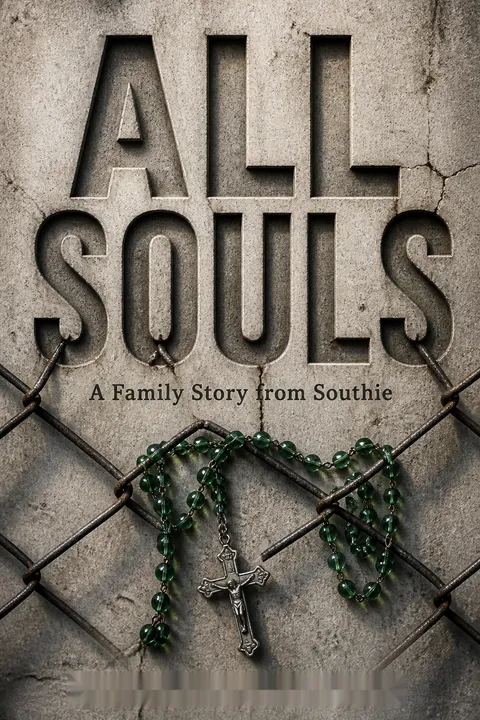


Key Takeaways
A neighborhood can feel like refuge while quietly making escape impossible
Belonging has two sides. Michael Patrick MacDonald grows up in Old Colony, a South Boston housing project where neighbors watch out for one another, children invent their own entertainment, and family loyalty gives life warmth and structure. The same closeness also enforces rules: never report a crime, distrust outsiders, and deny that poverty or addiction is taking lives. The neighborhood feels like the best place in the world partly because it is the only world the children know.
Home becomes hard to name. In 1994, after four years away, MacDonald walks through Southie and feels his dead brothers and friends present in the streets. He misses the community, yet recognizes how its myths helped conceal the conditions that killed people he loved. The central conflict is not whether he loves Southie, but whether love requires pretending it is safe.
What's striking is that attachment and harm are not opposites here. Social identity can provide belonging, practical support, and shared memory, while also making criticism feel like betrayal. That helps explain why the narrator cannot simply leave the neighborhood behind, even after its costs become undeniable. The tension also challenges a tidy idea of resilience: a community may help people endure hardship without having the power, or the freedom, to change its causes. MacDonald’s return matters because it refuses both easy condemnation and nostalgic absolution.
Name poverty even when race politics make it inconvenient
A hidden population becomes visible. A 1994 U.S. News & World Report article identifies three South Boston census tracts with some of America’s highest concentrations of poor white residents. Its findings report that nearly three-quarters of Lower End families had no father in the household and that 85 percent of Old Colony residents received welfare. MacDonald recognizes the conditions, but is startled that anyone outside the neighborhood has noticed them.
Labels can open doors. Residents and local politicians call the report false or insulting. Yet social-service groups use its findings to argue for funding they had previously been denied. The label “white underclass” is uncomfortable, but the refusal to acknowledge need had its own cost: families in crisis remained invisible to agencies that assumed poverty belonged elsewhere. The book argues that race-based assumptions can obscure hardship without making racism less real.
This episode resembles a problem in public policy called categorical blind spots: programs built around a familiar image of need can overlook people who do not fit it. Naming Southie’s poverty makes neglected needs legible, much as targeted data can reveal gaps in health care or education. But a category such as “underclass” can also flatten differences and turn a population into a stigma. The useful question is not whether the label is flattering. It is whether it helps direct resources without becoming a substitute for listening to the people it describes.
Survival skills can protect a family and still pass its wounds onward
Ma makes a life from scraps. MacDonald’s mother raises a large family with little money, plays music for grocery cash, and learns to navigate welfare rules that penalize a household if a man is present. Her first husband abuses her, disappears from family life, and fails to support the children. When baby Patrick becomes ill, a hospital turns him away because it has filled its quota of charity cases. He dies of pneumonia.
Endurance has a cost. The family’s early life includes unsafe housing, scarce medical care, and violence. MacDonald’s eldest brother, Davey, carries years of trauma, including finding Patrick dead and suffering abuse from their father. At fourteen, doctors subject him to shock treatment in a psychiatric hospital, where he remains for three years. Ma’s resourcefulness keeps the family going, but the story shows that grit cannot replace safe housing, health care, or humane treatment.
The memoir’s account of endurance is strongest when it refuses to make hardship inspirational. Ma’s ingenuity is real, but so is the institutional failure that makes ingenuity necessary. In public health, the phrase social determinants of health describes how housing, income, safety, and access to care shape well-being before individual choices enter the picture. That perspective fits the family’s experience, while preserving the agency of its members. Resilience can help people survive a crisis; it should not become an excuse for leaving the causes of that crisis untouched.
When school desegregation becomes war, children inherit the battlefield
Politics reaches the playground. In 1974, court-ordered busing pairs South Boston and Roxbury schools. Adults frame the policy as an attack on their children and community. MacDonald, then eight, joins the crowds, absorbs their hatred of the police and Black residents, and throws a rock at a bus, though it misses. He sees police beat protesters and teenagers, while political leaders present resistance as neighborhood loyalty.
The violence has victims. During the unrest, a Black Haitian man driving through Southie is dragged from his car and beaten by a crowd. MacDonald witnesses the assault at close range. His mother calls the man a scapegoat, targeted because he is more vulnerable than the people angry about busing. The episode complicates the narrator’s childhood pride: he was a child caught in a political struggle, but he also participated in its racial hostility.
The chapter shows how a policy dispute can become an identity conflict, where children learn who counts as “us” before they can assess the policy itself. That is not a claim that every resident held the same views, nor that opposition to busing and racial violence are interchangeable. It is a warning about political leadership that recruits children into adult resentments. The narrator’s own missed throw matters: it makes him a witness to the harm and a participant in the spectacle, resisting the comforting idea that only obvious villains help a mob form.
A gangster's protection is a bargain paid for in silence
The protector has a price. James “Whitey” Bulger is presented in Southie as a neighborhood guardian who can help residents facing eviction, police harassment, or a local dispute. People credit him with keeping the area orderly, even as drugs are sold near the housing projects and violence spreads. His organization’s power depends partly on residents looking away and on the local code against informing.
The myth survives the evidence. In 1990, law enforcement arrests 52 people connected to South Boston’s cocaine trade, but Bulger is not among them. Reports and rumors identify him as an FBI informant who helped federal agents while his own criminal network operated. The revelation overturns the image of a protector who kept drugs out. MacDonald’s neighbors had been asked to mistake selective control for community care, while the costs fell on families and young people.
This is a portrait of governance by a parallel authority: when public institutions seem absent or hostile, a criminal power can appear useful by offering protection and settling disputes. The arrangement may feel more responsive than official channels, but it is accountable to neither law nor residents. The memoir also makes silence more than a personal failing. Fear, family ties, and a belief that speaking will change nothing can all sustain it. That context explains the code without making its consequences acceptable.
Treat overdose, suicide, and murder as public crises, not private shame
The losses form a pattern. MacDonald’s family loses Patrick as an infant, Davey to suicide, Frankie to an armored-car robbery, and Kevin after a life in crime and a death in custody. His sister Kathy survives a fall from a roof with severe brain injuries. Around them, friends and neighbors die from drugs, violence, and suicide. Families are often left to hear that a victim was a troublemaker or that the death was simply bad luck.
Shame hides causes. When people avoid naming overdose, murder, or suicide, each death can seem isolated and deserved. MacDonald describes neighbors grieving privately while the community continues to deny the wider toll. His mother attends wake after wake, eventually counting 32 in about a year. The book asks readers to see these deaths not as proof of individual worthlessness, but as evidence of a community facing interconnected failures and too little support.
The move from private misfortune to public pattern is a central act of interpretation. Epidemiology uses population-level patterns to identify risks that are invisible when each case is viewed alone. A memoir cannot establish the causes of every death, and the people in these pages retain distinct histories and choices. Still, repeated loss makes it harder to accept the explanation that each victim simply deserved what happened. Public recognition can reduce isolation and sharpen questions about prevention, treatment, safety, and who is responsible for providing them.
Demand evidence when authorities turn a grieving child into a suspect
A tragedy becomes a prosecution. When thirteen-year-old Steven finds his friend Tommy dead from a gunshot wound, police question him without a lawyer or guardian. A police transcript falsely records Steven saying he shot Tommy. The original 911 recording contains no such statement. Prosecutors later accuse Steven of murder, then reduce the charge to involuntary manslaughter. A judge convicts him, and he is sent to a youth facility.
The record can be challenged. MacDonald and Steven’s family keep pressing the case. The state’s forensic claims are contested, and evidence of police misconduct and weak defense representation becomes central to the appeal. In 1994, the state appeals court overturns Steven’s conviction. The experience teaches MacDonald that an official account is not the same as a reliable one, especially when a poor child faces institutions with far more power and resources.
The case illustrates why procedural safeguards matter most when a defendant is vulnerable, not least. A child in shock may be especially susceptible to suggestion, while a false transcript can turn an investigative mistake into apparent proof. The appellate victory does not restore Tommy’s life or erase Steven’s years in custody, and the court’s decision is not published as precedent. That limitation underscores a broader point: an individual correction can expose a failure without ensuring that the system learns from it.
Turn private grief into organized pressure for safety and care
Grief finds allies. After his family’s losses, MacDonald works with anti-violence activists in Boston’s Black and Latino neighborhoods. He meets mothers in Charlestown whose murdered children have been met with silence, and sees how they organize vigils, seek answers, and build ties with bereaved families across racial lines. He brings that approach back to Southie, where people have suffered similar losses but rarely speak together.
Action can take different forms. MacDonald helps organize a citywide gun buyback that ultimately destroys 2,901 guns. His mother, meanwhile, moves to Colorado and leads a class-action suit seeking services for people with developmental disabilities, including Kathy. She wins access to services and creates a basis for challenges elsewhere. Neither effort undoes the past. Both turn private pain into pressure on institutions that had left families to cope alone.
The transition from mourning to organizing connects individual testimony to collective efficacy, the shared belief that people can act together to improve their conditions. A gun buyback and a disability-rights lawsuit work through different mechanisms, yet each makes neglected needs visible and gives families a public role. The memoir also treats cross-racial alliance as practical, not sentimental: people recognize one another through shared losses while retaining different histories. Organizing cannot guarantee justice, but it can reduce isolation and make denial more costly.
Love your home without protecting its myths
A vigil changes what can be said. On All Souls’ Day, MacDonald helps hold a Southie vigil for people who died young. The list contains 250 names. Hundreds gather in a storm to speak the names of children and adults lost to violence, drugs, and suicide. Black and Latino women come too, despite being warned against entering the neighborhood, and are welcomed by Southie mothers who have suffered similar losses.
Truth becomes part of belonging. The ceremony does not erase the neighborhood’s racism, criminal power, or grief. It does something smaller and essential: it lets families acknowledge what happened without pretending the dead brought it on themselves. MacDonald returns to Southie knowing that he loves its people and its street life, but no longer needs to defend the stories that concealed its failures. The book’s final reconciliation is with a complicated home, not with its myths.
Public ritual can create a temporary space where experiences usually treated as shameful become speakable. Naming the dead is not a legal remedy, a treatment program, or an answer to every family’s questions. Its value lies in recognition: people discover that their grief is shared rather than exceptional. The vigil also models a form of civic belonging that does not require sameness. It welcomes people across racial boundaries through a common act of remembrance, while leaving room to face the neighborhood’s unequal histories honestly.
Analysis
All Souls is a memoir built around a contradiction: Southie is both a sustaining community and a setting in which community rules help conceal preventable suffering. Its neighborhood life is not rendered as mere backdrop. Stoop conversations, informal protection, local customs, and family humor explain why residents remain attached to a place outsiders might describe only through statistics or violence. The same social closeness can discipline people into silence, particularly when criminal power, political leadership, and public institutions all benefit from appearances being maintained.
The book’s account of race and class refuses a clean moral division. The narrator’s family is poor and white, and its hardship is dismissed by categories that associate poverty with Black communities. Yet the memoir also records Southie residents’ anti-Black language, their participation in busing violence, and the assault of a Haitian man. Recognizing class-based neglect does not absolve racism. The book’s more demanding claim is that race and class shape each other, while convenient narratives let one injustice obscure another.
Family stories make structural forces tangible: a hospital’s refusal to admit an uninsured infant, a brother confined and subjected to shock treatment, and a child prosecuted after a friend’s death. These episodes are not interchangeable, and the memoir does not offer a single cause for every tragedy. Together, however, they show how vulnerability accumulates when care is scarce, trust is damaged, and official accounts are difficult to contest. The narrative’s movement from private grief to vigils and activism offers no triumphant escape. The gun buyback, disability lawsuit, and public naming of the dead are partial forms of repair, not replacements for accountability or material change. The ending matters because MacDonald’s love for Southie survives the exposure of its myths. That is a harder form of loyalty than either nostalgia or denunciation: it makes belonging compatible with truth.
Review Summary
All Souls is a powerful memoir about growing up in the impoverished, crime-ridden Southie neighborhood of Boston. Readers praise MacDonald's candid portrayal of his family's struggles with violence, drugs, and poverty. The book offers insight into Southie's complex social dynamics, including racial tensions during forced busing. While some find the writing style challenging, most appreciate the author's honest, emotional narrative. MacDonald's transformation from a victim of his environment to a community activist resonates with many readers, making this a compelling and eye-opening account of urban poverty in America.
People Also Read




Glossary
Southie dot
Neighborhood loyalty tattooA small tattoo used by some South Boston residents to signal local identity and acceptance. The book describes a dot on the wrist as a mark of belonging within the neighborhood, but one that could make its wearer a target outside it, including in downtown Boston or jail. The mark represents loyalty with potential costs.
breakthrough apartment
Two joined project apartmentsA housing-project apartment created when the Boston Housing Authority removed a connecting wall between two units. MacDonald’s family received one after the birth of Seamus, giving them ten rooms, two kitchens, and two bathrooms. The extra space becomes a marker of unusual comfort within Old Colony, though it cannot insulate the family from neighborhood violence.
forced housing
Integration through housing placementThe phrase South Boston residents used for efforts to place minority families in housing projects that had previously excluded them. The policy arose amid disputes over the Boston Housing Authority’s housing assignments and waiting lists. To residents, it echoed the earlier fight over school busing, while new families often arrived simply seeking an available home.
white underclass
Media label for poor whitesA term used in a 1994 news report about concentrated poverty in South Boston’s Lower End. The article cited high joblessness and many female-headed households, including the fact that 85 percent of Old Colony families received welfare. MacDonald finds the label troubling, but also sees how public recognition helps local service agencies argue for support.
code of silence
Rule against informingAn informal neighborhood expectation that residents should not report crimes or share information with police. In Southie, the rule is reinforced by fear, local loyalties, and the belief that authorities cannot be trusted. It can protect neighbors from outside scrutiny, but it also leaves families without witnesses, weakens investigations, and helps criminal power endure.
FAQ
1. What is All Souls: A Family Story from Southie by Michael Patrick MacDonald about?
- Memoir of South Boston: The book is a deeply personal memoir recounting Michael Patrick MacDonald’s childhood in the Old Colony housing project in South Boston during the 1970s and 1980s.
- Family and Community Struggles: It explores the impact of poverty, violence, drugs, and racial tensions on MacDonald’s family and the broader Southie community.
- Tragedy and Resilience: The narrative centers on the tragic deaths of several of MacDonald’s siblings and friends, while also highlighting the resilience and complex social dynamics of Southie.
- Social and Political Context: The memoir situates these personal stories within broader issues like busing, organized crime, and systemic corruption, including the influence of gangster Whitey Bulger.
2. Why should I read All Souls: A Family Story from Southie by Michael Patrick MacDonald?
- Authentic Urban Perspective: The book offers an unflinching, authentic look at life in a marginalized, working-class urban community, challenging stereotypes about South Boston and its residents.
- Powerful Family Narrative: Readers gain a profound understanding of family loyalty, grief, and survival through MacDonald’s intimate storytelling about his siblings and his mother’s strength.
- Historical and Social Relevance: The memoir sheds light on systemic issues like police corruption, racial tensions, and the drug epidemic, making it relevant for those interested in social justice and urban history.
- Inspiration and Activism: Beyond despair, the story highlights hope through activism and the fight for justice, inspiring readers to consider the impact of advocacy.
3. What are the key themes and takeaways from All Souls: A Family Story from Southie by Michael Patrick MacDonald?
- Cycle of Violence and Loss: The book reveals how violence, drugs, and systemic neglect perpetuate cycles of tragedy in working-class neighborhoods.
- Community and Loyalty: Southie is depicted as a place of strong neighborhood bonds and loyalty, which can be both protective and confining.
- Corruption and Betrayal: The memoir exposes the betrayal by institutions meant to protect, such as the police and FBI, and their complicity with organized crime.
- Hope and Breaking Silence: Amid despair, the importance of breaking the “code of silence” and engaging in activism emerges as a path to healing and justice.
4. Who are the main family members and characters in All Souls: A Family Story from Southie by Michael Patrick MacDonald?
- Michael Patrick MacDonald: The author and narrator, whose perspective guides the memoir as he reflects on his childhood, family tragedies, and journey toward activism.
- Ma (Helen MacDonald): The matriarch, a strong and loving mother who endures the loss of four sons and fights tirelessly for her family and community.
- Siblings: Davey (mentally ill, died by suicide), Frankie (boxer, killed during a robbery), Kevin (involved in crime, died by suicide), Joe, Johnnie (Navy Seal), Mary, and Kathy (brain injured, struggles with addiction), each representing different facets of Southie life.
- Whitey Bulger: The infamous gangster whose criminal empire and relationship with law enforcement profoundly affect the neighborhood and the MacDonald family.
5. How does Michael Patrick MacDonald describe his childhood and family life in All Souls: A Family Story from Southie?
- Early Hardships: MacDonald recounts being born into a large Irish American family with a history of abuse, poverty, and tragedy, including the death of a baby brother and the mental illness of an older brother.
- Life in the Projects: The family’s move from Columbia Point to Old Colony projects brought exposure to violence, drugs, and neighborhood rivalries, vividly described in the memoir.
- Family Losses: Four of MacDonald’s brothers died young from violence, drugs, or suicide, shaping the family’s experience and the author’s perspective on life and death.
- Mother’s Role: His mother, Ma, is portrayed as a fierce protector and provider, using music and humor to keep the family together.
6. What role does the South Boston community and neighborhood play in All Souls: A Family Story from Southie by Michael Patrick MacDonald?
- Tight-Knit but Troubled: Southie is depicted as a “small world within a world,” where everyone is like family, with a strong sense of loyalty and protection.
- Pride and Denial: Residents take pride in their Irish heritage and neighborhood, often denying or minimizing the social problems of drugs and violence.
- Code of Silence: The community’s reluctance to speak out about violence and crime, rooted in loyalty and fear, allows many tragedies to go unaddressed.
- Duality of Protection and Danger: The same bonds that protect also confine, making it difficult to confront or escape the neighborhood’s problems.
7. How does All Souls: A Family Story from Southie by Michael Patrick MacDonald address the issue of race and busing in Boston?
- Racial Tensions: The memoir captures the hostility and violence between Irish Southie youth and black and Italian communities, especially during the busing crisis of the 1970s.
- Busing Impact: Court-ordered busing to desegregate schools exacerbates community divisions and fears, influencing family decisions and fueling social fragmentation.
- Integration Challenges: The arrival of black and Hispanic families in Southie’s housing projects brings new tensions and highlights ongoing racial complexities.
- Shared Struggles: Despite animosities, the book also reveals moments of solidarity and shared suffering between poor white and black communities.
8. What is the significance of the “code of silence” in All Souls: A Family Story from Southie by Michael Patrick MacDonald?
- Community Loyalty: The code of silence is an unwritten rule not to “snitch” or talk to outsiders about neighborhood violence and crime, rooted in loyalty and fear.
- Barrier to Justice: This silence allows murders, drug problems, and suicides to go uninvestigated and unpunished, perpetuating cycles of violence and loss.
- Breaking the Silence: MacDonald’s activism and the vigil events described in the book represent efforts to break this code, encouraging families to speak out and seek justice.
- Cultural Consequence: The code both protects the community from outside interference and traps it in cycles of suffering.
9. How does All Souls: A Family Story from Southie by Michael Patrick MacDonald depict the impact of drugs and crime on South Boston’s community?
- Widespread Drug Epidemic: The memoir details the rise of cocaine and heroin in Southie, showing how drugs devastated families and fueled violence.
- Organized Crime Influence: Whitey Bulger’s control over drug trafficking and his protection by law enforcement illustrate the entanglement of crime and corruption.
- Community Consequences: Drug addiction leads to overdoses, violence, and broken families, while the code of silence and fear prevent justice.
- Personal Toll: Characters like Kevin and Kathy are directly affected, and the MacDonald family’s losses reflect the broader community crisis.
10. Who is Whitey Bulger and what is his significance in All Souls: A Family Story from Southie by Michael Patrick MacDonald?
- Neighborhood Protector and Criminal: Whitey Bulger is depicted as a powerful and feared gangster who controlled South Boston’s drug trade and maintained order in the neighborhood.
- Complex Figure: While a criminal, Whitey is seen by many residents as a protector who kept worse elements out and preserved the community’s way of life.
- Symbol of Power and Corruption: Whitey represents the complicated intersection of crime, politics, and community loyalty in Southie, embodying both the neighborhood’s strength and its darker realities.
- FBI Complicity: The memoir exposes how Bulger’s status as an FBI informant allowed him to operate with impunity, deepening community mistrust of law enforcement.
11. What is the significance of the vigil and activism described in All Souls: A Family Story from Southie by Michael Patrick MacDonald?
- Breaking the Silence: The vigil organized by MacDonald and other mothers symbolizes a collective refusal to accept the deaths of their children as inevitable or unspoken.
- Community Healing: Activism provides a way for survivors to find solidarity, voice their pain, and demand justice, transforming grief into action.
- Broader Social Change: MacDonald’s involvement with groups like Citizens for Safety and gun buyback programs reflects efforts to address systemic violence and police abuse beyond Southie.
- Empowerment: The activism described in the memoir inspires others to confront injustice and seek change in their own communities.
12. What are the most memorable quotes from All Souls: A Family Story from Southie by Michael Patrick MacDonald and what do they mean?
- “Do not stand at my grave and weep, I am not there, I do not sleep. I am the stars that shine through the night.” This mass card quote symbolizes the author’s way of coping with the deaths of his brothers, seeing them as present in spirit rather than in the grave.
- “Our son was murdered by ambivalence, tolerance, and a general ‘it doesn’t happen here’ attitude in Southie.” Spoken by a grieving father at a vigil, this quote highlights the community’s denial and inaction as contributing factors to the tragedy of drug-related deaths.
- “This place was ours, it was all we ever knew, and it was all ours.” MacDonald’s reflection on Southie’s sense of belonging and ownership, despite
Download PDF
Download EPUB
.epub digital book format is ideal for reading ebooks on phones, tablets, and e-readers.








