

Plot Summary
The Ranch Outlives the Family
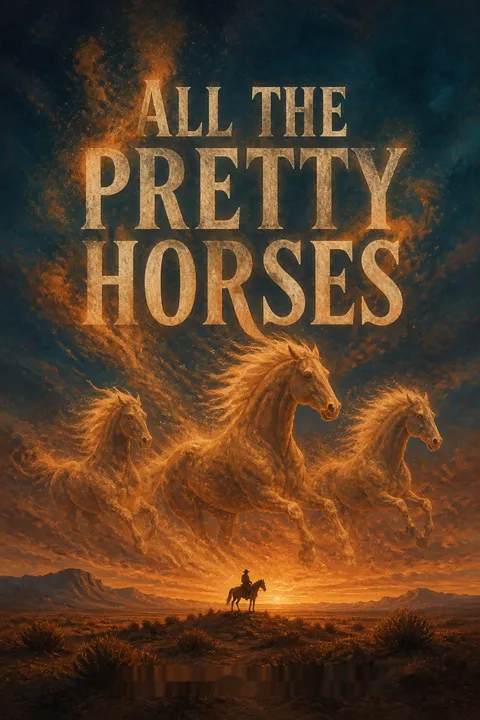
John Grady Cole stands at his grandfather’s funeral as wind scatters the chairs across the cemetery. The old man was the last of the family’s ranching line, and the vast Texas property is already slipping away: John Grady’s mother wants to sell it, while his father lives separately in town.
A lawyer confirms that his parents’ divorce is final, a fact kept from him until after his grandfather’s death. John Grady sees the ranch not as an asset but as the country that made him. At sixteen, he has no legal claim to keep it and no clear place in the life his parents are choosing. The loss leaves him looking for a future beyond home.
The opening makes inheritance less a matter of money than of belonging. John Grady’s family property carries a working world, a history, and a way of understanding himself; its sale removes all three at once. Yet his parents’ separation shows that this rupture began before the funeral. The ranch’s decline is not a single betrayal but the visible end of several private decisions made without him. His grief therefore has a practical edge: he is losing both a home and the only future he can imagine. The novel begins when inherited identity can no longer guarantee continuity.
A Saddle Before Departure
John Grady visits his father, a war veteran weakened by illness, and learns more about the long estrangement between his parents. His father admits he once tried living with John Grady’s mother in California, but could not remain there. He gives his son a fine new saddle, a gesture that recognizes their shared love of horses even as their relationship remains guarded.
John Grady also travels to San Antonio to see his mother acting onstage, then watches her leave with another man. When his mother refuses to lease him the ranch and the lawyer explains that she can dispose of it as she chooses, John Grady stops waiting for permission. Before dawn, he saddles up with his friend Lacey Rawlins and leaves Texas.
The saddle is a rare act of mutual understanding between father and son. It cannot repair their family, but it gives John Grady a tool for carrying forward something his father also values. The mother’s refusal makes the conflict concrete: John Grady is not merely mourning a lost past, he is denied the work through which he hoped to build a future. Leaving is a choice, though hardly a free one. He turns the limited inheritance he can claim, horsemanship, into a means of escape. His departure is both an act of self-definition and a refusal to accept a life already arranged by others.
Blevins Joins the Trail
As John Grady and Rawlins ride south through ranch country, they discover that a boy has been trailing them on a striking bay horse. He calls himself Jimmy Blevins and says the horse is his, though Rawlins doubts both the story and the boy’s claimed age.
Blevins has little food or money, but he carries an old Colt pistol and proves he can shoot with remarkable accuracy by punching a hole through Rawlins’s airborne wallet. The Texans know he is hiding something, yet they let him ride with them after he insists on his American identity. Their journey now has a third rider, one whose courage and bravado are matched by a deep fear of being laughed at or caught.
Blevins enters as an unstable mixture of vulnerability and performance. His shooting skill gives him authority in a group where age, confidence, and competence matter, but his insistence on his name and horse hints that he is defending more than pride. Rawlins reads the danger clearly; John Grady is more willing to treat the boy as a person in need. Their disagreement establishes a moral pressure that will recur: whether responsibility ends where another person’s poor judgment begins. The group’s formation is thus not a simple adventure alliance. It is a test of what each young man believes he owes a stranger.
Lightning Strips Blevins Bare
When thunderheads gather over the desert, Blevins panics. He believes lightning is waiting for him, a fear reinforced by stories of relatives killed or maimed in storms. He strips off his clothes to avoid metal fastenings and gallops away, leaving his horse behind. John Grady later finds him sheltering naked under a cottonwood root, but the floodwater has carried off his clothes and boots, and his horse is gone.
Rawlins wants to leave him to fend for himself. John Grady gives Blevins a shirt and lifts him onto his own horse. At a wax workers’ camp, a stranger offers to buy the boy; John Grady refuses and takes Blevins away, though Rawlins warns that the kindness is drawing them into danger.
The storm converts Blevins’s private fear into a material crisis for all three riders. His terror is not mocked by the narrative as mere foolishness: it strips him of his possessions and leaves him exposed in a country where exposure has consequences. John Grady’s compassion is equally concrete. He gives up clothing, space, and safety to retrieve a boy who has repeatedly endangered the group. Rawlins’s objections are not cruelty so much as an effort to measure costs before they become irreversible. The scene asks whether decency can be separated from prudence when another person is helpless.
A Horse Worth a Shootout
In Encantada, the riders spot Blevins’s bay horse and pistol in the hands of local men. John Grady and Rawlins hide Blevins outside town while they investigate, but the boy slips away and climbs into the stable where his horse is kept. At dawn he bursts through a fence on the animal as dogs bark and gunshots follow.
He tells the others to leave the road and draws the pursuers after him, allowing John Grady and Rawlins to escape across the rough country. They do not see him again before moving on. The two friends continue south, unsure whether Blevins has evaded capture, while his insistence on reclaiming what he believes is his has tied the journey to a violent local dispute.
Blevins’s return is not a calculated sacrifice so much as an act of possession: he cannot accept that others have taken what he considers his, even when recovering it may cost him his life. The horse is at once transportation, proof of identity, and the object around which the men’s competing claims gather. John Grady and Rawlins benefit from Blevins drawing pursuit, but neither can know whether he has survived. The separation leaves an unresolved debt in their minds. It also changes the journey’s moral weather: the boys have crossed into a world where ownership may be asserted with a gun, while the law and the facts remain uncertain.
Work at La Purísima
After days crossing the mountains, John Grady and Rawlins join Mexican vaqueros driving cattle and are hired at La Purísima, the estate of Don Héctor Rocha. The Texans work alongside the ranch hands, then offer to break sixteen wild colts in a few days.
John Grady calms and rides the animals with a patience that astonishes the watching workers, and his skill brings him to Don Héctor’s attention. When the hacendado discusses his plans to breed quarter horses, John Grady demonstrates that he understands bloodlines and the practical demands of cattle work.
Rawlins stays at the ranch, while John Grady receives greater responsibility among the horses. La Purísima gives the young riders work and shelter, but it also brings them into the orbit of the Rocha family.
At La Purísima, John Grady’s competence earns a place that lineage could not secure at home. He is useful because he can read horses, handle fear without force, and connect breeding theory to ranch labor. That recognition offers a temporary answer to his displacement: he can belong through work rather than inheritance. But the ranch is not a neutral refuge. Its hierarchy is organized by family authority, and John Grady’s new access brings him close to people whose choices are constrained by that same hierarchy. His practical gift creates opportunity while quietly setting the stage for a conflict he cannot solve by skill alone.
Alejandra Breaks the Rule
John Grady first notices Alejandra, Don Héctor’s seventeen-year-old daughter, riding her black Arabian across the ranch. Their meetings deepen after she asks to ride John Grady’s powerful stallion, and they begin meeting at night, away from the hacienda.
Don Héctor’s aunt, Dueña Alfonsa, warns John Grady that Alejandra’s reputation is vulnerable in a way a man’s is not, and that their unsupervised rides can carry serious consequences. John Grady promises to respect her wishes, but neither young person ends the affair.
Alejandra eventually tells her father that she and John Grady are lovers, refusing to let Alfonsa control the disclosure. The confession breaks the secrecy that had protected their meetings and places John Grady’s work and freedom at risk.
The romance develops inside an unequal structure: John Grady can take risks with his name and future that Alejandra cannot take without altering how her family and society judge her. Alfonsa’s warning is not simply an attempt to police desire; it describes the consequences that fall unevenly on women. Alejandra’s decision to tell her father is an effort to reclaim agency from her aunt’s threat, but it also exposes the relationship to paternal authority. John Grady’s promise to obey her wishes sounds generous, yet he does not grasp that the choice is not hers alone. Their intimacy is real, but its risks are distributed unequally.
The Rurales Come at Dawn
A patrol of Mexican rurales rides to La Purísima, and soon afterward armed men enter John Grady’s sleeping quarters. They search his belongings, take Rawlins’s rifle, cuff both Texans, and lead them away through the ranch where the vaqueros watch in silence. The officers accuse them of theft and crimes connected to Blevins, although neither boy knows what happened to him after the Encantada escape.
For three days, the guards ride north with their prisoners, who eat little and are given no explanation. They arrive in Encantada and are locked in a dark cell. There John Grady hears a familiar voice and finds Blevins inside, battered and unable to walk. Rawlins immediately suspects the boy’s return has brought the authorities down on them.
The arrest strips the Texans of the protections they assumed work and good conduct might provide. They have served at a powerful estate, but their employers’ authority cannot prevent the rural officers from taking them. The vaqueros’ silence compounds the isolation: the boys are not formally condemned, yet no one intervenes. Blevins’s presence in the cell reveals how completely the separate strands of their journey have converged. Rawlins sees causation where John Grady sees a person in trouble; their old disagreement returns under harsher conditions. The prison makes the question of loyalty immediate, not philosophical.
Blevins Vanishes in the Trees
In the Encantada cell, Blevins explains that he went back for his horse and pistol, then shot a man and a rural officer during the attempt to escape. The authorities accuse him of three killings, and his feet have been beaten so badly that he can barely walk. The guards chain the three prisoners together and transport them south toward Saltillo.
At a ruined estancia, they separate Blevins from John Grady and Rawlins. Blevins gives John Grady the money hidden in his boot, then is led toward the trees by the captain and a charro. The two friends wait beside the truck. Two distant shots confirm that Blevins has been killed, and his boot is left in the grass as the convoy continues toward Saltillo.
Blevins’s death is the brutal consequence of a chain of choices, but the novel refuses the comfort of treating it as a deserved ending. He has acted recklessly and killed, yet his final gesture is to give his money to the friends he once endangered. John Grady and Rawlins cannot save him, and the officers’ casual procedure turns execution into an administrative interval. Their helplessness is not innocence: both men must reckon with having watched him go. The scene makes violence morally costly even when it is perpetrated by the state, and it leaves the survivors with grief that cannot be converted into a clean judgment.
Saltillo Demands Blood
At Saltillo’s overcrowded prison, John Grady and Rawlins are thrown into a hierarchy enforced by barter and violence. A powerful inmate, Emilio Pérez, offers to arrange their protection for money, but the Texans cannot pay.
Rawlins is slashed by a knife-wielding prisoner, and John Grady learns that survival may depend on accepting protection or defending himself. He buys a small blade with Blevins’s remaining money. In the dining hall, a hired attacker corners him and tries to cut his throat; John Grady stabs the man in the heart, then collapses from his own wounds.
Pérez’s attendant carries him to safety, and a doctor treats him. Rawlins survives as well. Their release comes through a payment arranged by Alfonsa, who attaches a personal condition to John Grady’s freedom.
The prison converts social life into a market in which protection, cigarettes, and weapons carry explicit prices. John Grady’s refusal to buy into Pérez’s system is principled but not strategically secure; the stabbing of Rawlins shows the cost of being unprotected. When John Grady kills his attacker, self-preservation does not settle the moral meaning of the act. He has survived by doing what he never imagined himself doing, and he remains troubled by the dead stranger. His physical recovery and legal release do not restore innocence. The prison teaches him that courage may be necessary while leaving unanswered whether necessity makes violence right.
Freedom Has a Condition
When John Grady and Rawlins leave the prison, they learn that Alfonsa arranged the money that secured their release. In Saltillo, Rawlins decides to return to Texas, exhausted by the ordeal and haunted by Blevins’s death. John Grady understands that Alfonsa’s help is tied to Alejandra: the young woman has promised not to see him again.
Rawlins urges him not to return to the hacienda, but John Grady will not accept the separation without hearing from Alejandra herself. He gives Rawlins half the money Alfonsa provided and sends him home by bus. The two friends part with care rather than anger. John Grady, wounded and alone, sets out to find Alejandra, choosing one more risk over an ending imposed by someone else.
Alfonsa’s intervention is simultaneously rescue and control. She can use wealth and family influence to remove the young men from prison, but the price is paid in the intimate life of her grandniece. Rawlins’s departure marks a different response to trauma: he chooses safety, home, and the possibility of recovery. John Grady cannot yet make that choice because he needs the separation to be spoken by Alejandra herself. His insistence is not simply romantic idealism; it is a demand to know whether their bond survives outside other people’s arrangements. The friends’ parting preserves affection while recognizing that their paths have diverged.
Zacatecas Cannot Keep Them
John Grady reaches Alejandra in Zacatecas after arranging a meeting away from her family’s control. At dinner he tells her everything that happened, including Blevins’s death, the prison, and the knife fight. Alejandra admits that she told her father they were lovers after Alfonsa threatened to disclose the affair.
Her father left the hacienda, and Alejandra fears she has broken his heart; she believes he may have ridden into the mountains intending to kill John Grady. She still loves John Grady, but refuses to marry him or leave with him. The next day they walk through the city, visit the place where her grandfather died in the Revolution, and spend their last hours together. At the station, she boards the train alone.
The meeting strips the romance of fantasy without diminishing its feeling. Alejandra does not reject John Grady because she has stopped loving him; she refuses because love cannot erase the obligations and consequences she sees around her. Her confession to her father was an act of defiance toward Alfonsa, but it also made the private relationship public and irreversible. The station departure leaves no villain who can be defeated and no simple compromise that would preserve everyone. John Grady’s belief that devotion can repair damage meets Alejandra’s knowledge that some choices change a family even when they are made in love.
Back to Encantada
After Alejandra leaves, John Grady rides back into Mexico to recover the horses taken during his arrest. In Encantada, he enters the jail, frees Orlando, an elderly prisoner held there without understanding his case, and forces the corrupt captain to lead him to the animals.
At a nearby hacienda, John Grady finds his own horse, Rawlins’s grullo, and Blevins’s bay. A rifleman shoots him in the leg during the escape. John Grady uses the captain as a hostage, drives the horses into the open country, and cauterizes his wound with a heated pistol barrel.
He later resets the captain’s dislocated shoulder but keeps him under guard. Armed riders pursue them until men of the country arrive, take the captain, and leave John Grady the horses and a blanket.
John Grady’s return is a deliberate attempt to repair one concrete wrong: the horses have been taken, and he will not abandon them. Yet his rescue of Orlando shows that he is also responding to the prison’s larger injustice. He uses force, threatens the captain, and risks his life, but then treats the man’s injury rather than exacting revenge. That distinction does not make him morally untouched; it shows him trying to preserve a limit inside a violent situation. The horses remain a bond to his former life, but retrieving them cannot restore the ranch, Blevins, or Alejandra. His victory is real and sharply incomplete.
A Texas Courtroom Test
Back in Texas, John Grady spends weeks trying to identify the bay horse’s owner. In Ozona, three men claim the animal, so a judge hears John Grady’s account of the journey from the horse’s first appearance to the Mexican prison. The judge tests his story with details only a genuine witness could know and asks him to show the wounds in his leg.
The claimants cannot establish their ownership, and the judge returns the horse to John Grady. Later, John Grady visits the judge privately, troubled by his role in Blevins’s death and the man he killed in prison. The judge listens without pretending that regret can undo either event. John Grady then visits a radio preacher named Jimmy Blevins, but finds no clear connection to the boy.
The hearing offers a rare institution that seems to care about evidence rather than power. John Grady’s story is accepted not because he presents himself as blameless, but because its details withstand scrutiny. His later visit to the judge is more revealing than the verdict: he worries that legal vindication might mistake survival for moral innocence. The judge does not absolve him, yet makes room for a person to examine what he has done without reducing himself to it. The visit to the preacher named Blevins extends the search for meaning beyond law, but supplies no neat family link or explanation for the boy.
Rawlins Gets His Horse Back
In March, John Grady returns to San Angelo and rides to the Rawlins family pasture. He brings Rawlins’s grullo, Junior, back to its owner and recounts what happened after their separation. Rawlins tells him that John Grady’s father has died and that Abuela, the longtime family servant who helped raise him, is gravely ill.
He also offers John Grady work on the oil rigs or a place to stay, but John Grady says he intends to move on. The land still looks familiar, yet he no longer feels it is his country. Rawlins accepts the answer without trying to hold him. They part as friends, with Junior returned and the other horses still in John Grady’s keeping.
The reunion gives Rawlins and John Grady a brief return to shared ground, but not to their former lives. Returning Junior is a concrete act of loyalty: John Grady has carried his friend’s horse across a border and back, even after they separated. Rawlins offers the forms of security John Grady once wanted, including home and work, but the offer cannot restore the past. John Grady’s refusal is not contempt for Texas; it is an acknowledgment that familiarity has ceased to mean belonging. The novel treats friendship as durable without requiring the friends to choose the same future.
Home Is Another Country
John Grady stands across the road during Abuela’s funeral, then enters the cemetery after the mourners have gone. He remembers that she cared for his mother and for generations of the family, and says goodbye to her as his grandmother. His father is also dead, though John Grady has not returned to see his mother.
He rides north with the horses through rain-washed country, passing oil wells and a small Indigenous camp whose people watch him without greeting. At sunset, horse and rider continue across the red Texas land. John Grady has recovered the animals and survived the journey, but neither the ranch nor the people he loved can be gathered back around him. He rides on without knowing where home now lies.
The ending answers the opening’s funeral with another burial, but the losses have widened. Abuela’s death binds John Grady to a household that has vanished, while his father’s death closes the possibility of repairing their relationship. His failure to return to his mother leaves that thread unresolved, as does the question of where he belongs. The final ride is not a triumphant restoration of the cowboy past: the landscape now contains oil machinery, abandoned histories, and people who do not recognize him. Still, he continues to care for the horses and move through the world. Persistence remains possible, though it no longer promises a homecoming.
Analysis
All the Pretty Horses follows a young man who believes that skill, loyalty, and endurance can make a life coherent. John Grady’s loss of the Texas ranch sets him moving, but the journey tests more than his horsemanship. In Mexico, he finds work and intimacy through the very qualities that define him, yet neither can protect him from unequal laws, family authority, or violence. The novel’s moral pressure comes from the gap between intention and consequence. John Grady does not set out to harm anyone, but his loyalty to Blevins draws him into danger, his love for Alejandra helps expose her to family conflict, and his survival in prison requires killing a man. His pain does not make him innocent, nor does his culpability make him cruel.
Horses offer a rare form of legible communion. John Grady can understand their fear, habits, and physical needs in ways he cannot reliably interpret the people around him. Human beings act through histories and loyalties that remain partly hidden, even from those they love. The contrast gives the novel its emotional shape: an animal may answer patient care with trust, while a person’s affection cannot overcome social limits or political power.
The book also resists treating the border as a simple line between freedom and danger. The Texas world has already displaced John Grady through the sale of his home; Mexico gives him work and welcome before it subjects him to a corrupt system. Neither place is a moral abstraction. Each contains generosity, violence, and forms of belonging that can fail.
By the end, John Grady has recovered the horses but not the ranch, the girl, or the family that once made the word home feel secure. His continued ride is not a victory over loss. It is a choice to keep moving without pretending that endurance can restore what has vanished.
Review Summary
All the Pretty Horses is a critically acclaimed western novel praised for its lyrical prose, vivid descriptions, and compelling characters. Readers appreciate McCarthy's masterful storytelling, though some find his minimalist punctuation and untranslated Spanish challenging. The coming-of-age story of John Grady Cole resonates with many, exploring themes of love, loyalty, and the fading cowboy lifestyle. While some criticize the romance elements, most reviewers consider it a powerful and immersive work that showcases McCarthy's unique style and storytelling prowess.
People Also Read



Characters
John Grady Cole
Horse-bound Texas heirA sixteen-year-old Texan whose sense of self is rooted in horses, ranch work, and an inherited family landscape. John Grady is unusually observant around animals and quick to accept practical responsibility for people in trouble. He values constancy, but his instinct to honor a promise can make him dismiss risks that others see clearly. His reserve hides a strong appetite for connection, whether with his father, Rawlins, or Alejandra. He approaches the world as if skill and good faith ought to matter, then has to confront institutions where neither guarantees safety. His defining tension is between loyalty to what he loves and the recognition that love cannot command the world to preserve it.
Lacey Rawlins
Practical trail companionJohn Grady’s close friend and fellow young cowboy, Rawlins is quicker to assess danger and more willing to say when a plan has become foolish. His jokes and bluntness protect a tenderer concern for the people traveling with him. He understands that courage without judgment can become a burden placed on everyone nearby, but he is not indifferent to suffering. His bond with John Grady rests on shared work and trust rather than agreement: he challenges his friend, then stands beside him through hardship. Rawlins represents the practical intelligence of someone who knows that survival matters, even when he cannot make the world fair.
Jimmy Blevins
Lightning-haunted runaway boyA small, self-possessed runaway who appears on the road with a fine horse, an old pistol, and a story that invites suspicion. Blevins is talented with a gun and eager to prove he can look after himself, but his bravado covers deep fears and a sharp sensitivity to ridicule. He is resourceful, stubborn, and difficult to protect because he resists advice as fiercely as he resists being abandoned. His presence tests how far John Grady’s sense of responsibility extends and how much Rawlins is willing to risk for a stranger.
Alejandra Rocha
Hacienda’s restless daughterDon Héctor’s seventeen-year-old daughter, educated away from the ranch yet drawn back to her father’s land and horses. Alejandra rides with confidence and carries herself with a directness that unsettles the social rules surrounding her. She wants to make her own choices, but she understands that a young woman’s reputation is treated as family property and that defiance can damage relationships she still values. Her attraction to John Grady grows from their shared attention to horses and the freedom they find outside the house. She is not simply a sheltered romantic; she is a young woman negotiating independence within limits she did not create.
Dueña Alfonsa
Strategic family elderAlejandra’s grandaunt and godmother, Alfonsa is an educated, politically minded woman shaped by a family history of revolution, loss, and restricted choices. She speaks with the authority of someone who has watched idealism collide with social power, and she is acutely aware of how women bear the consequences of scandal. Her protectiveness toward Alejandra is sincere, though it can become controlling when she believes she is preventing harm. Alfonsa’s intellect does not make her detached: she studies other people’s motives while remaining entangled in her own loyalties, memories, and ideas about what a life can safely become.
Don Héctor Rocha
Hacienda ranch patriarchThe owner of La Purísima, Don Héctor is a rancher who lives on his land, values horses, and takes a serious interest in John Grady’s knowledge of breeding. He is courteous but guarded, accustomed to making decisions within a family and social order that gives his judgment great weight. His affection for his daughter coexists with expectations about her future, leaving him pulled between tenderness and authority. He represents the ranch’s ability to welcome John Grady as a worker while keeping the decisive power within the Rocha family.
John Grady’s father
War-worn absent fatherA veteran weakened by illness, he lives in town after years of separation from John Grady’s mother. His bond with his son is affectionate but stiff, shaped by missed time and a reluctance to ask for emotional care. He understands horses and recognizes John Grady’s attachment to ranch life, though he cannot give him the home he wants. His memories of war and marriage suggest a man whose inner life has been altered by experiences he rarely explains.
John Grady’s mother
Restless ranch ownerA young woman who has left ranch life for the stage and is determined to shape an identity beyond the family property. Her choices frustrate John Grady, who sees the ranch as a calling rather than an encumbrance, but she is not simply indifferent to him. She has spent years in a troubled marriage and wants a social and creative life the isolated ranch could not provide. Her absence makes her difficult for her son to understand, while her decision to sell the land forces him to face a future outside his inherited world.
Abuela
Family’s longtime caretakerAn elderly Mexican woman who has worked for the Cole family for decades and helped care for John Grady as a child. Her place in the household is built from daily labor, memory, and affection rather than formal kinship, yet John Grady regards her as family. She links his present to generations of the ranch’s history and to the people who made the house livable. Her quiet loyalty gives the family’s grand inheritance a human scale.
Luisa
Cole household caretakerA longtime worker in the Cole household, Luisa cooks for John Grady and remains close to Abuela and the family’s daily life. She feels the strain of the household’s changes but rarely challenges them openly. Her practical care offers John Grady a familiar presence while his parents and the ranch recede from him.
Antonio
Trusted ranch horsemanA respected horseman at La Purísima who helps John Grady work with the ranch’s mares and stallion. Antonio is observant, discreet, and careful about the risks surrounding the young American. His loyalty is shown through practical acts, including looking after John Grady’s belongings and offering him a place to sleep. He understands the ranch’s customs without needing to explain every danger aloud.
The Mexican captain
Corrupt rural officerA local authority figure who treats the law as something that can be bent to protect powerful interests and settle private scores. He is practiced at recasting events to suit his version of the truth, and he uses imprisonment and intimidation to make that version stick. Beneath his official posture is a personal code built around domination and the refusal to appear weak. His authority makes him dangerous, but not omnipotent.
Emilio Pérez
Prison power brokerAn influential prisoner who understands that the prison’s apparent disorder has its own rules and prices. Pérez offers protection in exchange for payment and studies the Texans’ refusal to trust him. He is articulate and urbane, using conversation to test what other people believe about justice, money, and evil. His power depends less on formal office than on knowing how confinement reshapes every choice.
The Texas judge
Evidence-minded local judgeA thoughtful county judge who listens carefully before deciding who has a legitimate claim to the bay horse. He has spent years confronting the gap between legal judgment and moral certainty, and he recognizes that a young man may need to speak about guilt as much as innocence. He does not offer easy absolution, but he makes room for difficult questions. His measured attention contrasts with the arbitrary authority John Grady encounters in Mexico.
Luis
Veteran vaquero storytellerAn elderly, limping ranch worker who joins John Grady and Rawlins on a trip into the mountains. His stories about war, horses, and Mexico widen the boys’ understanding of the land they have entered.
Orlando
Forgotten jail prisonerAn old man held in the Encantada jail who does not know what crime he is accused of or what papers might secure his release. His quiet presence exposes how completely the local system can erase an individual.
The radio preacher named Jimmy Blevins
Texas radio evangelistA preacher whose broadcast reaches John Grady during his search for the bay horse’s owner. His name resembles the runaway boy’s, but the visit establishes no definite connection between them. He is an energetic public speaker whose work has become inseparable from his radio ministry.
Plot Devices
The horses
Work, kinship, and identityHorses are the practical means by which John Grady and Rawlins travel, find ranch work, and survive in unfamiliar country. They are also the clearest language John Grady shares with other people: his skill earns Don Héctor’s respect and brings him close to Alejandra. Ownership is never merely abstract, since a horse can carry a person into safety or expose that person to accusation and violence. John Grady’s attention to the animals measures his tenderness, but his attachment also keeps drawing him back toward the losses he is trying to leave behind.
The border crossing
A threshold into uncertaintyCrossing the Rio Grande turns the boys’ imagined escape into a lived encounter with another legal and social order. The crossing is made physically vulnerable by the need to swim the horses across at night, and the country beyond the river is poorly represented on their first map. Once in Mexico, they discover that familiar skills can open doors but do not guarantee protection. The border therefore functions as more than a geographic boundary: it marks the point where their assumptions about law, work, and freedom stop being reliable.
Blevins’s bay horse
A disputed claim with consequencesThe bay horse is introduced as part of Blevins’s uncertain story and becomes the object around which several conflicts gather. Blevins regards it as his property, while local men possess it and the authorities later attach criminal accusations to its recovery. John Grady and Rawlins are drawn into the dispute because they choose to help Blevins and later refuse to abandon the horse. The animal’s return to Texas creates a final question of ownership that requires testimony rather than force. It connects the journey’s earliest suspicions to its last legal reckoning.
The horse-breeding work
Skill opens the ranch gatesJohn Grady’s handling of the wild colts establishes his competence before his relationship with Alejandra becomes central. By calming and riding the horses, he earns the attention of Don Héctor and a place among the ranch’s workers. The breeding program then gives him sustained access to the horses and the people who care for them. This device joins plot and character: the same patience that makes John Grady an excellent horseman earns his welcome, but it also brings him into a family structure whose authority he does not control.
The prison’s informal economy
Protection becomes a priceInside Saltillo’s prison, cigarettes, weapons, protection, and access all circulate through systems not governed by the official guards. Emilio Pérez explains that outsiders who refuse to understand these systems remain exposed, while the Texans discover the consequences of refusing his offer. The prison’s informal economy makes power tangible: it is not only a question of who has the law, but who can secure protection and what that protection costs. John Grady’s decision to resist the arrangement forces him to defend himself in a place where independence can be mistaken for an invitation to attack.
FAQ
Basic Details
What is All the Pretty Horses about?
- A young man's journey: The novel follows John Grady Cole, a sixteen-year-old Texan, as he embarks on a journey to Mexico with his friend Lacey Rawlins, seeking adventure and a new life after the death of his grandfather and the loss of his family ranch.
- Exploration of freedom and identity: The story explores themes of freedom, identity, and the loss of innocence as John Grady navigates the challenges of the open prairie and the complexities of human relationships.
- A blend of adventure and tragedy: The narrative combines elements of adventure, romance, and tragedy, as the characters encounter both beauty and brutality in their quest for self-discovery.
Why should I read All the Pretty Horses?
- McCarthy's masterful prose: Experience Cormac McCarthy's unique writing style, characterized by its lyrical prose, vivid descriptions, and sparse dialogue, creating a powerful and immersive reading experience.
- Exploration of timeless themes: Delve into profound themes of love, loss, identity, and the clash between tradition and modernity, offering a thought-provoking and emotionally resonant narrative.
- A journey into the human condition: Embark on a journey that explores the complexities of the human condition, as the characters grapple with moral dilemmas, personal desires, and the search for meaning in a harsh and unforgiving world.
What is the background of All the Pretty Horses?
- Post-World War II Texas: The novel is set in the late 1940s in Texas, a time of transition as the old ranching way of life is fading and the modern world is encroaching. This historical context shapes the characters' desires and the challenges they face.
- The allure of the Mexican frontier: The story is set against the backdrop of the Mexican frontier, a place that represents both freedom and danger, drawing the characters into its vast and untamed landscapes.
- Cultural and historical influences: The novel incorporates elements of Western and Mexican culture, exploring the clash between these worlds and the impact of history on the characters' lives and choices.
What are the most memorable quotes in All the Pretty Horses?
- "What he loved in horses was what he loved in men, the blood and the heat of the blood that ran them.": This quote encapsulates John Grady's deep connection to both horses and men, highlighting his admiration for passion and vitality.
- "You can say whatever's on your mind. Hell. You can bitch at me about smokin if you want.": This line from John Grady's father reveals a complex mix of vulnerability and acceptance, showcasing the strained yet enduring bond between father and son.
- "There is no forgiveness. For women. A man may lose his honor and regain it again. But a woman cannot. She cannot.": This quote from Duena Alfonsa underscores the harsh realities of gender roles and societal expectations in the novel's setting, highlighting the limited options available to women.
What writing style, narrative choices, and literary techniques does Cormac McCarthy use?
- Lyrical and sparse prose: McCarthy employs a distinctive writing style characterized by its poetic language, vivid imagery, and minimal punctuation, creating a unique and immersive reading experience.
- Focus on dialogue and action: The narrative often prioritizes dialogue and action over exposition, allowing the characters' words and deeds to reveal their inner thoughts and motivations.
- Use of symbolism and foreshadowing: McCarthy uses recurring symbols, such as horses and the open prairie, and subtle foreshadowing to enhance the novel's themes and create a sense of inevitability.
Hidden Details & Subtle Connections
What are some minor details that add significant meaning?
- The old horseskull: John Grady finds an old horseskull, "frail and brittle. Bleached paper white," which foreshadows the fragility of life and the inevitability of death, a recurring theme in the novel.
- The painting of horses: The oil painting of horses breaking through a corral, described as "picturebook horses," symbolizes the unattainable ideal of freedom and the romanticized vision of the past that John Grady seeks.
- The brass calendar: The small brass calendar in his grandfather's office, stuck on September 13th, represents the stagnation and the inability to move forward, reflecting John Grady's own sense of being trapped by circumstances.
What are some subtle foreshadowing and callbacks?
- The Comanche road: The description of the old Comanche road, "like a dream of the past," foreshadows the journey into a different world and the loss of innocence that John Grady will experience.
- Rawlins' comment about women: Rawlins' casual remark that "a goodlookin horse is like a good-lookin woman...They're always more trouble than what they're worth" foreshadows the complications and heartbreak that John Grady will face with Alejandra.
- The recurring phrase "You never know": The phrase "you never know" is repeated throughout the novel, highlighting the uncertainty and unpredictability of life and the characters' inability to control their destinies.
What are some unexpected character connections?
- John Grady and his grandfather: Despite the grandfather's death at the beginning of the novel, his influence is felt throughout, with John Grady often reflecting on his grandfather's words and values, creating a subtle connection across generations.
- John Grady and the old groom: The old groom in the barn, who initially seems like a minor character, shares a silent understanding with John Grady about horses, suggesting a deeper connection based on shared passion and knowledge.
- John Grady and the old man in prison: The old man in the prison cell, who speaks little, serves as a silent witness to John Grady's suffering, creating an unexpected connection based on shared experience and the harsh realities of their confinement.
Who are the most significant supporting characters?
- Luisa: The family cook, Luisa, provides a sense of stability and continuity in John Grady's life, offering a maternal presence and a connection to the past, especially after his mother leaves.
- Arturo: The ranch hand, Arturo, is a loyal and reliable figure, representing the traditional values of the ranching life and providing a sense of continuity and support for John Grady.
- The vaqueros: The vaqueros on the Mexican ranches, with their knowledge of horses and the land, serve as mentors and guides for John Grady, offering insights into a different way of life and a deeper understanding of the natural world.
Psychological, Emotional, & Relational Analysis
What are some unspoken motivations of the characters?
- John Grady's desire for escape: Beyond the stated reasons, John Grady's journey to Mexico is driven by an unspoken desire to escape the constraints of his family's legacy and the changing world around him, seeking a place where he can define his own identity.
- Rawlins' fear of change: While outwardly loyal, Rawlins' unspoken motivation is a fear of change and a desire for stability, which is why he is more hesitant about the journey and more eager to return home.
- Alejandra's internal conflict: Alejandra's actions are driven by an unspoken internal conflict between her love for John Grady and her loyalty to her family and societal expectations, leading to her ultimate decision to end their relationship.
What psychological complexities do the characters exhibit?
- John Grady's idealism vs. reality: John Grady's character is marked by a psychological tension between his romanticized ideals of the past and the harsh realities of the world, leading to disillusionment and a loss of innocence.
- Rawlins' pragmatism vs. loyalty: Rawlins exhibits a psychological complexity in his struggle between his pragmatic nature and his unwavering loyalty to John Grady, often torn between his desire for safety and his commitment to their friendship.
- Alejandra's independence vs. duty: Alejandra's character is defined by a psychological conflict between her desire for independence and her sense of duty to her family, leading to a tragic choice that sacrifices her own happiness.
What are the major emotional turning points?
- The death of Blevins: The death of Blevins is a major emotional turning point, forcing John Grady and Rawlins to confront the consequences of their actions and the harsh realities of the world, leading to a sense of guilt and loss.
- The farewell with Alejandra: The farewell with Alejandra is a significant emotional turning point, marking the end of John Grady's romantic dreams and leaving him with a profound sense of loss and longing.
- The return to Texas: John Grady's return to Texas is an emotional turning point, as he grapples with the changes in his absence and the loss of his family and his past, leading to a sense of displacement and a search for meaning.
How do relationship dynamics evolve?
- John Grady and Rawlins' friendship: The friendship between John Grady and Rawlins evolves from a bond of shared adventure to a deeper understanding of each other's strengths and weaknesses, tested by the trials they face and ultimately enduring despite their differences.
- John Grady and Alejandra's love: The relationship between John Grady and Alejandra evolves from a passionate romance to a tragic love story, highlighting the complexities of desire and the limitations imposed by societal and familial expectations.
- John Grady and his father's relationship: The relationship between John Grady and his father remains strained and distant, marked by unspoken emotions and a lack of communication, reflecting the challenges of familial bonds and the impact of loss and trauma.
Interpretation & Debate
Which parts of the story remain ambiguous or open-ended?
- The true nature of Alejandra's feelings: The extent of Alejandra's true feelings for John Grady and her motivations for ending their relationship remain ambiguous, leaving the reader to question the depth of her love and the reasons for her choices.
- The meaning of the journey: The ultimate meaning of John Grady's journey and the lessons he learns remain open-ended, inviting readers to interpret the significance of his experiences and the impact they have on his life.
- The role of fate vs. free will: The novel leaves the question of fate versus free will open to interpretation, as the characters' lives seem to be shaped by both their choices and circumstances beyond their control.
What are some debatable, controversial scenes or moments in All the Pretty Horses?
- The violence in the prison: The graphic violence in the Mexican prison, particularly the scene where John Grady kills the cuchillero, is a controversial moment, raising questions about the nature of justice and the limits of human morality.
- The relationship with Alejandra: The relationship between John Grady and Alejandra, marked by its intensity and ultimate failure, is a controversial aspect of the novel, prompting debate about the nature of love and the impact of societal expectations.
- The ending of the novel: The open-ended nature of the novel's ending, with John Grady's future uncertain and his relationships unresolved, is a controversial aspect, leaving readers to question the meaning of his journey and the possibility of redemption.
All the Pretty Horses Ending Explained: How It Ends & What It Means
- John Grady's return to Texas: The ending sees John Grady return to Texas, but he is no longer the same person who left. He is marked by his experiences and the loss of innocence, highlighting the transformative power of his journey.
- The unresolved nature of his relationships: The ending leaves John Grady's relationships with Alejandra and Rawlins unresolved, emphasizing the lasting impact of his choices and the limitations of human connection.
- A sense of loss and acceptance: The ending conveys a sense of loss and acceptance, as John Grady comes to terms with the harsh realities of the world and the limitations of his own power, suggesting a bittersweet understanding of life's complexities.
The Border Trilogy Series
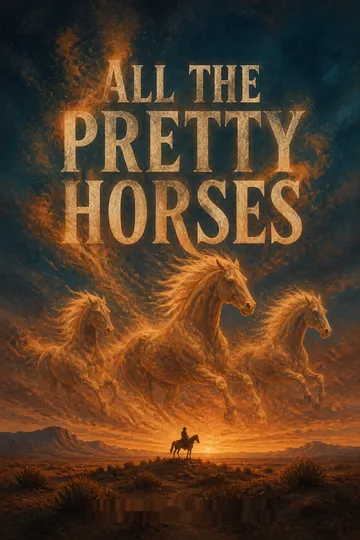
About the Author
Other books by Cormac McCarthy



Download PDF
Download EPUB
.epub digital book format is ideal for reading ebooks on phones, tablets, and e-readers.








