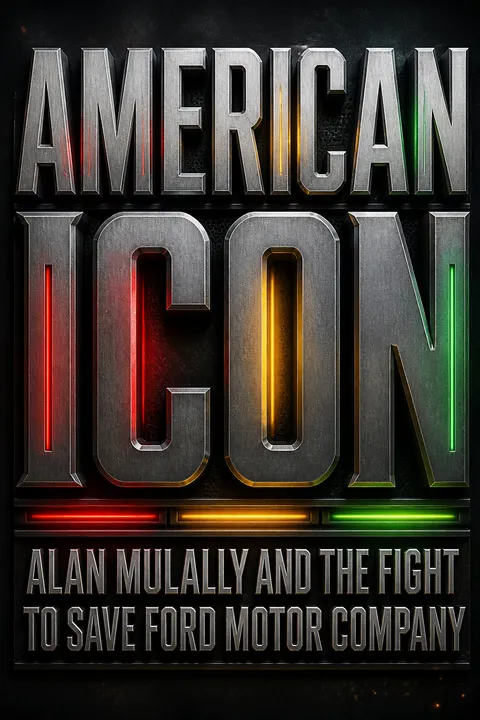


Key Takeaways
Ford kept repeating its oldest mistake: treating a winning product as permanent.
Success had a short shelf life. Henry Ford’s Model T made cars affordable and helped Ford reach 61.5 percent of the U.S. market in 1921. But Ford failed to refresh it as competitors improved their offerings. The same pattern resurfaced with the Taurus: after it became America’s bestselling car, Ford let investment fade, and the model slid into rental fleets. Later, profits from oversized SUVs encouraged the company to overlook changing fuel prices and customer preferences.
A comeback was not a cure. Ford repeatedly recovered through a new hit, then grew complacent and fell behind again. Its 2006 crisis was not simply a bad year. It exposed a habit of treating temporary product success as proof that the business itself was healthy.
What's striking is that the recurring failure was not a shortage of invention. Ford repeatedly created products that competitors copied, then neglected the follow-through that keeps a product relevant. This resembles a familiar problem in technology markets: an innovation can become a trap when its success protects old assumptions from scrutiny. The useful question is not merely, “What is selling?” but, “What customer need is changing beneath those sales?” Still, the book’s historical pattern should not imply every decline is self-inflicted. Oil prices, regulation, and recessions can overwhelm even competent planning.
Bill Ford saved Ford by handing its CEO seat to an outsider.
Stewardship meant sharing power. Bill Ford became CEO in 2001, but he struggled to overcome entrenched rivalries and resistance to change. Mark Fields developed a serious restructuring plan, yet Ford’s North American business kept losing ground, and the company’s internal conflicts obstructed execution. By 2006, Ford was facing record losses and a falling stock price.
The succession was an act of restraint. After failed efforts to recruit other high-profile executives, Bill Ford brought in Alan Mulally, who had led Boeing’s commercial aircraft division through major crises. Ford stepped aside as CEO while staying executive chairman. He provided the family’s support and promised Mulally room to lead. The partnership mattered: Mulally brought operational discipline, while Ford’s position and institutional knowledge helped protect the turnaround from internal resistance.
This is a case of ownership serving the institution rather than the owner’s ego. Family control can entrench weak leadership, as Ford’s own history shows, but it can also support long-term decisions that public markets may punish in the short term. Bill Ford’s move worked because stepping aside did not mean disappearing: he remained a source of legitimacy with the family, board, dealers, and employees. The arrangement was unusually dependent on trust between two leaders, however. A succession plan is stronger when it transfers authority and embeds practices, not just when personalities happen to complement each other.
Make bad news visible before it becomes a financial emergency.
One meeting exposed the real problem. Mulally replaced Ford’s crowded schedule of executive meetings with a weekly Business Plan Review, or BPR. Senior leaders reported progress using common data and simple status colors: green for on track, yellow for concern, and red for trouble. A Special Attention Review, or SAR, followed when a problem needed deeper discussion. The process made the company’s separate operations easier to compare and harder to hide.
The red Ford Edge changed the room. At an early review, the slides were all green despite huge losses. Mark Fields then reported that a grinding noise had forced Ford to pause the Edge launch. Instead of punishing him, Mulally praised the warning and asked who could help. Soon other executives began marking problems honestly. Ford could not solve issues that its leaders concealed from one another.
The BPR is more than a reporting format. It changes what information earns status inside a team. In organizations where bad news threatens careers, employees learn to manage appearances; common metrics and repeated review can make reality harder to evade. The Edge episode shows that psychological safety is not simply warmth or permissiveness. It is the demonstrated expectation that raising a problem will lead to help and accountability rather than retaliation. The method still has limits: color coding can oversimplify complex risks, and a leader’s approval can become a new performance cue. Candor depends on consistent responses, not a dashboard alone.
Build one global company without erasing local market knowledge.
Ford joined scale to accountability. Before Mulally, regional divisions often designed and sourced vehicles separately, duplicating work and guarding authority. His matrix organization gave global functions, such as product development and purchasing, company-wide responsibility while retaining regional business units accountable for their markets. This linked teams that had rarely worked together without making every decision from Dearborn.
Products made the change tangible. Ford and its affiliates offered 97 nameplates around the world when Mulally arrived. The company reduced that number to 59 by 2008 and concentrated investment on shared platforms. Its Global Product Development System, or GPDS, brought engineering, design, manufacturing, purchasing, and sales into the development process. The strategy aimed to reduce rework and build vehicles that could serve multiple markets, rather than simply adapting disconnected regional plans.
The organizational design addresses a real tension in multinational business: centralization can capture economies of scale, while decentralization preserves local responsiveness. Ford’s matrix attempted to make both visible by assigning global functional ownership alongside regional business responsibility. That architecture is useful only if decision rights are clear; otherwise, matrix structures can multiply meetings and create competing bosses. The book’s emphasis on common platforms also reveals an important distinction: standardize the expensive underlying systems, but leave room for the visible features customers value locally. Global integration is not sameness for its own sake.
Borrow while lenders still believe the plan, not after panic begins.
Liquidity bought time. Ford’s finance leaders feared that the company would need substantial cash to restructure and that its access to credit would disappear as its rating worsened. In late 2006, Ford sought a financing package exceeding $18 billion. Lenders ultimately committed $23.6 billion, including secured borrowing backed by nearly all domestic assets. The collateral reached as far as Ford Credit, Volvo, and the Blue Oval itself.
The timing was deliberate, not risk-free. Ford secured the money before credit markets froze, giving Mulally resources to cut capacity while continuing product investment. The loan also put the family’s control and the company’s assets at risk if Ford failed to repay. It was not a magic cure. The financing mattered because Ford had a plan to use the cash, and because the company acted before an emergency left it with no negotiating power.
The financing decision illustrates the value of liquidity as an option: cash gives an organization room to make changes before every choice becomes forced. It also shows why timing and credibility reinforce each other. Lenders were more receptive after Bill Ford appointed a leader with a turnaround record, but the loan’s scale made failure more consequential, not less. This is not a general argument for maximal borrowing. Leverage can preserve a viable business or accelerate a weak one’s collapse. The relevant discipline is to connect financing to specific, testable actions and to stress-test whether the company can still repay under worse conditions.
Treat labor as a partner in survival, not a cost line.
The old contract strained the business. Ford carried high labor costs and a roughly $23 billion obligation for retiree health care. The company also faced restrictive work rules and a jobs bank for idled employees. Rather than wait for a strike or bankruptcy, Mulally and his team shared financial information with the United Auto Workers and explained the choices facing the company.
Negotiation exchanged concessions for a future. In 2007, Ford and the UAW agreed to move retiree health care into a union-run trust, reducing Ford’s long-term liability. The deal required Ford to contribute $17.3 billion, with only 40 percent in cash and the rest in convertible notes. Ford also secured lower labor costs and made commitments to keep or place products in U.S. factories. Further negotiations in 2009 brought additional savings and changes to the contract. The relationship remained contentious, but both sides had a reason to keep Ford operating.
The labor agreement reframed bargaining from dividing a fixed pie to preserving the institution that produced the pie. Sharing company data helped make the danger credible, while product commitments gave workers a concrete stake in the proposed future. This resembles interest-based negotiation, which separates underlying needs from opening demands: workers sought job security and benefits, while Ford needed lower costs and flexibility. The balance was not perfectly equal. Workers accepted painful concessions, and the company still had to demonstrate that its promises would become investment and jobs. Partnership is meaningful when shared sacrifice is matched by visible mutual commitments.
Keep investing in wanted products, even when the market collapses.
A shrinking market changed the product mix. By 2008, gasoline above $4 a gallon and the financial crisis sent demand away from Ford’s profitable trucks and SUVs. Mulally’s team cut production to match actual demand, but refused to abandon new-product investment. Ford retooled factories that had made large SUVs and trucks to build compact cars and crossovers, including the global Focus and Fiesta. It also pushed ahead with EcoBoost, which used turbocharging and direct fuel injection to give smaller engines the power of larger ones.
The bet created options for recovery. Ford’s new vehicles arrived as customers began returning to dealerships. Its 2009 profit reached $2.7 billion. Ford did receive government-supported loans for retooling and Federal Reserve support for Ford Credit, but it avoided the direct operating bailout that GM and Chrysler required. Its independence rested on both earlier preparation and products customers wanted.
The strategic choice resembles investment through a downturn: protect capabilities that will matter in the recovery instead of optimizing only for immediate cash. Ford’s factory conversions connected product strategy to physical capacity, while its labor agreements made U.S. production of small cars more viable. The outcome was not purely managerial foresight. Government credit programs, consumer incentives, and competitors’ troubles also shaped the recovery. The stronger lesson is not “always invest through a recession,” but distinguish temporary demand collapse from a permanent shift in customer preference, then preserve only the bets that fit the evidence and the balance sheet.
Make the turnaround survive its star by distributing decisions and discipline.
Results had to become routine. Ford’s recovery was the work of many people: Bill Ford made room for new leadership, Fields built the initial North American restructuring, finance leaders secured funding, and teams across the company improved products, quality, suppliers, and labor relations. Mulally’s BPR process spread beyond the executive suite, giving departments and regions a regular way to track shared goals and surface problems.
The proof was broader than one quarter. Ford earned $2.7 billion in 2009 and $6.6 billion in 2010, while cutting debt and improving product quality. Its 2010 Focus embodied the global strategy: one compact platform could support millions of vehicles across markets. Yet the book ends with a real question. Ford had often recovered before and then drifted back into complacency. Whether its new habits could outlast Mulally remained uncertain.
A celebrated leader can catalyze change, but celebrity is not institutional memory. Ford’s strongest defense against regression was the routine that made information, responsibility, and cross-functional help part of ordinary work. That is a form of organizational learning: knowledge becomes more durable when it is carried by processes and distributed expertise rather than held by one person. Still, procedures cannot guarantee culture. Teams may keep the meetings while restoring the old incentives, hiding failure, or protecting status. The real test is whether the system continues to reward truth and cooperation when the crisis, and the leader who embodied them, are gone.
Analysis
Ford’s turnaround is best understood as a coordinated redesign of an organization, not a lone executive’s rescue. The company already had valuable pieces: Fields’s restructuring plan, Leclair’s grasp of the balance sheet, Kuzak’s product-development ideas, and a history of improving quality in some regions. What it lacked was a mechanism for combining those pieces quickly. Mulally supplied that mechanism through shared data, recurring reviews, clarified responsibilities, and a strategy that connected product decisions to factories, suppliers, labor agreements, and financing.
The narrative’s central paradox is that Ford became more integrated while becoming more focused. Integration meant linking regions and functions that had operated as separate empires. Focus meant shedding brands, products, and capacity that consumed resources without strengthening the core. Neither move alone would have sufficed. A smaller portfolio without coordinated execution could still reproduce waste; a global matrix without strategic priorities could turn complexity into endless meetings.
The crisis also changed the credibility of information. Ford’s executives had reason to conceal problems because past leaders punished candor and rewarded political maneuvering. The public red status on the Edge mattered because it altered the expected consequence of honesty. That cultural shift enabled more accurate planning, but it did not eliminate the risk of metric gaming or overly optimistic forecasts. Accountability systems need judgment and trust alongside numbers.
The book rightly resists a purely heroic explanation. Bill Ford’s decision to surrender the CEO role, early financing, labor concessions, and the work of many executives were necessary parts of the outcome. So were external factors, including federal credit support, consumer incentives, and competitors’ crises. Ford’s independent recovery therefore demonstrates preparedness and execution, not self-sufficiency from public institutions or luck. Its most durable achievement was not simply returning to profit, but making coordination more routine. The unresolved question is whether those routines can withstand success, the condition that had repeatedly undone Ford before.
Review Summary
American Icon receives overwhelmingly positive reviews, praised for its engaging narrative and insights into Ford's turnaround under Alan Mulally's leadership. Readers appreciate the book's blend of business strategy, leadership lessons, and compelling storytelling. Many find it inspirational and relevant to their own work. The book is lauded for its thorough research and ability to make a complex business story accessible and exciting. Some critics note a bias towards Ford and Mulally, while a few find it overly detailed. Overall, it's highly recommended for those interested in business, leadership, and American industry.
People Also Read









Glossary
Business Plan Review
Weekly performance reviewThe weekly meeting Alan Mulally introduced at Ford for senior leaders to review a common set of business data and progress against company goals. Executives reported changes, forecasts, and risks using concise presentations. The recurring format was intended to expose problems early, create shared accountability, and reduce the private reporting systems that had allowed Ford’s divisions to hide or distort information.
Special Attention Review
Focused problem-solving sessionA meeting held after the Business Plan Review when an issue required deeper discussion than the main review allowed. The BPR kept attention on the company-wide plan and status; the SAR gave leaders time to investigate a specific obstacle, compare options, and coordinate a response. Together, the two meetings separated routine monitoring from more intensive problem-solving.
One Ford
Shared global operating strategyAlan Mulally’s strategy for making Ford operate as one integrated global company rather than a collection of regional businesses. It combined common global priorities, shared platforms, coordinated functions, and clear accountability while retaining regional business units to respond to local markets. The goal was to reduce duplication, improve product development, and use Ford’s worldwide scale more effectively.
Global Product Development System
Integrated vehicle-development processFord’s cross-functional system for designing and engineering vehicles with input from product development, manufacturing, purchasing, sales, and other relevant groups. Drawing on practices from Mazda, Volvo, and Ford’s own teams, GPDS aimed to identify conflicts earlier, reduce engineering changes, shorten development time, and support vehicles built from shared platforms for multiple markets.
VEBA
Union retiree health trustA voluntary employees’ beneficiary association is a trust established to provide benefits, including health care, to a defined group of workers or retirees. Ford and the UAW negotiated a VEBA to take responsibility for hourly retirees’ health care, transferring a large long-term liability from Ford’s books to a union-run fund. Ford funded the trust through a combination of cash and convertible notes.
Aligned Business Framework
Long-term supplier partnership modelFord’s supplier strategy to reduce the number of companies it purchased from while building longer-term, more collaborative relationships with those retained. Instead of relying chiefly on many competing suppliers and repeated price pressure, the framework aimed to improve quality, reduce costs, and give suppliers more predictable business. It reflected the company’s effort to address strained supplier relations and simplify its supply base.
FAQ
What's American Icon: Alan Mulally and the Fight to Save Ford Motor Company about?
- Focus on Ford's Turnaround: The book chronicles Alan Mulally's leadership as he takes over Ford during a crisis and implements strategies to revitalize the company.
- Historical Context: It provides a detailed history of Ford, highlighting its challenges and competition, especially during the 2000s.
- Leadership and Culture: Emphasizes Mulally's leadership style and the cultural changes he introduced to foster collaboration and accountability.
Why should I read American Icon?
- Inspiring Leadership Lessons: Offers insights into effective leadership and management, especially in times of crisis, relevant for business professionals.
- Real-World Case Study: Serves as a case study of corporate turnaround strategies, showcasing Ford's transformation from near bankruptcy to profitability.
- Cultural Transformation: Highlights the importance of corporate culture and its impact on an organization’s success or failure.
What are the key takeaways of American Icon?
- Importance of Transparency: Mulally emphasized honesty and transparency, stating, “The data sets you free.”
- Team Collaboration: Highlights the significance of teamwork, with Mulally implementing a weekly business plan review process.
- Focus on Core Competencies: Mulally's strategy involved simplifying Ford's product lineup and focusing on consumer-desired vehicles.
What are the best quotes from American Icon and what do they mean?
- “The neatest thing about this process is that we’re going to get back together next week.”: Reflects Mulally's commitment to continuous improvement and accountability.
- “We have a lot of brands. We have a lot of nameplates.”: Underscores the complexity within Ford, which Mulally aimed to simplify.
- “We must change to grow and survive.”: Encapsulates the urgency of transformation necessary for Ford's competitiveness.
Who is Alan Mulally, and why is he significant in American Icon?
- Background and Experience: Former CEO of Boeing's Commercial Airplanes Group, known for leading the development of the Boeing 777.
- Transformational Leadership: Focused on collaboration, transparency, and accountability, which he applied to Ford.
- Crisis Management: His ability to navigate crises and implement strategic changes is a central theme of the book.
What challenges did Ford face before Mulally's arrival?
- Declining Market Share: Ford lost market share to foreign competitors due to outdated products and poor quality.
- Financial Losses: The company faced massive financial losses, with projections indicating a loss of over $12 billion for the year.
- Cultural Issues: Characterized by infighting, lack of accountability, and resistance to change, hindering adaptation to market demands.
How did Mulally approach the restructuring of Ford?
- Weekly Business Plan Reviews: Implemented a system to ensure executive accountability and alignment with company goals.
- Simplification of Product Line: Focused on reducing brands and models to streamline operations and meet consumer demand.
- Cultural Change: Fostered openness and collaboration, encouraging idea-sharing without fear of retribution.
What is the "One Ford" strategy mentioned in American Icon?
- Unified Global Operations: Aimed to integrate Ford's regional divisions into a cohesive entity to leverage global resources.
- Focus on Core Products: Emphasized streamlining the product lineup and focusing on consumer-demanded vehicles.
- Collaboration and Accountability: Fostered a culture of teamwork and shared responsibility among employees.
How did Mulally secure financing for Ford's turnaround?
- Massive Loan Acquisition: Orchestrated a $23.6 billion financing deal, mortgaging nearly all of Ford's assets.
- Building Investor Confidence: His leadership and clear vision helped restore confidence among investors and lenders.
- Strategic Communication: Effectively communicated Ford's turnaround plan, emphasizing commitment to profitability.
How did Ford's product strategy change under Mulally?
- Focus on Fuel Efficiency: Shifted strategy to prioritize fuel-efficient vehicles, retooling factories for smaller cars and hybrids.
- Global Product Development: Emphasized a global approach, sharing platforms and resources across markets.
- Elimination of Overlapping Brands: Streamlined the brand portfolio, focusing on the core Ford brand to strengthen identity.
What role did corporate culture play in Ford's turnaround?
- Cultural Transformation Was Essential: Mulally recognized the need for a culture supporting teamwork and open communication.
- Encouraged Collaboration: Promoted a "One Ford" philosophy, fostering an environment of shared objectives.
- Data-Driven Accountability: Emphasized data in decision-making, creating accountability and tracking progress.
What does the future hold for Ford after Mulally?
- Continued Growth Strategy: Focus on global expansion and product innovation, building on Mulally's foundation.
- Challenges Ahead: Faces competition from emerging markets and changing consumer preferences.
- Leadership Transition: Ensuring Mulally's vision and culture endure is crucial for maintaining competitiveness.
Download PDF
Download EPUB
.epub digital book format is ideal for reading ebooks on phones, tablets, and e-readers.








