Plot Summary
Voices and Retirements
Victor Bayne, a psychic detective in Chicago's Paranormal Investigation Unit, attends his partner Maurice's retirement party. Their partnership, though not deeply personal, was built on mutual respect and the practical pairing of a psychic ("Psych") and a non-psychic ("Stiff"). Victor, who can see and communicate with the dead, relies on Auracel, a drug that dampens his abilities, to cope with the constant barrage of spirits. At the party, Victor's sense of loss is palpable—Maurice's departure marks the end of a stable era. The event is tinged with awkwardness, self-doubt, and Victor's struggle to fit in, both as a psychic and as a gay man in a world that's only just begun to accept people like him. The stage is set for upheaval, both professional and personal.
A New Partner, A New Case
Victor is introduced to Lisa Gutierrez, his new partner, a sharp, young Latina detective. Their first case together is a bizarre murder: Anthony Blakewood, a young gay man, is found dead in his apartment, surrounded by carefully arranged shards of mirror, with no visible cause of death. Victor, heavily medicated, is unable to contact the victim's spirit—a first for him, and a deeply unsettling experience. Lisa proves competent and unflappable, but Victor's reliance on Auracel and his awkwardness with new people make the partnership tense. The case's strangeness, combined with Victor's inability to use his psychic skills, hints at a threat that is both supernatural and deeply personal, setting the tone for the investigation.
Haunted Silences
Victor's inability to contact Blakewood's ghost gnaws at him. He and Lisa revisit the crime scene, but the usual "stickiness" of murder victims is absent—no spirit lingers, no clues are forthcoming. Victor's self-doubt intensifies, and Lisa's skepticism is both a comfort and a challenge. The investigation reveals little: the victim was ordinary, with no known enemies, and the crime scene is meticulously staged. Victor's psychic silence is mirrored by his emotional isolation, and the partnership with Lisa, though promising, is threatened when her own psychic abilities are discovered, leading to her suspension. Victor is left to face the case—and his own limitations—alone.
The Uncooperative Dead
Another murder occurs, echoing the first: a gay man, Ryan Carson, is found dead, surrounded by mirrors, his spirit also missing. Victor teams up with Detective Jacob Marks and his partner Carolyn, a human lie detector. The killer's victims are all attractive gay men, and witnesses give wildly different descriptions of the suspect, each seeing someone uniquely appealing. Victor's frustration mounts as his psychic talents remain blocked. The team suspects the killer is using some form of psychic camouflage, but without the cooperation of the dead, they are left chasing shadows. The case becomes a race against time as the body count rises.
Unlikely Alliances
As the investigation stalls, Victor and Jacob's professional relationship deepens into a personal one. Their chemistry is electric, and their mutual attraction offers Victor a rare sense of acceptance and desire. Yet, Victor's insecurities—about his abilities, his sexuality, and his worth—threaten to undermine this new connection. Meanwhile, Lisa, suspended but still involved, reveals her own psychic gift: the "si-no" game, a form of limited precognition. The team, now operating partly outside official channels, uses Lisa's ability to narrow down the killer's location and intentions, forging a bond of trust and shared risk.
The Killer's Mask
The investigation uncovers a chilling pattern: the killer appears differently to each witness, always as their ideal fantasy. This psychic glamour allows him to seduce and murder with impunity. The team theorizes that the killer is not human, but a psychic predator—an incubus—who feeds on the souls of his victims during sex. Victor's research into paranormal lore confirms their suspicions, but offers little guidance on how to stop such a being. The killer's power to manipulate perception and evade detection makes him nearly unstoppable, and Victor's psychic shields prove ineffective against him.
Dead Witnesses, Living Clues
With the dead unable or unwilling to speak, Victor turns to unconventional sources: dead witnesses at crime scenes, and Lisa's si-no game. The team pieces together that the killer is targeting men in the gay community, using clubs and dating spots as hunting grounds. Each murder is accompanied by the same ritualistic use of mirrors and a thumping, hypnotic music. The killer's psychic abilities are so strong that even Victor, a seasoned medium, is left vulnerable. The investigation becomes a battle of wits and wills, with the team racing to predict the killer's next move.
Ghosts and Guilt
The stress of the case, combined with his psychic failures, forces Victor to confront his own traumas: the isolation of his childhood, the horrors of "Camp Hell" (Heliotrope Station), and the constant pressure to suppress his abilities. His relationship with Jacob offers solace, but also stirs jealousy and fear of abandonment. Lisa's struggles with her own powers mirror Victor's journey, and their friendship deepens as they support each other through professional and personal crises. The ghosts Victor encounters—both literal and metaphorical—underscore the cost of living among the dead.
Nightmares and New Connections
As Victor and Jacob's relationship intensifies, so does the threat from the incubus. Victor's nightmares blur the line between the living and the dead, and his psychic senses are assaulted by the killer's presence. The team's efforts to trap the incubus lead to a harrowing confrontation, during which Victor's psychic shields are shattered and his physical and emotional limits are tested. The killer's seductive power nearly claims Jacob, forcing Victor to risk everything to save him. The battle is as much internal as external, with Victor's self-acceptance and courage proving as vital as his psychic skills.
The Si-No Game
Suspended but undeterred, Lisa uses her si-no ability to help the team locate the killer. Through a series of yes-no questions, they pinpoint the incubus's lair and anticipate his next victim. The si-no game, once a childhood diversion, becomes a crucial investigative tool, highlighting the value of unconventional talents and the importance of trust. Lisa's journey from self-doubt to empowerment parallels Victor's own, and their partnership—though unofficial—proves essential to the case's resolution. The team's willingness to bend rules and rely on each other is their greatest strength.
The Incubus Revealed
The team confronts the incubus in the act, witnessing his soul-draining attack on a new victim. Each person sees the killer as their own fantasy—David Bowie, George Clooney, Brad Pitt—underscoring his power to manipulate desire. Victor's psychic shields are overwhelmed by the incubus's scream, leaving him physically and emotionally shattered. The killer escapes, but not before Victor glimpses the void at his core: a black, featureless maw, the embodiment of emptiness and hunger. The encounter leaves the team shaken, but also more determined than ever to stop him.
The Final Confrontation
When Jacob is targeted by the incubus, Victor races to save him, armed only with his psychic training and sheer will. The final showdown is a battle of minds and souls, with Victor using every technique he learned at Camp Hell—psychic shields, body bags, and mirrors—to contain the creature. The incubus taunts Victor, immune to most defenses, but Victor's ingenuity and desperation give him the edge. In a climactic moment, Victor traps the incubus in a psychic body bag lined with mirrors, muffling his scream and emptying his gun into the entity. The incubus is destroyed, leaving only slime behind.
Aftermath and Acceptance
In the wake of the confrontation, Victor and Jacob recover together, their bond strengthened by survival and mutual vulnerability. Lisa, exonerated and empowered, decides to pursue formal psychic training, determined to use her gift for good. The team reflects on the cost of their victory—the physical and emotional scars, the loss of innocence, and the ongoing struggle for acceptance in a world that fears the unknown. Victor, once haunted by self-doubt and isolation, finds solace in love, friendship, and the knowledge that he is, at last, among the living.
Characters
Victor Bayne
Victor is a fifth-level medium, able to see and communicate with the dead, but plagued by anxiety, self-doubt, and the need to medicate his abilities with Auracel. His childhood and early career were marked by isolation and trauma, including time at the infamous "Camp Hell." Victor is gay, introverted, and deeply uncomfortable with his own power, often wishing for normalcy. His relationships—with partners, lovers, and the dead—are fraught with complexity. Over the course of the story, Victor evolves from a passive, self-medicating survivor to an active, courageous investigator who learns to trust others and himself. His journey is one of self-acceptance, vulnerability, and the search for connection in a world that both needs and fears him.
Jacob Marks
Jacob is a "Stiff"—a non-psychic cop—renowned for his competence, strength, and integrity. Handsome, self-assured, and openly gay, Jacob is both Victor's professional equal and romantic interest. He is fascinated by the psychic world, supportive of Victor's struggles, and unafraid to challenge him. Jacob's presence offers Victor stability and acceptance, helping him navigate both the dangers of the case and the complexities of intimacy. Jacob's own vulnerabilities—his desire for connection, his willingness to break rules for justice—make him more than just a love interest; he is Victor's anchor and partner in every sense.
Lisa Gutierrez
Lisa is Victor's new partner, a young Latina detective with a secret: she possesses the "si-no" ability, a form of limited precognition. Ambitious, intelligent, and resourceful, Lisa manipulates her psychic test scores to join the force, only to be suspended when her abilities are discovered. Her journey mirrors Victor's—struggling with identity, acceptance, and the burden of power. Lisa's courage and loyalty make her an invaluable ally, and her willingness to embrace her gift, despite institutional resistance, signals hope for a new generation of psychics.
Carolyn Brinkman
Carolyn is Jacob's partner, a level-two psychic who can detect lies. Calm, methodical, and quietly formidable, she serves as the team's moral compass and reality check. Carolyn's ability to read truth and falsehood makes her both a powerful investigator and a vulnerable target for manipulation. Her support of Lisa and Victor, and her willingness to bend rules for justice, highlight her integrity and empathy. Carolyn's presence ensures that the team remains grounded, even as they confront the supernatural.
Maurice Taylor
Maurice is Victor's long-time partner, a non-psychic detective whose wisdom, patience, and quiet support helped Victor survive the early years of his career. Their relationship, though not deeply personal, is built on mutual respect and understanding. Maurice's retirement marks a turning point for Victor, forcing him to confront change and loss. Maurice's legacy is one of stability and acceptance, a reminder that true partnership transcends differences.
The Incubus
The incubus is the story's antagonist, a psychic entity that seduces and kills by draining the souls of his victims during sex. He appears differently to each person, always as their ideal fantasy, and uses mirrors and music as part of his ritual. The incubus is both alluring and terrifying, a metaphor for desire, addiction, and the dangers of unchecked power. His ability to evade detection and manipulate perception makes him nearly invincible, forcing Victor and the team to confront their deepest fears and insecurities.
Sergeant Warwick
Warwick is Victor's boss, a traditionalist who struggles to understand and manage the psychic members of his team. His adherence to rules and suspicion of psychic abilities create tension and conflict, particularly when he suspends Lisa and later Victor. Warwick represents the challenges of institutional change, the fear of the unknown, and the limits of authority in the face of the supernatural.
Anthony Blakewood
Blakewood is the initial murder victim, a young gay man whose death sets the case in motion. His spirit's refusal to communicate is unprecedented for Victor, signaling the unique threat posed by the incubus. Blakewood's ordinary life and tragic end underscore the vulnerability of the community and the randomness of violence.
Ryan Carson
Carson's murder mirrors Blakewood's, reinforcing the pattern and urgency of the case. Like Blakewood, his spirit is absent, deepening the mystery and Victor's sense of failure. Carson's death raises the stakes and propels the team toward a confrontation with the killer.
The Dead Witnesses
The spirits Victor encounters—bar patrons, coffee shop regulars, and even a dead prostitute—offer fragmented, often unreliable clues. Their presence highlights the porous boundary between the living and the dead, the persistence of memory, and the limitations of even the most extraordinary abilities.
Plot Devices
Psychic Abilities and Limitations
The narrative is structured around the interplay of psychic talents—Victor's mediumship, Lisa's si-no, Carolyn's lie detection—and their limitations. These abilities drive the investigation, but also create vulnerability, isolation, and institutional suspicion. The story uses psychic phenomena as metaphors for trauma, identity, and the struggle for acceptance. The limitations of these powers—Victor's need for Auracel, Lisa's suspension, the dead's silence—underscore the cost of difference and the necessity of teamwork.
Shifting Perspectives and Unreliable Perception
The incubus's ability to appear as each person's fantasy highlights the theme of unreliable perception. Witnesses see what they most desire, making identification impossible and forcing the team to question their own senses. This device blurs the line between reality and illusion, desire and danger, and challenges the characters to trust each other over their own perceptions.
Mirrors and Music
The killer's use of mirrors and hypnotic music at each crime scene serves as both a literal and symbolic device. Mirrors reflect desire, fragmentation, and the multiplicity of identity, while music creates an atmosphere of trance and surrender. These elements heighten the story's sensuality and menace, reinforcing the incubus's power and the vulnerability of his victims.
Institutional Suspicion and Rule-Bending
The tension between the psychic detectives and their superiors—embodied by Warwick—drives much of the conflict. The team's willingness to bend rules, rely on unofficial talents, and trust each other over the institution is both a source of strength and risk. This device explores themes of bureaucracy, prejudice, and the necessity of change in the face of new realities.
Emotional and Psychological Realism
The story's emotional arc—Victor's self-doubt, Lisa's quest for acceptance, Jacob's desire for connection—parallels the supernatural investigation. The characters' psychological journeys are as important as the case itself, grounding the paranormal in authentic human experience. The resolution of the case is as much about healing and acceptance as it is about defeating the incubus.
Analysis
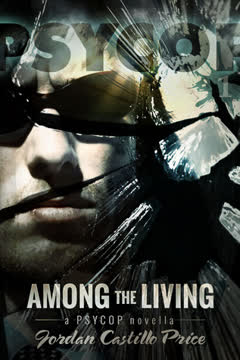
Among the Living is a genre-bending blend of paranormal mystery, police procedural, and queer romance, using the supernatural as a lens to explore themes of identity, trauma, and acceptance. Victor Bayne's journey is both literal and metaphorical: he must confront not only a soul-devouring incubus, but also his own fears, insecurities, and longing for connection. The novel interrogates the costs and gifts of difference—psychic, sexual, emotional—and the ways institutions both enable and constrain those who don't fit the mold. The incubus, as a shape-shifting predator, embodies the dangers of unchecked desire and the seductive power of fantasy, while the team's reliance on unconventional talents and mutual trust offers a model for resilience and hope. Ultimately, the story is about finding one's place "among the living"—embracing vulnerability, forging authentic relationships, and daring to be seen, even when the world is haunted by ghosts.
Last updated:
Review Summary
Among the Living introduces Victor Bayne, a Class 5 medium and PsyCop who sees and communicates with the dead while investigating crimes in Chicago. Paired with gorgeous Detective Jacob Marks, Vic works to solve a serial killer case while developing a romantic relationship. Readers praised the fast-paced plot, witty humor, compelling characters, and excellent world-building. Many noted Vic's endearing awkwardness and Jacob's protective nature. The main criticism was the novella's short length—under 100 pages—leaving readers wanting more character development and backstory. The paranormal mystery elements and steamy romance scenes balanced well, hooking readers into this series opener.