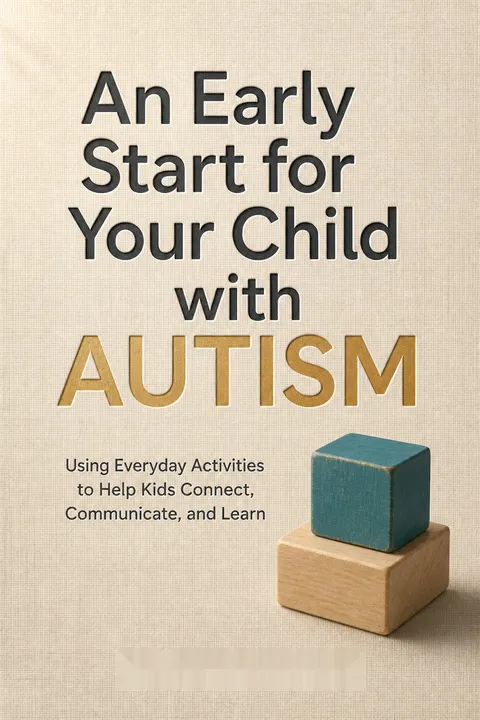


Key Takeaways
Choose evidence-based early intervention, tailored to your child's strengths and needs
Start with sound evidence. A diagnosis can bring urgency, grief, and a flood of competing claims. The authors advise choosing evidence-based practices, meaning approaches tested in scientific studies and shown to help more than no intervention. A strong program is individualized, led by trained professionals, tracks progress, and involves caregivers in setting goals and using strategies at home. The book reports a National Research Council recommendation of at least 25 hours of structured intervention weekly for preschoolers, while acknowledging that the ideal amount for children under three was unknown.
Build a coordinated team. Ask how providers measure progress and what they change when a child is not advancing. Families can use an IFSP or IEP to clarify goals and services, and request meetings so therapists, educators, and caregivers work toward shared priorities.
The useful distinction is between a treatment label and a testable plan. A familiar acronym does not prove that a program is effective for a particular child; measurable goals, transparent progress reviews, and a good fit matter. The 25-hour recommendation reflects the book's 2012 context and should not be treated as a universal dose. Intervention quality, access, the child's wellbeing, and family capacity all shape what is feasible. Evidence literacy helps families ask better questions without requiring them to become researchers.
Turn care routines into learning time, without adding therapy hours
Use the day already there. The book's central proposal is to weave opportunities to engage, communicate, and learn into ordinary moments: meals, dressing, bath time, books, play, and chores. A parent can offer a few bites at a time, pause for a request, name the food, and take a turn eating too. The point is not to turn a parent into a full-time therapist or to schedule hours of drills. It is to make existing interactions more shared and purposeful.
Parents can learn the techniques. In a study described by the authors, eight families received twelve weekly, one-hour coaching sessions. Parents' use of the strategies rose from roughly 40 to 60 percent of observed opportunities to more than 90 percent. Children showed gains in imitation and communicative sounds. The study was small, but it illustrates how brief coaching can change everyday interactions.
This approach resembles learning in context: skills are practiced where they are used, with familiar people and meaningful objects. That can make communication more functional than practicing a request only in a clinic. The small parent study supports feasibility, not a claim that caregiver practice replaces professional services or guarantees a particular outcome. The most sustainable version treats shared routines as relationship time with learning embedded, rather than measuring every family moment as a therapy session.
Follow the child's attention before asking them to follow yours
Find the current focus. Before introducing a new toy or game, notice what already holds the child's attention. The authors recommend joining that activity, getting into a comfortable face-to-face position, reducing competing distractions, and adjusting distance to the child's comfort. Then listen actively, describe what the child is doing in simple words, offer useful help, or imitate the child's actions. These moves make a caregiver part of an activity without abruptly taking it over.
Small changes can open a door. Pablo spent much of his time with a television remote, while Matthias stared out a window and rarely approached toys. Their parents first discovered what each child enjoyed, including tickling and energetic movement games, then used those interests to build shared play. The aim was not to force attention, but to make interaction easier to notice and more appealing.
Following attention respects the fact that attention is selective, not a resource that can simply be demanded. It also connects to responsive teaching: an adult uses a learner's current interest as the bridge to a new exchange. The book's emphasis on faces and gaze needs a humane boundary. Looking into someone's eyes is not the only evidence of attention, and discomfort should be taken seriously. The practical test is whether the child is engaged and communicating, not whether interaction looks conventionally typical.
Make social exchange feel rewarding, not like a lesson
Build a game together. The authors call simple, enjoyable face-to-face games sensory social routines. These are familiar exchanges, such as a song with gestures, bouncing, or a brief chase, where a caregiver starts, pauses, watches for the child's cue, and continues. A look, reach, sound, smile, or movement can be a meaningful turn. Pauses let the child influence what happens instead of remaining a spectator.
Match the child's energy. If a child becomes overexcited, soften the movement, voice, and pace. If the child seems disengaged, a livelier activity may help. André, who often played alone with figures, became more engaged when his parents increased the enjoyable games they already knew he liked. He began approaching them to restart play and using more looks, sounds, and gestures.
Pleasure is not decoration added after learning; it can be the reason a child chooses to stay in an interaction. This aligns with motivation research across learning settings, where interest and a sense of agency support persistence. The pause is especially powerful because it creates room for the child's contribution. Still, adults should read signals carefully: a child may enjoy repetition, or may be tolerating it. The child's cues, including turning away or becoming distressed, are more informative than an adult's assumption that a game is fun.
Give shared activities a clear beginning, middle, variation, and finish
Make the activity legible. A joint activity routine is a shared episode organized around one activity. It begins by choosing and setting up materials, develops a simple shared action, adds a variation to sustain interest, and ends with cleanup or a transition. The partners trade turns and control rather than having the adult direct every move. With blocks, for instance, both partners can add pieces to a tower, try a new way of using them, and put them away together.
Carry the pattern into care. Bath time can also have a beginning, a shared washing activity, playful variations with water or toys, and a clear ending as the child helps dry off or put toys away. Predictable steps help the child anticipate what comes next and create repeated chances to communicate, imitate, and participate.
A predictable sequence can lower uncertainty while preserving room for choice. In that sense, the routine works like a small social script: it makes the structure visible without requiring the child to infer every transition from scratch. The important balance is predictability without rigidity. If the child resists a step, the adult can adapt the sequence rather than treating completion as the only measure of success. The routine is a support for participation, not a test of obedience.
Wait for communication, then respond immediately to its meaning
Make space for a message. When a child wants a snack, toy, or game, caregivers often anticipate the need and provide it before the child has a chance to signal. The authors suggest pausing briefly and watching for a look, reach, sound, or gesture, then responding promptly. Clear containers, small portions, or choices can create opportunities to ask for help or indicate a preference. As skills develop, a reach may grow into giving, showing, or pointing.
Juliana's meals became practice. Her parents began offering a few visible food choices and waited for her to reach before handing over the selected item. The goal was to help her communicate, not to make her earn food. Opportunities should be easy and frequent, with distress treated as useful information. Essential needs should never be withheld to force a signal.
This is a form of accessible conversational turn-taking: the adult leaves a pause, recognizes a message in the child's available communication, and answers it. That can strengthen a child's sense that communication has effects. The boundary matters. Deliberately creating frustration can undermine trust, particularly for a child who is hungry, overwhelmed, or in pain. A good opportunity is brief, attainable, and responsive to the child's signals. Communication includes speech, gestures, pictures, devices, and other reliable ways of expressing a need.
Replace a behavior by meeting the same need more effectively
Map what happens. The book explains behavior through the ABCs of learning: an antecedent is what happens before a behavior, the behavior is the observable action, and the consequence is what follows. A child who grabs a drink may be trying to get it; a child who screams during toothbrushing may be trying to escape it. If the action achieves its goal, it is more likely to recur, even when adults dislike it.
Teach a workable alternative. A replacement behavior is a more acceptable action that achieves the same goal. If grabbing gets a desired object, a point or other available request can be prompted and rewarded with that object. The alternative needs to be easy for the child and effective quickly. The authors also caution that sudden behavior changes or persistent distress may reflect medical problems and deserve professional assessment.
The ABC model is useful because it shifts attention from blame to the conditions around an action. It treats behavior as information about what the child can access or avoid. Yet a three-part map is a hypothesis, not a complete explanation of a person's inner experience. Pain, sensory overload, fatigue, communication barriers, and several functions at once can affect behavior. A functional analysis should therefore invite observation and collaboration, not confident mind-reading. The strongest replacement plan improves access to communication while preserving dignity and safety.
Teach play from familiar actions toward pretend stories
Build from what the child can do. The authors describe a progression from using toys in simple, functional ways to making dolls or animals act, treating one object as another, and combining pretend actions into a scene. A child might first learn to brush a doll's hair, then have the doll act independently, then use a block as a pretend brush, and eventually play through a bedtime or meal sequence. Adults model, take turns, add manageable variations, and gradually leave more room for the child's own ideas.
Practice life through play. Pretending can also prepare a child for an unfamiliar event. Before a dentist visit, a family might act out sitting in the chair, opening the mouth, and finishing the visit with a familiar toy. The book also recommends building independent constructive play gradually, with organized materials and limited distractions.
Pretend play gives children a safe place to rehearse sequences and explore how people act in familiar situations. It can support narrative thinking because actions become linked into an understandable story. The developmental sequence is a teaching route, not a ranking of children's worth. Autistic play can be meaningful even when it is repetitive, solitary, or unusual to an observer. The useful question is whether the child is gaining enjoyable options and ways to participate, rather than whether every play style converges on a standard form.
Build speech on gestures, shared attention, and sounds
Communication comes first. The authors present speech as growing from earlier skills: attending to people, taking turns, imitating, using gestures, sharing attention to objects, and making sounds intentionally. Joint attention means coordinating attention among a child, another person, and something of interest. Giving, showing, and pointing can help a child share wants and interests, while sound games and songs build practice with the voice.
Speak just beyond the child's level. For a child using single words, the book recommends short phrases that add only a little complexity, while naming what the child is already doing or noticing. A bilingual family in the text narrates play in Spanish and English, using simple labels in both languages. Speech is not the only route to communication; the authors note that some children use pictures or other visual systems.
The emphasis on meaningful communication avoids a common trap: counting echoed words as proof that a child can use language spontaneously. Words matter most when they help a person request, refuse, comment, or connect. The same principle supports augmentative and alternative communication, which can provide access to communication rather than waiting for speech. Language models should follow the child's focus and respect the family's linguistic context. A child's communication may be multimodal, with speech, gestures, images, and devices working together.
Treat caregiver wellbeing and medical comfort as learning conditions
Support the whole household. The early months after diagnosis can strain sleep, partnership, and attention to siblings. The authors recommend protecting small amounts of couple and one-to-one sibling time, accepting help, using respite care where available, and building a supportive network. They also urge caregivers to protect their own physical and emotional health, and to seek professional help for persistent depression or anxiety.
Check comfort before correcting behavior. Sleep disruption, gastrointestinal distress, feeding difficulties, and seizures can affect a child's attention and behavior. A child who cannot explain pain may show a sudden change through crying, withdrawal, or aggression. The book advises discussing concerns with a physician instead of assuming every difficulty is simply part of autism. Medical care and supportive family routines complement, rather than replace, intervention.
The family-systems perspective is a strength: a child's development is shaped by relationships, routines, health, and the capacity of the people providing care. Respite is not a reward for having done enough; it can preserve the continuity of care. This framing also resists the fantasy that one caregiver can sustain endless, perfectly optimized interaction. The practical challenge is structural: support networks, insurance, and time are unequally available. Advice to seek help is most useful when paired with realistic attention to those constraints.
Analysis
The book's central move is to relocate intervention from a specialist-only setting into the ordinary traffic of family life. Its method is developmental and behavioral at once: follow a child's interest, build shared attention, create a reason to communicate, respond to the attempt, and repeat the exchange in meaningful settings. The result is a practical pedagogy rather than a list of isolated exercises. The chapter sequence matters because it moves from attention and enjoyable interaction toward gestures, imitation, play, and language, skills that support one another.
The strongest insight is that parents need not manufacture hours of therapy to increase learning opportunities. They can make existing routines more reciprocal. The book also gives caregivers a useful way to interpret behavior without moralizing it: notice what preceded an action and what outcome followed. Its emphasis on prompt feedback and attainable replacement behaviors makes the model operational, not merely aspirational.
The approach has important limits. The described parent study involved only eight families, so its results illustrate promise and feasibility more than broad effectiveness. The book was published in 2012, and clinical recommendations, service availability, and terminology can change; readers should verify current advice with qualified professionals. The ABC model can also become reductive if it is treated as a full account of a child's experience. Health, sensory conditions, communication access, and the child's own preferences require attention alongside consequences.
A further tension lies between helping a child gain useful skills and treating conventional social behavior as the goal. The book is strongest when it emphasizes comfort, agency, functional communication, and shared enjoyment. Those principles can be retained without requiring eye contact, a particular kind of play, or speech as the only marker of progress. Its most durable lesson is therefore not that every moment must become instruction, but that responsive relationships can make daily life more communicative, predictable, and open to learning.
Review Summary
An Early Start for Your Child with Autism receives mostly positive reviews, with an average rating of 4.30/5. Readers appreciate its practical strategies, clear explanations, and focus on parent-child relationships. Many find it helpful for understanding autism and implementing effective interventions. Some criticize its ABA-based approach and outdated language. Parents value its accessibility and concrete examples. Critics note it can be overwhelming and repetitive. Overall, most readers find it a valuable resource for families with autistic children, especially those newly diagnosed.
People Also Read









Glossary
Early Start Denver Model
Developmental autism interventionA developmental intervention approach for young children with autism developed by Sally Rogers, Geraldine Dawson, and colleagues. It builds social engagement, communication, imitation, and play through enjoyable interactions and everyday routines. In this book, the parent strategies are based on the model and are intended to complement services delivered by trained professionals.
Evidence-based practices
Research-tested interventionsPractices that have been evaluated in scientific studies and reported in scientific journals, with findings that they help children more than no intervention. The book advises families to ask providers what evidence supports a program, how progress is measured, and how the plan changes when a child is not making progress.
scaffolding
Support for focused learningThe adult's adjustment of an activity or environment so a child can attend to and learn from an important opportunity. Examples include choosing an appealing toy, simplifying language, exaggerating an action, or reducing distractions. Support is tailored to the child's interests and learning needs rather than imposed as a fixed teaching script.
sensory social routines
Enjoyable face-to-face gamesRepeated, pleasurable interactions between a child and another person, often involving movement, touch, songs, or playful sounds rather than toys. The adult starts an activity and pauses so the child can signal whether to continue. These routines create opportunities for shared attention, turn-taking, and communication.
joint activity routines
Shared, structured activitiesPlay or daily-care activities organized so a child and adult participate together, trade turns, and share control. An activity begins with a setup, develops a common action, gains interest through variation, and ends with a transition. The structure can be used in play, meals, bathing, dressing, and other routines.
joint attention
Shared focus between partnersThe coordination of attention among a child, another person, and an object or event. A child may look between a toy and a caregiver, point to something, or show an object to share interest. Joint attention gives people a way to share information and meaning, and provides context for language learning.
ABC's of learning
Antecedent, behavior, consequenceA way to examine how behavior relates to its context. The antecedent is what happens before an action, the behavior is the observable action, and the consequence is what follows. The framework helps caregivers consider what a child may be trying to achieve and how outcomes influence whether an action is repeated.
communication temptations
Opportunities to requestArrangements that give a child a natural reason to communicate, such as placing a favorite item in a container that needs adult help to open or offering a few pieces of a preferred snack at a time. The adult watches for the child's available signal and responds, keeping the opportunity manageable rather than creating undue frustration.
one-up rule
Model slightly longer languageA language-support strategy in which an adult speaks in phrases only a little more complex than the child's spontaneous, meaningful speech. If a child uses single words, the adult uses brief phrases rather than demanding a longer echoed sentence. The aim is to model usable language while keeping it understandable.
replacement behaviors
Alternative ways to meet needsBehaviors taught to replace an unwanted action while allowing the child to achieve the same goal. For example, a child who grabs for a drink might be taught to point or use another available request. The replacement needs to be easy for the child and produce the desired outcome promptly.
FAQ
What's An Early Start for Your Child with Autism about?
- Focus on Early Intervention: The book emphasizes the critical role of early intervention for children diagnosed with autism spectrum disorders (ASD). It provides strategies for using everyday activities to help children connect, communicate, and learn.
- Parent-Centric Approach: It advocates for parents as primary teachers, showing how they can effectively use daily routines to promote their child's development. Parents are empowered to be as effective as trained therapists.
- Evidence-Based Strategies: Grounded in research and clinical practice, particularly the Early Start Denver Model (ESDM), the book offers proven strategies that benefit children with ASD when parents are actively involved.
Why should I read An Early Start for Your Child with Autism?
- Practical Guidance: The book offers actionable strategies that parents can implement immediately, making it a valuable resource for impacting their child's development positively.
- Empowerment for Parents: It provides parents with the knowledge and confidence to support their child's learning and communication, emphasizing that they are not alone in this journey.
- Comprehensive Coverage: Covering a wide range of topics, from setting up early intervention programs to enhancing communication and social skills, it serves as a comprehensive guide for parents.
What are the key takeaways of An Early Start for Your Child with Autism?
- Importance of Early Intervention: Early intervention is crucial for children with ASD, leading to significant improvements in communication, social skills, and overall development.
- Everyday Learning Opportunities: Parents can create learning opportunities during everyday activities, embedding learning moments into daily life.
- Building Relationships: Emphasizes the importance of strong emotional connections between parents and children, fostering a positive learning environment.
What is the Early Start Denver Model (ESDM)?
- Evidence-Based Approach: ESDM is a comprehensive, evidence-based early intervention program for young children with ASD, combining behavioral and developmental strategies.
- Parent Involvement: A key component is the active involvement of parents in their child's learning process, using specific strategies during everyday interactions.
- Focus on Social Skills: ESDM emphasizes social skills and communication, helping children learn to interact meaningfully with others.
How can I create learning opportunities during daily routines according to An Early Start for Your Child with Autism?
- Embed Strategies in Activities: Incorporate learning strategies into everyday activities like meals and playtime, using simple language and gestures.
- Use Joint Activities: Structure daily routines as joint activities, promoting interaction and learning through turn-taking and engagement.
- Be Consistent: Consistency across different routines helps children understand expectations, reinforcing learning and comfort with new skills.
What specific strategies does An Early Start for Your Child with Autism recommend for capturing attention?
- Positioning and Engagement: Position yourself at eye level and use engaging, sensory-rich activities to capture your child's attention.
- Sensory Social Routines: Introduce playful interactions, such as tickling or singing, to increase smiles and laughter, enhancing social engagement.
- Joint Activities Framework: Use a four-part framework—setup, theme, variation, and closing—to create engaging play experiences.
How does An Early Start for Your Child with Autism address joint attention?
- Definition of Joint Attention: Described as the ability to share focus on an object or event with another person, essential for communication and social interaction.
- Strategies for Development: Use eye contact, gestures, and vocalizations during play to foster joint attention, creating engaging activities that naturally elicit it.
- Importance of Social Engagement: Highlights the struggle children with autism often face with joint attention, making it crucial for parents to actively work on this skill.
What methods does An Early Start for Your Child with Autism recommend for teaching imitation?
- Imitation with Objects: Use toys and household items to model actions for children to imitate, such as crashing toy trains together.
- Daily Activities: Integrate imitation into daily routines, like mealtimes and bath times, modeling actions in familiar contexts.
- Checklist for Success: Provides a checklist to assess whether parents are effectively teaching imitation, ensuring necessary tools and strategies are in place.
How can I help my child develop expressive language skills according to An Early Start for Your Child with Autism?
- Building Sound Vocabulary: Encourage vocal play and respond to your child's sounds as if they were words, helping develop a vocabulary of sounds.
- Using Everyday Activities: Incorporate language into daily routines, narrating actions and labeling objects frequently to provide practice opportunities.
- Encouraging Imitation: Model sounds and words during interactions, waiting for children to imitate, and gradually increase language complexity.
What role does play have in language development according to An Early Start for Your Child with Autism?
- Play as a Learning Tool: Play provides opportunities for practicing communication skills in a natural setting, enhancing social language use.
- Symbolic Play and Language: Engaging in pretend play expands vocabulary and understanding of social interactions, connecting symbolic play with language development.
- Encouraging Interaction: Foster play involving interaction with others, helping children learn to communicate effectively through negotiation and turn-taking.
What are some common challenges parents face when implementing strategies from An Early Start for Your Child with Autism?
- Resistance to Change: Children may resist new routines or strategies, requiring patience and persistence to help them adjust.
- Limited Attention Span: Young children, especially those with ASD, may have shorter attention spans, necessitating brief interactions that gradually increase in duration.
- Overstimulation: Monitor your child's energy levels to avoid overstimulation during play, adjusting activity intensity to maintain a positive learning environment.
What are the best quotes from An Early Start for Your Child with Autism and what do they mean?
- "Every interaction you have with your child is an opportunity for your child to learn.": Emphasizes the importance of intentional everyday interactions for significant developmental impact.
- "Learning happens only when behaviors are followed by reinforcers.": Highlights the necessity of providing rewards for desired behaviors, reinforcing learning.
- "Imitation is a foundational skill that supports language and social development.": Underscores the critical role of imitation in helping children learn to communicate and interact, forming the basis for complex social skills.
Download PDF
Download EPUB
.epub digital book format is ideal for reading ebooks on phones, tablets, and e-readers.








