

Plot Summary
Prologue
Queen Myrrah addresses new Locust troops beneath Sera, presenting the war as a struggle for survival. She says the Locust emerged from below and devastated human cities, then describes humanity’s counterattacks, including the destruction of its own territory to deny the enemy control. As the human population dwindles and the Locust face their own losses, Myrrah frames the coming battle as a final stand for both peoples.
The opening gives the enemy a political voice before the human soldiers take over the story. Myrrah’s account reverses the usual moral arrangement: humans are not only victims but also a people willing to destroy their own world rather than surrender it. Her language makes survival the shared motive and mutual understanding the missing possibility. The later story complicates that framing without dissolving it. Soldiers on both sides can be brave, but their governments and the momentum of war leave little room to recognize that bravery across the line.
The Sniper in the Ruins
Fourteen years after Emergence Day, Delta Squad patrols ruined Ephyra, where Locust drones erupt through the street and nearly choke Dominic Santiago, known as Dom. An unknown sniper kills the drone before it can finish him, using ammunition so old that Marcus Fenix doubts any current Gear owns it.
During the search for the shooter, Dom finds Bernadette Mataki, an older former sergeant who has shadowed his patrols for weeks. Marcus recognizes her from the Pendulum Wars. Dom then realizes she fought beside his dead brother, Carlos. Bernie has crossed continents to return to the COG, and her arrival brings an old comrade into a city where every rifle and every human life has become scarce.
Bernie’s entrance turns an anonymous act of rescue into a reunion with history. Dom is not simply grateful to the sniper; he recognizes her through the memory of Carlos, whose absence already structures his search for Maria. Her return also unsettles the squad’s assumptions about the Stranded and the usefulness of veterans: an outsider has protected them when their own forces were caught off guard. The obsolete rifle makes that tension material. In a world running out of equipment, knowledge and experience survive in people the institution has stopped counting.
Food Before the Fissures
At COG headquarters, Colonel Victor Hoffman studies new incursions that angle toward North Gate, where hydroponic equipment, seed, poultry, and protein farms feed Jacinto. The Lightmass assault has reduced Locust numbers, but Hoffman refuses to treat the lull as victory. He persuades Chairman Prescott to evacuate the food production zone and its irreplaceable machinery before the enemy can cut the city’s supply.
Delta Squad joins the convoy, while the Stranded watch from the streets with little trust in the government they have rejected. With barely enough vehicles and too few Ravens to airlift everything, the COG must move the cargo by road. The decision sets a deadline, a route, and dozens of vulnerable people in motion.
The food convoy makes survival administrative as well as military. Hoffman and Prescott are both responsible for the same endangered population, but their immediate measures differ: the chairman worries about rationing and civil order, while the colonel sees an army without equipment as a promise of future deaths. Their argument is not a simple contest between courage and cowardice. It is a conflict between time horizons. The threatened farms expose how thin the boundary is between combat and civilian life: a lost supply depot can defeat a city as surely as a battlefield loss.
A Brother by Choice
Years before Emergence Day, ten-year-old Carlos Santiago notices that new classmate Marcus Fenix, the wealthy son of a famous scientist, is isolated and vulnerable to bullying. Carlos sits beside him, defends him from the Curzon brothers, and discovers that Marcus can fight with startling precision.
Their friendship grows into a second family for Marcus, especially after his mother, Elain, disappears and his father refuses to explain what happened. Carlos’s younger brother Dom joins the friendship, and the Santiagos make room for the boy who seems more at ease in their crowded home than in his own mansion. Marcus’s guardedness and loyalty take shape together: he wants belonging, but learns early to keep painful questions to himself.
The childhood strand supplies the emotional grammar for the adult story. Carlos does not rescue Marcus through grand gestures; he offers ordinary acts of inclusion, and their repetition gives Marcus a family structure his own home cannot provide. Elain’s disappearance then plants a parallel between affection and secrecy. Adam’s silence protects neither Marcus nor their relationship, but the boy learns to endure uncertainty rather than demand an answer. Later, the same habit will shape how Marcus carries guilt and loss. The friendship is both his refuge and the bond that can override his judgment.
Three Brothers Enlist
As the boys grow up, Carlos chooses the COG military, and Marcus rejects his father’s preferred academic future to enlist as an ordinary Gear beside him. Dom marries Maria after she becomes pregnant, then joins the service to support his young family. He qualifies for commando work and trains under Bernie Mataki, who teaches him field survival as well as the hard limits of compassion in combat.
Years later, on a Pendulum Wars patrol, Carlos pursues and kills a saboteur carrying explosives near a pipeline, crossing a border in the process. The incident confirms that Carlos acts quickly when he believes lives are at stake. Soon afterward, Dom is recalled from leave and all three brothers are drawn toward a secret operation.
The three enlistments arise from different needs, even as the men build a shared identity in uniform. Marcus seeks a place where he can belong; Carlos follows a family tradition and his instinct to act; Dom turns military service into a means of caring for Maria and their children. Those motives explain why the COG can feel like family and still demand painful sacrifices from its members. Bernie’s training adds an ethical counterweight to their enthusiasm: competence means learning how to survive, but also confronting what survival may require.
The Hammer at Aspho
Sixteen years before the present, COG intelligence discovers that the UIR is developing the Hammer of Dawn, a satellite weapons system that could decide the Pendulum Wars. Major Victor Hoffman is assigned to lead Operation Leveler, a covert raid on the research site at Aspho Point.
The mission must seize technical data and, if possible, key scientists before destroying the facility. Adam Fenix helps identify what the raiders need, despite his unease about killing the researchers.
When the UIR strengthens nearby defenses, the COG creates a northern diversion and changes the assault route. Hoffman’s commandos will enter through the marsh, while Major Helena Stroud’s company blocks reinforcements. Marcus is not told that his father is involved, and Dom’s team is kept ignorant of the full target.
The operation places several kinds of responsibility in collision. Hoffman must translate political urgency into a plan that can be executed by young soldiers, while Adam must face the human consequences of a weapon he understands technically. The intended capture of scientists complicates the raid’s clean military logic: the targets are civilians, yet their expertise may enable mass killing. The secrecy that protects the operation also repeats the Fenix family’s failure to communicate. Marcus is asked to serve a plan shaped partly by his father without knowing the connection, so institutional necessity and personal injury become difficult to separate.
A Landing in Black Water
A violent storm delays Operation Leveler, leaving the soldiers seasick and uncertain whether the landing will happen. While the COG waits for a brief tidal window, Dom receives word that Maria has given birth to their daughter, Sylvia. He cannot contact her, so he carries the news into the mission alongside his fear of leaving his family behind.
When Helena Stroud gives the order to launch, landing craft push into the dark water, while Marcus and Carlos support the assault from C Company. Dom’s commando team reaches the marsh in Marlins deployed from Sea Ravens, unloads its equipment, and moves toward Aspho Point on foot. The dangerous crossing turns a secret exercise into an irreversible live operation.
Sylvia’s birth makes the mission’s stakes intimate without changing its demands. Dom has a new reason to survive, but he cannot act on it by withdrawing; he understands duty as provision for his family, even when that duty takes him away from them. The storm strips away the soldiers’ sense of control before they reach the enemy. Their insertion is not a triumphant display of technology but a risky dependence on timing, piloting, and trust. The dark sea becomes a threshold Dom must cross before he can return to the life he wants.
The Guard Behind the Wall
The raiders breach Aspho Point with little resistance. Dom’s team kills an armed guard, finds a startled network technician, and sends the bots to copy and erase the servers. Hoffman captures two of the three scientists on his list, but the third is absent.
Dom learns that the program’s data has an off-site backup at a nearby signals base, so the team cannot simply destroy the research building and leave. A hidden security guard has been tracking their movements and signaling the UIR forces.
When the raiders locate him in a concealed rooftop space, Hoffman and Dom kill him, but the warning has already brought a counterattack. With the data transfer still underway and enemy troops closing in, their planned quick raid becomes a race to escape with whatever they have secured.
The raid’s apparent ease is revealed as a trap in the space between information and knowledge. Intelligence has mapped the building, but not the backup or the guard’s improvised observation point. The bots can strip servers efficiently, yet they cannot make the humans around them safe. Dom’s encounter with the frightened technician also exposes the moral dissonance of the mission: the soldiers are trained to read every movement as a threat, while the people they seize experience them as an invasion. The hidden guard collapses that ambiguity into immediate danger, without making the cost of the operation disappear.
The Bridge Becomes a Battlefield
The UIR counterattack traps both the raiders and C Company in the marsh. Enemy armor, mortars, and helicopters threaten the extraction zone, while the COG’s air support is driven back. Helena Stroud leads the defense after Sergeant Kennen is killed. When an Asp blocks the way for rescue aircraft, she crosses exposed ground, climbs onto the vehicle, and drops explosives inside.
The Asp is destroyed, but Stroud dies in the blast. Carlos and Marcus then attack another armored vehicle near the bridge. Carlos is badly wounded when enemy fire hits his team, while Marcus climbs into the damaged Asp and turns it against the UIR line. Carlos cannot follow him, and the bridge becomes the last barrier between Marcus and the advancing enemy.
The battle converts command into personal exposure. Stroud’s final action removes a threat that could strand the wounded, but it also leaves her daughter listening as the company reports her death. Marcus’s commandeered Asp shows how rapidly a capable soldier can improvise when conventional weapons fail. Carlos’s injury, meanwhile, makes the friendship’s old pattern dangerous: he has spent years protecting Marcus, and Marcus now risks himself in return. The bridge is both an actual military obstacle and a test of whether loyalty can be expressed without turning into a second casualty.
No Gear Left Behind
After Aspho Point is destroyed, Dom’s Marlin is attacked by a Khimera helicopter and begins to sink. He cuts the scientists’ restraints and helps move the living onto another boat, refusing to leave wounded comrades or prisoners in the water. The second Marlin is hit as well, and Dom finally pilots it into a Sea Raven’s cargo bay so the survivors can be lifted aboard.
Ashore, Carlos, unable to reach Marcus, pulls a grenade pin and destroys the bridge, preventing Marcus from making a fatal rescue attempt. Marcus returns carrying Carlos’s remains. When Dom reaches the ship, Marcus cannot bring himself to explain at first; Bernie and Hoffman make sure Dom hears the news from the people who were there.
The two brothers enact the same bond in opposite directions. Dom risks his life for strangers and comrades because leaving people behind would violate his sense of what a Gear is. Carlos makes the final decision not to let Marcus trade his life for a rescue that cannot succeed. The difference is not that one brother is selfless and the other reckless; both act from love, but Carlos can see that Marcus’s loyalty has become a danger. Dom’s rescue also refuses to make compassion contingent on allegiance, even when the people he saves are enemy civilians.
Stars Over a Grave
Weeks later, Dom and Marcus attend the awards ceremony for Operation Leveler. Dom receives his own Embry Star, while Carlos’s medal is presented in his memory. Hoffman accepts his decoration on behalf of the Pesang troops who were denied equal recognition, knowingly damaging his prospects for promotion. At Carlos’s grave, Marcus removes his own medal and buries it with his friend’s.
The gesture reveals the grief he has kept under control since the bridge. Dom, meanwhile, returns to Maria and their children, but family life cannot erase the brother he has lost. In the aftermath, Marcus is promoted, Anya Stroud carries her mother’s medal, and the surviving Gears try to resume their duties with their losses exposed.
The ceremony turns private grief into public meaning, but the medals cannot settle what happened. Hoffman uses his recognition to challenge the COG’s treatment of its ally, insisting that sacrifice should not depend on political status. Marcus’s buried medal rejects the idea that his own survival can be cleanly separated from Carlos’s death. Dom’s young family offers a reason to go on, not an antidote to mourning. The survivors must accept that institutions can honor the dead and still fail to comfort those who remember the exact human cost.
The Convoy's Broken Spine
Back in the present, Delta’s North Gate convoy finishes loading the seed, machinery, and food supplies it can save. On the return through ruined Jacinto, Locust attack two vehicles and kill drivers, while Anya Stroud uses Jack’s camera feed to redirect the scattered convoy.
Baird stops to repair a failing truck, then joins Cole and Bernie in a firefight when drones attack. A Boomshot destroys their Armadillo, forcing the group to carry an injured driver and a dead Gear on foot.
Hoffman and Tai Kaliso become isolated near another damaged vehicle, where a Locust bomb has been planted. Marcus and Dom turn back to reach them, despite Baird’s warning that the wounded driver also needs help. Jack removes the bomb, and the surviving convoy reaches the city.
The attack tests whether COG procedure can hold when every choice has a human cost. The convoy rules discourage stopping in a kill zone, yet Baird risks his position to repair a truck and Cole refuses to abandon a dead comrade. Marcus and Dom likewise return for Hoffman rather than treating him as expendable. These actions are not simply rebellion against procedure: each soldier weighs the immediate risk against the social trust the army depends on. The food they protect sustains the city, but their insistence on recovering people is what prevents survival from becoming mere logistics.
What Brothers Withhold
After the convoy returns, Dom presses Bernie to explain Carlos’s death. She tells him that Carlos was badly wounded at the bridge, that Marcus tried to reach him, and that Carlos destroyed the bridge to stop his friend from being killed.
Dom grieves the newly specific truth, but also learns that his brother was not invulnerable and that he did not fail him. He then confronts Marcus about keeping the story secret.
Marcus admits he meant to protect Dom, and reveals that during an earlier Locust-tunnel mission he found his mother’s body, after Adam had allowed him to believe she had simply left. Hoffman also apologizes to Marcus for leaving him imprisoned. The friends begin to speak more honestly, though none of them can undo what silence cost.
The revelations are painful because they replace protective myths with accountable human choices. Bernie’s account lets Dom mourn Carlos as a person who made a desperate decision, not only as the flawless hero described by an award citation. Marcus’s admission links his silence about Carlos to his father’s silence about Elain: protection can become a way of withholding reality from someone who has a right to it. Hoffman’s apology does not repair the years Marcus spent in prison, but it names the wrong directly. The scene treats truth as a relationship practice, not a cure for grief.
Tollen's Empty Sea
Days later, a report of flooding brings Delta to Tollen, a settlement long beyond COG control. From a King Raven, Dom sees that the city has vanished beneath a vast, nearly circular body of water. Buildings, trees, and debris float among the bodies, while bubbles rise from the surface. The pilot suspects methane, but Baird argues that the shape and scale look less like a natural flood than a city that has sunk.
He warns that the Locust may have found a new way to drive humans out, though no one can prove what caused the collapse. Dom returns to the thought of Maria and insists to himself that she is still alive. The reconnaissance ends not with an answer, but with a larger and stranger threat.
Tollen unsettles the fragile hope created by the Lightmass assault. The city’s disappearance is visible evidence, but its cause remains unknown, forcing the soldiers to distinguish observation from explanation. Baird’s suspicion matters because his earlier expertise has often been reliable, yet even he cannot turn a pattern into proof. Dom’s insistence that Maria is alive shows how hope works for him: it is not confidence grounded in evidence, but a decision that keeps him moving. The drowned city expands the war beyond the battlefield and leaves the survivors facing consequences they do not yet understand.
Epilogue
Queen Myrrah rejects the possibility of cooperation between the Locust and humans. She argues that humans understand only possession and dominance, and claims the Locust have no choice but to fight alone.
Her final image is of a victory built over human bodies, a threat that answers the book’s uncertain ending with renewed certainty from the enemy’s side.
Myrrah’s closing certainty sharpens the contrast between what the soldiers discover and what their leaders can admit. Dom, Marcus, and their comrades repeatedly build trust through acts that cross individual boundaries, but Myrrah describes the conflict as a species-level contest in which trust is impossible. Her conclusion is not proof that peace could never exist; it is evidence that the Locust leadership has closed that possibility. The ending leaves the reader with a dangerous imbalance: the humans are uncertain whether the immediate threat has receded, while their enemy remains committed to war.
Analysis
Aspho Fields is structured around two linked crises: an old operation whose meaning has been withheld and a present war that may be changing shape. The braided timeline lets the reader experience the cost of silence before understanding its causes. Marcus’s childhood isolation, Adam’s evasions, Carlos’s protective loyalty, and Dom’s later insistence on the truth all belong to one emotional system. Love repeatedly takes the form of action, but action can become dangerous when it substitutes for communication.
The novel also asks what makes a society worth saving. The COG is coercive and imperfect: it drafts citizens, rations food, and accepts brutal military choices. Yet its strongest defenders do not treat duty as blind obedience. Dom saves enemy scientists from drowning; Hoffman risks his standing to honor Pesang allies; Cole shares food; Bernie insists that the dead deserve dignity. These moments make collective life credible because care travels beyond convenience and status.
War’s moral categories are especially unstable at Aspho. The UIR researchers are civilians, but their work could enable mass killing. The guard who signals the counterattack is an enemy, yet Hoffman recognizes in him the initiative and courage he would value in his own soldiers. The novel does not resolve these contradictions with a clean rule. Instead, it shows how people make choices under pressure and how their judgments continue to trouble them afterward.
The present-day ending refuses easy triumph. The Locust have diminished, but Tollen’s disappearance suggests that the conflict may involve forces the COG cannot yet explain. Dom’s hope for Maria remains personal rather than evidentiary, and Myrrah’s final certainty closes the door on cooperation from the other side. Survival is therefore more than staying alive. It is the difficult work of protecting trust, memory, and human decency when certainty and resources are both running out.
Review Summary
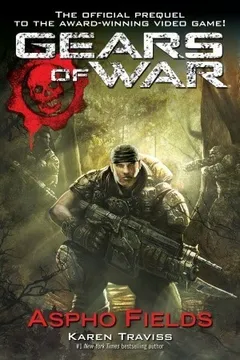
Aspho Fields receives largely positive reviews, praised for its character development, action sequences, and expansion of the Gears of War universe. Fans appreciate the deeper exploration of Marcus and Dom's backstories. Some critics note pacing issues and occasional lack of description. The book is considered accessible to both gamers and non-gamers, though prior knowledge of the franchise enhances the experience. Traviss's writing style and military authenticity are frequently commended. Overall, it's regarded as a strong video game adaptation that adds depth to the franchise's lore.
People Also Read





Characters
Dominic Santiago
The searching brotherDom is a Gear, Carlos’s younger brother, Marcus’s lifelong friend, and a husband and father whose family gives shape to his sense of duty. He is observant, practical, and unusually quick to offer help, whether he is tracking an enemy, caring for a wounded comrade, or looking for Maria after her disappearance. His warmth does not make him soft; he has trained as a commando and can make brutal choices under pressure. Dom also struggles to stop taking responsibility for losses he could not control. He keeps searching for Maria partly because love demands it, and partly because giving up would feel like abandoning one more person.
Marcus Fenix
The guarded loyalistMarcus is a formidable Gear and the son of scientist Adam Fenix. He is intelligent, physically powerful, and sparing with words, often relying on action where other people would explain themselves. As a child, he is drawn to the warmth of the Santiago family; as an adult, he trusts Dom and Carlos with a loyalty that can outweigh orders and self-preservation. His reserve protects him from exposing needs that his family rarely knew how to meet, but it also leaves important truths buried between him and the people closest to him. Marcus measures himself by whether he can protect his friends, a standard that makes both his devotion and his guilt difficult to contain.
Bernadette Mataki
The returning sergeantBernie is a veteran sniper and survival specialist who returns to COG service after years cut off from the main force. Tough, self-reliant, and capable of dry humor, she expects competence from herself and others, but is not indifferent to what war does to people. She knew Carlos and Marcus before the Locust war and carries memories that Dom wants to understand. Her years among isolated survivors have made her wary of how quickly human communities can become cruel when no one enforces mutual responsibility. Back among Gears, she must adjust not only to new weapons and tactics, but to the possibility of trusting people again.
Carlos Santiago
The protective older brotherCarlos is Dom’s older brother and Marcus’s first close friend. Generous, brave, and quick to intervene when someone is in danger, he gives the other two boys a model of loyalty that lasts into adulthood. His instinct is to act rather than wait, a quality that makes him effective in combat and sometimes puts him at odds with procedure. Carlos takes pride in the COG and in his family, but his identity is not reducible to soldiering: he thinks about the people who will live with the consequences of each decision. To Dom, he remains a beloved older brother whose example is both a comfort and a difficult standard.
Victor Hoffman
The burdened commanderHoffman is a career soldier responsible for keeping COG forces effective as equipment, personnel, and time run short. He is disciplined, abrasive, and deeply suspicious of optimism that cannot be measured, yet his severity comes from a strong sense of responsibility rather than indifference. He believes commanders should share the risks they impose on their soldiers and takes casualties personally, even when military necessity leaves him no good choices. Hoffman often hides uncertainty behind bluntness and strict procedure. His conflicts with Marcus and his difficult decisions at Aspho reveal a man trying to preserve both the population and the moral standards that make its survival worth defending.
Augustus Cole
The squad's bright shieldCole is a former thrashball star whose size and combat strength make him an imposing Gear, but his defining quality is his generous spirit. He jokes through bleak situations, shares food with hungry children, and treats squadmates as family even when they irritate him. His cheerfulness is not ignorance of grief; it is a deliberate gift to people who might otherwise feel alone with theirs. Cole gives Bernie a safe place to admit the ugliness of her years outside the COG, and he repeatedly puts care for comrades ahead of convenience. His humor keeps the squad human without pretending that the war is anything but terrible.
Damon Baird
The abrasive mechanicBaird is a technically gifted Gear who can diagnose machinery, study Locust behavior, and spot weaknesses that others miss. He is sharp-tongued, skeptical, and habitually dismissive of people he considers inefficient, which often makes him hard to live with. His cynicism can disguise fear and vulnerability, though he rarely admits either directly. Baird is not simply a complainer: he repairs a failing convoy truck under fire and fights fiercely when his squad is threatened. Bernie recognizes that his competence and loyalty are more dependable than his manners. He is a character whose care is usually expressed through fixing what is broken rather than saying what he feels.
Adam Fenix
The distant scientistAdam is Marcus’s father, a respected scientist and former Gear whose work places him close to decisions about weapons and national security. He values Marcus’s intelligence but struggles to show affection in ways his son can feel. His instinct to protect through secrecy leaves Marcus with questions that shape their relationship for years. Adam is capable of moral discomfort, especially when military necessity turns civilian researchers into targets, but he also accepts the COG’s demand for technical expertise. His love for his son is real, yet he often expresses it through caution and withholding rather than intimacy.
Anya Stroud
The watchful controllerAnya is a COG lieutenant who coordinates field operations through radios, reports, and Jack’s visual feed. She is perceptive, steady under pressure, and able to turn fragments of information into useful decisions for soldiers she cannot see directly. Being the daughter of a commanding officer has shaped her into a competent professional, though she does not always seem comfortable under the weight of that inheritance. Her connection to Dom and Marcus carries a quieter personal dimension, but she keeps her attention on the work when lives depend on it. Anya’s composure is not emotional distance; it is a discipline she maintains while hearing the cost of every order.
Helena Stroud
The frontline majorHelena is a forceful COG major who commands troops with physical courage and a voice that can cut through battlefield confusion. She expects discipline, but she earns commitment by taking on hard work alongside her soldiers and sharing their risks. Her relationship with her daughter Anya is shaped by military professionalism, which can look like distance even when affection is present. Helena has a gift for making a plan feel actionable in the moment, without pretending it is safe. She represents the kind of officer who leads through visible competence rather than reassurance.
Maria Santiago
Dom's absent wifeMaria is Dom’s wife and the mother of his children. Strong-minded and self-reliant, she prefers to manage family life in her own way and does not easily accept help. Her relationship with Dom begins in childhood and becomes an anchor for his hopes of a life beyond military service. After the family suffers devastating losses, she struggles with profound depression and disappears from Dom’s life. Her absence remains an active presence in his choices: he continues searching, measuring the passage of time against the possibility of finding her.
Richard Prescott
The civilian chairmanPrescott leads the COG government and must balance military demands against food, power, water, and public morale. He understands that civilians are nearing exhaustion and worries about unrest as much as the immediate Locust threat. Unlike Hoffman, he has to defend resource choices to a population that is running short on nearly everything. Prescott is neither a simple bureaucrat nor a battlefield commander; his job is to keep a battered society functioning while the army tries to protect it. His exchanges with Hoffman show the strain of having to govern for tomorrow while the war keeps arriving today.
Tai Kaliso
The steadfast IslanderTai is a South Islander Gear whose distinctive tattoos and decorated armor mark a strong cultural identity. He is a capable fighter, loyal to his comrades, and often expresses respect through ritual and practical action. His spiritual reflections can unsettle Hoffman, but they do not make Tai less grounded in combat. He sees significance in treating the dead with dignity and resists allowing battlefield necessity to erase a person’s humanity. Tai’s presence adds a different cultural perspective to a COG force that often assumes its own habits are universal.
Federic Rojas
The surviving young GearFederic joins Delta after his brother Jan is killed, carrying a family grief that Dom recognizes too well. He is eager and capable, but his resemblance to Jan makes his presence painful for those who knew the older man. Federic represents a generation of young soldiers asked to fill places left by the dead.
Queen Myrrah
The Locust's fierce voiceMyrrah is the ruler and public voice of the Locust Horde. She frames the conflict as a fight for her people’s survival and speaks with absolute conviction about the threat posed by humanity. Her perspective gives the enemy a political identity rather than reducing it to a battlefield presence. She is persuasive because she recognizes the scale of the suffering, but her certainty leaves little room for coexistence.
Plot Devices
Hammer of Dawn
A war-ending weaponThe Hammer of Dawn is a UIR satellite weapons program that prompts the COG to launch Operation Leveler. Its strategic importance forces the raiders to balance several objectives: destroy the research site, remove data, and capture specialists who might help the COG understand the system. The weapon also gives the story a moral problem beyond battlefield survival. Scientists who are not carrying rifles may still be helping construct a system designed to kill civilians. The competing claims of security, knowledge, and human life shape Hoffman’s choices throughout the mission.
The Lightmass assault
A fragile lullThe Lightmass detonation has devastated the Locust tunnels and greatly reduced the numbers of enemies reaching the surface. That apparent success gives Jacinto a rare interval in which it can repair equipment and salvage food production. It also tempts civilians and soldiers to hope that the war is nearly over. The story uses the lull as a test of judgment: Hoffman continues to plan for a threat that may return, while the final reconnaissance at Tollen suggests that the detonation may have altered the world in ways no one understands.
Jack the bot
Mechanical eyes and handsJack is a flying robot used for reconnaissance, communications support, and dangerous technical tasks. At North Gate, Jack scouts Locust movement and feeds images to Anya; during Operation Leveler, bots named Frank, Bruce, and Joe strip data from the Aspho servers and help bypass security. Their usefulness is sharpened by scarcity: they are valuable equipment the COG can no longer easily replace. The bots extend what small squads can see and do, but they do not remove human uncertainty. Soldiers must still interpret incomplete images, decide what risks to take, and act when the machines cannot make the moral choice for them.
The COG oath
Duty made collectiveThe COG oath places each Gear within a larger social structure, where personal freedom is balanced against mutual dependence. It helps explain why soldiers accept severe demands and why Dom sees helping others as part of his identity rather than an optional virtue. The story also tests the oath against its limits. COG institutions ration food, enforce service, and sometimes withhold information, while individual Gears choose to protect people beyond their official duty. Their loyalty is strongest when the collective ideal is practiced as care, not merely imposed as obedience.
The brothers' silences
Grief held in reserveMarcus, Dom, and Bernie each know pieces of Carlos’s last battle, but the details remain withheld because the truth seems likely to cause more pain. Marcus protects Dom by refusing to speak, while Bernie delays because she fears trapping him with an image he cannot forget. These silences echo Adam’s refusal to explain Elain’s disappearance to Marcus. The device links family history to military culture: soldiers are trained to control emotion, but that control can become avoidance. The eventual disclosures do not reverse loss; they let the characters understand one another’s choices more honestly.
Download PDF
Download EPUB
.epub digital book format is ideal for reading ebooks on phones, tablets, and e-readers.








