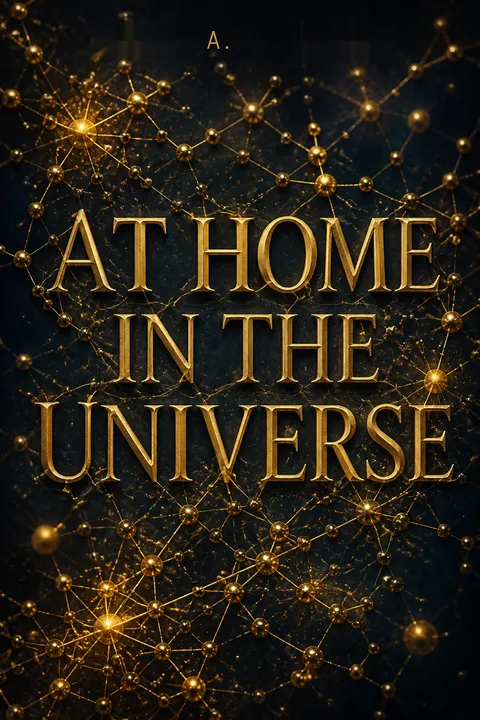


Key Takeaways
Explain life's order with self-organization, selection, and history together
Selection has a partner. Darwinian natural selection explains how heritable variations spread, but Kauffman argues that it does not create every form of order from scratch. Physical and chemical systems can organize themselves: a droplet becomes spherical, and interacting molecules may form larger patterns. Selection then works on the order already available, refining it over generations. The result is neither pure accident nor a prewritten design, but a combination of spontaneous structure and historical contingency.
A changed place in nature. Copernicus, Newton, and Darwin each unsettled older stories of humanity's central place in creation. Kauffman proposes a different source of belonging: if life arises through general properties of matter and energy, it may be a natural outcome rather than a cosmic fluke. This is a research program and a philosophical hope, not an established conclusion.
What's valuable here is the refusal to make emergence a substitute for evolution. Natural selection remains essential, but it need not explain why every possible biological arrangement is available in the first place. This resembles a distinction in developmental biology between constraints that shape what variation can arise and selection that sorts among variants. The idea invites productive questions about which patterns are common because of physical organization, and which are lineage-specific. Its limit is equally important: showing that order can emerge in a model does not show that it did so in Earth's history.
Let chemistry build a living whole before genes become its archive
A network, not a lone molecule. Kauffman's proposed origin of life begins when molecular diversity becomes sufficient for molecules to catalyze reactions that make other members of the same network. A collectively autocatalytic system is a web of reactions that helps regenerate its own components, given a supply of simpler food molecules. Its life-like property belongs to the organized whole, not to any one molecule.
A threshold, not a lucky assembly. A random-graph analogy helps explain the proposal: add enough links among dots, and a giant connected cluster suddenly appears. In his chemical models, increasing the number of possible reactions and catalytic links can similarly produce a self-sustaining network. The calculations depend on simplified assumptions about which molecules catalyze which reactions. They suggest a route to life, but do not establish the actual route taken on early Earth.
The proposal's strongest insight is methodological: search for collective conditions under which life-like behavior becomes likely, rather than imagining a complete modern cell assembling by chance in one leap. That shifts attention from a single miraculous molecule to reaction networks, compartments, and energy flow. It also makes the origin question testable in pieces. The challenge is translating mathematical connectivity into real chemistry. Actual reactions have unequal rates, competing products, and environmental constraints, so a network that closes on paper may fail in a laboratory. The threshold is a powerful hypothesis, not a solved origin story.
Use network structure to explain how order arises without careful design
Simple rules, collective behavior. Kauffman studies Boolean networks, simplified systems whose elements switch between two states and respond to a few other elements. A gene, for instance, is represented as on or off. In these models, networks with sparse connections can settle into short, stable repeating patterns. A simulated network of 100,000 elements with two inputs per element may cycle through roughly 317 states, despite having an unimaginably large number of possible configurations.
Order with room to move. Networks that are too rigid cannot coordinate change; highly connected ones may become chaotic. Between these extremes lies the edge of chaos, a proposed zone where systems remain stable yet responsive. The phrase describes a model-based possibility, not a universal law already demonstrated for every living system.
The network perspective helps explain how large-scale regularity can arise without a central controller. Similar reasoning appears in distributed computing, where local rules can coordinate global behavior without a manager monitoring every component. It also helps separate predictability of patterns from prediction of exact outcomes. Still, binary switches and random wiring are abstractions. Real genes interact at graded levels, with timing, geometry, and chemistry that simple networks omit. The models are most useful as guides to questions about stability and flexibility, not as literal portraits of a cell.
Read cell identity as a stable network pattern, not a tiny blueprint
One genome, many cell types. Most cells in an organism carry nearly the same DNA, but different subsets of genes are active in different cell types. Kauffman proposes that each cell type corresponds to an attractor, a stable pattern toward which a gene-regulation network tends to settle. This offers a way to understand how a fertilized egg can develop into many specialized cells without distributing different genetic instructions to each one.
A suggestive numerical fit. His models predict that the number of stable patterns grows roughly with the square root of the number of genes. The book compares this with estimates such as about 100,000 human genes and 256 human cell types, and reports a similar scaling across organisms. The correspondence is intriguing, but the author acknowledges that it is statistical support, not proof of the mechanism.
Attractor thinking remains a useful systems-level description: cell identity can be understood as a maintained pattern of activity, while signals or mutations may move a cell into another stable state. It connects development to the broader study of complex systems with multiple stable outcomes. The caution is that a mathematical match between scaling curves does not identify the causal machinery. Development also depends on spatial signals, cell interactions, and molecular processes not captured by the network model. The hypothesis is valuable as a framework for organizing evidence, not as a replacement for molecular explanation.
Keep cells guarded while ecosystems exchange molecular novelty
A proposed balance of creativity and containment. Kauffman estimates that today's biosphere contains millions of small organic molecules and perhaps a trillion proteins. He suggests that interacting organisms collectively generate new molecular possibilities, while individual cells remain below the threshold at which novelty would cascade uncontrollably. He calls the former supracritical behavior: each new product can help produce still more products. Subcritical systems, by contrast, do not sustain such an expanding chain.
Why boundaries matter. In a thought experiment, mixing the contents of many organisms could expose an enormous range of molecules and catalysts to one another. A single cell, Kauffman argues, avoids this kind of chemical explosion through its limited internal network and selective boundary. The numerical estimates and the claim that ecosystems are poised near a critical threshold are speculative, but they frame a striking link between biological diversity and cellular safety.
The underlying tension is compelling: exchange supports ecological innovation, while boundaries preserve the internal conditions organisms need to survive. This is a useful way to think about cells as both open systems and selectively protected environments. It also resonates with the general principle that diversity can create new interactions, not merely add more items to a collection. Yet the book's calculations rely on uncertain estimates of reaction numbers and catalytic rates. The proposed global threshold should therefore be read as a model to test, not a measured property of the biosphere.
Selection needs robust landscapes where small changes remain useful
Evolution searches, it does not survey. A fitness landscape maps possible genetic or physical designs onto their success. Natural selection can favor nearby improvements, but on a random landscape it gets trapped among countless local peaks with no reliable clues to better ones. In Kauffman's NK model, the parameter K represents how many other traits affect each trait's fitness. More interdependence creates more conflicting constraints and a rougher landscape.
Robustness makes change possible. On extremely rugged landscapes, small mutations can wreck a system; on very smooth landscapes, high mutation rates can wash away useful traits, an error catastrophe described by Manfred Eigen and Peter Schuster. Redundancy and self-organized stability can make minor variations tolerable, giving selection something to work with. Recombination can also explore combinations between existing variants, but it helps only when the landscape has suitable structure.
This argument usefully reframes evolvability as a property that needs explaining. Selection can improve a system only when variation produces enough viable intermediate forms; otherwise, the search has no footholds. The connection between robustness and evolvability is especially important in engineering, where redundancy can prevent a small fault from becoming systemic failure. The NK model clarifies the tradeoff, but its abstract genes and randomly assigned effects simplify real biology. It supports a general question about the conditions for evolutionary search, not a final account of how every organism acquired those conditions.
Model coevolution as a tension between frozen bargains and runaway races
Partners reshape one another's options. In coevolution, each species changes the conditions faced by others. A prey animal's new defense can alter a predator's fitness landscape, prompting counter-adaptation. Kauffman contrasts evolutionary stable strategies, where interacting populations settle into mutually tolerable states, with Red Queen dynamics, where each keeps changing as partners alter the game.
A poised middle ground. In computer models, average fitness can be highest between these extremes, near a transition from order to chaos. Such systems may produce many small extinction cascades and fewer large ones. Kauffman connects this to self-organized criticality, a proposed tendency for systems to reach a threshold where events occur at many scales. The fossil extinction data discussed in the book do not form a clean power law, so the broad ecological claim remains uncertain.
The framework captures a real difficulty in ecology: species are not optimizing against a fixed background, because their own adaptations alter the conditions of survival for others. It also explains why stability and change need not be opposites. A system can persist while its membership and relationships keep shifting. However, extinction patterns have multiple possible causes, including external catastrophes, and a power-law-like curve alone cannot identify self-organization as the cause. The model is strongest as a way to generate hypotheses about feedback, not as evidence that ecosystems universally tune themselves to one critical state.
Search molecular possibility by selection, and build safeguards alongside it
Search vast libraries instead of designing one molecule. Applied molecular evolution creates large collections of varied DNA, RNA, or protein sequences, then selects those that bind a target or perform a desired task. The book describes experiments screening trillions of RNA molecules and finding thousands that bound a particular dye. Antibodies can also serve as molecular templates for finding peptides that mimic a target's shape.
Opportunity and hazard share a source. Kauffman imagines extending these techniques to drug discovery, vaccines, enzymes, and even experiments that might create autocatalytic systems. His term random chemistry describes using broad mixtures of molecules and catalysts to generate novel compounds for screening. These were frontier proposals in the book, not guaranteed applications. The same search that may yield useful medicines can also generate harmful molecules, while rapid discovery can outpace confidence about consequences.
The key shift is from designing a molecule by prediction to searching a large experimental space and selecting what works. That is a powerful strategy when molecular interactions are too complicated to calculate in advance. It also makes the book's philosophical argument practical: human technologies can accelerate novelty beyond natural evolutionary timescales. But selection for a desired function does not automatically screen for every unintended effect. A responsible search therefore needs evaluation of downstream impacts, not just the successful binding or reaction that begins the search.
Break hard problems into patches, then tune their boundaries
Local autonomy can improve the whole. Kauffman and colleagues model a large, tightly connected problem as a grid divided into patches. Each patch makes changes that improve its own outcome, even when those changes affect neighboring patches. In their simulations, a single large patch can freeze into a poor solution, while many tiny patches keep changing without settling. Intermediate patch sizes often find better overall solutions, especially when the problem has many conflicting constraints.
The political analogy is a hypothesis. The model suggests why decentralized teams or federal systems might find workable compromises without one central planner. The book also describes a version of receiver-based optimization in which agents ignore a small share of competing demands. These ideas do not prove that a particular company or democracy should adopt one structure. The useful lesson is to test how boundaries and local decision rights affect coordination.
The surprising result is that a locally self-interested unit can help the whole system, provided its scope is chosen well. This resembles modular design: teams can work independently while interfaces carry the costs of coordination. The model also highlights a genuine danger, since a boundary can hide harms imposed on neighbors. Political or organizational applications need measures of fairness and accountability that the optimization grid does not contain. Patch size is not a universal recipe; it is a design variable whose effects depend on how tightly coupled the problem is.
Treat civilization as an evolving web, not a forecastable machine
New things create new niches. A car did not merely replace the horse as transport; it helped make room for roads, fuel stations, motels, traffic systems, and new businesses. Kauffman sees similar branching in biological evolution: major innovations open many possibilities, followed by narrower rounds of refinement. His models of symbol strings, goods, and services explore how one product can become the material or tool for another, expanding the web of economic possibilities.
Act wisely without pretending to command the whole. The book ends with the prospect of a global civilization whose cultures and technologies will transform one another in ways no single actor can fully predict. N. Scott Momaday's call to renew a sense of the sacred gives Kauffman a moral response: humility, respect, and attention to shared consequences. The argument is not to stop acting, but to admit that good intentions cannot guarantee control.
The book's closing strength is its integration of scientific uncertainty with an ethic of humility. Complex systems often resist detailed forecasts even when broad regularities can be identified, so admitting limits need not mean abandoning explanation or responsibility. The analogy between ecosystems and economies helps illuminate how innovations generate dependencies and new opportunities. But biological selection and human institutions are not interchangeable: people deliberate, hold power unevenly, and can alter rules intentionally. The comparison is most useful as a prompt to study feedback and unintended consequences, not as a claim that social outcomes are natural or inevitable.
Analysis
Kauffman's central achievement is to shift the question from how selection assembles every detail of life to what kinds of order arise before selection can act. That shift makes room for a layered account: physical constraints shape possible forms, self-organizing networks create robust patterns, selection modifies those patterns, and historical events determine which branches persist. The proposal is more interesting than a simple argument against Darwin because it asks how evolvability itself becomes possible.
The book's intellectual force comes from moving between scales. A reaction network, a gene circuit, an ecosystem, a technology market, and a political institution are not identical, yet each can be studied through connectivity, feedback, thresholds, and adaptation. These comparisons make unfamiliar mechanisms imaginable and generate testable questions. They also carry a risk: a shared mathematical pattern does not guarantee a shared causal mechanism. An ecosystem's extinction curve, a firm's failure rate, and a network's avalanches can look alike while arising for different reasons.
That distinction matters especially for the book's boldest claims. The autocatalytic origin of life and the edge-of-chaos account of development are compelling research programs, but the models do not reconstruct the actual history of life or establish a universal optimum. A threshold in a simplified simulation is not yet a threshold measured in nature. Likewise, the democratic analogy may illuminate compromise under interdependence, but it cannot derive political legitimacy from network dynamics alone.
The enduring lesson is methodological and ethical. Reductionism can explain components without explaining every collective property, while holism need not invoke mystery. Researchers can seek robust, scale-level laws while remaining cautious about extrapolating them. For citizens and designers, the book offers a disciplined form of humility: understand local mechanisms, look for systemic feedback, and do not confuse broad regularity with a power to predict every consequence.
Review Summary
At Home in the Universe presents Kauffman's theory of complexity and self-organization in biological systems. Many readers found the book thought-provoking, praising its insights into evolution, complexity, and emergence. Some appreciated Kauffman's lyrical writing style, while others found it overly rhetorical. The book's mathematical models and scientific concepts were challenging for some readers. Critics argued the theories lacked empirical evidence. Overall, reviewers were intrigued by the ideas presented, even if not fully convinced, and valued the book's contribution to discussions on the origins of life and complex systems.
People Also Read







Glossary
Order for free
spontaneous organized behaviorKauffman's name for order that arises from the dynamics of a system without being designed in detail by natural selection or a central controller. Examples in the book include self-assembling structures and stable patterns in simplified gene networks. The phrase does not mean that biological order violates thermodynamics; living systems maintain organization through flows of matter and energy.
Collectively autocatalytic system
network that helps reproduce itselfA set of molecular reactions in which molecules produced within the set catalyze reactions that make other members of the same set. Given simpler food molecules, the network can sustain and potentially reproduce its organization. Kauffman proposes that such systems could have preceded genetic templates as a route to early life. The proposal is theoretical in the book, not a demonstrated account of life's actual origin.
Catalytic closure
internal support for molecular productionA property of a reaction network in which each molecular species is either supplied from outside as food or produced by reactions catalyzed by molecules within the network. The network is therefore closed with respect to the sources of its catalysts, though it remains open to matter and energy from its environment. Kauffman treats catalytic closure as a defining feature of collectively autocatalytic organization.
Boolean network
network of on-off elementsA mathematical model made of elements that can occupy one of two states, commonly represented as on and off. Each element changes state according to a rule based on inputs from other elements. Kauffman uses Boolean networks as simplified models of gene regulation and molecular systems, studying how their connections and rules affect stability, repeating patterns, and sensitivity to disturbance.
Attractor
stable pattern of system behaviorA state or repeating sequence of states toward which a dynamical system tends to move from a range of starting conditions. The set of starting states that lead to the same attractor is its basin of attraction. Kauffman proposes that attractors in gene-regulatory networks may correspond to stable cell types, because each pattern involves a characteristic configuration of gene activity.
Edge of chaos
region between rigidity and disorderA proposed transitional regime in complex systems, between highly ordered behavior and chaotic behavior. A system in this region may be stable enough to preserve organization while flexible enough to respond to new conditions. Kauffman explores the idea in models of gene networks and coevolving species, while presenting it as a working hypothesis rather than a settled universal law.
NK model
model of interacting fitness constraintsA family of fitness-landscape models with N traits or genes, where each trait's contribution depends on itself and K other traits. Raising K increases interdependence and conflicting constraints, generally making the landscape more rugged. Kauffman uses the model to study adaptive search, biological evolution, coevolution, technological change, and the effects of dividing a problem into patches.
Supracritical behavior
self-amplifying molecular noveltyA condition in a reaction system where newly produced molecules help catalyze further reactions that create additional molecular types, allowing diversity to expand. Kauffman applies the idea to the biosphere as a whole and proposes that ecosystems may sit near a boundary between self-amplifying and self-limiting behavior. The book presents this as a hypothesis supported by simplified calculations.
Self-organized criticality
system poised for avalanchesA proposed behavior in which a system adjusts itself to a critical condition where small inputs can trigger events of many sizes. The sandpile model is the book's central illustration: slowly added grains produce frequent small slides and occasional large avalanches. Kauffman considers whether similar dynamics might help explain extinction events and other changes in complex systems.
Patch procedure
local optimization across connected unitsA method for addressing a difficult, interdependent problem by dividing it into nonoverlapping regions, or patches. Each patch changes its own state to improve its local outcome, while those changes affect neighboring patches. In Kauffman's simulations, intermediate patch sizes can outperform both centralized whole-system control and highly fragmented local decision-making.
FAQ
What's At Home in the Universe about?
- Exploration of Complexity: Stuart A. Kauffman explores the origins of life and the principles of self-organization and complexity in biological systems. He argues that natural selection is not the sole source of order; self-organization plays a crucial role.
- Interconnected Systems: The book discusses how molecules, cells, organisms, and ecosystems interact in complex ways, forming a web of life that is both emergent and self-sustaining.
- Philosophical Implications: Kauffman suggests that humans are not merely improbable accidents but expected outcomes of the universe's complexity, offering a philosophical perspective on our place in the cosmos.
Why should I read At Home in the Universe?
- New Evolutionary Perspective: Kauffman challenges the traditional view of evolution that emphasizes natural selection alone, offering a fresh perspective on biological processes.
- Interdisciplinary Insights: The book integrates concepts from biology, physics, and philosophy, appealing to readers interested in science and its broader implications.
- Thought-Provoking Ideas: Kauffman presents ideas about self-organization and complexity that can inspire further exploration and discussion, resonating with those curious about life's origins.
What are the key takeaways of At Home in the Universe?
- Self-Organization is Fundamental: Kauffman posits that self-organization is a fundamental principle contributing to life's complexity, alongside natural selection.
- Emergence of Order: The book emphasizes that order can arise spontaneously in complex systems, leading to the emergence of life and biological structures.
- Interconnectedness of Life: Understanding the relationships between various biological systems is crucial for grasping the nature of life, encouraging a holistic view of biology.
What is self-organization according to At Home in the Universe?
- Natural Emergence of Order: Self-organization refers to complex structures and patterns emerging spontaneously from simpler interactions without external direction.
- Examples in Nature: Kauffman illustrates self-organization with examples like cellular structures and ecosystems, showing how order can arise from chaos.
- Complement to Natural Selection: Self-organization works alongside natural selection, contributing to life's complexity and diversity, challenging the view that selection is the only evolutionary mechanism.
How does Kauffman explain the origins of life in At Home in the Universe?
- Collectively Autocatalytic Sets: Kauffman proposes that life originated from autocatalytic sets of molecules capable of sustaining themselves and reproducing.
- Phase Transitions: He discusses phase transitions, where a critical diversity of molecules leads to the sudden emergence of life, aligning with his argument on complexity.
- Supracritical Behavior: The idea of supracritical behavior, where molecular diversity drives new species and complexity, is central to understanding life's evolution.
What role does natural selection play in Kauffman’s theory?
- Not the Sole Source: While important, natural selection is not the only mechanism driving life's evolution; self-organization and spontaneous order also play significant roles.
- Selection as a Shaping Force: Natural selection acts on structures and patterns arising from self-organization, refining and shaping them over time.
- Limits of Selection: Kauffman highlights natural selection's limitations, suggesting it cannot account for all the complexity observed in biological systems.
What is the significance of the "edge of chaos" in Kauffman’s work?
- Balance of Order and Chaos: The "edge of chaos" is a state where systems exhibit both order and flexibility, allowing for adaptation and resilience.
- Implications for Evolution: Evolution may favor systems operating at the edge of chaos, where they can respond effectively to environmental changes.
- Broader Applications: This concept extends beyond biology, suggesting similar principles may apply to other complex systems like economies and ecosystems.
What is the concept of fitness landscapes in At Home in the Universe?
- Definition of Fitness Landscapes: Fitness landscapes metaphorically represent how different genotypes or designs perform in terms of fitness or success.
- Rugged vs. Smooth Landscapes: Rugged landscapes have many peaks and valleys, making it difficult to find the highest peaks, while smooth landscapes are easier to navigate.
- Impact on Evolution: The structure of fitness landscapes affects evolutionary processes, potentially trapping populations on local peaks and limiting adaptability.
How does Kauffman explain the concept of coevolution in the book?
- Interdependence of Species: Coevolution involves species influencing each other's evolution, illustrated by predator-prey relationships and mutualistic interactions.
- Dynamic Fitness Landscapes: The fitness landscapes of interacting species change as each adapts, leading to ongoing evolutionary changes.
- Red Queen Effect: This concept emphasizes the constant struggle for fitness among coevolving species, requiring continuous adaptation to survive.
How does Kauffman relate technological evolution to biological evolution in the book?
- Similar Processes: Both technological and biological evolution involve adaptation and coevolution, with innovations driving changes in society and species.
- Fitness Landscapes in Technology: Fitness landscapes apply to technological evolution, where designs and innovations compete for success.
- Emergence of New Niches: Technological innovations create niches for new products, similar to how biological systems create niches for new species.
What role does randomness play in At Home in the Universe?
- Random Mutations: Random mutations introduce variability essential for adaptation, though not all mutations lead to beneficial changes.
- Randomness in Fitness Landscapes: Random factors can influence fitness landscapes, leading to unpredictable evolutionary outcomes.
- Self-Organization and Randomness: While randomness is significant, self-organization also creates order from chaos, crucial for understanding complex systems.
How does Kauffman address the limits of natural selection in the book?
- Error Catastrophe: High mutation rates can lead to the loss of beneficial traits, highlighting a limitation of natural selection.
- Complexity Limits: Some systems may require mechanisms beyond natural selection, like self-organization, to evolve successfully.
- Need for Robustness: Systems must withstand environmental changes to survive, emphasizing robustness in evolutionary processes.
Download PDF
Download EPUB
.epub digital book format is ideal for reading ebooks on phones, tablets, and e-readers.








