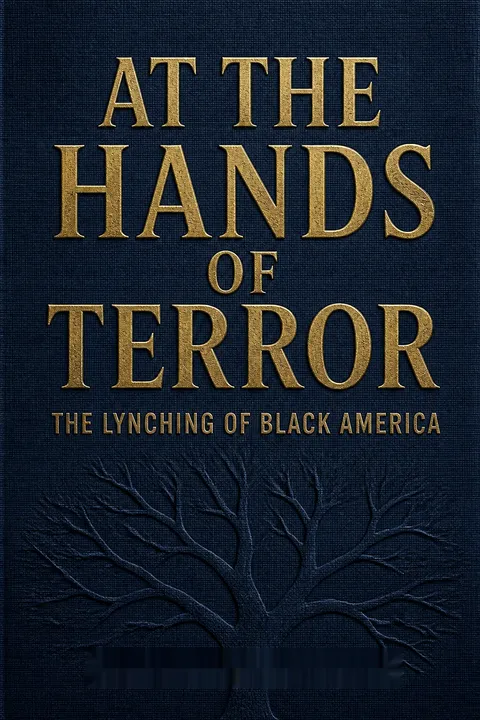


Key Takeaways
Treat lynching as a system of racial rule, not a burst of mob madness.
A public system of terror. Lynching was not simply a rare breakdown of order. It helped preserve white control by terrorizing Black communities, punishing challenges to racial hierarchy, and teaching witnesses what resistance might cost. The spectacle could be organized by a small group, cheered by a crowd, tolerated by officials, and quietly accepted by influential residents who stayed away but expected no consequences.
The Tuskegee archive recorded 3,417 Black victims and 1,291 white victims from 1882 through 1944. Its keepers knew the count was incomplete: isolated killings went unreported, and newspapers often ignored racial violence unless it drew a crowd. The archive mattered because it made denial harder, even without capturing the full scale.
What's striking is how the book treats violence as a form of governance. The rope did more than kill one person. It enforced boundaries for an entire community while giving authorities room to claim ignorance. That pattern resembles other systems of coercion in which a few conspicuous punishments deter many people. The statistics are therefore not a complete census of victims so much as evidence of a durable institution. Their limits matter: missing records are not neutral gaps, but part of how terror escaped accountability.
Interrogate the rape accusation before accepting the mob's story.
A charge that could mobilize a crowd. The allegation that a Black man had assaulted a white woman was lynching's most powerful excuse, but it did not explain most cases. In an informal study, W.E.B. Du Bois found rape alleged in about one quarter of the lynchings he examined. Accusations could mask wage disputes, political activity, economic competition, or consensual relationships that whites refused to acknowledge.
After Sam Hose was killed in 1899, W.E.B. Du Bois learned that no proper investigation of the alleged assault had taken place. A private investigator hired by Ida B. Wells reported that the dispute may have begun over wages, though the surviving evidence could not settle the facts. The uncertainty itself mattered: newspapers had made a verdict feel certain before a court could test the claims.
The rape accusation worked as a political instrument because it fused racial hierarchy with the protection of women. Once that story took hold, ordinary standards of evidence could be recast as indifference to women or sympathy for crime. The book also preserves uncertainty rather than pretending every case can now be solved. That restraint is important. Exposing a false or unsupported accusation does not require claiming that sexual violence never occurred; it requires refusing to let a charge substitute for investigation, evidence, and a fair trial.
Track how emancipation without land left freedom exposed to terror.
Freedom without independence. After the Civil War, federal Reconstruction efforts promised citizenship, voting rights, education, and legal protection. The Freedmen's Bureau also tried to help formerly enslaved people acquire land. President Andrew Johnson reversed the land program, leaving most freedpeople dependent on planters for work and housing. Sharecropping then trapped many families in debt while owners controlled crop sales and accounting.
White resistance targeted political participation as well as economic independence. The Ku Klux Klan attacked Black voters, teachers, organizers, and families, while local authorities often failed to protect them. Federal laws briefly challenged that violence, but Northern commitment weakened and Reconstruction collapsed. The result was not simply the return of old customs. It was a new order in which formal freedom coexisted with economic dependency, disenfranchisement, and the threat of mob force.
The history here links material security to political freedom. Land could have given freed families more leverage over work, movement, and local power; without it, legal rights were easier to undermine in practice. This is a useful corrective to accounts that treat emancipation as a completed transition followed by a separate era of racial violence. The book's emphasis on abandoned Reconstruction also raises a hard question: how much can constitutional rights protect people when they lack the resources and institutions needed to exercise them?
Expose the story, then organize leverage against those protecting it.
Ida Wells makes evidence public. In 1892, the lynching of three Black business partners in Memphis convinced Wells that respectable Black citizens could be killed for succeeding, not just for alleged crimes. She collected newspaper reports, investigated cases, and challenged the rape myth in the Black press. When Memphis whites threatened her, she was away from the city; the newspaper office was destroyed, and she could not safely return.
Wells did not rely on exposure alone. She urged Black communities to withdraw their business from places that would not protect them. About two thousand people left Memphis for the West after the grocery-store lynching, and a streetcar boycott helped force white leaders to denounce the killings. Wells also took her evidence to Britain, using foreign attention to embarrass American officials and journalists.
Wells's strategy joined investigation, storytelling, economic pressure, and personal courage. That combination helps explain why her work traveled farther than a list of atrocities: it gave audiences both evidence and a reason to act. Her use of international attention also shows how public reputation can become leverage when local institutions are captured or indifferent. Yet protest carried real costs. Exile and boycotts could protect people or disrupt business, but they could not compel a hostile state to prosecute killers.
A courtroom can become a lynching when justice is staged for the mob.
A verdict under pressure. The book uses legal lynching for proceedings that keep the appearance of a trial while denying meaningful due process. In 1906, Chattanooga officials rushed Edward Johnson to trial amid threats of a mob. The Supreme Court intervened and ordered the state to protect him, but Sheriff Joseph Shipp allowed a mob to take Johnson from jail and kill him. The court later convicted Shipp and others of contempt.
In 1916, Jesse Washington's Waco trial lasted less than an hour, with an armed crowd filling the courtroom and his defense barely functioning. He was convicted, then seized and burned by the mob. The episode showed how a trial can serve as a performance that calms a crowd while delivering the outcome it demands.
The distinction between legal process and justice is not merely procedural. A trial conducted under threat can launder public vengeance through official language, giving a community the appearance of order without protecting the accused. This insight remains relevant wherever officials prioritize calm over fairness. At the same time, the cases show why due process cannot be reduced to a checklist: legal representation, time to prepare, an impartial jury, and freedom from intimidation must function together, or formal procedure becomes a stage set.
Turn public revulsion into organized pressure, not just a moment of outrage.
Build institutions around protest. The NAACP investigated cases, published reports, challenged racial myths, and pressed officials and Congress. The Association of Southern Women for the Prevention of Lynching, led by Jessie Daniel Ames, used a different source of influence: white women rejected the claim that lynching protected them. By the early 1940s, nearly 30,000 women had signed its pledge, and more than 1,300 sheriffs had signed a promise to protect prisoners.
The campaigns had limits. The Dyer Bill failed in 1922, and the Wagner-Costigan bill failed in the 1930s after Southern senators used filibusters to block action. Still, organizing shifted the public argument. Lynching became harder to defend openly, and sheriffs could face scrutiny for surrendering prisoners. Publicity did not guarantee justice, but it raised the reputational and political cost of complicity.
The movement's strength came from building a network that could investigate, communicate, and pressure officials repeatedly. That is different from assuming that public sympathy automatically becomes policy. The failed bills reveal the gap between national opinion and legislative power, especially when procedural rules let a determined minority block action. The ASWPL also shows the tactical value of confronting a movement's own rhetoric: women could reject the claim that mobs acted in their name. But gradual reform still left vulnerable people dependent on local officials willing to cooperate.
Federal rights matter only when courts can enforce them against states.
A slow shift in federal power. After Reconstruction, Supreme Court decisions narrowed federal authority to protect citizens from racial violence. Later cases began to challenge that retreat. In Moore v. Dempsey, the Court ruled in 1923 that a trial overwhelmed by mob pressure could violate due process even if it looked regular on paper. Powell v. Alabama required adequate legal counsel, while Brown v. Mississippi barred convictions based on torture-forced confessions.
The decisive test came after the 1964 murders of civil rights workers James Chaney, Andrew Goodman, and Michael Schwerner. In United States v. Price, the Supreme Court allowed federal prosecution of private citizens acting with police under the phrase under color of law. Seven men were ultimately convicted. The case did not erase racial violence, but it broke the assumption that mob killings could always remain beyond federal reach.
This legal history is a study in how constitutional meaning depends on enforcement. Rights left to hostile local institutions can become promises without remedies; federal intervention can supply an alternative forum, though it too depends on political will and juries. The Neshoba case's importance lies in treating a mob and local officers as a joint enterprise rather than isolating individual acts. That approach addresses a structural problem: violence often succeeds not because no law exists, but because officials help make law unenforceable.
Recognize the mob's changing costume: spectacle gave way to concealed terror.
From public ritual to hidden killing. In the late nineteenth and early twentieth centuries, spectacle lynchings drew crowds who watched torture, collected souvenirs, and sometimes posed for photographs. The 1917 killing of Ell Persons in Memphis was praised by local newspapers for its orderly planning, even as the victim was burned and mutilated. Public approval made the violence part of community life.
As condemnation grew, lynchings became more secretive. The 1955 murder of Emmett Till, a fourteen-year-old from Chicago, was carried out by men who abducted him from a relative's home and dumped his battered body in a river. His mother's insistence on an open-casket funeral made the hidden crime visible to millions. The methods changed, but racial intimidation and impunity persisted.
The shift from public spectacle to clandestine violence suggests that publicity can alter the form of abuse without eliminating its purpose. When open celebration becomes socially costly, perpetrators may hide evidence, silence witnesses, and rely on local institutions to block accountability. Mamie Till's decision to show her son's body reversed that concealment, turning private grief into public evidence. Visibility can make denial harder, though images alone cannot ensure prosecution or protect those who speak.
Judge the end of lynching by the collapse of impunity, not by one final date.
An uneven ending. The book offers no single moment when lynching stopped. Recorded totals declined, and the public spectacle receded, but secret killings and terror continued. In 1959, Mack Parker was taken from a Mississippi jail and murdered by a mob. The FBI identified suspects, yet a local grand jury refused to indict them. In 1964, federal investigators and prosecutors finally secured convictions in the killings of Chaney, Goodman, and Schwerner.
That change in accountability did not end racial injustice. The epilogue connects lynching's history to later police violence, unequal treatment in courts, and the persistent presumption of Black criminality. The central historical shift was not that violence vanished, but that impunity became more contestable. Remembering the victims and the reformers means asking whether institutions protect the vulnerable consistently, not merely whether the old ritual has disappeared.
The book resists a neat ending because social practices rarely stop on the day a statistic reaches zero. Its account distinguishes a decline in public lynchings from the broader decline of official tolerance for mob violence. That distinction is analytically valuable, although the comparison with later policing requires care: different institutions and forms of harm should not be collapsed into one category. The durable question is institutional: who can make violence visible, who can compel investigation, and whose testimony is treated as credible?
Analysis
Dray's history is most persuasive when it refuses the comforting distinction between a law-abiding society and an occasional mob. Lynching depended on a continuum of participation: a sensational press prepared the public, local officials surrendered prisoners or looked away, juries declined to identify killers, and respectable citizens accepted the outcome as the price of quiet. The phrase persons unknown captures not just a failure to solve crimes, but a community's choice to make responsibility disappear.
The book also shows that racial violence was not organized around one stable motive. Sexual panic was an especially effective public rationale, yet lynchings also punished economic independence, labor organizing, political participation, and challenges to white deference. This variety strengthens the argument that lynching maintained a social order, while cautioning against treating every incident as identical. The records are incomplete, motives were often obscured, and the very absence of reliable evidence was part of the perpetrators' strategy.
Its legal narrative gives the history a second arc. Reconstruction amendments promised national protection, but federal courts narrowed that promise; later decisions slowly reopened it. The repeated failure of antilynching bills demonstrates that public condemnation alone could not overcome institutional veto points. The eventual federal convictions in the Neshoba murders mattered because they showed that local officials and private conspirators could be treated as partners in a single rights violation.
The adaptation's central question is therefore not simply when lynching ended. It is when a community loses the power to define its own violence as justice, and when victims can expect a remedy beyond the locality that threatened them. That standard keeps the ending historically honest: public lynching declined, accountability increased unevenly, and racialized coercion survived in altered forms. The history is not a claim that all later injustice is lynching. It is a warning to examine how law, public opinion, and official discretion can combine to deny equal protection while preserving the appearance of order.
Review Summary
At the Hands of Persons Unknown is a powerful, meticulously researched history of lynching in America. Readers praise Dray's unflinching portrayal of this brutal practice and its deep impact on race relations. The book is described as essential reading, offering insights into the origins of civil rights movements and the ongoing effects of racial violence. While some found the graphic details disturbing, most consider it a necessary and eye-opening exploration of a dark chapter in American history. The book's thorough examination of lynching's societal context and gradual decline is particularly commended.
People Also Read





Glossary
Spectacle lynching
Public ritualized mob killingA lynching staged before a crowd as a public event, often involving torture, burning, mutilation, photographs, or the distribution of souvenirs. These killings were not merely executions carried out in public. Their ritual and audience helped intimidate Black communities and communicate that white authority could override law.
Underground lynching
Concealed mob killingA secretive form of lynching that became more common as public spectacle grew harder to defend. Victims were abducted and killed away from large crowds, while perpetrators relied on threats, silence, and official inaction to prevent identification and prosecution. The concealment changed the method, not the aim of racial intimidation.
Legal lynching
Trial shaped by mob pressureA formally conducted trial that denies meaningful fairness because a mob's threats or demands determine the proceedings. The defendant may face inadequate counsel, rushed preparation, excluded jurors, coerced evidence, or a judge and jury afraid to acquit. Its legal appearance can disguise a result imposed by collective violence.
Judge Lynch's Law
Extralegal popular punishmentA name for summary punishment imposed by a crowd without lawful trial or due process. The term grew from earlier forms of vigilante justice that sometimes involved nonlethal penalties, but by the late nineteenth century it increasingly meant mob execution, especially of Black people in the South.
under color of law
Abuse using official authorityA legal phrase describing conduct carried out through the apparent authority of government office. In the book's civil rights context, it matters when police or other officials use their positions, or cooperate with private citizens, to deprive someone of constitutional rights. The concept helped federal prosecutors address joint action by officers and mobs.
Atlanta Compromise
Washington's accommodationist proposalBooker T. Washington's 1895 address proposing that Black Americans emphasize industrial education, labor, and economic advancement while postponing immediate demands for political and social equality. The speech won white approval and expanded Washington's influence, but critics such as W.E.B. Du Bois argued that accepting segregation and political exclusion conceded too much.
American Creed
National ideals of equalityThe democratic principles of freedom, citizenship, and equal rights that Gunnar Myrdal argued were central to American identity. The concept exposed a contradiction: the country's professed ideals promised equality while its laws and customs enforced racial hierarchy. The tension could become a source of pressure for reform, though ideals alone did not guarantee enforcement.
Moore v. Dempsey
Federal review of mob-tainted trialsA 1923 Supreme Court decision arising from the Arkansas sharecroppers' trials after the Elaine violence. The Court held that a state trial could violate due process when mob pressure overwhelmed the proceedings, even if the trial appeared regular in form. The ruling strengthened the federal role in reviewing state criminal justice.
Download PDF
Download EPUB
.epub digital book format is ideal for reading ebooks on phones, tablets, and e-readers.








