

Key Takeaways
Read the Mexican Revolution as U.S. history, not foreign background
A border-spanning story. In 1910, Texas ranch hand Antonio Rodríguez was lynched by a white mob. Mexican protests followed, and the Díaz government blamed exiled rebels for inflaming them. The episode opens a history in which events on either side of the border shaped the other. The Partido Liberal Mexicano, or PLM, organized among Mexican workers and exiles in the United States while trying to remake Mexico.
Consequences traveled north. Revolution displaced more than a million Mexicans, helping establish migration routes and communities that reshaped the United States. The movement also threatened U.S. investments and helped prompt new federal policing. Hernández’s central claim is that Mexican and Mexican American history is not a side story to U.S. history. It is part of how the country became what it is.
What's striking is how the border works here as a connection, not a dividing line. Labor, capital, political organizing, and state power cross it in both directions. That perspective makes familiar national histories look incomplete: U.S. industry relied on Mexican labor, while U.S. officials helped defend an order that displaced people from Mexico. The argument is strongest when it follows those concrete links. It also invites care with scale: the revolution contributed to major demographic change, but no single movement or event can explain migration's entire history.
Do not mistake Díaz's stability for consent when growth depends on dispossession
Order had a price. Porfirio Díaz brought railroads, investment, and a larger state treasury to a country battered by decades of coups and war. But development rested on force. His government transferred land to investors, suppressed strikes, censored critics, and used the rurales, a mounted security force, to intimidate or kill opponents. The regime's own euphemism for execution was to deal with an offender severely.
Prosperity was uneven. By 1910, U.S. investors controlled about 130 million acres in Mexico, while millions of rural people had lost access to land. Export production rose, but food for domestic use became scarcer. Workers could be paid in company store credit and trapped by debt. Foreign elites praised Díaz's stability; for many workers and Indigenous communities, it meant coercion and dispossession.
The book complicates the easy opposition between development and repression. Díaz's regime did build infrastructure and strengthen central authority, yet those achievements were inseparable from decisions about whose land, labor, and safety could be sacrificed. This is a useful lens for evaluating economic growth: aggregate output can rise while the people producing it lose control over the conditions of life. The account also shows why stability can win genuine support after prolonged conflict. That context explains the bargain, but it does not make the bargain consensual for those denied a voice.
Pair radical journalism with local organizing, or revolutionary ideas remain paper
Print made a network. Ricardo Flores Magón and his allies turned Regeneración from a restrained legal journal into a direct attack on Díaz's rule. When authorities shut it down in Mexico City, the editors crossed into the United States and rebuilt it in border communities. Workers passed copies between towns, read them aloud to people who could not read, and helped sustain a political conversation across national lines.
Ideas met organizers. The movement grew through journalists, laborers, migrants, women activists, and local clubs. Camilo Arriaga convened reformers; Juana Belén Gutiérrez de Mendoza published a feminist, anarchist paper; and Spanish-language newspapers carried news and argument through the borderlands. The PLM later organized local cells and circulated a platform addressing land, labor, and political rights. Newspapers spread ideas, but people and relationships made them actionable.
This account treats media less as a megaphone than as infrastructure. A paper mattered because people transported it, discussed it, and linked its arguments to grievances they already understood. That is a valuable corrective to the idea that political change begins with a single persuasive text. The movement's reach also depended on oral circulation, so literacy was not the same as political access. Still, print networks do not guarantee agreement or effective coordination. The same organization that spreads a shared language can expose its members to surveillance and intensify disputes over who speaks for the cause.
Treat racial violence as a cross-border political force, not isolated crime
Violence enforced hierarchy. In the U.S. borderlands, Mexican workers faced segregation, lower wages, and mob attacks. Activists called this racial order Juan Crow. Gregorio Cortez, a Mexican farmworker pursued after a mistranslated exchange with a sheriff, became a folk hero when he evaded a large posse and won several legal cases. His story circulated in newspapers and song, showing how communities used public memory to contest racial power.
A lynching crossed the border. In 1910, a mob in Rocksprings, Texas, burned Antonio Rodríguez alive. Mexican journalists denounced the killing, and protests erupted in Mexico. Díaz censored reporting and threatened severe punishment for demonstrators, while blaming exiled rebels for stirring unrest. The outrage was not only about one murder. It exposed a shared system in which Mexicans faced dispossession and racial subordination on both sides of the border.
The contrast between Cortez's legal victories and Rodríguez's murder shows why justice cannot be measured only by court outcomes. Public storytelling gave people a way to name abuse and recognize one another's vulnerability, while the state's response to protest revealed whose anger it treated as dangerous. The cross-border frame also prevents racial violence from being filed away as a local disturbance. At the same time, the book does not imply that every Mexican or Mexican American experienced the borderlands identically. Class, citizenship, location, and access to organized support shaped both exposure to violence and the ability to resist it.
U.S. protection of investors helped turn Mexican rebels into federal targets
Policing served investment. The Díaz government asked U.S. officials to suppress the PLM, whose demands included land redistribution, worker protections, and limits on foreign control. U.S. authorities monitored the rebels, pursued arrests and deportations, and prosecuted some under the Neutrality Act, which barred organizing armed expeditions against a country at peace with the United States. These measures were presented as law enforcement, but they also protected a political and economic order favorable to investors.
A new agency joined in. In 1908, the Department of Justice established the Bureau of Investigation, the forerunner of the FBI. Among its early assignments was investigating magonistas involved in attacks on Díaz's government. The book connects this episode to the growth of U.S. federal policing: a foreign revolution became a reason to build investigative capacity at home.
The revealing question is not simply whether the rebels broke laws, but which interests shaped the choice to enforce them so aggressively. The U.S. government had reasons to prevent armed action from its territory, yet the account shows officials treating threats to American capital as urgent while anti-Mexican violence and labor abuses received far less protection. This is a clear example of state capacity growing through a specific political problem. It should not be read as the sole origin of the FBI or federal law enforcement. Rather, the episode exposes one early use of investigative power against a transnational radical movement.
Build secrecy around communication, because the postal network can become surveillance
The mail carried revolt. PLM organizers used letters to recruit fighters, move funds, coordinate local cells called focos, and plan raids. They hid identities with pseudonyms, coded messages, and multiple couriers. Yet the movement depended on the same U.S. postal network that made long-distance organizing possible. After a correspondence officer was arrested, investigators gained access to letters moving through post offices and used their contents to locate organizers.
The archive began as surveillance. Mexican officials and U.S. operatives copied or intercepted rebel mail, sometimes through methods that may have violated federal law. Names, addresses, plans, and code keys helped authorities track people across borders. The files created to suppress the PLM later became essential evidence for historians reconstructing the movement. The rebels' communications system was simultaneously a tool of coordination, a vulnerability, and an unintended record of their work.
The episode anticipates a durable problem in political organizing: communication tools expand a movement's reach while creating traces that can be collected and repurposed. The postal system was not neutral infrastructure. It enabled both cheap mass circulation and state surveillance, depending on who controlled access. The archive's double life is especially important. Records produced by repression can preserve the voices that repression sought to silence, though they also reflect what officials chose to monitor and retain. Historians therefore have to read such documents both as evidence of rebel activity and as artifacts of the surveillance system that captured them.
Do not confuse an uprising's first shots with a winning revolution
Cananea exposed the regime. In 1906, Mexican miners at the U.S.-owned Cananea copper mine struck over wages, hours, and unequal treatment. The strike was crushed, with dozens killed. Arizona Rangers crossed into Mexico to protect U.S. interests, revealing how readily foreign investment could bring armed intervention. The PLM claimed the unrest as evidence that revolt was possible, even though it had not led the strike.
Raids did not create a mass rising. The PLM organized attacks at Jiménez, Viesca, Las Vacas, and other towns, hoping that the first actions would prompt people across Mexico to join. Most raids were underfunded and quickly defeated. Ricardo Flores Magón expected popular anger to produce a broader uprising, but anger alone could not supply weapons, logistics, or agreement on strategy. The movement helped open a path to revolution without controlling the revolution's military course.
The distinction between catalytic action and operational success is central here. A small revolt can make a regime look vulnerable, but symbolic impact cannot substitute for supplies, coordination, or durable alliances. The PLM's raids made political claims visible and drew harsh state responses, yet their limited military capacity left them exposed. The case also complicates the romance of spontaneity: people may share grievances without spontaneously choosing the same risks or political program. The book's account makes the insurgents' strategic failure legible without erasing their influence on the broader crisis.
A shared enemy cannot erase incompatible visions of the future
Opposition was not one program. Francisco Madero sought fair elections and political reform, but did not propose the broad land redistribution and economic restructuring demanded by many PLM members. The PLM's 1906 platform included labor protections, land reform, and limits on foreign ownership. Its leading anarchists went further, seeking to abolish private property, the state, and the church.
The coalition frayed. Organizers disagreed over leadership, tactics, ideology, and the role of women. Ricardo Flores Magón's attacks on fellow activists helped drive allies away. Práxedis Guerrero, a gifted organizer and field commander, died fighting in 1910. Madero's forces, including Pancho Villa and Pascual Orozco in the north and Emiliano Zapata in the south, gained prominence. The Díaz regime fell in 1911, but the PLM's political differences with Madero kept it from shaping the new government.
Coalitions often look unified when opposition is their only common ground. This story shows why that unity can dissolve quickly once victory becomes plausible: political democracy, land redistribution, worker control, and anarchism are not interchangeable goals. The internal tensions were not merely personality clashes, though Flores Magón's hostility made them worse. They concerned who would govern, whether government itself was legitimate, and who had authority inside the movement. The history also reveals a gap between radical commitments to equality and male leaders' tendency to restrict women's roles. Shared danger did not automatically produce shared power.
Follow the PLM's borderland legacy beyond Díaz's fall in 1911
The movement outlasted its leaders. After Díaz's fall, the PLM fractured, and Madero became president. Ricardo Flores Magón rejected the new government, while many former allies returned to Mexico and pursued reform from within. Meanwhile, the revolution sent more than a million Mexicans north, helping establish communities that would shape U.S. society. The political consequences did not stop at the change of president.
A later rebellion echoed its demands. In 1915, El Plan de San Diego called for a multiracial uprising against white supremacy in the U.S. Southwest. PLM adherent Aniceto Pizaña helped lead the revolt and used its language of land and freedom. The U.S. and Mexican authorities crushed the uprising, followed by mass killings of Mexicans and Mexican Americans known as la Matanza. The book traces a legacy of rebellion and repression across the border, not a simple story of victory.
This ending resists the tidy historical habit of treating a regime's fall as the finish line. Political ideas travel through people, organizations, and memories, even when the original movement loses influence. The connection between the PLM and El Plan de San Diego is meaningful but should be stated carefully: the later uprising had its own causes and participants, and Pizaña's ties show influence rather than a single continuous command structure. The aftermath also underlines the uneven cost of rebellion. A movement can lose militarily while leaving political language and organizing traditions that others adapt.
Analysis
The book's most consequential move is to change the unit of analysis. Rather than treating Mexico and the United States as separate national stories, it follows people, money, print, and policing across the border. That choice reveals a political bargain obscured by praise for Porfirio Díaz: U.S. investment and Mexican state power reinforced one another, while workers and Indigenous communities bore much of the cost. The magonistas matter not because they commanded the decisive armies, but because they helped make the regime's legitimacy fragile and supplied a language of land, labor, and freedom that others could use.
The narrative also makes repression part of the story of state-building. Postal surveillance, deportation, neutrality prosecutions, and the early Bureau of Investigation appear not as neutral responses to disorder, but as tools shaped by the perceived threat to investment and political stability. Yet the rebels are not idealized. Their weak military preparation, dependence on a hoped-for spontaneous revolt, ideological rigidity, and personal attacks narrowed their alliances. Their anarchist program was also distinct from Madero's electoral reform and from many fighters' immediate demands for land and labor rights. These differences help explain why the PLM could catalyze a revolution without directing its outcome.
The source record itself gives the book another layer. Much of the movement's correspondence survives because authorities stole and archived it. The same documents that expose surveillance make it possible to reconstruct a movement that tried to leave few traces. This is powerful evidence, but it is also an asymmetrical archive: the state recorded rebels as threats, and some celebrated stories remain uncertain or contested. Hernández signals such uncertainty rather than treating every dramatic anecdote as fact. The result is a history that joins narrative momentum to institutional analysis, while insisting that Mexican and Mexican American actors belong at the center of the American past.
Review Summary
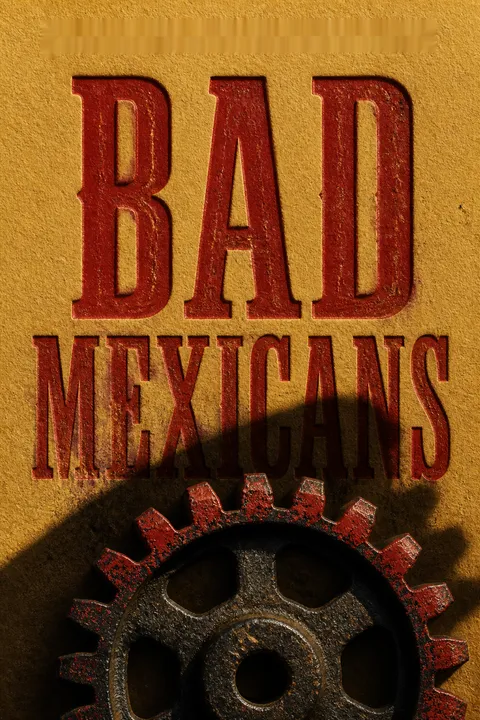
Bad Mexicans explores the Mexican Revolution's origins, focusing on the Magonistas and their leader Ricardo Flores Magón. Readers praised the book's comprehensive research, compelling narrative, and illumination of lesser-known historical figures. Many found it eye-opening, particularly regarding US involvement in Mexican affairs. Some criticized the writing as dry or overly detailed. Overall, reviewers appreciated the book's contribution to understanding Mexican-American relations and the revolution's impact on both countries, though some found it challenging to follow at times.
People Also Read




Glossary
magonistas
PLM supporters and organizersThe followers and collaborators of Ricardo Flores Magón, especially those organized through the Partido Liberal Mexicano. Many were workers, migrants, journalists, and exiles who opposed Porfirio Díaz and advocated political and economic change. Their goals ranged from democratic and labor reforms to anarchism, and their activities crossed the U.S.-Mexico border.
Partido Liberal Mexicano
Mexican opposition movementA political party and revolutionary organization founded by Mexican dissidents in exile. The PLM sought to remove Porfirio Díaz and published a 1906 platform supporting political rights, labor protections, and land reform. Its leading members increasingly embraced anarchism, while many affiliates and supporters held broader or different reform goals.
focos
Local revolutionary cellsSmall local groups organized by the PLM to recruit supporters, distribute material, gather weapons, and prepare for revolt. Focos operated across the borderlands and elsewhere in Mexico. Their local activity helped create a dispersed network, but limited resources and compromised communications made coordination difficult.
Porfiriato
Díaz's period of ruleThe era associated with Porfirio Díaz's rule in Mexico, beginning with his seizure of power in 1876 and ending with his resignation in 1911. It brought centralized government, railroads, and foreign investment, alongside political repression, land dispossession, labor exploitation, and repeated suppression of dissent.
Juan Crow
Anti-Mexican racial orderA term used by Mexican American activists for the system of segregation and racial subordination faced by Mexicans in the U.S. borderlands. It included segregated schools and neighborhoods, unequal wages, exclusion from public spaces, and racial violence. The term emphasizes that these practices shaped Mexican labor and civic life.
rurales
Mounted regime security forceThe mounted force used by the Díaz government to police rural areas and suppress opposition. The rurales pursued critics, workers, and Indigenous communities, and were associated with intimidation and lethal violence. Their role linked the regime's claims of order to coercive enforcement on behalf of political and economic interests.
ley fuga
Execution disguised as escapeLiterally, the law of flight, a practice in which authorities claimed a prisoner had been shot while attempting to escape. Under Díaz, it became a euphemism for summary execution. The practice allowed state violence to be presented as law enforcement rather than openly acknowledged as killing.
Brown Belt
Mexican-majority south TexasA name used for the region of south Texas between the Rio Grande and San Antonio, where Mexican and Mexican American residents formed a large share of the population. Spanish-language newspapers, labor migration, and political activity connected communities throughout the region and across the border.
FAQ
What's Bad Mexicans: Race, Empire, and Revolution in the Borderlands about?
- Focus on Revolution: The book explores the Mexican Revolution (1910-1917) through the experiences of Mexican revolutionaries, particularly Ricardo Flores Magón and the magonistas, who opposed Porfirio Díaz's regime.
- Historical Context: It delves into the socio-political landscape of Mexico under Díaz, highlighting foreign exploitation and U.S. imperialism's impact on Mexican society.
- Personal Narratives: Author Kelly Lytle Hernández uses vivid storytelling to bring to life the struggles of those labeled as "bad Mexicans," emphasizing their fight for land, liberty, and justice.
Why should I read Bad Mexicans: Race, Empire, and Revolution in the Borderlands?
- Insightful Historical Analysis: The book offers a comprehensive analysis of the Mexican Revolution, focusing on race, class, and imperialism, and challenges conventional narratives.
- Relevance to Current Issues: It connects historical events to contemporary discussions on immigration, race relations, and social justice, making it relevant for today's readers.
- Engaging Storytelling: The narrative is both informative and engaging, filled with personal stories and historical anecdotes that bring the past to life.
What are the key takeaways of Bad Mexicans: Race, Empire, and Revolution in the Borderlands?
- U.S.-Mexico Relations: The book illustrates how U.S. imperialism shaped Mexican history, emphasizing the importance of understanding these relations for grasping border politics today.
- Role of the Magonistas: It highlights the significance of the magonistas in advocating for social justice, with their demands for land reform and workers' rights resonating with ongoing struggles.
- Impact of Racial Terror: The book discusses racial violence faced by Mexicans, drawing parallels to systemic racism that persists in contemporary society.
What are the best quotes from Bad Mexicans: Race, Empire, and Revolution in the Borderlands and what do they mean?
- “The Díaz administration is a den of thieves!”: This quote by Ricardo Flores Magón encapsulates the corruption under Díaz's regime, rallying the oppressed to fight against tyranny.
- “¡Tierra y Libertad!” (Land and Liberty!): This slogan represents the magonistas' demands for land reform and social justice, highlighting fundamental rights sought by the revolutionaries.
- “The human heart is guided more by fear than by any other emotion.”: Porfirio Díaz's reflection underscores the use of fear as a tool for control, highlighting psychological aspects of governance and rebellion.
Who is Ricardo Flores Magón and why is he significant in Bad Mexicans: Race, Empire, and Revolution in the Borderlands?
- Key Revolutionary Figure: Ricardo Flores Magón was a prominent anarchist and journalist, often referred to as the "soul of the revolution" for his advocacy for social justice and land reform.
- Magonista Movement Leader: He led the magonistas, who sought to overthrow Díaz and establish a more equitable society, advocating for workers' rights and land redistribution.
- Legacy of Resistance: Magón's ideas inspired future activists and revolutionaries, making him a lasting symbol of resistance against oppression.
How does Bad Mexicans: Race, Empire, and Revolution in the Borderlands address race and identity?
- Racial Dynamics: The book examines how race shaped the experiences of Mexican revolutionaries, particularly in the context of U.S. anti-Mexican racism and Mexico's casta system.
- Identity Formation: It discusses how the PLM and its leaders navigated their identities as Mexicans and revolutionaries, often facing discrimination and violence.
- Intersectionality: The narrative emphasizes the intersection of race, class, and gender, illustrating their influence on the revolutionary movement and its participants.
What role did the U.S. government play in the events described in Bad Mexicans: Race, Empire, and Revolution in the Borderlands?
- Support for Díaz's Regime: The U.S. government supported Díaz, believing his regime was beneficial for American interests, providing military and political backing.
- Counterinsurgency Efforts: U.S. authorities actively suppressed the magonista movement, viewing it as a threat to American investments, through surveillance and deportations.
- Impact on Mexican Society: U.S. intervention exacerbated social inequalities in Mexico, contributing to unrest and the outbreak of the Mexican Revolution.
How did the Mexican Revolution reshape both Mexico and the United States according to Bad Mexicans: Race, Empire, and Revolution in the Borderlands?
- Transformation of Mexican Society: The revolution led to significant social and political changes, including a new constitution in 1917 that enshrined workers' rights and land reform.
- Migration Patterns: It prompted a mass migration of Mexicans to the U.S., altering U.S. demographics and culture, and shaping the labor landscape.
- Cultural Exchange: The revolution fostered cultural exchange between Mexico and the U.S., influencing art, literature, and social movements on both sides of the border.
What were the main grievances of the magonistas against the Díaz regime in Bad Mexicans: Race, Empire, and Revolution in the Borderlands?
- Land Dispossession: The magonistas fought against land dispossession of rural and Indigenous communities, demanding the return of land to those wrongfully stripped of it.
- Labor Rights: They advocated for workers' rights, including fair wages and safe working conditions, addressing fundamental injustices.
- Political Repression: The magonistas opposed Díaz's authoritarian regime, seeking to restore democratic principles and ensure marginalized voices were heard.
How did the magonistas use media to advance their cause in Bad Mexicans: Race, Empire, and Revolution in the Borderlands?
- Regeneración as a Tool: The magonistas used the newspaper Regeneración to disseminate ideas, rally support, and expose Díaz's regime's injustices.
- Censorship and Resistance: Despite facing censorship, they smuggled publications across borders, demonstrating resilience and commitment to their cause.
- Cultural Impact: Their writings informed political discourse and inspired cultural movements, with ideas about land, liberty, and social justice resonating in contemporary activism.
What were the consequences of the Cananea strike as described in Bad Mexicans: Race, Empire, and Revolution in the Borderlands?
- Immediate Violence: The strike led to violent confrontations, highlighting deep-seated grievances against Díaz's regime and escalating tensions.
- Political Ramifications: It drew attention to labor rights and the treatment of Mexican workers, serving as a catalyst for further revolutionary activities.
- Long-term Impact: The strike contributed to growing discontent, exemplifying broader struggles for justice and equity that defined the revolutionary movement.
How does Bad Mexicans: Race, Empire, and Revolution in the Borderlands connect to contemporary issues?
- Ongoing Struggles: The book draws parallels between historical struggles of the PLM and contemporary movements for social justice, immigration rights, and anti-racism.
- Historical Context for Current Events: It provides context for understanding current U.S.-Mexico relations, particularly regarding immigration policies and border enforcement.
- Inspiration for Activism: The narratives of resistance and solidarity serve as inspiration for current activists, highlighting the importance of collective action against oppression.
Download PDF
Download EPUB
.epub digital book format is ideal for reading ebooks on phones, tablets, and e-readers.








