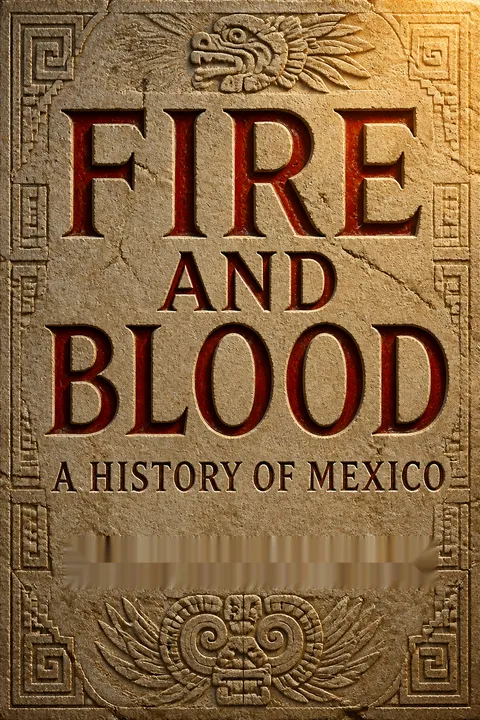


Key Takeaways
Treat Mexican history as an argument between geography and human ambition
Terrain set the terms. Fehrenbach begins with a land of mountain ranges, volcanic valleys, dry plateaus, and a small share of arable soil. In central Mexico, farming depended heavily on seasonal rain and maize. A milpa, the small field cleared and planted by a family or village, tied people to a particular place and harvest. The book’s central idea is continuity under changing rulers: successive societies inherited the same physical constraints, and their responses shaped what followed.
Surplus was precarious. Hunting peoples could move when food failed; settled farmers could not do so easily. Drought, frost, or volcanic activity could threaten whole communities. This makes geography more than scenery in the book. It is a pressure that repeatedly connects food, population, politics, and religious belief.
The environmental lens gives the narrative a useful anchor: political decisions occur within limits set by water, soils, and distance. That resembles modern environmental history, which asks how societies adapt to ecological constraints rather than treating nature as background. The risk is making geography sound like destiny. Mexico’s terrain constrained choices, but institutions, technology, and unequal access to land determined who bore the cost when harvests failed.
Maize surplus built cities, while harvest anxiety built priestly power
Food enabled specialization. Farming brought permanent villages, larger populations, storage, pottery, and new kinds of work. In Meso-America, a broad cultural region extending from central Mexico into Central America, shared practices included maize cultivation, calendars, temple-pyramids, and ball courts. The book argues that these societies developed independently of Eurasian civilizations, despite visual similarities between their monuments and Old World structures.
Ritual organized labor. Priests measured seasons and claimed knowledge of rain and fertility. That expertise helped organize large building projects, irrigation, markets, and skilled crafts. Yet the same account stresses a darker bargain: when harvests were uncertain, ritual sacrifice was treated as a practical means of sustaining the world. A teocalli was a temple-pyramid used as a religious center, not merely a monument for rulers.
The story links belief to institutional power without reducing religion to mere deception. Calendars and ritual could coordinate labor and preserve technical knowledge, while also legitimizing a specialized ruling class. That combination appears in many early states. The book’s emphasis on sacrifice is vivid, but its claim that ritual belief blocked scientific development is too sweeping. Societies can combine religious explanations with close empirical observation, as the book’s own examples of astronomy and engineering suggest.
When drought broke the cities, political traditions outlived their rulers
Collapse was not a clean ending. Fehrenbach describes drought, crop failure, migration, warfare, and the abandonment of major Classic-era centers, including Teotihuacán and Maya cities. The people did not vanish with the cities. Later groups inherited building styles, religious practices, and political memories, even when they could no longer reproduce the earlier civilization’s achievements.
Newcomers adapted. Northern-speaking peoples entered the highlands, including the Nahua groups associated with Tula. The book’s account of Topiltzin Quetzalcóatl, a ruler who tried to restrain sacrifice, shows a recurring tension between reform and established power. His political defeat did not erase his legend. Tula later became a model for rulers who fused older cultural practices with military authority.
The distinction between a state’s collapse and a society’s survival is essential. Cities, institutions, and political elites can disappear while practices persist in households, languages, and local communities. Archaeology often reconstructs this continuity more reliably than later political legends do. The book acknowledges that the evidence is fragmentary, but it sometimes presents disputed explanations, especially for Maya decline, as a tidy sequence. Collapse is usually uneven, with different communities adapting in different ways.
Conquest without consent created tribute, not a durable Mexican union
Power depended on extraction. The Mexica, often called Aztecs, built an empire centered on Tenochtitlán by demanding tribute from subject communities. Their rulers used war, tribute, and religious obligation to extend power, but they did not give most conquered peoples a shared political stake. A Flower War, in the book’s account, was a staged battle intended to capture prisoners for ritual sacrifice. Warfare served imperial and religious purposes at once.
Resentment became leverage. When the Spaniards arrived, many communities already resented Mexica rule. The empire’s reach was impressive, but its alliances were shallow and its enemies numerous. Fehrenbach’s larger lesson is that conquest can expand a state faster than it can build loyalty. Tenochtitlán’s power brought wealth and grandeur, but also a ring of potential allies for any challenger.
This is a sharp distinction between territorial control and political integration. Empires often survive by combining coercion with negotiated benefits; the Mexica system, as presented here, leaned heavily on extraction and ritual authority. That made the empire vulnerable when external pressure arrived. Still, the book’s portrait can understate the varied bargains and local politics that held such a large region together. Subject peoples were not simply waiting for liberation, and their choices could shift with circumstances.
Cortés prevailed by turning Mexico's internal enemies into his allies
The conquest was a coalition. Cortés arrived with roughly five hundred and fifty fighting men, but his success depended on Indigenous allies, especially Tlaxcalans and communities hostile to Mexica demands. He used diplomacy, interpreters, threats, and selective force to widen those divisions. Malintzin, a Nahua-speaking woman who had been enslaved and became Cortés’ interpreter, helped bridge languages and political worlds.
The first victory was fragile. Motecuhzoma’s hesitation and his belief that the strangers might be connected to Quetzalcóatl helped Cortés enter Tenochtitlán, but did not secure it. The Spaniards were driven out during the retreat later called the Noche Triste. Smallpox then killed many people, including the ruler Cuitláhuac. Cortés returned with a larger Indigenous coalition, built a siege force, and captured the city in 1521.
The coalition account corrects the familiar story of a tiny European force defeating an empire by technology alone. Political fracture, local agency, communication, and disease all mattered. This is a useful model for conquest elsewhere: outsiders often win by entering existing conflicts, not by overcoming a united population. The book gives much agency to interpreters and Indigenous allies, though its framing still treats Spanish victory as nearly inevitable. That inevitability can obscure the contingent decisions and immense risks involved.
Colonial rule joined religious conversion to labor extraction and demographic collapse
Protection and exploitation coexisted. The encomienda was a Spanish grant that let a colonist collect tribute or labor from Indigenous communities, supposedly in return for protection and Christian instruction. In practice, legal limits were often ignored. Missionaries built schools and defended some Indigenous people, while other church authorities destroyed native records and religious sites. The book presents this contradiction as central to Spanish rule, not as an exception to it.
Disease changed the balance. Smallpox, measles, and other epidemics devastated Indigenous populations. Fehrenbach cites estimates falling from about eleven million people in the 1520s to roughly one million by 1650, while noting the evidence is uncertain. Silver mining then pulled labor north, and the crown’s hunger for bullion directed policy. The result was a society dependent on Indigenous work even as its workforce was being decimated.
The combination of religious care, cultural destruction, and coerced labor resists simple moral categories. Institutions can provide genuine services while serving a broader system of domination. The demographic catastrophe also shows why epidemic disease cannot be separated from conquest: population loss reshaped land, labor, and political power. The book’s numbers are estimates, not precise counts, and its language about civilizational superiority reflects its era. Those claims should be separated from the stronger evidence for coercion and catastrophic mortality.
Follow land and labor to see how Mexico's mixed identity formed
The colonial economy hardened hierarchy. Silver enriched the crown and mining centers, but did little to create a broad domestic economy. Large haciendas, or landed estates, expanded as Indigenous populations fell and communal lands were alienated. Caste rules restricted occupations and status. Mixed-ancestry people often faced exclusion from both Spanish and Indigenous communities, while many poor people survived as peons or urban léperos.
The frontier offered another path. In the Bajío and northern ranching regions, scarce labor and open land gave some mestizos and Indigenous people room to become rancheros or vaqueros. These horsemen worked cattle, carried arms, and gained social standing through skill. An ejido was communal village land, a form of tenure that persisted alongside private estates. The north’s mixed society helped form a more recognizably Mexican identity than the rigid colonial order of the south.
Land tenure is a better guide to social power than official labels alone. The hacienda and the ejido organized daily life, access to food, and prospects for mobility. The frontier story also shows that identity changes through work and social position, not simply ancestry. Still, the book can overstate the contrast between a static south and a dynamic north. Both regions contained variation, conflict, and adaptation, and neither offered equal opportunity to all.
A revolution can topple rulers before it agrees what replaces them
The uprising split its own coalition. In 1810 Miguel Hidalgo turned a conspiracy by Creole officers into a mass revolt, drawing in Indigenous people, mestizos, miners, and rancheros. The sack of Guanajuato horrified property owners and made many elites fear social revolution more than Spanish rule. José María Morelos built a more disciplined force and proposed a republic with broader equality, but conservative forces defeated him and his movement.
Independence came by compromise. In 1821 Agustín de Iturbide joined former royalists and insurgents under the Plan of Iguala, promising independence, Catholicism, and formal equality. The arrangement ended Spanish rule but preserved much of the existing social order. The book’s key distinction is between popular revolution for social change and elite independence from Spain. They overlapped, but they were never the same project.
Revolutions rarely have one unified purpose. The same coalition can unite against a ruler and divide over property, religion, and who deserves power. Hidalgo’s rebellion exposed a deep social grievance, while Iturbide’s settlement prioritized stability and elite agreement. This pattern helps explain why formal independence can arrive without social transformation. The book rightly tracks competing interests, though its emphasis on elite failure sometimes underplays the political choices and organizing capacity of ordinary people.
A weak republic cannot defend territory or reconcile its rival elites
Independence did not create stable government. Mexico’s nineteenth century brought coups, debt, regional rebellions, and repeated conflict between centralists and federalists. The United States took Texas after years of failed Mexican governance there, then defeated Mexico in the 1846 to 1848 war. The Treaty of Guadalupe Hidalgo transferred vast northern territories to the United States. The humiliation came not only from defeat, but from Mexico’s inability to coordinate or sustain an effective defense.
Reform changed the state. Benito Juárez and other liberals challenged Church and military privileges, then fought conservatives in the War of the Reform and against French intervention and Maximilian’s empire. The Constitution of 1857 and the Reform laws weakened old institutions, but land concentration and social inequality persisted. Juárez’s victory secured republican government, yet legality alone could not create a unified society or a functioning economy.
State capacity is not the same as legitimacy, but a government unable to collect resources, coordinate regions, or defend borders struggles to preserve either. Mexico’s territorial losses made the cost of fragmentation unmistakable. The Reform then faced a different challenge: removing entrenched institutions without building replacements. The book’s focus on elite rivalries is illuminating, but it can make Indigenous and regional perspectives seem secondary to the capital’s political contests.
Modernize the economy without sharing gains, and stability becomes brittle
The Porfiriato brought order and growth. The term refers to Porfirio Díaz’s long period of rule, especially from 1876 to 1911. His government built railways, expanded mining and exports, attracted foreign capital, and made travel safer. But land became more concentrated, Indigenous communities lost territory, and workers endured low wages and poor conditions. Modern cities and infrastructure rose beside an impoverished countryside.
Growth widened the fracture. By 1910, the book estimates that about half the population was Indigenous and roughly two million people were mestizos, though such categories were imprecise. The regime’s foreign investment helped build industries but did not create broad economic opportunity. Madero’s call for fair elections mobilized educated reformers and northern communities; Zapata’s land demands revealed a deeper agrarian revolt. The political crisis opened the door to social revolution.
The Porfiriato illustrates a familiar development dilemma: infrastructure and investment can raise output while leaving ownership and opportunity sharply unequal. Growth is not automatically inclusive, and stability built by controlling political participation may conceal pressure rather than resolve it. At the same time, the book’s opposition between modernization and social justice is not absolute. Infrastructure can expand access and productivity, but only if institutions distribute its benefits and let affected groups influence policy.
Turn revolutionary promises into institutions, or strongmen will own them
The revolution changed direction repeatedly. Madero’s democratic revolt toppled Díaz but failed to satisfy agrarian demands. Huerta’s coup and the deaths of Madero and Vice President Pino Suárez reignited the war. Villa, Zapata, and Carranza’s Constitutionalists fought for overlapping but different aims. The 1917 Constitution established labor protections and gave the state authority over land and subsoil resources, making social reform part of the new political order.
Institutions replaced caudillos gradually. Obregón and Calles weakened the army’s political independence, expanded state capacity, and created a ruling party that became the PRI. Under Cárdenas, land redistribution and the nationalization of oil made the state a visible agent of reform. These changes did not end poverty or political control, but they built a national framework that could outlast individual leaders.
The revolution’s institutional legacy is more significant than any single hero’s intentions. Labor protections, land authority, and oil nationalization gave future governments tools to act, even when they used those tools unevenly. The PRI also illustrates a central tension: a strong party can stabilize a fragmented state while restricting genuine competition. The book’s account invites a useful question: when does continuity make reform possible, and when does it turn a revolutionary coalition into a permanent gatekeeper?
Judge Mexico's progress by who gains a voice, not just new infrastructure
Modernization kept advancing. After 1940, successive governments expanded industry, roads, electricity, schools, and social programs. Cárdenas’s oil nationalization strengthened economic sovereignty; later governments relied on foreign capital and private enterprise to grow the economy. The PRI kept political order by incorporating labor, peasants, and bureaucrats, but elections and leadership remained tightly managed.
The gains were uneven. Cities and a new middle class benefited more quickly than rural communities, where many people remained poor and underemployed. The book’s closing question is not whether Mexico changed, but whether development made the country more inclusive. By the end of its account, Mexico had become a nation with a stronger state and shared public identity, yet remained divided by income, region, and political access.
Infrastructure is visible; inclusion is harder to measure. A road, refinery, or school can expand capacity, but it does not by itself tell whether people can shape decisions or share the resulting gains. The book’s emphasis on national identity adds a further test: modernization can create common institutions while weakening local cultures. Its conclusion is strongest when treated as an unfinished question rather than a verdict that one model of development has solved Mexico’s historical divisions.
Analysis
Fehrenbach organizes Mexican history around continuity: terrain constrains food production, political elites repeatedly claim the right to guide society, and each new regime inherits unresolved conflicts over land, identity, and sovereignty. This produces a compelling narrative arc from maize agriculture and temple states to Spanish rule, independence, the Porfiriato, revolution, and the PRI. The deepest connective insight is that political change and social change rarely arrive together. Mexico repeatedly changes its rulers before it can agree on who belongs to the nation or how its resources should be shared.
The book is especially valuable when it connects institutional form to material life. Tribute, encomienda, mining, haciendas, foreign investment, and land reform are not side topics; they explain why successive political settlements either endure or fracture. Its treatment of the 1910 revolution also resists a simple heroic story. Madero’s democratic aims, Zapata’s agrarian demands, Villa’s insurgency, and Carranza’s constitutional project did not amount to one unified program. The resulting state was both a vehicle for reform and a means of political control.
The account should also be read as a dated interpretation. Published in 1973, it often speaks in broad racial and civilizational categories, and it can describe Indigenous peoples as obstacles to modernization rather than as communities with their own political goals. Its claim that conquest was inevitable and its treatment of colonial violence sometimes lean toward inevitability or equivalence. Those assumptions deserve scrutiny. The narrative’s stronger evidence concerns institutions, incentives, and unequal power, not fixed racial character. Read critically, the book offers a memorable framework: Mexico’s past is not simply a succession of revolutions, but a recurring struggle over who gets to define the nation and who pays for its modernization.
Review Summary
Fire and Blood receives mixed reviews, with praise for its comprehensive coverage of Mexican history and engaging writing style. However, critics note the author's Eurocentric bias, lack of citations, and reliance on stereotypes. Some readers appreciate the detailed historical narrative, while others find it outdated and problematic. The book's strengths lie in its broad scope and literary prose, but its weaknesses include racial generalizations and a perceived condescension towards Mexican culture. Overall, it remains a controversial yet influential work on Mexican history.
People Also Read




Glossary
Meso-America
shared ancient cultural regionThe broad cultural region extending from central Mexico into Central America in which many peoples shared practices such as maize farming, calendars, temple-pyramids, ball courts, and religious traditions. It was not one ethnicity or unified state. Fehrenbach uses the term to describe related civilizations with distinct languages, political centers, and regional styles.
milpa
small maize fieldA small cultivated plot, commonly cleared and planted by burning vegetation and working the soil with simple tools. Maize was central to the milpa system, often accompanied by other crops. In the book, milpas connect village life to the seasonal rains and explain how settled agriculture supported larger populations without producing a dependable surplus everywhere.
teocalli
temple-pyramidA Meso-American temple or sacred complex, often built on a stepped pyramid and used for ceremonies and worship. The term refers to more than a monumental structure: the teocalli could also function as a political center and a focus for markets, tribute, and community life.
Flower War
ritual battle for captivesA form of arranged warfare described in the book as combat intended primarily to seize prisoners for sacrifice rather than to conquer territory. Mexica forces fought such engagements with neighboring communities, including Tlaxcala. The practice illustrates how religious purposes could shape military strategy, though the combatants also had political and local interests.
encomienda
colonial labor and tribute grantA Spanish colonial grant that assigned an Indigenous community’s tribute or labor to an encomendero, who was formally responsible for protection and Christian instruction. The system was not legally defined as slavery, but its safeguards were often unenforced. In practice, it enabled coercive labor and helped establish Spanish control over Indigenous populations.
hacienda
large landed estateA large agricultural or ranching property that became a central institution of colonial and later Mexican society. Haciendas varied in size and management, but many relied on peons or other dependent workers. In Fehrenbach’s account, their expansion concentrated land, weakened communal holdings, and made rural workers dependent on owners.
ejido
communal village landLand held for the use of an Indigenous village or community rather than as an individual private estate. The ejido could support communal farming and village life. After the Revolution, the term also described land granted by the state to communities or groups of farmers, often under rules limiting sale or transfer.
cacique
local political bossA local leader who exercises authority through personal influence, patronage, control of resources, or armed followers. In Mexican history, caciques could govern regions with considerable independence from the capital. Their power could provide local order while also weakening national authority and making politics depend on personal alliances.
Porfiriato
Díaz's era of ruleThe period of Porfirio Díaz’s dominance in Mexican politics, especially from 1876 to 1911. It brought centralized order, railways, mining growth, and foreign investment, while concentrating land and political power. The term is commonly used for the era’s broader system, not only Díaz’s personal presidency.
PRI
postrevolutionary ruling partyThe Institutional Revolutionary Party, which grew out of the postrevolutionary political organization and governed Mexico for much of the twentieth century. It incorporated labor, peasants, bureaucrats, and regional leaders into a centralized system. The party helped stabilize succession and maintain state power, but it also restricted meaningful electoral competition.
Download PDF
Download EPUB
.epub digital book format is ideal for reading ebooks on phones, tablets, and e-readers.








