

Key Takeaways
Treat a glimpse of transcendence as a summons to integrate, not escape.
A childhood vision disrupted ordinary life. At eleven, after a car crash crushed his leg and a second hemorrhage nearly killed him, Johnson experienced what he called the Golden World: overwhelming beauty, peace, and joy. He survived, but ordinary ambitions felt thin beside that memory. At sixteen, after a brutal shift at a cannery, he watched the sunrise and experienced the same radiance again.
The challenge was living afterward. Johnson did not treat these episodes as proof that earthly life should be abandoned. He saw them as a call to find a way to honor inner experience while still making a life among people, work, and bodily needs. His central image is not escape from earth, but a life that can hold both realities.
The memoir takes unusual experiences seriously without making them a universal prescription. That distinction matters: intense visions can be meaningful to the person who has them, while their cause remains open to interpretation. Contemporary psychology can acknowledge the reality of an experience without certifying its supernatural explanation. Johnson’s useful question is therefore not whether everyone should seek transcendence, but how a person can return from an overwhelming experience with more capacity for ordinary life, rather than less.
Give solitude and service equal room before loneliness hardens.
Two kinds of work restored him differently. During the Second World War, Johnson volunteered at the Red Cross, helping people facing illness, poverty, and family emergencies. The work showed him that he could matter to others, but its endless demand left him exhausted. In summer, he became a fire lookout in a remote Washington tower, with only his dog and the wilderness for company. After a few days, time slowed and he felt content rather than isolated.
He distinguished aloneness from loneliness. Solitude gave him room to listen inwardly; service drew him into human need. Either one could become unbalanced. He used the image of a cross to describe the task: the earthly activity of doing and the inner attention of being must meet at a personal midpoint.
The contrast between the crowded city and the lonely tower challenges the assumption that proximity automatically cures isolation. Solitude can restore attention and emotional clarity, while useful service can interrupt self-absorption. Those are different functions, not competing remedies. The caution is that chosen solitude is not the same as imposed isolation, and service can become a way to avoid one’s own needs. The memoir’s strongest practical implication is to ask which side is starved, rather than prescribing more social activity to every lonely person.
Let mentors nourish the inner life your family cannot teach.
His biological family offered duty, not emotional understanding. Johnson describes a distant father and a capable but emotionally closed mother. His grandmother gave him affection, stories, music, and a sense of protection, but he still lacked someone who could understand his visions and inward life.
That education came from chosen elders. Ethel Rand, his organ teacher, encouraged his musical gifts and introduced him to writing about mystical experience. Owen Thomas taught him organ repair, while the artist Ambrose Seliger helped him make sense of sensitivity, suffering, and imagination. Johnson called such figures godparents: adults who help a young person develop capacities that parents may be unable to recognize. He later saw therapy and other mentorships as modern settings where this kind of encouragement and positive reflection can occur.
The idea of a godparent names a developmental role that families cannot always supply: a person outside the household who notices a young person’s particular strengths and makes them more livable. This connects with research on mentoring, where sustained, trustworthy support can broaden opportunity and strengthen identity. The relationship works best when it grows autonomy rather than dependence. A mentor is not a substitute parent or an unquestionable authority. The memoir’s examples make the role concrete: encouragement mattered, but so did practical teaching, shared work, and the young person’s own effort.
Take back the sacred value you project onto lovers and teachers.
The glow may belong partly to the observer. Johnson uses the Jungian term projection for attributing an unconscious quality of one’s own to another person or object. He calls the highest inner value placed this way alchemical gold. As a young man, he placed his gold on music, institutions, and the Indian teacher Jiddu Krishnamurti, hoping they could answer his spiritual hunger.
Reclaiming it makes real relationship possible. Johnson argues that admiration can reveal capacities still undeveloped in the admirer. He does not say the admired person is therefore false or unimportant. Rather, the task is to recognize what that person awakened, develop it within oneself, and then see the other person more clearly. Romantic love can start with idealization, but lasting human love requires seeing someone beyond the role of savior.
Projection offers a useful account of why admiration can feel both revelatory and destabilizing: another person can make a neglected possibility suddenly visible. This resembles the way role models shape possible selves, giving an abstract future a human face. The model should not flatten affection into a psychological trick. Genuine love includes discovery of the other person, not just retrieval of one’s own attributes. It also cannot explain every failure in a relationship. Its value lies in inviting a specific question: what quality became vivid through this bond, and how can it be honored without demanding that another person embody perfection?
Treat dreams as evidence to explore, not orders to obey.
Dreams gave Johnson a language for inner conflict. His first analyst, Fritz Kunkel, asked him to write down dreams and bring them to therapy. One dream showed Johnson eating the admired humanitarian and musician Albert Schweitzer. Kunkel helped him consider that the dream might express a need to absorb qualities he had placed in a hero, rather than literally imitate or consume him.
Exploration mattered more than a fixed answer. Johnson came to value dreams as images of the psyche’s current condition, not infallible instructions. He also practiced active imagination, a waking dialogue with images that arise from the unconscious. When he ceremonially buried a broken alarm clock, he found himself recalling and grieving important moments it had marked. He stresses that imaginative material should be engaged carefully and grounded in ordinary life.
Dream work can function as structured reflection: recording an image, noticing associations, and discussing it slows the leap from feeling to action. The process resembles reflective writing and some forms of psychotherapy, where meaning develops through revisiting experience rather than receiving an authoritative verdict. Johnson’s caution against literal obedience is essential. Dreams can intensify fear, reflect recent events, or invite multiple interpretations. They may be psychologically valuable without being supernatural messages. A sound practice preserves curiosity while checking interpretations against relationships, responsibilities, and observable circumstances.
Use attention to notice life's openings, and will for the practical work.
Johnson called meaningful openings slender threads. The phrase describes encounters and events that seem ordinary at first but later connect into an unforeseen pattern. In 1948, after arriving in Europe without a clear plan, he met Art Meyer on a ship. Years of unexpected help from Art enabled Johnson to continue studying at the new Jung Institute in Zurich. Johnson learned only later that the money came from Art’s fraud, and he eventually repaid the loan.
He did not reject practical agency. Johnson’s distinction was that the ego should gather information and handle daily tasks, while major direction may become clear through patience, dreams, and experience. He describes this as trusting a larger intelligence, though his story also shows that an apparent opening can carry moral complications and costs.
The slender-thread idea gives narrative shape to chance without requiring every coincidence to be treated as divine instruction. In decision science, attention and hindsight both shape which events appear meaningful; a person can find pattern without knowing whether fate produced it. The practical strength of Johnson’s approach is its resistance to frantic overcontrol. Its risk is passivity or retrospective certainty. A useful balance is to stay observant, gather facts, and remain ready to act, while retaining ethical judgment when an opportunity arrives through another person’s questionable choices.
Choose a life that fits your nature, not a ready-made institution.
A career could not be forced into a calling. Johnson tried to become a professional musician, but the work’s public relations and organizational demands clashed with his temperament. Music nourished him, yet turning it into a profession made it feel compromised. His later work as an analyst grew through study, mentorship, and a gradual fit between his abilities and the needs around him. He defined vocation as a calling that becomes recognizable, not simply a job selected through rational planning.
A monastery taught him what did not fit. At forty, lonely after his chosen family dispersed, he joined a Michigan monastery. Its rituals could not overcome the institution’s hierarchy and hypocrisy. He left and helped build a less formal life combining therapy, solitude, retreats, and relationships. The lesson was not that institutions are useless, but that borrowed forms can become escape routes.
The distinction between career and vocation highlights a real tension: livelihood depends on institutions and skills, while a sense of calling often draws on values that job titles cannot capture. Johnson’s experience supports experimentation over premature certainty. It also cautions against confusing discomfort with destiny. A poor fit may reflect a bad environment, insufficient training, economic constraint, or fear of ordinary responsibility. His strongest model is iterative: try a form, notice what it demands, and adjust without treating failure as proof of personal inadequacy.
Borrow across cultures carefully, without romanticizing the other side.
India offered forms of relationship Johnson had missed. At the Sri Aurobindo Ashram, his friend Shankar stayed beside him through a serious illness, even sleeping on the hospital floor. Johnson experienced this care as a kind of closeness he had rarely known in the West. He also found a culture that gave greater visibility to devotion, ritual, and shared life than his American upbringing had.
The welcome did not erase hardship. Johnson also encountered severe poverty, caste exclusion, untreated illness, and the limited choices imposed on women. He concluded that cultures develop different strengths and pay for them in different weaknesses. His account urges exchange rather than imitation: he wanted to learn from India’s relational life without pretending its social costs were benign or that Western institutions could simply be discarded.
Cross-cultural encounter can reveal that familiar habits are not universal, especially around intimacy, time, and religious practice. Johnson’s friendship with Shankar makes that insight personal rather than abstract. His account also risks broad generalization: India and the West each contain enormous internal diversity, and a visitor’s experience is shaped by class, language, money, and welcome. The most responsible use of the comparison is as a mirror, not a ranking. Another culture can expose a neglected capacity while still requiring careful attention to power, inequality, and local context.
Make room for opposites until a third way can take shape.
An Indian tale gave Johnson a map of inner division. In the story of Sita, Shreedaman, and Nanda, two friends embody contrasting qualities: one is intellectual, the other physically strong. Their heads are accidentally exchanged, and the resulting confusion cannot be solved by choosing one man over the other. The story ends with a funeral pyre and the birth of Samadhi, a child associated with peace and a new unity.
Johnson reads the tale as psychological integration. People can become trapped between competing ideals, such as spiritual aspiration and bodily life, or inner reflection and social action. Trying to seize both sides through a clever shortcut does not resolve the conflict. The work is to endure the tension long enough for a more coherent way of living to emerge.
The story dramatizes a dialectical insight: some conflicts are not solved by declaring one side correct, because each side carries a needed capacity. Holding opposing demands in view can generate a more adequate response than splitting into purity and rejection. That does not mean every conflict has a hidden synthesis or that compromise is always wise. Some situations require boundaries and concrete decisions. The tale is most useful as a prompt to ask what each side protects, what it neglects, and whether the apparent choice is the only available structure.
Mark an ending deliberately so its energy can serve a new life.
Johnson treated sacrifice as transformation, not mere deprivation. He describes it as withdrawing energy from a form of life that no longer fits and investing it elsewhere. A young friend who wanted to leave behind the culture of Saturday-night partying buried a hamburger in his yard as a private ritual marking that change. Johnson also argues that an unlived ambition can be acknowledged and mourned rather than allowed to become a permanent grievance.
The memoir ends with a changed relationship to loss. In a dream, Johnson’s friends form a circle as the mountains around them melt. He understands the scene not as a literal prediction, but as an image of an ending that can be met with connection. His later years bring greater ease with solitude, friendship, and mortality than he had expected.
Ritual can make an abstract transition tangible. A deliberate act gives grief a container and helps distinguish a chosen ending from a vague sense of failure. This is consistent with how rites of passage mark changes in social identity, though a ceremony alone cannot resolve material loss or guarantee emotional closure. Johnson’s emphasis on conscious relinquishment is strongest when paired with honest mourning. The point is not to sanctify every disappointment, but to prevent an impossible wish from consuming energy that could support a more available form of life.
Analysis
This memoir is organized less as a chronological life record than as a sequence of encounters that revise Johnson’s interpretation of experience. The childhood near-death vision creates the central problem: how can a person honor an overwhelming inner life while remaining available to ordinary human obligations? The answer develops through relationships and experiments, not a single doctrine. Mentors help him name his experience, dreams provide images for reflection, service and solitude correct each other, and India exposes capacities missing from his American life. The movement is from seeking an external container for transcendence toward learning to carry it without confusing it with egoic importance.
The book’s strongest contribution is its account of integration as a practical discipline. Johnson repeatedly discovers that one-sided solutions fail: a monastery cannot replace modern life, a lover cannot serve as God, and spiritual intensity cannot excuse neglect of the body or community. His stories make these failures memorable, especially the cannery worker who needs beauty, the exhausted analyst who retreats to a monastery, and the visitor who experiences care through Shankar’s hospital vigil.
The framework also has limits. The memoir interprets coincidence and dreams through Jungian and religious assumptions that are meaningful but not independently verifiable. Its broad comparisons between India and the West can flatten diverse societies, even as Johnson acknowledges poverty and caste violence. Most importantly, faith in guidance needs a companion ethic of evidence and responsibility. A meaningful pattern may guide attention, but it cannot by itself establish that a decision is wise or just. Read in that spirit, the book is neither a manual for surrender nor a defense of mysticism. It is an account of how a person can make room for mystery while continuing to act in the world.
Review Summary
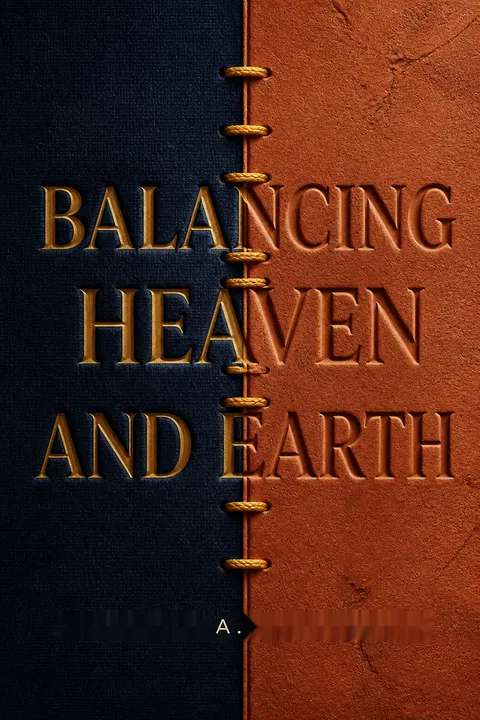
Balancing Heaven and Earth is a deeply moving memoir that resonates with readers seeking spiritual insight. Many praise Johnson's wisdom, humility, and ability to blend Jungian psychology with Eastern spirituality. Reviewers appreciate his exploration of dreams, symbols, and synchronicity, finding his life journey inspiring and transformative. The book offers valuable lessons on balancing earthly and spiritual realms, trusting intuition, and finding meaning in life's paradoxes. While some found certain sections less engaging, most readers consider it a profound and enlightening work.
Glossary
Golden World
Transcendent experience of wholenessJohnson’s name for experiences of overwhelming beauty, joy, and unity that he understands as contact with divine or archetypal reality. The Golden World is not simply a place after death. It can appear within ordinary life, but its intensity may unsettle a person who has not developed ways to remain grounded in everyday responsibilities.
slender threads
Meaningful, unforeseen guidanceJohnson’s term for unexpected encounters, opportunities, and coincidences that seem, in retrospect, to connect into a meaningful pattern. He interprets these events as guidance from an intelligence greater than the conscious ego. The phrase does not describe a predictable plan; it names a way of attending to life while accepting that its direction may not be fully controllable.
alchemical gold
Projected inner valueJohnson’s term for a person’s highest inner value or unrealized capacity, which may first appear to belong to an admired person, teacher, lover, or institution. Through reflection, the individual can recognize what the relationship awakened and begin to embody that quality. Reclaiming the gold does not require diminishing the other person; it allows that person to be seen more realistically.
active imagination
Waking dialogue with inner imagesA Jungian practice in which a person remains awake and consciously engages images arising from the unconscious. The participant allows the images to develop, responds to them, and treats them as voices with perspectives of their own rather than directing them toward a preferred outcome. Johnson emphasizes that a physical ritual or action can help connect imaginative experience to ordinary life.
individuation
Becoming a particular wholeIn Jungian psychology, the lifelong process of developing a more complete relationship between conscious identity and unconscious aspects of the personality. In Johnson’s account, individuation means discovering what is particular to one’s nature rather than merely conforming to expectations or pursuing an abstract ideal of perfection. It involves integrating neglected capacities while remaining engaged with the world.
inflation
Ego identification with greater powerA Jungian term for a state in which the ego identifies too closely with powerful inner or archetypal material and mistakes its contact with that material for personal superiority. Johnson describes becoming arrogant after emerging from depression and then swinging into fear and discouragement. Inflation is not simply confidence; it is a loss of proportion between the individual ego and the larger psyche.
Indeterminacy Principle
Resistance to perfect definitionJohnson’s name for the way life and the unconscious resist being made entirely clear, fixed, or final. He coined the phrase after observing the indirectness and uncertainty of social life in India. Though named by analogy with the scientific uncertainty principle, it is a psychological and philosophical idea in this memoir, not a scientific law or a claim derived from physics.
Self
The psyche beyond the egoIn Jungian psychology, the Self refers to the larger organizing center of the personality, encompassing both conscious and unconscious life. Johnson contrasts it with the ego, which manages the limited field of conscious awareness. He treats the Self as a source of direction that can be approached through dreams, inner experience, and a religious attitude, while recognizing that the ego still handles practical tasks.
FAQ
What's Balancing Heaven and Earth about?
- Inner Journey Focus: The memoir chronicles Robert A. Johnson's life, emphasizing his inner journey shaped by dreams, visions, and synchronistic events.
- Integration of Realms: It explores the balance between the spiritual (heaven) and material (earth) aspects of life, suggesting fulfillment comes from honoring both.
- Jungian Influence: Johnson discusses his relationship with the collective unconscious, a concept rooted in Jungian psychology, which he views as both a blessing and a curse.
Why should I read Balancing Heaven and Earth?
- Personal Growth Insight: Readers can gain valuable insights into personal growth and the importance of inner work through Johnson's experiences.
- Jungian Psychology: The book provides a deep dive into Jungian concepts, making it a great resource for those interested in psychology and spirituality.
- Cultural Exploration: It offers a unique perspective on Indian culture and spirituality, contrasting with Western norms and broadening readers' understanding.
What are the key takeaways of Balancing Heaven and Earth?
- Embrace Slender Threads: Johnson emphasizes recognizing and following the "slender threads" of fate that guide our lives to meaningful experiences.
- Balance Between Realms: The memoir teaches the necessity of balancing spiritual and earthly aspects for a harmonious existence.
- Value of Dreams: Johnson highlights dreams as a means of accessing the unconscious and understanding one's true self.
What are the best quotes from Balancing Heaven and Earth and what do they mean?
- "There is one right thing...": This quote suggests that life presents a singular path in each moment, urging us to listen to our inner guidance.
- "My life is managed by...": Johnson reflects on the notion of fate or divine guidance, suggesting a higher power at work in our lives.
- "The highest form of worship...": This statement underscores that true spirituality is found in joy and contentment, achieved through authentic living.
How does Robert A. Johnson define the "slender threads" in Balancing Heaven and Earth?
- Guiding Forces: "Slender threads" are unseen forces that guide our lives, manifesting as synchronistic events and meaningful coincidences.
- Trusting the Process: Johnson emphasizes waiting and watching for these threads, rather than forcing outcomes, for greater fulfillment.
- Connection to Fate: The concept ties into fate and destiny, illustrating how following these threads can lead to a meaningful existence.
What role do dreams play in Balancing Heaven and Earth?
- Accessing the Unconscious: Johnson views dreams as vital tools for accessing the unconscious mind, providing insights and guidance.
- Symbolic Language: Dreams communicate through symbols and archetypes, revealing deeper truths about oneself and one's journey.
- Active Imagination: The book discusses engaging with dreams to foster personal growth, highlighting its importance in Jungian analysis.
How does Johnson's relationship with Carl Jung influence Balancing Heaven and Earth?
- Mentorship Impact: Johnson's encounters with Jung profoundly shaped his understanding of psychology and spirituality.
- Jungian Concepts: The memoir is steeped in Jungian concepts like the collective unconscious and individuation, explaining Johnson's journey.
- Personal Connection: Johnson's anecdotes about Jung illustrate his deep respect and how Jung's teachings informed his path.
What is the significance of the "Golden World" in Balancing Heaven and Earth?
- Transcendent Experience: The "Golden World" represents a transcendent state of being, symbolizing ultimate beauty and spiritual fulfillment.
- Contrast with Ordinary Life: Johnson contrasts this experience with mundane life, illustrating the longing for connection to something greater.
- Path to Wholeness: It serves as a metaphor for the journey toward wholeness and self-realization, encouraging readers to seek transcendence.
How does Balancing Heaven and Earth address the theme of loneliness?
- Loneliness vs. Solitude: Johnson distinguishes between loneliness and solitude, suggesting true solitude can be enriching.
- Coping Mechanisms: He shares personal struggles with loneliness and how he coped through relationships and creative expression.
- Importance of Community: The memoir emphasizes the need for community and connection to overcome feelings of isolation.
What does Johnson mean by "individuation" in Balancing Heaven and Earth?
- Personal Development Process: Individuation is becoming one's true self, integrating conscious and unconscious aspects.
- Hero's Journey: Johnson likens it to the hero's journey, confronting fears and embracing unique qualities.
- Balancing Opposites: It involves balancing opposing forces within oneself for a harmonious and fulfilling life.
How does Johnson describe his experiences in India in Balancing Heaven and Earth?
- Cultural Immersion: Johnson shares profound experiences in India, highlighting the warmth and spirituality of the people.
- Lessons in Relatedness: He emphasizes community and connection in Indian society, fostering belonging and purpose.
- Spiritual Awakening: Johnson describes moments of spiritual awakening, shaping his understanding of spirituality.
What methods does Johnson recommend for personal growth in Balancing Heaven and Earth?
- Active Imagination: Johnson advocates for engaging with the unconscious to explore inner conflicts and gain insights.
- Dream Analysis: He emphasizes analyzing dreams to uncover hidden truths and patterns for self-awareness.
- Rituals and Ceremonies: Johnson encourages creating personal rituals to mark life changes and connect with spirituality.
About the Author
Other books by Robert A. Johnson







Download PDF
Download EPUB
.epub digital book format is ideal for reading ebooks on phones, tablets, and e-readers.








