

Key Takeaways
Romantic love is spiritual longing mistakenly assigned to a human partner.

A potion changes everything. In the medieval tale, knight Tristan and Princess Iseult drink a love potion by accident. Suddenly, each seems to hold the meaning of life for the other. Robert A. Johnson reads this spell as a portrait of romantic love: not simply affection, but a powerful mix of ideals, expectations, and involuntary feelings that makes a beloved seem perfect and life feel complete. The lovers are drawn to something larger than their ordinary selves, though they mistake its source for the person beside them.
A cultural inheritance. Johnson traces this pattern to courtly love, a medieval ideal in which a knight adored a lady as a spiritual inspiration. Modern relationships inherited the ecstasy and perfection-seeking, while adding marriage, sex, and daily life. His point is not that romance is false, but that it carries a longing for wholeness that no partner can satisfy alone.
What's striking is the distinction between a real feeling and the story attached to it. A person can experience intense attraction without that intensity proving compatibility, destiny, or a partner's perfection. Contemporary relationship research likewise distinguishes early idealization from the responsiveness and trust that sustain closeness. Yet romance need not be dismissed as mere error: idealization can open people to vulnerability and possibility. The useful question is what the feeling reveals about the lover's needs, rather than whether it certifies the beloved as the answer.
Notice when a beloved is carrying your image of perfection.

Meet the anima. In Jungian psychology, anima is the inner feminine image in a man's psyche, associated here with feeling, imagination, and connection to inner life. Johnson says Tristan sees this image in Iseult, so the princess becomes more than a woman to him: she seems to embody his soul and the wholeness he lacks. Jung called this process projection, the experience of treating an inner image as if it belonged to an external person. The book describes animus as the corresponding inner masculine image in a woman's psyche.
Look beneath the spell. Projection can make a partner seem impossibly radiant, then impossibly disappointing when ordinary human traits appear. Tristan's fixation reveals more about his longing than about Iseult's actual character. Johnson's interpretation asks readers to separate what they know about a person from the hopes and fantasies they have placed on that person.
Projection offers a useful way to notice how expectations shape perception. Cognitive psychology also finds that people interpret others through prior beliefs and schemas, although it does not establish Jungian archetypes as literal psychic structures. The distinction matters: a symbolic map can prompt self-inquiry without serving as a diagnosis. The book's anima and animus model also assigns inner qualities along a strict gender binary. Its deeper insight, that people seek disowned capacities through others, can travel further if those capacities are understood as human rather than inherently male or female.
Give the inner life its own home instead of loading a partner.

Return the Queen inward. In Johnson's reading, Iseult is meant to be Queen beside King Mark, a symbol of the psyche's inner order. Tristan instead tries to possess her as a physical woman and make her carry his soul-image. The theft damages both the kingdom and the relationship: he asks one person to embody a spiritual ideal that belongs to his own inner life. Johnson's proposed change is to withdraw that projection, which lets a person encounter a partner as an individual rather than as a vessel for perfection.
Separate two worlds. The soul-image can still matter, but it belongs in imagination and inner experience, not as a demand imposed on a spouse. In the book's terms, returning Iseult to her throne means taking responsibility for the qualities and sources of meaning that Tristan had assigned to her.
This is a powerful account of emotional responsibility: a partner can support a person's search for meaning without being made responsible for completing it. The distinction also resonates with differentiation in family psychology, where intimacy is healthiest when connection does not erase each person's separate identity. Still, the inward turn should not imply that all needs are private or that partners must never ask for change. Mutual care involves real requests and negotiation. The useful boundary is between asking for reciprocal behavior and demanding that another person become an ideal.
Pair the sword of clear judgment with the harp of relatedness.
Two tools for the hero. Tristan needs both a sword and a harp. Johnson uses the sword for assertiveness, analysis, and the ability to distinguish or defend; the harp represents feeling, appreciation, and relationship. Tristan defeats the Morholt with his sword, but when poisoned and beyond the help of force, he takes his harp and drifts toward Ireland. Each capacity matters: without the sword, feeling can lose its boundaries; without the harp, strength can become mere domination.
Choose the right instrument. In a disagreement, analysis can clarify what happened, but it cannot by itself restore warmth. Likewise, affection without honest limits may fail to address a real problem. Johnson's image is not a rule that one person should always be gentle or another always strong. It is a reminder to match the response to the need: sometimes a clear boundary, sometimes an act of connection.
The sword-and-harp contrast translates well into modern communication: effective relationships need both clear limits and emotional responsiveness. Research on conflict consistently treats these as compatible skills, not rival personality types. A boundary can protect a relationship, while empathy can make a difficult truth hearable. The metaphor's risk is that it maps agency onto masculine and feminine qualities, repeating a gender convention that the underlying advice does not require. The stronger reading is practical: discernment without care becomes harsh, and care without discernment becomes avoidance.
When the spell breaks, meet the person who remains.
The forest has a limit. Tristan and Iseult spend three years together in the Forest of Morois, absorbed in passion and cut off from ordinary life. When the potion's power ends, King Mark finds them asleep with Tristan's sword between them. He leaves his ring and sword as signs of forgiveness and a possible return to the human world. Johnson treats the fourth year as a symbol of a new stage: the lovers can begin to distinguish the actual people from the ideals they projected onto each other.
Use disillusionment well. When idealization fades, a person can mistake the change for proof that love has failed. Johnson sees another possibility: learn who the partner is, and reclaim the hopes and capacities that had been assigned to them. This does not guarantee a relationship should continue. It makes the decision more honest by replacing fantasy with knowledge.
The transition from idealization to accurate knowledge is a normal challenge in intimacy, not automatically a sign of failure. Relationship research associates perceived responsiveness, the sense that a partner understands and cares, with satisfaction over time. That kind of knowledge takes longer to build than infatuation. Johnson's symbolic timeline should not be mistaken for a universal three-year clock; relationships vary, and idealization can ebb and return. The enduring lesson is to treat disappointment as information, then assess the actual relationship rather than punish a partner for no longer matching a fantasy.
Choose commitment to a person, not obedience to every passion.
Two moral claims collide. In the forest, the hermit Ogrin urges Tristan to return Iseult to King Mark and honor their marriage. Tristan answers that the potion has bound him to Iseult. Johnson reads this as a clash between romantic passion, which prizes intensity, and human commitment, which asks people to keep faith with one another even when passion shifts. The danger is treating the feeling of being in love as automatic permission to break promises or injure others.
Distinguish desire from duty. The book argues that commitment is not the same as staying perpetually ecstatic. A person can acknowledge a powerful attraction without assuming it must dictate action. Johnson's point is not that every existing relationship must be preserved at any cost. It is that passion alone cannot settle questions of honesty, responsibility, and the consequences of one's choices.
The distinction between emotion and action is ethically valuable. Feelings arise without consent, while decisions can be weighed against promises and the welfare of others. Research on commitment also treats it as more than a mood: it is reflected in intentions and behavior, though its sources can include care, shared investment, and obligation. A necessary nuance is that commitment should not become a command to endure coercion or harm. Fidelity has meaning when it is freely chosen, reciprocal, and compatible with safety.
Do not trade ordinary human love for an unreachable ideal.
A life waits in Carhaix. After leaving Iseult, Tristan meets Iseult of the White Hands, a kind woman who offers marriage, friendship, and a place in a living community. He agrees to marry her, then refuses the intimacy and ordinary life she offers because he remains loyal to his idealized passion. Johnson calls her the earth feminine: the capacity to value physical life, daily connection, and love between actual people. Tristan's tragedy is not simply that he dies, but that he refuses a chance to live.
Let the real person count. The book contrasts Iseult of the White Hands with the distant, almost divine Iseult the Fair. The first can share ordinary work, affection, and a home; the second belongs to Tristan's inner vision. Johnson argues that love requires recognizing the person who is present, including imperfections, rather than waiting for an ideal to arrive in human form.
This section gives ordinary care moral weight. Shared routines and dependable support are not lesser forms of intimacy because they lack spectacle; they are often where trust becomes visible. The caution is that ordinary life must not become code for unequal domestic labor or for settling into a relationship that is unsafe or unwanted. The book's comparison with other cultures is best read as an invitation to question Western romantic assumptions, not as proof that any culture's marriages are uniformly stable or happy. Reciprocity remains essential.
Turn romantic suffering into self-knowledge, not a reason to repeat it.
Death can be symbolic. Tristan and Iseult's story ends in literal death, but Johnson also reads death as a symbol of transformation: the ego gives up an old worldview so a broader one can emerge. Romantic suffering, in this account, can expose impossible expectations and the habit of seeking wholeness through another person. It becomes useful when a person examines those patterns and takes responsibility for inner life, rather than simply pursuing the same ideal again.
Pain is not proof. The lovers treat their anguish as part of a grand destiny, and the story shows how suffering can deepen a fantasy instead of correcting it. Johnson's more constructive aim is conscious change: withdraw projections, accept human limits, and find meaning without demanding that a partner provide it. The transformation is psychological, not a requirement to sacrifice safety or wellbeing.
The distinction between suffering and learning is important. Research on post-traumatic growth suggests that some people report changed priorities or stronger relationships after adversity, but growth is not guaranteed, and pain itself does not make a person wiser. The book's mythic language can help readers frame a painful transition, yet it risks romanticizing anguish if taken literally. A grounded application asks what a painful experience reveals, while also seeking support and protection where needed. Meaning-making should not become pressure to call every loss a gift.
Build a symbolic inner life so romance need not carry the sacred.
Give the sacred a dwelling. Johnson turns to the Oglala Sioux story of the White Bison Spirit Woman. One scout treats her as sacred and receives a ceremonial pipe; another approaches her selfishly and is destroyed. The tale illustrates Johnson's claim that inner images should be approached as meaningful symbols, not reduced to objects for the ego. A second image comes from a dream: a man returns a sacred bell to a basilica, then leaves quietly rather than claiming fame for possessing it.
Make room inwardly. The bell and the pipe suggest that spiritual longing needs a place beyond romantic relationships. Johnson names this kind of conscious engagement the symbolic life: attending to dreams, imagination, meditation, ritual, or religious practice as ways of exploring inner experience. The point is not to abandon relationships, but to stop asking a partner to carry the whole burden of transcendence.
The idea that ritual and imagination can hold experiences too large for ordinary conversation has parallels in religious studies and narrative psychology. Symbols can give form to grief, longing, and purpose without requiring a literal solution. That is a valuable alternative to making a relationship bear every existential need. At the same time, psychological meaning and claims about supernatural reality are different kinds of claims. The book's symbolic approach is most persuasive as a practice of reflection, while leaving room for readers to understand spiritual experience through diverse traditions.
Practice love in small acts that affirm another person's reality.
Love sees the person. Johnson defines human love as valuing another person as they are, rather than using them to satisfy a fantasy. He contrasts this with the drama of romantic projection through the image of stirring oatmeal: sharing work, keeping promises, offering kindness, and attending to daily needs. These small acts can look unremarkable, but they make care concrete. Friendship matters for the same reason: friends help without demanding perfection or turning every disagreement into a test of destiny.
Keep both loves distinct. The book does not ask readers to abandon spiritual longing or passion. It asks them to give inner ideals an inward home, while directing human love toward actual people. In the story, Tristan fails to make that distinction. Johnson's alternative is a life with both an inner search for meaning and an outward commitment to human connection.
The emphasis on small, repeatable acts aligns with research on relationship maintenance: responsiveness, practical support, and constructive repair help sustain closeness beyond moments of heightened emotion. This also makes love observable without reducing it to a checklist. Still, selflessness should not mean self-erasure. Healthy care includes boundaries, fair exchanges, and the ability to name unmet needs. The strongest version of Johnson's claim is reciprocal: each person is treated as a full subject, not as a tool for another's happiness, spiritual development, or preferred story.
Analysis
Johnson's most useful move is to treat romantic love as meaningful without treating its demands as reliable. The Tristan and Iseult story is not merely an illustration of projection; it gives the reader a memorable sequence of psychological events. The potion magnifies longing, the forest suspends ordinary life, and the eventual return to the human world tests whether passion can become relationship. The tale makes a difficult distinction vivid: intensity may disclose something important about the lover, while saying little about whether the beloved can or should fulfill the role assigned to them.
The Jungian account is strongest as an interpretive vocabulary. Anima, projection, and the symbolic inner world help explain why a partner can seem to carry an entire universe of meaning. The book's prescription, to take responsibility for that meaning rather than outsource it, remains useful even for readers who reject archetypes. Its claim that Western culture has collectively redirected religious longing into romance is more speculative. A myth can illuminate a cultural pattern, but it cannot by itself establish that pattern's historical prevalence or cause. The book sometimes treats a poetic reading as if it were a psychological finding.
Its gender model also needs careful translation. Assigning feeling and relationship to the feminine, and agency to the masculine, risks reproducing the very cultural imbalance the book critiques. Yet its deeper argument does not depend on those categories: every person needs both discernment and connection, inner purpose and external relationship, autonomy and care. The conclusion is not to distrust passion, but to ask what it reveals and what it cannot decide. Romantic love may open a door to self-knowledge; ethical action, mutuality, and sustained attention determine what happens in the room beyond it.
Review Summary
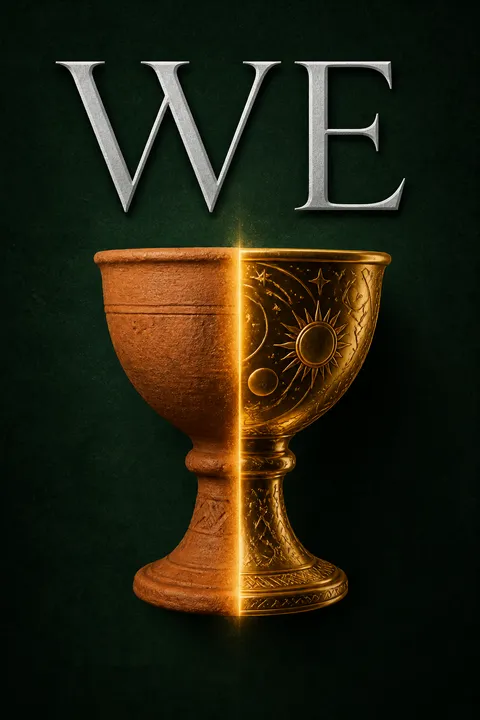
We explores romantic love through Jungian psychology and the Tristan and Iseult myth. Johnson argues Western society projects spiritual needs onto relationships, leading to unrealistic expectations. He distinguishes between illusory romantic love and genuine human love based on friendship and commitment. The book offers insights into the psychology of relationships, encouraging readers to cultivate inner spiritual life and realistic expectations. While some found it repetitive or heteronormative, many praised its profound impact on understanding love and relationships.
People Also Read



Glossary
Romantic love
Passion mixed with idealsJohnson uses romantic love to mean more than affection or sexual attraction. It is a culturally inherited set of ideals, expectations, and intense feelings that can make a beloved seem perfect and promise personal completion. He argues that it carries spiritual longing, which becomes confused when a human partner is expected to satisfy it.
anima
A man's inner soul-imageIn the Jungian vocabulary used by Johnson, anima is the inner feminine image in a man's psyche. It connects the conscious self with inner life, imagination, and the unconscious. Johnson argues that romantic attraction can project this image onto a woman, making her seem to embody the man's soul or ideal rather than appearing only as an individual person.
animus
A woman's inner soul-imageIn the Jungian account presented by Johnson, animus is the corresponding inner masculine image in a woman's psyche. The book uses it to describe how a woman may project an inner ideal onto a man in romantic love. Johnson treats anima and animus as gendered structures, though the broader idea is that people can project inner expectations onto partners.
projection
An inner image placed outwardProjection occurs when a person experiences an inner image, expectation, or possibility as if it belonged to someone outside them. In Johnson's account, a lover may mistake a partner for the embodiment of an ideal or missing part of the self. Recognizing projection makes it possible to see both the partner and the inner longing more clearly.
earth feminine
Capacity for earthly relatednessJohnson's term for the inner capacity that connects a person to physical life, ordinary human relationships, and the practical conditions of living. In the Tristan story, Iseult of the White Hands represents this quality. The earth feminine contrasts with the divine, idealized soul-image, and supports affection, commitment, and care between actual people.
Forest of Morois
A world of romantic projectionIn Johnson's interpretation, the forest where Tristan and Iseult live during the potion's three-year spell represents the temporary isolation of romantic projection. The lovers are absorbed in each other and detached from ordinary responsibilities. Leaving the forest symbolizes the chance to recognize the difference between an inner ideal and a real human relationship.
Maya
Illusion from confused inner and outerJohnson uses Maya, a concept from Hindu thought, for the distortion that occurs when inner images are confused with external reality. In romantic projection, a person may see a partner through a fantasy and fail to see either the partner or the inner ideal accurately. For Johnson, illusion arises from this confusion, not simply from the inner or physical world.
symbolic life
Conscious engagement with inner imagesJohnson's term for taking dreams, imagination, ritual, meditation, and religious imagery seriously as expressions of inner experience. A symbolic life gives spiritual longing a place apart from romantic relationships, so a partner is not expected to embody an entire inner world. It is an inward practice of engaging meaning through images rather than treating them as literal external facts.
FAQ
What's "We: Understanding the Psychology of Romantic Love" about?
- Exploration of Romantic Love: The book delves into the psychological underpinnings of romantic love, using the myth of Tristan and Iseult as a framework to explore how romantic ideals have shaped Western culture.
- Jungian Interpretation: Robert A. Johnson applies Jungian psychology to interpret the symbols and themes within the myth, offering insights into the unconscious forces that drive romantic relationships.
- Cultural Phenomenon: It examines how romantic love has become a dominant force in Western society, often replacing traditional religious experiences as a source of meaning and fulfillment.
- Inner and Outer Worlds: The book discusses the interplay between the inner psychological world and outer relationships, emphasizing the need for balance and understanding in love.
Why should I read "We: Understanding the Psychology of Romantic Love"?
- Insight into Relationships: The book provides a deep understanding of the dynamics of romantic love, helping readers navigate their own relationships with greater awareness.
- Cultural Reflection: It offers a reflection on how cultural ideals of love have evolved and how they impact personal and societal expectations.
- Psychological Growth: By exploring the unconscious motivations behind love, readers can gain insights into their own psychological development and potential for growth.
- Symbolic Understanding: The use of myth and symbolism enriches the reader's comprehension of complex emotional and psychological concepts.
What are the key takeaways of "We: Understanding the Psychology of Romantic Love"?
- Romantic Love as a Path: Romantic love is portrayed as a path to consciousness, offering opportunities for personal growth and self-awareness.
- Dual Nature of Love: The book highlights the dual nature of love, encompassing both divine aspirations and human relationships, and the need to balance these aspects.
- Projection and Reality: It discusses the concept of projection in romantic relationships, where individuals project their inner ideals onto their partners, often leading to disillusionment.
- Cultural Influence: The book emphasizes how Western culture's romantic ideals have shaped individual expectations and experiences of love.
How does Robert A. Johnson use the myth of Tristan and Iseult in the book?
- Symbolic Framework: Johnson uses the myth as a symbolic framework to explore the psychological dynamics of romantic love, illustrating how these ancient stories reflect modern experiences.
- Character Analysis: The characters of Tristan and Iseult are analyzed to reveal the unconscious forces at play in romantic relationships, such as projection and idealization.
- Cultural Reflection: The myth serves as a reflection of the cultural evolution of romantic love, showing how historical ideals continue to influence contemporary relationships.
- Lessons and Insights: Through the myth, Johnson extracts lessons and insights about the nature of love, the challenges of relationships, and the potential for personal growth.
What is the significance of the love potion in "We: Understanding the Psychology of Romantic Love"?
- Symbol of Romantic Love: The love potion symbolizes the involuntary and overwhelming nature of romantic love, capturing the essence of being "in love" as a psychological phenomenon.
- Dual Nature: It represents both the divine and destructive aspects of love, highlighting the potential for both ecstasy and suffering in romantic relationships.
- Cultural Impact: The potion reflects the cultural idealization of love as a magical and transformative experience, often leading to unrealistic expectations.
- Path to Consciousness: Johnson suggests that understanding the symbolism of the love potion can lead to greater self-awareness and a more balanced approach to love.
How does Robert A. Johnson interpret the role of anima in the book?
- Anima as Soul: Johnson describes anima as the inner feminine aspect of a man's psyche, representing his soul and his capacity for relatedness and love.
- Projection onto Women: Anima is often projected onto women in romantic relationships, leading men to seek their soul's fulfillment through external partners.
- Path to Inner World: Anima serves as a guide to the inner world, offering opportunities for spiritual growth and self-discovery when approached consciously.
- Balancing Inner and Outer: The book emphasizes the importance of balancing the anima's influence, recognizing her as a psychological reality rather than projecting her onto real women.
What are the best quotes from "We: Understanding the Psychology of Romantic Love" and what do they mean?
- "Romantic love is the single greatest energy system in the Western psyche." This quote highlights the profound impact of romantic love on Western culture, often surpassing traditional religious experiences in significance.
- "The love potion is both natural and 'supernatural.'" This reflects the dual nature of romantic love, encompassing both earthly desires and transcendent aspirations.
- "To be complete, the hero must have both a sword and a harp." This symbolizes the need for balance between masculine assertiveness and feminine sensitivity in personal development and relationships.
- "The withdrawal of projections makes the anima what she originally was: an archetypal image." This emphasizes the importance of recognizing anima as an inner reality, rather than projecting her onto external partners.
How does "We: Understanding the Psychology of Romantic Love" address the concept of projection?
- Projection in Relationships: The book discusses how individuals project their inner ideals and fantasies onto their partners, often leading to unrealistic expectations and disillusionment.
- Understanding Projections: Johnson emphasizes the need to recognize and withdraw projections to achieve a more authentic and fulfilling relationship with oneself and others.
- Inner Work: The process of withdrawing projections involves inner work and self-reflection, allowing individuals to integrate their unconscious aspects consciously.
- Impact on Love: By understanding projection, individuals can transform their experience of love from a source of conflict to a path of personal growth and self-awareness.
What does Robert A. Johnson suggest about the cultural evolution of romantic love?
- Historical Context: Johnson traces the origins of romantic love to the Middle Ages, highlighting its evolution from courtly love to modern romantic ideals.
- Cultural Ideals: The book examines how cultural ideals of love have shaped individual expectations and experiences, often leading to unrealistic demands in relationships.
- Western Phenomenon: Romantic love is portrayed as a uniquely Western phenomenon, deeply embedded in the cultural psyche and influencing societal norms and values.
- Potential for Growth: Despite its challenges, romantic love is seen as a potential path for personal growth and self-awareness, offering opportunities for individuals to evolve and mature.
How does "We: Understanding the Psychology of Romantic Love" differentiate between romantic love and human love?
- Romantic vs. Human Love: Romantic love is characterized by idealization and projection, while human love is based on genuine relatedness and acceptance of the other as they are.
- Ego vs. Selflessness: Romantic love often centers on ego desires and fantasies, whereas human love involves selflessness and a focus on the well-being of the other person.
- Temporary vs. Enduring: Romantic love is often fleeting and intense, while human love is enduring and stable, providing a foundation for lasting relationships.
- Path to Wholeness: Human love is seen as a path to wholeness and fulfillment, offering opportunities for personal growth and deep connection with others.
What practical advice does Robert A. Johnson offer for navigating romantic relationships?
- Awareness of Projections: Johnson advises individuals to become aware of their projections and work towards withdrawing them to achieve more authentic relationships.
- Balancing Inner and Outer Worlds: He emphasizes the importance of balancing the inner psychological world with outer relationships, recognizing the distinct roles of anima and human partners.
- Embracing Human Love: The book encourages embracing human love, with its imperfections and challenges, as a path to personal growth and fulfillment.
- Inner Work and Reflection: Johnson suggests engaging in inner work and self-reflection to understand one's unconscious motivations and integrate them consciously.
How does "We: Understanding the Psychology of Romantic Love" relate to Jungian psychology?
- Jungian Framework: The book applies Jungian psychology to interpret the symbols and themes within the myth of Tristan and Iseult, offering insights into the unconscious forces that drive romantic relationships.
- Anima and Animus: Johnson explores the concepts of anima and animus, highlighting their roles in shaping romantic ideals and influencing relationships.
- Archetypal Symbols: The book uses archetypal symbols to illustrate the psychological dynamics of love, emphasizing the importance of understanding these symbols for personal growth.
- Path to Individuation: Romantic love is portrayed as a potential path to individuation, offering opportunities for individuals to integrate their unconscious aspects and achieve wholeness.
About the Author
Other books by Robert A. Johnson




Download PDF
Download EPUB
.epub digital book format is ideal for reading ebooks on phones, tablets, and e-readers.








