

Key Takeaways
Stop mistaking brief thrills for the durable nourishment of joy
Thrill is not nourishment. Johnson distinguishes happiness, which depends on favorable events and fortune, from joy, a deeper gladness that can nourish the spirit. A lucky break, a new romance, or a drink may lift the mood, but the lift fades. His central warning is that trying to preserve a passing high through more spending, sex, alcohol, drugs, or excitement can deepen rather than resolve an inner emptiness.
A myth names the hunger. Johnson reads Dionysus, Greek god of wine and ecstasy, as a symbol of the human capacity for spiritual rapture. When that capacity is denied, he argues, people may seek physical substitutes. The book’s invitation is not to chase stronger sensations, but to ask what kind of aliveness they are meant to supply.
What's useful here is the distinction between pleasure that briefly changes a mood and experiences that help a person feel connected, engaged, or purposeful. Contemporary accounts of reward learning likewise distinguish a short-lived reward from a lasting sense of well-being, though they do not require a spiritual explanation. Johnson's frame can help readers examine what a craving promises. Its limit is causal: addiction has many biological, social, and psychological contributors, so spiritual deprivation alone cannot explain it or replace evidence-based care.
Let Dionysus restore the senses without letting ecstasy run the whole show
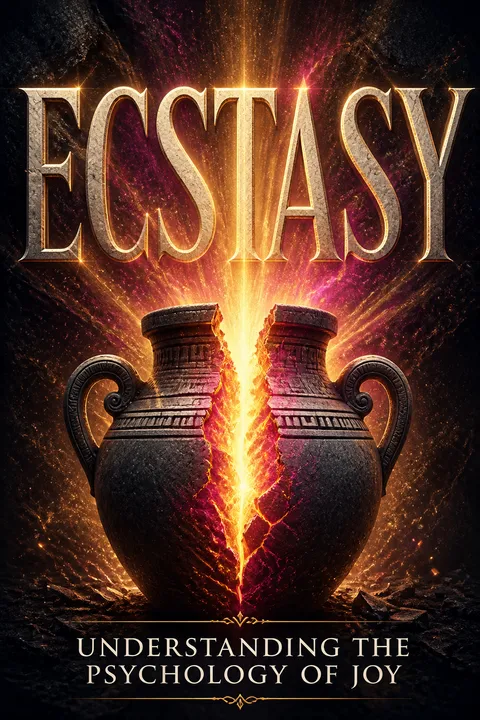
A god of change. In Jungian psychology, an archetype is a recurring pattern of human experience, expressed through images and behavior. Johnson uses Dionysus as the archetype of ecstasy, sensory vitality, and transformation. The myth makes the tension vivid: Zeus's mortal lover Semele is consumed when she demands to see his full divine power; the child Dionysus survives through successive births, is torn apart by the Titans, and is restored. His wine can represent either spiritual release or destructive intoxication.
Ecstasy has two edges. Dionysus changes shape, renews life, and unsettles rigid order. In the stories, rulers who deny him meet catastrophe. Johnson treats these myths as psychological dramas, not simply tales of an unruly party god: a living person needs both the force of feeling and the limits that keep it human.
The myth's strength is its refusal to make vitality harmless. Emotion, appetite, and spontaneity can open perception, but intensity alone is not wisdom. Contemporary emotion research similarly treats feeling as information that can guide choices without making every impulse trustworthy. Dionysus is a memorable image for that double function. The archetype should remain a lens, not a diagnosis: readers need not accept Jung's account of universal psychic patterns to recognize that suppression and unrestrained action can both narrow a life.
Feed the sensuous life, not the appetite for ever more sensation
Spirit through the senses. Johnson distinguishes the sensuous from the merely sensual. The sensuous is spiritual or emotional life encountered through the body and senses: noticing nature, feeling affection, making art, or sharing food with attention. The merely sensual, in his vocabulary, reduces experience to acquisition and physical gratification. The distinction is not between having pleasure and rejecting it, but between being present to an experience and treating it as a dose that must keep getting larger.
Quality over quantity. Johnson describes a culture crowded with entertainment and consumption yet uneasy with genuine emotional contact. His example of a stiff, awkward exchange of peace between strangers suggests how even ordinary touch can feel forbidden. The alternative is not forced intimacy. It is a more attentive relationship to bodily experience, pleasure, and other people.
This distinction connects naturally to attention: an ordinary meal, song, or walk can feel richer when noticed rather than consumed on autopilot. It also prevents a common misunderstanding of the book. Its defense of sensation need not mean that every person should seek touch, crowds, or heightened stimulation. Sensory needs and boundaries differ. The useful question is whether an experience deepens presence and connection, or simply escalates appetite. That criterion makes the idea more inclusive than a blanket celebration of abandon.
Give buried emotional energy a humane outlet before it turns destructive
Suppression does not erase. Johnson retells how Dionysus's opponents try to bind or reject him, only for his power to return in a more frightening form. He applies this pattern to human impulses: when feeling, play, or spontaneity cannot be expressed consciously, it may reappear as compulsive behavior or eruptions of anger. His account also links the rejected goat with scapegoating, the practice of loading a group's troubles onto an excluded person or group.
Make room deliberately. The practical point is to acknowledge difficult or disowned feelings before they dictate behavior. Johnson's historical narrative describes Roman authorities recasting Dionysus as Bacchus, a god of drunkenness, and suppressing his rites. He interprets this as a cultural rejection of ecstasy that leaves its energy without a dignified form.
The scapegoat image is powerful because it shows how a community can turn discomfort into blame rather than understanding. Modern psychology also recognizes that rigid emotional avoidance can make some thoughts and feelings more intrusive, although the effect depends on the person and context. Johnson's larger claim needs restraint: repression does not mechanically produce violence, addiction, or social persecution. Those outcomes have complex causes. His metaphor is most useful as a prompt to notice neglected needs, not as a single explanation for harmful behavior.
Welcome enthusiasm, but interrupt inflation before it commandeers your judgment
Energy needs a limit. Johnson calls an experience of being enlivened by a larger source enthusiasm. He contrasts it with inflation, when that energy is absorbed into the ego as grandiosity or fanaticism. In the myth, Semele is safe while Zeus approaches in disguise, but is destroyed when she insists on confronting his full radiance. Johnson uses this story to distinguish receiving inspiration from claiming its power as one's own.
Use the circuit metaphor. He describes enthusiasm as induction: energy is transmitted indirectly, like a nearby coil receiving a charge without direct contact. Inflation is conduction, a direct surge that overwhelms the receiver. His test is practical: if an energetic state feels impossible to slow, stop, or question, pause and seek grounding or outside perspective.
The distinction offers a useful check on inspiration: does it make a person more curious and connected, or more certain and impervious to correction? In that sense, feedback and sleep can act as safeguards around intense enthusiasm. The electrical analogy is evocative, not a clinical measure, and unusual energy can have causes that deserve professional attention. Treating every extreme state as spiritual inflation risks missing a health problem. A grounded interpretation leaves room for both meaning and ordinary care.
Train your least-used capacity to recover a neglected source of vitality
Find the weak side. Jung's four functions are thinking, feeling, sensation, and intuition. In Johnson's simplified account, each person relies most on a superior function and has a less developed, opposing inferior function. Someone comfortable with abstract ideas, for example, may struggle with practical physical detail. Johnson argues that this neglected capacity can carry vivid energy precisely because it is unfamiliar and poorly controlled.
Start small and concrete. He tells of an intuitive architect who designed a beautiful bookstore with curved walls that made shelves difficult to install. The example shows how a strong capacity can overlook what a weaker one would notice. Johnson suggests engaging the neglected area without demanding instant mastery. A modest hands-on task can be more useful than trying to turn a vulnerable skill into a career.
This is a compelling model for development because competence can become a blind spot: what comes easily may dominate attention, while other abilities remain underused. Contemporary learning theory also supports practicing skills at an attainable level rather than expecting fluency immediately. Still, Jung's four-function map is a theory, not a validated personality test, and the label inferior can sound like a deficiency. The practical insight survives without the taxonomy: identify what habitual strengths make easy to ignore, then explore it safely and with patience.
Practice qualities your culture assigns to the other sex
Make room inside. Johnson describes Dionysus as combining qualities traditionally coded masculine and feminine. In Jung's terminology, anima and animus are inner images of the other sex, which he believed mediate between conscious identity and the unconscious. Johnson's point is that social role changes alone do not guarantee inner integration. People also need permission to develop traits their culture has treated as belonging to someone else.
Nurture the whole self. A story about a male religious figure depicted with a nurturing, maternal body prompts Johnson to imagine heroism as something sustained by both traditionally masculine and feminine capacities. He extends this to everyday life: care is not women's property, and strength or judgment is not men's alone. Rigid expectations can also distort relationships by making partners carry qualities a person has not learned to recognize within themselves.
The invitation to develop care, decisiveness, receptivity, and courage across gender lines remains valuable. It challenges the idea that a person must choose between strength and tenderness. The Jungian vocabulary, however, reflects a binary account of gender and psyche that does not fit every identity or culture. The broadest, most useful reading is not that everyone contains a fixed opposite-sex personality, but that social expectations can restrict the range of qualities people feel allowed to express.
Let inner images speak, while keeping your conscious judgment engaged
Dialogue, not daydream. Active imagination is Jung's method for engaging images and characters that arise from the unconscious while awake. Johnson advises finding a quiet place, recording the exchange, and letting images respond without scripting every answer. The ego remains a participant: it can ask questions, state fears, and set limits.
An image can surprise. In one example, a woman imagines meeting Dionysus, who guides her through a forest and points out a monkey as an image of her own agility. The encounter leaves her energized. Johnson treats the scene as a personal symbolic experience, not a universal recipe. He also cautions that vivid inner work can overwhelm someone and recommends having support available if that seems likely.
The method resembles parts of expressive writing and guided imagery: giving form to a concern can reveal associations that ordinary analysis misses. Its value lies in curiosity, not in assuming that an image is an external authority or an infallible message. The book's emphasis on dialogue is important because it preserves agency. For people prone to disorientation or distress, solitary imaginative work may not be appropriate; a grounded setting and qualified support can matter more than producing a dramatic experience.
Read dreams as evolving conversations, not one-shot coded messages
Work from the image. Johnson proposes four steps for dreamwork: make personal associations, connect images to inner qualities, interpret the pattern, and give its insight a concrete expression. A symbol should be understood in the dreamer's context rather than assigned a universal dictionary meaning.
Meaning can change. Johnson recounts a dream from age twenty-five in which a huge snake seems to chase him. For years he understood it as dangerous energy to contain. Decades later, a new association with a protective serpent changed his reading: the snake had been guarding him. The dream's image stayed the same, but his relationship to it changed. The story illustrates why an interpretation can remain provisional as life and understanding develop.
This approach treats dreams less like encrypted forecasts and more like material for reflective inquiry. That is a useful safeguard against rigid symbol dictionaries, which can impose meaning rather than discover it. The snake story also shows how hindsight can reshape interpretation, a strength and a risk: a compelling later reading is not proof that the dream had one objectively correct meaning. Personal associations, emotional context, and practical consequences should all be considered before acting on a dream.
Build small rituals that give intense feelings a safe, usable form
Give experience a container. Johnson sees ritual as symbolic action that connects inner life with everyday conduct. It need not be elaborate or tied to a formal religion. He tells of a man fixated on running a four-minute mile who walked around a block while imagining the achievement, then found the obsession had loosened. In another example, a speaker throws a rolled towel to release energy before a lecture.
Improvise with intention. A Jewish story in the book follows generations who gradually forget a traditional ceremony but keep inventing a version for protection and nourishment. Each attempt remains meaningful because the participants act consciously. Johnson also sees art as ritual: Gauguin's paintings created an imagined paradise even though his own life in the South Seas was troubled.
Ritual can make an intention tangible, much as a repeated cue can help establish a behavior. Its symbolic value does not require believing that the ceremony magically controls events. The safety boundary matters, too. Johnson recounts a couple using a formalized argument despite a threat of physical violence; in such circumstances, a ritual is no substitute for immediate safety planning or professional help. Ritual works best for contained feelings and chosen practices, not as a solution to danger.
Analysis
Johnson's book is built around a productive tension: the same force that makes life vivid can also become compulsive or destructive. Dionysus supplies a memorable narrative for that tension. His repeated birth, dismemberment, restoration, and changing forms make ecstasy less like a permanent mood than a volatile capacity that needs relationship and expression. The book's strongest practical idea follows from this image: neither suppress intense feeling nor obey it blindly. Give it a conscious form through reflection, art, embodied activity, or ritual.
The method is interpretive rather than scientific. Jungian archetypes, the collective unconscious, and the four psychological functions organize experience, but readers should not mistake those models for established diagnoses or universal laws. Johnson sometimes moves too quickly from a mythic pattern to claims about whole cultures, addiction, and violence. Spiritual disconnection may illuminate an individual's story, but it cannot account by itself for substance dependence, social conflict, or mental illness. His own distinction between inspiration and ego inflation is most useful when paired with practical questions about health, context, and consequences.
The book also speaks from a gendered framework that deserves translation. Its plea to integrate qualities coded masculine and feminine can challenge narrow roles, while its account of anima and animus assumes a binary that many readers will not share. The enduring insight is broader: any identity can become cramped when certain human capacities are disowned.
For contemporary readers, the book works best as a set of symbolic prompts rather than a literal map of the psyche. Notice what kinds of pleasure leave a person connected rather than depleted. Ask what neglected capacity keeps returning. Use dreams and imagination to generate questions, not commands. Build rituals that are meaningful, bounded, and safe. The goal is not permanent ecstasy, but a fuller life in which joy does not have to disguise itself as excess.
Review Summary
Glossary
Archetype
Recurring pattern of human experienceIn Jungian psychology, an archetype is a basic pattern of motive or behavior that appears in individual lives and in cultural images such as myths. Johnson uses Dionysus as an image of ecstasy, sensory vitality, and transformation. Archetypes are interpretive psychological concepts in this book, not literal gods or clinical diagnoses.
Collective unconscious
Shared layer of the psycheA Jungian term for a proposed deep layer of the psyche shared across humanity, beneath personal memories and conscious thought. Johnson presents myths and archetypal images as expressions of this common psychological ground. The concept belongs to Jung's theory and should not be confused with a scientifically established shared memory store.
Dionysian
Ecstatic, sensory life forceJohnson uses Dionysian for the qualities associated with the Greek god Dionysus: ecstasy, bodily and sensory awareness, spontaneity, renewal, and contact with life beyond deliberate control. The term includes both creative joy and the risks of intoxication or loss of judgment. It is not simply a synonym for partying or excess.
Sensuous world
Spirit experienced through the sensesJohnson's phrase for experiences in which the senses carry emotional or spiritual meaning, such as attentive contact with nature, art, or another person. He distinguishes this from a merely sensual pursuit of physical gratification or material acquisition. The distinction concerns the quality of attention and meaning, not a rejection of bodily pleasure.
Anima and animus
Jungian inner gender imagesIn Jung's framework as presented by Johnson, anima names a man's inner feminine image, and animus a woman's inner masculine image. These figures may appear in dreams and are understood as mediators between conscious identity and unconscious material. The terms reflect a historically binary theory of gender and are not universal descriptions of identity.
Inferior function
Least developed psychological functionIn Jung's model, the inferior function is the least conscious or least controlled of four functions: thinking, feeling, sensation, and intuition. Johnson associates it with neglected capacities and powerful, sometimes disruptive energy. He calls it a possible route to deeper psychological experience, but the model is a theory rather than a validated personality assessment.
Active imagination
Awake dialogue with inner imagesA Jungian practice in which a person engages images, characters, or scenes that emerge from the unconscious while awake. Johnson recommends allowing them to develop, responding to them, and recording the experience without scripting every detail. The conscious person remains involved and can question, set limits, and seek help if the process becomes overwhelming.
Enthusiasm
Inspiration without ego possessionJohnson uses enthusiasm for an experience of being enlivened by a source of meaning or energy beyond ordinary ego concerns. He contrasts it with inflation, in which a person identifies too closely with that energy and becomes grandiose or fanatical. The distinction is a reflective guide, not a clinical test.
Inflation
Ego enlarged by intense energyIn Johnson's Jungian usage, inflation occurs when powerful psychic energy is taken into the ego as personal superiority, certainty, or grandiosity. He associates it with fanaticism and a loss of perspective. The term warns against treating an intense experience as proof of special authority; it does not by itself explain or diagnose a mental health condition.
Induction and conduction
Indirect and direct energy transferJohnson borrows two electrical terms as metaphors. Induction describes being energized through proximity to a powerful source without taking its full force directly, which he compares to enthusiasm. Conduction describes direct transfer that overwhelms the receiver, which he compares to inflation. The analogy illustrates a psychological distinction, not a scientific mechanism of the mind.
About the Author
Other books by Robert A. Johnson






Download PDF
Download EPUB
.epub digital book format is ideal for reading ebooks on phones, tablets, and e-readers.








