

Key Takeaways
Treat communication as a learnable skill, then choose your aim before speaking.
Skill, not personality. Shola Kaye describes herself as an introvert who once avoided networking events, then found communication skills essential across careers as a teacher, consultant, performer, and coach. Her point is practical: people can learn to communicate more effectively, even if spontaneous conversation does not come naturally. Words, tone, posture, facial expression, writing, and visual signals all contribute to how a message lands.
Start with the outcome. Before an interaction, ask what it should accomplish: connection, clarity, persuasion, a boundary, or repair. The same person may need warmth with a friend, concise direction in an email, and calm firmness when resolving a faulty purchase. The book treats everyday exchanges with loved ones, colleagues, acquaintances, and strangers as chances to practice deliberately.
What's valuable here is the shift from self-label to skill: calling oneself awkward can turn a temporary difficulty into a fixed identity. Communication is also a coordination problem, not merely a performance. The aim of a conversation changes which signals are useful, and explicit intention can prevent a familiar mistake, such as using humor when someone needs sympathy. Still, an outcome should not become a script imposed on the other person. Effective interaction requires adjusting to their response, not just executing a plan.
Use small talk to build trust before you ask for anything.
Make a human opening. Small talk is not empty when it helps strangers relax and discover shared ground. Kaye offers FORM as a topic guide: Family, Occupation, Recreation, and Motivation. Begin with easy subjects, then follow what the other person chooses to share. A specific compliment or an unusual detail can also open conversation, especially when it invites a response rather than demanding one.
Let curiosity lead. At a networking event, the newcomer first talks about tennis and the new city, then moves toward work once rapport has formed. In another example, a question about why someone bought a used coffee maker leads to a discussion of jobs in the same industry and a plan to stay in touch. The lesson is not to treat every stranger as a prospect. It is to let genuine interest reveal useful common ground.
FORM is useful because it lowers the mental burden of starting a conversation without prescribing a rigid sequence. Its strongest element is the move from a safe topic toward motivation, which can surface what a person values rather than merely what they do. That shift also needs tact: questions about family or personal reasons can feel intrusive across cultures or circumstances. A good conversational guide is a menu, not a checklist. Reciprocity matters too. Sharing a small piece of one’s own experience keeps curiosity from feeling like data collection.
Acknowledge emotion before offering advice or optimism.
Hear the feeling first. Active listening means attending to the speaker's words, tone, and emphasis instead of preparing a reply while they talk. Kaye's pacing and leading technique begins by recognizing the emotion someone is experiencing, then gently helps the conversation move toward a calmer or more constructive place. When a partner loses an important client, immediate reassurance can sound dismissive. Acknowledging the effort and disappointment gives him room to explain before considering next steps.
Make room for unfinished thoughts. A parent who hears that her daughter may leave the swim team resists jumping to solutions. She thanks her daughter for speaking up, stays quiet, and asks how they might work through the problem. The daughter then proposes a possible schedule change. Listening is not passive agreement. It is a way to understand what is actually troubling someone before responding.
This approach aligns with a broad principle in conflict resolution: people often become more receptive to problem-solving after they feel accurately understood. Reflecting emotion can reduce the pressure to defend or repeat a point, while silence gives the speaker time to clarify what matters. Yet acknowledgment should not become automatic agreement. A person can validate disappointment without endorsing every accusation or proposed response. The distinction is essential in close relationships and at work, where empathy and sound judgment must coexist.
Turn fuzzy conversations into explicit, shared agreements.
Ask instead of prescribing. The book's ask, don't tell approach replaces unsolicited instructions with questions that help people consider their own options. This can preserve an adult's sense of agency, especially when advice might otherwise sound like a scolding. Rather than telling a sister what she should do, someone might ask what she has considered and let her reason through the decision.
Close the loop. A roommate conversation about late-night noise keeps failing until both people restate what they will do: quiet after a set hour on work nights, guests on weekends, and a shared calendar to prevent surprises. Summarizing in each person's own words reveals whether they mean the same thing by an agreement. Kaye also advises colleagues to align their account before a joint presentation, since contradictory explanations can undermine trust and waste effort.
Explicit agreements convert goodwill into observable behavior. This resembles the value of implementation plans in organizational psychology: a broad intention becomes more reliable when people specify who does what and under which conditions. Asking questions adds a useful safeguard by letting the affected person participate in the solution. However, the method should not shift all responsibility onto the person with less power. In a workplace or family, some decisions require clear direction, and a summary is only meaningful if everyone can disagree safely.
Name the harm, own your part, and leave room for repair.
Be direct without prosecuting. When a manager blames an employee in front of a client, Kaye recommends raising the issue privately and describing its effect with an I-feel statement. This keeps the focus on a specific event and its impact rather than attacking the manager's character. Before speaking, clarify the purpose: expressing hurt, preventing a repeat, or restoring a working relationship.
Apologize without an escape hatch. A sincere apology names what the person did, recognizes why it caused harm, and accepts responsibility. Adding a justification after the apology can undo that ownership. The recipient may need time to respond, and forgiveness cannot be demanded. In disagreement, softer framing can also keep a difference of opinion from becoming a contest over who is foolish or bad. Respectful firmness preserves the possibility of continued connection.
The emphasis on specific behavior is important because global accusations invite a defense of identity, while a concrete account leaves more room for accountability. This resembles restorative approaches that focus on harm, responsibility, and repair rather than punishment alone. An apology, though, is not a shortcut to reconciliation: the injured person sets the pace, and changed behavior is stronger evidence than eloquent remorse. Similarly, an I-feel statement can still be used manipulatively if it disguises blame, so accuracy and a real willingness to listen matter.
Read body language as evidence, not a verdict.
Notice shifts, not just poses. A frown, tightened shoulders, changed speaking pace, or brief facial expression may offer clues that words leave unstated. Kaye discusses micro expressions, the fleeting facial signals associated with emotions such as fear, anger, happiness, and sadness. In a job interview, noticing tension when experience comes up can prompt a candidate to address that concern with evidence of relevant strengths.
Make signals useful. Nonverbal behavior can also set a boundary or encourage someone. Turning the feet toward an exit may help a talkative colleague see that the conversation is ending. A smile and nod can support a nervous presenter. But gestures are not universal codes: folded arms or limited eye contact can have many causes, and cultural expectations around eye contact differ. If the stakes are high, check what a cue means instead of treating a guess as fact.
Nonverbal attention is useful because communication unfolds through more than literal content, and a change in someone's expression can tell a listener to slow down or clarify. The caution is equally important: popular body-language advice often turns ambiguous behaviors into confident claims about intent. Context, culture, disability, stress, and habit all shape gesture. The most defensible use of a cue is hypothesis formation: notice it, consider its relevance, then ask a respectful question or adapt gently rather than announcing what the other person must feel.
Treat everyone with respect, especially when status makes it easy not to.
Courtesy reveals character. On a first date, one person is charming to a potential partner but rude to the restaurant server. That contrast changes the date's view more than polished conversation could improve it. Kaye argues that people notice how someone treats those they do not need to impress. The same principle applies when a customer complains: stay firm about a faulty product, but direct frustration toward the decision or process, not the employee who did not cause it.
Consider the audience. Praise can also hurt when it celebrates one person's work by humiliating others who had less time to prepare. In a meeting, joining a boss's gossip can damage trust even if the absent colleague has real weaknesses. And when a stranger falls, a simple offer of help may matter more than waiting for someone else to act. Tact involves noticing who else is affected by a message.
This is a moral claim as much as a practical one: communication quality is measured partly by how it distributes dignity. The examples show that an interaction has an audience beyond the person being addressed, including coworkers who hear praise or gossip and service workers with little power to respond. That perspective complements ideas of psychological safety, where people contribute more freely when humiliation is not a routine risk. Courtesy should not mean passivity, though. Respectful complaint and clear boundaries can coexist.
Move emotional conversations out of text before tone becomes a fight.
Match channel to stakes. Text removes voice, facial expression, and much of the context that helps people interpret intent. A friend reads a supportive message about cooking as criticism of her parenting, and a harmless exchange escalates into defensive replies. When a message concerns a sensitive relationship, a serious decision, or a growing misunderstanding, a phone call or face-to-face conversation can restore nuance and resolve the issue faster.
Write with care. Short messages can be especially difficult because brevity leaves readers to supply the missing tone. Emojis may help in casual exchanges, but they are not a substitute for clarity in every professional setting. Before sending an angry email or public comment, pause and reread it. Written words can be saved, forwarded, and revisited, so a moment of irritation may outlast the emotion that produced it.
Channel choice is a form of communication design. Richer channels give people more cues and allow quick repair, while text is efficient for simple coordination. This is not a case for abandoning messaging: asynchronous writing can give people time to think and creates a useful record. The practical rule is to use text for low-ambiguity tasks and switch channels when meaning, emotion, or stakes become contested. A phone call can also create pressure, so the best medium depends on the people involved.
Make work messages answer what, why, and what happens next.
Give the reader a route. Kaye's What, Why, and Now framework organizes an email around three questions: What is happening? Why should the reader care? What should happen next? A sprawling invitation to a colleague's farewell gathering becomes easier to act on when the date and purpose come first, followed by the reason for celebrating, then concrete requests for venue ideas, contributions, and a reply by a deadline.
Let visuals carry meaning. Slides overloaded with text force an audience to choose between reading and listening. A photograph, chart, or image can communicate mood or evidence while the speaker explains the point. The same principle applies to everyday visual signals, from a door sign that marks focused work time to a thoughtful handwritten note. The channel and design should make the intended action easier to understand, not compete with it.
The framework works because it follows the reader's practical sequence: orient, establish relevance, and act. That structure reduces cognitive work, especially in busy organizations where unclear requests generate extra messages and delay. Visual communication adds another route to comprehension, but imagery is not automatically clearer than text. A chart can mislead, and a photograph can distract if it does not support the claim. The test is functional: can the audience identify the main point and the next step without having to decode the presentation?
Post as if future employers and strangers may still be reading.
Public is persistent. Kaye describes a speaker who publicly criticized a major brand, forgot the post, and later lost a speaking opportunity with that company because of it. Deleting a post may not erase copies or screenshots. Before publishing while upset, consider whether the message is fair, whether it could offend unintentionally, and whether the writer would stand behind it in a future professional context.
Weigh the audience's pressure. Public complaints can attract a company's attention after ordinary customer-service channels fail. Keep them brief, specific, and courteous, and use the company's relevant account so it can respond. Public gestures need similar care. A stadium proposal may look romantic to one person but put another under intense pressure to say yes. Visibility can amplify a message, but it can also reduce the recipient's freedom.
Digital permanence changes the audience from a known group to an unpredictable future one. The reputational risk is real, yet the lesson should not become a demand for spotless public behavior. Public criticism can expose genuine failures, and accountability sometimes requires making a complaint visible. The useful distinction is between deliberate disclosure and impulsive venting. A pause can improve accuracy without silencing dissent. Similarly, a public gesture should be evaluated not only by its spectacle but by whether the person receiving it can respond freely.
Analysis
The book's central strength is its insistence that effective communication is not a single personality trait. It is a set of choices shaped by purpose, relationship, medium, and context. Kaye moves from the low stakes of approaching strangers to the higher stakes of apologies, work negotiations, and family conflict, repeatedly showing that small decisions in tone and timing can alter what another person hears. Her own career shifts and introversion give the practical advice a credible frame: skill can be learned without becoming the loudest person in the room.
Its most useful model is relational rather than rhetorical. The speaker is not merely trying to transmit a message. They are managing attention, trust, emotional safety, and action. That explains why the book joins small talk to empathy, body language to boundary-setting, and email structure to practical follow-through. The examples are memorable because they make abstract guidance observable: a roommate agreement gets a time and a shared calendar; an apology names the breach; a job request connects contribution to value.
The limitation is that many examples rely on clear, readable cues and cooperative participants. Real interactions are less tidy. A smile may mask discomfort, silence may reflect power or fear, and a person may interpret a sincere question as pressure. The book acknowledges cultural differences in some nonverbal practices, but readers should apply its cues as possibilities, not universal rules. Direct clarification is often safer than confident inference.
There is also a productive tension between strategic communication and authenticity. Advice about attire, posture, compliments, and social media can help people present themselves intentionally, but can drift into performance if impression management outranks honesty. Kaye's strongest advice avoids that trap: listen before solving, treat service workers with courtesy, own harm, and clarify what happens next. These are not tricks for winning every exchange. They are habits for making communication more accurate, humane, and useful across everyday life.
Review Summary
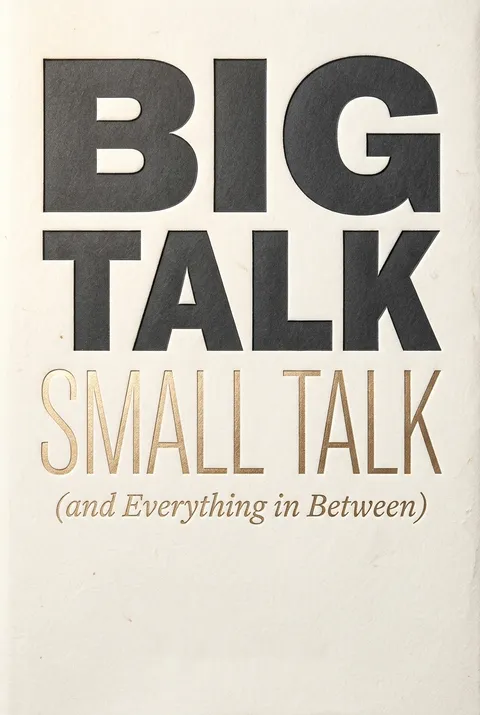
Big Talk, Small Talk (and Everything in Between) receives an overall rating of 3.64 out of 5 based on 14 reviews on Goodreads. Readers find the book to be a useful manual for reference, offering helpful advice for communicating with various people in different circumstances. One reviewer gave it 4 out of 5 stars, praising its practicality. The book appears to provide valuable insights and strategies for improving communication skills across a range of situations, making it a potentially beneficial resource for those looking to enhance their interpersonal interactions.
People Also Read




Glossary
FORM
Small-talk topic guideA mnemonic for four accessible areas of small talk: Family, Occupation, Recreation, and Motivation. The topics offer a starting point for conversation with someone new, moving from familiar subjects toward more open questions about what interests or motivates them. It is a flexible prompt, not a required sequence or a reason to probe into private matters.
pacing and leading
Acknowledge, then guideA conversational technique for responding to someone who is upset. First, the listener acknowledges the person's current emotion and shows understanding rather than immediately trying to correct it. Once the speaker feels heard and begins to settle, the listener can gently guide the conversation toward reflection, options, or a more constructive emotional state.
What, Why, and Now
Three-part email structureA framework for making work emails clear and actionable. What states the situation or main point. Why explains its relevance to the reader. Now specifies the next action, including who should do it and, when useful, by when. The structure helps readers understand a message quickly instead of searching a long email for its purpose.
micro expressions
Brief facial signalsVery fleeting facial expressions that may appear before a person has time to compose their face. The book associates them with emotions including fear, disgust, anger, happiness, contempt, and sadness, and credits psychologist Paul Ekman with naming the term. They can provide clues during interaction, but a brief expression alone cannot establish what someone thinks or intends.
ask, don't tell
Question-led guidanceA coaching approach that replaces unsolicited advice, especially repeated instructions framed as what someone should do, with questions that help the person consider options and reach a solution. It can reduce defensiveness and support autonomy. The approach does not prohibit direct advice when it is requested or needed; it encourages guidance that does not assume the other person is incapable of thinking.
Download PDF
Download EPUB
.epub digital book format is ideal for reading ebooks on phones, tablets, and e-readers.








