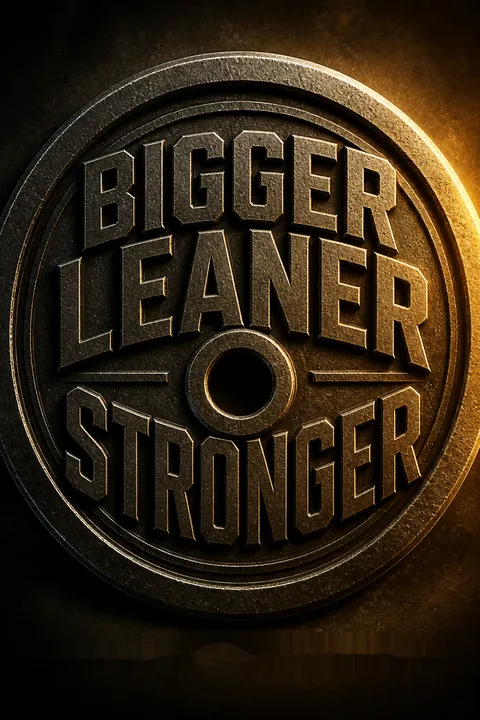


Key Takeaways
Replace fitness folklore with repeatable training, measured eating, and honest tracking.
The stalled lifter. Matthews opens with his own long detour: years of magazine-inspired routines, marathon gym sessions, and expensive supplements produced little progress. After nearly six years of regular lifting, he stopped chasing novelty and studied muscle growth, fat loss, and training research. Changing how he trained and ate finally moved his strength and physique forward. His central argument is that building a bigger, leaner, stronger body depends less on secret tricks than on applying a small set of basic principles consistently.
A better filter. The book begins by insisting that readers understand the terms behind fitness claims, from calories and protein to muscle and metabolism. Without clear definitions, contradictory advice can sound equally convincing. That skepticism matters in an industry where products and elaborate routines are often marketed as necessities.
The opening story works because it gives the advice a concrete before-and-after problem: effort alone did not solve the plateau. The book's strongest contribution is its attempt to replace a noisy marketplace of novelty with a testable process. That is also a useful form of scientific literacy: define the claim, identify what would count as evidence, and track the outcome. Still, a personal transformation cannot prove that one specific program caused every improvement. Its value is as a motivating case study, not a controlled experiment.
Make muscles adapt by adding load, then letting recovery catch up.
Progress beats the pump. Progressive tension overload means gradually asking muscles to handle greater resistance over time. Matthews treats this, rather than soreness, burning, or a dramatic pump, as the main training signal for muscle growth. His program centers on compound lifts such as squats, deadlifts, presses, and rows, which involve several muscle groups and make it practical to increase the weight or repetitions.
Recovery is part of training. Lifting creates a stimulus; rest and adequate food support adaptation. The book warns that excessive sets and too-frequent hard sessions can leave recovery behind, especially for natural lifters. Its template uses relatively few demanding working sets, long rests, and periodic easier weeks. The practical test is not how exhausted a workout feels, but whether performance improves across repeated sessions.
This shifts attention from the immediate sensation of exercise to the slower signal that matters: greater capacity over time. That resembles skill learning, where repeated practice with feedback beats constantly changing tasks for novelty. The advice to rest between heavy sets also protects the quality of the work being measured. The limitation is the book's confidence in a narrow, heavy-repetition prescription. Muscle can respond to a broader range of loads, so the larger principle, progressive challenge with recoverable volume, is more durable than any single rep range.
Create a modest calorie deficit; cardio cannot erase an unmeasured diet.
Energy sets the direction. The book explains energy balance as the relationship between energy eaten and energy used. Over time, an intake above expenditure tends to increase body weight, while an intake below expenditure tends to reduce it. Matthews uses this to challenge claims that a particular meal time, carbohydrate source, or cardio machine independently switches fat loss on.
Exercise is not a loophole. Cardio can increase energy use, but it cannot reliably compensate for consistently eating more than the body expends. The book gives a simple illustration: a run that burns a few hundred calories does not cancel a larger dietary surplus. It recommends using a moderate deficit rather than crash dieting, since severe restriction can undermine training, energy, and muscle retention. If progress stalls, check intake and activity before searching for a metabolic mystery.
Energy balance is a useful accounting model because it explains why many different diets can produce weight loss when they create a sustained deficit. The book also recognizes that expenditure can adapt during restriction, which helps explain why calorie targets need reassessment. The model is not a complete eating strategy, however. Hunger, food access, medication, health conditions, and measurement error affect whether a deficit is feasible or accurately estimated. Treat calories as a feedback tool, not a moral score or a promise of perfectly predictable weekly change.
Keep your food plan flexible enough to survive ordinary life.
Targets before taboos. Matthews organizes nutrition around calories and macronutrients: protein, carbohydrate, and fat. Protein supplies material for tissue repair, carbohydrates support training and replenish muscle glycogen, and dietary fat contributes to normal bodily functions. The book favors nutrient-dense foods for most meals, but argues that a sustainable plan need not ban bread, dessert, or other favorites.
Make compliance practical. Its flexible-dieting approach suggests getting at least 80 percent of calories from nutritious foods, then allowing room for treats within daily targets. Meal frequency and late-night eating matter less than total intake and a schedule the person can follow. Planning also catches hidden calories: two tablespoons of olive oil, for example, contribute about 240 calories. The point is not to weigh every bite forever, but to learn where intake is drifting and make the plan livable.
Flexibility is more than permission to eat dessert. It reduces the all-or-nothing cycle in which one deviation becomes a reason to abandon a plan. This is consistent with behavior-change approaches that emphasize adherence over theoretical perfection: the best eating pattern is useless if it cannot be maintained. The 80 percent figure is a rule of thumb, not a biological threshold, and food quality matters beyond body weight. A workable plan should also account for medical needs, cultural preferences, budget, and the person's relationship with tracking.
Separate fat-loss phases from muscle-building phases when progress stalls.
Choose the phase deliberately. Cutting means eating below maintenance to lose fat while trying to preserve muscle. Bulking means eating a modest surplus to support muscle gain, with some fat gain likely. Maintenance aims to hold roughly steady while making slower strength and muscle progress. Matthews argues that experienced lifters should not expect substantial muscle growth while dieting hard, though beginners and people returning after a layoff may gain muscle and lose fat at the same time.
Adjust by evidence. The book proposes gradual changes instead of dramatic swings. It suggests aiming for roughly 0.5 to 1 pound of weekly gain during a bulk, and slower loss during a cut, then reviewing body weight, waist, strength, energy, sleep, and how clothes fit. It recommends cycling phases rather than bulking without limit or chasing extreme leanness before building enough muscle.
The phase model helps resolve competing goals. A calorie deficit favors weight loss, while a surplus can make muscle gain easier, so choosing a primary objective can reduce frustration. The book's use of multiple indicators is particularly sound: scale weight alone cannot distinguish fat change from water, glycogen, or new muscle. Its body-fat cutoffs and rate targets should not be treated as universal prescriptions. Training history, health, age, and personal goals affect what pace is appropriate, and some people reasonably prefer slower recomposition over distinct phases.
Build workouts around big lifts, clean technique, and recorded progress.
Start with the foundations. Matthews prioritizes the squat, deadlift, bench press, and overhead press, then adds exercises for areas those lifts do not fully develop. His sample plans fit three to five weekly lifting sessions and generally keep workouts to about an hour. He emphasizes full, controlled movement, sound technique, and stopping when pain signals a problem rather than treating every warning as a challenge.
Make progress visible. A training journal records the exercise, load, repetitions, and relevant notes. If a lifter pressed a weight for four repetitions last week, the next target might be five. When a set reaches the program's repetition limit, the load increases. This turns vague effort into a feedback loop: if numbers stall for several weeks, review training, food, and recovery instead of randomly replacing the routine.
A logbook is a simple form of measurement that makes training more deliberate and less vulnerable to memory. It can also reveal patterns that a mirror cannot, such as a lift declining after poor sleep or a change in schedule. The core lifts are efficient, but no movement is mandatory for every body. The book's confidence that specific techniques suit everyone deserves caution, particularly for readers with pain, prior injuries, or limited experience. Good coaching and individualized exercise substitutions can preserve the principle without forcing a painful lift.
Use brief conditioning to support fat loss, not punish yourself.
Weights stay central. The book treats resistance training as essential during fat loss because it gives the body a reason to retain muscle. Cardio is an optional tool for increasing energy expenditure and improving conditioning, not a substitute for managing food intake. Matthews favors high-intensity interval training, or HIIT, which alternates hard efforts with easier recovery periods, and describes sessions shorter than the long treadmill slogs he criticizes.
Protect the main work. He recommends keeping cardio moderate, avoiding excessive sessions that interfere with lifting, and separating cardio from weights when possible. If both must happen in one session, his preference is to lift first. The broader lesson is to add activity only when it helps the goal and can be recovered from. More exercise is not automatically more effective, especially when food intake is already restricted.
This is a useful antidote to the idea that fat loss requires hours of punishment. Cardio can support health and create more room in an energy budget, while resistance exercise helps preserve strength and muscle. The book's claim that HIIT reliably outperforms steady-state cardio is stronger than its practical conclusion requires. Different forms of activity can work; enjoyment, joint tolerance, fitness level, and consistency matter. For beginners or people with health concerns, lower-intensity movement may be a safer and more sustainable starting point.
Treat cravings as temporary urges, and protect choices before temptation arrives.
A lapse is not a collapse. The book describes the what-the-hell effect: after breaking a rule, someone may decide the whole effort is ruined and continue overeating or skipping workouts. Matthews recommends responding to a slip with self-forgiveness and a return to the plan, rather than shame. He also advises noticing a craving without immediately obeying it, then waiting ten minutes before acting.
Make the hard choice easier. Stress, poor sleep, and tempting cues can make self-control harder. The book suggests reducing stress, keeping supportive company, reviewing personal goals, and using precommitment, meaning a decision made in advance that limits later backtracking. Examples include preparing meals or removing tempting foods from the home. These tactics shift the burden from heroic willpower in the moment to preparation before the difficult moment arrives.
The best insight here is that discipline is not simply a personality trait. Choices are shaped by stress, cues, social norms, and what is immediately available. Planning around those influences is more humane and often more effective than self-reproach. The book's model of willpower as a limited reserve can be useful as a metaphor, but it should not imply that every lapse is caused by depleted capacity. Habits, circumstances, and emotional needs also matter. The practical response remains strong: observe the urge, create a pause, and design the next choice.
Buy only supplements with transparent ingredients and a credible reason.
Food and training lead. Matthews argues that most fitness supplements are unnecessary, underdosed, or supported by weak evidence. Protein powder is presented as a convenience, not a requirement. He gives creatine monohydrate a stronger endorsement, while dismissing many testosterone boosters, growth-hormone boosters, and branched-chain amino acid products for people already eating enough protein. His buying advice is to inspect ingredient lists, serving sizes, and disclosed amounts, and to avoid proprietary blends that hide individual doses.
Question the seller. The book portrays supplement marketing as a major source of misleading claims and notes that dramatic physiques in advertisements may not result from the products being promoted. Its own closing pages also advertise the author's supplement company. That conflict does not automatically invalidate the advice, but it makes independent verification especially important. Supplements should not displace adequate food, training, sleep, or professional medical guidance.
The consumer-literacy advice is among the book's most valuable sections: a long ingredient list is not evidence of effectiveness, and undisclosed quantities prevent meaningful comparison. Creatine and protein powder are also not interchangeable examples; one is a specific ergogenic aid, the other a convenient food source. A notable tension is that the author criticizes supplement sellers while promoting his own brand in the same book. Readers should apply his demand for transparency to every seller, including the author, and check current evidence and safety information independently.
Analysis
Bigger Leaner Stronger is a practical fitness manual built around a clear hierarchy: train progressively, recover, eat in line with the desired change in body composition, and measure results. Matthews makes that hierarchy memorable by contrasting his earlier period of long, complicated workouts and stagnant progress with a later approach grounded in basic physiology. The story gives the book momentum, while the repeated myth-busting supplies its organizing structure.
Its most durable ideas are more general than its detailed prescription. Progressive challenge, adequate recovery, sufficient protein, a manageable calorie deficit for fat loss, and a training log are useful principles. So is the insistence that food flexibility and enjoyment matter because adherence is part of effectiveness. The book also makes an important distinction between scale weight and body composition, encouraging readers to consider strength, waist measurements, energy, sleep, and appearance together.
The limits appear when principles become rules. The book strongly favors heavy compound lifting, a particular repetition range, a specific split, and HIIT. Those choices may suit some readers, but they are not the only route to muscle or fat loss. Training history, injury, available equipment, age, preferences, and recovery capacity change what a sensible plan looks like. The book itself provides some alternatives, yet its confident tone can make a template sound more universal than it is.
The text also reflects the evidence and supplement debate of its period. It cites many studies, but citations do not make every interpretation conclusive, especially when findings are mixed or drawn from small, narrow samples. Its own commercial promotion is relevant: a reader should distinguish the sound general case for skepticism from product recommendations that could benefit the author. The best way to use this book is as a clear starting framework, not a medical prescription or an unchallengeable protocol. Keep the principles, test the details against personal results and qualified advice, and revise when the evidence says the plan is not working.
Review Summary
Bigger Leaner Stronger receives mostly positive reviews, praised for its evidence-based approach to fitness and nutrition. Readers appreciate the book's straightforward, no-nonsense advice on building muscle and losing fat. Many find the nutrition information particularly valuable. Some criticize the workout routines as basic or outdated, but most agree it's an excellent resource for beginners. The book is lauded for debunking fitness myths and providing actionable plans. While primarily aimed at men, many find the principles applicable regardless of gender.
People Also Read







Glossary
Progressive tension overload
Gradually increasing training demandThe book's central muscle-building principle: expose muscles to increasing resistance or workload over time so they have a reason to adapt. In practice, a lifter might add repetitions with a given weight, then increase the weight while maintaining controlled technique. The aim is measurable improvement, not merely fatigue or a temporary pump.
Energy balance
Energy eaten versus expendedThe relationship between the energy supplied by food and the energy the body uses. The book uses energy balance to explain long-term weight change: intake above expenditure tends to increase body weight, while intake below expenditure tends to reduce it. It is an accounting framework, not a claim that food quality, appetite, or health are irrelevant.
Metabolic adaptation
Lower energy use during dietingA reduction in energy expenditure that can occur as a person loses weight or restricts calories. The book warns that severe or prolonged restriction can make fat loss harder by lowering the body's energy use and can also undermine training and muscle retention. It recommends a moderate deficit rather than crash dieting.
Cutting
Dieting to reduce body fatA planned period of eating fewer calories than the body expends, with the aim of losing fat while preserving as much muscle as possible. The book pairs cutting with continued resistance training and adequate protein. It distinguishes cutting from extreme deprivation and advises tracking several measures of progress, not just scale weight.
Bulking
Eating more for muscle gainA planned period of eating a modest calorie surplus while training to build muscle and strength. Some fat gain is expected, so the book advises monitoring weight and body composition rather than treating a bulk as permission to overeat without limit. Cutting may follow when accumulated fat gain becomes undesirable.
Body recomposition
Losing fat while gaining muscleChanging body composition by reducing fat while increasing muscle, sometimes with little change in total body weight. The book says this is most attainable for beginners who have fat to lose and for people regaining previously built muscle. It cautions that experienced lifters usually make better muscle-building progress in a modest surplus.
HIIT
Alternating hard and easy intervalsHigh-intensity interval training is cardiovascular exercise structured as repeated periods of hard effort followed by easier recovery. The book favors it as a time-efficient conditioning option and describes using it alongside weight training. It is one possible form of cardio, not a necessary condition for fat loss.
Strength Week
Extra practice on major liftsA recurring training week in the Bigger Leaner Stronger program that concentrates on core lifts such as squats, deadlifts, and presses, with fewer exercises per workout. Matthews schedules it after several weeks of normal workouts to provide more practice and emphasize strength progression. The format is a program feature, not a universal training requirement.
What-the-hell effect
One lapse becomes continued indulgenceA pattern in which someone who has slipped from a plan treats the lapse as proof that the effort is ruined, then continues the behavior. In dieting, a small unplanned treat can become a much larger episode. The book recommends self-compassion and a prompt return to the next planned action rather than shame or abandonment.
Precommitment
Deciding before temptation arrivesA strategy of arranging a future choice in advance so it is harder to abandon a goal in a moment of temptation. In the book's examples, a person might prepare meals, remove tempting foods from the home, or create an accountability commitment. The method reduces reliance on in-the-moment willpower.
Surfing the urge
Notice cravings without obeyingA technique for responding to a craving by acknowledging it, allowing it to be present, and waiting rather than immediately acting. The book suggests that urges change over time and that suppressing thoughts about food can make them more persistent. A short delay creates room to remember the intended goal and choose deliberately.
FAQ
What's Bigger Leaner Stronger about?
- Focus on Transformation: Bigger Leaner Stronger by Michael Matthews is a guide for men aiming to transform their physique through effective training and nutrition.
- Simple Science: The book simplifies the science of muscle building and fat loss, debunking common fitness myths.
- Comprehensive Approach: It covers training, nutrition, supplementation, and mental strategies to achieve fitness goals.
Why should I read Bigger Leaner Stronger?
- Proven Results: The methods are backed by scientific research and have helped many achieve their fitness goals.
- Comprehensive Guidance: It offers a complete roadmap, including workout plans, dietary advice, and supplement recommendations.
- Motivational Tone: Matthews provides inspiration and tools to help readers transform their bodies.
What are the key takeaways of Bigger Leaner Stronger?
- Progressive Overload: Emphasizes increasing weights to stimulate muscle growth.
- Nutrition Importance: Highlights balanced macronutrients and adequate protein for muscle building.
- Debunking Myths: Challenges misconceptions like excessive cardio and frequent meals for metabolism.
What are the best quotes from Bigger Leaner Stronger and what do they mean?
- Proper Form: "If you can’t get full reps, you’re using too much weight." This stresses the importance of form over heavy lifting.
- Consistency Over Novelty: "Building muscle and strength doesn’t require that you constantly ‘challenge’ your muscles with new, exotic exercises." Focus on consistent progress in key exercises.
- Progress Focus: "A successful workout is one where you made progress." Encourages measurable improvements as the ultimate goal.
How does Bigger Leaner Stronger define proper nutrition?
- Two Main Goals: Nutrition is about recovery and energy manipulation for weight goals.
- Macronutrient Balance: Emphasizes protein, carbohydrates, and fats for muscle growth and health.
- Hydration and Micronutrients: Stresses the importance of staying hydrated and consuming vitamins and minerals.
What is the recommended training frequency in Bigger Leaner Stronger?
- Three to Five Days: Recommends training three to five days a week for optimal recovery and growth.
- Compound Movements: Focuses on exercises that work multiple muscle groups for efficiency.
- Rest and Recovery: Highlights the importance of rest days to prevent overtraining and injuries.
How does Bigger Leaner Stronger address fat loss?
- Energy Balance Principle: Fat loss is about consuming fewer calories than burned, regardless of diet composition.
- Avoiding Fad Diets: Warns against fad diets, advocating for a balanced approach with carbs and healthy fats.
- Preserving Muscle Mass: Stresses high protein intake during calorie deficits to prevent muscle loss.
What are the recommended supplements in Bigger Leaner Stronger?
- Vitamin D: Important for health and muscle function, especially with limited sun exposure.
- Creatine: Highly researched for enhancing strength and muscle mass, with guidance on proper use.
- Protein Powder: Convenient for meeting protein needs, especially for those struggling with whole foods.
How does Bigger Leaner Stronger suggest maximizing pre- and post-workout nutrition?
- Pre-Workout Protein: Recommends protein before workouts for amino acid availability.
- Post-Workout Recovery: Emphasizes protein and carbs post-exercise to replenish glycogen and support recovery.
- Timing and Composition: While timing is important, overall daily macronutrient intake drives results.
What is the role of cardio in Bigger Leaner Stronger?
- Cardio for Recovery: Moderate cardio aids muscle recovery by increasing blood flow.
- Improving Insulin Sensitivity: Enhances nutrient utilization for muscle growth and fat loss.
- HIIT Recommendations: Advocates for HIIT to preserve muscle while promoting fat loss, with 2 to 5 sessions weekly.
How does Bigger Leaner Stronger address common fitness myths?
- Debunking Myths: Challenges misconceptions like heavy weights making women bulky.
- Focus on Evidence: Encourages reliance on scientific evidence over anecdotal claims.
- Empowering Readers: Provides clarity to make informed training and nutrition decisions.
What is the significance of mindset in Bigger Leaner Stronger?
- Mental Resilience: Stresses the importance of a strong mindset to overcome challenges.
- Goal Setting: Discusses setting realistic goals to maintain motivation.
- Positive Self-Talk: Encourages cultivating a positive mindset to support fitness journeys.
About the Author
Other books by Michael Matthews



Download PDF
Download EPUB
.epub digital book format is ideal for reading ebooks on phones, tablets, and e-readers.








