

Key Takeaways
Let food intake drive fat loss, and keep cardio in a supporting role.
Start with the main lever. The book's central argument is that cardio is not a magic fat-loss machine. Losing body fat requires expending more energy than you consume over time. Exercise can help create that gap, but eating back the calories from a workout can erase it. The author points to a nutrition professor who lost 27 pounds while eating snack foods, an example of calorie balance at work, not proof that a snack-food diet is healthy.
Make effort count. Matthews describes spending years following magazine routines and doing more in the gym without understanding why progress stalled. Studying exercise science led him to emphasize food intake, resistance training, and a modest amount of cardio. His message is to stop trying to sweat away an unexamined diet.
The useful distinction is between what changes scale weight and what supports health. Energy balance explains why body weight changes, while food quality affects nutrition, satiety, and whether a plan is sustainable. The snack-food example makes the first point vividly, but it can be misread as evidence that food choices do not matter. They do, just in different ways. Cardio also has cardiovascular and psychological value even when it is not the main driver of fat loss. A sound plan does not need to make every workout pay for dinner.
Keep protein high in a calorie deficit to protect muscle, not just weight.
Protect what you want to keep. A falling scale does not reveal whether the lost weight came from fat or muscle. The book argues that adequate protein, paired with resistance training, helps preserve lean mass during fat loss. For a relatively lean, active person, it suggests roughly 1 to 1.2 grams of protein per pound of body weight per day while dieting. For someone carrying substantially more body fat, it gives a target based on lean mass instead.
Do not confuse weight loss with recomposition. The book also explains that protein needs are not identical for every person or goal. Its broader point is to establish a calorie deficit, keep protein adequate, and treat carbohydrates and fats as adjustable preferences rather than villains. Going low-carb is not presented as a special requirement for losing fat.
This is a body-composition argument, not merely a diet rule: the desired outcome is less fat with as much muscle retained as possible. Resistance training gives the body a reason to keep muscle, while protein supplies material for repair. The practical target may simplify planning, but protein needs vary with body size, age, training, and health status. A per-pound target can also produce unnecessarily high numbers when applied to total body weight in people with substantial excess fat. Personal medical conditions warrant individualized advice.
Make room for favorite foods so your eating plan survives real life.
Build for compliance. Flexible dieting means managing calories and nutrients without banning whole categories of foods or imposing a rigid meal schedule. Matthews suggests getting about 80 percent of calories from mostly minimally processed, nutritious foods, while leaving the remaining 20 percent available for treats and preferred foods. The point is not that treats improve health, but that an eating plan need not require perfect restraint to work.
Recover from imperfect days. The book treats occasional overeating as a manageable setback, not a reason to abandon the plan or punish oneself. A moderate calorie deficit, familiar foods, and flexibility around social occasions can make a diet easier to maintain. For fat loss, it recommends a deficit of about 20 to 25 percent below estimated daily energy needs, rather than an extreme restriction likely to feel miserable.
The model addresses a genuine behavioral problem: all-or-nothing rules can turn a small deviation into a full retreat. In behavior-change research, plans that anticipate obstacles tend to be more usable than plans that assume flawless motivation. The 80/20 split is a memorable heuristic, not a biological threshold; nutritional adequacy depends on the whole pattern, not a precise ratio. Flexibility also does not mean every preferred food fits easily into every goal. It means choices can be adjusted without treating one meal as a verdict on character.
Build meals around protein and fiber when you want less calorie math.
Make fullness do some work. For people maintaining their weight, or those unwilling to log every meal, the book recommends a simple pattern: eat a protein-rich breakfast, include plenty of fruits and vegetables, and choose fats thoughtfully. It cites research in which egg breakfasts were followed by lower calorie intake later in the day, and stresses that the protein content, rather than eggs alone, is the relevant feature.
Use volume strategically. Vegetables and some fruits contain substantial water and fiber relative to their calories, so they can make meals more filling. The author also suggests getting most dietary fat from sources such as fish, nuts, and oils, and keeping trans fats low. Calorie tracking remains the more precise tool when pursuing very low body fat, but these food habits can support maintenance without constant calculations.
This is a practical shift from relying on restraint to shaping the meal itself. Protein and high-volume foods can increase satiety, reducing the number of moments in which appetite must be resisted. The strategy is especially useful when meal tracking feels burdensome. Still, satiety is individual, and some nutritious foods, including oils and nuts, are calorie dense. The book's emphasis on food quality complements its calorie framework: calorie totals influence weight, while nutrient density and fullness influence how manageable those totals feel.
Dose cardio to your goal, not to guilt about the scale.
Use the minimum that helps. Matthews recommends doing enough cardio to support a goal without materially disrupting strength, recovery, or health. He reports maintaining a lean physique with roughly 45 to 60 minutes of cardio weekly, and using around 1.5 hours when cutting, alongside weightlifting. Those figures describe his experience, not a universal prescription.
Keep resistance training central. Cardio alone can reduce weight while also costing muscle, particularly when paired with a calorie deficit. Resistance training gives the body a reason to preserve muscle, while cardio can add activity and improve conditioning. The book warns against escalating cardio whenever the scale stalls: exercise estimates can be inaccurate, appetite or daily movement can compensate, and excessive training may compromise recovery. It also recommends lifting before cardio when both happen in one session.
The minimum-effective-dose idea is valuable because it treats exercise as a program with costs as well as benefits. Recovery, time, and enjoyment matter alongside calories burned. The author's weekly totals should not be read as a ceiling for everyone: health goals, athletic aims, accessibility, and preference differ. Nor should the critique of excessive cardio discourage ordinary movement. A useful test is whether added cardio improves health or progress without making strength sessions, sleep, or adherence noticeably worse.
Intervals save time only when the hard bouts are genuinely hard.
Know what the effort means. High-intensity interval training, or HIIT, alternates demanding work periods with easier recovery periods. The book describes the target as Vmax, a pace at which breathing is labored and conversation is difficult. For beginners, it suggests 30 seconds hard followed by 60 seconds of active recovery, building toward equal work and recovery periods as conditioning improves.
Keep sessions bounded. A typical session can include a brief warm-up, 20 to 25 minutes of intervals, and a cool-down. The author favors cycling, rowing, or sprinting when preserving strength is important, while emphasizing that an enjoyable alternative is preferable to a perfect workout that never happens. He also corrects the promise of effortless four-minute Tabata fat loss: the protocol is exceptionally intense, and four minutes alone burns too little energy to transform body weight.
The book's strongest HIIT advice is operational: intensity has to be high enough to distinguish intervals from ordinary steady exercise, and recovery has to make another hard bout possible. Shorter sessions can be appealing, but they are not automatically superior for every person or every outcome. Intervals impose substantial effort and are a poor starting point for some beginners or people with health limitations. The right progression is not to imitate an elite protocol immediately, but to choose an effort that can be repeated with sound form and adequate recovery.
Try fasted training only if it suits you; fasting is no fat-loss loophole.
Understand the claim. Fasted training means exercising after food has been digested and insulin has returned near baseline, not merely exercising when the stomach feels empty. Matthews argues that this state can increase fat mobilization and may help with the final, stubborn areas of fat loss. He favors fasted cardio and weightlifting during a cut, but acknowledges that some people feel weaker, less focused, or nauseated when training without food.
Keep the trade-off visible. The book says fasted exercise does not bypass the need for an overall calorie deficit. It also notes that performance can be better after eating carbohydrates and raises concern about muscle breakdown during fasted workouts. Its discussion of HMB and stimulant supplements is a specialized strategy, not a necessary foundation for fat loss.
The key scientific distinction is between burning more fat during a workout and losing more body fat over weeks. Those are not interchangeable outcomes: the body can compensate for fuel use at other times, while overall energy intake still matters. Fasted exercise may be convenient for someone who prefers morning workouts without food, but the claimed special advantage for stubborn fat is less secure than the book's basic calorie-balance advice. Training quality and comfort are legitimate outcomes too, not obstacles that must be ignored.
Reveal a six-pack by getting lean and training abs progressively.
Pair leanness with muscle. The book argues that visible abs require both low enough body fat and developed abdominal muscles. It gives rough visibility points of below about 10 percent body fat for men and below about 20 percent for women, while recognizing that a lean body alone may not create pronounced definition.
Train abs like muscles. Matthews recommends direct abdominal work, including weighted cable crunches and leg raises, with progressive increases in difficulty. He also says heavy squats, deadlifts, and overhead presses build the broader core, but do not necessarily develop the visible abdominal muscles enough on their own. His sample approach combines one weighted movement with unweighted exercises, performed for multiple sets several times per week.
This corrects two common misreadings: abdominal exercises do not selectively burn belly fat, and compound lifts do not guarantee highly developed abs. Progressive resistance is a sensible way to train the muscle itself, while overall fat loss affects how visible it becomes. The body-fat figures are rough guideposts, not precise thresholds for every individual; measurement methods and fat distribution vary. Aesthetic targets should also be balanced against the costs of maintaining very low body fat, which the chapter treats chiefly as a physique goal.
Make your first fitness promise so small that a bad day cannot break it.
Start with an easy win. The closing chapter argues that dramatic overhauls often fail because they demand more motivation and time than daily life reliably provides. A mini-habit is a deliberately small action that is easy to complete consistently, such as a short walk, a few push-ups, or following a meal plan for one day. The author argues that these actions build confidence and can grow naturally once the routine is established.
Make the obstacle concrete. He also recommends writing down the main challenge, identifying obstacles, and deciding in advance what action could address each one. A modest commitment is still a commitment: completing it counts, even if there is no extra workout or ambitious meal preparation that day. The aim is to make consistency possible before demanding intensity.
The approach turns behavior change into a design problem rather than a test of virtue. Small actions lower the activation energy required to begin, and repeated completion can strengthen self-efficacy, the belief that one can carry out a task. The useful caveat is that tiny habits are a launch point, not proof of adequate training or nutrition by themselves. Progress still requires an eventual match between the routine and the goal. The method works best when the small action is specific, repeatable, and linked to a meaningful next step.
Analysis
The book's organizing move is to replace fitness folklore with a hierarchy. Energy balance governs weight change; protein and resistance training shape what kind of weight is lost; food quality supports health and satiety; meal timing and cardio tactics sit lower in the stack. That ordering is more useful than any single meal plan because it tells readers what to troubleshoot first. A stalled scale should prompt scrutiny of intake and activity estimates before a new supplement, fasted workout, or punishing cardio schedule.
The author's own story gives the hierarchy credibility as a practical correction. He describes years of effort guided by magazines, followed by better progress after studying physiology and changing both training and eating. The memorable promise is not that effort is unnecessary, but that effort spent on low-leverage tactics can be replaced by simpler, measurable choices. Flexible eating and a modest exercise dose make the plan compatible with ordinary life, rather than a short-lived contest of discipline.
The strongest claims are the broad ones: sustained energy deficit is necessary for fat loss, resistance training supports muscle retention, and food preferences influence adherence. The more tactical claims deserve more restraint. Acute fat oxidation during fasted exercise does not automatically establish extra long-term fat loss, and the book's confident recommendations about HMB and stimulant supplements exceed what most readers need to act on. Its warnings about excessive cardio also should not be mistaken for a case against regular physical activity. The text is best used as a prioritization guide, not a universal medical or training prescription.
The practical sequence is clear: establish a sustainable calorie target, eat enough protein, lift consistently, and use cardio in a dose that fits recovery and preference. Track food when precision matters, then use repeatable meal habits when maintenance allows. Select one small behavior to begin, measure progress with more than scale weight, and adjust only when evidence points to a real plateau. The core achievement is demystification: fitness becomes a set of manageable trade-offs, not a search for a secret.
Review Summary
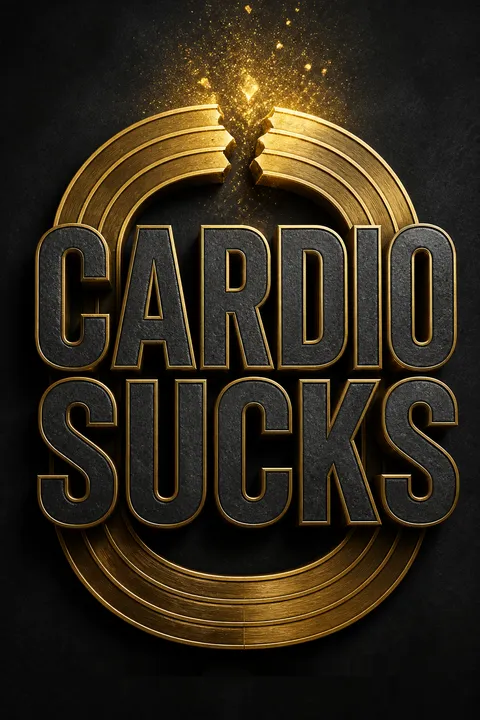
Cardio Sucks receives mixed reviews, with an average rating of 3.80 out of 5. Many readers appreciate the scientific approach and concise information on fat loss and muscle preservation. The book challenges traditional cardio methods, advocating for HIIT and strength training. Some find it informative and motivating, while others criticize it for lacking depth or repeating content from the author's previous works. Readers value the practical tips on nutrition and exercise selection, though some desired more detailed workout plans or disagreed with certain recommendations.
People Also Read








Glossary
Energy balance
Intake compared with expenditureThe relationship between the energy taken in through food and the energy the body uses. In the book's framework, sustained intake below expenditure produces weight loss, while intake above expenditure produces weight gain. Energy balance explains changes in body weight, but does not by itself describe whether that change comes from fat or muscle.
Flexible dieting
Flexible calorie and nutrient planningAn eating approach that manages calorie and macronutrient intake without forbidding particular foods or requiring a fixed meal schedule. The book emphasizes choosing foods that suit personal preferences, goals, and daily life, while getting most calories from nutrient-dense foods and treating occasional deviations as manageable rather than catastrophic.
BMR
Energy used at restBasal metabolic rate is the estimated energy the body uses over a day to sustain basic functions while at rest, excluding physical activity. The book presents a formula based on lean body mass to estimate BMR, then uses an activity multiplier to estimate total daily energy expenditure.
TDEE
Total daily energy useTotal daily energy expenditure is the approximate amount of energy the body uses in a 24-hour period, including ordinary activity and exercise. The book uses TDEE as a starting estimate for setting a calorie deficit for fat loss or a small surplus for muscle growth, while noting that estimates can be inaccurate.
LISS
Low-intensity steady cardioLow-intensity steady-state cardio is sustained, relatively easy activity such as walking, jogging, or cycling at a consistent pace. The book contrasts it with intervals, arguing that LISS takes longer to expend energy and may be less time-efficient for fat loss, while remaining a valid option for people who prefer it.
HIIT
Alternating hard and easy intervalsHigh-intensity interval training alternates strenuous bouts of exercise with lower-intensity recovery periods. In the book, the hard intervals should make breathing labored, while recovery remains active. The author presents HIIT as a time-efficient cardio option and recommends limiting session length and frequency to manage fatigue.
Vmax
Near-maximal sustainable speedThe book uses Vmax as a practical effort marker for HIIT: a pace at which breathing becomes labored and taking in air feels difficult. This is offered as an alternative to prescribing intensity by VO2 max, which is harder for most people to measure during an ordinary workout.
Fasted training
Exercise in a postabsorptive stateExercise performed after food has been digested and absorbed and insulin has returned near its baseline level. The book distinguishes this physiological state from simply feeling hungry or having an empty stomach. It presents fasted training as optional and notes possible drawbacks, including reduced performance and discomfort.
Tabata training
Very intense short intervalsA specific interval protocol based on 20 seconds of extremely hard effort followed by 10 seconds of recovery. The book explains that the original research examined performance outcomes and that a four-minute version is not a meaningful standalone fat-loss solution. It describes longer sessions as demanding and better suited to conditioned exercisers.
HMB
Leucine-derived supplement compoundBeta-hydroxy beta-methylbutyrate is a substance produced when the body metabolizes the amino acid leucine. The book discusses it as an anti-catabolic supplement that may help limit muscle breakdown during fasted training, while distinguishing that proposed use from claims that it directly builds muscle.
Mini-habits
Very small repeatable actionsSmall, deliberately achievable behaviors used to establish consistency before attempting a larger change. Examples in the book include a short walk, a few body-weight repetitions, or following a meal plan for one day. The approach treats reliable completion as the initial goal, with the action able to expand as it becomes routine.
About the Author
Other books by Michael Matthews


Download PDF
Download EPUB
.epub digital book format is ideal for reading ebooks on phones, tablets, and e-readers.








