

Key Takeaways
When power calls Black protest terrorism, ask whose violence gets excused
The label redirects scrutiny. The memoir opens with the public backlash after Trayvon Martin’s killer was acquitted. Patrisse Khan-Cullors, Alicia Garza, and Opal Tometi were branded terrorists for insisting that Black lives matter. The label obscures the violence being protested and recasts protest itself as a danger. Her brother Monte, a man experiencing a mental health crisis, was also charged with terrorism after police used rubber bullets and a Taser against him.
Test the accusation. The book contrasts these labels with the treatment of other violence, including the FBI’s continued designation of Nelson Mandela as a terrorist until 2008. Its point is not that every act is equivalent, but that labels can be applied selectively, shaping whose fear is believed and whose actions are treated as threats.
A security label does more than describe an event. It changes the question from what institutions did to whether the people challenging them are dangerous. That shift can make scrutiny feel disloyal or unsafe. The memoir is strongest when it asks readers to examine who controls the vocabulary of threat. There is also a useful boundary: the term terrorism should not lose meaning through indiscriminate use. The better test is consistent evidence and conduct, rather than whether a protester or target belongs to a politically disfavored group.
Track the institutions that turn poverty and illness into criminality
Hardship has a setting. Patrisse grows up in Van Nuys, where her mother works long days across multiple jobs, food is sometimes scarce, and the nearby choices include a convenience store and fast-food outlets. Less than a mile away, wealthier Sherman Oaks has lawns, cars, and resources that feel like another country. When Patrisse is twelve, police arrest her at a neighborhood summer school after she smokes marijuana, although similar use at her affluent middle school draws little police attention.
Compare the rules. The same behavior can be treated as youthful misbehavior in one setting and evidence of criminality in another. The book links this divide to job loss, underfunded schools, housing insecurity, and intensive policing, not to a defect in the children being watched.
This account shifts analysis from character to context without claiming that people have no agency. A useful question is not only what someone chose, but which options were available, what risks followed, and how institutions responded to similar conduct elsewhere. That is a social-ecological way of thinking: outcomes emerge from interactions among people, resources, and rules. It also guards against a trap in structural explanations. Communities should not be reduced to hardship; the memoir makes visible their humor, affection, and creativity alongside the constraints imposed on them.
Give mental illness treatment before police turn a crisis into a case
A crisis became custody. Monte, Patrisse’s beloved older brother, lived with schizoaffective disorder, a condition that can involve mood changes and psychosis. During episodes, he could become frightened, sleepless, and disconnected from what others could see. Instead of receiving steady care, he repeatedly encountered police and jail. In one crisis, officers shot him with rubber bullets, used a Taser, and charged him with terrorism.
Punishment deepened the harm. In jail, Monte was placed in solitary confinement and denied the medication he asked for. He deteriorated until he appeared in court strapped to a gurney and covered with a spit mask. His family struggled to secure care, while hospitals and emergency responders often treated his criminal record as more important than his illness.
Monte’s story exposes a design failure: institutions built to manage danger can intensify it when they mistake illness for defiance. The relevant choice is not simply police or no response. A community needs reliable crisis care, continuity of medication, and routes to treatment that do not require arrest as an entry ticket. The memoir also shows the burden placed on relatives who become unpaid case managers. Family commitment can be extraordinary, but it should not be treated as a substitute for trained, accountable public services.
Build the care networks institutions leave absent
Love became practical support. Patrisse’s mother, Cherice, kept the family together while working exhausting hours. Her father Gabriel, who struggled with addiction and incarceration, offered another kind of care: at recovery meetings, he spoke publicly about his mistakes and apologized to his family. These experiences taught Patrisse that accountability can happen in a community that listens, rather than only through punishment.
Friends became infrastructure. When Monte returned from prison, Patrisse’s friends helped with rides, work, and support during his episodes. When formal responders refused to help, people close to the family stayed present and eventually persuaded him to accept hospital care. This chosen network did not erase the damage, but it kept the family from facing each crisis alone.
The memoir treats care as something people do, not merely a feeling they profess. Showing up, bearing witness, and making room for accountability are forms of social infrastructure. The distinction matters: support does not mean excusing harm, and accountability need not mean exile. Yet the family’s resilience also reveals an inequity. When public systems withdraw, the work falls disproportionately on relatives and friends, often people already stretched thin. A humane policy would support these relationships without making survival depend on them.
Protect spaces where young people can question rules and claim themselves
School changed the possibilities. As a child, Patrisse is praised as bright and encouraged to read and teach classmates about civil rights. In middle school, a move from her working-class neighborhood to an affluent school brings shame and isolation. Later, Cleveland High’s humanities program gives students permission to question racism, religion, gender, and sexuality. Patrisse begins to challenge the religious rules she grew up with and to understand herself as Queer.
Belonging can be fragile. Her cousin Naomi is beaten by her mother after coming out and removed from the school community that supported her. The memoir also cites a disparity in school punishment: 12 percent of Black girls receive at least one suspension, compared with 2 percent of white girls. A supportive teacher eventually gives Patrisse and a friend a home when they are homeless.
Adolescence is a period of identity formation, but schools and families can either make exploration safer or turn difference into a disciplinary problem. The book’s examples show that belonging is not a soft extra. It affects whether young people can learn, ask for help, and imagine a future. At the same time, one affirming teacher cannot compensate for systemic failures in housing, counseling, and school discipline. The practical lesson is to build many points of support, so a young person’s safety does not depend on finding one exceptional adult.
Turn private trauma into public evidence and organized pressure
A family record became art. After reading an ACLU of Southern California report documenting abuse in Los Angeles County jails, Patrisse recognized details that matched what had happened to Monte. Her mother had kept records of calls made while searching for him. Patrisse used those records, survivor testimony, and official recordings to create Stained, a performance that made the jail’s violence visible to an audience.
Witness became an organization. The performance toured and helped build the Coalition to End Sheriff Violence, which sought civilian oversight of the sheriff’s department. Patrisse and her collaborators developed Dignity and Power Now, and Los Angeles established a civilian oversight board in 2016. The sequence links testimony, artistic communication, public attention, and institutional pressure.
Art can make bureaucratic harm legible by giving audiences a way to encounter records as human experience. Here, the performance does not stand in for organizing. It helps people see why organizing is necessary and gives a campaign shared material to act on. That conversion carries an ethical responsibility: testimony is not raw material to be used without consent or context. The strongest public work keeps survivors’ agency central and connects emotional force to a concrete demand, so awareness has somewhere to go.
Turn a hashtag into a decentralized movement with local power
A slogan opened a door. After Trayvon Martin’s killer was acquitted in 2013, Patrisse responded to Alicia Garza’s words with the hashtag Black Lives Matter. Opal Tometi helped build the digital tools that let people find the phrase, share it, and organize around it. The three founders wanted more than a viral message: they wanted a political project that could grow beyond them.
Local action gave it force. Organizers held protests and sit-ins, then coordinated a Freedom Ride to Ferguson after Michael Brown was killed. Hundreds of organizers traveled to support people on the ground, while local groups shaped their own work. The network grew across cities and countries, linking separate campaigns without requiring every decision to come from a central office.
The movement’s decentralized structure treats local knowledge as a source of authority, not a detail to be added after strategy is set. Digital communication helps scattered groups recognize shared stakes, while in-person coordination turns recognition into practical support. Decentralization also creates challenges: local groups can diverge, and public stories can become confused about who speaks for whom. The memoir’s account suggests a productive balance: shared principles and communication, paired with room for communities to define their own needs and leadership.
Make a movement answer for the Black women and trans people it overlooks
Visibility shapes whose pain counts. In Ferguson, women were central to protests and community care, yet media attention often centered men. The memoir describes organizers making space to discuss this imbalance and to recognize the leadership of Black women, Queer people, and Trans people. It also recounts the deaths of Sandra Bland and other Black women whose experiences received less attention than those of men.
Naming corrects the record. The #SayHerName campaign called attention to Black women harmed by state violence, including Black Transwomen. Black Lives Matter’s stated commitments included opposing sexism and transphobia and recognizing that Black people face different forms of vulnerability. Inclusion here is not a side issue. It changes which stories are told, who leads, and what counts as safety.
Movements can reproduce the hierarchies they oppose if visibility and authority default to the most familiar voices. Naming those omissions is a form of organizational correction, not a contest over whose suffering matters most. It can improve a movement’s understanding of how violence operates across gender, sexuality, disability, and class. There is a further challenge: asking marginalized organizers to continually educate others can become another unpaid burden. Inclusion requires not only recognition, but also shared resources, decision-making power, and room to rest.
Replace cages with the conditions that make safety possible
Safety requires more than enforcement. The memoir connects public safety to reliable housing, health care, food, good schools, jobs, and places for young people to gather. These were scarce in the neighborhoods where Patrisse grew up, while policing and incarceration expanded. Her organizing therefore pushed not only for accountability, but also against new jail construction and for investment in community needs.
Policy can repair as well as restrict. In California, Patrisse worked on Proposition 64, which legalized marijuana and directed $50 million a year in tax revenue toward communities harmed by the drug war. The measure also allowed some people with marijuana convictions to seek expungement. It did not solve every harm, but it showed how policy can remove a tool of criminalization and redirect resources toward people affected by it.
This is a broader definition of safety than the absence of immediate disorder. It asks whether people have the material security and care that make ordinary life possible, and whether public institutions answer to the communities they govern. The Proposition 64 example gives the argument a practical form: change the rule, clear some of its consequences, and direct resources toward those who bore the costs. Such measures remain partial. Durable safety also depends on who controls budgets and whether communities can hold institutions accountable.
Analysis
The memoir’s central argument is carried by a sequence of intimate encounters: a child watches police search her brothers, a teenager loses her father to prison, a family struggles to get medical care for Monte, and an organizer turns those experiences into public campaigns. This structure makes the political argument experiential. Policies are not distant abstractions. They enter homes, schools, relationships, bodies, and memory.
Its most important analytic move is to widen the frame around individual conduct. Addiction, mental illness, school discipline, and poverty are presented not as excuses, but as realities that punitive systems often ignore while claiming to solve the problems they intensify. That framing resists the false choice between personal responsibility and structural explanation. People make choices, but institutions shape their options and distribute consequences unevenly.
The book also treats care as political knowledge. Gabriel’s public accountability, Cherice’s persistence, friends’ support, and the healing spaces organized in Ferguson show how trust is built through repeated acts, not slogans alone. Yet the memoir does not let communal care serve as an alibi for state withdrawal. Families and friends can sustain people; they cannot replace a health system, safe housing, or accountable public institutions.
The movement narrative adds a second tension. Black Lives Matter gains power by being decentralized and by centering people often excluded from traditional leadership, especially Black women and Queer and Trans organizers. That structure supports local invention, but it makes visibility and coordination contested. The memoir’s account of media erasure shows that a movement can resist hierarchy internally only through ongoing practice, not good intentions.
The book’s strength is its refusal to separate grief from strategy. Art, testimony, protest, policy, and healing appear as connected forms of work. Its challenge to readers is correspondingly demanding: do not stop at sympathy for an individual story. Ask what arrangements made the harm predictable, who benefits from those arrangements, and what resources would make a different outcome possible.
Review Summary
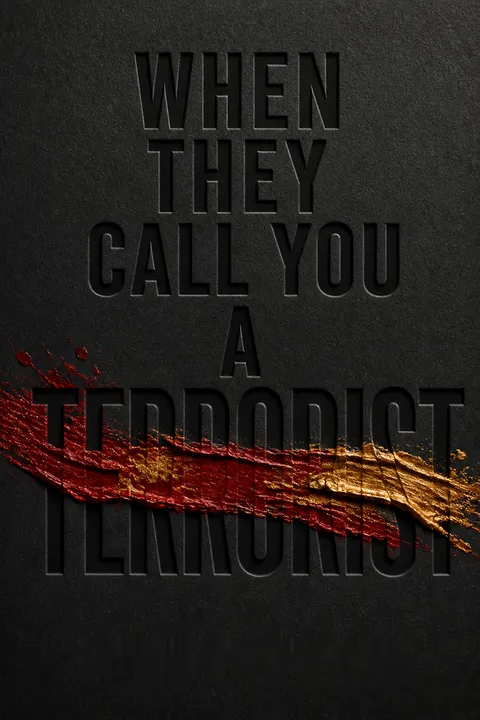
When They Call You a Terrorist is a powerful memoir that offers insight into the Black Lives Matter movement and the experiences of its co-founder, Patrisse Khan-Cullors. Readers praise the book for its raw honesty, emotional impact, and ability to educate about systemic racism and police brutality. Many consider it essential reading, particularly for white audiences. While some critics note issues with writing style or historical context, the overall reception is overwhelmingly positive, with readers commending Khan-Cullors' bravery in sharing her story and highlighting the importance of the BLM movement.
People Also Read




Glossary
Black Lives Matter
movement against anti-Black violenceA phrase, organizing network, and broader movement that emerged after the 2013 acquittal of Trayvon Martin’s killer. Founded by Patrisse Khan-Cullors, Alicia Garza, and Opal Tometi, it challenged anti-Black racism and state violence while encouraging local groups to organize around their own communities. The memoir emphasizes its decentralized structure and its commitments to Black women, Queer people, and Trans people.
intentional family
chosen, sustaining kinshipA family created through deliberate relationships of care and commitment rather than only through biological or legal ties. In the memoir, Patrisse’s close friends support her through homelessness, family crises, organizing, and grief. The idea recognizes that people can build reliable kinship when their families of origin or public institutions cannot provide adequate safety and support.
school-to-prison pipeline
school discipline into incarcerationA pattern in which surveillance, suspension, policing, and harsh discipline in schools push students, especially poor Black and Brown students, away from education and toward the criminal legal system. The memoir connects this pattern to metal detectors, police in school hallways, and unequal punishment for similar behavior. It argues that exclusion and criminalization do not address the conditions affecting students.
restorative justice
repair through accountability and dialogueAn approach to harm that emphasizes accountability, repair, and relationships rather than relying only on punishment. In the memoir, school-based circles invite young people to discuss racism, sexism, homophobia, class, and the conditions behind behavior. The approach aims to keep students connected to their community and their own future while addressing harm directly.
Ifa
Yoruba spiritual traditionAn African spiritual tradition associated with the Yoruba people and practiced by Patrisse and Mark Anthony. The memoir describes its understanding of a supreme being, spiritual forces in nature called Orisha, and ancestors who remain sources of guidance. Divination is used to seek insight into purpose and destiny. Ifa offers Patrisse a spiritual framework distinct from the punitive religious environment of her childhood.
#SayHerName
campaign for overlooked victimsA campaign and hashtag that draws attention to Black women, including Black Transwomen, harmed by state violence. The memoir presents it as a response to public accounts that often foregrounded men while leaving women’s experiences less visible. Naming victims is a way to correct the record and widen the movement’s understanding of who is targeted.
Dignity and Power Now
campaign against sheriff violenceAn organization founded by Patrisse Khan-Cullors and collaborators to address violence and abuse in the Los Angeles County Sheriff’s Department. It grew from public performance and organizing around jail survivors’ accounts and sought civilian oversight of the department. Its work illustrates the memoir’s progression from family testimony to public advocacy and institutional reform.
FAQ
What's When They Call You a Terrorist: A Black Lives Matter Memoir about?
- Personal Narrative: The memoir by Patrisse Khan-Cullors, a co-founder of the Black Lives Matter movement, details her life experiences, including her upbringing in Los Angeles and the systemic injustices faced by Black communities.
- Activism and Advocacy: It explores her journey into activism, motivated by personal experiences with police violence and systemic racism, emphasizing the role of grassroots movements in challenging oppressive systems.
- Cultural Context: The book situates the Black Lives Matter movement within a broader historical and cultural context, highlighting the intersections of race, class, and gender.
Why should I read When They Call You a Terrorist?
- Insightful Perspective: The memoir offers a unique perspective on the Black Lives Matter movement from one of its founders, providing insight into the motivations and experiences that shaped its inception.
- Empathy and Understanding: Khan-Cullors' storytelling fosters empathy and understanding of the challenges faced by marginalized communities, encouraging readers to reflect on their roles in social justice.
- Call to Action: It serves as a powerful call to action, urging readers to engage in the fight against systemic racism and injustice, inspiring them to contribute to meaningful change.
What are the key takeaways of When They Call You a Terrorist?
- Systemic Injustice: The memoir highlights the pervasive nature of systemic racism and its impact on Black lives, illustrating how institutional structures perpetuate inequality.
- Power of Community: Khan-Cullors emphasizes the importance of community organizing and collective action in effecting change, showcasing the potential of grassroots movements.
- Intersectionality: The book discusses intersectionality, exploring how race, gender, and class intersect to shape individual experiences, crucial for addressing social justice complexities.
What are the best quotes from When They Call You a Terrorist and what do they mean?
- "We are not just a hashtag.": This quote emphasizes recognizing the humanity of those affected by systemic violence, challenging the reduction of complex issues to social media trends.
- "The state has a monopoly on violence.": Khan-Cullors reflects on the state's role in perpetuating violence against marginalized communities, underscoring the need for accountability and reform.
- "We are the ones we’ve been waiting for.": This serves as a rallying cry for self-empowerment and collective action, encouraging individuals to take responsibility for creating change.
How does When They Call You a Terrorist address police violence?
- Personal Experiences: Khan-Cullors shares her encounters with police violence, providing a visceral understanding of the fear and trauma experienced by Black individuals.
- Historical Context: The memoir situates contemporary police violence within a historical framework, discussing the legacy of racial profiling and brutality.
- Advocacy for Reform: Khan-Cullors advocates for police reform and accountability, emphasizing the need for systemic change and reimagining public safety.
What role does family play in When They Call You a Terrorist?
- Support System: Khan-Cullors discusses her family as a source of strength and resilience, shaping her understanding of justice and activism.
- Complex Relationships: The memoir explores familial relationships' complexities, particularly in trauma and loss, influencing her identity and activism.
- Cultural Heritage: It highlights cultural heritage and community ties' significance in shaping individual identity, emphasizing family in fostering belonging and purpose.
How does When They Call You a Terrorist define activism?
- Grassroots Movements: Activism is defined as a collective effort to challenge systemic injustices, emphasizing grassroots organizing's power in effecting change.
- Personal Responsibility: The memoir encourages individuals to take personal responsibility for their roles in social justice, arguing everyone can contribute to activism.
- Intersectional Approach: Khan-Cullors advocates for an intersectional approach, recognizing the interconnectedness of social justice issues for building inclusive movements.
What challenges does Patrisse Khan-Cullors face in When They Call You a Terrorist?
- Systemic Barriers: Khan-Cullors discusses systemic barriers like economic inequality and lack of resources, shaping her understanding of justice and activism.
- Personal Struggles: The memoir reveals her struggles with trauma, loss, and mental health, sharing how these experiences inform her activism and resilience.
- Public Scrutiny: As a prominent figure, she faces public scrutiny and criticism, addressing the challenges of navigating fame while remaining committed to her principles.
How does When They Call You a Terrorist relate to the broader Black Lives Matter movement?
- Foundational Insights: The memoir provides insights into the origins and goals of the Black Lives Matter movement, sharing a vision for a world free from systemic violence.
- Collective Action: Khan-Cullors emphasizes collective action's importance, highlighting community organizing's role in challenging systemic injustices.
- Cultural Impact: The book discusses the movement's cultural impact, including its influence on public discourse and policy, reflecting on its ability to mobilize change.
What is the significance of the title When They Call You a Terrorist?
- Challenging Narratives: The title reflects how marginalized communities are labeled and demonized, challenging these narratives by asserting humanity and dignity.
- Reclaiming Identity: It signifies reclaiming identity and agency in the face of oppression, emphasizing self-definition and resistance against harmful labels.
- Call for Justice: The title serves as a call for justice and accountability, urging readers to confront systemic violence and advocate for change.
How does Billionaire at the Barricades address the role of the media?
- Media Bias: Ingraham discusses media bias against Trump, arguing it serves as an extension of the political establishment, undermining genuine discourse.
- Fake News Narrative: The book delves into "fake news" and its weaponization against Trump, crucial for understanding the media's role in the 2016 election.
- Impact on Voter Sentiment: Ingraham posits that media portrayal of Trump and his supporters contributes to voter distrust, fueling the populist movement.
What challenges does Ingraham identify for the Trump administration in Billionaire at the Barricades?
- Resistance from Establishment: Ingraham highlights resistance from the GOP establishment and Democrats to Trump's populist agenda, posing challenges to policy implementation.
- Media Opposition: The media's relentless criticism creates obstacles for the administration, potentially undermining public support and complicating efforts.
- Internal Conflicts: Internal conflicts within the administration can hinder progress, stressing the importance of unity and message discipline to overcome challenges.
Download PDF
Download EPUB
.epub digital book format is ideal for reading ebooks on phones, tablets, and e-readers.








