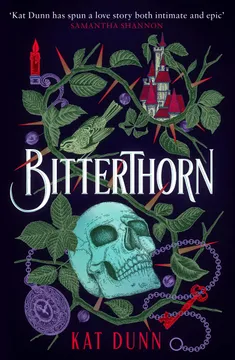


Plot Summary
A Daughter Left Behind
Mina,1 the duke of Schwartzstein’s4 only child, grows up with attentive servants but little attention from her parents. Her mother’s5 rare bursts of affection vanish as quickly as they arrive, and when Mina1 is twelve, her mother5 dies. The duke4 remarries a widow6 with three daughters, and Mina1 is gradually edged out of family life.
She makes the forest her refuge, then returns to her father4 hoping to help prepare for a diplomatic conference. He has hired a secretary13 and urges her to find a husband instead of waiting for her life to begin. His dismissal confirms the old fear that she is a burden. Alone in her room, Mina1 burns her arm against the stove, trying to turn emotional pain into something she can control.
Mina’s solitude is not simple abandonment. She has shelter, education, and status, but learns that care can be conditional, brief, and withdrawn without explanation. Her father’s rejection lands so deeply because she has built her identity around being sensible and undemanding, hoping those qualities will earn her a place. The burn is a small, private act of control when no family member will acknowledge her distress. Her walks in the forest offer a different kind of belonging: not affection, but a world that does not ask her to become easier to love.
The Witch Comes Due
Schwartzstein’s people expect the Witch2 to return after more than fifty years and take another young man from Blumwald. Their fear shapes daily life: shrines collect salt, iron, and yarn, shops close early, and the last companion’s11 family remains a public reminder of loss.
The duke4 presses ahead with a conference meant to win Chancellor Bismarck’s favor and secure a railway line, despite the danger of gathering important guests before the Witch2 has chosen anyone. Mina1 meets a black-clad woman2 in the palace stables, where the horses shy from the shadows around her. The stranger2 recognizes Mina’s1 wish to hide but does not comfort her. Mina1 leaves without understanding who she has met, while the Witch’s2 castle waits above the city.
The town’s rituals convert helplessness into a routine: people lay out protective objects because they cannot influence the Witch’s choices. The duke’s conference is a counter-ritual, an attempt to make Schwartzstein legible to modern political power and thereby deny the old fear its authority. Mina stands between these systems. She distrusts the charms because they cannot prevent grief, yet she has no alternative way to act. Her encounter in the stable gives the Witch a human presence before she becomes a legend, but Mina is still too accustomed to being unseen to recognize the danger gathering around her.
Mina Offers Herself
On the night of the conference dinner, Mina1 finds the Witch2 confronting her father4 in his study. The Witch2 insists that he choose a companion or she will choose someone herself. Mina1 realizes the duke4 already knows the bargain requires a person, and that he may sacrifice a servant to protect his political ambitions.
She steps forward and offers herself instead. The Witch2 accepts, revealing the face Mina1 saw in the stables, then binds them wrist to wrist with Mina’s black ribbon.
At the Witch’s2 insistence, Mina1 swears by the old woodland oath of oak, ash, and bitterthorn. Her father4 does not stop the binding. Before dawn, Mina1 packs practical clothes, her mother’s5 storybook, a drop spindle, and unspun fleece, then leaves Blumwald in the Witch’s2 carriage.
Mina’s offer is both an act of courage and an attempt to escape a life in which no one has chosen her. She understands that her father may accept her sacrifice because it solves two problems at once: the Witch’s demand and the daughter he cannot place. His silence confirms that her agency has emerged inside a system that still exploits her. The binding transforms a local superstition into a personal commitment, but Mina does not yet know what the vow requires. She leaves with objects that embody memory and making, carrying the possibility of a self beyond the family that dismissed her.
The Castle Refuses Maps
The Witch’s2 carriage travels too quickly and turns onto roads Mina1 cannot place. It stops at an empty inn, then climbs to a castle perched above a ravine, surrounded by blackthorn and mist. Inside, the halls are decayed, a spur of limestone splits the great hall, and the Witch2 bars Mina1 from the Tower before leaving her alone.
The housekeeper, Ursula Wolf,3 explains that staff live in the village and that Mina1 may wander, though the forest is dangerous. Mina1 explores corridors that defy geometry, finds seven old travelling trunks, and discovers the Witch’s2 study through a door that should lead elsewhere.
The village offers no welcome; its people fear the castle and refuse to explain its history. Mina1 has escaped her family, but arrives in a place that seems designed to make her lost.
The castle gives physical form to Mina’s new uncertainty. Its corridors resist mapping, its rooms hold signs of past lives, and even the village cannot be approached by ordinary routes. Mina’s geological habits encourage her to treat the place as something legible through evidence, but the castle frustrates that method. Her practical curiosity is also a way of resisting helplessness: if she can name a room or trace a path, she can imagine that she belongs there. Instead, the environment makes her dependence on the Witch unavoidable, while the seven trunks hint at a history Mina has not yet been allowed to read.
A Bargain for Company
Mina1 tries to make herself useful, but the Witch2 rejects her offers and forbids questions about earlier companions. After Mina1 loses her way in a blizzard and sprains her ankle, the Witch2 finds her, builds a shelter beneath a fallen tree, and keeps her warm through the night.
Mina1 returns to the castle feverish; the Witch2 sits beside her until she recovers, then withdraws again. Searching for answers, Mina1 enters a door that opens onto the Witch’s study on the previous Tuesday and witnesses her weeping over a black-bordered letter.
The Witch2 catches Mina1 trespassing. Rather than retreat, Mina1 admits she is lonely and asks for regular company. The Witch2 reluctantly agrees to breakfast together and evenings in her study. A new bargain replaces their first, harsher bond with a chance at trust.
The rescue complicates the Witch’s cruelty without canceling it. Her actions show attention that her words deny, while Mina’s own survival makes clear that being wanted is not the same as being safe. The Tuesday door lets Mina witness grief without knowing its cause, and the discovery gives her a dangerous kind of intimacy: she has seen the Witch unguarded, but by violating privacy. Mina’s request for company is unusually direct because isolation has become more painful than the risk of rejection. The Witch accepts limited companionship, not emotional openness, so their connection begins as a negotiated practice rather than a sudden cure.
The First Return
Breakfasts and evenings together soften the Witch’s2 hostility. She listens to Mina1 explain her rocks and gives her a sandstone specimen, while Mina1 begins tending an abandoned garden. Their fragile routine breaks when a letter from Klara8 reports that the duke4 has fallen from his horse.
The Witch2 first refuses to let Mina1 leave, then relents, though she fears Mina1 will not return. In Blumwald, Mina1 sits vigil as her father’s4 fever rises, and the doctor eventually confirms the danger has passed. Before visiting him, she delivers Edgar Hässler’s11 half-finished letter to his mother9 and sister.7
The family reveals that Edgar11 was taken by the Witch2 decades earlier and never came home. The duke,4 recovering but still withholding the truth, orders Mina1 back. She chooses to return to the castle, where the Witch2 receives her with unmistakable relief.
Mina’s return to Blumwald tests whether her new attachment can survive the old one. She comes because her father may die, but discovers that the family’s grief has remained largely private and that she cannot repair it by arriving. Edgar’s letter makes the Witch’s past companions concrete: they have mothers and siblings, not merely a place in local folklore. Mina still chooses to return, partly from duty and partly because the castle has become the first place where someone notices her absence. The decision is meaningful, but not yet fully free; her longing to be needed still shapes what she is willing to overlook.
Fire in the Great Hall
Frieda Hässler,7 Edgar’s11 sister, finds the hidden castle and confronts the Witch2 about her brother. The Witch2 freezes under Frieda’s7 accusations, and Mina1 sees fear where she expected anger. Frieda7 leaves, but later sets fire to the great staircase, determined to stop the Witch2 from taking anyone else.
Mina1 wakes the Witch2 and searches a junk room for axes. Together they hack through the burning stairs, creating a gap that keeps the fire from consuming the upper floors. The staircase collapses, and Frieda7 is caught beneath the wreckage.
In the morning, Mina1 finds her dead. Wolf3 takes charge of the body and blames Mina1 for bringing the trouble to the castle. Mina1 buries her guilt in routine and gardening, unwilling to examine what the Witch’s2 silence may be hiding.
Frieda’s anger is not a simple threat to the romance. She carries a claim the story has made morally serious: families deserve to know what happened to the people taken from them. Mina understands that claim, yet her loyalty to the Witch pulls her in the opposite direction. The fire forces Mina and the Witch to cooperate physically before they can trust one another emotionally. Frieda’s death then leaves no clean victory. Mina survives, but her relief that the confrontation is over unsettles her. She begins to recognize that attachment can make denial feel like kindness, especially when the truth might destroy the only home she has found.
Bones Beneath the Garden
As spring returns, Mina1 rebuilds the kitchen garden and grows closer to the Witch,2 whose small gifts and shared walks make their companionship feel mutual. Yet the Witch2 will answer little about the men who came before Mina,1 saying only that they stayed at the castle until their lives ran out. When the Witch2 leaves for Vienna, Mina’s1 loneliness sharpens.
While clearing weeds beside the Tower, she uncovers human bones and a concealed door at its base. She hides the bones again, then opens the door with oil and a crowbar, using yarn to mark her route through the dark spiral stair. At the top she finds a great spinning wheel wound with glowing golden thread. Touching it pulls Mina1 out of her own time and into the Witch’s2 past.
The garden makes Mina’s refusal to know increasingly difficult. She tends living plants in soil that contains human remains, turning a setting of death into a place of cultivation without yet facing the cost of that transformation. The Witch’s brief answer about the former companions offers language that can be heard as reassurance, though Mina senses its evasions. Her entry into the Tower is therefore not mere curiosity: she has found evidence that the stories and the Witch’s explanations do not fit together. The wheel turns the Gothic mystery into a material problem. Time has a mechanism, and Mina’s touch makes her witness to the person who inherited it.
The Curse of the Wheel
Mina1 sees the Witch2 as a sixteen-year-old named Holda,2 brought to the castle by her father and his new wife, Berchta.10 Berchta10 uses the wheel to show Holda2 how time carries grief and how stopping it would unravel the world.
She then transfers the burden of spinning time to her stepdaughter and locks her in the Tower. Holda2 struggles to keep the wheel moving, alone and untrained. Mina1 reaches toward the thread and is dragged through centuries, watching Holda2 become the Witch2 Mina1 knows.
When Mina1 returns to the present, she apologizes, but the Witch2 calls her trespass a betrayal. Mina1 admits she wants to know her, and confesses her love. The Witch2 rejects her and orders her away. Mina1 leaves the castle, hurt and furious, but turns her horse back toward it before reaching the valley.
The vision reframes the Witch’s authority as inherited coercion. Holda is not born monstrous; she is a frightened girl assigned a world-sized responsibility by an adult who controls both the explanation and the exit. Mina sees the cost of that assignment, but her compassion does not erase the violation of entering the Tower without permission. Their conflict exposes two incompatible defenses: Mina seeks certainty to feel safe, while the Witch protects herself by controlling what can be known. Mina’s return to the castle matters because she chooses connection after rejection, not because she has solved the Witch’s pain. Love begins as a risk taken without assurance.
A Kiss and the Wheel
Mina1 rides back and kisses the Witch2 before either can retreat into another argument. The Witch2 kisses her in return, then takes her up the Tower and explains the wheel: it spins time, and she must monitor its thread to keep the world moving smoothly.
The castle’s impossible rooms and the Witch’s2 ledgers are consequences of living close to that power. She has no instruction manual and cannot leave for long without returning to tend the wheel. Mina1 begins keeping her company during the work, reading aloud and telling stories while the Witch2 spins.
She also repairs the castle and clears the limestone outcrop in the great hall rather than destroying it. Their affection grows through shared labor, though the Witch2 still keeps parts of her past and the wheel’s dangers to herself.
The kiss does not resolve the conflict; it changes the conditions under which Mina and the Witch can face it. The Witch offers knowledge only after Mina returns, and her explanation makes the castle’s uncanny behavior part of a daily obligation rather than an isolated haunting. Mina responds with the skills she trusts: attention, maintenance, and patient work. Repairing the hall without flattening its natural rock becomes a model for the relationship she wants, a home that accommodates difficulty rather than erasing it. Yet intimacy remains asymmetrical. Mina is increasingly open, while the Witch’s habit of withholding information still leaves the bond vulnerable.
The Market Repeats
The Witch’s2 work grows harder as the golden fleece on the distaff dwindles. At the village market, Mina1 notices a woman buying snakeroot tea for a second time, then watches the same customers, burned bread, loose goat, and passing dressmaker repeat in exactly the same order.
The Witch2 arrives and draws Mina1 out of the loop, then repairs the snag while Mina1 waits. Exhausted afterward, she explains that time has become too thin and its threads are breaking.
Across the castle, rooms fall into loops and seasons slip out of order; the Witch2 dismisses the servants to keep them safe and spends nearly all her time spinning. Mina1 patrols for dangerous distortions and cares for the Witch,2 but cannot share the work. When she asks what is wrong, the Witch2 makes Mina1 promise to do anything for her.
The market loop makes an abstract threat public and bodily. Customers repeat ordinary purchases while their awareness disappears, turning a familiar social space into a trap. Mina’s own protection fails, so the Witch’s intervention becomes both rescue and evidence of declining control. The dwindling fleece links this episode to the earlier history of companions without yet making its price explicit. Mina’s promise is emotionally understandable: she sees the Witch exhausted and wants to relieve her. But the promise is also dangerous because Mina still lacks the information needed to judge what she is agreeing to. Care offered under unequal knowledge can become a path to sacrifice.
Love in the Dark
A June blizzard strikes as the seasons begin to fail. Mina1 finds the Witch2 crying beneath a table in her room, saying she has spun as much as she can and has no answer.
Mina1 brings candles, coffee, and biscuits, then washes the dirt from the Witch’s2 feet while explaining that love means seeing another person and staying present through pain. The Witch2 asks Mina1 not to leave. They undress and become lovers, each allowing the other to touch and guide her.
In the morning, Mina1 discovers a notebook on the Witch’s2 desk describing a thread so thin it can barely hold the world together. The entries also reveal the Witch’s2 dread that she must choose between Mina1 and everything time sustains. Mina1 realizes her life may be the material the wheel needs.
The scene of care reverses Mina’s lifelong role as the person who must make herself easy to keep. She tends the Witch’s body without treating its damage as monstrous, and the Witch accepts attention she has habitually refused. Their intimacy is an act of mutual vulnerability, but it does not neutralize the material danger that surrounds them. The notebook turns the romance’s central asymmetry into explicit knowledge: Mina has been loved, yet may also be needed as a resource. Love and instrumental use are not mutually exclusive here. The revelation forces Mina to distinguish being cherished from being safe, a distinction she has never had to make so sharply.
The Witch Lets Her Go
Mina1 confronts the Witch2 with what she has read and the bones she found beneath the Tower. The Witch2 denies that Mina1 is merely fuel, but when Mina1 insists on the truth, she adopts the cruel persona that has protected her for centuries and pursues Mina1 with a hunting knife.
Mina1 escapes through the castle, across the bridge, and down into the forest. The Witch2 never catches her. In Blumwald, Mina’s father4 confirms that the duke’s4 family has long kept the secret: the Witch2 requires a companion, and Mina1 was sent to her as a matter of duty.
He expects her to return and accepts the likelihood that she will die. Mina’s stepfamily6 offers no refuge either. She is once again alone, but now understands both the Witch’s2 secret and her father’s4 betrayal.
The Witch’s attack is terrifying partly because Mina knows it is a defense, not a simple revelation of her nature. The cruelty gives the Witch a script that makes the coming sacrifice seem inevitable and allows her to sever a bond she fears will make it harder to act. Mina’s father confirms that the danger was never an accidental misunderstanding; it was maintained by a ruling family willing to preserve public safety through private sacrifice. His sense of duty does not make the betrayal less intimate. Mina’s escape is therefore a refusal of two systems at once: the Witch’s fatal bargain and her father’s claim that obedience is the only responsible choice.
A Wedding Without Time
Mina1 returns to the palace, where her stepmother6 has turned her old room into a different space and the family treats her escape as a temporary inconvenience. At Klara’s8 wedding, Mina1 watches the church clock freeze at noon.
The next morning, Klara’s8 secretary, Klaus,13 is missing, and his wife Maria14 repeats the same distressed movements without noticing Mina.1 In the kitchens, servants perform the same actions over and over. Mina1 recognizes the pattern as a time loop and realizes that the Witch’s2 thread is failing because Mina1 escaped the wheel.
Bare footprints and a scrap of black lace show that the Witch2 came to the palace and took Klaus13 instead. Mina1 cannot let him replace her. She leaves the palace with a horse, food, and money, determined to return to the castle and prevent the Witch2 from killing again.
The wedding gathers the social world Mina once hoped to enter, but its celebration is pierced by a clock that cannot advance. Klaus’s disappearance translates the wheel’s crisis into a competing human claim: a life has been taken to keep the system running. Mina’s discovery that the Witch came for him sharpens the ethical stakes. She cannot pretend that love makes the Witch harmless, but she also refuses to let the Witch’s old method continue unchallenged. The family’s response to Mina’s earlier escape has left her emotionally isolated, yet the action she chooses now is not an attempt to earn their approval. She returns because another person’s life is at stake.
Across the Bitterthorn
Mina1 rides toward the Witch’s2 valley, following signs that time is breaking: streams run backward, trees shrink, and the seasons change between one stretch of road and the next. She reaches the village, where people jerk through a frozen fragment of summer, then finds the castle sealed behind a towering hedge of blackthorn.
At its base, Mina1 recognizes her overgrown garden and the skull among the branches. She cannot cut through, so she gathers flints, firewood, and furniture to build a rough staircase over the hedge.
After crossing the thorns and climbing the Tower, she finds Klaus13 beside the wheel, his life glowing as the Witch2 prepares to use it. The distaff is empty. Mina1 positions herself between them, urges Klaus13 to leave, and offers her own life instead.
The return journey makes Mina’s choice visible as sustained labor rather than a romantic impulse. She crosses seasons that no longer behave, navigates a village caught in a loop, and builds her way over the very barrier that once marked her separation from the Witch. Her garden, now tangled with thorn and bone, exposes the cost of the castle’s history without sending her back into denial. At the Tower, she does not arrive to restore the old arrangement. By sending Klaus away and offering herself, Mina tries to protect both an innocent stranger and the Witch from becoming an executioner again.
A Thread Made Together
Mina1 touches the distaff, and her life flows into the golden fibre. Time stops. The Witch2 refuses to spin, choosing to remain beside Mina’s1 body rather than continue by sacrificing her.
In the suspended moment, Mina1 witnesses the Witch’s2 history: she repeatedly gave companions’ lives to the wheel after growing close to them, then watched them die and buried their remains in the garden. The curse’s demand that she spin alone finally breaks when she is no longer alone in that frozen Tower. Mina1 wakes beside the Witch,2 alive.
Around the distaff, her life and the Witch’s2 have formed a new, multicolored fleece that keeps the wheel turning. The villagers and castle return to motion. The Witch2 and Mina1 have made a source of time that does not require another victim.
The climax does not defeat the curse by discovering a loophole in its machinery. It changes the moral relation at its center. The Witch’s refusal to spin proves that she will no longer preserve the world by turning a loved person into raw material. Mina’s journey through the Witch’s memories then exposes the repeated pattern that the Witch herself has hidden: each companion was both company and eventual sacrifice. Their shared life becomes a different kind of substance, not because love magically erases grief, but because neither woman treats the other as expendable. The new thread makes reciprocity a practical force, not merely an emotional ideal.
Epilogue
Mina1 and the Witch2 remain at the castle, where the wheel now draws on the life they have built together. They repair the halls, welcome Klara8 and her husband, and teach Wolf3 to spin. Mina1 writes to Frieda’s7 family and helps arrange the return of Frieda’s7 remains. The Witch2 eventually sends Mina1 to visit her mother’s5 grave, promising to manage the wheel while she is away.
Mina1 returns each year. The castle is no longer a prison sealed from the world, though Mina1 accepts that staying means giving up travel. In a final summer scene, she pulls the Witch2 away from her papers to show her the garden’s courgette flowers. Their future is not effortless, but it is shared.
The ending refuses to make love a cost-free escape. Mina remains bound to the castle, and the Witch’s grief does not vanish; instead, they build routines that allow care and separation to coexist. The annual visit to Mina’s mother’s grave matters because the Witch changes the terms of the original confinement: she can hold the burden alone briefly, trusting Mina to return. The garden, once rooted over the dead, becomes a place of food and shared attention. By opening the castle to visitors and teaching others to spin, Mina and the Witch also loosen the secrecy that made the old system seem inevitable. Their happiness is work performed repeatedly, not a final spell.
Analysis
Bitterthorn makes loneliness more than a private feeling: it is a condition organized by families, governments, and magical duties. Mina’s father4 can describe her sacrifice as necessary for the duchy, while the town’s rituals turn a recurring loss into an accepted tradition. The Witch’s2 curse is more overtly supernatural, but it rests on a similar structure. Berchta10 assigns a girl an impossible burden, then leaves her to call coercion duty. In both cases, those with power preserve their arrangements by making someone else absorb the cost. Mina1 and the Witch2 initially mistake isolation for protection. Mina1 tries to need nothing; the Witch2 controls access to herself and treats questions as threats. Their relationship develops not because one rescues the other from loneliness once, but because each repeatedly chooses attention, honesty, and practical care. Yet the novel complicates romantic devotion by showing how easily care becomes self-erasure. Mina’s1 desire to be needed makes her vulnerable to a sacrifice she does not understand, while the Witch’s2 love cannot undo the harm caused by her secrecy. The climax becomes possible only when neither woman accepts the old choice between one person and the world.
The spinning imagery ties craft to ethics. Mina’s mother5 teaches her the shape of making; Mina1 later gardens, repairs, and learns to spin, valuing work that joins patience to uncertainty. The wheel’s old thread comes from lives taken without consent, while the new thread grows from a life shared and freely given. That resolution does not claim love cancels death, grief, or constraint. Mina1 remains tied to the castle, and both women carry losses they cannot reverse. What changes is the system’s dependence on concealed victims. The final promise of happiness is therefore not escape from obligation, but a form of responsibility made mutual, visible, and open to others.
Review Summary
Bitterthorn receives an overall rating of 3.86/5, with readers praising its lyrical, atmospheric prose and gothic fairytale aesthetic. Many highlight its exploration of loneliness and its sapphic romance, drawing comparisons to Beauty and the Beast. Fans love the slow-burn relationship between Mina and the Witch, with some calling it a masterpiece. Critics, however, note pacing issues, an underdeveloped romance, and repetitive middle sections. Despite mixed feelings about character depth and plot momentum, most agree the stunning writing and gothic atmosphere make it a worthwhile, if imperfect, read.
People Also Read



Characters
Mina
The overlooked observerMina is the duke’s4 daughter, a solitary young woman whose curiosity finds its first home in forests, rocks, and the rhythms of the natural world. She has learned to survive by asking little of other people, even when she longs to be noticed. Her geological interests reflect a mind that seeks patient evidence and long histories, while her walks let her feel capable outside the family roles imposed on her. Mina’s attention to small acts of care gradually challenges her belief that she must either disappear or make herself useful to be loved. She is not fearless: she acts while frightened, and often mistakes self-sacrifice for agency. Her central struggle is learning how to choose connection without surrendering her right to understand what she is choosing.
The Witch
The guarded keeperKnown across Schwartzstein through fearful stories, the Witch lives in a decaying mountain castle and keeps even her face hidden behind a veil. She is sharp-tongued, proud, and quick to treat questions as threats, yet her actions reveal a watchfulness she rarely admits: she notices Mina’s1 absence, protects her from danger, and makes room for her interests. Centuries of isolation have taught her to manage closeness by controlling information and disguising vulnerability as cruelty. Her attachment to old clothes, music, and private records suggests a self shaped by accumulated history rather than simple wickedness. The Witch’s deepest conflict is between the duty she believes she must perform and the possibility that another person might share its burden.
Ursula Wolf
The castle’s watchful stewardWolf is the practical housekeeper who feeds and manages the castle from its village kitchens. Her clipped manner keeps Mina1 at a distance, but she is attentive to the Witch’s2 needs and has spent a long time protecting her. Wolf understands more about the castle than she is willing to explain, and her silences are often motivated by fear for the Witch2 rather than indifference. She is a worker accustomed to turning concern into action: preparing food, directing staff, and intervening when danger comes too close. Her loyalty has limits, however, and she resists being treated as though devotion requires endless agreement.
The Duke
A father ruled by dutyMina’s father1 governs the small duchy of Schwartzstein and measures his time through political negotiations, trade, and plans for modernization. He is not openly cruel, but his emotional reserve leaves Mina1 to interpret what little affection he offers. After his first wife5 dies, he delegates the care of his daughter1 to his new wife6 and treats Mina’s1 grief as something with an allotted duration. He sees duty as a defense against uncertainty and can mistake practical decisions for moral ones. His relationship with Mina1 is shaped by both genuine attachment and an unwillingness to accept the obligations that attachment entails. He represents a world where power can hide a personal choice behind the language of necessity.
Mina’s mother
A tender, troubled memoryMina’s1 mother is a delicate, often withdrawn woman whose moods make her presence unpredictable. She sometimes shares rides, art, stories, and small moments of warmth with Mina1, then retreats from the demands of ordinary life. Her death leaves Mina1 grieving not only the mother she had, but the fuller relationship she hoped they might one day have. She encourages Mina’s1 curiosity about nature and craft, including the drop spindle that becomes one of Mina’s1 keepsakes. Mina1 remembers her with affection, but also gradually recognizes that childhood memory cannot answer who her mother was as an adult.
The Stepmother
The household’s careful managerThe duke’s4 second wife is the mother of Johanna15, Else16, and Klara8. She prioritizes her daughters’ education, marriages, and social standing, leaving little emotional space for Mina1. She is not presented as openly violent; her power works through exclusion, correction, and the assumption that Mina1 should adapt to a household that is not organized around her. Her competence in arranging events contrasts with her limited interest in Mina’s1 private life. She regards security and respectable placement as practical solutions, which makes her difficult to confront: she can treat neglect as sensible management.
Frieda Hässler
A sister marked by absenceFrieda is Edgar Hässler’s11 sister and the daughter of a family shaped by the Witch’s2 old selection. Years of grief and social neglect have made her blunt, guarded, and fiercely protective of her mother9. She distrusts Mina’s1 account of returning from the castle because that return revives hope and pain at once. Frieda does not seek mystery for its own sake; she wants an answer that will give her family’s loss a shape. Her anger exposes the human cost hidden by the town’s vague language of companions and tradition.
Klara
Mina’s sociable stepsisterKlara is the youngest of Mina’s1 stepsisters and moves comfortably through the social world that Mina1 finds alien. She is engaged early in the story and later marries, following the expected path of courtship and family life. Her comments can wound Mina1 even when she does not intend cruelty, because she assumes marriage and social acceptance are available answers for everyone. Klara is not simply an antagonist: her later willingness to visit Mina1 suggests that relationships may grow outside the old household hierarchy, although neither woman can undo the years of distance.
Frau Hässler
A mother waiting for newsFrieda7 and Edgar’s11 elderly mother carries the grief of a son11 taken decades earlier. She preserves his memory through prayer and continues to hope for his return, making the difference between a public legend and a family’s private loss painfully clear. Her fragile faith is not foolishness; it is one way of enduring an absence that no authority has adequately explained. Mina’s1 visit forces that old hope into the present, where it can no longer remain safely abstract.
Berchta
The Witch’s formidable stepmotherBerchta enters Mina’s1 account through a vision of the past as a poised, politically astute woman who knows how to shape the people around her. She presents herself as knowledgeable about the strange power of the spinning wheel and speaks with the authority of someone accustomed to being obeyed. Her composure masks a willingness to make choices for others without giving them meaningful consent. She is important not because she resembles a fairy-tale villain, but because her actions show how a burden can be passed down under the language of duty.
Edgar Hässler
Frieda’s absent brotherEdgar is Frieda’s7 brother, taken from Schwartzstein in the previous generation of the Witch’s2 selections. His unfinished letter, discovered in a castle bedroom, gives Mina1 a glimpse of his affection for his family and his uncertainty about the place where he has been brought. His absence defines the Hässlers’9 lives, though Mina1 initially knows him only through their memories and the few words he left behind.
Hanna
A young castle workerHanna is a scullery maid who works in the castle kitchen. Mina1 sees her repeating a task with a vacant concentration that suggests the castle’s time distortions can affect ordinary workers. Her experience gives Mina1 a concrete view of the danger surrounding the Witch’s2 work and shows that the castle’s strange power reaches beyond its walls and its inhabitants.
Klaus Ernhoff
The duke’s young secretaryKlaus is a recently graduated secretary hired by the duke4 instead of allowing Mina1 to help with his papers. He is later married and appears at Klara’s8 wedding, representing the ordinary adult life Mina1 once assumed she had missed. His presence connects the palace’s political ambitions to the personal costs of the Witch’s2 bargain.
Maria
Klaus’s frightened wifeMaria is Klaus’s13 wife, newly connected to the duke’s4 household through the wedding celebrations. When Klaus13 disappears, she is left distressed and unable to break out of a repeating moment. Her brief role makes the consequences of the broken passage of time visible through someone who has no knowledge of the castle’s hidden history.
Johanna
Mina’s married stepsisterJohanna is the eldest of Mina’s1 stepsisters, already married and expecting a child when Mina’s1 story begins. She and Klara8 participate in the family life from which Mina1 feels excluded. Johanna’s practical focus on marriage and motherhood reflects the narrow future available to women in their household, without making her a deliberate enemy of Mina1.
Else
Mina’s absent stepsisterElse is the middle daughter of Mina’s stepmother6 and is already living with her husband in Munich. Her departure helps Mina1 understand how the household is reorganizing around the futures of her stepsisters8, leaving her with no obvious role of her own.
Plot Devices
The Spinning Wheel
Time’s hidden machineryThe wheel in the Witch’s2 Tower turns golden fibre into thread and keeps time moving beyond the castle. Its work accounts for the strange rooms, uneven hours, and seasonal disturbances Mina1 encounters. The Witch2 records its behavior in ledgers because she must monitor the thread and repair snags. As the available fibre dwindles, repeated moments and collapsing seasons make the danger visible to Mina1 and the wider community. The wheel also embodies the story’s central moral problem: a system that sustains the world has been maintained through the lives of the Witch’s2 companions. Its eventual transformation depends on a different source of thread.
The Binding Oath
A vow with consequencesThe Witch2 binds Mina1 with her own ribbon and demands an oath using the old words associated with oak, ash, and bitterthorn. The ritual makes Mina1 her companion and later offers some protection from the castle’s temporal disturbances. The vow also carries emotional weight beyond its magic: Mina1 repeatedly interprets it as a reason to return, while the Witch2 uses it to insist that Mina1 cannot leave. Its meaning changes as Mina1 comes to distinguish a promise freely kept from obedience imposed by another person.
The Castle’s Time Doors
A house out of sequenceThe castle’s proximity to the wheel bends space and time. Doors open onto the Witch’s2 study on a recurring Tuesday, another room remains fixed in summer, and parts of the building become inaccessible or loop through the same minutes. These effects let Mina1 investigate the Witch’s2 life while making navigation unreliable and sometimes dangerous. They are not random Gothic decoration: as the wheel’s work becomes unstable, similar distortions spread into the market and village. The castle becomes a warning system for a crisis that Mina1 initially mistakes for private haunting.
The Bitterthorn Hedge
A living boundaryBlackthorn grows around the castle and gives the Witch’s2 hidden home a physical border. The plant is first associated with local protective customs and the old oath Mina1 uses when she is bound. Later, the hedge expands into a nearly impassable wall as time falters. Mina1 cannot cut through it, so she gathers stones and other materials to climb across. The hedge marks the difference between separation by fear and the patient work of finding a way back. Its sharpness also echoes the characters’ defensive habits without reducing the plant to a simple symbol.
Mina’s Geological Collection
A measure beyond griefMina’s1 rocks give her a way to think about age, change, and belonging that does not depend on human approval. She studies how pressure, heat, and erosion leave evidence in stone, and explains this interest to the Witch2 as a way of touching histories larger than one lifetime. The collection also shapes Mina’s1 method of approaching the castle: she observes, compares, and looks for physical clues. Her scientific attention cannot solve every magical mystery, but it keeps her from accepting fear as the only explanation and offers the Witch2 a subject through which intimacy can grow.
Download PDF
Download EPUB
.epub digital book format is ideal for reading ebooks on phones, tablets, and e-readers.








