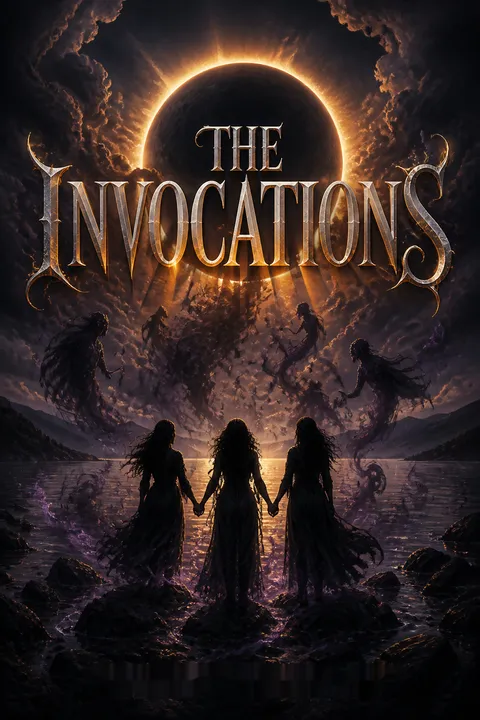


Plot Summary
Prologue
On Halloween night in London, a young woman leaves a crowded party and takes the dark towpath home. A shadowy man follows, but she escapes by stepping through shadows, a power she bought with blood and part of her soul.
The safety she trusted turns out to be fragile: the stranger reaches her doorstep and attacks her from behind. The prologue introduces the danger facing women who seek magic, and the killer who can move through darkness in ways no ordinary man should.
The opening makes fear physical before it explains the supernatural rules. The woman weighs ordinary risks, an empty canal path and a stranger behind her, against the confidence her purchased power has given her. Her escape seems to vindicate the bargain, until the attacker appears at her home. That reversal establishes the story’s central tension: a woman can gain tools to defend herself, yet the world around her still converts safety into another test. The prologue also plants the killer’s ability to cross space unnaturally, so later sightings of a flickering shadow feel like confirmation rather than surprise.
Oxford's Invisible Cursewriter
At Oxford, Emer Byrne survives by stealing food, clothes, and student identities, then disappears into the Bodleian Library to study dead languages. She is physically strong, but the old wound on her arm and the sulfur scent clinging to her skin betray a life far outside student routine. Her work with ancient words is not academic alone.
She carries a rolled strip of lead engraved with words for blood, hatred, and vengeance, adding to it as she searches for a way to answer an old injury. At night she watches men from her bicycle, daring them to mistake her for prey. She has built a life around remaining unseen, but the spells she writes for women are beginning to draw dangerous attention.
Emer’s Oxford routine is a survival strategy disguised as student life. She learns how to imitate belonging, but her stolen meals, borrowed clothes, and refusal to be recorded mark the limits of that imitation. Language gives her a kind of agency: she can read what other people cannot and turn that knowledge into protection. Yet her lead talisman points toward revenge, not simply safety. Her double purpose, helping other women while preparing to confront a private enemy, makes her generosity inseparable from unresolved trauma. The library becomes both refuge and workshop, a place where she can shape words into power while remaining hidden from ordinary scrutiny.
Two Girls at the Crime Scene
Jude Wolf wakes from another night of supernatural pain in the decaying house her wealthy father gave her after banishing her from the family. A botched spell has bound an enraged demon to her, and she has spent two years paying investigators to locate a cursewriter who might undo it.
Her search brings her to a London crime scene, where Detective Reese Chopra lets her inspect the body of Rebecca Wright, a young woman killed by strangulation and marked with a bloody pentagram.
Zara Jones is there too, quietly recording evidence and studying the victim’s occult books. Jude pays Zara’s entrance fee when she cannot afford it. Each girl recognizes in the dead woman a danger that could reach them both, though neither yet knows how closely their reasons for being there connect.
Jude and Zara enter the story through different forms of desperation. Jude has money, access, and a sharp performance of confidence, but her body is visibly failing. Zara has little material power, yet she brings the habits of a researcher to the crime scene and refuses to treat the victim as an abstraction. Their shared attention to Rebecca’s body creates an alliance before either has chosen one. Chopra’s paid access makes the investigation morally compromised from the start: the girls gain knowledge through a detective willing to bend rules, while official institutions have not yet joined the crimes into a public pattern.
The Lead Strip's Message
At the scene, Jude notices a thin piece of lead marked in mirrored writing and pockets it before Chopra can stop her. Zara sees the theft and keeps quiet. Using a car mirror, Jude reads the hidden name and coordinates: Emer Byrne, a cursewriter in Oxford. Over dinner, Jude explains that the metal marks on her own skin are invocations, spells burned into the body to bind a demon in exchange for power.
Each one costs years of life and leaves its bearer sick. Zara reveals that Savannah, her older sister, was the first victim she knows of, and that Savannah had recently gained an uncanny ability to find things. Zara’s goal is not revenge but a chance to speak with her sister again. She agrees to travel with Jude to meet Emer.
The lead strip turns a crime scene into a point of contact between three otherwise isolated lives. Jude’s theft is both practical and revealing: she is willing to break rules because conventional help has failed her. Zara’s silence makes her a collaborator before she understands the full stakes. Their dinner gives the occult a concrete grammar, with bodily marks, prices, and limits, rather than leaving it as rumor. Zara’s distinction between justice and reunion is especially important. She is not pursuing a killer to punish him; she wants to reverse an absence she cannot accept. Jude, by contrast, seeks repair for herself, creating an alliance held together by different needs.
The Witch Who Refuses
At Blackwell’s bookshop, Jude and Zara locate Emer among the occult shelves. Emer recognizes the disastrous invocation destroying Jude’s thigh, but refuses to repair magic written by someone else. Jude’s demons lash out when she threatens to sever one of their bonds, and Emer distracts them by offering her own blood. Zara then lays out the names and photographs of the murdered women.
Emer recognizes them as clients she warned about the risks of magic, and learns that at least five have died. Her guilt turns to fury, but she does not accept Jude’s offer of money to help investigate. Zara adds that Savannah was one of the victims. Emer agrees to hear more, while admitting that the killings echo the violence that destroyed her own family.
Emer’s refusal protects a real boundary: skill does not mean omnipotence, and a bad spell cannot always be undone by a better practitioner. Jude’s wealth cannot buy certainty, which unsettles the bargain-making logic that has shaped her life. When Emer sees her clients among the dead, the cost of her work becomes intimate. She gave women power while warning them that power might make them targets; the warning now feels inadequate. Zara’s evidence changes the question from whether magic exists to what responsibility a maker bears for those who use it. Emer’s anger arises not from abstract guilt, but from recognizing the faces of women she tried to help.
A Spell on Camera
At the next murder scene, Abby Gallagher lies beneath a blood-painted pentagram, her heartspace invocation cut from her chest. Security footage shows a shadowy pursuer apparently passing through a locked entrance, then vanishing in a jump the police first mistake for a glitch.
Emer recognizes the effect as an invocation she wrote for Vera Clarke, a client who could flicker away from an abusive husband. The trio visit Vera’s flat and find her husband claiming she left weeks earlier. Zara slips into the bedroom and steals Vera’s engagement ring, giving Emer a personal object for a locating spell.
Bael guides them to Hampstead Heath, where Emer dives into a pond and finds Vera’s weighted corpse. The matching missing invocation proves someone has taken her magic, though Vera could not have committed Abby’s murder.
The investigation advances through a productive misreading. The footage seems to support the idea that Vera is the killer, but the discovery of her corpse destroys that explanation and forces the investigators to distinguish a person from the power attached to her. Zara’s theft of the ring is not merely a clue-gathering trick; it is a breach of another woman’s private life made necessary by the urgency of finding her. Emer’s willingness to enter the freezing pond turns intuition into evidence. Vera’s death shifts the mystery from possession to appropriation: someone is using a dead woman’s protection spell as a weapon.
Jude Becomes the Bait
Back at Jude’s house, Zara searches its mold-damaged occult library while Jude finds an unfinished invocation that could give her electrical power. The spell was written for another woman, but Jude proposes using it to lure the killer, who has already stolen several of Emer’s clients’ abilities. Emer warns that the draft may be unstable; Jude accepts the risk and burns it into her neck.
On the canal towpath, she waits alone and unleashes lightning when the shadow appears. Her blast injures him but scorches Jude’s hand and leaves the house split and burning. The attacker survives, flees, and nearly strangles her. Zara and Emer find Jude alive in the wreckage, confirming that the killer can be hurt, but not yet stopped.
Jude’s plan is an extension of the logic that has failed her: if danger cannot be avoided, buy enough power to face it. But the spell is unfinished, and its violence exceeds her control. Her attack damages the killer while also making her home uninhabitable, a material version of the cost she has already paid in her body. Zara and Emer’s presence shifts the aftermath from solitary endurance to shared care. The episode also changes the team’s understanding of the threat. The shadow is not invulnerable, yet ordinary force and borrowed magic are insufficient against it.
Emer's First Homecoming
After tending Jude’s injuries, Emer explains how she survived the massacre of her Irish coven as a child. She spent years alone in the woods, where Bael and two other demons brought food, warmth, and books. Nessa, her cousin, later rescued her and hid her in Cork. At fifteen, Emer used Bael to kill an abusive man threatening a neighbor; fearing the authorities would expose her, Nessa sent her away.
Emer chose Oxford to master cursewriting and make herself useful to women who needed protection. Now the killer’s stolen powers present a problem she cannot solve with London research. She proposes searching the old Byrne family library at Lough Leane, and Jude and Zara go with her.
Emer’s history complicates the distinction between care and exploitation. The demons kept her alive, but as an investment in a future cursewriter; Nessa protected her, yet fear eventually required another separation. Emer’s first use of Bael against an abuser offered immediate justice while also making her a fugitive. Her work is therefore not a simple calling but an answer to the helplessness she experienced as a child. Returning to Lough Leane means approaching the source of that helplessness rather than remaining safely in research. Jude’s willingness to accompany her creates a different kind of protection, one based on presence instead of control.
The Dead Name Volkov
At Lough Leane, Emer leads the others through a fear-inducing ward and into the abandoned Byrne home. In the orchard, they find a preserved body with an invocation cut from its wrist: Emer’s pregnant cousin Róisín. Zara discovers a clean copy of an ancient necromancy text in the family library and persuades Emer to test a resurrection ritual.
They pour preserved blood into Róisín’s mouth and invite a demon into her body. The creature answers one question before trying to escape its grave. Zara ignites the kerosene-soaked corpse, ending the possession, but not before it names Andy Volkov as the man who killed Róisín. The revelation suggests that the London murders may belong to the same tradition of hunting witches.
The return to the orchard makes history materially present: the family’s bodies have remained beneath the trees, and their stolen spells connect an old massacre to current murders. Zara’s experiment crosses a boundary that Emer has long treated as absolute. It yields information, but the answer arrives through a body that is not truly Róisín anymore. The episode refuses to make knowledge free. They gain a name only by allowing a demon to occupy someone Emer loved, then destroying that body again. The old family secret is no longer safely past; its method of violence appears to have survived into the present.
A Hunter's Invitation
Back in London, Zara poses as an older lawyer to meet Dickie Volkov, a wealthy young man whose family claims a long history of combating witchcraft. Over an expensive lunch, she draws out an address for a group that calls itself a society devoted to saving women from magic.
Emer goes there alone, using Zara’s invented identity, and finds men gathered beneath a mural of witches burning. A portrait of the society’s founder, Victor Volkov, makes her recognize the family name tied to Róisín’s death.
Meanwhile, Jude prepares to attend her father Lawrence’s wedding, hoping one evening among her family might restore what exile cost her. The three investigations are converging on the Wolf family, though Jude still wants to believe she can return to it.
The society’s language of rescue disguises a practice of domination: it frames women’s choices as moral corruption requiring correction. Zara’s performance exposes how readily old power opens doors to a young woman who seems socially acceptable. Emer, by contrast, sees the violence beneath the polished setting and recognizes a lineage she thought belonged only to the past. Jude’s decision to attend the wedding makes the family question personal. She still longs for recognition from the people whose privilege has excluded her, even as the investigation begins to show that the family’s respectability may be built on something more sinister.
The Wedding's Locked House
Before the wedding, Jude and Zara exhume Savannah and smuggle her body into the mansion’s steel panic room, where Zara intends to try the ritual. Jude then enters the celebration in a pink dress chosen by Lawrence. Her father turns on her in public, and her brother Adam intervenes. Soon the mansion’s security shutters descend, trapping the guests.
Drew knocks Jude unconscious. She wakes bound inside a gilded birdcage beside Emer, who has been captured after infiltrating the house as a server. Adam reveals that the family descends from witch hunters and treats killing as a way to cleanse witches and preserve its power. He also tells Jude that her mother Judita was murdered for possessing magic.
The wedding brings the family’s polished rituals into collision with its hidden violence. Lawrence’s insistence on dressing Jude as a conventional daughter echoes the hunters’ larger demand that women conform, while Adam’s intervention offers a brief, misleading appearance of loyalty. The shutters make the mansion’s protective architecture a prison. Inside the cage, Jude learns that the home she wants back has been sustained by a doctrine that calls murder benevolence. Her mother’s death reframes Jude’s own exile: the false story of scandal did not merely conceal shame, it concealed a family history of killing.
Savannah Leaves the Panic Room
While Jude is held captive, Zara opens Savannah’s suitcase and pours five liters of stored blood into her sister’s corpse as the necromancy text instructs. A bell rings, and Savannah’s body stirs, but the demon inhabiting it is hungry, confused, and far from the sister Zara remembers. Zara apologizes for their last argument and asks what Savannah wanted to find when she bought her spell.
The creature uses fragments of Savannah’s memories to recognize the panic-room keypad, then escapes into the mansion. Her power leads her toward the sound of the hunters’ ceremony. Zara follows, knowing she has awakened something dangerous but unable to abandon the possibility that some part of Savannah can still hear her.
Zara’s achievement is also a devastating correction to her hope. She can make a body move, but she cannot command the self that once inhabited it to return intact. Her apology is sincere, yet it must be offered to a being whose capacity to receive it is uncertain. The creature’s recovered memory suggests that Savannah has not vanished completely, but that residue does not equal reunion. The panic room’s code becomes a small, practical bridge between the living and the dead. Zara follows the creature because love still directs her, even when love cannot control what it has brought back.
The Wolf Trophy Room
In the mansion’s hidden trophy room, Emer finds books, keepsakes, and invocations cut from murdered witches, including pieces taken from her own Byrne family. Drew appears and admits that he is Andy Volkov, the man who led the old attack at Lough Leane. He explains how he deceived Róisín to find the coven and then helped kill its members.
Across the house, Saul’s research has also revealed that Savannah and Vera both worked for Lawrence Wolf’s companies. Jude realizes that the family has been near the victims all along, but she is struck down before she can act. Drew confines Jude and Emer as the hunters prepare their ritual, while the truth about who is using the stolen spells remains unresolved.
The trophy room converts violence into an archive. The invocations are not only tools stolen from bodies, but evidence that the hunters have treated women’s lives as collectible property. Drew’s account of Róisín exposes the intimacy of the betrayal: he gained access by performing affection, then used her trust to locate an entire family. Saul’s employment records link the murders to Lawrence’s world, turning coincidence into proximity. Yet this revelation does not solve the immediate danger. Knowledge arrives while the protagonists are physically trapped, underscoring the difference between understanding a system and having the power to stop it.
Elijah's Borrowed Power
Savannah bursts into the ballroom and attacks the hunters as Zara reaches Jude and Emer’s cage. In the chaos, Drew flees, but Emer knocks him down the basement stairs; Bael consumes his body. Jude then encounters Elijah, the half-brother she trusted most. He confesses that he lured Savannah into finding Emer, killed her, and stole her spell so he could locate other witches.
He stitched the stolen invocations into his own body, seeking power and recognition from the older brothers who had rejected him. Elijah begins choking Jude and cutting away her magic. Emer concludes that the killer’s slow strangulation loosens a victim’s soul enough for him to transfer a spell before death.
Elijah’s betrayal hurts because it grows from a recognizable wound without being excused by it. He has been demeaned by the family and wants the power he believes it withheld, but he answers that exclusion by reproducing its violence against women. Savannah’s spell, acquired to help Elijah search for Jude, becomes the instrument he uses to hunt other witches. The family’s system has therefore shaped both its celebrated heirs and its disregarded son, though in different ways. The revelation also gives the heroes a mechanism: Elijah’s method depends on keeping victims near death, which becomes the opening for a counterattack.
A Curse Changes Hands
Emer binds Bael to her heartspace and uses the new power to hold Elijah, but his stolen spells let him escape into darkness and attack her. Demons who have relied on Emer for years finally intervene, moving her beyond Elijah’s reach.
She tells Jude to let Elijah bring her to the edge of death. While Zara performs CPR, Emer cuts Jude’s ruined invocation from her thigh and staples it onto Elijah. The spell transfers, and Emer then attaches Jude’s damaged curse to herself.
She channels its electrical force into Jude’s heart until it beats again. When the reanimated Savannah breaks into the basement, Emer electrifies the pool and finally disintegrates the demon within her sister’s body. Jude survives, freed from the curse that had been consuming her.
The climax reverses the novel’s economy of magic. Power has been treated as something purchased through individual sacrifice or stolen through violence; Emer instead risks herself to redirect the cost and save another person. The transfer depends on precise bodily acts, cutting, stitching, compressions, and electrical shocks, making rescue neither abstract nor clean. Emer’s bond with Bael also changes from a childhood bargain into reciprocal action: the demons protect the person who has fed and worked with them. Savannah’s final destruction is not a triumphant reunion but a painful release from a second violation of her body.
After the Red Lights
At the hospital, Jude learns that Lawrence survived because he was outside when the mansion sealed. He admits he knew Judita was a witch and had tried to keep Jude away from the older brothers, though his secrecy and distance left her alone.
He also explains that he failed to protect Elijah, whom he believed rejection would keep apart from the hunters. Jude mourns the brother she loved while recognizing the harm he chose to do.
Zara finds Principal Gardner’s number and finally tells an adult what she has endured; Gardner believes her suffering even without claiming to understand every supernatural detail. Emer leaves for Ireland, and Zara decides not to keep pursuing necromancy. The three girls have survived, but their next lives will not be the same.
The resolution refuses to make survival synonymous with restoration. Jude is alive and unburdened by her curse, but her family has been destroyed and her attachment to Elijah cannot be made innocent again. Lawrence offers an explanation rather than absolution; his attempt to protect Jude was entangled with the same secrecy that deprived her of help. Zara’s turn toward Gardner marks a different kind of courage, one based on telling the truth instead of solving grief through another impossible project. Emer’s departure acknowledges that solidarity does not require the three girls to share one future.
Epilogue
Emer returns to Lough Leane and rebuilds the farmhouse with Bael and the demons, using money Jude arranged to reach her. By summer, the orchard and gardens are being restored, and she has made a home where her family’s coven once stood. Jude and Zara visit with supplies, work beside her, and tell her they have both been accepted to university.
When they prepare to leave, Jude turns back and asks to stay. Emer welcomes her, and the two finally kiss. The house is named Phoenix House, not because the past has vanished, but because the survivors have made something livable from its remains.
The epilogue gives Emer a form of home that is neither a return to childhood nor a retreat from the world. She rebuilds the old property on her own terms, with labor, chosen companionship, and a future coven rather than the isolation that followed the massacre. Jude’s decision to stay is an act of desire, not the result of illness or family obligation; her recovery gives her the freedom to choose a life beyond inherited wealth. Zara and Jude still leave for university, so the ending preserves separate futures even as it offers intimacy. Phoenix House names reconstruction as ongoing work, not erasure.
Analysis
The novel makes power inseparable from the conditions that force people to seek it. Emer’s clients do not pursue magic as a hobby; they seek ways to escape violence, protect children, or survive situations in which ordinary institutions have failed them. Their spells exact bodily costs, but the story refuses to treat those costs as proof that the women were foolish to choose them. The more unsettling exploitation comes from men who already possess money, status, or institutional authority and still reach for women’s power as property.
That contrast gives the central conflict its political shape. The Volkov and Wolf tradition presents violence as protection, using the language of salvation to make its victims appear responsible for their own punishment. Elijah’s motive is more intimate and psychologically legible: he has been humiliated within the family and wants to acquire what it denied him. But his grievance does not erase his choices. He reproduces the family’s hierarchy by taking power from women, then calls that theft art. The novel distinguishes explanation from absolution.
The three young women respond to grief in different ways. Zara tries to solve loss through research and necromancy, as if enough precision could make death negotiable. Jude tries to buy her way back to health and belonging, then must face how little wealth can protect her from family violence. Emer turns survival into service, but her work is also shaped by a desire to avenge her murdered coven. Their alliance becomes meaningful when they stop treating each other’s motives as distractions and begin accepting that care involves real risk.
Magic in this story is not an escape from the body. It is written into skin, measured through blood, and contested through breath, pain, and physical labor. Even the climax depends on an improvised exchange of tissue and life rather than a clean spell that restores order. The ending offers no return to an untouched past. Instead, it imagines chosen kinship, truth-telling, and reconstruction as forms of power that can outlast the systems built to contain women.
Review Summary
The Invocations receives mostly positive reviews, praised for its dark, witchy atmosphere and feminist themes. Readers appreciate the complex characters, gruesome magic system, and compelling mystery plot. Some find the pacing uneven and character development lacking. The book is described as unapologetically anti-patriarchy, with strong female protagonists and intense horror elements. While some predict plot twists, many enjoy the overall story and writing style. Critics note similarities to other works but still recommend it for fans of dark fantasy and feminist narratives.
People Also Read


Characters
Emer Byrne
The hidden cursewriterEmer is a young Irish cursewriter who survives through discipline, physical toughness, and an astonishing command of ancient languages. Raised among witches, she has learned to treat magic as both a dangerous craft and a tool women may need when ordinary protection fails them. Years of hiding have made her watchful and socially blunt, while her work for vulnerable clients reveals a deep resistance to leaving others alone with danger. Her bond with the demon Bael complicates her understanding of trust: she knows it has its own appetite, yet its presence has also shaped her sense of family. Emer is driven by old grief and a need to make her skills matter, even when helping carries a cost.
Jude Wolf
The cursed heiressJude is a wealthy teenager whose tailored suits, irreverent humor, and practiced sexual confidence conceal chronic pain and fierce loneliness. She lives apart from her powerful family and still craves the approval of her father, Lawrence, even as she resents the rules he imposes. Jude approaches problems as if money, nerve, or a sufficiently audacious plan can force an answer; that instinct gives her initiative but often blinds her to the risks others must share. Her closest relationship is with Elijah, a half-brother who has been her ally in a family that prizes obedience. Beneath her sharp performance, Jude wants ordinary comforts: safety, affection, and a place where she does not have to earn her right to belong.
Zara Jones
The grieving investigatorZara is a brilliant, methodical teenager whose neat clothes and academic ambitions once gave structure to her identity. Since losing her older sister Savannah, she has redirected that intelligence toward occult research, treating grief like a problem that more study and effort might eventually solve. Her need for control appears in spreadsheets, precise questions, and repeated experiments, while poverty and an unstable home force her to improvise. Zara is not naturally comfortable with risk or rule-breaking, but her loyalty can carry her past both. She remembers the people who offered her care, especially her great-aunt Prudence and principal Gardner, even when she struggles to accept help in the present.
Elijah Wolf
Jude's closest brotherElijah is Jude’s younger half-brother and most trusted family ally. The son of one of Lawrence’s former partners, he grew up subject to his older brothers’ cruelty and to expectations about what a Wolf heir should become. His wit and intimacy with Jude soften the coldness of the family around them, but his humor also shields a long-standing hunger to be taken seriously. Elijah is creative by temperament and interested in a life beyond the family’s prescribed ambitions. His relationship with Jude is built on shared rebellion, private jokes, and the feeling that each has found one person who understands the other.
Lawrence Wolf
The distant family patriarchLawrence is a billionaire patriarch who governs his family through wealth, reputation, and approval that can be withdrawn without warning. He expects his children to uphold the Wolf name and sees public embarrassment as a personal affront. His treatment of Jude is controlling and emotionally withholding, though his motives are more complicated than simple dislike. Lawrence has survived within a violent family history by using secrecy as a form of protection, but that same secrecy leaves his children without the truth they need. His power makes affection feel conditional even when he believes he is acting for his family.
Savannah Jones
Zara's devoted sisterSavannah is Zara’s older sister and the person who gave her the most dependable sense of being loved. While Zara pursued school and a future beyond their difficult childhood, Savannah took on work and practical responsibilities that helped keep them housed. She is more spontaneous and less invested in conventional measures of success than Zara, but this difference is not a lack of ambition; Savannah has her own desires and private reasons for the choices she makes. Her closeness with Zara rests on shared history, small rituals, and an unusually strong sense of connection. Zara’s grief is shaped by how much she still does not know about her sister’s adult life.
Bael
Emer's demon guardianBael is a powerful demon that has followed Emer since she was a child in the woods. It communicates through the harsh language of demons and often misunderstands human needs, yet it has repeatedly brought Emer food, books, and warmth. Bael is not a pet or a benign supernatural helper: it has its own hunger and expectations, and Emer knows its protection cannot be taken for granted. Their bond is unusual because it predates a formal invocation and grows through years of dependence. Bael represents a relationship in which care and self-interest coexist, forcing Emer to ask whether a bond must be pure to be meaningful.
Reese Chopra
The compromised detectiveReese Chopra is a detective investigating the murders and separating from her wife while trying to protect her children. She initially treats Jude’s occult explanations as implausible, but she recognizes that the crime scenes contain patterns the police cannot comfortably explain. Her willingness to let Jude and Zara see evidence is partly transactional and partly an attempt to understand what she is facing. Reese is sharp, wary, and impatient with theatrics, especially Jude’s flirtation. She represents an institution constrained by procedure, even as she quietly bends its rules when official methods stop producing useful answers.
Drew Wolf
The polished older brotherDrew is one of Lawrence Wolf’s older sons, raised within a family where status and loyalty are tightly managed. He is socially assured and accustomed to moving through spaces where other people make way for him. To Jude, he belongs to the powerful older generation of brothers whose lives seem governed by wealth, reputation, and their father’s approval. His composure makes him difficult to read, and the family’s shared history gives his presence weight even when he says little. Drew’s role reflects the danger of a legacy that teaches its heirs to confuse authority with moral right.
Adam Wolf
The designated successorAdam is Lawrence’s eldest son and the expected successor to the family business. He is polished, pragmatic, and conscious of how every public appearance affects his standing. Jude once viewed him as a possible source of paternal warmth, particularly because he has a daughter close to her age. His distance from Jude is shaped by the pressures of reputation and ambition, while his role as a father gives him a different view of family responsibility. Adam illustrates how the Wolf household rewards composure and obedience, even when those qualities require its members to ignore uncomfortable truths.
Nessa
Emer's fearful rescuerNessa is Emer’s cousin, a former member of the Byrne coven who left because she feared the risks of magic. She finds Emer alone in the woods and brings her into a more ordinary life in Cork, attempting to keep her safe by keeping her away from occult knowledge. Nessa’s fear is not cowardice; she has seen what persecution can do and believes secrecy offers the best chance of survival. Her choices protect Emer for a time, but they also teach the younger girl that safety and freedom may demand opposing things.
Prudence
Zara's puzzle-minded guardianPrudence is Zara and Savannah’s formidable great-aunt, a woman of appetite, intellect, and exacting standards. When their mother can no longer care for them, Prudence chooses to raise the girls rather than surrender them to the system. She recognizes Zara’s strategic mind through a puzzle box and gives both sisters a stable home, schooling, and a model of persistence. Her humor and stubbornness make her more than a stern guardian; she offers Zara an inherited language for endurance. Even after her death, Prudence remains a source of guidance when Zara must decide whether to continue or stop.
Principal Gardner
The school’s steady adultPrincipal Gardner is a stylish, observant school leader who notices Zara’s academic decline and tries to offer practical help rather than treating her as a disciplinary problem. She confronts Zara after the teenager steals books, but also finds a way to let her keep them and gives her a personal route to support. Gardner understands that grief can derail a young person without defining her future. Her steady concern gives Zara an adult relationship not based on fear, money, or obligation.
Kyle Jones
Zara's unstable guardianKyle is Zara’s uncle and reluctant host after Prudence’s death. He spends much of his time gaming and smoking, treats Zara’s presence as a financial burden, and takes the money she has saved for her plans. His belittling behavior makes home feel less like refuge than a place Zara must manage carefully. Kyle’s role shows the material vulnerability beneath Zara’s academic polish: she is intelligent and determined, but she has no easy access to safety or resources.
Róisín Byrne
Emer's lost cousinRóisín is Emer’s pregnant cousin, raised within the Byrne coven’s secluded world. Her desire for connection beyond that community makes her vulnerable to people who understand how to exploit trust. She belongs to Emer’s memories of a large, close-knit family whose daily life centered on shared work and shared meals. Róisín’s presence links the intimate history of the Byrne family to the broader danger facing women who practice magic.
Dickie Volkov
The society's young contactDickie is a wealthy young man from an old family who moves easily through elite social settings. He believes his family’s inherited role in opposing witchcraft is righteous, and he presents its work as a response to women being misled by magic. His confidence makes him careless about what he reveals to someone he assumes shares his class background. Dickie shows how prejudice can persist beneath polished manners and modern social language.
Vera Clarke
The lawyer with a flickerVera is a corporate lawyer who sought a spell to escape an abusive husband. Her invocation gave her a way to move out of immediate danger, but it did not resolve the life that made danger necessary. Zara and Emer encounter her first through records, a ring, and the spell written on her body, so she is at once a person and a clue. Her story keeps the investigation grounded in the specific reasons women seek power.
Abby Gallagher
The girl who fought backAbby is a young woman who sought a spell after an abusive uncle and her parents’ failure to protect her left her desperate to defend her younger sister. Her invocation gave her the ability to burn through objects with her hands. Abby’s case reveals both the urgency behind Emer’s clients’ choices and the limits of a power that cannot repair every surrounding condition.
Saoirse Byrne
Emer's lost motherSaoirse is Emer’s mother, a member of the Byrne coven whose gentle magic helped sustain the family’s isolated home. Emer remembers her as a protective presence and as one of the women whose knowledge shaped her earliest understanding of language and the supernatural. Her loss is the first wound around which Emer’s survival and later work take shape.
Dove Wolf
Jude's observant nieceDove is Adam’s teenage daughter and Jude’s niece. She is publicly associated with youthful causes and social media, and she belongs to a generation that appears more progressive than the older Wolfs. Her relationship to Jude is complicated by their shared family world and the distance created by Jude’s exile.
Cassandra
The false psychic leadCassandra is a self-styled psychic whom Jude visits after a private investigator mistakes a visible advertisement for evidence of real magic. Her encounter with Jude demonstrates how easily desperation can be exploited by people selling certainty. She is a brief but useful contrast to the hidden, disciplined practice of cursewriting.
Plot Devices
Invocations
Power with a bodily priceAn invocation is a spell engraved on thin lead and pressed or burned into a pulse point. Its writer defines a particular ability, then binds the wearer’s soul to a demon in exchange for that power. The magic has a cost: lost years, chronic illness, pain, or physical decay. The invocation’s placement and wording matter, and a badly translated or carelessly written spell can cause catastrophic harm. In the story, invocations explain Jude’s suffering, Savannah’s uncanny ability to find things, and the protection Emer offers to women who have few other means of defending themselves.
Blood wards
A warning written in bloodWitches can offer their blood to demons in return for short-lived assistance. A ward uses that exchange to mark a boundary and warn its maker when someone approaches. Stronger protection requires more blood, carefully distributed around a property and accompanied by spoken words that prevent nearby demons from consuming the offering too quickly. Emer uses a modest blood ward around her sleeping place, while she later teaches other clients how to protect their homes. The device shows that magic can serve as a practical defense, but that its protection is temporary and never guarantees safety.
Bael and second sight
A demon bond with two edgesEmer can perceive demons through a trained but imperfect second sight. Her closest companion is Bael, a demon that has followed her since childhood, feeding and educating her when she was alone in the woods. Bael can act in the human world when Emer pays it with blood, and it can reveal what ordinary people cannot see. Its loyalty is not simple affection: demons have hungers, and their bargains carry expectations. This device makes the unseen rules of magic legible to the reader while keeping Emer dependent on a being whose care and self-interest coexist.
Stolen invocations
Magic taken from the deadThe killer removes invocations from murdered women and somehow grafts those spells onto his own body, gaining powers that should not belong to him. The theft explains why the victims are selected for their magic and why the murders leave rectangular wounds. Each stolen spell adds to an expanding collection of abilities, making the killer more dangerous while exposing the central contradiction of the occult world: men are not supposed to wield magic. The mechanism also provides the heroes with a possible countermeasure, since a spell can be transferred again under specific conditions.
Nekromanteía
A body reopened by demonsAn old ritual in the Byrne family library describes how blood can let a demon animate a corpse. Zara studies it as a possible way to speak with Savannah, while Emer regards the result as possession rather than true resurrection. The procedure requires an enormous quantity of blood, a corpse with enough flesh to move, and a plan for containing the creature that wakes. When the ritual produces a speaking body, the returned voice may belong to the demon, the dead person, or some unstable mixture of both. It offers information, but never restores the dead without danger.
FAQ
Synopsis & Basic Details
What is The Invocations about?
- A dark magic thriller: The Invocations follows three young women, Emer, Jude, and Zara, each grappling with the consequences of magic and loss. They become entangled in a web of murder and dark forces as they seek to understand and control the powers that have shaped their lives.
- Intertwined destinies: The story explores how their paths converge as they confront a killer who steals magical power from his victims, forcing them to confront their own demons and make difficult choices.
- A fight for survival: The narrative is a blend of mystery, suspense, and supernatural elements, as the women must learn to trust each other and their own abilities to survive the dangers that surround them.
Why should I read The Invocations?
- Unique magical system: The book offers a fresh take on magic, with a focus on invocations, demons, and the consequences of wielding power, creating a dark and compelling world.
- Complex female characters: The story features three distinct and well-developed female protagonists, each with their own motivations, flaws, and strengths, making for a compelling and emotionally resonant read.
- Intriguing mystery: The plot is full of twists and turns, keeping readers guessing as the characters uncover the truth behind the murders and the killer's identity, making for a page-turning experience.
What is the background of The Invocations?
- Urban fantasy setting: The story is set in a contemporary London, blending the mundane with the supernatural, creating a sense of unease and danger lurking beneath the surface of everyday life.
- Historical and mythological influences: The book draws on elements of historical witch hunts, ancient languages, and demonology, adding depth and complexity to the magical system and the characters' motivations.
- Exploration of power dynamics: The narrative explores themes of power, control, and the consequences of unchecked ambition, reflecting real-world issues of oppression and the struggle for agency.
What are the most memorable quotes in The Invocations?
- "Men cannot use magic.": This recurring statement, challenged by the events of the story, highlights the book's subversion of traditional power dynamics and the limitations placed on women.
- "I did not come this far to only come this far.": This mantra, repeated by Zara, encapsulates her determination and resilience in the face of loss and the impossible odds she faces.
- "You think because you sold a piece of your soul for some meager magic that you are invincible. You are not.": Emer's words to Jude reveal the harsh realities of magic and the vulnerability of those who seek power, highlighting the book's themes of sacrifice and consequence.
What writing style, narrative choices, and literary techniques does Krystal Sutherland use?
- Multiple perspectives: The story is told from the alternating viewpoints of Emer, Jude, and Zara, allowing readers to experience the events from different angles and gain a deeper understanding of each character's motivations and struggles.
- Vivid imagery and sensory details: Sutherland uses rich descriptions and sensory language to create a dark and atmospheric world, immersing readers in the story's magical and dangerous setting.
- Foreshadowing and suspense: The narrative is full of subtle hints and clues, building suspense and keeping readers guessing as the characters uncover the truth behind the murders and the killer's identity.
Hidden Details & Subtle Connections
What are some minor details that add significant meaning?
- The recurring mention of Double Decker bars: Jude's fondness for this specific candy, initially a joke with her brother, becomes a symbol of their shared history and a reminder of the life she has lost, adding emotional depth to her character.
- The descriptions of the weather: The changing weather patterns, from the chilling Halloween night to the fog-laden streets of London, mirror the characters' emotional states and foreshadow the dark events to come.
- The specific details of the stolen items: The descriptions of the stolen items, such as the Oxford-branded hoodie and the student ID cards, highlight Emer's resourcefulness and her ability to blend into the world she is trying to navigate.
What are some subtle foreshadowing and callbacks?
- The mention of Sylvia Plath: Zara's admiration for Sylvia Plath, a poet known for her dark themes, foreshadows Zara's own descent into the occult and her willingness to confront death and the supernatural.
- The recurring image of the snake: The snake, which appears in Elijah's childhood story and in the description of the river, foreshadows his betrayal and the venomous nature of his actions.
- The description of the house in Hoxton: The decaying state of Jude's house, with its leaks and broken furniture, mirrors the decay of her soul and the corrosive nature of the curse she carries.
What are some unexpected character connections?
- The shared history of the Wolf family and the Byrne family: The revelation that the Wolf family has a history of witch hunting and that they were responsible for the massacre of Emer's family adds a layer of complexity to the story and highlights the cyclical nature of violence and oppression.
- The connection between Savannah and the occult: The discovery that Savannah was also involved in the occult and had sought power through a demon reveals a hidden side to her character and adds a layer of tragedy to her death.
- The parallel between Jude and Emer: Despite their different backgrounds, Jude and Emer share a similar experience of being betrayed by those closest to them, creating a bond of understanding and empathy between them.
Who are the most significant supporting characters?
- Reese Chopra: The detective who is initially skeptical of the supernatural, but becomes a reluctant ally to Jude, providing her with access to crime scenes and information, highlighting the importance of questioning authority and seeking the truth.
- Bael: The demon who has been with Emer since childhood, acting as both a protector and a source of power, representing the complex relationship between witches and the supernatural forces they wield.
- Nessa: Emer's cousin, who took her in after the massacre of her family, represents the struggle between the desire for a normal life and the pull of magic, highlighting the difficult choices that women must make in a world that seeks to control them.
Psychological, Emotional, & Relational Analysis
What are some unspoken motivations of the characters?
- Emer's desire for revenge: While she presents herself as a protector of women, Emer's actions are also driven by a deep-seated desire for revenge against those who killed her family, highlighting the complexities of her character.
- Jude's longing for acceptance: Despite her wealth and privilege, Jude is driven by a deep-seated need for acceptance from her family, particularly her father, which makes her vulnerable to manipulation and self-destructive behavior.
- Zara's need for control: Zara's obsession with necromancy stems from a need to control the uncontrollable, to undo the loss of her sister and regain a sense of agency in a world that has taken so much from her.
What psychological complexities do the characters exhibit?
- Emer's internal conflict: Emer struggles with the burden of her power and the responsibility she feels for the women she helps, highlighting the psychological toll of being a witch in a world that fears and persecutes them.
- Jude's self-destructive tendencies: Jude's reckless behavior and her willingness to put herself in danger stem from a deep-seated self-loathing and a desire to punish herself for her past mistakes, highlighting the psychological impact of trauma and guilt.
- Zara's obsessive grief: Zara's grief over her sister's death manifests as an all-consuming obsession with necromancy, highlighting the psychological complexities of loss and the lengths people will go to in order to cope with it.
What are the major emotional turning points?
- Emer's decision to use her most powerful spell: Emer's decision to use the spell she has been saving for her family's killers highlights her willingness to sacrifice herself for the greater good and her deep-seated desire for justice.
- Jude's confrontation with Elijah: Jude's realization that her own brother is the killer is a devastating emotional blow, forcing her to confront the darkness within her own family and the betrayal of someone she loved.
- Zara's acceptance of Savannah's death: Zara's decision to let go of her sister's corpse and focus on stopping the killer marks a turning point in her emotional journey, as she begins to accept the reality of her loss and find a new purpose in life.
How do relationship dynamics evolve?
- The bond between Emer, Jude, and Zara: The initial alliance between the three women evolves into a deep and meaningful friendship, as they learn to trust and rely on each other in the face of danger and loss.
- The complex relationship between Jude and Elijah: The relationship between Jude and Elijah, initially one of love and support, is shattered by his betrayal, highlighting the destructive power of ambition and the fragility of family bonds.
- The shifting power dynamics between Emer and Bael: The relationship between Emer and Bael evolves from one of necessity to one of mutual respect and understanding, as they learn to work together to achieve their goals.
Interpretation & Debate
Which parts of the story remain ambiguous or open-ended?
- The true nature of demons: The book leaves the true nature of demons ambiguous, raising questions about their origins, motivations, and the extent of their power, leaving room for interpretation and debate.
- The long-term consequences of magic: The book does not fully explore the long-term consequences of wielding magic, leaving readers to wonder about the lasting impact of the characters' choices and the future of the magical world.
- The possibility of redemption: The book leaves open the question of whether the characters can truly find redemption for their past actions, highlighting the complexities of morality and the enduring power of choice.
What are some debatable, controversial scenes or moments in The Invocations?
- The graphic descriptions of violence: The book contains graphic descriptions of violence, particularly the murders of the witches, which may be disturbing to some readers and raise questions about the author's intent and the purpose of such depictions.
- The portrayal of the Wolf family: The portrayal of the Wolf family as wealthy and powerful, yet deeply flawed and corrupt, may be seen as a critique of privilege and the abuse of power, but also as a potentially problematic representation of wealth and status.
- The use of blood magic: The book's exploration of blood magic and its connection to power may be seen as controversial, raising questions about the ethics of using such a practice and the potential for its abuse.
The Invocations Ending Explained: How It Ends & What It Means
- The destruction of the Wolf family: The ending sees the destruction of the Wolf family, with Elijah's death and the exposure of their dark secrets, highlighting the consequences of unchecked power and the cyclical nature of violence.
- The formation of a new coven: The formation of a new coven at Lough Leane, led by Emer, represents a new beginning for the witches, a chance to rebuild and reclaim their power, highlighting the themes of resilience and hope.
- The ambiguous future of the characters: The ending leaves the future of the characters open-ended, with Emer choosing to stay at Lough Leane, while Jude and Zara return to their lives, leaving readers to wonder about the long-term impact of their experiences and the choices they will make.
Download PDF
Download EPUB
.epub digital book format is ideal for reading ebooks on phones, tablets, and e-readers.








