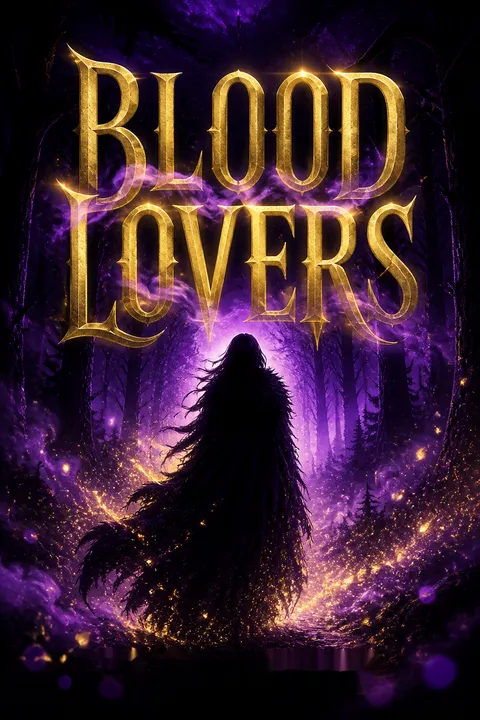


Plot Summary
The Dying Witch's Return
On New Year’s Eve, twenty-eight-year-old Syrsee enters the cabin where her grandmother is dying, ending ten years of estrangement. Rose had left her with the Guild of Guardians when she was seven, and Syrsee later cut her off after learning Rose had killed Syrsee’s mother to steal her magic.
Now a librarian for the Guild, Syrsee knows her Black blood makes her valuable to Paul, the vampire who feeds on witches like her. As she takes Rose’s cold hand, a lavender dreamwalk carries her to a forest where she senses Paul waking. Rose’s failing magic has kept Syrsee hidden from him since birth. Syrsee returns to the cabin knowing that when her grandmother dies, that protection may die too.
Syrsee’s return is driven less by forgiveness than by a refusal to let guilt decide who she is. She can condemn Rose’s violence and still recognize that the same stolen magic protected her. That contradiction makes the opening emotionally specific: family is neither safe nor disposable. The dreamwalk turns an inward reckoning into an approaching danger, linking Syrsee’s private history to Paul’s awakening. Her old protection has been both shelter and barrier, and its collapse threatens to expose not only her body but the identity she has tried to keep at a distance.
The Feeder's Last Blood
After two years buried beneath the Montana earth, Paul rises and senses Syrsee in the dreamwalk. He heads to his compound, where a New Year’s party has spilled into his lodge and his halfbreed servants have been drinking from Rose, the dying feeder he keeps there.
Paul sends the humans away, then carries Rose to her bed and begins his ritual: he drains her, gives her his blood, and repeats the exchange while she appears to grow younger in the induced dream. Rose turns the dreamwalk against him.
She tells him that her dead blood will poison him and endanger Ryet, his longtime scion. Paul dismisses her warning until the black blood takes hold, strips away his human appearance, and leaves him screaming in pain as the old feeder’s voice follows him.
Paul’s ritual reveals how he disguises exploitation as tenderness. He remembers Rose as a child, speaks as if he honors her, then controls the images she experiences while taking her blood. The dreamlike restoration makes his feeding feel intimate without changing its coercion. Rose’s counterattack matters because it breaks the fantasy of Paul’s total command: the feeder he treats as a resource has retained agency and can reach into his mind. His pain is therefore not only a supernatural consequence. It is the first visible failure of a system that depends on him controlling both the body and the story.
The Funeral Bargain
Ryet’s buried past begins at the funeral of his wife, Jane, and their three children, who died in a church fire Paul secretly caused. Grief has emptied Ryet of any reason to continue living, so Paul approaches him in a monstrous form rather than hiding what he is. Ryet agrees to surrender his soul in exchange for survival and the removal of his memories.
Paul gives him the name Ryet, makes him his scion, and binds him through an exchange of blood that becomes an addiction. For decades, Paul keeps Ryet alive with carefully limited drinks, while hiding the truth of his former family. Ryet’s obedience is never simple loyalty: it is shaped by bereavement, dependence, and the bargain he made when he wanted his life to end.
Ryet’s origin gives his dependence on Paul a painful psychological logic. Paul does not create grief; he exploits it, offering relief at the precise moment Ryet believes there is nothing left to protect. The bargain preserves Ryet’s body by erasing the memory that made his life meaningful. That exchange complicates the language of choice: Ryet consents, but under conditions engineered by murder and despair. His later resistance to Paul cannot be separated from the fact that the same person who offers comfort has manufactured the wound. Blood becomes both sustenance and a mechanism for keeping the wound inaccessible.
Grandma's Final Warning
Zusi, Syrsee’s closest friend and a Guild Guardian, rushes to the cabin with news that Paul’s scion has tracked Syrsee to Colorado. Syrsee refuses to leave Rose alone, even after Zusi warns that the weakening spell is letting the hunter close in.
In a dreamwalk, Rose appears young and explains that she escaped Paul’s feeder system, destroyed the coven that had condemned Syrsee, and used her daughter’s stolen power to hide the child. She warns that Paul will tempt Syrsee with promises tied to someone she loves, then tells her to run.
Rose dies, and Syrsee feels a strange jolt of power. Zusi and her partner, Tristin, get Syrsee onto a private jet. To defeat the tracker following her heartbeat, they stop her heart briefly and smuggle her out in a coffin.
Rose’s final warning changes the meaning of her past without erasing its harm. Her violence was part of a desperate escape from a system that treated girls as food, yet she still made choices that cost her daughter her life. Syrsee inherits protection and power alongside that damage. The abrupt physical jolt after Rose dies makes inheritance more than a family metaphor: it becomes an unstable force Syrsee does not understand. Zusi’s coffin plan turns care into a frighteningly literal rescue, showing how the Guild protects Syrsee through secrecy and risk while keeping her outside the knowledge that might help her understand herself.
The Ten-Day Road
After two weeks hiding on a South American beach, Syrsee learns Zusi and Tristin must return to Guild work. They set her on a ten-day route through multiple cities and airport lounges, finally sending her north to White River, Idaho, where she has been given an apartment above a hardware store.
The town is nearly empty in winter: the diner is closed, the gas station has little to offer, and her phone has no service. Crying in her truck outside the diner, Syrsee meets Ryet, the caretaker of Paul’s run-down cottages across the road. He offers to take her to his cabin for food and warmth. She accepts, not knowing he is the scion the Guild has sent to hunt her, or that Paul owns the town around them.
The journey strips away the Guild’s organized protection one stop at a time. The airport lounges briefly make Syrsee feel welcomed into a larger family, but her destination is an isolated town where she cannot even call for help. That contrast prepares the emotional force of her meeting with Ryet: his offer is ordinary, immediate, and humane in a place designed to make her feel abandoned. Yet the apparent coincidence is built on hidden arrangements. The same practical help that lets Syrsee survive the cold also carries her into Paul’s territory, making safety and entrapment look almost identical.
A Night Without Memory
Inside Ryet’s shabby cabin, Syrsee turns their improvised dinner invitation into flirtation, and the two spend the night together. Their ease surprises them both: Ryet treats her carefully, even removing her boots so she need not touch the dirty floor, while Syrsee jokes her way past the fear of being alone with a stranger.
When she bites her lip during sex, Ryet tastes a few drops of her blood and blacks out. He wakes hours later unable to account for the lost time, but Syrsee is alive and affectionate. Their intimacy has also awakened an unfamiliar hunger in him, one that resembles his craving for Paul’s blood. The next morning, he heads out to find food for her, leaving Syrsee with a connection neither can yet explain.
The cabin scene builds intimacy through small acts of attention, not simply attraction. Ryet’s care with Syrsee’s boots makes the filthy room temporarily safe, while her humor lets her set terms in a situation where she otherwise has little control. The blood interruption exposes the limits of that apparent normality. Ryet experiences desire and hunger at once, and the blackout leaves both of them with missing information. Their connection is real as an experience, but its conditions are being manipulated by forces outside their understanding. The scene makes romance feel both freely chosen and dangerously entangled with appetite.
Blood Is the Cure
While Ryet is away, Syrsee visits the church pantry for medicine and herbs, where she meets Joshua, the local minister. Before she can return, Paul enters her dreamwalk and identifies Ryet as the hunter assigned to find her. He also tells her Ryet is dying and that only her blood can keep him alive. Syrsee returns to the cabin anyway.
Ryet collapses with a dangerous fever, and she chooses not to call the Guild or abandon him. She heats a knife over the stove, cuts her palm, and lets him drink. His color improves, and he falls asleep. Paul’s appearance beside Ryet convinces Syrsee that the vampire has been arranging events around them, but she has already made the choice to save the man who came looking for her.
Syrsee’s decisive act is a choice made without reliable knowledge. Paul gives her a truth that serves his interests, and the Guild has already withheld the context needed to evaluate it. Still, she does not save Ryet because she believes Paul; she stays because Ryet is visibly suffering and she feels responsible for him. This distinction preserves her agency without pretending the situation is fair. The heated blade and open palm turn a supernatural bond into a concrete act of care. Her blood becomes both medicine and the means by which Paul’s hidden design can move forward.
The Spa's Hidden Design
As Ryet recovers, Syrsee and he attend a crowded church breakfast, then decide the strange, closed-off town is no place to stay. Ryet takes her to the North Star Spa, a lavish retreat he helped build for Paul. There, Paul reaches Ryet in a dreamwalk and reveals that Ryet is nearing the end of his life as a scion, with his memories beginning to return.
He also admits he killed Jane and the children, then erased Ryet’s memories of them. In Syrsee’s dreamwalk, Paul claims the Guild sent her to White River as part of a bargain and insists she is the Black witch Ryet was meant to find. Syrsee does not know which parts to trust, but the spa makes one fact plain: Paul can reach both of them wherever they go.
The spa offers luxury without safety. Ryet knows the property as a place he helped build, but it belongs to the vampire whose control he is trying to escape. Paul’s revelations convert their private attraction into a crisis of memory and complicity: Ryet learns that his grief was not only hidden but caused by the person he depends on. Syrsee, meanwhile, discovers that the Guild’s protection may have been part of a transaction. The parallel dreamwalks show how little privacy either protagonist possesses. Even flight becomes another room Paul can enter, and the lovers’ sense of choice grows increasingly difficult to separate from his design.
The First Vampire's Making
At the spa’s greenhouse, Paul draws Ryet into a long exchange of blood, telling him that he must drink deeply to survive. Syrsee enters the dreamwalk and sees Ryet feeding on Paul, then offers her own blood without understanding what the ritual will do. When Ryet comes out of it, he learns Syrsee is the Black witch he has been hunting and believes she deliberately lured him into the transformation.
Paul confirms that Ryet was bred for this purpose, while Syrsee was created to supply the blood that would turn him into a vampire. Ryet flees the greenhouse in anger. Paul takes Syrsee to his compound, where she is placed in a tower room and discovers that her role in the plan is far larger than either lover had admitted.
This revelation fractures the romance by exposing how its most intimate acts have also served a breeding plan. Syrsee’s blood was not merely a cure, and Ryet’s hunger was not an isolated symptom. Paul has arranged their attraction around a biological outcome, making tenderness difficult to distinguish from instrumental use. Ryet’s anger is justified even though Syrsee did not understand the plan; the harm is real before intent can be sorted out. The tower changes the story’s power geometry as well. Syrsee moves from a woman choosing whether to help Ryet to a captive whose body is being managed by the people who claim to know her purpose.
The Night Mare's Inheritance
In the tower, Lucia, Paul’s powerful companion, chains Syrsee to a bed and begins draining her blood into storage bags. She explains that Paul and the hidden geneticist Josep have engineered Syrsee and Ryet as the beginning of a new vampire line.
Lucia then takes Syrsee through dreamwalk visions of an ancient people and their water creature, the aquis equi. Syrsee learns that her inherited power belongs to the purple dreamwalk and that she can change beings between states.
Lucia’s plan is to use dead Black blood to kill Ryet before his transformation is complete, then trap Paul in the purple as a spirit. Syrsee is horrified that the answer again requires her death, but Lucia insists the cloak in the dreamwalk holds the key to Syrsee’s power.
Lucia gives Syrsee knowledge while also using her body, so the lesson arrives inside another violation. The ancient vision supplies a lineage beyond the Guild’s account of Black witches as nothing but evil or food. Yet this inheritance does not offer simple liberation; it places Syrsee in a role with catastrophic consequences. Lucia’s plan treats death as a reversible tactic, but Syrsee has reason to distrust any bargain framed as necessary. The fur cloak makes power tangible and interpretable, not merely a gift someone else can explain. Syrsee’s challenge is no longer only learning what she is. It is deciding which inherited script she will refuse.
The Cloak Takes Paul
When Ryet arrives at the compound in the grip of his transformation, Paul kills Lucia and lays him beside the weakened Syrsee. Ryet drinks from Syrsee while Paul feeds her his blood, completing the exchange Paul has been pursuing. In the dreamwalk, Lucia returns as a spirit and tells Syrsee to inject herself with a drug, die, and let Ryet drink her dead blood.
Syrsee refuses that sacrifice. Instead, she meets Paul in the snowy forest where he promises that she and Ryet can have a child and a place in his future. Seeing the fur cloak, Syrsee throws it over him. Paul vanishes from the living world into the purple. At the same time, Ryet sees Jane again, remembers his family, and hears her urge him to release the life he has lost.
The climax turns on competing definitions of sacrifice. Paul calls his plan a future, Lucia calls hers a rescue, and both require Syrsee to surrender control of her body. Syrsee’s refusal of the syringe is not passivity; she uses the power she has discovered to remove Paul from the world instead. The cloak reverses the pattern of possession that has shaped the story: for once, Syrsee acts on the being who has treated everyone else as material. Ryet’s encounter with Jane gives his grief its own resolution, separate from Paul’s promised oblivion. Neither character is healed by being controlled, but each gains a chance to choose what comes next.
Home Beyond the Hunt
Syrsee wakes beside Ryet and Lucia’s severed body, with the drug syringe still available. Rather than kill herself and Ryet as Lucia instructed, she drops the needle, feeds him from the stored bags, and helps him escape through Paul’s hidden passageway to the garage.
For ten days she drives without a destination, stopping whenever Ryet’s changing body needs blood. When he finally wakes in Arizona, she erupts over the exhaustion and fear she has carried alone.
A painted horse-and-rider symbol on a roadside sign helps Syrsee name her power as the night mare. Ryet does not explain everything, but he embraces her and takes the wheel. He brings her to his West Virginia home, where neighbors welcome him back and he introduces Syrsee as his girlfriend.
Syrsee’s refusal to carry out Lucia’s plan accepts uncertainty rather than choosing death as a guaranteed escape. She protects Ryet without pretending the danger or betrayal has vanished, and the long drive makes care exhausting, repetitive work rather than a single heroic gesture. Ryet’s awakening matters because he responds to Syrsee’s fear with presence and practical action, not another grand promise. His home offers a form of belonging unlike the Guild’s conditional protection or Paul’s possessive compound: neighbors know what he is and still greet him. The ending resolves the immediate flight, but leaves their transformation and future unsettled.
Analysis
Blood Lovers makes consent difficult to read by placing genuine desire inside systems of coercion. Syrsee chooses to help Ryet, and Ryet once chose Paul, but both choices are shaped by withheld information, engineered dependency, and threats that narrow the available future. The novel does not erase agency; it asks what agency can mean when one person controls the facts, the body, and even the memories through which a decision might be understood.
Blood is the story’s most effective double image. It sustains life and creates kinship, but it is also stored, measured, traded, and used to produce power. Paul’s intimacy with Ryet is therefore neither simply false nor safely loving. He can feel attachment while treating Ryet as the proof of a political and biological ambition. Syrsee’s blood becomes the material of that ambition, even as her kindness gives it an unintended human meaning.
Memory is another contested resource. Ryet’s erased family does not vanish from his emotional life; it returns as grief without names, an absence he mistakes for his own nature. Syrsee faces a related injury when the Guild’s shelter proves inseparable from secrecy. Both characters must decide whether painful knowledge is preferable to managed safety. Their final movement toward Ryet’s West Virginia home does not solve their supernatural condition, but it offers a different model of belonging: a place built through repeated mutual recognition rather than a bargain imposed by a powerful patron.
The ending’s emotional force comes from refusing a clean cure. Syrsee does not become innocent, Ryet does not simply return to humanity, and Paul’s removal from the living world is not presented as a settled answer to every danger. What changes is who gets to choose the next action. After a novel in which others repeatedly define the protagonists as food, weapons, or projects, Syrsee and Ryet begin again by treating one another as people who can stay, leave, and ask for help.
Review Summary
Blood Lovers is a unique vampire novel that subverts traditional lore. Readers praise Huss's fresh take on vampires and witches, complex characters, and intricate plot. The story follows Syrsee, a black witch; Paul, a powerful vampire; and Ryet, Paul's conflicted scion. Many reviewers found the book captivating and unpredictable, with steamy scenes and dark themes. While some felt confused at times, most appreciated the author's world-building and storytelling. Overall, fans eagerly anticipate the next installment in this new series.
People Also Read






Characters
Syrsee
Black witch in exileSyrsee is a Black witch raised by the Guild of Guardians after her grandmother left her in their care. She works as a librarian, observant and useful but never fully convinced she belongs among the people who protected her. Her estrangement from family comes from moral horror at the violence attached to her bloodline, as well as fear that learning the truth will cost her the only home she has known. Syrsee’s instinct to help people persists even when helping may place her in danger. Humor and practical questions give her ways to manage fear, while her dreamwalks expose abilities she does not yet understand.
Ryet
Paul's restless scionRyet is Paul’s long-serving scion, a hunter whose life is bound to the vampire through blood and dependence. He is physically capable, self-reliant, and wary of Paul’s attempts to draw him closer, yet he cannot separate his resentment from his craving. The family he cannot remember shapes his grief even while its details remain inaccessible to him. Ryet’s bluntness and humor help him connect with Syrsee, whose presence stirs a tenderness he has not allowed himself to trust. His struggle is not simply to escape Paul, but to decide whether survival without memory is still a life worth choosing.
Paul
The American vampire kingPaul is an ancient vampire who rules a vast Montana compound and maintains a carefully ordered household of halfbreeds, feeders, and servants. He is charming when it serves him, attentive to beauty, and capable of tenderness that does not cancel his appetite for control. He regards blood as nourishment, power, and intimacy, often blurring those meanings until others struggle to recognize where affection ends and manipulation begins. His attachment to Ryet drives much of his behavior, while his ambition reaches beyond their private bond. Paul’s confidence rests on the belief that he understands what others need better than they do.
Grandma Rose
Syrsee's dangerous protectorRose is Syrsee’s only known relative and a Black witch whose choices shaped the girl’s entire life. She is capable of terrible violence, including stealing power from her own daughter, but she also acts to prevent Syrsee from being raised as a vampire’s feeder. Her long separation from Syrsee leaves both women with unfinished anger and guilt. Rose understands the danger of Paul’s promises because she has lived inside his world, though her warnings come late and leave Syrsee to interpret their meaning alone.
Zusi
Syrsee's loyal Guardian friendZusi is Syrsee’s closest friend, a Guild Guardian whose warmth and easy humor soften the institution’s severity. She has shared years of schooling and private jokes with Syrsee, and she takes real risks to help her friend travel safely. Zusi is also bound by Guild expectations, so her loyalty exists alongside limits on what she can disclose or defy. Her affection is genuine, but Syrsee cannot always tell whether the Guild’s decisions are protecting her or managing her.
Tristin
Zusi's disciplined partnerTristin is a Guild Guardian and Zusi’s partner, practical, composed, and focused on risk. He helps move Syrsee away from the scion and insists on procedures that he believes will keep her alive. His brisk manner can sound judgmental, particularly when Syrsee chooses an emotionally risky course, but his concern is not merely institutional. Tristin represents the Guild’s protective competence and its tendency to treat a person’s safety as a logistical problem.
Lucia
Paul's dangerous companionLucia is an old, powerful witch who lives within Paul’s world and is both subordinate to and openly antagonistic toward him. She is observant, proud, and skilled at using charm or submission as circumstances demand. Her knowledge of bloodlines and dreamwalk history makes her a guide to Syrsee, though her motives are difficult to trust. Lucia’s rivalry with Paul is personal as well as political, and she sees the present crisis as a rare chance to challenge his control.
Josep
The hidden geneticistJosep is an ancient geneticist who lives in a subterranean refuge beneath Paul’s compound. He works through blood and lineage rather than human laboratories, helping shape the breeding efforts behind Paul’s ambitions. Quiet and reclusive, he is known to Ryet mostly through Paul’s accounts and the work Ryet once did on his bunker. His patient intellect contrasts with Paul’s appetite for immediate control, though both are invested in creating a new vampire line.
Echo
Paul's observant young attendantEcho is a young halfbreed servant at Paul’s compound, quick to notice trouble and brave enough to speak when others hold back. She takes instructions seriously and wants Paul’s approval, yet she is not incapable of independent judgment. Her pink hair and lively manner make her memorable amid the compound’s fear and hierarchy. Echo’s role shows how ordinary dependence and affection can coexist with a deeply unequal household.
Isabella
The promised cottage ownerIsabella is a woman connected to Paul’s plans for a child and to the White River cottages Ryet is ordered to renovate. She is assertive about what she believes Paul has promised her and confronts Ryet directly when he questions her authority. Her presence makes Paul’s arrangements visible in mundane terms: property, pregnancy, labor, and a future designed by someone else.
Hutch
Paul's pressured servantHutch is a young servant who has attended Paul for years and is treated as a favored member of his household. Paul expects him to produce a male heir through Isabella, while Hutch’s attachment to her makes the demand personal. His situation reveals how Paul’s affection can coexist with coercive expectations.
Joshua
White River's ministerJoshua is the welcoming minister who runs the church pantry with his wife. He offers Ryet food without demanding religious commitment and notices when the newcomers may need help. His generosity is sincere, even as the town’s unusual uniformity leaves Syrsee and Ryet uneasy.
Emily
The pantry's herbal healerEmily is Joshua’s wife and a local herbal healer whose family has tended a greenhouse for generations. She prepares medicine for Syrsee and helps organize the town’s communal meals. Her practiced warmth can feel welcoming or unsettling to newcomers who are trying to understand White River.
Jane
Ryet's lost family anchorJane is connected to Ryet’s concealed human past and to the family life he struggles to remember. His few returning images associate her with tenderness, shared plans, and the ordinary future they once imagined together. She represents a source of love that predates his dependence on Paul, though Ryet cannot easily access that history.
Charlie, Nancy, and Susan
Ryet's remembered childrenCharlie, Nancy, and Susan are Ryet’s children, glimpsed through the fragments of his erased family life. Their names and shared memories return gradually, giving shape to a past that Paul has kept beyond Ryet’s reach.
Myer
Syrsee's school crushMyer is an older Guild student who briefly becomes the focus of Syrsee’s adolescent hopes. Their encounter highlights her social isolation and her uncertainty about how much she belongs among Guild students.
Plot Devices
The dreamwalk
Past, present, and futureA purple or lavender haze lets witches and certain vampires enter a shared, liminal realm where memories, present events, and possible futures can overlap. Syrsee first encounters Paul there without seeing him clearly, then gradually gains more access to the realm and its inhabitants. The dreamwalk carries warnings, exposes suppressed memories, and lets characters reach one another across distance. Because the visions can be manipulated or misleading, it is both a source of knowledge and a site where control is contested.
Black witch blood
Hunger, power, and dependenceBlack blood is the source of a witch’s dangerous magic and the substance vampires require. Paul stores blood from feeders, while Ryet’s dependence on Paul’s blood keeps him alive and emotionally bound to him. Syrsee’s blood can also sustain Ryet, but feeding has consequences beyond nourishment: it intensifies desire and helps move his body toward transformation. Blood makes intimacy physically real while giving powerful characters a means to manipulate need.
The long drink
A ritual of death or changeThe long drink is an extended cycle of taking blood and giving it back. Paul uses it to end a feeder’s life, while also describing it as part of the process that can transform a scion. It induces powerful dream states that can soften resistance and blur pain with pleasure. The ritual’s meaning depends on who controls it: it can be framed as care, nourishment, or a chosen exchange, even as it places the feeder’s body under another person’s power.
The fur cloak
A weapon inside the purpleThe cloak appears in Syrsee’s dreamwalk as a physical clue to the power Lucia says she possesses. Syrsee interprets its presence as an instruction and uses it during her confrontation with Paul in the snowy forest. Its ordinary appearance conceals its function: the dreamwalk can affect the living world, allowing Syrsee to remove Paul from it. The cloak turns a power she has not been taught to control into an immediate, decisive choice.
The horse and rider
A marker of hidden inheritanceThe Guild’s symbol, resembling a horse and rider encircling one another, guides Syrsee through protected travel lounges. Much later, a related image appears on a roadside sign and helps her recognize the connection between her powers and the ancient aquis equi story Lucia showed her. The recurring emblem links the Guild’s hidden infrastructure to Syrsee’s inherited dreamwalk abilities, offering a clue that becomes meaningful only after she has begun to understand the purple.
About the Author




Download PDF
Download EPUB
.epub digital book format is ideal for reading ebooks on phones, tablets, and e-readers.








