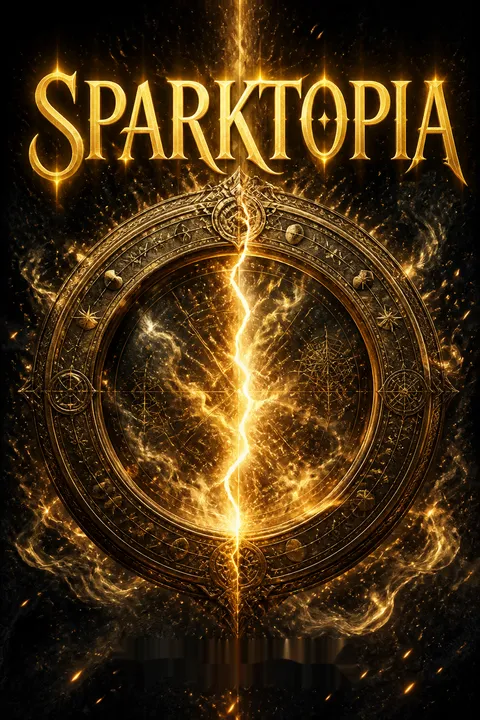


Plot Summary
Clara Counts the Bells
Clara Birch has spent a decade as a celebrated Spark Maiden in Tau City, where young women are trained to serve a tower god. Every ten years, ten Maidens are chosen; usually only number one enters the tower, while the rest leave wealthy and free. Clara, ranked ninth, expects to marry Finn Scott, the Extraction Master's son, as soon as her service ends.
But the bells have rung seven times in their decade, and every summoned Maiden has vanished. Clara clings to the belief that she is safe, even as the eighth-ranked Haryet and tenth-ranked Gemna share her growing dread. On Choosing Day, Clara returns to her luxurious tower after a secret tryst with Finn, still imagining that three months separate her from an ordinary, happy life.
Clara's confidence rests on a bargain she has never examined: obedience in exchange for comfort, status, and an eventual private life. Her rank feels like protection because the ritual has taught her to understand danger statistically, not morally. The missing Maidens are not abstractions to her; they are friends, yet she continues to trust the system that takes them. Her imagined marriage to Finn gives the sacrifice an endpoint, allowing her to treat ten years of suspended adulthood as a temporary cost rather than a life already shaped by institutional power.
Butterflies in Blue
Jasina Bell arrives among the seventy-five Little Sisters selected for the first round of Choosing, outwardly thrilled by the Maiden Tower's extravagance. She has come from down-city with four friends, Ceela, Britley, Harlow, and Lucindy, and a hidden assignment from the Rebellion: help end the Extraction and its god.
Jasina wants more than political victory; she longs to become important enough for history to remember her. At the first gala, she reveals a skirt she has spent a year sewing, decorated with butterflies that she animates in blue spark.
The display makes her the evening's sensation and catches Clara's attention. Jasina's beauty and ambition draw notice, but her real success is gaining a place inside the institution she intends to dismantle.
Jasina's entry makes ambition both a political instrument and a personal hunger. The gown is not simply decoration: she uses patient craft to make limited power unforgettable, turning a social contest into a first act of insurgent self-fashioning. Yet she is not immune to the luxury she has entered. She wants to enjoy the tower even while planning its destruction, a contradiction that complicates any easy division between rebel virtue and elite corruption. Her desire to be remembered may free her from inherited obscurity, but it also leaves her vulnerable to anyone who can promise a place in history.
The Master Is Murdered
During the gala, Finn tells Clara that his father, Aldo Scott, has suffered an accident and that he must take over the ceremony. He keeps the crowd celebrating, concealing that Aldo is dead.
At the morgue, Finn learns Aldo was murdered and receives a letter warning that the god is dying and will demand more Maidens. The Council insists that Tau City's survival depends on feeding the tower, and Finn discovers his family has spent generations assuring citizens that the sacrifice is harmless.
Before the night ends, the bells summon Haryet. Clara collapses when Finn's friends tell her Aldo is gone, then lashes out at a Matron as the bells begin again. Finn, suddenly Extraction Master, sees the ceremony's lies and his new powerlessness at once.
Finn inherits authority at the exact moment he discovers how little agency the office actually grants him. The family legacy is not just a title but a discipline of reassuring the public while withholding the cost of its comfort. Aldo's murder strips away Finn's boyhood assumptions, yet the Council immediately recruits him into the same performance. Clara's grief and public anger contrast with his practiced composure: each responds to catastrophe through a different learned script. The scene makes succession morally unstable, since taking over a corrupt institution can look like responsibility while also extending the very harm the new leader now understands.
Haryet Walks Alone
As the bells toll through the night, Clara and Gemna stay beside Haryet while Matrons insist she remain composed for the Extraction. Clara drives them out and comforts Haryet, who vows to discover what happens inside the tower and send word back. Finn learns from his friends that a past Extraction Master refused the god and lost the entire Council and a hundred Maidens, so he believes defiance would kill everyone.
He conducts Haryet's final ceremony and watches her enter the black doors, glowing with spark. Clara then asks whether he will save her if the bells call her next. Finn says he cannot oppose the god. Their intimacy turns rough and desperate, but his refusal leaves Clara feeling betrayed, not protected.
Haryet's courage is shaped by the same training that makes the sacrifice appear voluntary: she chooses to search for truth, but only after accepting that she must cross the threshold. Clara's comfort for her friend reveals how care persists inside a coercive ritual, while Finn's decision turns his fear of collective death into an excuse that Clara experiences as personal abandonment. His reasoning is not empty, since the precedent is catastrophic, but neither is it morally neutral. The contrast exposes how institutions make ethical choices appear as arithmetic, then leave individuals to carry the grief of the numbers they preserve.
The Ninth Maiden Vanishes
The next morning, Clara and Finn spend their last hours recalling childhood memories and imagining the life they will never share. Finn helps her dress, but cannot promise rescue, and their argument ends with Clara calling him a coward.
At the Extraction, she tries to maintain the composure expected of a Maiden, despite wearing a humiliating dress chosen by the Matrons. When midnight comes, the tower's power pulls her forward against her will. Finn does not reach her before she crosses the threshold, and Clara leaves him with a final expression of hatred.
The doors close. Instead of finding a god or a familiar chamber, she wakes in a ruined version of Tau City, centuries removed from her own, in the quarters of Tyse Saarinen, a former soldier who found her unconscious underground.
Clara's passage through the door transforms the ritual from a rehearsed public pageant into a physical loss of agency. Her final anger at Finn is sincere, but the pull of the tower also clarifies that neither lover controls the terms they have mistaken for choice. The humiliating dress and the required performance of grace sharpen the gap between how the city represents sacrifice and how it feels to the person being taken. The abrupt arrival in a ruined future breaks the story's governing assumptions: Clara has lost her home, her social identity, and even the framework that once made her suffering intelligible.
Tyse Finds the Stranger
Tyse assumes Clara is a disoriented partygoer, while she insists she came through the God’s Tower as a Spark Maiden. Their first exchanges are hostile: she takes his weapon, he refuses to accept her account, and the locked door traps them together.
Tyse eventually leads her to a modern health center, where scans show no brain injury to explain her memories. He accepts that she comes from another version of Tau City and agrees to help her find a way home.
Clara, who has never lived independently, admits she needs his help rather than simply expecting him to rescue her. Tyse gives her clothes and work through Rodge, a tower merchant. As Clara adapts to the ruin, they begin building trust on explicit terms rather than inherited romantic promises.
Their partnership begins with a contest over interpretation. Tyse's skepticism protects him from being manipulated, but it also risks turning another person's experience into a diagnosis; Clara's insistence on evidence gives her a way to defend her reality without demanding blind belief. The health scan changes their relationship because it removes the simplest explanation, not because it explains the impossible. Tyse's demand for mutual candor is a response to his own history of betrayal, while Clara's request for support marks a shift from dependence disguised as entitlement toward chosen interdependence.
Jasina Enters the Palace
While Clara adjusts to Tyse's world, Jasina's assignment draws her toward Finn's private quarters. A strange door in the Little Sister dorm connects to the Extraction Master's tower, and the Rebellion wants her to find a secret device called a Looking Glass before Finn does.
She first encounters Finn while he is drunk and grieving Clara; he mistakes Jasina for his lost lover and touches her, an encounter she later treats as both opportunity and violation. At the next Choosing interviews, Finn selects her for a private dinner, giving her access to the palace.
Jasina's apparent aunt, Matron Bell, grows suspicious of her closeness to Finn, while the predatory Donal Oslin attacks her in a corridor. Jasina returns from the assault with her faith in the Rebellion badly shaken.
Jasina's assignment fuses political infiltration with a need for recognition, making it difficult for her to tell when she is acting strategically and when she is seeking validation. Her first contact with Finn is ethically compromised by his grief and mistaken identity, even as it gives her the access she wants. The violence from Donal and Matron Bell's reaction reveal that the structures Jasina hoped to manipulate are also shaping and policing her body. Her uncertainty about whom to trust is not a failure of intelligence; it is the predictable result of being valued by others primarily for what they can extract from her.
Aldo's Message Opens
Jasina and Finn enter the hidden room in the Extraction Tower, where a glass control desk and tiled dome form the Looking Glass. When Finn closes the broken door, the system activates and reveals a recording left by Aldo.
His message explains that the tower is not a god, that the Extraction Master controls its doors, and that the Looking Glass links different worlds. He also warns Finn to leave the tower and destroy the device, setting a countdown that will demolish the Extraction Tower.
Jasina takes notes while Finn struggles to absorb the revelation. The message gives them a route toward the tunnels and trains, but it also confirms that Aldo knowingly opened the doors for Haryet and Clara, forcing Finn to confront his father's role in the losses he mourns.
Aldo's recording converts inherited ritual into engineered infrastructure. The god's apparent will is revealed as a mechanism controlled by human officeholders, making the Extraction less an ancient mystery than a carefully maintained political technology. Yet the revelation does not free Finn from responsibility: his father both exposed the truth and used the system to send women through the door. Jasina's note-taking becomes a counterarchive, preserving information that the official history has suppressed. The countdown makes knowledge consequential, turning interpretation into an immediate choice about whether to obey a dead father's plan.
Spark Becomes a Commodity
Tyse takes Clara to dinner at the home of Stayn, the patrol chief, hoping to introduce her to ordinary city life. Instead, Stayn and a visiting official reveal that Clara's arrival matched the recorded signature of a Spark Maiden ordered from another dimension.
They discuss her as a purchased resource, not a person. Tyse's dormant augment system flares back to life when Clara's spark fills the air, and he lies about what he knows to keep the men from taking her.
On the walk home, Clara's power swells dangerously as they cross into the tower's spark field. Tyse kisses her, drawing off the excess spark and inadvertently revealing a living overlay of Clara's Tau City to himself. He now has evidence that her world exists and a reason to keep her safe.
The dinner exposes the economic logic beneath the language of gods and civic necessity: Clara is treated as a manufactured input whose value depends on her energy. Tyse's deception is ethically different from the city's because it protects a person rather than an institution, though it still places him in control of information. Their kiss makes intimacy an exchange of power, but not a simple transaction; it stabilizes Clara and reactivates Tyse's damaged capacities. The overlay gives private experience public evidence, while also making the pair visible to forces that know how to buy and classify what they cannot understand.
Anneeta Names the Dead
Anneeta brings Clara a childhood book containing a photograph of her mother, Imogen Gibson, the first Maiden taken from Clara's cohort. Under Tyse's questioning, Anneeta admits she consumed Imogen's spark as a small child, then later fed on Marlowe, both Mabels, Lucy, Piper, and Brooke. She had not understood that they were people Clara loved.
Anneeta explains that she, Clara, and Tyse form a Looking Glass: Anneeta reads the system, Clara supplies spark, and Tyse's augments perceive the overlay. Stayn's men are already searching for them, so the trio decide to flee toward Delta City, where Tyse grew up and Anneeta believes another god may shelter her. Clara agrees despite knowing Anneeta's hunger could drain her.
Anneeta's confession collapses the boundary between victim and threat without erasing either side. Her dependence began as survival, but ignorance does not undo the deaths it caused; Clara's response therefore has to hold grief and compassion together. The trio's shared function reframes their connection as more than romance or convenience: each provides a capacity the other two lack. Clara's consent to help Anneeta is meaningful precisely because it carries risk, while Tyse's insistence on rules recognizes that trust must be negotiated with someone capable of harming them.
The Escape Turns Violent
Tyse, Clara, and Anneeta obtain spark jumps, train tickets, false identification, and travel clothes through Rodge, who helps them leave without using the main stairs. Anneeta leads them into the lower levels where she once fed, and Clara sees the remains of the missing Maidens.
She confirms Haryet is not among them, then sets a rule that Anneeta must never take anyone's spark without consent. When Stayn's patrol closes in, Tyse refuses to surrender either woman.
Clara and Anneeta's combined spark forms a protective bubble, while Tyse's restored augment and weapon drive the patrol back. The three escape through the collapsing underground passages, but the strain leaves Clara and Anneeta weakened. Their route is now committed: reach the train and survive the journey to Delta.
The escape forces abstract trust into bodily terms. Clara's rule for Anneeta is both an ethical boundary and a condition for belonging; it lets compassion remain active without pretending the past is harmless. Tyse's refusal to hand them over clarifies his loyalty through action, not assurances. Their combined defense suggests that cooperation can produce capacities none possesses alone, but the dwindling energy and collapsing passages prevent this from becoming an effortless triumph. The group escapes the immediate pursuer while carrying unresolved guilt, danger, and dependence into the next stage.
Finn Finds the Ritual
In the other Tau City, Finn follows Aldo's hidden staircase beneath the Tower District and discovers Matrons, Little Sisters, and a second Looking Glass. Gemna and Jasina have been chained to metal circles, with Ceela volunteering for the third place, while Donal sits wired to a crown as Little Sisters are drained to power him.
Finn finds his mother among the Matrons and learns she supports the plan to create a replacement god. She blames Aldo for opening the tower doors and says his actions cost him his life. Finn initially asks what she needs him to do, appearing to accept her account. But when he notices Jasina gathering spark with Gemna, he recognizes that she is resisting the ritual and that she has his father's notes.
Finn's mother's explanation turns family intimacy into political recruitment: she presents complicity as survival and frames Aldo's resistance as selfishness. Finn's initial compliance shows how readily grief and exhaustion can make a familiar authority seem like shelter. His attention then shifts from the abstract mission to Jasina, whose refusal to submit gives him a concrete moral choice. The scene does not absolve him of earlier failures; instead, it places him at a new threshold where he can either repeat the obedient role he inherited or respond differently to a woman in danger.
The Looking Glass Shatters
As Donal drains the Little Sisters, Jasina and Gemna channel their own spark into the Looking Glass, building a force the Matrons cannot control. Ceela and Donal die in the violent surge, and the glass room explodes, scattering the ritual and collapsing the chamber. Finn chooses Jasina over his mother's plan, digs her out of the rubble, and warns Gemna that Aldo's countdown will soon destroy the Extraction Tower.
Gemna leaves to search for survivors. Finn carries Jasina through the tunnel toward the trains, while the city above breaks apart. Jasina wakes furious that Finn called her Clara during their encounter, but he insists he chose her and saved her. She accepts his help, and they escape together with Aldo's notes.
The rebellion's climax is not a clean victory: the same power used to exploit the Little Sisters becomes their weapon, but the cost includes Ceela's death and a ruined city. Jasina and Gemna redirect extraction rather than simply overpowering it, exposing how the system depends on the Maidens' energy while underestimating their agency. Finn's rescue matters because it answers his earlier refusal through a changed action, not a retroactive excuse. Jasina's anger over being mistaken for Clara preserves her insistence on being seen as herself, even as she accepts an alliance with the man who finally acts.
The Factory Line Begins
Finn and Jasina travel through the tunnels, exhausted and injured, until they reach a station marked as the Sigma Factory in Dimension 702. Aldo's notes identify the white figures there as Workers and direct Finn to another Extraction Tower, where he uses his credentials to start a self-destruct countdown. They take food, water, boots, and packs from the tower, then board a train before it explodes.
Jasina learns that her home city is a factory producing Spark Maidens for other worlds, while Finn realizes he was one of its Workers. Rather than stop with Tau City, they ride onward to repeat the sabotage at other facilities. Finn chooses Jasina as his partner, and her notebooks become their map through the system.
The factory revelation changes the scale of the conflict from one city's abusive ritual to an industry that manufactures people for use elsewhere. Finn and Jasina respond by turning sabotage into a repeatable method, using Aldo's procedural knowledge and Jasina's records rather than waiting for a single heroic confrontation. Their theft of supplies is morally compromised but necessary to keep moving through a system designed to consume them. The train, once a route of ordinary transit, becomes an instrument of escape and resistance, linking separate sites of exploitation into one target.
Clara Crosses the Line
Tyse, Clara, and Anneeta board a train for Delta City with thirteen spark jumps, far fewer than their journey requires. Anneeta's need steadily drains Clara, while Tyse spends the jumps to keep Clara conscious.
When the supply runs out, he begins drawing spark through his augment from ghostlike figures visible in the overlay, choosing Clara's survival over theirs. The train reaches Delta with both women near collapse, and patrol officers take them from the carriage. Clara later speaks with Delta, the city god, in a liminal health-center encounter.
He explains that her home Tau City was a factory world and that Spark Maidens are treated there as commodities. Clara also tells him she saw Haryet in an overlay while unconscious, an experience that makes Delta suspect she is more than a simple power source.
The train journey converts the trio's cooperative plan into a brutal triage problem. Tyse's choice to feed Clara from the overlay's ghostly figures echoes the extractive logic they are fleeing, even though his motive is intimate protection rather than institutional profit. Survival does not erase the cost of that choice. Clara's encounter with Delta offers knowledge but not closure: she may be more than the role assigned to her, yet she cannot explain the visions that point beyond her known world. Her identity remains contested, now by a god as well as by the city that manufactured her.
A New Mission Awaits
After Clara wakes in Delta City's health center, Tyse brings her to a home overlooking the ocean and black sand beaches. Anneeta is placed in a special school for young gods, while Clara begins building a life with Tyse.
Three weeks later, Delta summons Tyse and explains that factories across the worlds are creating false gods and exploiting Spark Maidens. The train line connects these worlds, and Tyse's augment lets him cross between them. Delta orders him and Clara to travel along the line, kill the rogue gods, and dismantle the factories.
Tyse understands that the war is also a game between gods, one he has entered without knowing the rules. He leaves the meeting with a new mission and Clara at his side, while Finn and Jasina continue sabotaging the system elsewhere.
The ending offers refuge only briefly before revealing that escape has made Tyse and Clara participants in a larger conflict. Delta's authority resembles the systems they oppose, since he assigns a mission and defines the enemy, so his appeal cannot be accepted as morally pure. Tyse's return to military purpose is complicated by Clara's presence and by the possibility that his powers were cultivated for this very war. The parallel trajectories matter: Finn and Jasina attack the factories from within, while Tyse and Clara are recruited to fight the gods. Neither pair yet knows whether liberation can avoid becoming another form of control.
Epilogue
Three weeks after arriving in Delta City, Tyse is summoned to meet its god. Delta reveals that Spark Maiden factories are multiplying across the worlds and that the gods are at war over them. Tyse is ordered to travel the train line with Clara, cross into other dimensions, and destroy the false gods and factories.
His augment has recovered, making him capable of seeing and entering the layered worlds, while Clara's unusual connection to spark makes her essential to the mission. Anneeta remains in Delta's care. Tyse accepts the assignment, aware that he has entered a conflict whose rules he barely understands.
The epilogue refuses to let the lovers' arrival at a safer home function as a conventional ending. Delta's invitation transforms survival into recruitment, and the word god remains unstable: some beings create spark, others consume it, and all claim authority over people made dependent on them. Tyse's military skill returns in a context that may repeat the old pattern of using bodies as weapons. Clara's presence makes the mission relational rather than purely strategic, but her unexplained visions suggest she may alter the system in ways neither Tyse nor Delta can predict.
Analysis
Sparktopia builds its central violence through systems that make exploitation feel ordinary. Tau City's citizens do not need to be monsters for the Extraction to continue; they need only trust a ceremony, enjoy its comforts, and accept the story that one woman's disappearance sustains everyone else. The novel makes that complicity intimate through Clara's love for Finn, Jasina's ambition, and Finn's inheritance of a role he did not understand until it was too late.
Its strongest psychological tension lies between agency and conditioning. The Maidens are taught to perform composure so thoroughly that fear can be mistaken for consent. Jasina's rebellion initially reproduces the same coercive logic, using her body and ambition as tools for political advancement. Clara, by contrast, begins by believing she can earn freedom through good behavior, then learns that self-command is valuable only when it serves choices she has actually made. Tyse's insistence on explicit partnership offers a fragile alternative to both obedience and control, though his later choices show that protection can itself become another form of extraction.
The revelation that Spark Maidens are manufactured commodities widens the story from a local revolt to a conflict over who may define personhood. The parallel narratives resist an easy victory: Finn and Jasina destroy one mechanism, while Tyse and Clara are recruited by a god whose motives remain uncertain. Even kindness, such as Delta's refuge or Rodge's generosity, exists inside systems whose power is unevenly distributed. The ending's promise is therefore not that the characters have escaped control, but that they have acquired the means to see its architecture. Their next struggle will be deciding whether to dismantle it without becoming another authority that claims the right to use others for a greater good.
Review Summary
People Also Read







Characters
Clara Birch
The Ninth Spark MaidenClara has spent ten years serving as a public symbol of Tau City's Extraction, convinced that her ninth-place rank will keep her from the tower and reunite her with Finn. Her polish is not emptiness: etiquette and self-command are skills she has deliberately cultivated, and she values the ordinary domestic future she imagines more than the luxury surrounding her. Clara's first instinct is to rely on the systems and relationships she has known, but she can revise her assumptions when evidence forces her to. Her compassion for Haryet and later Anneeta coexists with anger, pride, and a growing willingness to choose her own terms. She is defined by an ability to remain composed without being emotionally untouched.
Tyse Saarinen
The Discharged AugmentTyse is a former Sweep soldier living in the ruined God’s Tower, where he prefers privacy, practical arrangements, and as little obligation as possible. Failed augments and the deaths of his former team have left him distrustful of institutions and wary of anyone who expects him to become a hero. He uses bluntness as armor, but his habits reveal a strong capacity for loyalty: he keeps promises, protects people in immediate danger, and expects partners to be candid with him. Clara disrupts his chosen isolation, while Anneeta and the returning overlay force him to reckon with powers he thought were gone. His skepticism is grounded in experience, not indifference.
Finn Scott
The Reluctant Extraction MasterFinn is Clara's lifelong love and the heir to the office that stages the Extraction. Raised inside a protected social order, he has learned ceremony, duty, and loyalty to his family, but not how to challenge the system those values uphold. His affection for Clara is genuine, yet he initially treats impossible choices as decisions already made for him. Grief over Aldo's death and the truths hidden from him destabilize his inherited confidence. Finn is neither a natural villain nor a ready-made hero; he is a man learning that responsibility begins when inherited rules cease to excuse his actions. His friendship with Mitchell and dependence on his father's legacy complicate that learning.
Jasina Bell
The Rebel's Brightest SpyJasina is a down-city Little Sister whose beauty, sewing skill, and appetite for recognition help her enter the elite world she hopes to overthrow. She is ambitious enough to enjoy the gowns and attention while also taking her clandestine work seriously. Jasina's self-image depends on being bold and memorable, but she gradually learns that being useful to a cause does not guarantee that the cause values her. Her capacity to observe, record, and improvise becomes more important than her performance of seduction. She is vulnerable to flattery and exploitation, yet not passive: when trusted institutions turn against her, she makes new alliances and acts on her own judgment.
Anneeta
The Tower's Strange ChildAnneeta is a seven-year-old raised inside the ruined tower, dressed in eccentric layers and guided by perceptions no one else fully shares. She knows its hidden routes, hears what happens around her, and speaks of a god as though it were a familiar presence. Her apparent childishness can make others underestimate her, but she is observant, stubborn, and accustomed to surviving without conventional care. Anneeta wants companionship and safety, yet her dependence on spark creates a serious conflict with the people she befriends. She must learn that need does not erase another person's consent. Her unusual connection to the tower is central to the story's mystery.
Haryet Chettle
Clara's Eighth-Ranked FriendHaryet is one of Clara's closest companions in the Maiden Tower, a small, sensitive woman whose fear becomes especially acute after the bells summon another Maiden. She asks why the city needs a god if its comforts cost women's lives, voicing doubts that the others have learned to bury. Before entering the tower, she forms a purpose beyond survival: she intends to discover what happens there and find a way to warn Clara. Her resolve is quiet rather than theatrical, and her friendship gives Clara a personal measure of what the ritual takes.
Gemna Hatley
The Last Maiden WaitingGemna is Clara's other steadfast friend, a taller, more outspoken Maiden who can joke about losing luxury while admitting that the repeated summons have frightened her. She offers Clara companionship through grief and helps her maintain a sense of shared life when the tower grows silent. Gemna's composure is not proof that she feels less; she simply gives fear less authority over her behavior. Her loyalty to Clara and Haryet makes the ritual's personal cost visible, while her directness challenges the comforting stories the city tells itself.
Aldo Scott
The Keeper of the RitualAldo is Finn's father, the long-serving Extraction Master, and a paternal figure to Clara after her own father dies. To the public he represents continuity and order; privately, he understands more about the tower than he has allowed his son or the city to know. His choices are shaped by the conflict between preserving Tau City and ending a system whose danger is growing. Aldo's affection for Clara and his responsibilities to Finn do not prevent him from making decisions that devastate them. His hidden knowledge sets the story's central machinery in motion.
Matron Bell
Jasina's Severe HandlerMatron Bell is the stern woman Jasina regards as her aunt and the Rebellion's authority inside the Maiden system. She expects Jasina to obey, deliver information, and treat the mission as more important than comfort or friendship. Her control is exercised through shame and threats as much as through formal rank, making Jasina's service feel conditional. She understands how institutions preserve power and is willing to exploit those same methods for her cause. Her position forces Jasina to question whether opposing one hierarchy is enough when the rebellion reproduces its coercion.
Mitchell Davies
Finn's Hard-Edged SecondMitchell is Finn's longtime friend and most practical aide after Finn inherits the Extraction office. He can steady Finn under pressure, organize ceremonies, and say what others will not. His blunt pragmatism often presents itself as loyalty, but his familiarity with the city's darker arrangements makes Finn's trust in him increasingly uncertain. Mitchell treats people as problems to manage and can mistake emotional suppression for strength. His friendship with Finn is genuine, yet it is shaped by access to power and by what he chooses to conceal.
Jeyk Ward
The City's Quiet StrategistJeyk is one of Finn's oldest friends, an engineer whose knowledge of Tau City's systems and history often exceeds what Finn has been taught. He is attentive to patterns others ignore and passes along stories that official histories have erased. Jeyk worries about Clara and recognizes the danger in the repeated bell summons. His caution makes him a useful counterweight to Mitchell's bluntness and Finn's inexperience. He tends to observe before acting, a habit that gives him insight but can also leave him on the margins when decisive action is needed.
Stayn
The City's Patrol ChiefStayn is Tyse's friend and the head of Tau City's patrol, a powerful official who can be welcoming in private while serving the city's political machinery. He trusts Tyse's abilities enough to ask for difficult work, but his authority rests on treating people as assets within a larger plan. Stayn believes the city faces threats severe enough to justify its arrangements, and he is willing to bargain when challenged. His mixture of friendship and coercion shows how ordinary loyalties can become instruments of institutional power.
Donal Oslin
The Predatory Tower HeirDonal is the handsome, privileged heir of the Tower District, accustomed to being protected by good manners and family status. He uses that protection to demean Jasina and assumes he can corner her when chaperones are absent. His polished public manner disguises entitlement rather than concealing a deeper kindness. Donal's place in the city's elite gives him access to rituals and spaces ordinary citizens cannot enter, while his cruelty makes clear how easily inherited authority can be mistaken for merit.
Rodge
The Tower MerchantRodge runs the tower's supply store and employs Clara when she needs coin and routine. He is generous without making a performance of it, offering practical help, clothes, and assistance with the escape. His care for Anneeta is more complicated: he recognizes that a child raised by the tower needs more than food, and he urges her to learn responsibility. Rodge provides a rare model of community support that does not depend on prestige or a promise of repayment.
Prisha
Rodge's Capable DaughterPrisha helps her father run the store, handles customer orders, and treats Clara with easy courtesy. Her competence gives Clara a first glimpse of a working life outside the Maiden system, while her small gifts help Clara feel welcomed rather than merely tolerated.
Plot Devices
The Extraction
Makes sacrifice look voluntaryEvery decade, the city chooses ten Spark Maidens and publicly sends one into the tower, while rewarding the others with wealth and celebrity. The ceremony's pageantry, etiquette lessons, and rankings turn a death sentence into a coveted social contest. As the bells summon more women than expected, the ritual's reassuring logic collapses. Its hidden mechanics include the Extraction Master's control of the tower doors and the Maidens' compelled movement toward them. The device links the city's comforts to the systematic removal of women and makes complicity seem like civic duty.
Spark and the Symbols
Turns bodies into powerSpark is the energy that powers lights, transport, agriculture, heating, and other comforts in the cities. It also lives inside certain young women and can be displayed, stored, transferred, or drained. Clara's growing blue markings are treated as a normal expression of Maiden talent, while Tyse's augment responds to spark in ways he cannot initially control. The story gradually reveals that spark is not only a resource but also a language and a connective force between people, machines, and worlds. Its bodily cost exposes the violence hidden inside systems that describe energy as abundant and impersonal.
The Looking Glass
Connects worlds and doorsThe Looking Glass is an advanced chamber hidden inside the Extraction Tower, with a control desk and a dome of glass-like panels. Aldo's recorded message explains that the device governs the tower doors and links Tau City to other worlds. It requires distinct capacities to operate: Tyse's augment perceives the overlay, Clara's spark powers the system, and Anneeta can interpret its patterns. A second Looking Glass under the Tower District serves the Matrons' ritual. The devices give the characters a way to discover the structure behind the apparent gods, but they also become targets that can be used to exploit or destroy entire communities.
The Train Line
Carries escape between worldsThe trains run through underground tunnels connecting stations and cities along a line between worlds. Tyse remembers them as real technology, while Clara's city knows only their buried ruins. Aldo's instructions make the line the route out of Tau City and the path toward other Extraction Towers. The trains let characters move beyond the boundaries each city claims are final, but their passengers encounter factories, Workers, and governments with their own rules. The line functions simultaneously as a practical escape route and as the infrastructure that links isolated systems of exploitation.
The Children's Myth
Foreshadows the unlikely pairThe Godslayer and His Courtesan appears as a children's story and as a fuller, supposedly untold history. Jasina notices copies in the Maiden dorm and Finn's quarters, while its recurring pattern involves lovers separated across danger and worlds. The book's titles and images seem at first to be decorative folklore, but its language increasingly echoes the characters' situation. It gives Jasina a way to imagine a role beyond being a rebel or a Maiden, and it reframes the pairing of Finn and Jasina as a legend others may judge harshly. The device also warns that history can be shaped into propaganda after the fact.
About the Author






Download PDF
Download EPUB
.epub digital book format is ideal for reading ebooks on phones, tablets, and e-readers.








