

Plot Summary
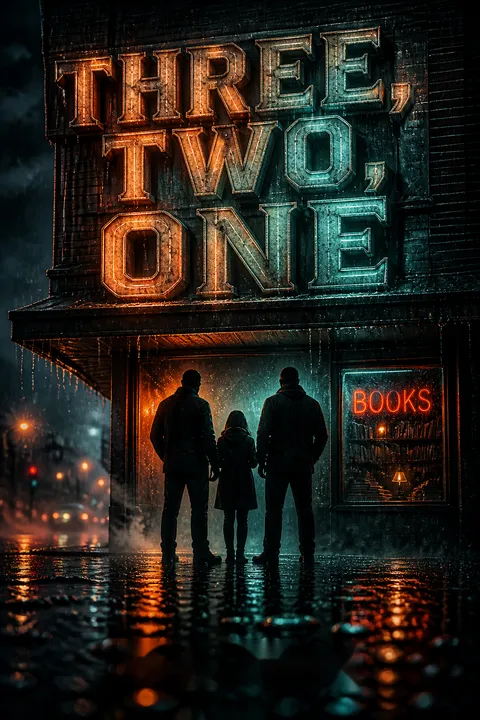
Rain on 16th Street
The story opens with Ark in a federal interview room, refusing to explain the bodies investigators have found, until a photograph of Blue pulls him back to their first meeting. At dawn in Denver, she is barefoot, bruised, and hiding beneath a bookstore awning after escaping fifteen months of captivity. Ark stops to ask if she needs help.
His partner, JD, arrives with a camera and offers money for photographs and sexual favors. Blue accepts because she has nowhere else to go and needs cash to escape the city. When her fear and drugged confusion become obvious, Ark and JD abandon the planned shoot and carry her through the rain to their loft.
The opening makes rescue morally uncertain from the start. Ark and JD approach Blue through the same commercial gaze that structures their work, pricing her attention before they understand her danger. Yet the frame of Ark refusing the investigators establishes that the encounter has consequences beyond romance: the woman in the photograph is connected to a later crime scene. The rain shelters Blue only briefly. Her first chance at safety comes from men whose business depends on persuading vulnerable women to surrender control, so trust must be earned inside a compromised setting.
Shelter with Conditions
At the loft, Blue is barely conscious, but she continues trying to earn the money JD promised. Ark joins JD in a sexual encounter with her, then stops when she collapses. The men warm her in a bath and discover deep cuts, welts, and older scars across her back.
JD holds her, speaks gently, and offers her a place to sleep; Ark agrees when Blue begs them not to send her away. She says she cannot return home to Montreal, but gives no explanation. After she sleeps, JD cooks for her and lets her move through the apartment at her own pace. Blue remains wary, yet the unlocked rooms and ordinary food begin to feel unlike captivity.
The shift from sexual transaction to shelter does not erase the imbalance that came before it. Blue is impaired, desperate, and conditioned to comply, while the men initially read her willingness as permission. The discovery of her injuries forces a different response: care becomes a practical obligation, not a sentimental reward. JD offers warmth through touch and food; Ark offers a place to stay while trying to control the risks. Blue's gratitude and suspicion coexist, showing how trauma can make safety feel both necessary and dangerous.
The Price of Ray's Deal
While Blue rests, Ark visits Ray, the wealthy producer who supplies their video work. Ray wants Ark to perform sexually for a married couple and offers him a valuable share of producers for his coming business. Ark refuses, insisting he is a camera operator, not a performer. But he still owes Ray two videos, and their scheduled women have failed to appear.
Ark seeks out Lanie, a former partner who has helped him meet quotas before. She agrees to perform, though she challenges the business Ark plans to build. He records the material and uploads it for Ray, recognizing that his contracts and legal precautions do not change the fact that he profits from women’s need.
Ark's refusal sounds like a defense of autonomy, but his actions expose the limits of that principle. He will not let Ray dictate what happens to his own body, yet he asks Lanie to provide the labor that keeps his business solvent. His self-awareness does not stop the exploitation; it sharpens his shame without changing his behavior. This contrast prepares his later crisis of conscience. The novel treats legality as a thin boundary: contracts and testing can regulate a transaction while leaving the unequal pressures that produced it intact.
A Familiar Brand
When Ark returns, he and JD notice a circular brand on the back of Blue's neck. JD recognizes it from Marie, a former girlfriend who disappeared years earlier, and leaves the loft shaken. Blue denies knowing anything about the mark or any other girls. Ark corners her for answers, but her calm defiance makes him realize that threats will only repeat the treatment she has survived.
He backs away, then invites her into his office to look at the photographs he took in the rain. The images make her feel seen rather than merely watched. Ark tells her about a wounded zoo monkey he and JD once paid to save, offering the story as evidence that their care can be real.
The brand converts Blue's private injury into a clue, but the men do not yet know whether it is evidence or coincidence. JD's reaction reveals that his past is not settled, while Ark's retreat from intimidation marks an important change in his approach to Blue. Photography becomes a contested form of attention: the camera first helps turn her into a product, then gives her a way to recognize her own image without being forced to explain herself. The rescued monkey story also exposes Ark's need to believe that intervention can repair damage.
Zoey's Buried Story
Blue finally explains that she came to Denver to find Janine Delgado, her childhood friend, who was pregnant and feared losing her baby. Blue had hoped to investigate the group arranging adoptions and publish a story. Instead, she joined it, was branded, and was held in a basement after the group discovered her identity.
The members drugged, abused, and exploited her, then used recorded footage to keep her silent. Ark recognizes her as Zoey Marshall, the missing daughter of a prominent Canadian diplomat. Her disappearance now threatens two families: Blue's, who believe her dead or lost, and JD's, because Marie bore the same brand. Blue also admits she never found Janine, leaving JD with a reason to resume his search.
Blue's confession recasts her as both a victim and an aspiring investigator whose confidence exceeded her protection. Her original plan to expose the group became the mechanism by which it trapped her, a reversal that complicates any simple story of courage or foolishness. The name Zoey carries public power, but Blue has survived by withholding it. For JD, the matching brand turns a private grief into a possible lead. For Ark, the confession confirms that the woman he sheltered is now at the center of a dangerous network he cannot safely dismiss.
The Three Make Rules
As Blue regains strength, she stays in the loft and grows close to both men. Ark asks personal questions to understand her, learning that her first boyfriend died young and that she writes stories. JD offers affection more freely, but his grief over Marie keeps surfacing. Blue asks for both men because feeling surrounded helps her feel safe; Ark and JD agree to a sexual relationship while setting boundaries around consent and care.
Blue will not leave the apartment, afraid someone will recognize her. On Halloween, Ark goes to the Sanctuary Club to film a contracted performance. Its leader, Gabriel, privately offers information about JD's missing daughter if Ark will father children with members of his circle.
The household takes shape through negotiated need rather than a shared fantasy of effortless harmony. Blue seeks physical reassurance; JD seeks intimacy that can soften grief; Ark seeks structure and control. Their agreement gives each person something, but it does not resolve the unequal knowledge among them. Blue's confinement is self-imposed, yet it echoes the captivity she escaped. Gabriel's offer brings that private arrangement into contact with the trafficking plot, testing whether Ark's desire to protect the people he loves can survive the corrupt bargains of his business world.
Gabriel's Bargain
Ark rejects Gabriel's offer and warns him to stay away from JD. Left alone while the men work, Blue searches their rooms and finds JD's video diary. In it, she sees him years earlier, gaunt and grieving, promising to keep searching for Marie and their child.
The recordings show how Ark helped JD recover and how Public Fuck America gave him new purpose, before a visit to Marie's grave reopened his despair. Blue now understands that JD's charm covers a history of addiction and loss. Gabriel's claim that he can locate JD's daughter therefore has real force, even though Ark refuses to trade his body or future children for the information.
The diary gives Blue access to a self JD has hidden behind performance. His repeated recordings turn private grief into an archive, but they also show how a business built on watching others helped him avoid confronting his own loss. Gabriel recognizes the same vulnerability and tries to convert it into leverage. Ark's refusal is ethically clear but emotionally costly: he chooses not to buy information that might save JD from uncertainty. The scene leaves the reader with an unresolved question about whether protecting someone means shielding them from hope as well as from danger.
The Christmas Tree Fight
Six weeks into Blue's stay, Ark urges her to leave the loft for a Christmas tree. She explains that the open door frightens her because freedom itself feels like a risk, so he goes alone. When he returns, he finds JD having sex with Blue in a way that mirrors the coercion she suffered. Ark attacks JD and calls the behavior abusive; JD insists Blue wants rough treatment.
Blue locks herself in the bathroom, overwhelmed by memories of her captivity. Ark comforts her and explains that JD has crossed boundaries before, while insisting that Blue's conditioned response is not proof that the harm is harmless. He decides the relationship cannot continue as it stands, and the rupture leaves Blue grieving both men.
The Christmas tree represents an invitation into ordinary life, but Blue cannot yet experience ordinary freedom as safe. Ark's discovery forces the story to distinguish a chosen fantasy from a pattern shaped by captivity. Blue's arousal does not settle the question of consent; her own confusion is central evidence that the past remains active in the present. Ark is right to recognize the danger, yet his unilateral decision to end the arrangement repeats his habit of managing other people's lives. Protection here is necessary, but it is not the same as listening.
Lanie's Silent House
Ark takes Blue away from the loft, claiming JD sold the private recordings of her abuse to Gabriel's group. He brings her to Lanie's home to check on her, but the smell of decay reveals that Lanie is dead inside. Ark retrieves a car and hidden identification, then drives Blue to a secure warehouse used for his business servers.
He admits that he has concealed much about his work, while Blue accuses him of keeping her at a distance. When Ark sleeps, Blue uses his phone to call JD. JD denies selling her footage and promises they can talk. Afraid of losing him and unconvinced by Ark's version, Blue drives back to the loft, where JD is waiting.
Lanie's death turns Ark's private guilt into immediate evidence that the danger around them is real. His response is tactical: change vehicles, secure identity papers, move Blue to a hidden location. But the more he controls, the less she trusts his account. His accusation against JD may be an attempt to protect her, yet it repeats the secrecy that has already fractured their relationship. Blue's return is not simply gullibility. She chooses the person who has made her feel emotionally held, even when the choice places her back inside a dangerous situation.
The Loft Becomes a Crime Scene
Blue returns to find Gabriel waiting in the loft with JD. Gabriel has promised to reveal the location of JD's daughter, and JD has brought Blue as leverage. He forces her to the floor and demands names from Gabriel. When two guards appear, JD shoots them, then wounds Gabriel as the bargain collapses into violence.
Ark arrives armed and tries to stop JD from killing Blue or himself. Blue recognizes that the men may have withheld the truth about Marie and the child, but JD silences her and holds a gun to her head. Federal agents crash through the windows, their laser sights covering all three. JD refuses to surrender, and the scene breaks off as he turns toward his final choice.
The loft, once a refuge, becomes the physical convergence point for every concealed bargain. JD's desperation for his daughter makes Blue instrumental to the same man who once offered her shelter, while Gabriel's polished authority gives way to open violence. Ark tries to intervene without revealing everything he knows, but his secrecy has left him unable to command trust at the moment it matters most. The federal raid brings institutional force into a story governed until now by private loyalties, and its arrival cannot guarantee that anyone will be saved.
The Undercover Name
As federal agents enter, JD shoots himself. Ark survives the raid but is taken into custody, where he refuses to tell investigators the story until agents from Washington shut down the interview. His brother Jax then reveals the truth: Ark is Jacob Barlow, an FBI operative who entered Denver's porn business to investigate the trafficking network connected to the murder of their foster brother, Michael.
Four years undercover led to records that support raids across several states and identify hundreds of people involved in buying children. Ark learns that the mission succeeded, but its personal cost is irreversible. Blue is returned to her family, while Ark is left grieving JD and the future the three of them had briefly imagined.
The identity reveal changes the moral meaning of Ark's secrecy without absolving its damage. His criminal persona was an investigative instrument, but the relationships formed inside that cover were not therefore false. The mission's success is measured in records, raids, and names, while its private cost is JD's death. The novel resists a clean equation between justice and healing: an operation can disrupt a trafficking network without restoring the people it harmed. Ark's grief also complicates the idea of the undercover agent as detached observer. He was implicated because he cared.
Epilogue
Two years later, Zoey has turned their story into a bestselling novel and hopes Ark will attend her Brooklyn reading. He does not appear, but a private invitation leads her to his changing art gallery, where photographs of the three of them preserve the life they shared. Ark tells her that JD's daughter, Paige, was found in the trafficking records and is now his adopted child.
He also admits JD had helped Marie enter the scheme to finance his addiction, then carried the guilt of surrendering their baby. Ark says he left so he could offer Zoey an honest, unconditioned love. She chooses to stay. Janine's child has also been reunited with family, and Zoey's fictional ending has hidden the truth from the public.
The epilogue offers reunion, but not a restoration of the original trio. Ark and Zoey can build a life together only after JD's absence has become permanent, and Paige's presence makes that life carry his history rather than erase it. The gallery turns photography from surveillance and commerce into memorial work: Ark preserves what he could not keep. Zoey's novel performs a parallel transformation, disguising testimony as fiction so that she can reclaim authorship without surrendering her private history to public scrutiny. Their reunion depends on disclosure at last, though its promise cannot undo the losses that made it possible.
Analysis
Three, Two, One builds a romance inside a moral trap. Ark and JD make money by persuading women in precarious circumstances to perform, while Blue arrives having been controlled by a group that turns sex, motherhood, and recorded consent into instruments of power. The novel's central distinction is therefore not simply between legal and illegal sex, or between roughness and tenderness. It asks whether consent can be understood when fear, dependency, and conditioning have shaped what a person believes she wants. Blue's uncertainty matters more than the men's confidence about her desires.
The love triangle is also a conflict between styles of care. JD offers emotional immediacy, but his unresolved grief makes his intensity dangerous. Ark offers protection and structure, but can mistake control for responsibility. Blue wants both because each answers a different need, yet neither man's devotion automatically makes him safe. The Christmas confrontation exposes the limits of eroticized rescue: affection cannot erase the history that gives a sexual act its meaning, and aftercare cannot substitute for agency.
The book's photographs and recordings deepen this problem. Cameras make the characters visible while allowing them to avoid direct confession. They preserve intimacy, but they also turn bodies into material that can be sold or used as leverage. Ark's eventual gallery changes the camera's purpose from extraction to remembrance, though it cannot restore JD. Likewise, the federal operation brings the trafficking network into view but cannot reverse its personal losses.
The ending refuses to make love a cure for trauma or mental illness. JD's death remains a devastating consequence of guilt and despair, not a romantic sacrifice that redeems him. The recovery of children and the return of Zoey's authorship offer forms of justice, but they do not restore the original three. The title's counting motif captures the novel's unstable promise: three people may briefly create a whole, yet survival depends on acknowledging what each person cannot repair for the others.
Review Summary
People Also Read








Characters
Blue
The guarded runawayBlue arrives in Denver with no clothes, no documents, and a past she cannot safely explain. Beneath her apparent fragility is an educated, observant woman who has spent much of her life acting decisively, sometimes before she understands the cost. She wants to protect people she loves, and that instinct leads her into danger as readily as it helps her survive it. Her responses to intimacy are complicated by fear, conditioning, and a desire to feel held. Writing remains part of her inner life, even when she cannot speak openly about herself. Blue's challenge is not simply to escape danger, but to distinguish her own wants from the ones others have taught her to feel.
Ark
The watchful protectorArk is a photographer, planner, and business partner who prefers the camera to the center of the frame. He built a profitable operation with JD and relies on rules, paperwork, and careful observation to keep it controlled. His restraint can look like coldness, but it also protects him from emotional risks he does not know how to manage. Loyalty to JD is one of his strongest commitments, even when he disapproves of JD's choices. Ark is drawn to Blue's vulnerability, but his impulse to protect can become an impulse to decide for her. His central tension lies between the person he believes he should be and the life he has learned to benefit from.
JD
The charming performerJD is Ark's closest friend and the charismatic performer at the heart of their public videos. He reads people quickly and can make strangers feel chosen, a skill that serves both his work and his relationships. Beneath the easy humor is a history of addiction, grief, and a need to keep moving rather than sit with pain. JD seeks closeness through touch and shared experience, but his intensity can overwhelm the boundaries of the people he wants to comfort. His friendship with Ark is built on loyalty and mutual rescue, though the men do not always agree about what protection requires. JD's warmth is genuine, but it does not make him harmless.
Marie
The absent first loveMarie is JD's former partner, whose absence shapes his understanding of love, guilt, and loss. She remains present in his memories and private recordings even when he avoids speaking about her. Her connection to JD's past gives Blue's unexplained brand a significance the men cannot ignore. Marie is not simply a lost romantic ideal; the fragments of her story point toward choices made under pressure and consequences that others have tried to conceal.
Janine Delgado
The lost childhood friendJanine is Blue's childhood friend, once close enough that Blue follows her across the continent when she asks for help. Their different temperaments make their friendship both intimate and unstable: Janine is more vulnerable to outside influence, while Blue trusts her own nerve. Janine's crisis becomes the reason Blue enters a world she does not understand. Even absent from the central action, she represents the loyalty that can draw someone toward danger.
Ray
The porn-world patronRay is a powerful producer and Ark and JD's business contact, offering them lucrative work while expecting dependable results. He treats Ark with a mixture of paternal concern and commercial pressure, and he is one of the few people who can challenge Ark's choices without immediately becoming an enemy. Ray believes in the machinery of his business and understands its risks, but his influence does not make him a moral authority. His relationship with the two men blends mentorship, money, and negotiated loyalty.
Gabriel
The polished sect leaderGabriel leads a tightly controlled religious circle and presents himself with the calm manners of a man accustomed to being obeyed. He understands how to make demands sound like opportunities and how to use other people's private needs as leverage. His authority depends less on visible force than on secrecy, ritual, and the promise that obedience will bring security. Gabriel's courteous manner makes him more unsettling, not less, because it disguises the coercion beneath his influence.
Lanie
Ark's old contactLanie is a waitress and a former intimate contact of Ark's who has helped him meet work obligations when other performers fail to appear. Their arrangement is transactional, but their history carries familiarity and unresolved affection. Lanie understands the cost of Ark's business more clearly than he wants to admit, and she is willing to challenge his rationalizations. Her role shows how Ark's private loyalties and commercial demands can become entangled.
Jax
Ark's family anchorJax is Ark's brother and a steady figure from the family life Ark has kept at a distance. Their bond rests on shared history, blunt honesty, and a form of loyalty that survives anger. Jax represents the world Ark left behind and the obligations that continue to exist beneath his assumed identity. He approaches crises with a practical focus, while still understanding the personal cost they carry.
Silvie
Ray's warm confidanteSilvie is Ray's partner and the welcoming presence in his private club. She treats Ark with easy familiarity and offers a glimpse of a relationship that exists alongside Ray's public business. Her calm warmth contrasts with the transactional atmosphere surrounding the men.
Shadow
The street informantShadow is a street worker who knows the people and informal channels around Denver's bus station. She trades information for practical help and understands how quickly danger can move through the streets. Her brief encounter with Ark adds a small but useful piece to his search.
Jimmy Laslos
Blue's first loveJimmy Laslos is Blue's first boyfriend, remembered as kind, loyal, and different from the reckless people she feared becoming. Her memories of him establish an earlier model of intimacy before the experiences that later distort her sense of desire and safety.
Agent Matheson
The patient interrogatorMatheson is the federal agent who tries to draw Ark's account out of him in the opening frame. He uses patience rather than threats, recognizing that the story is too complicated for a simple confession. His questions give the narrative its first sense of impending consequence.
Jerry
The blunt investigatorJerry is Matheson's colleague, more confrontational and less patient with Ark's silence. He represents the investigators' need to account for the bodies and possible victims. His directness makes the interview feel like a struggle over who controls the story.
Plot Devices
The Circular Brand
A scar that links victimsThe circular mark on Blue's neck is a bodily signature that connects her captivity to Marie's disappearance. It gives Ark and JD a reason to suspect that Blue has encountered the same hidden group that shaped their past. Unlike a document, the brand cannot be dismissed as a mistaken record, but it does not tell them what happened or who is responsible. Its meaning arrives through recognition, forcing the men to choose whether they will treat Blue as a person in danger or as a clue to their own unresolved losses.
The Camera
A lens with two purposesArk's camera begins as a tool for producing the paid videos that support his business. It also records Blue's first hours with him and JD, preserving images that later become evidence of the life they built. The camera creates distance for Ark, who is more comfortable observing than participating, but it can also turn vulnerability into a commodity. In the later gallery, photographs become memorials rather than products. The device therefore tracks a shift in the meaning of looking, from extracting value to acknowledging that a moment mattered.
JD's Video Diary
Grief preserved on tapeJD records private messages to Marie over several years, documenting his grief, addiction, and gradual return to work with Ark. Blue finds the diary while searching the loft and sees a version of JD that his charm conceals. The recordings make his history legible without requiring him to confess it directly, while also showing how he uses performance and repetition to endure. The diary is not a neutral archive: it contains his account of his own suffering, but cannot by itself establish the full truth about the people he has lost.
The Recorded Contracts
Paper trails beneath the crimeThe trafficking group uses recorded agreements and false adoption arrangements to make coercion appear voluntary and to conceal the movement of children. Blue's signed contract and the group's other records give it leverage over her, especially because she fears the public consequences of her recorded participation. Later, the files become evidence for investigators and help connect buyers, children, and the people who arranged the transactions. The records show how bureaucracy can be used both to disguise abuse and, once recovered, to expose its structure.
Ark's Cover Identity
A secret beneath the businessArk's name, work, and Denver enterprise conceal a federal investigation that has been operating for years. The cover lets him move through the porn industry and gather information about a trafficking network, but it also makes genuine attachments difficult to distinguish from operational choices. His concealed identity explains his access to hidden resources and his sudden urgency when the danger escalates. The reveal does not make his relationships fictitious. Instead, it forces the reader to hold two truths together: Ark has been lying about who he is, and his love for JD and Blue has become real.
About the Author









Download PDF
Download EPUB
.epub digital book format is ideal for reading ebooks on phones, tablets, and e-readers.








