

Key Takeaways
Recover Black women's blues as an archive of working-class feminist thought.
Listen beyond biography. Angela Davis does not claim that Ma Rainey, Bessie Smith, or Billie Holiday used today’s feminist language. She studies how their performances register ideas about gender, sexuality, race, and class that formal histories often miss. Poor Black women had limited access to print, but recording offered a route for circulating their voices. Davis transcribed 252 available Rainey and Smith recordings, attending to changes in delivery as well as lyrics.
A record industry's contradiction. Mamie Smith’s 1920 hit helped open the market for Black women singers, and record companies initially pursued them as gateways to Black listeners. That exposure could be exploitative, but it also preserved a rich body of women’s work. Davis treats these recordings as cultural evidence, not simply commercial products or personal confession.
What's striking is the shift in what counts as an archive. A song preserved on a commercial disc can carry social knowledge even when its singer never wrote a manifesto or kept a diary. This approach also corrects a familiar bias: written records tend to make educated, affluent people appear more politically articulate than working people. The recordings are not transparent transcripts of every listener's life, however. Their value lies in showing what could be publicly voiced, performed, and shared, not in proving that every audience member understood a song in the same way.
Treat sexual self-determination as freedom's intimate, post-emancipation proof.
Freedom in daily life. Davis places blues sexuality in the aftermath of slavery, when Black people remained economically dispossessed but could make more autonomous choices about travel and intimate partners. In that setting, choosing a lover was not merely private pleasure. It marked a form of personal sovereignty long denied under slavery. Women’s blues made desire explicit, sometimes playful, sometimes angry, and rarely wrapped in the idealized romance of popular songs.
Domestic ideals did not fit. Marriage, motherhood, and household devotion appear far less often than lovers, work, betrayal, and independence. In Bessie Smith’s Sam Jones Blues, a deserted wife becomes a woman living independently after her marriage ends. Such songs do not prove that marriage was irrelevant to Black women. They show how a middle-class ideal of feminine fulfillment could erase the different pressures shaping working-class lives.
The argument is strongest when sexuality is understood as one domain in which freedom became tangible, not as a substitute for economic or political equality. That distinction keeps the songs from being mistaken for celebrations of liberation already achieved. Their frankness also unsettles the assumption that feminism must first appear in formal political writing. At the same time, sexual independence in a song does not establish that performers or listeners had equal power in their actual relationships. The music offers a record of aspiration, negotiation, and contradiction, not a simple report of social conditions overcome.
Make intimate violence audible before society calls it political.
Songs break the silence. Rainey and Smith recorded songs that described bruises, threats, and partners who used force. In Smith’s Yes, Indeed He Do, a woman’s apparent praise of an abusive lover becomes biting irony through the singer’s delivery. Rainey’s Black Eye Blues gives an abused woman a sharp, defiant voice. Davis argues that these performances moved violence out of the supposedly private home and into a public, shared setting.
Irony needs a listener. Some lyrics sound as if they accept or even welcome abuse. Davis reads performance, humor, and exaggeration as possible critiques of that surface meaning. Even when a song does not explain why men use violence, naming the injury can help make it recognizable as a shared problem rather than an isolated shame.
The distinction between what a lyric says and what a performance does is central here. In oral and musical traditions, irony can carry criticism where direct accusation is dangerous or unavailable. The songs also anticipate a key political move: making private suffering discussable in public. But irony is not a guaranteed shield against harmful interpretation. Some listeners may hear acquiescence, and the book cannot establish how particular audiences responded. The claim is more persuasive when framed as an opening for critique, rather than proof that every performance functioned as an unambiguous protest.
Build women's solidarity from shared stories, not respectability rules.
A community in the audience. Many blues speak directly to other women, offering warnings and advice about unreliable partners, economic dependence, or how to protect a relationship. Rainey’s Trust No Man creates an imagined audience of women who can learn from one another’s experience. These songs resemble consciousness-raising: personal troubles become material for collective recognition, without requiring a singer to present a formal political argument.
Solidarity is complicated. Women’s blues also portray rivalry over lovers, sometimes with comic threats and sometimes with imagined violence. In Bessie Smith and Clara Smith’s duet My Man Blues, two singers compete for one man, then settle on sharing him. The joke turns their attention away from rivalry and toward a common understanding of men’s infidelity. Davis sees both the agency and the friction in this community.
The songs resist a tidy picture of sisterhood. Their community is made through argument, jealousy, advice, and laughter, which makes it more socially believable than a community defined only by agreement. That complexity matters because respectability politics often tried to secure Black women’s standing by policing their sexuality. Still, portraying rivalry does not automatically challenge the structures that produce it. The most generative element is the change in perspective: a woman’s individual story becomes available to other women for comparison, response, and practical judgment.
Claim movement as freedom, even when the destination is uncertain.
The road changes meaning. After emancipation, movement carried special force for people whose lives had been geographically controlled. Men commonly traveled for work, while women were more often tied to home by family duties and paid domestic labor. Rainey’s Traveling Blues gives a woman the train ticket and the decision to leave, even though she does not know where she will end up. The journey itself becomes a claim to agency.
Home can reverse direction. Bessie Smith’s songs reflect the Great Migration and the disappointment many Black migrants met in northern cities. In songs such as Louisiana Low Down Blues, returning south can mean recovering community and cultural ground, not simply retreating. The South remains marked by racist oppression, so the homecoming is neither uncomplicated nor purely nostalgic.
Travel functions here as a form of action before it becomes a successful escape. That is a useful distinction for reading stories of migration: movement can disrupt dependency and enlarge a person’s choices without guaranteeing safety or prosperity. The songs also complicate the familiar map in which the North always means progress and the South only means oppression. Yet the symbolic return should not be confused with material security. The music makes home a source of memory and belonging, while leaving the economic and racial conditions that drove migration unresolved.
Read rent, laundry, prison, and flood songs as working-class history.
Hardship is social evidence. Blues songs record pressures that conventional accounts can treat as background: domestic labor, eviction, imprisonment, poverty, and disaster. Smith’s Washwoman’s Blues gives voice to Black women whose work for white households was exhausting and narrowly available. Her Poor Man’s Blues links hardship to unequal wealth and the sacrifices demanded of poor workers. Rainey’s Chain Gang Blues evokes punishment carried out through a racist labor system.
Disaster has politics. Smith wrote Backwater Blues after encountering people displaced by the 1927 Mississippi flood. More than 600,000 people lost homes, and Black residents made up over half of those affected. Davis describes relief that often treated Black survivors unjustly. The song turns a disaster into shared memory, connecting individual loss to the conditions that magnified it.
These examples show why popular music can supplement official histories: it records how large systems enter kitchens, bedrooms, courtrooms, and flooded neighborhoods. The songs also preserve emotional knowledge that statistics cannot supply, including humiliation, exhaustion, and disorientation. Their value is not that they provide comprehensive data; they do not. Rather, they make ordinary experience historically legible and point listeners toward questions about labor, law, and public relief. The distinction between naming an injustice and organizing to change it remains important, but naming can help create the shared understanding from which collective action becomes possible.
Respect the blues as a competing spiritual authority, not low culture.
The blues claim sacred ground. Churches often condemned blues as worldly or sinful, while some Black intellectuals dismissed the music as low culture. Rainey’s Countin’ the Blues invokes prayer while naming songs and troubles; Smith’s Preachin’ the Blues playfully casts blues performance as a kind of sermon. Both challenge the idea that religious institutions alone can interpret Black life.
Artistic status was contested. During the Harlem Renaissance, many leaders hoped Black music would be reshaped into high art. Black Swan Records rejected Smith because her sound was considered too raw, while Langston Hughes embraced the blues as a source of artistic form and cultural knowledge. Davis presents the singers’ work as an argument for the seriousness of popular Black expression.
The conflict is not simply between religion and pleasure, or elite taste and popular taste. It is also a struggle over who may speak with authority about Black experience. The blues’ self-conscious naming of its own practice gives performers a way to defend that authority from both outside racism and internal class hierarchy. This defense need not mean that every religious critique is oppressive or every blues performance emancipatory. Its lasting insight is that cultural seriousness should not be measured only by institutional approval, formal education, or resemblance to European classical standards.
Hear Billie Holiday turn Tin Pan Alley romance into social critique.
Meaning lives in delivery. Holiday worked mainly with popular songs written for the commercial music market, often using familiar romantic language. Davis calls the political possibility within this transformation the aesthetic dimension: the way artistic form can alter a work’s meaning without changing all its words. In You Let Me Down, Holiday’s phrasing makes promises of romance sound hollow. In My Man, the words seem to accept abuse, while her performance gives them an ambivalent, questioning force.
A blues inheritance. Holiday’s music carries forward the blues practice of making words signify more than their literal content. She did not need to sing classic blues to remain connected to that tradition. Her interpretations preserve emotional complexity and make apparently private love songs available for reflection on gender and power.
This reading asks audiences to treat musical performance as interpretation, not decoration. Tempo, phrasing, and vocal tone can complicate a lyric in ways a printed page cannot show, much as an actor’s delivery changes the force of a line. The approach also explains how a singer can work inside a commercial form without simply endorsing its assumptions. Still, interpretive richness has limits: an ambivalent performance does not guarantee that every listener perceives a critique. The value lies in hearing the conflict between lyric and sound, rather than assuming that either one alone settles the song’s meaning.
Put Strange Fruit at the center of Holiday's political artistry.
A protest shaped by choice. In 1939, Holiday began performing Strange Fruit, a song about lynching, at New York’s interracial Café Society. Columbia declined to record it, fearing a backlash, so she recorded it for the independent Commodore label. Davis emphasizes Holiday’s own role in making the song central to her work, against accounts that portray her as passive or unable to understand its meaning.
Private grief meets public terror. Holiday connected the song’s subject to her father’s death after he was denied proper medical care in segregated Texas. Her performance asked audiences to confront lynching as a human and political reality. Davis argues that it did not stand outside Holiday’s love songs as an isolated exception. It made the wider social stakes of her artistry harder to ignore.
The song’s history shows how artistic agency can be obscured even by sympathetic biographers: the singer becomes an interpreter only after someone else explains the work to her. Restoring Holiday’s decision-making is therefore part of restoring the music’s meaning. The recording also illustrates the economic cost of direct political expression, since a major label considered the subject commercially dangerous. Its force comes from joining individual grief to a public indictment, although the song’s cultural impact should not be reduced to a single performer or recording. It belongs to a broader history of anti-lynching organizing and Black musical protest.
Analysis
Davis’s central intervention is methodological as much as historical: she asks readers to treat recorded performance as a place where political thought is made, not merely a reflection of ideas formed elsewhere. That choice brings poor and working-class Black women into feminist history through a medium they could access, and it changes the scale at which political consciousness is recognized. A joke about a husband, a train journey, or a rent bill can carry arguments about social power without resembling a platform or a petition.
The book’s most productive tension is between the record and its interpretation. Davis insists that lyrics cannot be separated from voice, timing, irony, and audience response. That attention makes familiar songs newly complex, especially when a woman appears to endorse mistreatment or conventional romance. Yet performance is not a transparent code. The same irony can be missed, and a surviving commercial recording cannot reveal every listener’s response. Davis is most convincing when she treats a song as an opening for shared interpretation, rather than as proof of a uniform feminist consciousness.
Her historical framing also refuses a simple liberation story. Emancipation enlarged personal choice, but poverty, racial violence, domestic labor, and segregated institutions remained. Sexual autonomy and travel appear as meaningful freedoms precisely because broader freedom was restricted. Likewise, Holiday’s reworking of popular romance shows artistic agency operating within a market that supplied her material and could block politically risky work.
The result is a history of cultural work under constraint. Rainey, Smith, and Holiday do not stand for one unified politics, nor do their songs resolve every contradiction they expose. Their significance is that they made experiences available for recognition and discussion across class and racial boundaries. Davis expands the canon without merely adding three famous women to it: she challenges the rules that made their music seem culturally minor and their thought seem politically accidental.
Review Summary
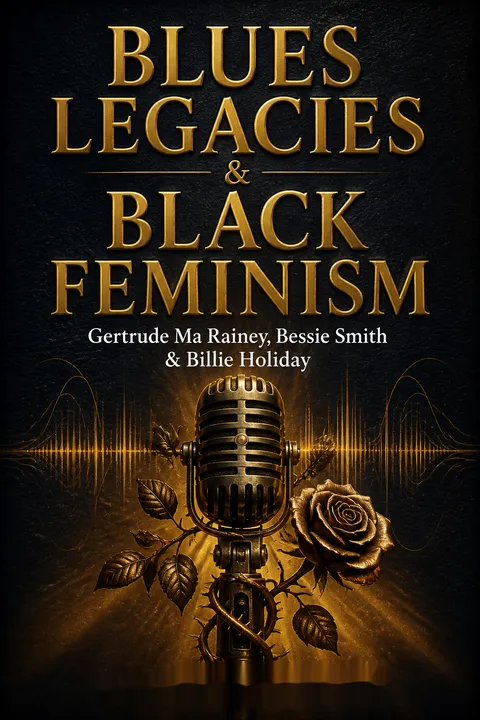
Blues Legacies and Black Feminism explores the impact of blues music on American culture and feminism through the lives of Gertrude "Ma" Rainey, Bessie Smith, and Billie Holiday. Davis analyzes their lyrics and performances, arguing that they challenged social norms and expressed black feminist ideals. While some reviewers praise the book's insights and historical context, others criticize Davis's academic writing style and interpretations. The book is valued for its transcriptions of song lyrics and its exploration of themes like sexuality, domestic violence, and racial inequality in early 20th-century America.
People Also Read





Glossary
orature
oral cultural expressionOrature refers to cultural knowledge and artistic expression transmitted through spoken, sung, and performed forms rather than primarily through written texts. Davis uses the term to emphasize that blues recordings preserve working-class Black women's ideas and experiences even when those women had limited access to publishing. Performance, audience response, and reinterpretation are part of this living archive.
nommo
creative power of namingNommo is a West African concept of the word as an active, creative force. In Davis’s account, naming a condition through blues can give it an aesthetic form and bring it from isolated experience into shared recognition. The idea helps explain why songs that name sorrow, violence, or hardship can be more than descriptions: they can reshape how a community understands those experiences.
aesthetic dimension
art's power to reshape meaningDavis adapts Herbert Marcuse’s term for the way artistic form can create a perspective that differs from ordinary social assumptions. In Billie Holiday’s work, phrasing, timing, and vocal tone can complicate or challenge the literal meaning of a popular song’s lyrics. The aesthetic dimension is not simply a hidden message; it is the meaning created through the performed work.
race records
records marketed to Black listenersRace records was the recording industry's category for music marketed to Black audiences, including blues by Black women singers in the 1920s. The category helped companies pursue a market they had previously neglected, but it also segregated Black music commercially and culturally. Davis shows how this industry label shaped artists’ opportunities and limited wider recognition of their influence.
call-and-response
music shaped by audience replyCall-and-response is a musical and conversational pattern in which a leading voice invites replies from other participants. Davis stresses that blues performance preserves this social interaction even when a recorded singer appears to perform alone. The audience’s spoken or musical response helps turn an individual story into a communal event and allows listeners to recognize their own experiences in a song.
FAQ
What's Blues Legacies & Black Feminism about?
- Exploration of Blues Women: The book examines the contributions of Gertrude "Ma" Rainey, Bessie Smith, and Billie Holiday, highlighting their influence on American music and culture.
- Intersection of Feminism and Blues: Angela Y. Davis connects these artists' legacies to black feminist consciousness, exploring themes of race, class, and gender.
- Historical Context: It situates the blues within the socio-political landscape of the 1920s to 1940s, showing how these women challenged patriarchal structures through their art.
Why should I read Blues Legacies & Black Feminism?
- Rich Cultural Insight: The book offers a deep understanding of the historical and cultural significance of blues music from the perspective of black women.
- Feminist Perspective: It provides a unique feminist analysis, reclaiming the narratives of these artists as pivotal figures in music and social justice.
- Meticulously Researched: Angela Y. Davis's extensive research and engaging writing make it appealing to those interested in music history, feminism, and African American studies.
What are the key takeaways of Blues Legacies & Black Feminism?
- Blues as Feminist Expression: The book argues that the blues served as a medium for expressing feminist consciousness, revealing the struggles and resilience of black women.
- Cultural Resistance: It highlights how the music of Rainey, Smith, and Holiday acted as resistance against racial and gender oppression.
- Legacy of Empowerment: The work emphasizes the lasting impact of these artists on contemporary understandings of race, gender, and sexuality in American culture.
How does Angela Y. Davis connect feminism to the blues in Blues Legacies & Black Feminism?
- Historical Context: Davis situates the blues within the broader historical struggles of black women, showing how their music reflects feminist consciousness.
- Contradictions and Complexities: She explores the contradictions in the artists' lives, illustrating how their music both conformed to and challenged patriarchal norms.
- Cultural Significance: The book posits that the blues served as entertainment and a means of articulating social and political critiques, contributing to feminist discourse.
What role did race and class play in the lives of the blues women discussed in Blues Legacies & Black Feminism?
- Intersectionality: Davis emphasizes that race and class are intertwined in the experiences of Rainey, Smith, and Holiday, shaping their identities and artistic expressions.
- Economic Struggles: The book highlights the economic hardships faced by these women, influencing their music and themes like love, betrayal, and resilience.
- Cultural Marginalization: It discusses how their working-class status led to marginalization within the music industry and broader cultural narratives.
How does Blues Legacies & Black Feminism address the theme of sexuality?
- Sexual Agency: The book argues that the blues provided a space for women to assert their sexual agency, challenging societal norms.
- Complex Representations: Davis explores how the music reflects complex attitudes toward love and sexuality, intertwining personal experiences with social critiques.
- Cultural Commentary: The work illustrates how the blues served as a commentary on the sexual politics of the time, revealing the struggles and desires of black women.
What is the significance of the title Blues Legacies & Black Feminism?
- Cultural Heritage: The title reflects the enduring legacy of blues music as a vital part of African American culture and its role in shaping feminist thought.
- Intersection of Discourses: It signifies the intersection of blues music and black feminism, highlighting the artists' contributions to understanding race, gender, and class.
- Reclamation of Narratives: The title emphasizes reclaiming the narratives of black women in music, positioning them as central figures in cultural and feminist histories.
How does Davis critique the traditional narratives surrounding the blues in Blues Legacies & Black Feminism?
- Challenging Stereotypes: Davis critiques the tendency to view blues music as a product of male experiences, advocating for recognition of women's contributions.
- Revising Historical Accounts: She calls for revising historical accounts that overlook the significance of black women in blues development and cultural impact.
- Highlighting Agency: The book emphasizes the agency of these women, showcasing their music as resistance and empowerment rather than passive acceptance.
What methods does Angela Y. Davis use in Blues Legacies & Black Feminism to analyze the music of Rainey, Smith, and Holiday?
- Lyric Analysis: Davis conducts a close reading of song lyrics, examining how they reflect social consciousness and feminist themes.
- Historical Contextualization: She situates their music within the historical and cultural contexts of the 1920s to 1940s, exploring socio-political dynamics.
- Interdisciplinary Approach: The book employs an interdisciplinary approach, drawing from history, musicology, and feminist theory for comprehensive analysis.
How does Blues Legacies & Black Feminism relate to contemporary social issues?
- Ongoing Relevance: Themes of racial injustice and gender inequality resonate with movements like Black Lives Matter and #MeToo, highlighting enduring struggles.
- Cultural Legacy: The book shows how the legacies of blues singers continue to influence modern artists and activists, serving as inspiration and empowerment.
- Call for Awareness: Davis encourages readers to engage with social issues presented in the music, advocating for justice and equality today.
What role does Billie Holiday play in Blues Legacies & Black Feminism?
- Pivotal Figure: Billie Holiday is portrayed as a transformative artist whose work, especially "Strange Fruit," brought social consciousness to popular music.
- Personal Struggles: The book details her battles with racism, addiction, and the music industry, illustrating how these informed her artistry and image.
- Cultural Impact: Davis argues that Holiday's legacy extends beyond music; she became a symbol of resistance and resilience for Black women.
How does Angela Y. Davis define the relationship between music and social consciousness in Blues Legacies & Black Feminism?
- Music as a Reflection: Davis posits that music, particularly the blues, reflects social realities and struggles of marginalized communities, acting as a mirror and catalyst.
- Artistic Expression: The book emphasizes the emotional depth and political messages in blues music as essential for understanding African American life.
- Call to Action: Davis suggests that music can inspire listeners to engage with social issues, making it a vital tool for activism and awareness.
About the Author

Download PDF
Download EPUB
.epub digital book format is ideal for reading ebooks on phones, tablets, and e-readers.








