

Key Takeaways
Treat enslaved Black women as workers, resisters, and family-makers
Work came first. The familiar image of the enslaved Black woman as a house servant hides the more common reality: by the mid-1800s, about seven in eight enslaved people, women and men alike, worked in the fields. Women were expected to meet the same labor demands as men, even when pregnant or caring for infants. Enslavers valued their capacity to bear children as a way to increase the enslaved workforce, while denying them the protections and respect attached to motherhood.
Resistance took many forms. Enslaved women defended relatives, fled, sabotaged work, joined rebellions, and secretly taught others to read. Within slave communities, women and men also built family and kinship networks despite forced separation. Davis argues that shared oppression did not make women powerless or erase their distinct exposure to sexual violence.
What's striking is how this account refuses a false choice between gendered harm and shared exploitation. Women could be treated as equivalent laborers when that served enslavers, then targeted specifically through sexual coercion and reproductive control. This resembles a broader insight from labor history: the same institution can distribute work by one rule and vulnerability by another. The book also warns against mistaking survival for consent. At the same time, the claim of relative equality within enslaved families should be read as a description of community practices under extreme constraint, not as evidence that slavery somehow dissolved gender differences or violence.
Build feminist alliances through shared struggle, not borrowed comparisons
Abolition opened a door. White women who organized against slavery learned practical politics: raising money, circulating petitions, arranging meetings, and speaking publicly. Prudence Crandall defended Black girls' access to education despite threats and attacks. Sarah and Angelina Grimke went further, arguing that women had to resist their own enforced silence in order to fight slavery effectively. Frederick Douglass also supported women's political rights, even when that position brought ridicule.
Solidarity was uneven. Some white women used slavery as a metaphor for restrictive marriage, a comparison that risked minimizing the violence and legal ownership Black people endured. Black women were also often excluded from abolitionist and women's organizations. Davis's point is not that the causes were identical, but that movements for liberation could strengthen one another when participants confronted the inequalities inside their own ranks.
Coalition is more than a shared enemy. It requires members to notice when a movement's language or leadership makes another group's experience secondary. The Grimke sisters offer a practical model: they treated women's right to speak not as a distracting side issue, but as a condition for effective abolitionist work. Modern coalition theory similarly distinguishes inclusion from influence. A seat in the room matters less if a group's priorities cannot shape decisions. Davis's caution about slavery metaphors remains useful: analogy can make injustice legible, but it can also flatten differences in degree, structure, and historical consequence.
Do not purchase political access by abandoning Black freedom
Suffrage became a test. After the Civil War, activists disagreed over whether Black men's voting rights should take priority when women remained disenfranchised. Frederick Douglass argued that Black men in the South faced immediate violence and economic coercion, making the vote a tool of protection and political survival. Elizabeth Cady Stanton and Susan B. Anthony instead opposed the Fifteenth Amendment when it enfranchised Black men but not women, sometimes using openly racist arguments to bolster their position.
Expediency had a cost. Davis shows how the promise of white Southern support encouraged suffrage leaders to tolerate segregation and white supremacy. The vote mattered to women's equality, but Black women's safety and rights could not be treated as bargaining chips. The conflict fractured the Equal Rights Association and weakened the prospect of a durable alliance between Black liberation and women's rights.
This episode shows why formal equality cannot be assessed without asking what is at stake for each group at a particular moment. Douglass's argument for priority was a strategic judgment about violent conditions, not a claim that women did not deserve the vote. That distinction is valuable in movements facing competing urgent needs. Still, strategy can become a permanent excuse for postponement unless groups establish how and when deferred demands will be addressed. Davis's account makes a strong case that political access gained through racial exclusion is unstable: it asks the excluded to bear the cost while leaving the underlying power structure intact.
When mainstream clubs exclude Black women, build institutions that act
Black women organized anyway. In the 1890s, as lynching and sexual violence intensified, Black women built clubs to defend their communities and challenge racist attacks. After Ida B. Wells's newspaper office was destroyed for exposing lynching, Black women in New York organized a public rally in her support. The Women’s Era Club, founded in Boston, became an important part of this organizing. Its representative, Josephine St. Pierre Ruffin, was denied entry to a white women's federation convention because she insisted on representing her Black women's club.
Service meant resistance. Black women's clubs supported anti-lynching work, education, and racial justice, eventually forming a national association. Their leaders included Wells and Mary Church Terrell, whose methods differed but whose work helped build a political force. Davis also notes that class divisions and personal rivalries complicated this organizing, without erasing its achievements.
The clubs illustrate how institutions can do two jobs at once: provide mutual support and create a platform for public action. This is a useful corrective to histories that treat excluded groups only as petitioners seeking admission to someone else's organization. Building independent capacity can make a community harder to ignore, though it can also demand scarce time and resources from people already burdened by discrimination. Davis's account of disagreement between Wells and Terrell adds welcome texture. Collective action is not automatically harmonious; durable institutions need ways to manage conflict without allowing rivalry to eclipse shared objectives.
Emancipation without land, wages, and safety leaves bondage in new clothes
Legal freedom did not secure independence. Decades after emancipation, Black women still faced restricted job choices and coercive labor arrangements. In 1890, Davis reports, more than a million Black women and girls over age ten worked for wages. Of them, 38.7 percent worked in agriculture, 30.8 percent in domestic service, and 15.6 percent in laundry work. Sharecropping debts and the convict lease system, in which authorities rented prisoners to employers, kept many Black people under conditions resembling forced labor.
Domestic service carried old dangers. Black women working in white homes often endured long hours, low pay, racial humiliation, and sexual harassment, with little legal protection. A Georgia worker interviewed in 1912 described employers treating her as though she were still enslaved. Davis's evidence makes emancipation a continuing struggle over control of labor, family life, and bodily safety.
The distinction between a legal status and the material ability to exercise it is central here. A person can be formally free while debt, criminalization, and labor-market exclusion sharply limit meaningful choices. This is a recurring problem in policy design: rights on paper are weak if institutions can punish people for attempting to use them. Davis's figures also show why labor statistics need social context. Counting employment alone would miss the coercion, dangerous conditions, and restricted alternatives shaping that work. Her account invites readers to ask not only whether a system has changed, but who controls workers' time and bargaining power.
Treat education as infrastructure for freedom, not a private achievement
Learning was a collective demand. Enslavers prohibited literacy because reading could help people resist control. Yet enslaved people studied secretly, and some women ran clandestine schools at night. After emancipation, Black communities demanded schools alongside land and political rights. Davis describes former slaves sacrificing scarce resources to educate children and adults, while Black and white women teachers helped build schools across the South.
Reconstruction built lasting capacity. Davis cites 247,333 pupils attending 4,329 schools during the period. The work helped establish public education and Black colleges, even as the end of Reconstruction and the rise of Jim Crow later restricted access. Education was not simply individual advancement. It gave communities the skills to communicate, organize, preserve knowledge, and resist efforts to restore the old order.
Education here functions as civic infrastructure: it supports individual learning, but also enables a community to produce leaders and coordinate action. That helps explain why access to schooling has so often been contested by those seeking to control labor and political participation. The Reconstruction examples also complicate the idea that institutions are gifts delivered from above. Black families, students, and teachers did much of the work of making education real. Schools alone, however, cannot overcome political repression or economic exclusion. Davis's account is most persuasive when education is understood as a necessary resource for freedom, rather than a sufficient solution to injustice.
Expose rape myths as political tools, not neutral crime stories
The accusation served power. Davis traces how the myth of the Black rapist was used to justify lynching and racial terror, even while Black women faced routine sexual abuse with little legal protection. Between 1930 and 1967, she notes, 405 of the 455 men executed following rape convictions were Black. She also cites a study finding that only about one-sixth of lynching victims were accused of rape. The accusation could therefore function as a pretext for violence tied to economic and political control.
Black women challenged both harms. Ida B. Wells exposed lynching and its false justifications, while Black women organized against sexual violence and defended men framed by racist accusations. Davis criticizes feminist writing that portrays men of color as especially prone to rape while overlooking racial terror and abuse by powerful men.
Davis insists on holding two truths together: sexual assault is real, and claims about it can be manipulated to authorize racist violence. That distinction is essential to sound analysis of crime, where arrest and conviction data reflect policing and prosecution as well as offending. Her critique also asks whose victimization becomes visible and whose is dismissed. The argument should not be taken to mean that racial injustice makes sexual violence secondary or that accused people are automatically innocent. Its force lies in demanding evidence, context, and equal concern for victims, including Black women historically denied credibility and protection.
Defend reproductive choice without turning poor women's fertility into policy
Choice has two sides. Davis supports access to contraception and abortion, but argues that reproductive freedom also requires protection from forced sterilization. Black women had sought ways to avoid pregnancy under slavery, when raising children meant exposing them to forced labor, separation, and violence. Those desperate acts should not be confused with a general preference for abortion or with freedom to choose under fair conditions.
Population control was not consent. The birth control movement sometimes absorbed eugenic and racist ideas, treating poor women and women of color as people whose fertility should be restricted. Davis describes the sterilization of the Relf sisters, ages twelve and fourteen, without their mother's informed consent. She argues that abortion rights and safeguards against sterilization abuse belong together: the right to end a pregnancy means little if institutions can also take away the right to have children.
The key distinction is between reproductive autonomy and a state's preferred population outcome. A service may be called health care while operating coercively if consent is uninformed, economic support is withheld, or only one reproductive option is practically available. Contemporary bioethics treats meaningful consent as more than a signature: it requires comprehension, voluntariness, and real alternatives. Davis's history makes that standard political as well as clinical. One tension is that advocates can focus so heavily on past abuses that they risk obscuring the urgent need for accessible care. The stronger position protects the right to choose in every direction.
Join class struggle to anti-racism and feminism, or workers stay divided
Labor movements had blind spots. White-led socialist organizations often treated class as the main problem and neglected the specific oppression of Black people. Some Black women were largely invisible because many worked in domestic service or agriculture rather than industry. The Industrial Workers of the World made a more explicit commitment to organizing workers across racial lines, while figures such as Lucy Parsons emphasized class exploitation, sometimes at the expense of distinct racial and gender harms.
Black women sharpened the analysis. Communist activist Claudia Jones argued that Black women faced overlapping exploitation as Black people, workers, and women. She challenged even progressive allies who relied on Black domestic workers while demeaning them. Davis presents such organizing, alongside working women's campaigns for wages and safer conditions, as evidence that labor politics must address race and gender to build genuine solidarity.
This section is strongest when it treats solidarity as a practice that changes institutions, not merely a shared vocabulary. A union can proclaim worker unity while excluding domestic workers, and a feminist group can pursue women's advancement while relying on poorly paid women of color. Those contradictions are material, not just rhetorical. The account also shows a productive tension between class-first analysis and attention to specific forms of oppression. Neither lens can fully substitute for the other. The challenge is to identify common interests without pretending that workers encounter employers, police, or political institutions in identical ways.
Move housework from private drudgery into shared, publicly supported systems
Housework has a history. Before industrialization, many women made goods for household use and contributed directly to the home economy. As factories took over production, domestic work became less visible and was increasingly treated as women's natural, unpaid responsibility. Davis estimates that housework consumes 3,000 to 4,000 hours a year for the average housewife, before counting the constant work of caring for children.
Redistribution is not enough. Asking men to do more can make the burden fairer, but does not make repetitive, isolating chores more meaningful. Davis favors socializing services such as child care and meal preparation, and industrializing tasks where practical, so individuals do not shoulder them alone. She questions the Wages for Housework approach, arguing that payment could legitimize women's permanent confinement to domestic labor instead of reducing and sharing that work.
This argument separates two questions often collapsed into one: who performs domestic work, and why households must perform so much of it privately. Sharing chores addresses the first; public services and better technology address the second. The distinction matters because an equal division of an exhausting workload can still leave everyone exhausted. Davis's proposal also raises a practical design question: social services must be accessible and accountable, not merely transferred to a low-paid workforce. Her skepticism about wages for housework is persuasive as a warning about institutionalizing gender roles, though payment could still recognize labor while broader changes are pursued.
Analysis
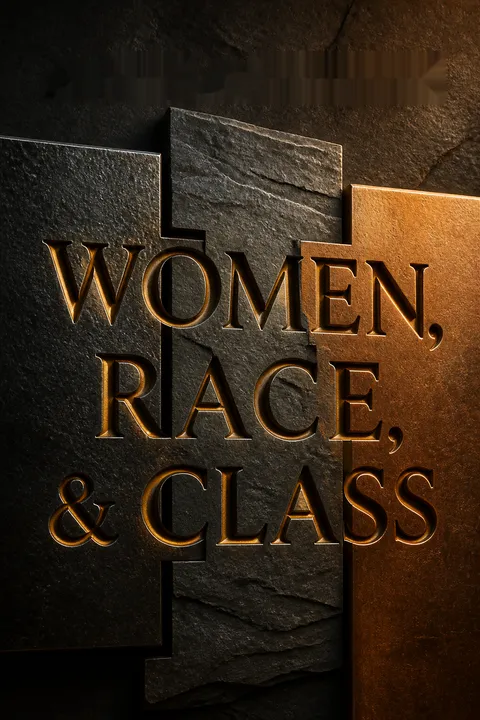
Women, Race, & Class is a historical argument about how political movements define their subjects, choose their allies, and distribute the costs of progress. Davis moves from slavery through abolition, suffrage, labor organizing, anti-lynching work, reproductive politics, and housework. The recurring test is concrete: whose work is counted, whose safety is protected, and who is expected to wait?
The book's most powerful method is to set celebrated reform narratives beside the people they omit. Suffrage leaders who opposed slavery could still embrace racist strategy; a movement for birth control could support coercive population policies; feminist households could depend on poorly paid domestic workers. These contradictions do not make every reform worthless. They show that declared ideals do not automatically govern institutional behavior. The chapters also recover Black women's organizing as political thought and action, not simply as a response to famous white leaders.
Davis's Marxist framework gives the book a material center: labor, property, wages, and control over reproduction shape what freedom can mean. That emphasis is illuminating, especially when legal emancipation coexists with peonage or when domestic labor sustains paid work while remaining economically invisible. It can also make capitalism appear to explain more than the evidence in each case independently establishes. Readers should distinguish the well-documented histories and testimony from broader causal claims about political economy, and treat statistics in a 1981 book as period-specific rather than current estimates.
The argument remains valuable because it resists both easy equivalence and easy separation. Black women's experiences are not reducible to a generic category of women, yet racial justice and gender justice cannot be cleanly divided into separate campaigns. The practical implication is not that every coalition must agree on everything. It is that movements need structures that let affected people set priorities, contest exclusions, and share power. Without those conditions, solidarity becomes a slogan that the powerful can use selectively.
Review Summary
Women, Race & Class is praised as a seminal work on intersectional feminism, examining the complex relationships between gender, race, and class in American history. Reviewers applaud Davis's comprehensive analysis of the feminist movement's failures to address the needs of Black and working-class women. The book is lauded for its historical context, critique of white feminism, and exploration of topics like suffrage, reproductive rights, and labor issues. While some find parts dry or dated, most consider it essential reading for understanding intersectionality and the evolution of feminist thought.
People Also Read





Glossary
partus sequitur ventrem
Maternal status determined a child'sA legal principle adopted in slaveholding states under which a child's status followed the mother's status. If the mother was enslaved, her child was enslaved as well. Davis emphasizes that this rule made enslaved women's reproductive capacity economically valuable to enslavers while denying mothers legal claims over their children.
convict lease system
Prisoners rented for laborA post-emancipation system in which authorities imprisoned people, often on minor pretexts, and leased their labor to employers. Davis describes it as a way to reproduce forced labor under a new legal form. Black men and women could be subjected to harsh work, unsafe conditions, and abuse without the protections enslavers had sometimes extended to valuable property.
myth of the Black rapist
Racist rape accusation used to justify terrorThe false racial stereotype that Black men were especially prone to rape white women. Davis argues that this story was politically used to excuse lynching and strengthen white supremacy, while obscuring sexual violence against Black women and the economic and political motives behind racial terror.
voluntary motherhood
Women's control over becoming mothersA nineteenth-century feminist demand that women have the right to decide whether and when to become pregnant, including the right to refuse sex within marriage. Davis treats it as an important foundation of reproductive autonomy, while noting that early advocacy often centered the circumstances and aspirations of more privileged women.
Negro Project
Birth control campaign targeting Black communitiesThe name used by the Birth Control Federation of America for a proposed campaign among Black communities. Davis discusses the project as part of a birth control movement shaped by eugenic and racist assumptions. It promoted population restriction rather than simply ensuring that individuals could make informed, voluntary reproductive choices.
triple jeopardy
Overlapping racial, class, and gender oppressionA way of describing the compounded disadvantages Black women face as Black people, workers, and women. Davis connects the idea to Communist activist Elizabeth Gurley Flynn's account of Black women's exploitation. It emphasizes that these forms of oppression interact in lived experience rather than operating as entirely separate burdens.
Wages for Housework Movement
Campaign to pay women for domestic laborA feminist movement that demanded wages for housework, arguing that unpaid domestic labor helps reproduce the workforce and benefits capitalism. Davis agrees that housework is economically consequential but challenges wages as the central solution. She argues for reducing and socializing domestic tasks, rather than making women's private responsibility a permanent paid role.
FAQ
What's Women, Race, & Class about?
- Exploration of Intersectionality: Angela Y. Davis examines how race, gender, and class intersect within the women's rights movement in the U.S., highlighting the marginalization of Black women.
- Historical Context: The book provides a historical overview of slavery's legacy and its impact on Black women, contrasting their experiences with those of white women.
- Critique of Feminism: Davis critiques mainstream feminism for neglecting the specific needs of women of color, arguing that women's rights must be linked with anti-racism and anti-classism efforts.
Why should I read Women, Race, & Class?
- Understanding Historical Dynamics: It offers insights into the historical interplay of race and gender, crucial for grasping contemporary social justice movements.
- Empowerment through Knowledge: The book highlights the often-overlooked contributions of Black women to feminism, promoting a more inclusive historical understanding.
- Critical Analysis: Davis provides a critical examination of both the women's suffrage and civil rights movements, essential for those interested in social justice and race relations.
What are the key takeaways of Women, Race, & Class?
- Intersectionality is Essential: Understanding the intersection of race, gender, and class is crucial for justice movements, as shown through Black women's experiences.
- Historical Contributions: The book highlights significant contributions of Black women to abolitionist and women's rights movements, challenging white-centered narratives.
- Critique of Racism in Feminism: Davis critiques the racism within the suffrage movement, illustrating how white feminists sidelined issues faced by women of color.
What are the best quotes from Women, Race, & Class and what do they mean?
- "The legacy of slavery... is a powerful force.": This quote emphasizes the enduring impact of slavery on Black women and society, urging acknowledgment in race and gender discussions.
- "Women will occupy a large space in its pages.": It highlights the overlooked roles of women in the anti-slavery movement, calling for a reevaluation of historical narratives.
- "The oppression of women was identical to the oppression of men.": This illustrates shared oppression experiences among Black men and women under slavery, emphasizing solidarity in fighting oppression.
How does Women, Race, & Class address the legacy of slavery?
- Impact on Black Women: Davis discusses how slavery shaped Black women's roles and identities, distinct from those of white women.
- Economic Exploitation: The book highlights the economic exploitation of Black women, often forced into low-paying jobs, linked to slavery's historical context.
- Cultural Narratives: Davis critiques stereotypes around Black womanhood, advocating for a nuanced understanding of their experiences and contributions.
What role did Black women play in the suffrage movement according to Women, Race, & Class?
- Active Participants: Black women were key players in the suffrage movement, leading efforts for voting rights, with figures like Ida B. Wells highlighted.
- Intersection of Struggles: They navigated race and gender intersections, facing discrimination from both white feminists and racist structures.
- Critique of White Feminism: Davis critiques the suffrage movement's racism, noting white suffragists often prioritized their interests over Black women's.
How does Women, Race, & Class critique the mainstream feminist movement?
- Exclusion of Women of Color: Davis argues mainstream feminism often excludes women of color's voices and experiences, particularly Black women.
- Racism and Classism: The book highlights how these issues shape feminist discourse, often prioritizing middle-class white women's experiences.
- Need for Solidarity: Davis stresses solidarity among women of different races and classes, arguing true liberation requires addressing intersecting oppressions.
What historical events are covered in Women, Race, & Class?
- Abolition Movement: The book covers the abolition movement's connection to women's rights, detailing Black women's crucial roles.
- Suffrage Movement: Davis examines the suffrage movement, highlighting Black women's contributions and the racism within the movement.
- Post-Civil War Era: The book discusses challenges Black women faced post-Civil War, focusing on rights, education, and economic independence.
How does Women, Race, & Class define the concept of intersectionality?
- Interconnected Oppressions: Davis defines intersectionality as interconnected social categorizations creating overlapping discrimination systems.
- Historical Context: The book shows how historical events shaped women of color's experiences, emphasizing struggles can't be understood in isolation.
- Call for Inclusivity: Davis advocates for inclusive feminism recognizing diverse women's experiences, arguing intersectionality is key for equity.
What impact did Women, Race, & Class have on feminist discourse?
- Challenging Narratives: The book challenges traditional feminist narratives by highlighting Black women's contributions and critiquing movement racism.
- Promoting Intersectionality: Davis' work promotes intersectionality in feminist theory, urging consideration of interconnected oppressions.
- Inspiring Activism: It inspires activists to advocate for inclusive feminism addressing all women's needs, becoming foundational in race and gender equality discussions.
About the Author


Download PDF
Download EPUB
.epub digital book format is ideal for reading ebooks on phones, tablets, and e-readers.








