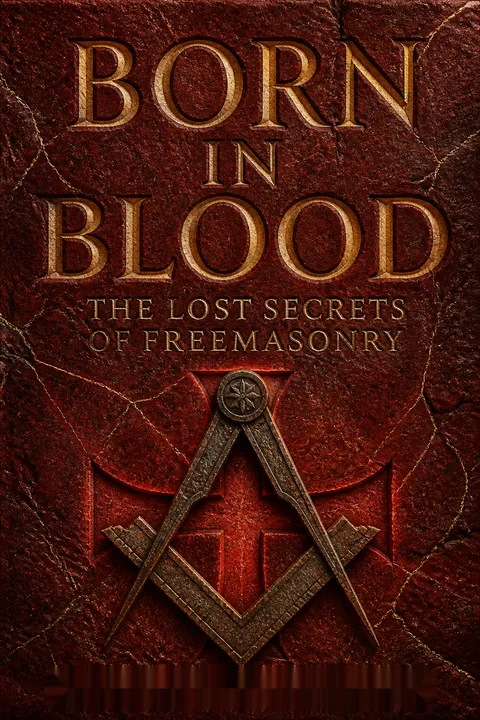


Key Takeaways
Robinson traces Freemasonry to fugitive Templars through a chain of clues
The central claim. John J. Robinson argues that Freemasonry began not as a society of stonemasons, but as a refuge for Knights Templar who escaped arrest after the order was suppressed in the early 1300s. In his account, the fugitives and their allies built a secret network to protect one another, and that network gradually became Freemasonry.
A case, not a settled fact. Robinson connects this theory to the Templars’ persecution, the organized Peasants’ Revolt of 1381, Masonic ritual, and the fraternity’s tolerance of different beliefs. He presents the clues as mutually reinforcing, but acknowledges that direct records proving an unbroken link do not exist. The book is therefore both a medieval history and an argument about how a hidden institution might preserve its identity.
The book’s governing idea is memorable because it turns familiar ritual into a historical puzzle: why would a fraternity preserve severe oaths, guarded meetings, and elaborate recognition signals? Robinson offers a coherent answer rooted in danger and mutual aid. The key distinction is between a plausible explanation and a demonstrated lineage. Historical reasoning often uses abduction, meaning inference to the explanation that best fits available clues. That method can generate strong hypotheses, but several explanations may fit the same pattern. The reader gains most by following the case while keeping its evidentiary status visible.
Start the revolt with plague economics, not a timeless peasant temperament
A society under strain. Robinson places the 1381 revolt in the upheaval after the Black Death. He estimates that plague killed 35 to 40 percent of Europe’s population; England’s population fell from about four million to fewer than 2.5 million. With workers scarce, surviving farmers and craftspeople could demand better pay and conditions. Landowners and Parliament tried to reverse that shift through wage limits and restrictions on workers leaving their villages.
Taxes sharpened anger. The Hundred Years’ War drained money, while the church and nobility held extensive land and wealth. Poll taxes added pressure, and lower-ranking priests shared many of their parishioners’ grievances. Robinson’s point is that rebellion grew from material pressures and political decisions, not from an unexplained eruption of irrational violence.
This account gives the revolt a material foundation, a useful corrective to explanations that treat mass protest as a sudden failure of social order. A labor shock changes bargaining power, while laws that try to freeze wages can turn economic change into a political grievance. The analysis also shows how religious institutions can be both spiritual authorities and large employers or landlords. One caution is that broad demographic estimates do not by themselves explain why people rebelled in particular places or chose particular targets. Economic pressure explains the combustible conditions, not every spark.
Read Wat Tyler’s revolt as coordinated action, not a spontaneous riot
Signals preceded the rising. The rebellion began amid efforts to collect a third poll tax. Letters from priests, including John Ball, urged people to act, using a repeated signal that the moment had arrived. In Essex and Kent, local resistance grew into a march on London. Robinson notes that roughly a hundred thousand people were said to have taken part, an extraordinary scale for a society with slow travel and limited communications.
Organization showed in details. Rebels moved between towns, freed prisoners, attacked officials, and sometimes imposed rules on who could join. In Yorkshire, groups in York, Beverly, and Scarborough reportedly wore coordinated white hoods with red decorations and swore common oaths. Such evidence supports planning and communication. It does not, on its own, identify a single organization directing every action.
The distinction between spontaneous anger and organized mobilization matters well beyond medieval history. Shared grievances do not automatically produce coordinated action; communication, trusted intermediaries, and local leadership help convert discontent into collective behavior. Robinson draws attention to those mechanisms rather than treating a crowd as a single mind. Yet coordination is not the same as centralized command. Similar signals and clothing can arise through regional alliances or imitation, and chronicles may exaggerate unity. The strongest reading preserves both facts: the revolt had structure, while the identity and reach of its organizers remain uncertain.
Notice the rebels’ unusual focus on Hospitallers and former Templar sites
A conspicuous target. The rebels attacked church property widely, but Robinson emphasizes the intensity of their assaults on the Knights Hospitaller. They burned the order’s manor at Cressing, destroyed its London headquarters at Clerkenwell, and targeted other Hospitaller properties. The prior, Robert Hales, was among the officials executed in London. A rebel leader’s reported confession singled out the destruction of the Hospitallers as a central objective.
The Templar connection. The Hospitallers had received much of the Templars’ property after the Templar order was dissolved in 1312. Robinson argues that the rebels’ special hostility may therefore reflect a surviving Templar grievance. He also notes that rebels spared a former Templar church in London while destroying nearby Hospitaller buildings. The pattern is intriguing, but targeted destruction is not proof of who organized it or why.
Target selection can reveal political meaning that a simple tally of burned buildings would miss. When attackers repeatedly strike one institution, the pattern invites questions about ownership, local memory, and the interests of organizers. Robinson’s comparison between Hospitaller and former Templar properties makes the revolt feel less random. Still, interpreting violence requires care: church landlords were also unpopular for ordinary economic reasons, and selective survival of a building may have practical explanations. The evidence supports a focused inquiry into motive, but it cannot uniquely establish Templar revenge as the answer.
The Templars had both motive and machinery to build an underground network
A violent suppression. In 1307, King Philip IV of France arrested the Templars, a wealthy military religious order that had lent him money. Their grand master, Jacques de Molay, was eventually burned after retracting confessions made under torture. In England, the arrests began months later. Robinson says that the delay gave Templars time to prepare, and that many people, records, and valuables were missing when officials searched their properties.
Skills fit the danger. The Templars had experience with guarded meetings, coded communication, financial transfers, and identifying people at a distance. Fugitives needed new identities, food, safe lodging, and trusted contacts. Robinson proposes that a loose network of mutual assistance could have met those needs and persisted beyond the first generation. The circumstances make such a network conceivable; the book cannot document its formation directly.
The argument links organizational capacity to organizational survival. A group with established routines for secrecy and communication is better placed to adapt when repression threatens its members. The practical needs Robinson describes, especially safe lodging and trustworthy introductions, also help explain why a network might outlast its original crisis. But capability is not evidence of execution: institutions can possess secure systems without repurposing them into a lasting underground society. The absence of seized treasure or missing members invites explanation, yet escape, dispersal, or ordinary administrative loss remain possible alternatives.
Read Masonic ritual as coded memory of protection, not simply stonework
Ritual as a clue. Robinson reads the candidate’s blindfold, partial undressing, removal of metal objects, and binding rope as symbols of vulnerability. The oaths, distress signals, guarded lodge, and promise of help make sense, he argues, as the practices of a brotherhood protecting people in danger. He also interprets the word lodge in its older sense of a place to sleep, suggesting that lodges began as safe lodging for travelers and fugitives.
Symbols carry the argument. He links the circular lodge and its ritual procession to Templar churches, the black-and-white floor to the Templars’ two-colored banner, and the lambskin apron and gloves to Templar clothing rules. The Hiram Abiff story, in which a master builder is killed and the temple remains unfinished, becomes an allegory of the Templar order’s destruction. These are Robinson’s interpretations, not established readings shared by all Masonic historians.
Ritual is a form of social memory: repeated gestures can preserve a group’s values even when their original context fades. Robinson uses that insight effectively to make obscure ceremony historically legible. The interpretive challenge is that symbols are unusually flexible. A circle can evoke a church, a meeting, or a moral ideal; repeated use does not prove a single origin. Ritual analysis becomes persuasive when symbols align with independent records, rather than when each symbol is decoded by reference to the same theory. The chapter is strongest as a guided reading of possibility, not as a definitive translation.
Test the guild origin against the rules guilds actually needed
Different institutions, different rules. Medieval craft guilds, as Robinson describes them, were local associations of business owners. They controlled entry into a trade, standards, prices, and access to a town’s market. They also participated openly in church life through patron saints, religious performances, and donations. Their rules served a commercial and civic purpose.
A poor fit, in Robinson’s view. The Masonic Old Charges include obligations to shelter a visiting brother, provide temporary work and money, and conceal secrets that might cost a brother his life or property. Robinson argues that these duties suit a clandestine aid network better than a local trade association. He also reports finding no medieval stonemasons’ guild records in the English archives he searched. That research challenges the familiar guild-origin story, though a failed archival search cannot establish that no such guild existed.
Comparing institutional rules with institutional function is a sound historical test. A chartered trade body would be expected to regulate work and commerce, while rules about concealment and escape suggest a different kind of need. Robinson’s challenge is especially valuable because it asks readers to examine the guild-origin claim rather than accept repetition as evidence. The limitation is that absence of records depends on what survived, what was catalogued, and where researchers looked. A strong alternative theory needs positive evidence of its own, not only weaknesses in its competitor.
Treat religious tolerance as a survival pact forged under persecution
Belief without uniform worship. Freemasonry requires belief in a Supreme Being, but does not prescribe how a member must worship. Members are discouraged from arguing about religion in the lodge. Robinson sees this as a practical way to unite people whose beliefs could otherwise expose them to church or state punishment.
Dissent offered new recruits. The book places the idea in a period of religious conflict, when the church wielded political and economic power and heresy could bring imprisonment or death. It connects the revolt’s preaching to critics such as John Wycliffe and John Ball, and suggests that later underground Lollard groups may have overlapped with Masonic networks. The connection is speculative. Robinson’s broader point is that a tradition of tolerance may have begun not as abstract liberalism, but as a way for endangered people to cooperate.
The argument makes tolerance concrete: it can be a rule for living together when disagreement is dangerous, not merely a declaration of high-minded principle. Sociologically, shared institutions often reduce conflict by setting boundaries on what members may debate inside the group. That can enable cooperation across difference. At the same time, tolerance within a fraternity does not imply equal access for everyone, and a safety pact may protect insiders while excluding outsiders. The distinction helps readers appreciate the ideal without mistaking the institution’s stated openness for universal inclusion.
Freemasonry surfaced publicly in 1717 after British religious conflict shifted
A long political pendulum. Robinson traces Britain’s religious changes from Henry VIII’s break with Rome through Protestant and Catholic reversals, civil war, and the exclusion of Catholic claimants from the throne. These repeated shifts, he argues, kept dissenters and secret associations wary of exposure even after the Templars’ original persecution had passed.
A public beginning. In 1717, four London lodges formed a Grand Lodge, making Freemasonry publicly visible. Robinson links the timing to the collapse of the 1715 Jacobite rebellion, which he sees as the final defeat of the immediate Catholic restoration threat. Once secrecy no longer served the same protective purpose, the fraternity could emphasize charity, moral improvement, and fellowship. This is the book’s explanation for the timing, not proof that a continuous secret organization existed for four centuries.
A change in political risk can alter what an organization is for. Groups formed to protect members may become public associations when their original danger recedes, then adopt new functions that sustain membership. Robinson’s timeline gives that institutional transformation a clear narrative. Its weak point is the leap from a specific political defeat to the end of secrecy: other motives, including changing fashion or the ambitions of London lodges, could also have mattered. The broader model remains useful, but the precise cause of the 1717 decision is not established by timing alone.
Keep the pattern, but do not mistake circumstantial clues for proof
The case is cumulative. Robinson connects the revolt’s organization, its attacks on the Hospitallers, missing Templar property, Masonic obligations, French-derived ritual terms, and the fraternity’s religious tolerance. Each clue adds to a picture of continuity. The book also spends time challenging claims that Freemasons secretly controlled governments, worshiped the Devil, or engineered the Vatican banking scandal, arguing that sensational accusations often distort evidence.
A necessary distinction. The strongest parts of the book identify questions that conventional origin stories may have left unanswered. Its most vulnerable parts treat word similarities, symbolic parallels, and gaps in records as if they pointed to one historical source. Readers should separate documented events from Robinson’s explanations of them. This makes room to appreciate his synthesis without repeating its most confident conclusions as proven history.
The book’s refusal to accept anti-Masonic conspiracy claims is a useful reminder that secrecy can attract accusations unsupported by evidence. Yet the same standard must apply to its own thesis. A cluster of clues may raise the probability of a connection, but shared vocabulary and symbolism are not equivalent to a chain of documented transmission. The most productive response is neither dismissal nor credulity: treat Robinson’s theory as a research program, ask what evidence would distinguish it from rival accounts, and preserve the difference between an evocative pattern and a proven origin.
Analysis
Born in Blood is most compelling as a work of historical interpretation, not as a settled account of Freemasonry’s origins. Robinson builds a continuous narrative from the suppression of the Templars in 1307, through the Peasants’ Revolt of 1381, to the London Grand Lodge of 1717. The narrative’s power comes from accumulation. Political events, ritual details, old rules, and linguistic puzzles appear to converge on one explanation: that an underground fraternity began as mutual protection for fugitive Templars and their sympathizers.
That method is abductive reasoning, or inference to the explanation that seems to make the most clues cohere. It is productive here because it generates questions that a purely institutional history might overlook. Why do the Old Charges emphasize discretion, assistance, and safe passage? Why did rebels single out Hospitaller holdings? What might a lodge have meant before it became a meeting room? These are worthwhile questions, even if the proposed answers remain uncertain.
The evidentiary problem is that the clues do not all have equal weight. The revolt’s coordination and the Templars’ suppression are historical events; the alleged continuity between them is an inference. Rituals can preserve memory, but they can also be revised, borrowed, or reinterpreted. Similar words can arise through language change without proving common institutional ancestry. And missing records can reflect concealment, but also ordinary archival loss. When every absence supports secrecy and every resemblance supports inheritance, a theory becomes difficult to disprove.
The book is also valuable as a study of how institutions acquire new purposes. Robinson’s account of a protective association becoming a public fraternity centered on charity, morality, and fellowship offers a persuasive model of organizational change. Its final lesson is methodological: take the historical puzzles seriously, but keep the distinction between evidence and explanation intact. The Templar origin thesis is an engaging possibility, not a demonstrated lineage.
Review Summary
Born in Blood explores the theory that Freemasonry originated from the Knights Templar rather than medieval stonemason guilds. Reviews praise Robinson's thorough research and compelling circumstantial evidence linking Templar persecution to Masonic origins, particularly through linguistic analysis and ritual examination. The book covers the Peasants' Revolt of 1381 and traces secret society development. While readers find it informative and engaging, many note the evidence remains speculative without definitive proof. Some criticize repetitive sections, excessive historical detail, and lack of citations. Overall, reviewers appreciate its objective, accessible approach to controversial historical connections.
People Also Read






Glossary
Great Society
Alleged revolt networkThe name Robinson uses for the organization that some rebels in 1381 reportedly served. The historical record describes a great society but does not establish that this was its formal name or identify its leadership. Robinson suggests that it may have been connected to fugitive Templars and the later Masonic network, but that connection remains his hypothesis.
Old Charges of Masonry
Ancient Masonic conduct rulesA collection of early rules and obligations associated with Freemasonry. Robinson emphasizes provisions about secrecy, helping visiting brothers, and protecting information that could endanger a member’s life or property. He argues that these rules fit a mutual-aid society better than a trade guild. Their original purpose and interpretation are disputed.
Secret Masonry
Masonry before public exposureRobinson’s term for the alleged pre-1717 secret fraternity that he believes developed from fugitive Templars and their allies. He distinguishes it from the more visible Freemasonry that formed a Grand Lodge in London in 1717. The term organizes his argument, but the continuous history it describes is not documented.
Public Masonry
Freemasonry after 1717Robinson’s term for the publicly visible form of Freemasonry that developed after four London lodges formed a Grand Lodge in 1717. In his account, this phase emphasized fellowship, charity, and moral improvement, while adopting symbols and explanations associated with the building trades. He contrasts it with the earlier, supposedly protective secret society.
Hiram Abiff
Masonic murdered masterThe central figure in the Master Mason initiation story. In Masonic ritual, Hiram Abiff is a master builder at Solomon’s Temple who is killed after refusing to disclose a secret. Robinson interprets the unfinished temple as an allegory for the suppressed Knights Templar and the dead master as a symbol of lost Templar leadership.
Lollards
Underground religious dissentersFollowers of John Wycliffe’s criticisms of the medieval church. Robinson describes Lollardy as a movement that survived persecution through secret meetings and local networks. He proposes that these networks may have overlapped with Freemasonry, since both are associated in his account with secrecy and mutual assistance. The proposed organizational link is not proven.
Tyler
Lodge guard and sentryA Masonic officer responsible for guarding the meeting place, checking visitors, and keeping unauthorized people out. Robinson notes that Walter Tyler, the leader of the 1381 revolt, bore a title also used in Masonic lodges. He treats this as a possible clue to a connection, while acknowledging that the resemblance alone is weak evidence.
Templar Rule
Knights’ religious regulationsThe regulations governing the Knights Templar, a religious military order founded in Jerusalem in the early twelfth century. The Rule prescribed conduct, dress, discipline, prayer, and secrecy. Robinson compares specific Templar practices with Masonic clothing and ritual, arguing that they may preserve traces of Templar influence.
Download PDF
Download EPUB
.epub digital book format is ideal for reading ebooks on phones, tablets, and e-readers.








