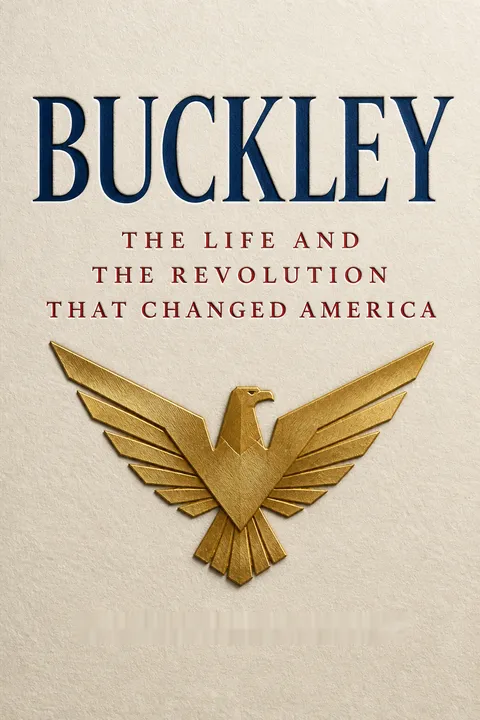


Key Takeaways
Treat inherited beliefs as both a source of strength and a source of blind spots
A world built at home. William F. Buckley Jr. grew up amid oil wealth, a large Catholic family, servants, horses, music, and a home-school education shaped by his father. Spanish came first; French and English followed. His father’s stories and arguments supplied an early political education: distrust of Roosevelt, socialism, and Communism, alongside a fierce attachment to business freedom and order. His mother’s faith deepened his Catholic devotion, while the family’s inherited racism and anti-Semitism taught him whom their world excluded.
Privilege and affection coexisted. The Buckleys treated many Black employees generously, yet their lives remained shaped by segregation. Bill also learned that a family could be warm and loyal within its walls while holding harsh beliefs about outsiders. His later politics grew from this intimate blend of faith, ambition, hierarchy, and belonging.
What's striking is that the family supplied both Buckley's moral vocabulary and some of his most consequential blind spots. Privilege did not make his affection for relatives or employees false, but affection within a hierarchy could be mistaken for justice. The distinction matters beyond this biography: personal kindness can coexist with support for institutions that deny others equal standing. Buckley's case shows how political beliefs often arrive not as abstract propositions, but as family loyalties that feel like common sense.
Win attention before trying to build a movement
Argument became performance. At Millbrook, Buckley learned to debate in public and sharpened his skills against classmates who disagreed with him. At Yale, he turned the student newspaper into a platform, first challenging a professor's treatment of religion and then staging a public forum with the FBI. The forum defended the Bureau's conduct, despite evidence that Buckley had coordinated with it behind the scenes.
A book made the fight travel. In 1951, God and Man at Yale argued that the university's Christian and free-market identity clashed with what Buckley saw as liberal teaching in its classrooms. The book drew national attention and sold about 23,000 copies by year's end. Its claim about institutional hypocrisy reached far beyond campus, though its proposed remedy, greater alumni control over faculty, sat uneasily beside its defense of open inquiry.
Buckley understood that an argument needs a stage, an audience, and a memorable antagonist. That instinct turned a campus dispute into a national event. The FBI forum also exposes a central tension: a defender of dissent can use managed access and selective disclosure to discredit opponents. The performance was effective partly because it looked impartial. Attention can open a space for debate, but it cannot establish that the person controlling the stage is neutral or that the case presented there is complete.
Build institutions that turn scattered dissent into durable political force
A magazine became a movement's hub. In 1955, Buckley founded National Review with writers and thinkers including James Burnham, Frank Meyer, Willmoore Kendall, and Whittaker Chambers. The magazine aimed to make conservative ideas intellectually serious and readable, and to challenge liberal influence in universities, journalism, and politics. Buckley also recruited writers, raised money, and built ties to donors and activists, rather than waiting for a political party to welcome his ideas.
The infrastructure outlasted the launch. National Review lost money for years, with Buckley’s family covering major shortfalls. Campus groups such as the Intercollegiate Society of Individualists and Young Americans for Freedom brought those arguments to students. The 1960 Sharon Statement gave young conservatives a short declaration of individual liberty, limited government, and opposition to Communism. The lasting achievement was an interconnected network, not simply a magazine or a single candidate.
The book presents conservatism as something deliberately assembled: publications, donors, campus chapters, policy writers, and electoral organizers each supplied a different capability. In organizational terms, that combination made a scattered opposition harder to ignore and easier to reproduce across generations. It also complicates the free-market image. The magazine survived through family money and coordinated institutions, not spontaneous demand alone. Building an independent platform can broaden debate, but financial dependence and shared loyalties can narrow what that platform is willing to question.
Defend dissent without mistaking a useful cause for a trustworthy champion
The cause outlasted its champion. As a teenager, Buckley defended Charles Lindbergh and the America First Committee, arguing that opposing the popular view did not make someone a traitor. After Pearl Harbor he rejected that cause, but his suspicion of liberal leaders and wartime power persisted. In the early Cold War he became a prominent defender of Senator Joseph McCarthy, whose accusations of Communist infiltration often outran the evidence.
McCarthyism became a test. In McCarthy and His Enemies, Buckley and Brent Bozell emphasized the danger of Communist influence and portrayed McCarthy’s excesses as secondary to the cause. The book conceded exaggeration while avoiding sustained judgment of McCarthy himself. As the Army-McCarthy hearings exposed his bullying and recklessness, Buckley continued to defend him. The movement gained a rallying figure, but it paid for treating loyalty as a substitute for proof.
The tension is not simply that Buckley changed sides. It is that he first defended dissent as a democratic safeguard, then accepted arguments for social pressure against people whose ideas he considered dangerous. Security threats can be real, and governments can be infiltrated. Those possibilities make evidence and due process more important, not less. When a movement excuses a champion because his target seems worse, its own standards become vulnerable to the same opportunism it condemns.
Judge a movement by the rights it protects when its own side feels threatened
The racial line was explicit. Buckley defended segregation from his Millbrook days onward, including the claim that Black citizens should be denied voting rights. In 1957, he argued that white Southerners were entitled to preserve political and cultural dominance. He invoked constitutional theory, but his position rested on a hierarchy that treated white society as more fit to govern.
Kindness did not equal equality. His father employed Black workers year-round in Camden and helped Black families, including students at Mather Academy. At the same time, the family supported the Camden News, which promoted segregation and the local Citizens' Council. Buckley condemned some white violence, including the flogging of a bandleader, but his public response remained qualified and rare. His humane relationships did not undo his defense of unequal citizenship.
This is the biography's clearest moral test. Buckley's language about constitutional limits and local customs cannot be separated from the people those arguments kept from voting, attending equal schools, or receiving equal protection. The charitable record is real, but it does not balance the political record like entries in a ledger. A useful distinction is between benevolence, which depends on a benefactor's choice, and rights, which do not. The former can soften an unjust system without changing who holds power.
Use media to set the agenda, but do not turn reporting into a weapon
Buckley became a newsmaker. He believed liberal opinion leaders controlled which issues received attention and how they were framed. In the late 1950s, he used National Review to investigate the Justice Department’s handling of allegations against Congressman Adam Clayton Powell. Drawing on information from a former prosecutor, Buckley published a story, sent it to grand jurors, and kept public pressure on the case. The jury later indicted Powell on tax charges, though his trial ended without a conviction.
The line between journalism and intervention blurred. Buckley’s campaign generated a major story, but he had gone beyond reporting when he contacted jurors and distributed material about a pending case. His efforts helped shape the event he was covering. The episode foreshadowed his broader talent for turning political disputes into public drama, from TV debates to rallies, while raising a lasting question about what a journalist may do in pursuit of a story.
Buckley saw media as a force that shapes political reality, not merely a mirror of it. The Powell campaign demonstrates the power of persistence and source access, but also the danger of an advocate becoming an operative. The jury's indictment does not by itself validate the methods or establish the strength of the case. This distinction remains important in advocacy journalism: exposing institutional failure can serve the public, but pressuring decision-makers risks making the reporter part of the process being reported.
Translate doctrine into the everyday fears and hopes of overlooked voters
Goldwater gave the movement a candidate. Brent Bozell wrote The Conscience of a Conservative under Barry Goldwater’s name, turning limited government and constitutional restraint into a compact political case. The book helped Goldwater win support among activists who wanted more than an abstract defense of tradition. At the 1960 convention, young Goldwater supporters had already shown that a small, organized group could disrupt party expectations.
The coalition widened through lived concerns. Organizers such as Clif White and Bill Rusher built support through local Republican networks, while Mike Bernstein identified voters anxious about security, taxes, and further government expansion. The phrase Forgotten Americans named a constituency that included people who had benefited from earlier public programs but felt ignored by newer political priorities. The strategy linked doctrine to pocketbooks and status, especially among white voters in the South and West.
This coalition-building was politically effective because it treated voters as people with overlapping interests, not as abstract ideological categories. Yet the phrase Forgotten Americans also concealed a choice about whose concerns counted most. As the movement translated economic anxiety into opposition to civil rights policy, a universal language of liberty could carry a racially selective political effect. Effective messaging is not proof of a fair program. The distinction between a coalition's stated principles and the interests it actually mobilizes deserves close scrutiny.
Turn ideological combat into a conversation people want to watch
The performer became the format. Buckley’s quick wit, courtesy, and readiness to debate made him unusually effective on television. Firing Line, which began in 1966, put him opposite guests with sharply different views and let his questioning carry the program. His 1965 mayoral campaign, despite his prediction that he would win only one vote, ended with more than 341,000 votes and made him a national figure. The debates with John Lindsay and Abraham Beame helped turn his campaign into a television event.
Style widened his audience. Buckley could sound like a patrician, an insurgent, or a comic depending on the room. His Cambridge debate with James Baldwin exposed the limits of this gift: Baldwin's account of racial history moved the audience, while Buckley relied on personal attack and familiar arguments. Charisma could make politics memorable, but it could not guarantee that the argument was adequate.
Buckley's television skill rested on a real strength: he listened closely enough to respond rather than merely recite. The format rewarded that agility and let viewers witness disagreement instead of receiving only slogans. It also rewarded theatrical confidence, making composure look like mastery and humor like proof. The Baldwin debate is a useful counterexample because the audience's response was not simply a verdict on style. It reflected the moral force of historical testimony that Buckley's performance could not neutralize.
Question loyalties that make you certain before the evidence is in
Friendship became a blind spot. Buckley defended E. Howard Hunt, his former CIA colleague, even as Hunt became central to Watergate. Hunt told him damaging information, including that the scandal reached beyond the burglars, yet Buckley kept much of what he knew from public view and continued to champion his friend. In a different case, Buckley spent years asserting Edgar Smith was innocent of murder, relying heavily on their correspondence rather than independent investigation. Smith later confessed to the killing and committed another violent assault.
The pattern had material costs. Buckley’s enthusiasm for radio stations and leveraged ventures contributed to a financial crisis that nearly cost him his home. In each case, confidence and loyalty crowded out routine verification. His friendships were a source of generosity and connection, but they could also make skepticism feel like betrayal.
Buckley's loyalty was not a minor personality trait. It was a moral commitment that enriched friendships and made him generous, but it also dulled his response to evidence. The Hunt and Smith episodes show different versions of the same risk: a trusted person's self-presentation becoming more persuasive than documents, witnesses, or ordinary diligence. Loyalty is most valuable when it can survive scrutiny. When it forbids scrutiny, it stops protecting people and starts protecting a story.
Analysis
Tanenhaus's biography is not simply the rise of a conservative intellectual. It is the story of how a movement was made: first through a wealthy family’s private education in faith, hierarchy, and argument; then through a magazine, campus networks, donors, and carefully staged media encounters; finally through electoral coalitions that joined anti-government doctrine to anxieties about race, status, crime, and national decline. Buckley was less a systematic philosopher than an unusually effective movement entrepreneur. His gifts were verbal speed, social ease, strategic patience, and an ability to make opponents participate in the spectacle he designed.
The book's deepest tension is between Buckley's stated principles and his methods. He defended dissent, then supported efforts to marginalize ideas he regarded as dangerous. He warned about concentrated state power, yet helped build disciplined organizations and accepted covert government work. He promoted individual liberty while defending segregation, and he could treat personal charity as evidence of a just social order. These are not incidental inconsistencies. They show how abstract principles change when they meet the interests of a political coalition.
The biography also complicates the common story that modern conservatism simply rose because voters were naturally conservative. It required money, publications, student groups, local organizers, public relations, and skilled candidates. That infrastructure could turn defeat into preparation, as the Goldwater campaign did. But it could also reward spectacle over verification, as Buckley's defenses of McCarthy, Powell, Hunt, and Edgar Smith reveal.
Buckley's enduring importance lies in this double legacy. He helped make conservative dissent institutionally durable and culturally entertaining. He also showed how a movement's leader can become so committed to preserving the coalition that he protects allies from evidence, or mistakes loyalty for judgment. The book therefore asks readers to distinguish political effectiveness from moral clarity, and to judge a movement not only by the opponents it exposes but by the standards it applies to its own champions.
Review Summary
People Also Read

Glossary
the Remnant
civilization's chosen minorityAlbert Jay Nock's term for a small group of cultivated people who, in his view, preserve civilization while mass democracy and government expansion degrade it. Buckley and other conservatives adopted the concept as an image of intellectual resistance. Its appeal also reveals the movement's suspicion of equal political participation and its preference for cultural hierarchy.
managerial elite
modern bureaucratic ruling classJames Burnham's name for the administrators, planners, policy experts, and institutional managers who increasingly govern industrial societies. Burnham argued that this new class held power across political systems that otherwise appeared opposed. His theory helped Buckley and other conservatives interpret federal agencies, universities, and media organizations as parts of a shared structure of rule.
psywar
psychological warfareShort for psychological warfare, a deliberate effort to shape an adversary's beliefs and behavior through propaganda, deception, and strategic messaging. In the book, the term connects wartime tactics with Cold War politics: some conservatives argued that the United States should counter Communist influence by using comparable methods, including covert information campaigns.
The Liberal Establishment
dominant liberal opinion networkA label used by Buckley and National Review for the connected journalists, academics, politicians, and cultural figures they believed set the terms of acceptable public debate. The term implied more than shared political preferences. It suggested an institutional advantage that could marginalize conservative arguments before voters or readers encountered them.
the two majorities
elite and legislative constituenciesWillmoore Kendall's distinction between a presidential majority, shaped by national elites and the president's advisers, and a congressional majority, expressed through legislators closer to local voters. Kendall argued that the legislature's capacity to obstruct a president could itself be democratic, not merely a failure of leadership or government efficiency.
Forgotten Americans
overlooked middle-class votersA political category developed in the Goldwater orbit for voters who felt neglected by liberal priorities, including working and middle-class people who had benefited from earlier public programs but feared higher taxes, cultural change, or further government expansion. The phrase helped conservatives connect small-government arguments to economic insecurity and social resentment.
Sharon Statement
YAF's founding declarationA short statement adopted by young conservatives at a 1960 gathering hosted by Buckley in Sharon, Connecticut. It presented individual liberty as God-given, limited federal government as a safeguard, and victory over international Communism as a national purpose. The document served as a shared pledge for Young Americans for Freedom.
New Right
grassroots conservative insurgencyThe organized conservative force that expanded in the 1970s through activist networks, direct-mail fundraising, policy organizations, and campaigns aimed at party control. Its leaders sought support beyond established conservative intellectual circles, especially among voters alienated by cultural change and federal programs. The New Right was more electorally organized than Buckley's early magazine-centered movement.
Southern Strategy
Republican-Southern electoral allianceThe effort to build Republican strength by joining Southern white voters, Western conservatives, and other groups dissatisfied with the Democratic coalition. It linked states' rights and opposition to federal civil rights enforcement with broader concerns about labor, taxes, and government power. Its political effectiveness depended in part on racial backlash, even when advocates framed it in constitutional or economic terms.
Download PDF
Download EPUB
.epub digital book format is ideal for reading ebooks on phones, tablets, and e-readers.








