

Plot Summary
A Father Boards Armed
Yuichi Kimura boards the Hayate with a silenced pistol and a paper bag, intending to kill the fourteen-year-old who pushed his six-year-old son, Wataru, from a department-store roof. Wataru lies comatose in hospital, and Kimura has only recently stopped drinking, partly because his parents warned him that one drink could restart his dependence.
He has found the boy’s seat through an old underworld contact. As Kimura approaches, the teenager shocks him with a homemade stun gun, then binds his wrists and ankles. The boy, Satoshi Oji, known as the Prince, has anticipated the revenge attempt and taken the weapon. Kimura’s mission becomes captivity, and his son’s peril becomes the leverage that keeps him there.
Kimura’s return to violence is not presented as a clean restoration of competence. He enters the train burdened by grief, newly sober but still vulnerable to the impulse to act before thinking. The Prince turns that familiar pattern against him: Kimura’s love for Wataru makes him controllable precisely because it is genuine. The train’s public, orderly setting sharpens the humiliation. Kimura cannot simply use force without risking his child, and his old methods no longer guarantee agency.
The Dead Passenger
In car three, contract partners Tangerine and Lemon are escorting the rescued son of crime boss Yoshio Minegishi, whom they pulled from an underground kidnapping site. The young man seems oddly detached after his ordeal. Their other responsibility is a locked suitcase containing ransom money, but Lemon admits he stored it in the luggage rack between cars, where it has vanished.
Then Tangerine checks the young man and discovers he is dead, with no obvious wound. The partners now have to explain both a missing fortune and the death of Minegishi’s heir. Lemon tries to distract himself with his beloved Thomas and Friends lore; Tangerine, more methodical, begins searching the carriage for whoever took the case.
The partners’ catastrophe is built from two different kinds of failure. The missing suitcase exposes Lemon’s carelessness, while the unexplained death removes the person who could have justified their mission to Minegishi. Their banter is not relief from the danger so much as a defense against admitting its scale. Tangerine converts panic into procedure, but his competence depends on Lemon’s cooperation, creating a brittle partnership in which affection and irritation are constantly entangled.
Seven Tails Misses Ueno
Nanao, a nervous contract worker managed by Maria, boards with instructions to steal a black suitcase and leave at Ueno. His ticket runs all the way to Morioka, a precaution Maria refuses to explain. At Ueno, Nanao finds the case, but the Wolf, a thug he once beat for attacking children, forces his way aboard and blocks the exit.
The Wolf draws a knife and threatens to kill him. Nanao restrains him, but the train lurches and the two fall; the Wolf’s neck breaks in the accident. Nanao has a corpse, a stolen suitcase, and no chance to disembark. He hides the case inside a concealed refuse compartment and props the body in a seat, hoping to pass it off as a sleeping passenger.
Nanao’s misfortune is more than a running joke: it is his explanation for why preparation never feels sufficient. He carries tools because experience has taught him that small complications multiply. Yet the Wolf’s death comes from a stumble, not a calculated attack, placing Nanao in the morally uncomfortable space between responsibility and accident. His instinct to hide the body preserves the job while deepening the danger, showing how survival choices can turn an unintended harm into an escalating chain of concealment.
The Prince’s Long Game
As the Prince keeps Kimura bound, he explains that he fed Kimura’s old contact false information to lure him onto the train. The Prince has researched Kimura’s divorce, alcoholism, and devotion to Wataru, and he claims an accomplice near the hospital will tamper with the boy’s life-support equipment if he misses scheduled calls.
Kimura recognizes the threat as plausible because he has already seen the Prince manipulate classmates into cruelty and submission. Earlier, Kimura interrupted the Prince’s attempt to shock a classmate and the boy’s dog with a dangerous medical device. The Prince remembers Kimura’s violent intervention as a personal challenge; Kimura understands that his rescue of others has made his own family a target.
The Prince treats knowledge as a substitute for physical power. He studies vulnerabilities, then arranges situations in which other people appear to choose obedience. Kimura’s earlier intervention at the park complicates their conflict: the Prince’s revenge is not simply opportunistic, but an attempt to reverse a moment when Kimura’s bodily force exposed the limits of his control. The hostage threat turns fatherhood into a coercive instrument, forcing Kimura to weigh immediate resistance against a danger he cannot verify.
A Body Behind the Wall
The Prince notices Nanao carrying a dead man and lying about his condition, but chooses not to alert staff because the discovery might interrupt the train and spoil the unfolding contest. He later finds the suitcase hidden in the wall compartment. Wanting access to its contents, he orders Kimura to try the combination in a toilet.
The lock opens at 0600, revealing stacks of cash and five bank cards with their PINs written on them. Kimura secretly tears up one banknote and flushes it, a small act of defiance that the Prince detects. The boy takes the cards, then returns the case to a luggage rack so the other people searching for it will keep colliding.
The suitcase becomes valuable not only for its money but for the leverage created by knowing where it is. The Prince understands that information can make people move without openly forcing them, a principle he applies to the case as readily as to classmates. Kimura’s destroyed banknote matters because it is one of the few actions he can take unseen. Its discovery, however, reminds him that even private resistance can be observed and repurposed by someone who is watching for weakness.
Omiya’s False Sleep
At Omiya, Tangerine steps onto the platform and reassures Minegishi’s stern representative that the heir is merely asleep and the suitcase remains secure. Lemon compounds the deception by lifting the dead young man’s hand to wave through the window. The bizarre movement convinces the watcher that something is wrong; as the train pulls away, he calls Minegishi.
The partners’ cover has bought them only a few minutes. Meanwhile, Nanao stays aboard because the suitcase has disappeared from its hiding place, reasoning that he has a better chance of finding it on the train than by chasing an unknown thief through the station. The missed stop binds both teams to the same northbound journey.
The Omiya scene makes performance a survival tool and a source of danger. Tangerine’s measured lie nearly works, but Lemon’s improvised gesture turns a convincing sleeping pose into an unmistakable puppet act. Their professional control cannot compensate for the body’s physical evidence. Nanao’s decision to remain aboard is likewise a rational response to uncertainty, yet it traps him among the people whose job he has disrupted. On this train, every attempt to reduce risk creates a new audience and a new interpretation.
Lemon Meets Ladybird
Nanao enters car three hoping to negotiate with the partners after learning that they also work for Minegishi. Lemon recognizes him and attacks before he can explain. They fight across the seats, and Lemon cuts Nanao’s arm with a knife before Nanao knocks him unconscious and takes his gun and phone.
Nanao rigs an alarm watch beneath a seat to draw Lemon away, then slips past while he searches for it. Tangerine pursues him toward the rear cars, but Nanao plants a tripwire, an umbrella decoy, and a borrowed wig to slow the search. The improvisations buy him space, though the partners now know he is aboard and consider him a convenient culprit.
Nanao’s brief shift from anxious planner to rapid improviser reveals the resourcefulness hidden beneath his self-deprecation. He does not win by overpowering the partners; he reads attention, timing, and their assumptions, then exploits the narrow geography of the carriage. The fight also exposes the cost of treating criminal colleagues as interchangeable threats. Nanao approached with a possible alliance in mind, but Lemon’s suspicion transforms that opening into violence, strengthening the very distrust that makes cooperation necessary.
The Snack Cart’s Needle
Nanao learns that the Hornet, a rumored assassin who kills with poison needles, may be aboard. A photo found on the Wolf links his revenge job to the old underworld boss Terahara, and the snack-trolley attendant matches the image. When she approaches Nanao with a needle, he knocks her into the trolley and fights her in the accessible toilet area.
A snake that escaped from a passenger’s container appears among the scattered refreshments. Nanao is struck by a bent needle, pulls it free, then uses the attendant’s own needle against her. Before she can inject herself with an apparent antidote, he breaks her neck and uses the injector on his own leg, uncertain whether it will save him.
The scene turns Nanao’s bad luck into an unstable source of advantage. The escaped snake, the bent needle, and the injector all arrive as hazards, yet each becomes part of the sequence that lets him survive. His decisive violence is not triumphant; he acts because hesitation would likely kill him. The Hornet’s method also echoes the book’s larger concern with hidden mechanisms. Death is made to resemble accident, and Nanao must infer the system behind an apparently ordinary service worker and an apparently harmless trolley.
The Case Returns
Overwhelmed, Nanao hands the suitcase to a conductor and tells Tangerine he is abandoning the job. He also warns that the Hornet may have killed Minegishi’s son. Soon afterward, he spots the same case back on the rack where he first found it, as if an unseen hand has restored it.
Maria urges him to carry it to Sendai, but Nanao remains wary of both the partners and Minegishi. Tangerine and Lemon recover the Wolf’s photograph and identify the snack attendant as their likely target. The conductor’s movements through the train and the attendant’s access to every car leave Nanao wondering whether the Hornet is one assassin or a team.
The suitcase’s unexplained return briefly unsettles the story’s causal order. Nanao’s experience encourages him to see misfortune as a personal law, yet this sudden reversal could be someone’s deliberate intervention or mere chance. His surrender is therefore not a clean exit; it is another attempt to manage uncertainty. The Hornet investigation widens the danger beyond the three competing teams, while the possibility of an accomplice makes the train itself feel penetrated by an intelligence no passenger can map.
Sendai’s Underwear Swap
At Sendai, Minegishi’s men wait for Tangerine and Lemon to produce the heir and the ransom suitcase. Tangerine improvises by presenting Nanao as the son and a different locked case as the original. Nanao fumbles with the combination, accidentally opening it and spilling women’s underwear across the platform. The failed deception confirms that something is badly wrong.
The pair escape back onto the departing train, while Minegishi orders them to continue to Morioka and warns that he will hold them responsible. Nanao, who had hoped to leave at Sendai, is pulled along by the crisis. Tangerine and Nanao agree to cooperate temporarily, but neither trusts the other enough to share the full truth.
The underwear spill is comic in form and consequential in effect: it converts a carefully staged lie into public proof of failure. Nanao’s familiar misfortune becomes impossible to dismiss as private inconvenience, while Tangerine’s confidence in improvisation begins to fray. Their temporary cooperation is not founded on trust but on a shared recognition that Minegishi is more dangerous than either partner alone. The false case also demonstrates how a prop can briefly support a story, then destroy it when one detail refuses to fit.
Two Fruits Disappear
After Sendai, the Prince continues using Kimura’s fear for Wataru to control him, while the criminal partners search the cars and the Prince works his way into their conflict. Lemon is rendered helpless by a sleeping drug hidden in water; when he struggles to stay conscious, he gives Tangerine a clue about a key in a Morioka coin locker.
The Prince then shoots Lemon and leaves him with Kimura’s wounded body in a locked toilet. Tangerine discovers both men there and suspects that someone else has arranged the scene. Rather than report the deaths, he pursues the Prince, who is carrying his own gun and trying to shape what the survivors believe happened.
The Prince’s power depends on making other people’s deaths legible in whatever way benefits him. Lemon’s final clue survives as a small act of loyalty, while the Prince tries to bury that loyalty beneath a staged crime scene. Tangerine’s response is shaped by his partnership: despite their constant friction, Lemon’s death breaks through his practiced composure. The locked toilet becomes a miniature crime scene and a test of interpretation, where visible facts are incomplete and each character’s assumptions can be manipulated.
The Diesel Sticker
Tangerine finds a Thomas and Friends sticker on the Prince’s jacket, placed there by Lemon, and recognizes it as the malicious Diesel. Lemon’s last clue points to a coin locker, but Tangerine withholds it while testing the boy’s story. He offers the Prince an apparently usable gun, which is actually rigged to explode, and gives him a choice rather than shooting him outright.
The Prince refuses the trap and calls for help when Nanao arrives. Nanao sees Tangerine aiming at the boy and breaks Tangerine’s neck. He finds Lemon and Kimura’s bodies in the toilet, moves Tangerine’s body inside, and takes the suitcase. The violence leaves him with no certainty about what the Prince intends next.
The sticker works because Lemon’s private vocabulary becomes evidence that Tangerine can read. A toy character, initially a source of teasing between partners, turns into a final message that distinguishes the Prince’s performance from his behavior. Tangerine attempts to make justice a contest the Prince cannot control, but Nanao’s intervention disrupts that design. His choice to kill Tangerine is immediate and protective, rooted in the earlier image of a helpless kidnapped child, though the consequence is another death added to his already crowded journey.
The Old Kimuras Arrive
At Ichinoseki, Nanao tries to leave but loses his phone among the luggage and misses the closing doors. He stays aboard with the Prince and the exam-prep instructor, Suzuki. At Mizusawa-Esashi, Kimura’s parents, Shigeru and Akiko, board after suspecting their son is in danger. Shigeru recognizes the Prince as the schoolboy who called him and keeps him under guard while Nanao listens.
The Prince reveals that a missed call could put Wataru at risk, because his hired accomplice is waiting near the hospital. The couple’s arrival shifts the balance: Kimura is no longer isolated, and his parents begin using old professional instincts to find out what has happened.
Nanao’s missed exit is both absurd and structurally important. It keeps him present when the Prince’s threats become clear to people who can act on them. The arrival of Shigeru and Akiko introduces a different kind of authority: not youthful calculation or criminal force, but seasoned judgment sharpened by shared history. Their concern does not make them naïve. The Prince expects age to mean helplessness, and the couple’s composure challenges that assumption before they even know the full extent of his scheme.
Morioka’s Last Reckoning
Shigeru’s old contact, another man named Shigeru, sends Morning Glory to stop the hospital accomplice. Morning Glory, an assassin known as the Pusher, kills the man by sending him into traffic before he can harm Wataru. A message on the train’s digital ticker confirms that Wataru is safe, and Shigeru later learns the boy has awakened.
At Morioka, Kimura’s parents confront the Prince; Nanao hears a gunshot as he leaves the train, while Minegishi collapses on the platform with a needle in his back. The Hornet may have had an accomplice aboard. Two months later, Nanao enters a supermarket raffle with Tangerine’s old ticket and wins a box of lemons and tangerines.
The resolution distributes agency across people who had seemed marginal. A go-between, a retired couple, and a teacher each affect the outcome without controlling the whole train. The ticker is a fitting instrument of rescue: the Prince used timed calls and information to threaten a child, while Shigeru turns the same communications system into proof that the threat has failed. Nanao’s citrus prize closes the story without promising that luck has permanently changed. His modest win is meaningful precisely because it does not erase the cost of the journey.
Analysis
The train compresses a broad criminal world into a place where distance is measured by car numbers and escape by minutes. Its orderly infrastructure does not prevent violence; it gives violence a schedule. The characters try to control the journey through different forms of knowledge. The Prince gathers personal information and manipulates social pressure. Tangerine reads behavior and physical evidence. Nanao prepares gadgets and contingency plans. The Kimuras rely on older instincts and relationships that the Prince has dismissed as obsolete. None of these methods is sufficient alone, which is why the plot’s many reversals feel both chaotic and causally connected.
The novel is especially interested in how people justify harm. The Prince frames cruelty as inquiry, turning other people into demonstrations of his theories about power. Kimura has his own history of violence, but his impulse to intervene for children exposes a moral limit the Prince cannot fully account for. Nanao’s accidental killing of the Wolf shows another uncomfortable boundary: intention matters, but consequences do not disappear simply because they were unintended. Suzuki’s reflections on rules offer a practical answer to the Prince’s question. A prohibition on killing protects the conditions that let people share a world, while the Prince’s abstract arguments evade the irreversible particularity of a person’s life.
The comic motifs do not soften the danger so much as make it legible. Lemon’s trains preserve a language of loyalty and usefulness; Nanao’s rotten luck gives emotional shape to his fear; the citrus prize at the end lets survival feel modest rather than triumphant. The shifting suitcase, false identities, and contested messages all ask the same question: who gets to decide what is happening? The answer is never simply the strongest person. It is the person who can make others believe a version of events, until someone else notices the detail that version cannot explain.
Review Summary
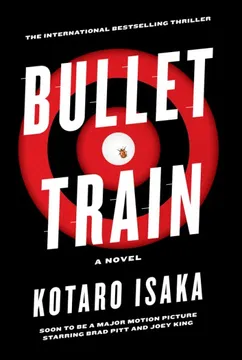
Bullet Train receives mixed but generally positive reviews, averaging 3.85/5. Many readers praise its frenetic pacing, quirky characters, and dark humor, frequently comparing it to Tarantino's style. Standout characters include the psychopathic teenage Prince, the unlucky assassin Nanao, and fruit-named duo Lemon and Tangerine. Fans love its clever twists and entertaining blend of action and philosophy. Critics find it overly chaotic, repetitive, or too cinematic for a novel. Most readers agree the book surpasses its Hollywood film adaptation, with the translation widely considered excellent.
People Also Read



Characters
Nanao
The unlucky fixerNanao is a contract worker who takes jobs through Maria and prepares for trouble with a waist pack full of improvised tools. He is courteous, self-effacing, and convinced that bad luck follows him, a belief reinforced by a childhood kidnapping and a lifetime of small disasters. His unease does not make him passive: when a child or a vulnerable person is threatened, he acts with startling speed. Nanao’s central tension lies between his desire to stay uninvolved and an instinctive responsibility that repeatedly pulls him toward danger. He distrusts grand theories about fate, yet his own history makes it difficult to distinguish coincidence from a pattern that has chosen him.
Yuichi Kimura
A father seeking revengeKimura is a former underworld worker turned security guard, a divorced father who has struggled with alcohol dependence. His son Wataru’s injury drives him back toward the violence he had left behind, even as sobriety gives him a new reason to distrust his own impulses. Kimura can be coarse, impatient, and quick to threaten, but he is also capable of recognizing frightened children and stepping between them and harm. His relationship with his parents is marked by years of resentment and embarrassment, especially around their insistence that he take responsibility. Beneath his roughness is a father who measures every decision against the possibility of losing his son.
The Prince
A calculating schoolboySatoshi Oji, called the Prince by classmates, is a bright fourteen-year-old who studies people as systems of appetite, fear, and influence. He reads widely, collects information, and understands how to make others doubt their own judgment. His polished manners and harmless appearance help him disguise a desire to control people and test the limits of their suffering. The Prince is not simply a school bully with unusual reach; he wants an explanation for why people obey rules and accept authority, but his curiosity has become inseparable from cruelty. He treats empathy as a weakness to exploit and regards other people’s reactions as evidence in experiments of his own design.
Tangerine
The careful contract killerTangerine works with Lemon as a professional enforcer and is the more organized, observant member of the pair. He reads novels, remembers details, and tries to impose a clear plan on jobs that keep collapsing around him. His irritation with Lemon’s carelessness masks a deep familiarity and dependence: he has built his working life around a partner whose instincts and habits he both mocks and understands. Tangerine is not gentle, but he is wary of needless violence and often thinks through the consequences before acting. His literary interests give him a vocabulary for human motives, though they do not protect him from grief or guarantee that he can interpret the people closest to him.
Lemon
The train-obsessed partnerLemon is Tangerine’s long-time partner, a physically capable criminal whose attention gravitates toward trains, especially the characters and lessons of Thomas and Friends. He is careless with luggage and details, but he can stay calm amid violence and often notices patterns that his more deliberate partner misses. His habit of translating people into train characters is funny to others and serious to him; the stories offer a private moral map for work that otherwise has few rules. Lemon wants to be useful and dependable, though he avoids admitting when his mistakes have caused trouble. His bond with Tangerine is expressed less through tenderness than through routine, arguments, and a shared understanding of danger.
Maria
Nanao’s pragmatic handlerMaria arranges Nanao’s work and gives him instructions from a safe distance, presenting herself as a simple intermediary. She is sharp-tongued, practical, and often amused by Nanao’s insistence that every assignment will go wrong. Her teasing coexists with genuine concern; she tracks the dangers surrounding him and tries to give him permission to abandon a job when survival matters more than payment. Maria understands the underworld’s shifting loyalties but cannot control every consequence once Nanao boards the train.
Shigeru Kimura
Kimura’s watchful fatherShigeru Kimura is Yuichi’s elderly father, a former professional who left criminal work for a modest life managing supermarket stock. He believes character reveals itself through conduct and has long worried that Yuichi’s drinking and work choices would harm Wataru. His practical instincts and strong moral disgust toward people who enjoy humiliating others remain intact beneath his quiet domestic routine. He is also capable of warmth and humor, especially with Akiko, but when family is threatened he does not mistake age for helplessness.
Akiko Kimura
A retired sharpshooterAkiko is Yuichi’s mother and Shigeru’s partner in both marriage and their former professional life. She keeps a calm, domestic manner, often puncturing her husband’s seriousness with teasing observations. That ease does not mean she has forgotten how to assess danger or handle a weapon. Akiko is attentive to family loyalties and understands both her son’s flaws and his capacity for love. Her instincts temper Shigeru’s urgency, while her willingness to act shows that retirement has changed their daily lives, not erased their abilities.
Mr. Suzuki
The listening teacherSuzuki teaches at an exam-preparation school and travels north with a bag of station sweets. He is mild, attentive, and unusually good at drawing people into conversation without pressing them. A personal bereavement has left him with a quiet sadness that does not prevent him from meeting strangers with patience. Suzuki thinks carefully about rules, violence, and the practical structures that allow people to live together. He offers a civilian perspective aboard a train where nearly everyone else is interpreting conversation as a tactic.
Yoshio Minegishi
The feared crime bossMinegishi is a powerful underworld figure whose reputation makes even experienced criminals wary of disappointing him. He expects work to be completed as ordered and uses money, surveillance, and intimidation to reduce uncertainty. His family life is complicated by separate households and unequal affections, while his public identity is built on the belief that weakness invites exploitation. Minegishi rarely appears directly in the train’s early conflicts, but the characters’ fear of his response shapes their lies, alliances, and attempts to control the suitcase.
Little Minegishi
The kidnapped heirMinegishi’s adult son is rescued from kidnappers by Tangerine and Lemon and becomes the reason for their journey north. He responds to danger with an unsettling lack of visible emotion, leaving the two professionals unsure how much of his ordeal he has absorbed. His relationship with his father is complicated by the expectations placed on him as an heir and by the distance between them. He is caught between his father’s criminal world and his own apparent detachment from it.
Wataru Kimura
The injured childWataru is Yuichi Kimura’s six-year-old son, a gentle child whose curiosity and affection are clear in his memories with his father and grandparents. He is especially close to the older Kimuras, who delight in his questions and energy. Wataru’s dependence on adults exposes the consequences of their choices, while his father’s love for him becomes a powerful source of courage and vulnerability. He represents the ordinary childhood that the Prince’s games and the criminal world repeatedly threaten.
The Wolf
A bully with a knifeThe Wolf is a low-level criminal known for targeting people weaker than himself, including girls and children. He boasts about his connections and past work, but his reputation exceeds his actual standing in the underworld. Nanao once intervened when the Wolf was attacking young children, creating a grudge that resurfaces aboard the train. The Wolf’s vanity and appetite for intimidation make him dangerous in close quarters, though he is not the formidable professional he claims to be.
The Hornet
The poison-needle assassinThe Hornet is an elusive underworld assassin associated with deaths that leave few obvious signs of violence. Rumors describe a method involving poison needles and suggest the name may refer to more than one person. This uncertainty matters: characters cannot identify the threat by appearance alone, and the apparent ordinariness of people aboard the train becomes part of the danger. The Hornet’s reputation links the present crisis to earlier struggles among the criminal organizations surrounding Minegishi.
Morning Glory
The accident-making assassinMorning Glory, known professionally as the Pusher, kills by nudging victims into the path of cars or trains and making the deaths appear accidental. He prefers jobs involving moving vehicles and works through a contract broker rather than arranging every assignment himself. He is observant and methodical, attending closely to traffic, timing, and the movements of a target. His private attention to dandelions and ladybirds contrasts with the violence of his work, without absolving him of what he does.
The second Shigeru
A well-connected go-betweenA former criminal turned contract broker, this Shigeru knows people across the underworld and can still call on trusted professionals. He is excitable about communication systems and takes pride in finding unusual ways to pass information. His willingness to help the Kimura family reconnects him with the danger he left behind, but he does not pretend that his influence is the same as direct physical skill.
Momo
The underworld information brokerMomo runs an adult bookstore that doubles as a meeting point for criminals trading information. She knows the reputations and habits of many professionals, including Nanao and the fruit-named partners. Her blunt humor makes her a vivid presence even over the phone, while her network gives other characters crucial context they could not easily obtain on their own.
The snack attendant
A familiar face with a secretThe snack-trolley attendant moves through the train with the authority of someone expected to be everywhere and noticed nowhere. She maintains the practiced friendliness of customer service and carries refreshments between the cars. That ordinary role makes her presence difficult to interpret in a journey where appearances are repeatedly used to disguise intent.
The cross-dresser
A reluctant decoyA passenger travelling with a bearded companion, the cross-dresser wears a bright green outfit and carries clothing and a wig in a shopping bag. Quick to complain and confident in public, he is not easily intimidated by strangers. His belongings later become useful to Nanao, who needs a disguise and a way to distract a pursuer.
The bearded companion
A paid distractionThe cross-dresser’s companion is a short, bearded man who tries to calm his friend and keep their trip moving. He is more easily persuaded by money than by Nanao’s threats, which makes him an unlikely but useful participant in Nanao’s escape plan.
Plot Devices
The Hayate Shinkansen
A moving pressure chamberThe train’s cars, gangways, toilets, luggage racks, and brief station stops define what each character can see or do. A passenger can be only a few cars away and still functionally unreachable, while a missed stop can turn a short job into a journey toward Minegishi. The linked Komachi train creates a false possibility of escape because passengers cannot pass between the two while moving. The limited space intensifies every encounter: concealment and surveillance happen in public, and a locked door or a crowd boarding at a station can alter the balance of power.
The locked suitcase
A portable source of leverageThe black suitcase contains ransom money and bank cards, but its changing location matters more than its contents. Minegishi assigns competing people to retrieve or transport it, leaving each crew unsure who is truly in control. Nanao steals it, hides it in a concealed wall compartment, and loses track of it. The Prince opens it with Kimura’s help, takes the cards, and returns it to circulation. A mistaken replacement suitcase then exposes Tangerine’s lie at Sendai. The case repeatedly turns possession into suspicion and makes people act on incomplete information.
The Prince’s phone rules
A threat with a timerThe Prince tells Kimura that an accomplice near Wataru’s hospital will interfere with the child’s life-support equipment if the Prince misses scheduled calls or fails to answer after a set number of rings. The rule is designed to make silence as dangerous as disobedience. Kimura cannot verify the accomplice’s identity or intentions, so the uncertainty itself becomes a restraint. Later, the same phone and call pattern become relevant to the Kimura family’s effort to protect Wataru. The device shows how communication can serve as both a weapon and a means of rescue.
Thomas and Friends
A code for characterLemon uses the names and personalities of Thomas and Friends characters to explain people, professional habits, and moral behavior. His fixation initially seems comic, especially against Tangerine’s impatience, but the references become a private language between the partners. Lemon’s stickers can carry a message when ordinary speech is unsafe, and the Diesel’s reputation helps Tangerine interpret the Prince’s behavior. The stories offer Lemon a coherent moral vocabulary for a world in which loyalty, usefulness, and betrayal are otherwise difficult to name.
Luck and misfortune
A pattern without a refereeNanao believes bad luck follows him, while the Prince assumes his own good fortune will protect him. Their competing convictions influence how they interpret accidents, missed exits, sudden reversals, and the escaped snake. The story leaves room for both human calculation and chance: Nanao’s preparations matter, yet mishaps repeatedly change their results. Near the end, a small raffle win offers a hopeful counterweight rather than proof that his luck has permanently shifted. Fortune becomes a way for characters to explain what they cannot control.
Download PDF
Download EPUB
.epub digital book format is ideal for reading ebooks on phones, tablets, and e-readers.








