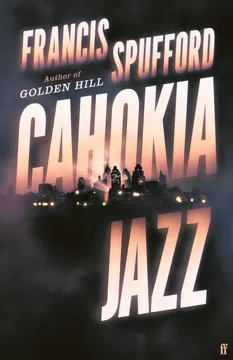


Plot Summary
Prologue
The book opens with an Anopa glossary and a 1605 account by Jesuit Sebastian Villanova, who faces death at the hands of Cahokia's rulers. He survives by presenting Christ's sacrifice as a source of shared power, persuading the prince to hear him rather than kill him.
The episode plants a question that will haunt the modern city: who may claim the right to sacrifice one person for the good of many? The city’s language and its Catholic and Indigenous traditions are not separate ornaments. They have grown into a political order whose symbols can protect people, or be turned against them.
Villanova survives by translating one sacred story into terms another culture can use. That act is both rescue and political negotiation: faith becomes a bridge, but it also helps establish an order in which authority depends on stories about sacrifice. The opening therefore prepares the novel to judge more than the identity of a murderer. It asks what happens when a community treats a human cost as proof of its virtue, and whether a ruler can distinguish necessary ritual from convenient violence. The glossary that precedes the account also makes naming an ethical act. To speak the city’s categories is to acknowledge a history that outsiders would rather flatten.
Blood on the Land Trust
Before dawn on a snowy Monday, detectives Joe Barrow and Phineas Drummond find a man bound across the glass roof of Cahokia's Land Trust building. His throat has been cut, his chest opened after death, and blood has run down the skylight.
Barrow identifies him as Frederick Hopper, a poorly dressed clerk, from a prescription in his wallet. On Hopper's forehead, someone has written Bashli, a word associated with the Warriors, a small Indigenous liberation group. Drummond recognizes the mark as a political provocation, not an ordinary gang killing.
The building's elevator was already running, its doors were locked, and the killer left a message designed to be seen. The detectives have a corpse, a slogan, and no reliable account of how Hopper reached the roof.
The crime scene is arranged as an argument before it is a puzzle. The exposed body, the opened chest, and the slogan invite observers to read the killing as an archaic Indigenous ritual. That interpretation is immediately politically useful, which is why Barrow's reluctance to accept the obvious matters. His first strength is not insight but attention to the gaps between what the scene shows and what it asks people to believe. The corpse also introduces the novel's central ethical problem: a dead person can be made to carry meanings chosen by the living, while his actual life, a poor clerk's anxious existence, is nearly erased.
The Sun Wants Questions
At the station, Drummond lets journalist Mickey Casqui see the rooftop and hints that the killing carries political meaning. Casqui then arranges a meeting between Barrow and Sebastian Cuauhtemoc Hashi, Cahokia's ceremonial ruler, known as the Man of the Sun. In his limousine, Hashi refuses to order the detectives to suppress the case.
Instead, he gives Barrow a card authorizing him to seek help and urges him to distrust a story that fits too neatly. He explains that symbols have practical force in Cahokia, where shared land ownership, Catholic rites, and Indigenous custom shape public life. Barrow accepts the commission but does not yet understand why Hashi chose him, or how the murder could threaten the city's stability.
Hashi's authority works through restraint rather than command. He gives Barrow permission to investigate while making clear that permission itself is political: the detective is being invited into a symbolic order he barely understands. This complicates the familiar division between corrupt power and independent truth. Hashi may be protecting the city, yet he also wants Barrow's loyalty and judgment. Barrow's blunt insistence that he works for the city, not a prince, is sincere but incomplete. His task will require him to learn that public meanings are not distractions from material consequences. They are one of the means by which land, safety, and power are defended or seized.
The Widow's White Robe
Barrow and Drummond visit Hopper's wife, Marlene, who first mistakes them for the loan shark pursuing her husband and aims an old pistol at them. Hopper owed money to a takata bootlegger named Weiss, but Marlene says he left home on Sunday night to settle accounts. In a closet, the detectives find his Ku Klux Klan robe.
Marlene explains that the Klan helped her struggling family move from Ohio to Cahokia, where Hopper found a government job. Barrow gives her the cash from Hopper's wallet and urges her to take their young son out of town before Weiss comes after the debt. As they leave, Drummond sees the Klan as a lucrative machine selling belonging to desperate white families.
Marlene's robe makes the political spectacle personal. The Klan is not merely a faceless force in the streets; it has offered a poor family a story in which their hardship can be blamed on racial hierarchy and answered through membership. Drummond sees the commercial extraction behind that promise, but his cynicism also keeps him safely outside the suffering he describes. Barrow, by contrast, spends his own money and risks Marlene's anger to help her escape. His action is small and concrete, yet it exposes the moral difference between recognizing exploitation and accepting responsibility for someone caught inside it.
The Moon Across the Creek
After Drummond suffers a suffocation nightmare from the war and leaves to drink, Barrow questions Hopper's supervisor, Mrs. Hankeha. She explains that the Land Trust manages leases on Cahokia's collectively owned land and that Hopper had recently handled a boundary adjustment for Union Cartridge. Barrow then uses Hashi's card to enter the House of the Moon, home of Hashi's niece, Couma.
She says the angle from her window made it impossible to see the roof and asks why her uncle has chosen Barrow for this work. She appears exhausted and guarded, but agrees to meet him at her fashion house the next evening. Her evasiveness leaves Barrow with a new witness who is close to the city's power, yet offers no evidence.
The encounter shifts the investigation from public symbols to intimate power. Couma's title makes her visible to the city, while her insomniac isolation and carefully controlled home suggest the private cost of being treated as an emblem. Barrow is drawn to her, but her first response is to examine why Hashi trusts him, not to flatter him or enlist him. The Land Trust detail quietly broadens the case: Hopper's paperwork concerns the institutional mechanism that keeps land from becoming a commodity. What initially looks like an eccentric murder may touch the legal structure holding Cahokia together.
The Crocodile's Altar
On Tuesday, Barrow and Drummond raid a shabby house marked with the Warriors' slogan. They find Laurence Chunchouba, an elderly shaman called the Great Crocodile, beside an altar stained with animal blood. He admits that former Warriors brought him blood from the slaughterhouses, but he says the group broke up months ago.
At the Helm plant, the detectives find Louis Bessa and the other young former Warriors working the night shift when Hopper died. Bessa explains that the group left Chunchouba when his spiritual teaching turned toward human sacrifice. Barrow shows him Hashi's card, and Bessa reluctantly gives the name of Sammy Noukouwa, a former member who embraced the blood rites and may now work at Union Cartridge.
The first apparent culprit is not simply disproved; the investigation discovers how a political label can conceal differences within a movement. Chunchouba's grotesque altar makes him look like the newspaper's imagined savage, while Bessa's account shows younger activists rejecting him and turning toward labor politics. Their factory alibi gives the detectives a factual limit that Drummond would prefer to ignore. Barrow's use of Hashi's card persuades Bessa because symbolic authority carries weight even for someone hostile to the ruling family. The scene distinguishes belief from caricature without making the Warriors innocent of every troubling idea they have entertained.
Vanderberg's Factory Visit
At Union Cartridge, Barrow and Drummond learn that Sammy Noukouwa has missed work since Friday. Federal agents have been watching Louis Bessa for alleged communist activity and threaten to reactivate the detectives as soldiers if they interfere.
Arthur Vanderberg, the company's powerful owner, appears with Sammy's employment record and a coded address in the Quarters. He treats Barrow as a curiosity, then rides with the detectives to the Union Club. Barrow realizes that Vanderberg already knows Drummond.
When Barrow presses the investigation forward, Drummond admits that a powerful person has offered him a life-changing opportunity, though he will not explain the bargain. Barrow refuses to abandon the case and makes Drummond promise to follow evidence rather than steer it.
Vanderberg's friendliness is a form of domination: he can cross a factory floor, a police investigation, and an elite club as if each belonged to him. His interest in Barrow's mixed identity turns the detective into an exhibit, exposing the racial hierarchy beneath his genial manner. Drummond's refusal to name his new patron marks the first fracture in the partnership. Barrow has long relied on Drummond to think for both of them, but now he insists on a shared standard of evidence. The move is not yet a triumph of independence. It is the beginning of a struggle to tell loyalty from obedience.
Sammy's Blue Door
The detectives follow Sammy's directions to a blue door in the Quarters and find his mother, Annie, alone. She says Sammy has been absent, controls her household, and returned that morning only to collect a suitcase. Barrow and Drummond discover his locked room: cheap dandy suits, posed studio portraits, knives arranged around a picture of a skeletal goddess, and a mouse he has tortured as an offering.
A Four Winds crowd then surrounds the police and silently herds them out of the neighborhood. Sergeant Hanunu learns that Sammy boarded the westbound Usunhiyi, bound for Los Angeles. At Union Station, clerks confirm he bought an expensive private Pullman berth. The ticket proves he planned a sudden, extravagant escape, but not why.
Sammy's room reveals a fantasy organized around self-invention and control. He stages himself as a hero in photographs while terrorizing his mother and a helpless animal, a gap between grand self-image and actual conduct that makes him disturbing without proving murder. The Four Winds' intervention is equally ambiguous: it may defend a resident from police intrusion, but it also shields a suspect from scrutiny. Barrow's search yields a trail rather than an answer. The expensive ticket and abrupt departure suggest resources or sponsorship, while Annie's account makes the absence feel like fear, not merely eccentricity.
Weiss's Soda Fountain
Barrow insists on questioning Weiss at his drugstore, despite Drummond's warning that the visit could damage their arrangements with the bootleggers. Drummond enters swinging a club, and Barrow is cut in the struggle before Weiss forces the fight to stop. Weiss denies involvement in Hopper's murder and supplies a detailed alibi from a church event and supper with the minister.
He also claims no connection to the Land Trust, though he resents its limits on private ownership. His anger at Drummond suggests the detective has been acting on Weiss's behalf, not simply negotiating police protection. Barrow leaves with a stitched brow, a shaken partnership, and the suspicion that Hopper's debt was part of a larger plan.
The confrontation makes corruption visible through a reversal of expected roles. Drummond is supposed to be the detective questioning a gangster, yet his sudden violence looks like a signal between men who already understand one another. Weiss's insistence that the police remember who depends on whom confirms a hierarchy Barrow has tolerated without examining. Barrow's injury gives the compromise a bodily cost: he is no longer able to call the arrangement harmless or abstract. At the same time, Weiss's alibi prevents anger from becoming proof. The case demands that Barrow separate a convincing suspicion from an admissible explanation.
The Aztec Story Cracks
The medical examiner finds obsidian flakes in Hopper's opened chest but determines that the wounds came from a steel knife; the glass was planted. Professor Kroeber then explains that Cahokia's supposed Aztec ancestry was shaped by Jesuit storytelling, not by direct cultural descent. The book Mickey Casqui cites describes the ritual scene reproduced on the roof.
At Couma's lecture, Barrow learns that Sammy's wall carried the name of the Red Council, a traditional women's wartime governing body, not a communist cell. The clues weaken the theory that an Indigenous fanatic performed a genuine ancient rite. They point instead toward someone who researched an outsider's stereotype and staged it to make Cahokia look barbaric.
The material evidence and the historical correction converge on the same insight: the murder's supposed authenticity is manufactured. Obsidian is not the killer's weapon but a prop, and the Aztec tableau borrows a story Cahokia itself did not live. This is not merely a debunking of one newspaper headline. It reveals how outsiders can turn fragments of Indigenous history into a weapon, then demand intervention against the people they have misrepresented. The Red Council's meaning adds a second complication. A tradition omitted from public male authority still has political force, and the detectives have not yet understood who can invoke it.
The Express Comes Back Empty
When the Usunhiyi reaches Dinetah, Navajo police report that Sammy is nowhere aboard, though Cahokia's station records show he bought a ticket. The city's unrest worsens: white crowds attack businesses and police, Klan senator Corfield calls for outside intervention, and Mayor Lakna dismisses the police captain.
Barrow notices Drummond has vanished too. He finds evidence that Drummond has been taking an experimental stimulant that keeps him awake and accelerates his speech, then leaves a message with journalist Harry Anderson to locate him.
At a pay phone, Barrow recognizes from Casqui's book that Drummond had blood in his hair at the first crime scene. The conclusion is devastating: his partner likely killed Hopper and helped stage the false ritual.
The two disappearances create parallel uncertainties. Sammy may be a killer, a political actor, or a decoy; Drummond's absence forces Barrow to reconsider the man he trusted to interpret every case. The stimulant offers a physiological explanation for Drummond's manic behavior, but it cannot absolve his choices. Meanwhile, the Klan's demand for federal force converts one staged murder into a citywide emergency. Barrow's realization comes from a remembered detail, not a grand deduction: blood in Drummond's hair matched the priestly image in the book. His new independence begins with the recognition that intimacy can hide evidence as effectively as power can.
The Plaza's White Tide
On Thursday, Barrow crosses a city crowded with fleeing white residents and reaches the Plaza as the Klan surges toward the Mound. He carries Sister Peggy Iti away from the advancing mob. The Cahokia National Guard then rides out in the green uniforms used to portray Indigenous soldiers in the Klan's favorite film.
The robes break ranks when their wearers mistake the cavalry for the massacre they have watched on screen. Barrow and Peggy climb a Victory monument to escape the horses. Soon afterward, Klansmen enter the cathedral to attack the protected sacred flame. Barrow dons the yellow guardian mask and fights beside Oscar, using a staff to drive attackers from the lantern and its gold monstrance.
The Guard defeats the march by turning the Klan's own cinematic fantasy against it. The white robes have been trained to imagine themselves as endangered innocents; when confronted with the image they fear, they flee before the soldiers fire. The victory is tactical and theatrical at once. In the cathedral, Barrow's mask lets him act with a decisiveness he struggles to claim as himself, protecting a shared sacred object without knowing every layer of its meaning. His rescue of Peggy and defense of the flame join physical courage to a new willingness to enter the city's rituals, though the violence remains real beneath the pageantry.
Gunfire at the Moon's House
Later, Barrow reaches Couma's home as gunmen fire through its windows. He and Hanunu take cover, but bullets kill the wounded shop assistant and then strike Hanunu as he watches a window. Barrow gives Couma his revolver, takes the dead bodyguard's Thompson gun, and uses a decoy hat to draw the roof gunman's fire away from her position.
Oscar shoots from across the Creek, allowing Barrow to reach the garden and kill the remaining attackers, including the gunman who cut him at Weiss's drugstore. When Sammy arrives among the bodies, Couma orders him hidden. Barrow understands that she had the power to mobilize the Red Council and that Sammy's disappearance was never a simple escape.
The siege forces Barrow to act before he can make the situation morally legible. He saves Couma through tactical improvisation, while Hanunu's death makes the cost of delayed understanding immediate and irreversible. The attackers' connection to Weiss links the street violence to the same criminal network that pressured Hopper. Sammy's arrival changes the meaning of the earlier police sweep: the Four Winds did not merely protect a neighborhood from outsiders; they may have protected a person whose movements mattered to a larger plan. Barrow has saved the Moon, but the question of what she has done remains inside the house with them.
The Moon's Hidden Council
After Barrow is carried to the palace, he wakes to find Hashi's brother, Cardinal Louis, home from Rome. The Cardinal sends Bishop Halloran back to Chicago for aiding the Klan and condemning Cahokia's blended religious customs.
Barrow returns to the investigation and learns that Sammy's supposed train search may have been concealed by someone with authority among the tribal nations. He also learns from Mrs. Hopper's letter that her husband had been summoned to the Land Trust for a special task, while the museum confirms Vanderberg donated the rare obsidian.
When Sammy reappears, Barrow connects the Four Winds, the false train report, and Couma's political power. He realizes she arranged her brother's killing, though she has not confessed to him.
The evidence does not arrive as a single confession; it accumulates across institutions that each hold only part of the truth. A widow's note, a museum record, and a train's missing passenger converge with Barrow's observation of who can command the Four Winds. The Cardinal's return offers a competing model of authority: he rejects Halloran's demand for cultural purity and insists that religious fidelity can include traditions he does not control. Barrow's realization about Couma is therefore not a simple exposure of a villain. He sees a leader who may have committed a crime in the name of preserving a community, and must decide what truth would do to that community now.
Drummond's Bloodied Trail
Barrow tells the new police chief, Lieutenant Doyle, that Drummond has been working for Vanderberg, then finds the phone number that leads him to his partner. Drummond admits he has been relying on an experimental amphetamine supplied through Vanderberg's company to hold off his wartime nightmares. He still refuses to explain the full bargain and escapes before police arrive.
Barrow's own investigation links him to Hopper's scheduled meeting, the staged Aztec evidence, and the killer's bloodied hair. The city can now name a likely perpetrator, but cannot yet arrest him. Barrow has also discovered that the man who helped him survive the war may have used their friendship to keep him from asking questions.
Drummond's drug use gives his erratic behavior a bodily mechanism, not a moral pardon. The pills suppress sleep, and therefore the nightmares, but they also magnify impulse and distort judgment. His escape preserves the central wound in Barrow's relationship: the partner who once returned him to consciousness now evades accountability by exploiting his trust. Barrow's decision to tell Doyle marks a break from complicity, yet the police have no clean evidence and no control over the city's larger crisis. A legal case and a moral reckoning are moving at different speeds.
The Sun Takes a Risk
Hashi takes Barrow to the Union Club, where he confronts Vanderberg after the Klan's defeat and the attack on Couma's house. Rather than arresting the industrialist, Hashi uses Cahokia Pacific's financial power to drive Vanderberg's company toward bankruptcy, warning him that further attacks will bring worse consequences. Vanderberg answers that capital survives any single defeat.
Barrow watches two powerful men treat lives and institutions as pieces in a larger contest. He gives Doyle what he knows, resigns from the police, and accepts the chance to tour with Dolphus Henderson's jazz band. That night, at the ballgame, Hashi publicly paints Couma's eyelids gold and names her his successor, making her the future Sun.
Hashi's retaliation is effective, but its form mirrors the power it opposes: he uses a financial system to injure a rival who has used money and violence against Cahokia. His victory prevents immediate escalation without resolving the ethical symmetry Barrow sees between their methods. Barrow's resignation is not merely a rejection of police work; he refuses to let public acclaim decide what his life must mean. Couma's elevation then makes that refusal harder. The woman he desires is becoming the city's central symbol, and the city has claimed her future as surely as it once claimed his service.
One Night Under Moonlight
After the ballgame, Couma's housekeeper brings Barrow to her darkened home. Couma explains that she arranged the killing of her brother, Frankie, because she believed he would fail the city as its heir. She had also used Sammy, and knows that Barrow now understands the bargain behind her public grief.
Barrow cannot call the murder harmless, but he accepts her invitation to share one private night before he leaves for Mississippi with the band. Couma wants a child and promises that any child will be raised within the family, not abandoned. Their intimacy brings tenderness, desire, and grief together without erasing her responsibility or Barrow's coming departure.
Couma's confession exposes the cost of ruling by necessity. She does not deny the murder or ask Barrow to mistake it for innocence; she believes the city's future justified the act and accepts that it will burden her. Barrow's response is not absolution. He offers tenderness while holding onto the fact that she killed her brother, a distinction that keeps intimacy from becoming a moral alibi. Her wish for a child also meets his deepest wound, the childhood experience of being left behind. The night is therefore both a genuine encounter and an unstable promise, shaped by affection, power, and the approaching separation.
The Leap Between Roofs
On Saturday morning, Barrow finds Drummond's letter and searches the Usunhiyi, but his partner is not aboard. A news report about Frankie's killer, whose hat matches Sammy's, and the prospect of an open-air ceremony on the Mound make Barrow suspect another assassination attempt.
He returns to the Land Trust roof, sees Drummond aiming a rifle from the neighboring Water Trust, and leaps across the alley to reach him. Drummond stabs him with the knife used on Hopper. Barrow disarms and embraces him, then throws him from the roof rather than let him fire at Couma and Hashi. Bleeding badly, Barrow watches the Sun and the newly crowned Couma appear on the Mound as the ceremony continues.
The final rooftop encounter turns Barrow's two defining capacities, strength and musical sensitivity, into a single moral decision. He cannot reason Drummond out of the shot, and he cannot preserve their friendship without stopping the violence. His leap is both an act of protection and a sacrifice of the life he had just chosen for himself. Throwing Drummond from the roof is not presented as a clean victory; it is an irreversible killing by a wounded man who knows the intimacy of the person he stops. The final image leaves Barrow's fate uncertain while placing the city's ritual above him, still beautiful and still founded on costs its leaders cannot undo.
Analysis
Cahokia Jazz makes the detective's question, who killed Frederick Hopper, inseparable from a harder one: who gets to define what the killing means? The staged body is designed to convert anti-Indigenous fantasy into a demand for federal intervention, while the city's own traditions provide both protection and cover for political action. Spufford's alternate Cahokia is not a utopia sealed off from American history. It contains police corruption, class exploitation, racial hostility, gendered authority, and leaders willing to spend individual lives for collective survival. Its difference lies in the institutions and memories that let people resist some forms of dispossession, not in any claim to purity.
Barrow's development turns on the shift from borrowed judgment to chosen responsibility. Drummond gives him companionship after war, but their familiar division of labor lets Barrow avoid thinking through what their police work serves. The case forces him to see that friendship can coexist with manipulation, and that a good cause can still use people without their knowledge. His decision to leave for music is therefore not cowardice or a simple escape. It is an attempt to claim a life not dictated by the police, the city, or a charismatic partner. Yet when Drummond aims at the Mound, Barrow returns because refusing violence matters more than preserving the clean future he had planned.
The novel's central moral tension is not whether sacrifice is ever necessary, but who is permitted to call it necessary and who bears its cost. Couma and Hashi defend a vulnerable community through secrecy, symbolic authority, and force; Vanderberg pursues domination through capital and racial reaction; Drummond disguises self-interest as freedom from belief. Their methods differ, but none can make the dead whole again. Against that compromised field, Barrow's music offers a model of relation rather than command: separate voices improvise together without becoming identical. The city's future remains uncertain, and Barrow's is left physically precarious, but the book's final measure is whether power can be interrupted by an act of care.
Review Summary
Reviewers praise Cahokia Jazz for its vivid alternate-history setting, a 1922 Cahokia where Native Americans thrive, and for its atmospheric noir style, jazz imagery, and world-building. Many call it ambitious and gripping, with a strong protagonist in Joe Barrow. Critics cite heavy exposition, uneven pacing, underdeveloped secondary characters, a strained ending, and a romance that some find weak. Opinions range from enthusiastic five-star praise to frustrated two-star disappointment, with several noting its contemporary political resonance and themes of race and power.
People Also Read

Characters
Joe Barrow
The reluctant pianistA very large detective with a mixed Indigenous and Black heritage, Barrow grew up in an orphanage and learned early to survive by letting stronger personalities make decisions for him. He is observant, physically formidable, and sparing with words, but his mind is not simple: music gives him a private language for complexity that he rarely permits himself to claim. His partnership with Drummond offers companionship and a familiar division of labor, with Barrow supplying force while Drummond supplies interpretation. In Cahokia, that arrangement becomes harder to accept. Barrow is drawn toward the city, its music, and its people, yet fears that belonging will require him to surrender judgment and autonomy.
Phineas Drummond
The charming cynicBarrow's talkative partner is a quick-witted, sharp-shooting veteran whose comic performance helps him manage both police work and the memories of war. He professes distrust of every institution and treats belief as an invitation to exploitation, a philosophy that protects him from dependence but also excuses his own compromises. Drummond dreams of California, money, and escape, while concealing the parts of himself that might make those dreams feel vulnerable. His friendship with Barrow is real enough to matter, but it is built on unequal roles: Drummond leads, Barrow follows. His fear of sleep and his reliance on stimulants complicate the difference between survival and self-destruction.
Couma Hashi
The sleepless princessThe Man of the Sun's niece lives between private personhood and public office. As the Moon, she is expected to embody the city's continuity, while her sharp intelligence and severe self-command leave little room for ordinary desire. She runs a couture house and supports an intellectual foundation, engaging modern ideas while remaining deeply tied to Cahokia's political and spiritual traditions. Widowed young, she carries grief beneath a disciplined exterior and rarely allows others to approach her without first testing their assumptions. Her relationship with Barrow unsettles the distance she has cultivated, because he sees both the authority she represents and the vulnerable woman beneath it.
Sebastian Cuauhtemoc Hashi
The symbolic SunCahokia's ceremonial head of state is a polished diplomat, a Catholic, and a custodian of traditions he knows cannot remain unchanged. His power is less direct than that of an elected official or industrial magnate, yet citizens look to him as the living sign of their collective survival. He understands how rituals, names, and stories move people to action, and uses that knowledge with care as well as calculation. His conversations with Barrow reveal both an aristocrat's capacity for strategy and a ruler's anxiety about preserving a community under pressure from the United States and private capital.
Oscar
The masked bodyguardHashi's enormous chauffeur and protector speaks little, watches closely, and makes danger seem manageable through physical competence. He serves both the Man and the city's ceremonial order, shifting between driver, armed guard, and ritual guardian. His teasing familiarity with Barrow grows from shared service and a recognition of the man beneath the detective's guarded exterior. Oscar does not explain every custom he protects, which reinforces the discipline of keeping some acts inside the mask.
Mickey Casqui
The restless newspapermanCasqui reports for a Cahokian newspaper and sells stories to the English-language press, moving quickly between languages, audiences, and versions of the same event. His curiosity is sharp, but so is his awareness that information can be traded for access. He begins as a reporter pressing the detectives for a scoop, then appears among the city's poets and intellectuals as Michael, an Anopa writer. His shifting public roles make him a useful guide to how stories are built and who profits when they spread.
Harry Anderson
The sharp-eyed reporterA red-haired journalist at the Post, Anderson is clever, provocative, and more ambitious than the paper's racial agenda allows her to be. She knows how to turn a scene into a headline, but she also recognizes when editors have prepared a story before the facts arrive. Her attraction to Barrow is tangled with curiosity and a willingness to test boundaries. She wants access to the real story, even when her employer prefers a simpler, more inflammatory version.
Lieutenant Doyle
The hard-nosed mikoA veteran police lieutenant who becomes the department's chief during the crisis, Doyle is impatient with showmanship and insists on records, evidence, and methodical follow-up. His Irish-Cahokian family history makes him protective of the city, but he does not confuse loyalty with blind approval. He distrusts Barrow's omissions and gives him limited chances to prove his reliability. Doyle's bluntness can wound, yet it is paired with a practical commitment to making the police act like a public institution rather than another gang.
Amanda Chokfi
The Four Winds telephonistThe police department's young telephonist, called Li'l Rabbit by colleagues, is more perceptive and courageous than her diminutive appearance suggests. Her work connects the station to a citywide network of information, and her place in the Four Winds gives her a second, carefully guarded civic role. She resists Drummond's sexual harassment and begins to treat Barrow as a man capable of tenderness and commitment. Her kindness does not make her passive; she can enforce boundaries with startling decisiveness.
Nicholas Hanunu
The patient sergeantHanunu is a disciplined Cahokian sergeant whose knowledge of the Quarters comes from having grown up there. He approaches people through custom and patience rather than force, especially when questioning Sammy's frightened mother. His respect for mothers and household authority reflects traditions that complicate outside assumptions about Cahokian gender roles. He is conscientious and brave, but also loyal to both the police and the tamaha, a tension that requires tact from anyone working beside him.
Sammy Noukouwa
The self-made zealotA former Warrior with a taste for theatrical clothes, studio poses, and private religious fantasies, Sammy wants to imagine himself as a figure in a grand historical struggle. His need to feel exceptional sits beside a cruel, controlling relationship with his mother and an obsessive interest in sacrificial imagery. The gap between his swagger and his actual life makes him difficult to assess: he may be dismissed as ridiculous, but his fantasies have the potential to become dangerous.
Arthur Vanderberg
The industrial magnateVanderberg is a wealthy owner of munitions, rail, and industrial interests who treats people and places as pieces in a system he expects to control. He enjoys playing the fool when it gives him a chance to humiliate someone, and his apparent geniality often masks contempt. He views Cahokia's collective land system as an obstacle to private expansion and assumes that capital will outlast any local resistance. His confidence is not merely personal arrogance; it is backed by institutions capable of turning money into political pressure.
Louis Bessa
The laboring WarriorA former leader among the Warriors, Bessa works on the killing floor at Helm and speaks plainly about the limits of nationalist nostalgia. He rejects Chunchouba's turn toward ritual sacrifice and argues that Indigenous liberation is bound to the freedom of workers more broadly. His political commitments make him a suspect in the eyes of both local police and federal agents, but he refuses to accept the role of a convenient scapegoat.
Laurence Chunchouba
The discarded shamanKnown as the Great Crocodile, Chunchouba is an elderly spiritual teacher living in a filthy house with an altar stained by animal blood. He rejects the imposed identities and Christian forms he associates with conquest, but his followers have abandoned him after his teachings turned toward increasingly disturbing rites. His condition is pathetic as well as alarming, making him an inadequate match for the polished, deliberate spectacle of the rooftop murder.
Marlene Hopper
The frightened widowHopper's wife is a poor migrant from Ohio, worn down by debt and the effort of maintaining a respectable household. Her faith in the Klan comes from the social world she knew before Cahokia, where its membership appeared ordinary and widely accepted. She is frightened, proud, and suspicious of Barrow, whose help she cannot easily trust. Her response to her husband's death reveals how hardship can make a hateful organization look like a source of protection.
Sister Peggy Iti
The chemist and nunA Loreto sister, university chemistry lecturer, and poet, Peggy moves between scientific practice and the intellectual life of Cahokia. She identifies the experimental stimulant Drummond takes and explains its likely effects without pretending to know more than the evidence permits. Her faith is neither sheltered nor naive; she acts decisively when the Klan threatens the city and understands the meaning of its rituals. Her range of roles challenges the assumption that religious commitment and modern expertise must oppose each other.
Alfred Kroeber
The patient anthropologistAn American anthropologist and guest lecturer, Kroeber approaches Cahokia as a living civilization rather than a remnant of the past. He corrects the false Aztec reading of the rooftop scene and helps Barrow understand how Jesuit accounts shaped the city's origin story. His scholarship is attentive to cultural change, though he also recognizes that intellectual insight does not dissolve the political pressures surrounding the people he studies.
Cardinal Louis Hashi
The returning churchmanThe Man of the Sun's brother returns from the papal election to lead Cahokia's Catholic community. Less imposing than his sibling, he is sharp-eyed, physically frail, and unwilling to let outside clergy dictate what counts as legitimate faith. He understands the Church's institutional power, yet urges humility toward traditions that do not look European. His arrival strengthens the city's religious leadership at a moment when outsiders are trying to use religious conformity as a political weapon.
Mayor Paul Lakna
The anxious reform mayorLakna is Cahokia's first mayor without Hashi family blood, elected on a platform of cleaner government and civic modernization. He cultivates white business voters while depending on the city's mixed electorate, leaving him exposed when racial violence makes compromise look like weakness. His fear of being blamed for the crisis often outruns his confidence in the police.
Senator Corfield
The Klan's political voiceA state senator aligned with the Klan, Corfield turns Hopper's death into an argument for outside intervention and white control. He understands the value of public spectacle and frames local political power as an illegitimate monarchy. His speeches give organized prejudice a respectable legislative face.
Eulalia Jackson
The rooftop witnessA night cleaner at the Land Trust, Jackson discovers the unlocked roof door and alerts the police. She is a working mother with little patience for being detained after her shift, and her practical observations help Barrow reconstruct when the scene may have been accessible. Her testimony anchors the investigation in the routines of ordinary labor.
Plot Devices
The Four Winds masks
A hidden civic networkThe Four Winds are painted masks representing the cardinal directions, worn by people whose everyday jobs include policing, service, scholarship, and domestic work. Their silent welcome for new colleagues signals inclusion, while their coordinated appearance can communicate a collective decision without a public declaration. Barrow encounters them first as an unsettling office ritual, then as a force that can protect a household and shape movement through the Quarters. The masks make the distinction between individual identity and civic role visible, while also preserving a boundary around actions that members do not discuss once the masks are put away.
The city's sacred symbols
Meaning becomes political forceCahokia's Mound, the Man and Moon, the Four Winds, the ballcourt, and the cathedral's perpetual flame are not decorative remnants. They organize public memory and tell citizens how the city understands itself. The novel repeatedly tests whether a symbol can protect a community or be appropriated to frighten it. The false Aztec tableau on the Land Trust roof exploits a popular misunderstanding, while the flame joins Catholic sacrament to Indigenous sacred fire. Barrow learns that these meanings can move bodies, crowds, and governments, although their power does not make every action taken in their name morally sound.
The Land Trust
Collective ownership under threatCahokia's land belongs collectively to the tamaha, with individuals and businesses using it through leases administered by the Land Trust. The system is part of the city's economic foundation, not simply a cultural custom. Hopper's work on a Union Cartridge boundary adjustment puts him in contact with records that matter to powerful outsiders. The Trust's collective ownership also explains why Vanderberg resents Cahokia: he wants the freedom to buy land outright and expand his industrial empire. By making a murder victim a clerk in this institution, the plot joins personal vulnerability to a constitutional struggle over who may own the ground beneath the city.
The obsidian fragments
A staged clue points outwardBlack volcanic glass in Hopper's chest initially seems to confirm the newspaper theory that a ritual killing has revived ancient Aztec practice. The medical examiner discovers that the glass did not come from the knife that cut Hopper, proving that someone added it afterward. Its rarity in Cahokia and its presence in Vanderberg's museum collection give Barrow a concrete link between the manufactured scene and the industrialist's world. The fragments show how physical evidence can be made to support a false story, while their forensic mismatch provides a way to challenge that story. This device reveals evidence of deliberate staging.
The sleepless stimulant
A chemical dam against memoryDrummond takes experimental phenylisopropylamine supplied through Vanderberg's chemical business. The stimulant keeps him awake and suppresses the exhaustion that would otherwise force him to sleep, temporarily holding back his memories of being buried alive in the war. It also accelerates his speech and appears to worsen his impulsiveness and judgment. The drug turns his California dream into a chemically maintained escape from the past, but it cannot remove the trauma that returns when its effects fail. Its presence gives Barrow a practical lead to Drummond and a way to understand his deterioration without treating illness as innocence.
Download PDF
Download EPUB
.epub digital book format is ideal for reading ebooks on phones, tablets, and e-readers.








