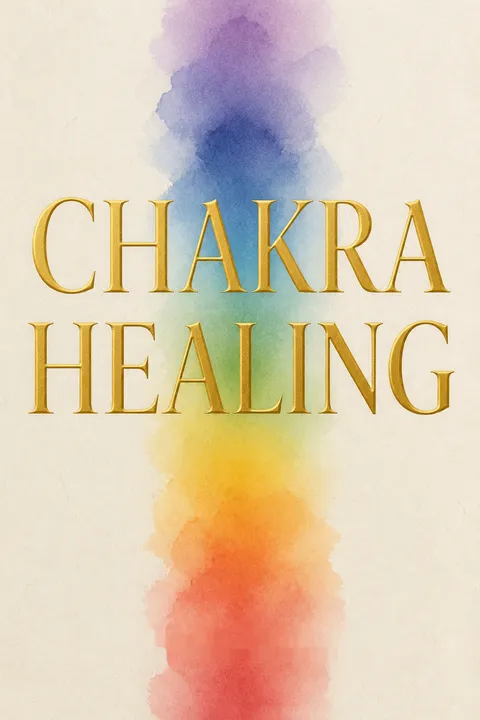


Key Takeaways
Use chakra work to ask better questions, not to outsource your healing
Healing begins with attention. The book presents chakras as seven energy centers linking physical experience with emotional, mental, and spiritual life. Its opening story follows Ms. B, who came for stress and ankle pain while feeling afraid to pursue creative work. The author interpreted that fear as part of a deeper pattern and used acupuncture, Reiki, crystals, and compassionate conversation as supports. Ms. B later left her job, trained as a yoga instructor, and began writing about wellness; her ankle pain also resolved during treatment.
The reader remains the agent. Practitioners may guide or support the process, but the book insists that personal healing cannot simply be handed over to someone else. Its central invitation is to notice what one is carrying, question old stories, and respond with care.
The opening story works best as an illustration of meaning-making, not proof that an energetic blockage caused an ankle problem or that a particular treatment cured it. Its stronger insight is that physical complaints can bring a person into a conversation about work, fear, and neglected desires. Psychology likewise recognizes that personal narratives influence choices and coping, while cautioning that a compelling story is not the same as a demonstrated cause. The self-agency principle is useful across care settings: support can help, but the client’s values and decisions remain central. That principle also makes room for medical evaluation rather than setting it against inner exploration.
Use the seven chakras as a map from basic safety to spiritual connection
A vertical map of concerns. The book describes seven major chakras, each associated with a region of the body and a set of life themes. From the base upward, they represent: root, safety and basic needs; sacral, feelings, creativity, and sexuality; solar plexus, confidence and personal power; heart, love and compassion; throat, expression; third eye, intuition and insight; crown, spiritual connection. The lower three are framed as physical, the upper three as spiritual, and the heart as their bridge.
A reflective vocabulary. The book also gives each center a color, location, Sanskrit name, and related practices. These details form a symbolic system for asking where a struggle feels most salient, not a clinically established map of organs or disease.
The map’s practical strength is its progression: material security, emotional life, agency, relationships, communication, judgment, and larger meaning are familiar domains of human experience. It can help a reader organize reflection without needing to accept every metaphysical claim. Similar maps appear in other traditions because embodied metaphors make abstract concerns easier to notice. The limitation is that a tidy seven-part arrangement can suggest sharper boundaries than real life contains. Confidence, grief, and communication overlap, and a person’s experience may not fit neatly into one center. Used lightly, the map prompts inquiry; used rigidly, it can become a label.
Treat symptom-to-chakra links as prompts, never as medical explanations
The book links body and story. It associates fear about survival with the root chakra, unprocessed grief with the heart, difficulty speaking up with the throat, and digestive distress with the solar plexus. It also connects many physical conditions, from back pain to cancer, with chakra patterns. The proposed use is to ask whether stress, relationships, or avoided feelings deserve attention alongside bodily symptoms.
Association is not diagnosis. These mappings are the author’s spiritual framework, not established medical causes. A symptom can have many explanations, and serious or persistent problems need assessment by qualified clinicians. The book itself acknowledges physical causes for ailments and advises seeking professional help when pain affects quality of life. Emotional reflection may accompany care, but it cannot determine what is happening medically.
A symptom can be both physically real and emotionally consequential without emotion being its cause. This distinction matters especially where the book connects cancer, infertility, thyroid disorders, or other serious conditions to energetic imbalance. Such explanations are not supported by the evidence presented, and can unintentionally burden patients with blame for illness or imply that the right attitude should prevent it. A safer use of the framework is as a journaling prompt: what is happening in life, and what support is needed? Clinical diagnosis answers a different question. Keeping those roles separate preserves the reflective value while reducing the risk of delayed care.
Choose a practice you can sustain, then notice what it changes
Several routes into reflection. The book offers meditation and visualization, yoga, changing habitual responses, crystals, essential oils, and more deliberate food choices. Meditation can be brief: the author suggests sessions of roughly five to ten minutes, focusing on breath or imagining light at a chakra. Yoga uses movement and breathing to build bodily awareness. Habit change means noticing a repeated reaction and practicing a healthier response, such as expressing a need instead of withdrawing.
Fit matters more than a perfect method. The author suggests beginning with body-based approaches when physical concerns predominate and reflective practices when emotional concerns feel central. For essential oils, the book advises dilution in a carrier oil and warns against ingestion. It also recommends instructor guidance for advanced yoga poses.
The menu of practices is a useful form of choice architecture: people are more likely to continue with an activity that feels accessible and personally meaningful. There are also plausible, ordinary mechanisms behind several options. Meditation can train attention, yoga combines movement with bodily awareness, and habit rehearsal can change behavior through repetition. These benefits do not require proving that an invisible energy field is being adjusted. Crystals and oils may serve as sensory cues or meaningful rituals, but claims about their special healing frequencies are not established here. Readers can judge a practice by safety, fit, and observable effects on daily life.
Turn an insight into one different action, not another fixed identity
Awareness needs a next step. In the book’s example, someone who goes quiet during relationship conflict is invited to notice the moment of shutting down, pause, and try a more effective way to communicate. The goal is not to force a dramatic confrontation; it is to practice a response that better expresses the person’s needs. Repeated changes can loosen the story that silence is simply part of one’s identity.
Ms. B’s choices make this concrete. She recognized that fear and distrust of her own judgment were holding her back from creative work. Alongside treatment and support, she pursued yoga training and wellness writing. Her story illustrates the book’s emphasis on pairing inner reflection with practical action, while not proving that chakra work alone produced her career change.
This is where the book’s spiritual language meets a well-established behavioral principle: insight becomes useful when translated into a behavior that can actually be attempted. A person can notice a familiar response, identify an alternative, and practice it in a manageable situation. That is more actionable than adopting a permanent label such as “blocked” or “inauthentic.” The story also resists a purely inward account of healing: Ms. B’s circumstances changed because she made concrete choices. At the same time, one patient’s positive outcome cannot predict another’s, and major decisions may require financial, relational, or professional planning as well as courage.
Look across several life areas when one problem keeps repeating
The centers are presented as connected. The book argues that an imbalance in one chakra can reverberate through others. Its story of Ms. M describes a childhood marked by emotionally unavailable parents and shame about her body. As an adult, she developed an eating disorder and misused substances while struggling with self-worth, emotion, intuition, and expression. The author interprets this as involving several chakras, rather than a single isolated problem.
A whole-person view can widen inquiry. The story asks readers to consider family history, relationships, coping behaviors, and self-image together. It does not establish that chakra imbalance caused Ms. M’s conditions. Experiences of abuse, eating disorders, and substance misuse can require specialized professional care; a spiritual practice may be supportive, but should not be treated as a substitute.
The case’s most transferable insight is systems thinking. A behavior that looks like an isolated symptom may be entangled with family relationships, shame, stress, and coping strategies. Looking across those domains can reveal where support is missing and prevent simplistic blame. This is compatible with biopsychosocial approaches, which examine biological, psychological, and social influences together. The chakra vocabulary adds a spiritual interpretation, but should not narrow the assessment or assign a single hidden cause. In trauma-related situations especially, safety, consent, and qualified care matter more than symbolic neatness. An integrated perspective is valuable when it expands options, not when it replaces expertise.
Practice gently, and seek a qualified guide when distress exceeds your tools
Slow practice is part of the method. The author warns readers not to force sensations or expect immediate breakthroughs. During chakra visualizations, the suggested approach is to breathe, notice thoughts without judgment, and pause if discomfort develops. For Kundalini energy, described as a dormant force that may awaken through spiritual practice, the book recommends gradual cultivation and supervision rather than trying to force an intense experience.
Outside help has a role. The author presents practitioners as guides, not as the owners of another person’s healing. She recommends checking credentials and choosing someone who feels safe. Reiki is described as hands-on or hands-off energy work; acupuncture is a licensed clinical modality that may be used for symptoms. The book notes that practitioners disagree about whether acupuncture directly heals chakras.
The emphasis on pacing and consent is a meaningful safeguard in a book that invites close attention to emotion and bodily sensation. A person’s response to meditation or intense movement varies, so stopping when an exercise feels destabilizing is sensible. The recommendation to check a practitioner’s credentials also helps distinguish supportive guidance from unaccountable authority. Still, spiritual language about awakening can make ordinary distress sound like evidence of a special energetic event. It is wiser to describe what is concretely occurring and seek appropriate mental or medical support when symptoms are severe, persistent, or frightening.
Keep the rituals, but let evidence guide decisions about health
The book blends distinct kinds of claims. It offers meditation, yoga, breathing, movement, and self-observation alongside assertions about chakras, crystals, essential oils, and bodily illness. It cites a 2016 study reporting that one meditation session reduced physiological indicators of anger in both experienced and novice meditators. That finding concerns meditation, not the existence of chakras or the healing powers attributed to stones or oils.
Use complementary practices as complements. A calming ritual or reflective exercise may help someone feel more attentive and grounded. But the text does not establish that chakra work prevents disease or treats cancer, depression, addiction, or other conditions. The practical boundary is clear: use safe practices for reflection and wellbeing, and consult qualified clinicians for diagnosis and treatment.
The book’s strongest practices and its least supported claims should not be bundled together. A brief meditation study can support a modest claim about a measured response to meditation; it cannot validate an entire metaphysical system. This is a common reasoning error, where evidence for one component lends unwarranted authority to neighboring claims. Readers can preserve ritual, symbolism, and self-inquiry while asking what kind of evidence supports each health assertion. That distinction is not hostile to spiritual practice. It protects both patient autonomy and the possibility that a meaningful personal ritual can coexist with evidence-based care.
Analysis
This book is best understood as a practical guide organized around a spiritual map, not as a medical account of how illness develops. Its structure moves from a seven-center model to methods of practice, symptom interpretations, and chakra-specific exercises. The patient stories give the system human stakes: bodily discomfort sits beside work dissatisfaction, family wounds, shame, and hopes for change. The most useful contribution is this invitation to examine experience across physical, emotional, relational, and spiritual dimensions, then choose a small practice or behavior that supports greater self-awareness.
The text also combines claims of very different evidential status. Meditation, movement, and communication practice can be discussed in terms of attention, bodily awareness, and behavior. Claims that energy centers cause specific diseases, or that crystals and oils rebalance those centers, are not established by the evidence included. This distinction is especially important because the symptom catalog reaches serious conditions. An interpretive framework can generate questions, but it cannot diagnose their answers. Taken literally, the mappings risk converting illness into personal or spiritual failure. Used metaphorically, they can help someone articulate fear, grief, powerlessness, or disconnection.
The book’s insistence that healing remains the individual’s responsibility is empowering when it means active participation, self-knowledge, and informed choices. It becomes less helpful if responsibility is confused with blame or if professional care is displaced. The soundest reading therefore holds two ideas at once: subjective meaning can be real and valuable, while metaphysical explanations still require evidence. Readers may use the chakra model as a reflective vocabulary, keep safe rituals that help them focus, and assess outcomes by changes they can observe. Medical and mental health concerns should be evaluated through qualified care. This approach preserves the book’s humane emphasis on integration without treating its symbolic map as a validated physiology.
Review Summary
Chakra Healing receives mixed reviews, with an average rating of 3.95/5. Readers appreciate its beginner-friendly approach and comprehensive overview of chakras, healing methods, and related practices. However, some criticize the book for oversimplifying complex health issues, promoting potentially harmful advice, and lacking depth. Critics also note repetitive content and cultural insensitivity regarding smudging practices. While many find it a useful introduction to chakra concepts, others caution against relying solely on chakra healing for serious medical conditions.
People Also Read

Glossary
Chakras
Seven symbolic energy centersIn the book, chakras are energy centers that connect a person’s physical body with emotional, mental, and spiritual experience. Seven major centers are placed along the body’s midline and associated with themes such as safety, creativity, confidence, love, expression, intuition, and spiritual connection. These associations are part of a spiritual framework, not established medical anatomy.
Aura
The human energy fieldThe book uses aura for the layers of a human energy field said to extend beyond the physical body. It describes these layers as interacting with the body and chakras, together forming an energetic counterpart to physical systems. Aura is used in spiritual and energy-healing traditions, rather than as a medically verified bodily structure.
Kundalini energy
Dormant spiritual forceKundalini energy is described as a primal force, usually dormant near the base of the spine, that may awaken and activate the chakras. The book associates gradual awakening with practices such as Kundalini yoga and meditation, and cautions that intense or spontaneous experiences may be difficult to manage without preparation and knowledgeable guidance.
Clairsentience
Intuitive information through feelingClairsentience is the book’s term for receiving intuitive information through feeling. It is associated with the sacral chakra and described as a capacity to sense impressions emotionally or bodily. The term belongs to spiritual and metaphysical vocabularies; the book does not provide evidence establishing it as a distinct perceptual ability.
Reiki
Practitioner-guided energy healingReiki is described as an energy-healing practice in which a practitioner acts as a conduit for life-force energy, using gentle hand placement either on or near the recipient. The book presents it as support for physical, emotional, mental, and spiritual wellbeing and advises working with a certified practitioner. These energy-transfer claims are not established here as biomedical mechanisms.
Pratyahara
Drawing the senses inwardPratyahara is presented as the inward turning or withdrawal of the senses. The book suggests practices such as doing yoga with a blindfold to reduce reliance on external vision and direct attention toward inner experience. In this context, it is a yogic practice for cultivating inward focus, not a chakra-specific medical treatment.
A Single Session of Meditation Reduces Physiological Indices of Anger in Both Experienced and Novice Meditators
A one-session meditation studyThis 2016 study, cited in the book, examined physiological indicators of anger after a single meditation session in experienced and novice meditators. The book reports that the indicators decreased in both groups. The finding concerns a measured response to meditation; it does not test whether chakras exist or whether chakra healing treats illness.
FAQ
What's "Chakra Healing: A Beginner's Guide to Self-Healing Techniques that Balance the Chakras" about?
- Introduction to Chakras: The book introduces the concept of chakras, which are energy centers in the body, and explains their significance in maintaining physical, emotional, mental, and spiritual health.
- Self-Healing Techniques: It provides a variety of self-healing techniques, including meditation, yoga, crystal healing, and essential oils, to balance and heal the chakras.
- Practical Guidance: The book offers practical advice and step-by-step instructions for beginners to start their journey in chakra healing.
- Holistic Approach: It emphasizes a holistic approach to healing, connecting physical health with spiritual and emotional well-being.
Why should I read "Chakra Healing" by Margarita Alcantara?
- Comprehensive Guide: The book serves as a comprehensive guide for beginners interested in learning about chakras and self-healing techniques.
- Empowerment: It empowers readers to take control of their own healing process by understanding and balancing their energy centers.
- Practical Tools: Provides practical tools and exercises that can be easily incorporated into daily life to improve overall well-being.
- Expert Insights: Written by a licensed acupuncturist and Reiki Master, offering professional insights and experiences in energy healing.
What are the key takeaways of "Chakra Healing"?
- Understanding Chakras: Gain a foundational understanding of the seven major chakras and their roles in the body.
- Identifying Imbalances: Learn to identify symptoms of chakra imbalances and how they manifest physically, emotionally, and spiritually.
- Healing Techniques: Discover various techniques such as meditation, yoga, and crystal healing to balance and heal chakras.
- Holistic Health: Emphasize the importance of a holistic approach to health, integrating physical, emotional, and spiritual healing.
What are chakras according to "Chakra Healing"?
- Energy Centers: Chakras are described as energy vortexes within the body that transport energy from the universe into the aura and body.
- Seven Major Chakras: The book focuses on the seven major chakras, each associated with specific organs, glands, and emotional and spiritual issues.
- Connection to Health: Chakras are linked to physical, emotional, mental, and spiritual health, and their balance is crucial for overall well-being.
- Historical Context: The concept of chakras is rooted in ancient Hindu texts and has been recognized by various cultures throughout history.
How does "Chakra Healing" suggest balancing chakras?
- Meditation and Visualization: The book recommends meditation and visualization exercises to connect with and balance each chakra.
- Yoga Practices: Specific yoga poses are suggested to open and balance the chakras, promoting physical and energetic alignment.
- Crystals and Essential Oils: Using crystals and essential oils that resonate with each chakra can help in balancing and healing them.
- Lifestyle Changes: Encourages adopting lifestyle changes, such as healthy eating and mindfulness practices, to support chakra health.
What are some common symptoms of chakra imbalances mentioned in "Chakra Healing"?
- Physical Symptoms: Includes issues like back pain, digestive problems, and headaches, which can indicate specific chakra imbalances.
- Emotional Symptoms: Feelings of fear, anger, guilt, and depression are linked to imbalances in different chakras.
- Mental Symptoms: Anxiety, stress, and lack of focus can be signs of chakra disharmony.
- Spiritual Symptoms: Disconnection from self and others, and a lack of purpose or direction, may also indicate chakra imbalances.
What role do crystals play in "Chakra Healing"?
- Energy Amplifiers: Crystals are used to amplify and direct energy, helping to balance and heal specific chakras.
- Chakra-Specific Crystals: Each chakra is associated with certain crystals that resonate with its energy, such as amethyst for the third eye chakra.
- Methods of Use: Crystals can be worn, carried, or placed on the body during meditation to enhance their healing effects.
- Cleansing and Charging: The book provides methods for cleansing and charging crystals to maintain their effectiveness.
How does "Chakra Healing" incorporate essential oils?
- Chakra Correspondence: Essential oils are matched with specific chakras to aid in their healing and balancing.
- Application Techniques: Oils can be applied directly to the chakra area, inhaled, or used in a diffuser to access their benefits.
- Emotional and Physical Benefits: Essential oils help in releasing emotional blockages and promoting physical relaxation and healing.
- Blending Oils: The book suggests blending different oils to create personalized healing experiences for multiple chakras.
What is the significance of meditation in "Chakra Healing"?
- Mindfulness Practice: Meditation is used to calm the mind and connect with the energy of the chakras.
- Visualization Techniques: Visualizing the chakras as spheres of light helps in focusing energy and promoting balance.
- Emotional Release: Meditation aids in releasing stored emotions and blockages within the chakras.
- Daily Practice: Regular meditation is encouraged to maintain chakra health and overall well-being.
How does "Chakra Healing" address emotional issues?
- Identifying Emotions: The book helps readers identify emotions linked to specific chakra imbalances, such as guilt with the sacral chakra.
- Emotional Expression: Encourages healthy expression and processing of emotions to prevent energy blockages.
- Healing Techniques: Provides techniques like journaling and creative expression to work through emotional issues.
- Connection to Physical Health: Emphasizes the link between emotional health and physical symptoms, promoting a holistic healing approach.
What are the best quotes from "Chakra Healing" and what do they mean?
- Empowerment Quote: "You are the healer of you, not someone else." This emphasizes personal responsibility in the healing process.
- Connection Quote: "When we get in touch with the energy within our chakras, we connect with ourselves more fully." Highlights the importance of self-awareness and connection.
- Holistic Health Quote: "It is all connected." Reflects the book's holistic approach, linking physical, emotional, and spiritual health.
- Transformation Quote: "Transformation takes patience." Encourages readers to be patient and compassionate with themselves on their healing journey.
How does "Chakra Healing" integrate yoga into chakra balancing?
- Chakra-Specific Poses: The book suggests yoga poses that correspond to each chakra, such as Tree Pose for the root chakra.
- Physical and Energetic Alignment: Yoga helps align the physical body with the energy centers, promoting balance and flow.
- Breathwork Integration: Emphasizes the use of breathwork in yoga to enhance the connection with chakras.
- Holistic Practice: Yoga is presented as a holistic practice that supports physical, mental, and spiritual health, complementing other healing techniques.
Download PDF
Download EPUB
.epub digital book format is ideal for reading ebooks on phones, tablets, and e-readers.








