


Plot Summary
Prologue
A solitary voice waits close to death, certain that gods and fate have offered no answer. It remembers fragments of a life, but cannot tell which memories belong to it.
What it wants is a story, something that proves it once existed between life and death. The voice senses that its long silence will end in violence, though it does not know what will happen next.
The opening makes memory itself the mystery. Its speaker has no stable identity, only scraps that might belong to other lives, so the desire for a story is also a desire for evidence of personhood. The prophecy of a violent ending sounds less like a promise of destiny than a mind trying to impose shape on its own uncertainty. That tension prepares the novel to ask whether a being made from loss can recover an identity without taking one from someone else.
The Towers Become a Trap
As Tisaanah’s1 ship nears Ara, she sees the Towers that once seemed to promise safety. Max2 notices warships at the port and takes Tisaanah,1 Sammerin,9 Nura,3 and Eslyn13 ashore to investigate. Captain Elias identifies them as traitors to a new king and orders them to surrender. When Eslyn13 attacks, the soldiers close in.
Tisaanah1 uses her rotting magic to save Max,2 but the group is badly outnumbered. Syrizen arrive through the air and carry them away, leaving the refugees’ ship behind. They land at Max’s2 childhood home, where Zeryth Aldris,8 the new king, is waiting. Tisaanah1 recognizes the house from Max’s2 painful memories: this is where Reshaye5 once killed his family.
The return to Ara overturns the promise attached to its most recognizable landmark. The Towers still stand, but their authority now protects a coup rather than the people Tisaanah hoped to free. The ambush also compresses public danger into Max’s private history: the refuge is his family home, already haunted by the power inside Tisaanah. Their arrival therefore does not restore them to safety. It places them inside the machinery that once broke Max and may now use Tisaanah.
A Crown Bound to Blood
Zeryth8 claims Queen Sesri is dead and produces a decree naming himself regent. He explains that Atrick Aviness25 controls the Capital and that he needs Max2 and Tisaanah1 to defeat the rival Houses. Tisaanah1 accuses him of withholding the danger of the Mikov mission, but her Blood Pact already obliges her to fight for the Orders.
Zeryth8 adds a second restraint: a spell made with her blood that will kill her if he dies. He threatens to punish her if Max2 disobeys, so Max2 accepts command of an army. Tisaanah1 must now wield Reshaye5 for a king she distrusts, while Max2 returns to war because abandoning her is not an option.
Zeryth turns earlier choices into instruments of coercion. Tisaanah’s bargain was made to protect enslaved people, but its obligations can be redirected toward a dynastic war. The life-binding spell makes that manipulation literal, converting her survival into a lever over Max. His acceptance is not consent to Zeryth’s politics; it is a choice made inside a deliberately narrowed field. The scene exposes how institutions can preserve the language of duty while taking away the freedom that makes duty meaningful.
The House of Stone Falls
In the parallel Fey storyline, Aefe4 is a disgraced former princess serving among the Sidnee Blades. During a patrol with her commander Siobhan,12 she hears a wounded man claim sanctuary in Sidnee territory. He is Caduan Iero,6 one of the last survivors of the House of Stone, whose city was attacked by human soldiers.
Aefe4 carries him to safety, and he tells the Sidnee that thousands of humans overwhelmed his people. His account challenges the Fey assumption that humans are too weak to threaten them. The Teirna grants the survivors shelter and crowns Caduan6 king, though only a handful of his subjects remain. Aefe’s4 rescue turns a distant disaster into a warning that her own people may be next.
Aefe’s instinct to answer a plea for sanctuary puts human vulnerability beside Fey complacency. The massacre is not only a military defeat; it is a failure of imagination by a society that mistakes its longevity and magic for invulnerability. Caduan’s coronation gives a political form to a people almost erased, but cannot restore the home that made his title meaningful. Aefe, already treated as an outsider in her own House, recognizes the human cost more quickly than the leaders who have the most power to respond.
Two Houses Share a Mission
Queen Shadya of the House of Wayward Winds answers the Sidnee request for help, and her generals propose a small team travel south to investigate the human attacks. Aefe4 is chosen to represent Obsidian, with Siobhan12 beside her; Caduan6 insists on joining because his surviving people need answers. The party also includes Ishqa,17 Shadya’s polished general, and Ashraia, a blunt Wyshraj warrior.
Their old rivalries surface immediately, especially when Ashraia attacks Siobhan12 over a hunting taboo. Caduan6 breaks the standoff by calling out their childishness. As the group travels, Aefe4 begins training Caduan6 to fight practically, while the team’s uneasy cooperation becomes essential to the investigation.
The scouting party is an experiment in coalition, but the characters bring their histories into every decision. Aefe and Siobhan defend each other instinctively, while the Wyshraj test whether an alliance can survive ordinary friction. Caduan’s intervention matters because he refuses to let etiquette disguise a real threat. His training with Aefe offers a quieter counterpoint to the political mission: both are learning new ways to act after their inherited roles have failed them. The group’s cooperation remains fragile, but it is already more adaptive than the systems they represent.
Two Armies, One Separation
Zeryth8 divides his forces between Max’s2 campaign in the west and Tisaanah’s1 defense of Korvius. Moth,10 a thirteen-year-old refugee, has enlisted while Max2 was away; Max2 is angry, then makes him an assistant so he can keep him away from combat. Tisaanah1 watches Max2 depart, knowing the general’s uniform represents a role he despises.
She also visits the Threllian refugees, who have been placed in poor housing outside the Capital, and promises to improve their lives. Nura3 explains that her own Order’s oath prevents her from killing Zeryth,8 though she wants his war finished quickly. Tisaanah1 and Max2 separate with their love intact, but both are again committed to other people’s wars.
The separation sets two forms of responsibility against each other. Max tries to protect Moth from the institution that recruited him, while Tisaanah sees that escape from slavery has not given the refugees stable homes or political power. Neither can solve those problems alone. Their different assignments also expose the limits of their intimacy: love gives them strength, but it cannot make the people outside their relationship disappear. Max’s anger at Moth is fear shaped by experience, while Tisaanah’s promise is compassion edged with the danger of promising more than she can control.
Victory Without Mercy
Tisaanah1 and Eslyn13 confront the Kazaran army at Korvius. Zeryth8 orders them to collapse the pass and crush the attackers, but Tisaanah1 instead uses Reshaye’s5 power to frighten the soldiers into retreat. Across the country, she repeats these terrifying displays to force cities to surrender with fewer deaths.
Max2 also rejects easy massacres: at Antedale, he starves the defenders of supplies and uses an illusion to draw guards away from the gates before taking the keep. His approach still kills Lord Gridot and dozens of soldiers. In Meriata, enemy forces attack Max’s2 men while they are off duty. Moth10 kills his first opponent, and Max2 helps him face the cost instead of praising him for it.
Both commanders use performance to avoid greater slaughter, but neither can make war clean. Tisaanah turns fear into a substitute for killing, while Max uses patience and deception to make resistance collapse. Their methods preserve lives without erasing the human costs they do incur. Moth’s first kill sharpens the distinction between tactical success and moral damage: Max refuses to let the army treat a child’s grief as proof of readiness. The section suggests that restraint is an active skill, not a refusal to fight, and that it must be practiced against pressure from both enemies and allies.
The House Beneath the Water
At the House of Reeds, Aefe4 and Ishqa17 find empty homes and a temple filled with faceless, dead-eyed Fey who attack them. When Ishqa’s17 wing is broken, Aefe4 bites him and steals enough of his magic to grow wings herself, carrying them both beyond the walls. The team later burns the corrupted city, listening as its inhabitants die in the flames.
Caduan6 examines one creature and finds human blood and unfamiliar magic inside it. He concludes that someone tried to create a human-Fey hybrid, and that the experiment failed. He urges the party to seek answers in exiled Niraja, whose people have crossed the boundary between human and Fey. Aefe4 must choose between tradition and investigating a threat she can no longer deny.
The attack at the Reeds transforms the conflict from a question of territory into a question of what life can be made to endure. The creatures are neither alive in a recognizable way nor simply dead, and the party’s choice to burn them is framed as mercy that still feels like violence. Aefe’s theft of Ishqa’s magic exposes a capacity her society treats as shameful, yet it saves both their lives. Caduan’s theory makes the taboo of mixed magic suddenly practical: refusing to study forbidden knowledge may preserve a clean doctrine while leaving people defenseless.
Niraja Breaks the Rules
Caduan6 argues that the party must visit Niraja, but Aefe’s father4 forbids it. Aefe4 goes anyway, disguising herself and Siobhan12 as Wyshraj nobles. In Niraja, King Ezra20 and Queen Athalena19 confirm that humans have been searching for magical sites marked on an ancient map. Athalena19 explains that visitors killed her daughter while trying to harness her mixed Fey and human blood.
Orin,18 her half-brother, recognizes Aefe’s4 weapons and reveals that Aefe’s mother4 once lived in Niraja. He says Aefe’s father4 attacked the island to bring her mother4 back. Aefe4 cannot yet accept what this means about her own blood, but the revelation weakens the story she has used to justify her father’s authority.
Niraja makes the costs of inherited purity visible in bodies, family histories, and political violence. Aefe’s disguise is practical, yet it also exposes how easily the boundary between respectable identity and forbidden identity can be worn as clothing. Orin’s revelation destabilizes her sense of belonging before she is ready to replace it with another. The deeper conflict is not simply whether her ancestry is mixed; it is whether loyalty to a father and a nation requires her to accept the violence used to maintain their legitimacy.
The Ally Who Leaves
Aefe’s4 team leaves Niraja after Sidnee soldiers attack the palace. Siobhan12 dies in the fighting, Ashraia is killed, and Caduan6 falls from a balcony after being struck; Ishqa17 carries the wounded Aefe4 away. He then takes her to a meeting with human leaders, where he has secretly arranged a bargain.
The humans want Aefe’s4 unusual magic, and Ishqa17 trades her in exchange for help protecting the Fey. They restrain her and begin experimenting on her. Across years of torture, Aefe4 loses her memories and her sense of self until she answers the question of who she is with nothing. Her disappearance becomes the origin of the nameless power5 that later lives inside Max2 and Tisaanah.1
Ishqa’s betrayal repeats the political logic that the novel keeps exposing: one person’s life is treated as an acceptable price for everyone else’s security. His motive may be protection, but Aefe experiences only the abandonment and the violence that follow. The transformation of her identity into a nameless force is not a mysterious birth of evil; it is the consequence of prolonged dehumanization. Her lost memories make the entity frightening, yet they also make its later hunger for recognition intelligible.
The Prison Remembers
After Max2 returns to Korvius, he and Tisaanah1 visit Ilyzath to question Vardir,21 the imprisoned researcher who helped bind Reshaye5 to Max2 years earlier. The prison turns their memories against them, showing Tisaanah1 her dead mother and Max2 the family he lost.
Vardir21 explains that they have opened channels to a deeper form of magic that feeds on life, so every use can consume its wielder. He cannot promise that Zeryth’s8 life-binding spell can be broken. Tisaanah1 and Max2 leave with no cure, but with a clearer sense of the danger in their power. The prison’s claim that Max2 belongs there follows him after they escape.
Ilyzath does more than frighten its visitors; it weaponizes guilt by presenting memory as evidence for the worst possible judgment. Max’s fear that he belongs in prison is especially potent because it echoes a real trial and real deaths. Vardir’s explanation gives a physical cost to the magic that has seemed both miraculous and monstrous. Tisaanah and Max gain knowledge, but not control. The scene therefore refuses the comforting idea that understanding a weapon makes its use safe.
A Refugee's Trap
Letters from Threll reveal that the Zorokov family is threatening the relatives of refugees who escaped with Tisaanah.1 She and Sammerin9 use Eslyn’s13 body to fake Tisaanah’s1 death, hoping to buy those captives time. After Eslyn13 dies from magical toxicity, Sammerin9 reshapes her face to resemble Tisaanah,1 and Tisaanah1 rots out the eyes to match the Lords’ punishments.
Later, Fijra summons Tisaanah1 to help her grandmother and young Meo. The family has been coerced into handing Tisaanah1 over to Atrick Aviness25 in exchange for another child. Tisaanah1 is drugged, bound, and taken to the Palace. Her campaign to protect the refugees has created another opening for enemies to exploit.
The false death is an act of solidarity built from a corpse, and its moral discomfort mirrors the desperate choices surrounding it. Sammerin’s healing gift becomes a tool of deception, while Tisaanah’s power makes the deception visually convincing. The later trap is cruel precisely because it grows from a real plea and a real fear for a child. The episode refuses an easy division between trustworthy victims and calculating enemies: Fijra’s betrayal is shaped by coercion, yet it still places Tisaanah in mortal danger.
Max Enters the Palace
Max2 learns that Aviness25 has taken Tisaanah1 and rushes to the Palace alone, using his dangerous fire form to reach the cells. Inside, he fights through guards until Tisaanah1 finds him. She has been magically restrained with Stratagrams, but when Irene tries to seize Reshaye,5 Tisaanah1 draws power from Irene and destroys the tattoos at the cost of her own flesh.
Max2 and Tisaanah1 then face the army gathered outside. They use their combined power to turn the battle, and Aviness25 jumps from the Palace balcony rather than surrender. Tisaanah1 is nearly spent, but she goes to the refugees to confirm that the Threllian campaign will begin after Zeryth’s8 war ends.
The rescue reverses their usual pattern of one partner arriving to save the other: Tisaanah frees herself, then joins Max in confronting the wider battle. The power she takes from Irene shows that deep magic can be redirected, but the physical damage makes clear that ingenuity does not eliminate cost. Their victory also depends on spectacle. Max becomes publicly legible as a force of war, while Tisaanah returns to the refugees to make her promise legible to those who will bear the consequences.
Zeryth Falls, Reshaye Chooses
At Zeryth’s8 victory celebration, he exposes Vos23 and Lady Erksan as the people who arranged Tisaanah’s1 capture and gives Tisaanah1 a dagger to punish them. She refuses. Zeryth8 kills Erksan himself, then attacks Max2 with the toxic magic he has been using to strengthen the Syrizen. Tisaanah’s1 Blood Pact keeps her from resisting his commands, but Reshaye5 helps her turn against him.
She stabs Zeryth8 and kills him; the life-binding curse then pulls her toward death. Max2 takes her to Eomara22 and gives her his own magic to keep her alive. Reshaye5 gives up its existence so Tisaanah1 can survive. She wakes with Max2 beside her, but both are scarred and their shared power is gone.
The climax forces Tisaanah to distinguish justice from revenge while Zeryth collapses into the very violence he claimed would secure respect. Her refusal to kill Vos preserves a moral choice that the Blood Pact and Reshaye both try to overwhelm. Reshaye’s final act complicates its history as a destroyer: its first clearly selfless decision is also a surrender of the identity it has been seeking. Max’s sacrifice saves Tisaanah, but neither love nor power can restore them to their former selves.
A Home Made of Ash
After Zeryth’s8 death, Tisaanah1 tells the refugees that the war is over and promises to return to Threll. She and Max2 take a short recovery at his cottage, where they imagine a quiet life together. Tisaanah’s1 magic does not return, and an attempt to draw from Max2 only rots his hand.
Then a shadow creature attacks their home, bringing the cries of murdered slaves and leaving a box of branded hands behind. They escape through a Stratagram supplied by an unknown ally. When they later return, the cottage and garden are burned, and the hands remain. Tisaanah1 tells the refugees the truth and joins them in mourning through their lost funeral songs.
The destroyed cottage makes private peace inseparable from public violence. The lovers’ imagined future is not foolish, but it is vulnerable to a war they have not yet understood. Tisaanah’s failed attempt to use Max’s magic warns that survival has not restored her abilities; the attack confirms that the threat has followed them home. The refugees’ funeral song offers no solution, but it gives grief a shared practice rather than turning Tisaanah into an icon expected to fix every loss.
Nura Opens the White Room
Nura3 shows Max2 and Tisaanah1 her memories. She reveals that she used Tisaanah1 as a candidate for Reshaye5 because she had foreseen a catastrophic Fey invasion, and later helped Zeryth’s8 war while secretly feeding him dangerous magic. Beneath the Towers, they find six captured Fey, including Ishqa’s son,17 and records showing that Nura3 has bought Threllian slaves to create more weapons.
She argues that these sacrifices are necessary to defeat the coming threat. Tisaanah1 and Max2 refuse to help her repeat the system that enslaved Tisaanah.1 Their cottage attack and Ishqa’s17 message confirm that the threat is real, but Nura’s3 vision does not make her methods acceptable.
Nura’s memory spell gives her the intimacy she has long refused, but it cannot convert confession into absolution. Her fear is genuine, and so is her care for Ara; neither fact changes what she has chosen to do to captives and slaves. Tisaanah’s objection is sharpened by personal history, but it also identifies a structural danger: a weapon built from expendable people will reproduce the logic of the enemy it is meant to defeat. The scene makes evidence and ethical permission separate questions.
The King Beneath the Magic
The message carries Tisaanah1 and Max2 to a remote island where they meet Ishqa.17 He explains that the Fey survived, united under King Caduan,6 and that Caduan6 is searching for Reshaye.5 Ishqa17 admits that centuries earlier he handed Aefe,4 the former Sidnee heir, to humans in exchange for military help.
Their experiments stripped away her memories and turned her into the entity5 Tisaanah1 carried. Aefe’s4 earlier story reaches its answer: the lost Fey princess and Reshaye5 are the same being. Ishqa17 asks Tisaanah1 to restore that power before Caduan6 attacks. She refuses to become another people’s weapon, but accepts that Caduan’s6 pursuit is already reaching into their world.
The revelation changes the meaning of the novel’s central monster without making its violence harmless. Reshaye is not an abstract force; it is what remains of a person whose name and memories were repeatedly taken. Ishqa’s confession also shows that historical guilt persists through institutions and living bodies, even when generations have passed. Tisaanah’s refusal matters because she recognizes that being needed does not automatically make another person’s demand just.
The Scar Opens
Nura3 is about to become Arch Commandant when Tisaanah1 reveals that her contract removed Max’s2 restrictions. Max2 accepts the council’s call to compete, and they move the final trial to the Scar that evening. He refuses to kill Nura,3 but when she uses deeper magic against him, he opens his own dangerous channel and defeats her.
That victory lets Caduan6 enter Max2 and seize his body. Tisaanah1 reaches them as the Scar collapses and the Syrizen turn against her. She steals their magic to defend herself, then uses Max’s2 power to sever Caduan’s6 connections to the world. Caduan6 escapes the immediate battle, but Max2 is buried in the collapse and left behind with Nura.3
Max’s candidacy is an attempt to stop Nura from ruling through fear, yet the contest repeats the same institutional premise that leadership can be settled by a magical duel. His refusal to kill her is both a moral strength and a tactical risk, while his use of deep magic opens the breach he hoped to control. Tisaanah’s answer is not greater force alone; she identifies and severs the connections sustaining Caduan’s invasion. The victory prevents immediate catastrophe but exacts a devastating personal cost.
Separated by the Sea
Nura3 declares Max2 guilty of treason and war crimes, then sentences him to Ilyzath. His memories return only as he enters the prison, too late to prevent the sentence. Ishqa17 carries the unconscious Tisaanah1 to the refugees in Threll, where she wakes a month later and learns that Max2 remains in Ara.
The Fey king Caduan,6 meanwhile, has restored Aefe4 to a body in the united Fey kingdom; she remembers little, and Caduan6 does not force her to claim the name she has lost. The novel ends with Tisaanah1 grieving across an ocean from Max,2 while both the political war and the question of Reshaye’s5 identity remain unresolved.
The ending denies the couple the reunion that their earlier sacrifices seemed to earn. Max is punished through the same institution that once made his memories feel like proof of guilt, while Tisaanah is left with responsibility and no immediate means to reach him. Aefe’s restored body offers a different kind of survival: not a recovered past, but a chance to exist without being forced into one. The emotional resolution is therefore partial. The characters survive, but the systems and distances that separate them remain active.
Epilogue
Newly crowned, Nura3 sits alone in the Palace throne room. Her people fear the Fey war she has helped bring upon them, and the cost of her rule weighs more heavily than its honors.
She takes the unfinished necklace Max2 returned to her, a gift from his mother,2 and crushes its crystal in her fist. The shards cut her palm. Nura3 tells herself that her choices were necessary, but alone beneath the moonlight, she feels no triumph.
The crown gives Nura the authority she pursued, but the epilogue strips power of its usual emotional reward. She has secured the title and lost the possibility of being loved by the family that once sheltered her. Breaking the unfinished crystal makes her self-punishment concrete: she destroys the last object connecting her to an earlier form of belonging. Her insistence that the sacrifice was worthwhile sounds less like conviction than a defense against the grief she cannot admit.
Analysis
The novel makes power inseparable from the question of who is permitted to become expendable. Tisaanah1 is repeatedly offered freedom on terms that turn her into a weapon; Max2 inherits a military culture that praises the same violence he cannot forget; Nura3 converts fear of future catastrophe into permission to sacrifice captives before the catastrophe arrives. Their conflicts are not solved by discovering that one side has pure motives. Each character believes they are preventing a worse harm, and the novel tests that belief against the people who bear its cost. Aefe’s4 history gives this argument its deepest measure. Reshaye’s5 violence is the aftermath of a person treated as material for political exchange until memory and identity are stripped away. Ishqa’s17 old bargain and Nura’s3 new experiments echo one another across centuries, showing how a society can repeat its foundational crime while claiming that survival makes repetition necessary. The parallel plots also complicate easy moral divisions: humans and Fey alike can protect, betray, build, or destroy.
Love functions as a counterpractice to utility. Max2 and Tisaanah1 learn each other’s wounds without making those wounds the price of belonging. Caduan’s6 hope for Aefe4 similarly allows a self to emerge without demanding immediate recovery. Yet affection cannot cancel institutions, distance, or history. The ending refuses the fantasy that surviving the climax means winning freedom. Tisaanah1 and Max2 are separated, Nura3 holds power, and the refugees must begin again. What remains is not certainty that good intentions will prevail, but the harder possibility that people can recognize the machinery of sacrifice before they mistake it for necessity.
Review Summary
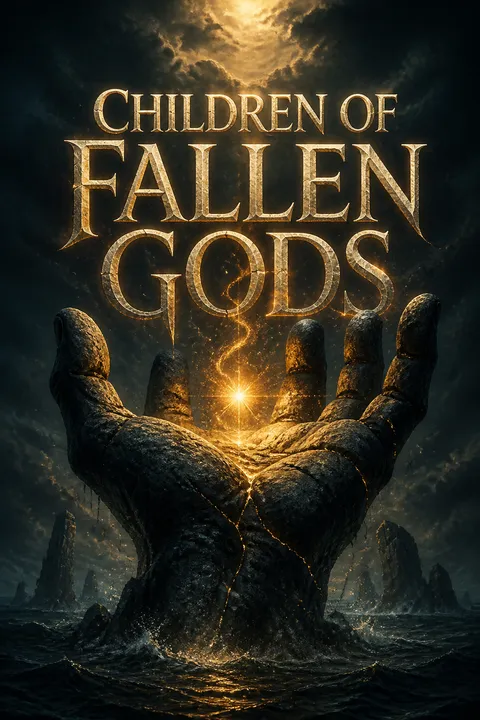
Children of Fallen Gods received mostly positive reviews, praised for its compelling plot, complex characters, and emotional depth. Many readers found it even better than the first book, with engaging new storylines and perspectives. The romance between Tisaanah and Max was particularly well-received. Some readers criticized the pacing and length, finding parts of the book slow or repetitive. The ending left many readers eager for the next installment, though some found it emotionally challenging. Overall, the book was commended for its fantasy world-building and character development.
People Also Read

Characters
Tisaanah Vytezic
The unwilling saviorA former Threllian slave and refugee, Tisaanah is a gifted performer, strategist, and wielder of dangerous magic. She understands how easily people in power disguise exploitation as necessity, because she has lived under masters who treated her life as a possession. Her drive to free the people left in Threll makes her brave and resourceful, but also tempts her to measure her worth by how much she can sacrifice. With Max2, she finds affection that does not depend on usefulness. Her central struggle is to serve others without allowing every cause to claim her body, power, and future.
Maxantarius Farlione
The reluctant generalMax is a gifted Solarie fighter from a celebrated military family, shaped by a catastrophic wartime mistake and the deaths of his relatives. He distrusts glory because he has seen how easily it turns casualties into statistics. His dry humor and practical caution conceal a fierce capacity for tenderness, especially toward Tisaanah1 and the young recruits under his command. He resists leadership because he fears what his power can do, yet his refusal to abandon others repeatedly draws him back into responsibility. Max’s challenge is not to become fearless, but to act without mistaking guilt for a duty to suffer.
Nura Qan
The iron-willed commanderNura is a formidable Valtain strategist whose control of fear and emotion helps her survive institutions that offer her little protection. An orphan welcomed into Max’s2 family, she learned early to pursue competence as a substitute for security. She believes that decisive action can prevent greater disasters, and she is willing to accept moral injury in pursuit of that outcome. Her composure is not the absence of feeling; it is a defense built around grief, ambition, and fear of helplessness. Nura’s bond with Max2 gives her a history she cannot easily discard, even as her political logic drives them apart.
Aefe
The disgraced BladeAefe is a volatile Sidnee warrior who once held the position of princess and now serves among the Blades. She craves her father’s respect but is quick to defend people whom the powerful dismiss. Her impulsiveness earns her punishments and scars, yet it also makes her alert to the cost of inaction. Aefe’s relationship with Siobhan12 gives her a model of earned respect, while Caduan6 challenges the obedience she has mistaken for belonging. Her story explores how a person builds an identity when family, tradition, and political history all claim the right to define her.
Reshaye
The hungry presenceReshaye is an ancient, unstable presence that shares its hosts’ minds and can magnify their magical power. It is curious about human longing but understands love through desire, possession, and fear of abandonment. Its history is fractured, leaving it unable to distinguish its own memories from those of the people it has inhabited. Tisaanah’s1 refusal to treat it as only a weapon unsettles its assumptions, though its capacity for violence remains real. Reshaye embodies the psychological cost of being used without being recognized as a person.
Caduan Iero
The displaced kingCaduan is a thoughtful survivor of the House of Stone, more comfortable studying history than performing the grandeur expected of a king. The destruction of his home leaves him with a severe distrust of comforting promises and a hunger for concrete answers. He learns practical swordsmanship from Aefe4 and responds to her bluntness with unusual patience. Caduan’s grief does not make him crave revenge above all else; he wants to understand the forces that destroyed his people and to prevent further loss. His quiet attention unsettles Aefe4 because it treats her as someone worth knowing.
Ishqa Sai’Ess
The elegant generalIshqa is a celebrated Wyshraj general, disciplined and politically adept, with a strong attachment to tradition and to his family. He can read military risk with precision, yet his confidence in careful plans is tested by an enemy whose methods exceed established knowledge. His restraint often conceals deep loyalties and unresolved grief. Ishqa’s relationship with Aefe4 moves between professional respect and the demands of history. He represents the uncomfortable possibility that a person can be both a capable protector and a source of grave harm.
Zeryth Aldris
The borrowed kingZeryth is a politically skilled Valtain who has spent his life feeling excluded from Ara’s inherited privileges. He wants a crown not only for its authority, but because he believes recognition will answer the humiliation of his origins. His charm and tactical intelligence make him dangerous, while his insecurity makes him susceptible to increasingly destructive displays of power. Zeryth understands that the nobility may never accept him, yet he tries to force their respect rather than build their trust. His rise illustrates how real grievance can become a justification for domination.
Sammerin
The healer with hard choicesSammerin is a gifted healer whose command of flesh could make him a terrifying fighter. He prefers restoration, but knows that healing often requires speed, judgment, and actions others would rather avoid. His calm manner steadies Tisaanah1 and Max2, though it can hide the strain of watching people suffer. Sammerin’s friendship with Max2 predates the worst of their shared history, and he treats Tisaanah1 as a person rather than a symbol. He often becomes the practical conscience of the group, reminding them that care is difficult work, not simply good intentions.
Moth Rethem
The eager young recruitMoth is a thirteen-year-old refugee who joins the military because he wants to help rather than remain a student while others fight. His optimism and impatience make him a source of both warmth and worry for Max2 and Sammerin9. Moth is intelligent enough to notice when adults mistake protection for trust, and his questions force Max2 to confront his own habit of running from responsibility. He is still a child, even when the army dresses him as a soldier.
Serel
Tisaanah's oldest friendSerel is a survivor of the same Threllian world as Tisaanah1 and one of the few people who knew her before she became a symbol of power. His optimism helps him find possibility in poor housing and uncertain freedom, though it does not erase his doubts. He offers Tisaanah1 affection without asking her to perform invulnerability, and he reminds her that a friend matters more than a savior.
Siobhan
Aefe's steady commanderSiobhan is a fair, disciplined Sidnee Blade commander who values accountability more than excuses. She is demanding with Aefe4 because she sees both her potential and the danger of her impulsiveness. Their relationship blends mentorship with genuine affection, though Siobhan does not soften standards merely to make Aefe4 feel accepted. Her steadiness gives Aefe4 a measure of respect she cannot obtain from her father.
Eslyn
The Syrizen captainEslyn is a capable Syrizen and a forceful battlefield companion to Tisaanah1. She supports Tisaanah’s1 magic with her own dangerous skill, yet the strain of deep magic makes her vulnerable to the physical cost of the Orders’ work. Her confidence masks the compromises demanded by her role. Through her, the story shows how institutions can call sacrifice an honor while concealing what that honor consumes.
Ariadnea
The watchful SyrizenAriadnea is a Syrizen whose eyeless face and precise movements make her difficult to read. She serves alongside Nura3 and Eslyn13, and her presence connects the Orders’ secretive operations to the people most exposed to magical risk. Though she rarely explains herself, her loyalty and practical attention are evident in the way she responds to danger.
Filias
The wary organizerFilias is a Threllian refugee who wants more than personal safety; he wants the displaced people to build collective strength. His suspicion of Tisaanah1 reflects the stakes of trusting a leader who is bound to another country’s war. He is blunt, politically alert, and unwilling to mistake promises for plans. His skepticism challenges Tisaanah1 to make commitments that can be tested by consequences.
Riasha
The community's anchorRiasha is an older refugee who brings steadiness and practical care to people forced to rebuild far from home. She understands the losses of displacement without reducing the community to those losses. Her attention to the dead and to shared traditions gives the refugees ways to mourn that are not dependent on political leaders.
Ishqa Sai’Ess
The elegant generalIshqa is a celebrated Wyshraj general, disciplined and politically adept, with a strong attachment to tradition and to his family. He can read military risk with precision, yet his confidence in careful plans is tested by an enemy whose methods exceed established knowledge. His restraint often conceals deep loyalties and unresolved grief. Ishqa’s relationship with Aefe4 moves between professional respect and the demands of history. He represents the uncomfortable possibility that a person can be both a capable protector and a source of grave harm.
Orin
The guarded war-masterOrin is Niraja’s practical war-master and Athalena’s19 half-brother. He watches visitors closely, especially those whose weapons suggest a connection to the Houses that once attacked his people. His history with Aefe’s mother4 gives him knowledge that challenges the official Sidnee account, though his urgency also makes him a political actor rather than a neutral witness.
Athalena
The grieving queenAthalena is a Nirajan queen and mother whose compassion for refugees is tested by the violence they bring to her home. She wants to protect her family and preserve Niraja’s hard-won safety, yet she is willing to share information when silence would leave other people exposed. Her grief is a private force behind her choices, not a simple route to forgiveness.
Ezra
Niraja's cautious kingEzra rules Niraja alongside Athalena19 and works to protect a kingdom distrusted by both Fey and human powers. His caution comes from a history in which outside promises have often concealed danger. He wants his family to live beyond the conflicts that shaped his people, but he knows that isolation cannot make Niraja invulnerable.
Vardir Israin
The imprisoned researcherVardir is a brilliant, unstable researcher whose work helped bring Reshaye5 into the Orders’ world. He treats dangerous questions as opportunities for discovery and shows little instinct for the suffering his experiments create. His knowledge is valuable precisely because it comes from practices other people fear, but his fractured mind makes him an unreliable guide to their consequences.
Eomara
The visionary scholarEomara is a former practitioner and researcher in Meriata with an appetite for questions that conventional institutions reject. She is generous with knowledge but careful about the cost of magic, and she can recognize possibilities without pretending they are safe. Her connection to Max2 gives him a source of expertise outside the Orders’ official machinery.
Vos
The scarred former friendVos is one of Tisaanah’s1 former companions from the Mikov estate. His disfigurement records the price he paid after her escape, and his anger is inseparable from the betrayal he believes she committed against him. He distrusts Tisaanah’s1 promises because he has already suffered for trusting her once.
Orscheid
Aefe's composed sisterOrscheid is the Sidnee heir and Aefe’s4 younger sister. She has mastered the poise expected of a royal daughter, but her affection for Aefe4 remains more spontaneous than court decorum permits. She gives Aefe4 one of her clearest experiences of being loved within her family.
Atrick Aviness
The rival claimantAtrick Aviness is a powerful Aran claimant whose forces oppose Zeryth’s8 new rule. He treats Tisaanah1 as a valuable source of power rather than simply a battlefield opponent, and his political challenge places her life at risk. His claim to authority gives the country’s competing factions a human face.
Plot Devices
The Blood Pact
A contract that tightensTisaanah’s1 Blood Pact binds her to the Orders after they help her defeat the Threllian Lords. Zeryth8 exploits that obligation by invoking the contract during his war, while a separate blood spell ties her life to his. The two bindings turn political service into a bodily constraint: she cannot simply refuse, and Max2 cannot kill Zeryth8 without risking her life. The pact dramatizes how a bargain made under unequal conditions can preserve its formal terms while changing its practical purpose. It also gives Tisaanah1 a recurring test: how much can she resist coercion without abandoning the people she meant to save?
Deep Magic
Power paid for in lifeBelow the familiar streams of Valtain, Solarie, and Fey magic lies a deeper current that can consume the life force of its wielder or its target. Reshaye5 and the Syrizen draw on related depths, while Vardir21 helps Max2 and Tisaanah1 understand why their bodies are changing. Nura3 later uses this magic to strengthen the Syrizen and to pursue weapons against the Fey. Its power is never a free escalation: blackened veins, illness, bodily decay, and death mark the debt. The device links supernatural cost to political cost, since every attempt to gain overwhelming force creates new people who must pay for it.
Stratagrams
Circles that move and bindStratagrams are drawn symbols that allow Wielders to travel across distance, support magical effects, and in some cases restrain a person’s power. Characters use them to move armies, send letters, and escape dangerous locations. Aviness’s25 people tattoo Stratagrams onto Tisaanah1 to suppress her magic, while Max2 and Tisaanah1 later rely on them to travel when exhausted. Their flexibility makes them both practical tools and instruments of control, depending on who draws the pattern and who is made to bear it.
Ilyzath
A prison that weaponizes memoryIlyzath is an ancient prison that appears to answer its visitors’ private fears. Its silent corridors and shifting perceptions make Max2 and Tisaanah1 see loved ones in danger, while its experience intensifies Max’s2 belief that he belongs among the condemned. Vardir21 is held there, making the prison both a source of information and a psychological threat. Its influence follows Max2 after he escapes, so the question of whether Ilyzath is alive matters less than the damage its visions leave behind.
The Fey Map
A guide to hidden powerAn ancient map held in Niraja marks places believed to contain unusually strong magic or powerful artifacts. Human visitors attempt to steal it, and the attacks on Fey settlements follow the locations marked upon it. The map gives the violence a motive beyond conquest: desperate human nations hope to gain an advantage in their own wars. Because its legends may be partly false, the map also shows how a belief can drive real atrocities even when its promised reward is uncertain.
About the Author
Other books by Carissa Broadbent




Download PDF
Download EPUB
.epub digital book format is ideal for reading ebooks on phones, tablets, and e-readers.








