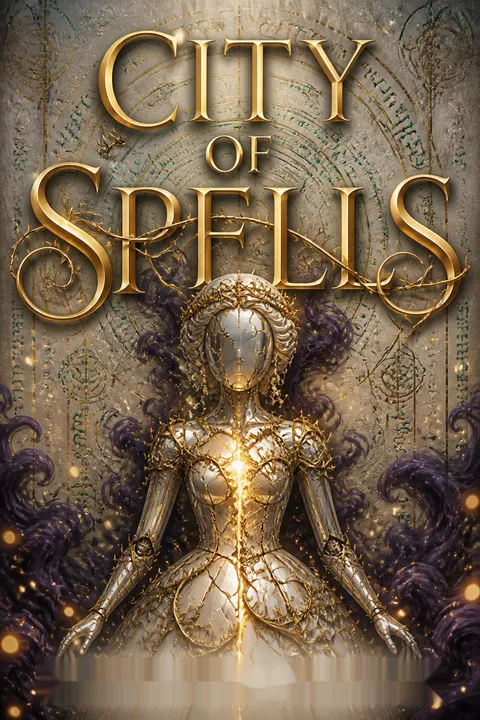


Plot Summary
Prologue
Vea Akintola knows her infant son Malik’s magic is feared to bring war, so she lets her mother perform a forbidden spell to hide his powers and memories. The ritual is meant to save him, but it erupts in black fire.
Malik vanishes, Vea dies, and the secret of his birth is buried with her. The act leaves her family grieving and her people cursed, while the child grows up without knowing what was taken from him.
The opening makes protection inseparable from violence. Vea chooses to erase her son’s history because a prophecy seems to make his future dangerous, but the spell destroys her and leaves the child unable to understand either his gifts or his losses. Her choice is loving, yet it repeats the logic of the world she hopes to prevent: one person decides another’s life in the name of safety. The black fire becomes both a literal family wound and a warning about what happens when fear is mistaken for certainty.
Tavia Robs Rishiya
Far from Creije, Tavia tracks Nolan Kane, Rishiya’s boastful busker, hoping to steal the magic her scattered rebellion needs. She points Wesley’s gun at him, then uses a duplicate charm to surround him with six copies of herself. The copies help her seize his backpack, but Nolan’s friends arrive and he grabs Tavia from behind with a knife at her throat.
She headbutts him, escapes with the bag, and reaches a bar, only to discover its tracking charm has led Nolan’s crew straight to her. Karam, the disciplined fighter who has been training her, arrives in time to help her drive them off with a blinding charm. Tavia gets the magic, but her lone-wolf raid confirms how far she still has to grow as a leader.
Tavia’s first victory is real, but it is not clean. She can improvise with magic and absorb Wesley’s lessons, yet she still measures competence by whether she can operate alone. The tracking charm exposes the cost of that belief: a stolen advantage can become a danger to everyone who shelters her. Karam’s rescue complicates Tavia’s self-image, while the successful escape gives her a needed proof that she can take risks and still bring resources back to the rebellion.
Ashwood Takes High Town
As Dante Ashwood’s army burns through Creije, Zekia stands beside him while Wesley, her former mentor, watches in handcuffs. She wants Wesley to join the Kingpin and calls the coming bloodshed necessary, even as Ashwood kills a captured defender and orders the district’s people slaughtered. In a separate show of reach, Ashwood demands support from the other realm Kingpins.
When Aurelia of Volo refuses, Zekia kills her with a slash of magic, and Simran of Wrenyal yields rather than face the same fate. Meanwhile, Zekia’s visions and mind magic torment Wesley, but she finally reveals that the power awakening in him is his own. Wesley recognizes Crafter staves on his skin and realizes he was never merely borrowing magic.
Zekia’s conviction is frightening because it is built from a child’s need to make suffering add up to something. She treats obedience as proof of love and violence as an unpleasant tool for achieving safety. Wesley’s revelation offers an alternative kind of belonging, but it arrives inside a prison where neither of them can act freely. Ashwood’s murder of Aurelia makes his political ambition unmistakable: persuasion is only the first instrument, and terror is waiting behind it.
A Coalition Takes Shape
In the Uncharted Forest, Saxony clashes with her grandmother, Amja, who refuses to risk their Crafter Kin by joining the war. Tavia, meanwhile, strikes a bargain with Casim, Rishiya’s underboss, promising Wesley’s protection in exchange for buskers and help rallying the other city leaders.
When Saxony and Tavia quarrel over Wesley and Zekia, Karam steadies the discussion and helps Saxony persuade Asees, a Wrenyi Liege, to act. Together, Saxony and Asees summon the Lieges across four realms. Some refuse, but eleven commit their Kins to the fight. The alliance gives the rebels the beginnings of a true army, and Saxony discovers that leading means making decisions before her family agrees with them.
The rebellion becomes viable when its leaders stop waiting for perfect trust. Saxony risks defying the authority that raised her, while Tavia uses the underworld’s transactional habits to secure help. Neither strategy is wholly selfless, and both women resent the other’s motives. Their uneasy cooperation nevertheless shifts the group from a circle of personal loyalties into a political force. The summoned Lieges make that change visible: people who once survived by isolation now have to decide whether distance can still protect them.
The Loj Spreads
While patrolling the forest, Tavia finds Nolan drunk and hiding with another cache of magic. He tries to escape with a vial of Loj, the mind-control elixir that caused the sickness in Creije and helped destroy Tavia’s mother. Tavia catches him and presses him for information.
Nolan admits that Ashwood’s Crafters are supplying buskers across Uskhanya directly, bypassing underbosses such as Casim, who does not even know his authority is being undermined. He also says Wesley has been moved to Tisvgen. Tavia’s group briefly loses control of Nolan during a clash with the newly arrived Liege Lionus, and he escapes. The discovery makes the threat larger than Creije, so Karam decides to travel to Tisvgen and bring Wesley back.
The Loj turns the rebellion’s social world against itself. Ashwood does not merely conquer districts; he bypasses the leaders who once organized the magic trade and recruits buskers with promises of survival and reward. Nolan is culpable, but his small ambitions also expose how coercion becomes attractive when people expect defeat. Tavia’s anger at the elixir is personal because it recalls her mother, yet the spread forces her to treat private grief as a public emergency.
Wesley Jumps for Freedom
Wesley has been held in a coastal mausoleum while Zekia tries to make him accept Ashwood’s cause. He has already learned that he can escape, but refuses to leave without her, believing he owes her for the earlier betrayal that placed her in Ashwood’s reach. At last, he uses his newly awakened Intuitcrafter power to overwhelm Zekia with visions, then leaps from a high window into the sea.
He swims until he reaches the Uncharted Forest and finds Tavia there. Their reunion is tender beneath their familiar insults, but the camp has little time to celebrate. Ashwood reaches the Crafters through their minds, announces that Creije has fallen, and sends an army against the forest. The rebels flee the burning refuge.
Wesley’s escape is not a simple triumph of cunning. He has the means to leave earlier, but guilt keeps him tethered to Zekia, even as she becomes one of his captors. When he finally jumps, he chooses survival without having solved the moral debt he feels. His return to Tavia restores a vital relationship, but Ashwood immediately turns the reunion into another test: Wesley’s home and the rebels’ refuge can both be taken from them.
The Shores Ambush
Karam, Arjun, and Asees reach the Shores of the Dead on their way to rescue Wesley, but Ashwood’s Loj-controlled soldiers spring an ambush. Asees is stabbed before Karam can stop the attack, and Arjun’s attempt to heal her fails. He and Karam extract a vision from a dying Intuitcrafter: Zekia appears to shoot Tavia on a bridge. The enemy wounds Karam, but Arjun kills the attacker and keeps her alive.
After mourning Asees and burning the dead according to Wrenyi custom, the pair find rowboats and use Arjun’s weather magic to cross toward Rishiya. There they discover the forest in ruins. Saxony’s ring, given to Karam as a way home, begins to glow and guides the two survivors toward the estate where the others have taken shelter.
The ambush makes the cost of Karam’s duty immediate and irreversible. She set out to retrieve one friend, but loses Asees and several members of the Grankan Kin instead. Arjun’s grief and Karam’s need to keep moving pull in opposite directions; their funeral gives grief a ritual shape without pretending to undo it. The vision of Tavia’s death then converts mourning into a dangerous obligation. Karam returns not with the rescue she promised, but with a warning she must decide how to use.
Wesley’s Buried Name
After the forest battle, Saxony confronts Amja and her father about the black fire Wesley used to destroy a tornado. They reveal that he is Malik, Saxony’s infant brother, whose powers and memories were hidden by the forbidden spell in the prologue. Their family feared visions that predicted war if Malik grew up with magic, so Vea sacrificed herself to send him away.
The truth explains why Wesley’s staves resemble Saxony’s and why the family hid his identity even from him. Wesley rejects the name and the family’s claim, furious that adults made his life a consequence of their fear. Tavia steadies him when his magic surges, and, under dream dust, he encounters Vea and begins to consider that his future belongs to him.
The revelation does not restore Wesley’s childhood; it exposes how thoroughly it was taken from him. His family’s attempt to prevent prophecy created the very isolation that made him vulnerable to Ashwood’s grooming. Wesley’s resistance to the name Malik is therefore not mere stubbornness. It protects the identity he built in Creije from being overwritten once again by other people’s expectations. Vea’s appearance offers no command to return, only the possibility that past damage need not dictate the person he chooses to become.
A Family Finds Its Shape
Karam and Arjun follow Saxony’s ring out of the ruined forest and reach the hidden estate, where the surviving allies reunite. Karam tells Tavia privately about the vision of Zekia shooting her, and Tavia asks her not to tell Wesley or Saxony, fearing they would abandon any attempt to save Zekia. At the estate, Amja recognizes that Saxony has already been leading and accepts her as Liege.
Tavia then notices that Saxony and Wesley resist Zekia’s Loj because they share her blood. She proposes that Crafter blood could form an antidote, protecting their army and later freeing the enthralled. The idea gives the scattered survivors both a leader and a practical answer to Ashwood’s most effective weapon.
This turning point converts inheritance from a burden into a tool. Saxony’s authority is no longer simply assigned by ancestry; Amja recognizes the leadership Saxony has demonstrated. Tavia, whose strength lies in noticing the practical details others overlook, connects shared blood to resistance against the Loj. Yet the secret about her vision shows the emotional cost of strategy: protecting Wesley’s hope may require withholding information that could protect Tavia herself.
Schulze Accepts the Alliance
Wesley summons Doyen Fenna Schulze to the estate and asks her to unite her forces with the buskers and Crafters. Schulze distrusts all three groups, but Ashwood has taken Creije and is threatening Yejlath, leaving her few alternatives. Wesley presents a plan: Crafters will make the army resistant to the Loj, and Star Eggs filled with time magic will freeze Ashwood’s forces while allies divide between Creije and the government city.
Schulze accepts, agreeing to lead one half toward Yejlath while Arjun commands the other force. Her decision transforms a fragile rebellion into a coordinated campaign. For the first time, the military, the underworld, and the Crafters have a shared plan rather than competing claims to authority.
Schulze’s agreement rests less on sudden trust than on the collapse of her ability to act alone. Wesley understands that her political caution cannot be argued away, so he gives her a plan that protects her immediate interests while requiring cooperation. The alliance remains morally uneasy: each side has reason to distrust the others, and none has clean hands. Its significance lies in making that distrust subordinate to a specific shared task, not in pretending it has disappeared.
Creije Freezes in Time
Wesley, Tavia, Saxony, and Karam slip into occupied Creije, where they see Ashwood’s soldiers abusing a civilian but cannot risk exposing their mission to intervene. At the central bridge, Saxony and Wesley use their magic to lift the group to its tower, despite Tavia’s fear of heights. Tavia sets six Star Eggs in place, and Saxony ignites their fuses.
The devices spread time magic over the city, freezing Ashwood’s forces while leaving the water routes moving. The opening is meant to let Schulze and Arjun advance on Yejlath as the rest of the army retakes Creije. Before they can begin, Ashwood and Zekia arrive by train on the still-flowing river and confront the four rebels on the bridge.
The plan succeeds by exploiting a limit rather than overpowering Ashwood outright: the city can be stopped, but the waterways cannot. That distinction creates the opening and the danger at once. The team’s refusal to save the tortured civilian is painful because it forces strategy to compete with immediate compassion. Their choice is not framed as heroic purity; they accept a local failure in order to prevent a larger one, carrying the moral cost into the battle that follows.
Tavia Breaks Ashwood’s Hold
On the bridge, Zekia appears to shoot Tavia, but the apparent body is an illusion that conceals Tavia’s movement. She retrieves the bullet carrying Ashwood’s blood and uses it to activate a mirror doll, which transfers her blows onto the Kingpin. Zekia turns against Ashwood, briefly controls his shadow demons, then destroys them by releasing her magic, leaving herself powerless but free of his command.
Wesley injects a time serum into the doll, reversing Ashwood’s stolen years and stripping away his shadowed power. When the serum leaves him human, Wesley shoots him through the heart. The prophecy that began as a warning becomes a weapon against the man who manipulated it, while the people Ashwood tried to bind make their own choices.
The victory depends on coordinated acts of agency, not a single chosen hero. Tavia uses deception and a prepared device, Zekia makes a costly break with Ashwood, and Wesley accepts that family is defined by choices rather than blood claims. The time serum reverses Ashwood’s accumulated power, but it cannot reverse the damage he caused. His death ends his control, not the grief or political repair that follow. The apparent prophecy is defeated by people acting together instead of submitting to its interpretation.
Creije Opens Its Doors
With Ashwood dead, Schulze’s forces and the rebels defeat his remaining army in Yejlath. Saxony’s blood-based cure is distributed in Creije and Yejlath, then prepared for the other cities. People controlled by the Loj receive a chance to recover, while willing collaborators face trial. Wesley and Schulze announce a new alliance that makes magic legal under safeguards and promises Crafters the right to live openly.
Wesley refuses to replace Ashwood as Kingpin and stays in Creije to rebuild it. Saxony and Zekia prepare to return to Rishiya with Karam, while Arjun carries the grief of Asees’s death. Tavia, who once planned to seek a home in Volo, decides to remain beside Wesley and help restore the city that shaped them.
The ending resists the easy transfer of power from one charismatic ruler to another. Wesley’s refusal to inherit Ashwood’s position matters because victory is measured by changing the structures that made the Kingpin’s rule possible, not merely by removing him. The cure distinguishes victims controlled by the Loj from people who chose Ashwood’s politics, preserving responsibility without treating every compromised person as equally guilty. Tavia’s decision to stay also revises her idea of home: belonging is no longer a distant destination but a community she has helped rebuild.
Analysis
City of Spells asks what happens when protection becomes a license to control. Ashwood sells domination as rescue, while Zekia accepts violence because she believes fear has shown her the only survivable future. Vea and Amja make a quieter version of the same mistake when they hide Malik’s powers to prevent a prophecy. These choices are not morally identical, but they share a dangerous premise: that someone can be made safe by removing their right to choose.
The rebellion’s counterargument is not that individual choice solves every crisis. Tavia, Wesley, Saxony, and Karam often make compromises, conceal information, or accept immediate losses for a larger aim. What distinguishes their decisions from Ashwood’s is that they remain answerable to one another. The group argues, revises plans, and recognizes that even a useful person cannot be treated as property. Wesley’s identity matters here: his blood and staves connect him to a family and a destiny, but neither connection cancels the life he made in Creije.
Magic works as both material power and social infrastructure. The Loj turns a person’s mind into contested territory; the cure requires cooperation across kinship lines; time magic changes a city into a battlefield; and the mirror doll makes Ashwood vulnerable through a representation of himself. Each device asks who controls the conditions under which other people act. The final political settlement therefore matters as much as the Kingpin’s death. Wesley refuses to inherit Ashwood’s office, Schulze accepts a limited alliance, and the cure separates people coerced by the Loj from those who chose its cause.
The emotional resolution is deliberately local. Tavia does not find belonging by abandoning Creije for the homeland she once imagined. She recognizes that home has already been built through shared work, stubborn loyalty, and the people who stayed. The novel’s answer to inherited trauma is not forgetting the past, but refusing to let it dictate the next decision.
Review Summary
City of Spells received mostly positive reviews, with readers praising its action-packed plot, character development, and satisfying conclusion to the duology. Many enjoyed the magical world-building, witty banter, and relationships between characters. Some found the beginning slow or confusing, but felt the story improved as it progressed. The book was often compared to Six of Crows and appreciated for its darker fantasy elements. Overall, fans of the first book were pleased with this sequel, though a few readers felt it didn't fully meet their expectations.
Characters
Tavia
Streetwise magic runnerA gifted busker from Creije, Tavia survives through quick hands, sharper observation, and an instinct for turning whatever magic she has into an advantage. She has spent years learning from Wesley, whose ruthless competence she admires even when she resists his influence. Beneath her humor and bravado is a fierce attachment to the people she calls family, sharpened by the loss of her mother. Tavia’s instinct is to act before anyone can tell her she is unready. That independence makes her resourceful, but it can also isolate her from allies. Her deepest struggle is to lead without becoming a copy of the people who taught her how to survive.
Wesley
Creije’s polished underbossWesley is a former street child who made himself powerful through performance, strategy, and a reputation for being dangerous. He uses immaculate clothes and dry humor as armor, concealing a deep suspicion that dependence will expose him to harm. His relationship with Tavia is built from years of mentorship, loyalty, and unresolved tenderness. Wesley’s understanding of leadership is practical and often ruthless: he believes people need someone willing to make the decisions they fear. Yet beneath the self-serving persona is a persistent capacity for responsibility. He is drawn to control because chaos once defined his life, and his challenge is to protect others without turning protection into possession.
Saxony
Fire-wielding Crafter leaderSaxony is a powerful Energycrafter raised within a close-knit Kin, where inherited duty and communal safety shape nearly every choice. She is passionate, principled, and determined to protect her sister and the people who depend on her. Her affection for Karam gives her a place of tenderness amid war, while her fractured friendship with Tavia forces her to confront how easily hurt becomes judgment. Saxony often waits for permission from people whose caution she understands but cannot share. Her strength lies in combining conviction with the ability to persuade others, even when doing so means challenging her family’s authority and accepting responsibility for a wider world.
Karam
Warrior and steadfast protectorKaram is a fighter shaped by rigorous discipline, familial duty, and the protective traditions of the Rekhi d’Rihsni. She trusts physical skill because it offers clarity in a world where magic can alter minds and realities. Her bond with Saxony is intimate and grounding, while her friendship with Arjun gives her a history beyond the current rebellion. Karam often becomes the group’s mediator, though she would rather act than manage other people’s disputes. Her loyalty is both her greatest strength and her greatest danger: she feels responsible for everyone she loves and must learn that protecting them does not mean controlling every outcome.
Zekia
Burdened young IntuitcrafterZekia is a gifted young Crafter whose Intuitcrafter visions can overwhelm her with possible futures. The expectations placed on her make her desperate to prove she can fulfill a role larger than her years. She is perceptive and capable of tenderness, but fear and isolation leave her vulnerable to anyone who offers certainty. Her relationship with Wesley carries the complicated force of affection, dependence, and old hurt. Zekia wants to protect magic and the people she considers hers, yet she struggles to distinguish protection from obedience. Her character reveals how a young person can be both responsible for harm and still shaped by manipulation.
Dante Ashwood
Kingpin of dark magicAshwood is the Kingpin of Uskhanya, a master of stolen magic who presents domination as salvation. He recruits through promises of order and protection, then uses the Loj elixir, fear, and violence to make dissent dangerous. His attention to Wesley and Zekia is intensely personal, but he treats affection as a claim of ownership. Ashwood’s history of rejection fuels his hunger to become impossible to ignore, and he converts that wound into a political vision where power is the only reliable form of safety. He is most dangerous when he makes coercion sound like care and persuades vulnerable people that their freedom is the threat.
Amja
Rishiyat Kin elderAmja is an experienced Crafter and elder whose authority comes from surviving an earlier era of conflict. Her caution protects her Kin from dangers she remembers firsthand, but it can also make her mistake retreat for wisdom. She loves Saxony and wants to keep her family safe, even when her decisions strain their trust. Amja’s relationship with tradition is complicated: she treats inherited rules as safeguards until experience forces her to recognize the harm they can conceal. Her influence is maternal, stern, and deeply tied to the choices that shaped the family.
Bastian
Saxony’s devoted fatherBastian is Saxony’s father, a steady presence in a family burdened by old grief and difficult silences. He is protective without sharing Amja’s authority, and his instinct is to shield the people he loves from further loss. His care for Saxony is evident even when fear makes him hesitate to support her plans. Bastian’s memories of Vea and their children reveal a man who has endured sorrow by keeping parts of it unspoken. His affection is quiet and practical, shaped by the belief that survival matters more than ambition.
Asees
Wrenyi Crafter LiegeAsees leads a Crafter Kin in Wrenyal and carries the responsibility of protecting people who have already suffered under Ashwood’s expansion. She is cautious about old spells and alliances, not from indifference but from a hard-earned awareness of what leaders risk on behalf of others. Her bond with Arjun is affectionate and trusting, while her growing respect for Karam and Saxony makes her willing to reconsider isolation. Asees embodies leadership under pressure: she must weigh her people’s immediate safety against the wider consequences of refusing to act.
Arjun
Asees’s loyal secondArjun is a Wrenyi Spiritcrafter, warrior, and trusted friend to Karam. His loyalty to Asees is profound, and he takes seriously the responsibility of standing beside her even when their judgments differ. He can be stubborn and proud, but his humor and warmth make him an anchor for those who know him. Arjun’s fighting skill and command of weather magic complement Karam’s physical discipline. He carries the expectations of his Kin alongside an intense personal devotion, which makes the distinction between public duty and private grief difficult to maintain.
Fenna Schulze
Uskhanyan elected DoyenFenna Schulze is the elected Doyen of Uskhanya, a politician whose public work has focused on reducing the dangers of the underrealm. She has good reason to distrust buskers and Crafters, since their powers and trades have caused real harm. Schulze is pragmatic rather than sentimental; she weighs alliances by what they can accomplish and what they may cost. Her insistence on precautions reflects a leader responsible for a population larger than the group before her. She must decide whether old political divisions still offer protection when a common enemy threatens the institutions she serves.
Vea Akintola
Crafter mother and seerVea is Saxony and Zekia’s mother, a powerful Spiritcrafter whose contact with the dead makes her unusually sensitive to grief and memory. She is loving, quick-witted, and willing to make painful choices for her children, but her knowledge of the future places an unbearable weight on her. Vea’s choices reveal the danger of treating a vision as a verdict. Even in the brief glimpses her children retain, she is not merely a martyr or idealized parent; she is a complicated woman trying to protect her family in a world that offers no harmless option.
Casim
Rishiya’s cautious underbossCasim is Rishiya’s underboss, accustomed to protecting his influence and avoiding risks that do not benefit his city. Tavia understands that his fear of Wesley and concern for his own position can be turned into a useful alliance. Casim is neither a principled idealist nor a simple coward; he is a political operator trying to survive a power struggle that threatens to make his office irrelevant.
Nolan Kane
Rishiya’s reckless buskerNolan is a confident Rishiyat busker who sells magic and trusts his salesmanship more than his judgment. He wants money, security, and a place on the winning side, which makes him susceptible to Ashwood’s promises. His encounters with Tavia expose both his vanity and his willingness to endanger others for personal advantage. Nolan is a small player in a large war, but his choices show how individual self-interest can help an authoritarian power spread.
Plot Devices
The Loj Elixir
Turns fear into obedienceThe Loj is a mind-control elixir Ashwood distributes through Crafters and buskers. It can bring civilians and Crafters under his influence, turning them into soldiers while blurring the line between willing follower and victim. Its spread through Creije and the other cities drives the rebellion to build an army quickly, and its effects make every captured person a possible weapon. The characters eventually use shared Crafter blood to develop a countermeasure, allowing those controlled by the elixir to be distinguished from collaborators who chose Ashwood’s cause.
The Prophecy and Visions
Make possible futures politicalIntuitcrafter visions show possible futures, while a prophecy about time, strange hands, and betrayal becomes a recurring source of fear. Zekia interprets visions as instructions and believes Ashwood can prevent the worst future. Tavia and Wesley are more skeptical, arguing through their actions that a vision does not remove the right to choose. The prophecy’s value lies less in predicting a fixed ending than in showing how people reshape their decisions around what they think they have seen. Its ambiguity helps Ashwood manipulate Zekia and later challenges the family’s belief in inherited destiny.
Star Eggs and Time Magic
Freeze the occupied cityStar Eggs are small explosive devices that can disperse magic across a wide area. Tavia recognizes their use after seeing Nolan employ one as an acid weapon, then the rebels adapt the devices to carry time magic. When ignited from Creije’s central bridge, they halt the city’s inhabitants and Ashwood’s forces long enough for the allied army to move. Waterways remain outside the freeze, a limitation that lets Ashwood and Zekia approach by train. The devices turn a magical trick into battlefield logistics and give the rebellion a way to split its attack between Creije and Yejlath.
The Mirror Doll
Links a puppet to AshwoodA mirror doll can be connected to a person through blood, allowing harm done to the doll to affect its living counterpart. Tavia carries one as a dangerous but familiar busker’s tool. During the confrontation on the bridge, she uses Ashwood’s blood on the doll to bind and injure him, creating a way around his magical defenses. The doll also gives the rebels a target for the time serum, letting them affect Ashwood through a substitute body. Its grotesque transformation makes visible the story’s recurring question of whether power can be separated from the people who wield it.
Crafter Blood and Staves
Expose hidden kinship and immunityCrafter staves mark a person’s magical identity, while blood carries a connection that can affect how magic works. Wesley’s silver staves appear as his powers awaken, and their resemblance to Saxony’s helps uncover his hidden origins. Shared blood also explains why Saxony and Wesley resist Zekia’s Loj. Tavia builds on that resistance to propose a blood-based antidote. The device links family history to practical strategy, but it is also a counterweight to destiny: inherited power matters, yet the characters decide what they will do with it.
About the Author
Other books by Alexandra Christo


Download PDF
Download EPUB
.epub digital book format is ideal for reading ebooks on phones, tablets, and e-readers.








