

Plot Summary
Prologue
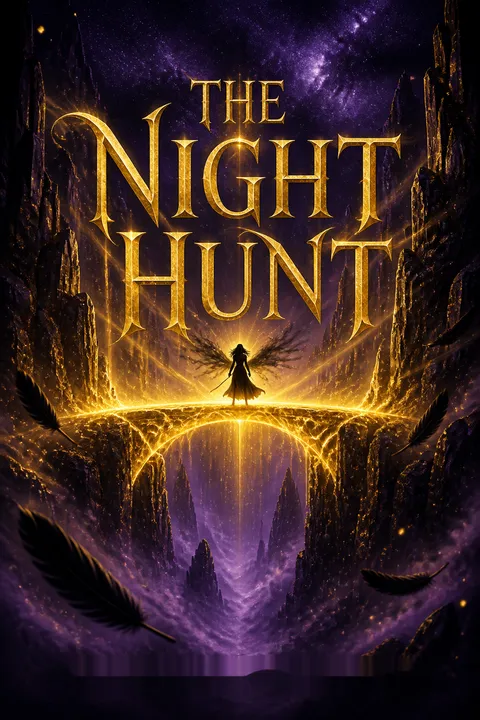
The story opens with a death, then turns its attention to the monster responsible: Atia, the last known Nefas, a creature who prefers to be remembered by name. Other monsters hide behind sounds and rumors, but Atia treats recognition as a source of power. The Gods resent her reputation.
Their Heralds announce death with wind chimes, while Atia collects fear from the living. Before the plot begins, the prologue establishes the struggle that will shape it: who gets to name a creature, define its purpose, and decide whether it deserves to exist.
The prologue frames naming as a form of self-possession. Atia’s insistence on being known is not simple vanity: she has lost her family and her kind, and a name offers resistance to erasure. The contrast between her chosen identity and the Gods’ anonymous monsters also establishes a political tension. Power belongs to whoever controls the story of what a creature is. The opening promises a conflict not only over survival, but over whether Atia can claim a self beyond the role imposed on her.
The Last Nefas
At seventeen, Atia has spent three years alone since the Gods killed her parents, moving between villages and feeding on human fear. At a Rosegarde lakeside, she shares a hunt with Sapphir, a vampire whose repeated killings are making her age under the Gods’ curse.
Sapphir kills their prey after Atia finishes feeding, then flees when wind chimes announce the arrival of Silas, a Herald who guides the dead. Silas recognizes Atia as a Nefas and warns that the Gods could punish her for keeping murderous company. Atia refuses to be intimidated. She has never killed a human herself, and believes the Gods will preserve her as the last of her kind.
Atia begins by treating fear as food and danger as something that belongs to other people. Her judgment of Sapphir’s killings shows that she has a moral boundary, even while she enjoys invading human minds. Silas’s warning exposes how little safety her confidence actually provides: the Gods’ rules can reach her through their servants. Their first meeting also makes each a witness to the other’s compromised position. Atia is a monster who resists being defined by her kind, while Silas is a servant who quietly resists the role assigned to him.
The Seer Protects Tristan
At the Covet tavern, Atia passes herself off as a seer and befriends Tristan Berrow, a young scholar whose fascination with monsters makes him less frightened of her than he should be. When a smoke-scented collector threatens to make Tristan watch his parents suffer over a debt, Atia breaks the man’s nose and drives him away with a fabricated threat to expose his secrets.
Later, she follows the collector as he stalks Tristan through a dark alley. She enters the man’s mind and finds the violence he has committed, as well as his terror of Vail, Queen of the Alchemy Kingdom. Atia’s anger overwhelms her control. She feeds until the man dies, and Tristan confirms what she already fears.
Atia’s intervention reveals a protective impulse that contradicts her insistence on staying detached from humans. The collector’s threat strikes the same nerve as her parents’ deaths, so her defense of Tristan becomes entangled with old grief. That history explains her fury, but does not excuse the loss of control. By killing a human, Atia crosses the rule she has spent years trying not to break. Her moral self-image cannot survive unchanged: she has become more like Sapphir, despite believing that fear is preferable to bloodshed.
A Curse Becomes a Bargain
Silas arrives at the alley and invokes the Gods’ curse, which will strip Atia of her powers. Tristan follows Atia through a gateway, then stays beside her as her magic begins to fail. When a lykai attacks, Silas saves Atia and reveals a way to reverse the curse: she must absorb the blood and power of a vampire, a banshee, and a God, then drink from the River of Eternity.
In exchange, Atia must help Silas kill a God so he can recover his humanity and lost memories. The Gods have placed a bounty on her, leaving little time to refuse. Tristan insists on joining because Vail’s agents may also target him. Atia accepts Silas’s bargain and sets out with both men.
The curse turns Atia’s abstract fear of losing herself into a bodily crisis: her powers, form, and ability to escape are disappearing. Silas’s offer exploits that desperation, but it also gives her a route she can choose rather than simply endure. Their alliance begins as mutual utility, with each treating the other as a means to regain what the Gods took. Tristan’s decision complicates that transaction. He joins not because he has supernatural strength, but because his knowledge and loyalty matter, making the group a chosen partnership rather than a pair of monsters using a human.
Sapphir's House of Teeth
Atia seeks Sapphir’s help locating a vampire, but finds the vampire’s home filled with a nest waiting to claim the bounty on her head. Sapphir has chosen the Gods’ favor over their uneasy friendship, hoping to recover her lost youth. Silas resists the vampires, while Atia lets them lead the group downstairs so she can see the lair before striking back.
In the fight, Tristan uses Silas’s Godly dagger to kill one vampire, and Atia kills Sapphir with the same weapon. She tastes the vampire’s blood and feels part of her power return. Tristan also frees a chained captive, Cillian, a wounded half-banshee who can sense his kind. After Cillian offers to help find them, Atia lets him join the hunt.
Sapphir’s betrayal confirms Atia’s fear that companionship is only a temporary truce, but killing her does not make Atia triumphant. She must consume the blood of someone she once hunted beside, turning friendship into the price of survival. Cillian’s rescue offers a different model of connection: Tristan helps him before knowing whether he is useful, and Atia eventually accepts his help without pretending he is harmless. The group grows through acts of care and practical need, while each member carries a history of being treated as disposable.
Thia Sees the Phial
In the Fire Kingdom, Cillian leads the group to Thia, an oracle who feeds on glimpses of people’s destinies. Her mirror shows Atia a phial of River of Eternity water held by Vail, and reveals Thentos, the God of Death, in Silas’s erased past. It also gives the group a warning that monsters are disappearing.
Thia directs them toward a banshee cave, but inside they find a dozen dead banshees, including Cillian’s kin. Before they can understand the slaughter, the Sisters of Erinyes arrive. These curse spirits seize Atia and Silas, speaking as if they know Silas’s lost history. Their presence makes clear that the Gods are no longer relying on a slow curse to stop the hunt.
Thia’s visions turn private uncertainty into concrete direction, but they do not provide uncomplicated truth. Atia receives a lead to the phial and a face tied to her trauma; Silas receives only the disturbing label of betrayer. The dead banshees make the cost of the Gods’ expanding campaign visible, and Cillian must confront a family he barely knew through its slaughter. The Sisters’ arrival raises the stakes from a personal quest to a coordinated purge. Their knowledge of Silas hints that his missing past is not an incidental mystery.
The River Crossing
The Sisters overpower the group and hold Silas in place with a spell. When Atia calls on Cillian to use his banshee voice, he focuses his scream on the attackers, incapacitating them long enough for Tristan and Atia to escape. The Sisters have destroyed the bridge over a cold-flame river, so Atia dives in and nearly freezes while memories of her parents flood back.
Silas breaks free and pulls her from the water before she drowns. Shaken but alive, the group turns toward the Alchemy Kingdom, where Vail keeps the phial they need. Tristan admits he once studied there and helped locate monsters for the queen’s scholars, before learning that their research was being used to capture them.
Cillian’s scream converts a feared, untrained ability into a deliberate act of protection. The rescue depends on trust: Atia asks him to act, and he accepts the risk despite fearing his own power. The river tests Atia differently. It weaponizes the guilt she carries about her parents, and her physical near-death shows how memory can overwhelm her as thoroughly as magic. Silas’s return for her is an intimate counterweight to his earlier role as the Herald who cursed her. Tristan’s history with Vail also turns his academic curiosity into a source of responsibility.
Vail's Living Collection
The group uses the Museum of Monsters to confirm that Vail displays the bodies of creatures she has collected, then stages a public attack so her guards will take them into the palace. Tristan presents Cillian as a rare male banshee and disguises Atia’s identity, while Silas passes as a mysterious supernatural specimen. Vail’s wards suppress ordinary monster magic, but Silas can still use his Herald powers.
Once the guards bring them to the cells, Cillian senses a banshee nearby. Silas knocks down the guards, and the group discovers that Vail keeps a full banshee as a living enforcer. The creature attacks, and Atia kills her with Silas’s dagger, absorbing the blood and power she needs. In the struggle, Vail’s phial shatters.
The palace caper exposes the difference between studying monsters and treating them as objects. Vail’s museum turns living histories into trophies, while her hidden cells make the violence behind that display literal. The group survives by performing the very spectacle Vail wants to consume, then using her appetite for rare creatures against her. Atia’s second supernatural kill is not an accident; Cillian’s testimony helps her distinguish necessity from vengeance. Yet the shattered phial threatens to make that victory incomplete, showing that every gain in this story has a cost.
The Petal Knows
Atia hides Vail in a Water Kingdom manor and summons Thia to search the queen’s memories. Thia learns that the High Gods gave Vail the last phial available in the human realm and ordered her to destroy monsters. Tristan then finds a route into the Library of Souls, where a dried iris petal left by Atia’s father guides them to the entrance.
The Keeper of Files says Atia’s parents once passed through the realm after being expelled from Oksenya. He also hints that Silas bears responsibility for her curse. Silas admits that he deliberately led the collector to Tristan, hoping Atia would kill him and become desperate enough to help him escape his own fate. Atia realizes their alliance began with his manipulation.
The petal joins Atia’s private inheritance to the larger history of the world: what she kept as a childhood keepsake also functions as a guide. Vail’s memory confirms that the Gods are not merely enforcing rules but secretly sponsoring violence. Silas’s confession then turns the quest inward. His assistance has been real, but so was his calculation. Atia must assess the difference between care and manipulation without letting either erase the other. The reveal forces their partnership to become morally honest, rather than allowing attraction to substitute for trust.
The Betrayal Comes Due
Before Atia can decide what to do with Silas’s confession, Eurynomos, a monster sent by the High Gods, attacks at the River of Death. Silas takes a fatal-looking wound while protecting Atia, and the group defeats the creature with his Godly dagger. They board the Charon’s boat and reach the dry bed of the River of Eternity, where the River Gods have retreated.
Thentos offers the last remaining drop of eternity, giving Atia a choice between restoring her immortality and saving Silas. She gives him the water. Once healed, Silas stays behind with Thentos to learn the truth about his past. Atia takes Silas’s winged pin and crosses the River of Fire with Tristan and Cillian, determined to enter Oksenya.
Atia’s choice of Silas over her own immortality reverses the logic of the bargain that brought them together. She acts from attachment, not need, even though his manipulation remains painful and unresolved. Silas’s decision to stay with Thentos gives him a different kind of agency: he seeks the truth rather than allowing the relationship to become his only identity. The group’s separation is therefore not a rejection of their bond, but a test of whether each can pursue a necessary task alone. The barren river also reveals how thoroughly the Gods have hoarded eternity.
The God Behind Silas
Atia crosses the River of Fire without a God’s power, trusting that she is worthy to enter Oksenya. Beyond it, she finds a prison of glass orbs containing souls and realizes her father’s petal is meant to free them. The High Gods seize her before she can use it.
Elsewhere, Thentos reveals that Silas was once Aion, God of Eternity, and helped Atia’s parents escape Oksenya before the High Gods erased his memories and made him a Herald. Aion’s memories return, including his part in the ancient rebellion. He joins his siblings, the River Gods, and heads into the prison to aid Atia. When the High Gods demand that he kill her, he rejects them and returns Silas’s dagger to her.
Atia’s crossing is an act of earned self-definition: she does not wait for stolen power to certify her worth. The prison makes the conflict’s true scale tangible, while the petal connects her parents’ choices to the possibility of liberation. Silas’s revelation destabilizes the romance and the alliance, but it also explains his lifelong resistance to service and his connection to the Nefas. His return to Atia is meaningful because he chooses it with his memories restored. He is no longer merely rebelling against a role; he is deciding what his history obliges him to do now.
The High Gods Fall
The River Gods and freed monsters attack the High Gods while Atia uses her mother’s song and the iris petals to shatter the prison orbs. Skotadi is killed by Thentos and Firia, and Aion later kills Imera after his siblings weaken her. Kyna dies in the battle.
Isorropía enters Atia’s mind and uses false visions of her parents to intensify her guilt, but Atia recognizes the deception, draws on her own memories, and kills the God through her fears. She wakes with Isorropía’s power inside her. Silas’s tears restore Atia’s immortality, and the surviving monsters are free. With the High Gods gone, the creatures who had been imprisoned can begin deciding how Oksenya should be governed.
The climax makes memory an instrument of both oppression and resistance. Isorropía weaponizes Atia’s grief by turning her parents into accusers, but Atia defeats the illusion by distinguishing remembered love from imposed blame. Her victory does not erase sorrow; it lets her act without being governed by it. The liberation of the prison also changes the moral structure of the conflict: the Gods’ defeat is not simply revenge, but the release of beings whose lives were controlled and hidden. Kyna’s death prevents the victory from becoming painless, preserving the cost of overturning a regime.
A Bridge Between Worlds
After the battle, Atia discovers that she has absorbed Isorropía’s power and become a bridge between monsters, humans, and Gods. She refuses to replace the High Gods with another distant ruler. Instead, she proposes guidance without curses, new guardians chosen from the freed monsters, and protection for creatures who cannot safely live among humans.
Vail is returned to her throne under a new obligation to educate people about monsters rather than imprison them; Atia promises phials to the five human rulers as part of a treaty. Thia receives a mirror that lets her travel between realms. Tristan and Cillian choose to remain part of Atia and Silas’s family, while Atia and Silas decide to travel together rather than settle in one world.
Atia’s political choice grows directly from the harm she has experienced: she refuses to make safety depend on obedience to a distant authority. Her new role is relational rather than sovereign, built around movement, negotiation, and accountability. The treaty with Vail is deliberately imperfect; it does not erase her crimes, but redirects her power toward education and protection. Atia’s insistence on chosen guardians also answers Cillian’s history of rejection. The ending defines home not as a fixed territory, but as a community that allows its members to move without being abandoned.
Epilogue
Months later, Atia and Silas return to their favorite cliff in the Water Kingdom before leaping into another world. They have restored the River of Eternity and returned the Nefas to their full ability to travel between realms.
Tristan studies the hidden histories of monsters, while Cillian finds a place among creatures who value his human heritage. Atia and Silas continue to visit Oksenya, but neither agrees to be trapped there. Their home is the life they choose together, made of new journeys rather than a single promised paradise.
The epilogue resolves the story’s central tension through movement rather than settlement. Atia once believed safety required disappearing, and Silas believed freedom meant recovering a lost past. Their new life asks neither to abandon history nor remain imprisoned by it. Restoring the Nefas’ gateways makes travel a collective right, not a privilege controlled by Gods. Tristan’s scholarship and Cillian’s belonging show that the new order also changes ordinary relationships, not only divine politics. The ending’s adventure is therefore evidence of a world made more open, not merely a romantic reward.
Analysis
The Night Hunt makes the right to define oneself its central political question. Atia is called a monster before she can choose what kind of creature to be, while Silas is reduced to a Herald after his memories and former identity are taken. Both characters begin by imagining freedom as a return to what was lost: Atia wants her Nefas powers and immortality, and Silas wants his humanity and memories. Their journey complicates those wishes. Atia’s power returns only through choices that force her to distinguish defense from revenge, and Silas’s recovered past does not absolve him of the harm he caused. He has to take responsibility in the present, not simply reclaim a former self.
The book also challenges the difference between law and justice. The Gods punish monsters for killing humans, yet secretly authorize Vail’s capture and destruction of creatures who have broken no such rule. Their authority is exposed as selective: they use moral language to protect their own control. The monsters are not idealized in response. Sapphir kills for appetite, Atia loses control, and Cillian’s family commits its own cruelties. Instead, the novel argues that a being’s nature does not settle its ethics. Actions, relationships, and accountability matter more than the label imposed at birth.
Family memory becomes the counterforce to divine erasure. Atia’s mother’s song and father’s petal are not sentimental ornaments; together they free the imprisoned. The climax makes emotional knowledge materially effective. Atia survives Isorropía’s manipulation because she knows her parents’ love more truly than the false accusation presented in their faces. The eventual political settlement follows the same logic. Atia refuses to replace one distant authority with another, choosing guidance, education, and shared guardianship instead. The ending imagines freedom not as isolation or absolute power, but as the ability to move between worlds while remaining answerable to others.
Review Summary
The Night Hunt received mixed reviews. Some praised its immersive world-building, engaging characters, and unique premise involving monsters and gods. Readers enjoyed the found family trope and quest-like plot. However, others found the pacing inconsistent, character development lacking, and romance underdeveloped. Many felt the book had potential but fell short in execution. The writing style and world-building were divisive, with some finding them captivating and others lacking depth. Overall, opinions varied widely, with ratings ranging from 1 to 5 stars.
People Also Read
Characters
Atia
Fear-eating NefasAtia is a young Nefas who can enter human minds, draw out their fears, and make those terrors seem real. Since the Gods killed her parents, she has survived by hiding, moving between kingdoms, and pretending not to need anyone. Her sharp humor and appetite for chaos conceal a deep fear of being found and losing the last pieces of her family. She is not instinctively gentle, but she distinguishes fear from slaughter and can be fiercely protective when someone vulnerable is threatened. Her struggle is to decide whether connection makes her weak or gives her a reason to use her power responsibly.
Silas
Restless death HeraldSilas is a Herald who guides the dead and carries the Gods’ messages. He has no memory of his former life, so he chose a name to preserve the idea that he is more than a servant. His crisp clothes and careful manner conceal frustration with a duty that offers neither rest nor a clear path to freedom. He is observant, dryly funny, and more emotionally responsive than the other Heralds, though his commitment to his own escape can make him calculating. Atia challenges his assumption that reclaiming the past is enough to determine who he should become.
Tristan Berrow
Scholar of monstersTristan is a young scholar who studies monsters with the earnest conviction that knowledge can make the unknown less frightening. He is sociable, talkative, and brave in ways that sometimes outrun his caution. His friendship with Atia begins in the Covet tavern, where he treats her eccentricities as reasons to be curious rather than suspicious. Books are his tools, but he is willing to leave their safety when the people he cares about are at risk. Tristan’s openness helps turn Atia’s reluctant companionship into a genuine chosen family.
Cillian
Half-banshee outcastCillian is a wounded young man of mixed human and banshee heritage. His family’s rejection has left him wary of his own abilities and convinced that he does not belong among either humans or monsters. He can sense other banshees and has a powerful scream, though learning to direct it requires courage. Cillian is witty, fond of comfort and pastries, and more compassionate than his guardedness suggests. Tristan’s attention and Atia’s eventual acceptance offer him a community where difference is useful and valued rather than treated as a defect.
Sapphir
A vampire running from ageSapphir is a vampire who hunts alongside Atia, sharing an uneasy companionship built on appetite and mutual usefulness. Her repeated killing of humans worsens the curse that makes her rapidly age, driving her to feed again to reclaim her youth. She is charming, predatory, and practical, with little patience for sentiment when survival or a reward is at stake. Her relationship with Atia reveals the difference between a temporary truce and dependable loyalty.
Thia
An oracle who tastes fateThia is an oracle in the Fire Kingdom who sees fragments of destiny and feeds on the energy of those visions. Wry, theatrical, and wary of the Gods, she prefers intrigue to direct combat. Her knowledge helps the group locate the phial and understand the danger surrounding Vail, but she never pretends that foresight provides a complete map. Thia is drawn to Atia’s defiance and becomes a potential ally without surrendering her independence.
Vail
Collector Queen of AlchemyVail rules the Alchemy Kingdom and surrounds herself with scholars, magic, and captured monsters. She is intelligent, imperious, and skilled at turning curiosity into control. Her interest in rare creatures is not the dispassionate study she claims it to be; she wants their powers and values them as possessions. Vail’s polished courtly manner makes her cruelty feel bureaucratic rather than impulsive. Her relationship to monsters embodies the danger of treating living beings as specimens instead of neighbors.
Thentos
God of DeathThentos governs death and creates the Heralds who serve the Gods. Dry, proud, and difficult to read, he is accustomed to carrying out duties that others would rather avoid. His connection to Silas and Atia’s history complicates his role as an enforcer. Thentos is neither warmly reassuring nor easily trusted, but his choices are shaped by loyalty, regret, and a desire to prevent another war.
Imera, Skotadi, and Isorropía
The ruling High GodsThe three High Gods govern Oksenya and claim authority over the monsters and realms they created. Imera embodies day, Skotadi darkness, and Isorropía balance. They present their power as the natural order, yet their rule relies on punishment, secrecy, and control over who may live freely. Their relationship with the River Gods is both parental and political, while their treatment of monsters exposes the distance between divine authority and justice.
Firia, Kyna, and Lahi
Guardians of the riversFiria, Kyna, and Lahi are River Gods who govern fire, sorrow, and forgetting. Their different temperaments shape how they respond to family duty: Firia is direct and combative, Kyna carries visible grief, and Lahi is gentle but determined. They are bound to the High Gods while maintaining their own judgments, which makes their loyalties increasingly difficult to separate from their conscience.
The Keeper of Files
Caretaker of the deadThe Keeper tends the vast archive where the dead are recorded. He speaks in riddles, treats files as more important than conversation, and knows details about the past that he will not readily explain. His teasing advice nudges Silas toward questioning his service and provides Atia with clues about her parents.
The Charon
Ferry guide of soulsThe Charon ferries souls across the River of Death and requires payment for passage. He is stern, cryptic, and less interested in comforting the living than in carrying out the terms of his work. His boat gives the group access to the divine rivers, though he never promises that the journey will be safe.
Plot Devices
The monster's curse
Punishment with loopholesWhen a monster kills a human, the Gods curse it, with the punishment varying by creature. A vampire who kills repeatedly loses youth and must feed to restore it, while Atia’s curse strips away her magic and form. Silas reveals a countermeasure: a cursed monster must absorb the power of a vampire, a banshee, and a God, then drink from the River of Eternity. This mechanism drives the hunt while forcing Atia to confront the moral cost of taking life. It also exposes the Gods’ laws as systems of control rather than neutral justice.
The River of Eternity
A cure and divine passageThe River of Eternity grants immortality and belongs to Aion, whose apparent death leaves the river dry. A phial of its water survives in the human realm, first held by Vail and later revealed to be one of the last drops available. The water can heal Silas’s otherwise fatal wounds, but Atia’s choice to give it to him means she cannot use it to restore herself. The river also connects to entry into Oksenya, making its loss both a personal obstacle and a sign of the Gods’ hoarded power.
The iris petal and song
A family key to freedomAtia carries a pressed iris petal her father once tucked into their reading. Its magic leads her to the Library of Souls and later helps unlock the prison holding the High Gods’ captives. The petal works with the melody her mother sang to her, so liberation depends on both parents’ gifts rather than force alone. The device turns Atia’s private memories into practical knowledge, linking childhood intimacy to political action. It also makes family inheritance more than grief: what her parents taught her can still change the world.
Herald wings and gateways
Travel across sealed realmsAtia opens blue gateways between places in the human realm, though her curse initially weakens and obstructs them. Silas travels through shadow with the wings held in his gold tie pin, and can carry the others when they remain linked. The methods create contrasting forms of movement: Atia’s gateways express her Nefas identity, while Silas’s shadow travel reflects his Herald service. At the climax, his pin becomes a means for Atia to find him again, turning a tool of his imposed role into a token of trust.
The Library of Souls
A record of hidden historyThe Library of Souls stores files on the dead in a shifting realm accessible through a human library. Its moving corridors and guarded entrance make history difficult to retrieve, but the Keeper preserves records the Gods have tried to erase. The archive offers the group a route to the River of Death and gives Atia clues about her parents’ passage from Oksenya. It also frames memory as both evidence and vulnerability: Silas’s file exists, yet the identity it records has been removed from his own mind.
About the Author
Other books by Alexandra Christo
Download PDF
Download EPUB
.epub digital book format is ideal for reading ebooks on phones, tablets, and e-readers.








