

Plot Summary
A Prince for Eighteen
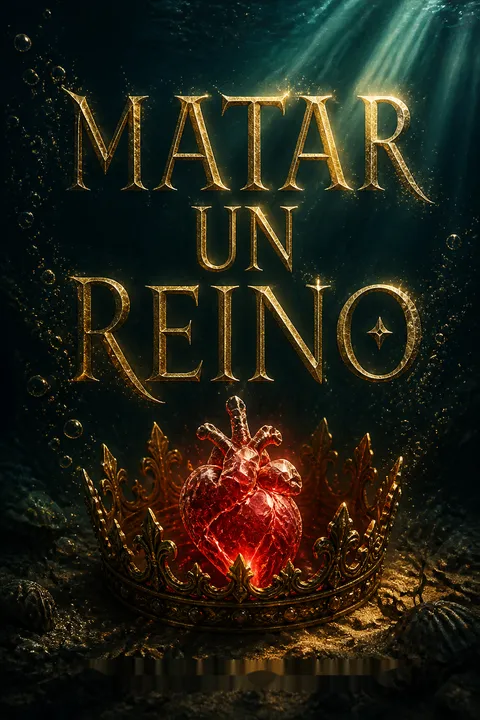
Lira, the Sea Queen’s daughter, has spent seventeen years collecting human hearts as birthday trophies, each one taken in revenge for the goddess Keto’s death. She hunts only princes, following her mother’s rule that killing a kingdom’s heirs destroys its future. On a voyage with her younger cousin Kahlia, Lira chooses the Adékaros prince and lets Kahlia pursue his mother, the queen.
Their song draws both royals into the sea, but the prince’s gentle face recalls Lira’s earliest kill. She takes his heart two weeks before her birthday, breaking the tradition she has obeyed all her life. The act gives her another trophy, but also gives her mother grounds to question her loyalty.
The hearts are both trophies and instruments of political control: each one measures a siren’s age while turning revenge into ritual. Lira’s choice looks like a familiar act of violence, yet the early timing exposes a crack in her obedience. The prince’s face stirs a memory she cannot admit, suggesting that her brutality has never been as effortless as her legend implies. Her bond with Kahlia offers another contradiction. In a society that prizes self-interest, Lira protects her cousin, a reflex that makes her powerful as a hunter and vulnerable as an heir.
The Queen Takes Her Due
The Sea Queen discovers that Lira took the Adékaros prince’s heart before her birthday and orders her to surrender it. When Lira brings the heart from its hiding place, her mother crushes it, ripping away the life and magic Lira had gained from the kill. The Queen then punishes Kahlia for helping, but Lira offers to bear the punishment herself.
Instead, her mother decrees that Lira’s next birthday trophy must be a sailor’s heart, a public humiliation meant to strip away the title Princes’ Bane. Alone at the edge of her territory, Lira meets two mermaids, who point her toward the golden prince of Midas. She sees his heart as a way to regain her mother’s favor and preserve the status she has built.
The Queen’s punishment does more than weaken Lira. It makes her private affection for Kahlia costly and turns the succession into a test of emotional conformity. By destroying the heart, the Queen demonstrates that Lira’s achievements belong to the crown until she decides otherwise. The sailor’s-heart decree attacks Lira’s public identity, which has become the one form of approval she can reliably earn. The mermaids’ advice gives Lira a new target, but she adopts their suggestion for the same old reason: she still believes that the right act of violence can purchase her mother’s love.
Elian Hunts a Legend
Elian Midas is a crown prince who feels most himself as captain of the Saad, a ship crewed by hunters and outcasts. After returning to Midas, he learns that Prince Cristian of Adékaros and the queen were killed by the Princes’ Bane, the siren he has pursued without ever seeing.
At the Golden Goose, a stranger tells him of the Crystal of Keto, a weapon supposedly capable of killing the Sea Queen. Elian’s truth-seeking compass confirms the account, and children’s tales lead him to the Cloud Mountain in Págos.
He bargains with Sakura, the tavern keeper who is secretly a Págese royal, for the family map showing a safe route up the mountain. In exchange, he promises to make her his queen, putting his future on the line before the journey begins.
Elian’s grief over Cristian gives his hunt a personal charge, but his response also reveals how readily he converts loss into a mission. The Crystal promises a final solution, which suits a young captain who prefers action to the slower work of understanding an enemy. His secret compass complicates his bravado: he trusts evidence, yet the evidence he needs comes from stories and hidden histories. The bargain with Sakura shows the cost of his self-conception as a rescuer. He is willing to sacrifice the life he loves before anyone asks whether that sacrifice is necessary.
The Midas Dockside Attack
Lira reaches Midas and waits beside the Saad, the dark ship carrying the prince she intends to take. Before she can sing to Elian, a mermaid attacks her, claiming the prince as treasure and trying to drown him for his heart. Lira kills the mermaid and pulls Elian from the water, then nearly takes his heart herself while he lies unconscious on the shore.
Royal guards arrive before she can strike, forcing her to retreat. When the Sea Queen later confronts her, Lira admits she saved Elian because she meant to claim him for her birthday. Her mother rejects the explanation, turns Lira into a human with legs and a beating heart, and gives her until the solstice to bring back the prince’s heart.
Lira’s rescue of Elian is not yet compassion in her own understanding. She treats him as a trophy that no other creature may steal, showing how possession can imitate care before a person has language for attachment. The Queen exploits this ambiguity by recasting Lira’s action as weakness and making her human body a punishment. The transformation also changes the conditions of Lira’s power: the hunter who relied on song, speed, and strength must now navigate a world where she can be injured and deceived. The solstice deadline keeps her trapped between survival and obedience.
A Captive on the Saad
After the transformation, Lira follows Elian’s ship but loses her strength and sinks in open water. Elian dives after her and brings her aboard, where she wakes bound to the railing and dressed in his shirt. He takes the seashell necklace she needs to find her way home and questions her about her origins.
When the Saad’s sonar draws a siren into a trap, Lira recognizes the captive as Maeve and understands her pleas. Elian hesitates to kill the begging siren, but Maeve tears herself free and attacks him, so he kills her. Lira’s knowledge of Psáriin exposes her as more than an ordinary castaway. She invents a story about surviving a siren attack and offers her expertise in exchange for a place on the ship.
The ship makes the hunters’ moral contradictions visible. Elian’s crew uses technology and steel against sirens, while Lira, stripped of her own abilities, is treated as a possible threat. Her translation of Maeve’s plea briefly interrupts the crew’s assumptions, but Maeve’s attack confirms their fear and lets Elian return to violence. Lira’s fabricated history is a survival strategy, yet it also marks the beginning of her participation in the human world through deliberate choice. She is no longer simply pursuing a heart. She is learning how to remain among people who might kill her.
The Shell Finds Kahlia
At Eidýllio, Elian refuses to take Lira on the mountain quest and returns her seashell, leaving her to fend for herself. Lira uses it at the Reoma Putoder waterfall, where the shell becomes a beacon and summons Kahlia. Her cousin arrives with a bruised, closed eye, punishment for helping Lira kill the Adékaros royals.
Lira tells her that Elian is searching for the Second Eye of Keto, the power her mother once sought to control the ocean. Kahlia agrees to help Lira take it and challenge the Sea Queen. Meanwhile, Elian seeks help from Queen Galina of Eidýllio, hoping to escape the marriage promise he made to Sakura. When Lira later offers knowledge of the eye’s unlocking ritual, he accepts her help and lets her rejoin the Saad.
The reunion with Kahlia makes Lira’s rebellion more than an attempt to recover status. Her cousin’s injury shows that the Queen’s punishments spread through relationships, turning affection into leverage. Lira’s plan still begins in revenge, but it now includes protecting someone who has paid for her choices. Elian’s separate bargain with Galina mirrors Lira’s own maneuvering: both are trying to escape the roles assigned by royal families, though each risks treating other people as pieces in a larger strategy. Their alliance begins as mutual use, not trust.
The Queen Boards the Saad
Once Lira joins the expedition, Elian teaches her to use a sword, and she begins to learn the Saad’s rhythms and the crew’s easy loyalty. At sea, the Sea Queen appears aboard the ship with the Flesh-Eater, the merman chosen to mate with Lira. She confirms that Lira’s human form is a punishment and warns that the solstice deadline still stands.
The Queen has also taken Lira’s seashell, using it to sing through the ship and keep Elian’s crew asleep during the visit. Lira cannot openly fight her mother without exposing her plans, so she endures the threat and watches the Queen leave. The warning makes clear that the hunt for the eye is also a race to escape the Queen’s control.
The Sea Queen’s visit collapses the distance Lira has tried to create between herself and her old life. Her mother can reach the Saad, command its crew through song, and still define Lira’s body as property. This power makes Lira’s new friendships dangerous: the Queen can use them as pressure points. Yet Lira’s place among the crew is changing. Sword training and shared routines give her skills beyond the siren’s inherited weapons, while the crew’s loyalty offers a model of allegiance built through repeated acts rather than fear.
Rycroft’s False Trail
In Psémata, Elian leads a small party through a hidden passage to meet Tallis Rycroft, leader of the Xaprár thieves. Elian hopes to recover the Págese necklace needed to open the mountain palace, but Rycroft turns the meeting into a trap. He reveals that his agent in Midas sent Elian after the Crystal of Keto so the prince would obtain the map and secure access to Págos for him.
Rycroft already has the necklace and intends to seize the crystal’s power for himself. He threatens Elian’s crew and demands the details of the quest. Lira and Elian are overpowered and tied in a cabin as the Saad begins attacking Rycroft’s ship. The mission now has a human enemy who wants the same prize for domination.
Rycroft’s scheme is a sharp counterpoint to Elian’s heroic self-image. Elian believes he is pursuing the crystal on his own terms, but a thief has steered him by exploiting his grief and royal connections. The revelation exposes how readily a noble goal can be recruited by someone with a more openly selfish purpose. Rycroft’s threat to the crew also changes the stakes from abstract war to immediate responsibility. Elian’s decisions have endangered the people who trusted him, while Lira must decide whether their partnership is worth defending.
Blood Wins the Necklace
While Elian’s crew attacks the Xaprár ship, Rycroft returns to the cabin and cuts Lira free, expecting her to fight for him. She instead claws at him, steals his own knife, and stabs him. The Págese necklace is still around his neck, so she takes it before Elian and the crew reach her.
Rycroft fires a pistol at Elian, and Lira pushes the prince clear, taking the bullet herself. Elian carries her back to the Saad while the crew captures the wounded Rycroft. A ship’s engineer treats Lira, and Kye, who has long distrusted her, tends her bandages and admits she has earned a place among them. The rescued prisoner remains alive for the journey to Págos.
Lira’s choice to protect Elian is decisive because it is not calculated as a way to win her mother’s approval. She acts before she can turn the moment into strategy, and the cost is written into her body. The crew’s rescue and Kye’s care make belonging concrete: the Saad does not merely accept her as useful, it stays beside her while she is helpless. Rycroft’s survival prevents the victory from becoming simple revenge. The crew now carries the consequences of their choices forward, including a prisoner whose ambition helped create the danger.
Págos Opens Its Gates
The Saad reaches Págos with Rycroft in custody, and Elian presents the stolen necklace to King Kazue as proof that he can fulfill the bargain for mountain access. Sakura arrives with the Págese royal family and reveals herself as Princess Yukiko, the king’s sister.
She insists on joining the expedition, while her brothers support the plan because they want a witness from their own family at the Crystal’s discovery. Elian gains permission to climb and promises that Págos will receive credit for helping defeat the Sea Queen.
Yukiko’s presence complicates his position: he once promised to make her his queen, but he has already sought a different arrangement with Galina. Lira watches Elian submit to another royal bargain and sees how easily his freedom is being traded.
Págos turns hidden royal knowledge into political currency. The necklace, map, and route are not merely keys to a physical chamber; they are tools through which the royal family controls access and reputation. Yukiko’s return exposes the personal cost of Elian’s bargain, while her participation keeps the expedition from becoming a private mission between him and Lira. The scene also sharpens Lira’s perception of power. She recognizes in Elian’s obligations a version of her own confinement, and her concern grows precisely because she knows how damaging it is to call a forced choice duty.
A Kiss Above the Clouds
As the party climbs the Cloud Mountain, Yukiko’s authority strains the crew, and Lira challenges her when she belittles Elian for not yet being king. That night, Elian takes Lira away from camp to show her the stars he has spent years naming and imagining. He admits that reaching the crystal fills him with dread rather than triumph, because he is unsure whether destroying the sirens is right.
Lira tells him the legend that a human who takes a siren’s heart becomes immune to every siren’s song, though she does not reveal her identity. They speak instead of whether killers can change. When Lira asks whether he will kiss her, Elian does, and the intimacy makes their coming betrayal harder for both to ignore.
The mountain strips away the noise of court and crew, giving the two heirs a rare space to admit uncertainty. Elian’s dread complicates his stated mission, while Lira’s question about whether killers can change points toward the political choice she cannot yet confess. Their kiss does not erase the danger between them. It makes that danger more personal by giving each of them a glimpse of what trust could feel like. The stars also function as Elian’s private language: sharing them is an act of intimacy distinct from the bargains that have governed both their lives.
The Princes’ Bane Revealed
At the summit, Yukiko uses the necklace to open the hidden ice dome, revealing the Second Eye of Keto suspended in water from Lira’s home sea. Lira falsely tells the group that siren blood is needed to release it, then cuts her own hand and takes the eye while the others sleep. Yukiko discovers that Lira is the Princes’ Bane and exposes her to Elian.
He attacks Lira in the dome, but cannot bring himself to kill her; she does not reach for the eye, and he orders her to leave. Elian keeps the eye and tells Yukiko he will not marry her. He offers her a place ruling Eidýllio beside Galina instead, allowing Yukiko to accept a kingdom without becoming his queen. Lira escapes toward the moat alone.
The revelation turns the romance into a direct ethical crisis. Elian has trusted the person responsible for Cristian’s death, while Lira has used that trust to obtain the very power that could decide the war. Yet his inability to kill her is not simple forgiveness; it is a refusal to let revenge make the decision for him. Lira’s failure to seize the eye from him similarly reveals a shift in priorities. The political alternative offered to Yukiko shows Elian beginning to renegotiate inherited duty rather than merely endure it.
The Sea Queen Invades
At the mountain moat, Lira uses her seashell to summon the Sea Queen, who arrives unaware that Lira has already taken the eye. The Queen believes Elian holds it and opens portals in the water, bringing an army of sirens into Págos. She orders Lira to recover the eye and kill the prince. Instead, Lira asks the sirens to reject a war that has outlived everyone who began it.
Kahlia publicly supports her cousin, reminding the others that Lira is a stronger candidate for the throne than the Queen’s rule of fear. Sirens begin to bow to Lira, but the Queen’s army still attacks Elian’s crew. The rebellion has begun, yet Elian and the humans remain in immediate danger.
Lira’s appeal to the sirens is a political experiment: she asks for allegiance without using the eye to compel it. That restraint distinguishes her claim from her mother’s, though it leaves her exposed to rejection and attack. Kahlia’s public support gives the rebellion familial and political legitimacy at once. The Queen’s portals make clear that her power is not confined to her kingdom, and that Lira cannot win merely by changing hearts. The conflict now asks whether a new form of rule can survive the violence of the old one.
The Eye Chooses Lira
During the battle, the Sea Queen restores Lira’s siren form and orders her to take Elian’s heart. Her song incapacitates the human crew, but Elian remains immune, because Lira’s heart is already bound to him through their love. She kisses him, explains the truth, and asks him to trust the possibility that killers can change. Elian gives her the eye.
Lira uses its power to rally the sirens, then fights the Flesh-Eater, who nearly kills Elian before they defeat him together. She turns the Sea Queen’s lightning against her and traps her in a series of cyclones. The mountain collapses in the struggle, burying the Queen. Lira waits beside her body until it dissolves, while human and siren survivors watch.
The eye’s transfer is the climax’s moral hinge. Elian gives up the weapon that could secure his victory because he chooses trust over control, while Lira receives power without immediately turning it into domination. Her immunity to the Queen’s authority comes not from greater violence alone, but from the relationships she has built and the allegiance she has earned. The battle still requires force, and the Flesh-Eater’s death does not make violence disappear. What changes is who directs it and toward what end. The Queen’s defeat opens a political possibility that neither heir could have achieved alone.
The Ocean Opens
After the Sea Queen’s death, Lira takes the throne and combines the two eyes of Keto, gaining the power to govern the ocean without inheriting her mother’s war. She opens the hidden sea kingdom to human visitors and begins making treaties with the surface kingdoms. Elian’s sister Amara becomes Midas’s queen, freeing him from the throne he never wanted while he continues to sail with the Saad.
Yukiko and Galina rule Eidýllio together, and the crew returns to the sea as allies rather than hunters. In the final scene, Elian brings the Saad to Diávolos, where sirens guide the ship to Lira. She meets him in both her queenly and human forms, then dives into the water with him.
The ending resolves the opening conflict by changing the institution that made violence seem inevitable. Lira does not simply replace her mother as another ruler of the same closed kingdom; she opens Diávolos and makes diplomacy possible. Elian’s freedom is also redefined. He avoids the crown, but remains involved in the world through travel and the relationships he has chosen. The two protagonists do not abandon their identities; they make room for both. Their political settlement rests on practical exchange, shared authority, and the willingness to meet across boundaries that once existed only to keep enemies apart.
Analysis
To Kill a Kingdom makes inherited violence feel less like an ancient curse than a political curriculum. Lira and Elian are both taught that their roles demand violence: she must prove herself worthy of ruling the sea, while he is expected to defend human kingdoms from sirens. Their training differs, but each turns fear and grief into a mission. The novel’s central question is whether people can interrupt a system that rewards them for repeating its injuries.
Lira’s transformation into a human makes that question bodily. She loses the powers that made her formidable, but gains exposure to dependence, pain, and relationships beyond the Sea Queen’s control. Her time on the Saad teaches her that loyalty can be earned rather than enforced. Elian, meanwhile, begins with the assumption that a weapon powerful enough to destroy the enemy will solve the problem. His unease grows as he recognizes that victory by annihilation would reproduce the logic he is fighting.
The romance matters because it turns political trust into a personal risk. Lira and Elian know enough about each other to cause real harm, yet they repeatedly choose to protect one another. This is not presented as a substitute for justice or a magical cure for prejudice. It becomes evidence that inherited categories can be questioned through action. Elian must entrust the eye to the person he has pursued as a monster; Lira must seek allegiance without forcing it through power.
The resolution therefore does not erase the past or pretend peace is effortless. It changes who can participate in shaping the future. Lira opens the sea kingdom, Elian returns to the life he chose, and former enemies begin negotiating rather than hunting. The novel’s most hopeful claim is modest but demanding: a different world begins when authority is no longer treated as permission to make others suffer.
Review Summary
To Kill a Kingdom is a dark fantasy retelling of The Little Mermaid that has garnered mostly positive reviews. Readers praise the witty banter, complex characters, and slow-burn romance between siren princess Lira and pirate prince Elian. The worldbuilding and mythology are highlights for many. Some criticize the pacing and predictable plot elements. While opinions on the romance are mixed, most enjoy the enemies-to-lovers dynamic. The book is lauded as an entertaining standalone with morally gray characters, though a few found it overhyped or underwhelming.
People Also Read



Characters
Lira
Siren princess and hunterLira is the Sea Queen’s daughter and a feared hunter of human princes, raised to treat cruelty as proof of fitness to rule. She measures herself by the approval of a mother who turns affection into a weakness and obedience into a condition of belonging. Beneath her ruthless discipline, she is fiercely protective of her cousin Kahlia and more capable of attachment than she allows herself to recognize. That contradiction drives her choices: she wants power, but she also wants to decide what power is for. Her sharp wit and appetite for danger hide a deep uncertainty about whether the person she was trained to become is the person she must remain.
Elian Midas
Pirate prince and captainElian is Midas’s heir, but he feels most alive aboard the Saad, leading a chosen crew through dangerous waters. His public charm and irreverence conceal a serious sense of responsibility, especially toward his crew and the people threatened by sirens. He believes action can repair the world, which makes him brave but also susceptible to grand, costly bargains. Elian’s private habits, from naming stars to preserving his father’s compass, reveal a thoughtful side that court rarely sees. His central struggle is not simply choosing between prince and pirate; it is learning that duty need not mean surrendering judgment, freedom, or compassion.
The Sea Queen
Ruthless ruler of KetoThe Sea Queen rules the sirens through inherited magic, fear, and a history of human violence she treats as an eternal mandate. She regards emotional restraint as weakness and trains her daughter to measure worth through killing. Her affection is conditional, expressed as command, punishment, and control over the people closest to Lira. The Queen’s political skill lies in making domination seem like protection: she presents the war as necessary for siren survival, while ensuring that no one can question her authority without risking everything. She is not merely a cruel parent but the living institution that has taught her people to confuse obedience with safety.
Kahlia
Lira’s loyal cousinKahlia is Lira’s younger cousin and the daughter of Crestell. She is still learning the violent customs of siren life, but her admiration for Lira is matched by a quiet capacity for independent judgment. Her closeness to Lira makes her vulnerable to the Sea Queen’s punishments, yet it also gives Lira a reason to imagine loyalty beyond fear. Kahlia’s humor and curiosity soften the harshness of the underwater court, and her choices carry political weight because they show that the next generation may not accept the Queen’s rules as inevitable.
Kye
Captain’s wary bodyguardKye is Elian’s closest friend, first mate, and self-appointed shield against the risks his captain seeks out. A diplomat’s son who chose piracy over politics, he distrusts strangers and reads danger quickly. His humor keeps the crew’s tension from hardening into fear, though his protectiveness can become controlling when Elian’s safety is at stake. Kye’s bond with Madrid is affectionate and combative, built on the ease of people who know one another’s worst habits. His loyalty is not blind obedience; it is a personal commitment he continually renews.
Madrid
Ethical marksmanMadrid is the Saad’s second mate, a highly skilled fighter with a Kléftesis past as a trained killer. Her tattoos mark a history of coercion, but she has developed a strong moral resistance to unnecessary violence. That conscience makes her an unusual fit for a crew devoted to hunting sirens, and a valuable counterweight to Elian’s willingness to risk himself. She is direct, capable, and protective of the people she chooses, especially Kye. Her care often appears as practical action: preparing a weapon, tending a wound, or making room for someone who has been treated as disposable.
Kolton Torik
Saad’s steadfast first mateTorik is Elian’s broad-shouldered first mate, a dependable fighter who helps keep the Saad functioning when its captain is chasing danger. His gruff humor and practical instincts balance the crew’s younger, more reckless members. Torik values loyalty, competence, and a full meal, but his gentleness is as evident as his strength. He is one of the people who makes the ship feel like a home rather than a weapon, offering care without demanding a display of gratitude.
Yukiko
Guarded royal wandererYukiko is a Págese royal who has lived under the name Sakura while running a tavern in Midas. She left the life expected of her because she wanted to see beyond the snowbound court and build an identity apart from her family’s succession. Sharp, self-possessed, and difficult to intimidate, she understands how much leverage a royal can gain by concealing what she knows. Her ambitions are real, but so is her desire for a role that feels useful rather than ornamental. She challenges Elian because she recognizes the same restlessness in him that she once felt in herself.
Tallis Rycroft
Xaprár pirate leaderRycroft leads the Xaprár, a band of thieves known for stealing royal treasures and selling their services to powerful clients. He treats risk as entertainment and possession as proof of skill. His interest in the Crystal of Keto is not rooted in justice or safety; he wants the power it promises. Rycroft’s confidence makes him dangerous, but his reliance on threats and manipulation reveals a man who mistakes control over others for invulnerability.
King Kazue
Págos’s calculating kingKazue rules Págos alongside his brothers and guards his family’s traditions, secrets, and political standing. He is cautious about allowing an outsider to climb the Cloud Mountain, but understands the value of being associated with a world-changing discovery. His leadership combines ceremony with calculation: he wants the kingdom’s contribution remembered and its interests protected. Kazue is not easily persuaded by heroic claims, so Elian must offer a concrete exchange before Págos grants access.
Queen Galina
Isolated queen of EidýllioGalina rules Eidýllio while living with a inherited power that makes physical contact with men dangerous to their autonomy. After betrayal in her marriage, she avoids intimacy and refuses to continue the dynastic pattern that gave her gift its political purpose. Her solitude protects others, but it also limits her ability to connect with her people and neighboring rulers. Galina is perceptive and pragmatic, willing to consider new arrangements when they strengthen her kingdom without repeating the harms she has experienced.
Crestell
Kahlia’s compassionate motherCrestell is the Sea Queen’s sister and Kahlia’s mother. Unlike the ruler who dominates the court, Crestell represents a form of authority grounded in protection and personal sacrifice. Her relationship with Lira helps define the difference between obedience and care, while her devotion to Kahlia shapes the cousin’s sense of what loyalty can mean. Crestell’s quiet courage leaves a lasting moral question for Lira: what kind of ruler would honor a bond that power cannot command?
Amara
Elian’s sharp-witted sisterAmara is Elian’s younger sister, quick to tease him and perceptive about the tensions inside their family. She is affectionate without being deferential, and she can challenge Elian in ways that court officials cannot. Her presence reminds him that Midas is not only a burden or a gilded cage; it is also home to people he loves. Amara’s intelligence and steadiness make her a credible future ruler in her own right.
Maeve
Captured siren fighterMaeve is a scarred siren caught by the Saad’s crew. Fierce and unwilling to submit, she attacks even while trapped, embodying the danger Elian’s crew expects from every siren. Her presence also reveals how easily a human observer can mistake a plea for weakness or deception.
Prince Cristian
Elian’s generous royal friendCristian is the prince of Adékaros and a friend who welcomes Elian’s crew despite his kingdom’s scarce resources. He values hospitality and companionship, giving what he can even when it costs him. His generosity stands in contrast to the transactional politics surrounding the other royal families and helps explain why Elian’s pursuit of the siren becomes personal.
Radames
Elian’s demanding fatherRadames is the king of Midas and Elian’s father. He worries that his heir’s voyages endanger both his son and the kingdom, and he presses Elian to accept the responsibilities attached to his birth. His concern is genuine, though he often expresses it through authority and argument rather than understanding.
Isa
Elian’s perceptive motherIsa is Midas’s queen and a gentler presence in Elian’s family. She mediates between her husband’s demands and her son’s need for independence, noticing when his cheer conceals exhaustion. Her care is expressed through attention and restraint rather than control.
The Flesh-Eater
Sea Queen’s brutal championThe Flesh-Eater is a merman chosen by the Sea Queen as Lira’s mate. His sharklike body and predatory behavior make him a physical embodiment of the violence imposed on sirens as a reproductive duty. He offers no companionship or tenderness, only the Queen’s expectation that Lira submit.
Nadir Pasha
Midasan court informantNadir Pasha is a Midasan dignitary whose relaxed conversation brings Elian news of the attack on Adékaros. His social ease makes him a useful conduit for information that changes the prince’s course.
The Págese princes
Kazue’s royal brothersHiroki, Tetsu, and Koji are King Kazue’s brothers, each with a distinct place in Págos’s royal order. They help determine whether Elian may climb the mountain and whether Yukiko should accompany him. Their varied temperaments show a family bound by both shared tradition and individual ambition.
Plot Devices
The Second Eye of Keto
A weapon with divided powerThe Second Eye is a relic of the sea goddess Keto, hidden inside a sealed palace atop the Cloud Mountain. It is the counterpart to the ruby set in the Sea Queen’s bone trident, and whoever frees it can wield its power. The Págese necklace opens the hidden dome, while blood is needed to release the eye. Elian seeks it as a way to end the siren threat; Lira sees it as a means to challenge her mother. Its power forces both characters to choose between domination and a different political order.
Elian’s truth compass
A needle that tests claimsThe compass Elian’s father gave him points toward truth or falsehood rather than a geographic direction. Elian uses it to test the stranger’s story about the Crystal of Keto and later to judge what Lira tells him. It does not reveal every secret or explain a person’s motives, so it can confirm that a statement is true while leaving the larger context hidden. The device makes deception a recurring tactical problem and reflects Elian’s desire to distinguish loyalty from manipulation.
Siren song
A voice that compelsSirens use song to draw humans toward them, overwhelming judgment with enchantment and making victims approach the water willingly. The Sea Queen can use song across distance, as when she keeps the Saad’s crew asleep. Human technology, including the Saad’s sonar, can disrupt a siren’s ability to sing. The story’s songs are both weapons and tests of agency: the crew’s ordinary songs create belonging, while siren melodies remove choice. The possibility of resisting them becomes crucial to the conflict between Lira, Elian, and the Sea Queen.
The seashell necklace
A beacon to the seaSiren seashells let their wearers hear the ocean and locate the kingdom of Keto. Lira’s shell is also a means of calling Kahlia when the two are separated. Elian takes it from Lira after rescuing her, unknowingly holding her route back to her people, then returns it at Eidýllio. Later, Lira uses it to summon the Sea Queen to the mountain moat. Its function shifts from private navigation to a public signal that draws the central conflict into the open.
Elian’s blood-drinking knife
A blade that stores magicElian’s enchanted knife absorbs the blood of its victims, leaving little trace on the Saad’s deck. It gives him an advantage against sirens, whose blood is caustic, and grows stronger through the lives it takes. Lira understands that the weapon can hold what ordinary containers cannot, making it relevant to the ritual surrounding Keto’s eye. Its magic also carries a cost: the tool that protects Elian is built by repeated killing, forcing him to confront what his hunt is making of him.
Hundred Kingdoms Series
About the Author
Other books by Alexandra Christo


Download PDF
Download EPUB
.epub digital book format is ideal for reading ebooks on phones, tablets, and e-readers.








