

Key Takeaways
Do justice, but test whether your diagnosis and remedy tell the truth
Justice needs discernment. Williams argues that Christians must confront injustice, but good intentions alone cannot tell them whether a proposed remedy is just. People who disagree about policing, poverty, abortion, or sexuality often believe they are defending justice. Their conclusions reflect deeper assumptions about human nature, authority, and evidence. Williams calls the worldview that turns events into moral judgments a “madness machine.” The term means an underlying set of convictions that shapes what someone notices and what they believe deserves outrage.
Two competing visions. He calls biblically compatible justice-seeking Social Justice A, and uses Social Justice B for approaches he considers grounded in assumptions that conflict with Christian teaching. These are Williams’s categories, not neutral labels accepted by everyone. His case is that Christians should neither abandon justice nor endorse every cause carrying its name. They should test claims and remedies against Scripture, reality, and the dignity of those affected.
The distinction is useful because it resists a false choice between caring about injustice and thinking carefully about solutions. Its value depends, however, on applying the test consistently. Calling a cause biblical or unbiblical cannot substitute for explaining the relevant scriptural principles or checking the evidence behind a claim. The book’s strongest methodological point is broader than its labels: a sincere moral aim does not guarantee a sound diagnosis. Readers can adopt that discipline even when they reject Williams’s judgments about particular movements.
Treat every opponent as an image-bearer, not a walking ideology
Dignity starts beyond categories. Williams grounds human worth in the Christian belief that every person bears God’s image, regardless of race, sex, ability, wealth, or political commitments. In his account, a closed, material view of human beings struggles to explain why every person has equal dignity when people differ greatly in strength, talent, and circumstance. The theological claim gives Christians a reason to treat people as more than their usefulness or group membership.
The standard applies to all. Williams opens with the Aztec rulers’ human sacrifices and the Spanish conquest of their empire. He condemns both the Aztecs’ violence and the conquistadors’ seizure and abuse of people, arguing that professed religion did not excuse injustice. The test is not whether someone claims to worship God, but whether their actions honor the people they encounter as persons of worth.
The image-bearing idea gives dignity a basis that does not depend on achievement, popularity, or innocence. That is especially powerful when a person is despised or politically inconvenient. It also sets a demanding standard for debate: opponents cannot be reduced to symbols of their side. The book makes its case within Christian theology, so readers outside that tradition may not share its premise. Even so, its practical warning travels well: group labels can reveal social patterns, but they cannot tell the whole story of an individual.
Audit your justice work for the idols hiding inside good causes
Good aims can take over. Williams uses “idolatry” for treating a created good as the highest authority. A desire to help the poor, gain acceptance, protect personal freedom, or preserve social order can become destructive when it overrides every other commitment. He warns that Christians on the political right can idolize wealth, individualism, religious escape from present suffering, or the status quo. He also warns against making the self, government, or cultural approval ultimate.
Check what rules you. The question is not whether a cause is good, but whether it has become unquestionable. Williams recalls Martin Luther facing pressure to recant at the Diet of Worms, a vivid example of choosing religious conviction over safety and approval. He cautions that no political party or movement can contain the whole Christian faith. Christians should examine their motives and resist forcing Jesus into a ready-made political camp.
This account of idolatry reaches beyond obvious religious substitutes. A worthy cause can become a source of moral identity, making criticism feel like an attack on the self. That helps explain why political arguments so quickly turn personal. The framework also corrects one-sided critiques: concern for the poor can be corrupted, but so can concern for property, tradition, or personal liberty. A useful limitation is that conviction under social pressure is not automatically proof of truth. Courage matters, but it must travel with humility and scrutiny.
Build belonging around shared human need, not moralized group identities
Belonging can become tribalism. Williams notes that people need community, but that need can be exploited by groups promising virtue and belonging in exchange for dividing the world into innocent insiders and guilty outsiders. He describes Christian Picciolini, who joined a neo-Nazi group as a teenager, and Conor Barnes, who entered a radical left-wing community. Both men sought identity and purpose, and both later rejected the movements that had shaped their lives.
Shared need undercuts superiority. Williams argues that the Christian idea of shared human sinfulness makes it harder for any group to claim moral innocence. He pairs that shared condition, “in Adam,” with a new identity “in Christ” that crosses ethnic and social divisions. He also identifies a propaganda pattern: edit history to condemn a group, treat individuals as its representatives, then blame that group for broader problems.
The stories show that political extremism can offer more than a set of arguments. It can supply friendship, identity, and a script for turning private frustration into public mission. That makes purely intellectual rebuttal insufficient when someone is also searching for community. The book’s Christian account of shared guilt offers a direct challenge to group-based moral superiority. Still, group identity is not always tribalism: it can name real shared experience or organize people against injustice. The distinction lies in whether identity clarifies harm or replaces judgment of individuals.
Let anger expose harm without letting it become your moral compass
Rage can consume its cause. Williams contrasts the bitterness that can follow injustice with Christian practices of forgiveness, patience, and self-examination. He recounts Corrie ten Boom, a survivor of a Nazi camp, meeting a former guard responsible for her sister’s death. She struggled to offer forgiveness, prayed for help, and chose to extend her hand. He also describes relatives of people murdered in a racist attack in Charleston who publicly expressed forgiveness toward the killer.
A different kind of strength. Williams calls love, peace, patience, gentleness, and self-control the “fruit of the Spirit,” qualities Christians believe the Holy Spirit produces. He argues that political approaches built on suspicion and rage can deepen division, even when they begin with genuine injury. His point is not that suffering should be ignored, but that resentment should not become a permanent identity or a license to hate.
These accounts make forgiveness concrete: it is not presented as an easy feeling, but as an action taken amid grief. That distinction matters in discussions of reconciliation, where calls to forgive can otherwise silence victims or excuse wrongdoing. Forgiveness and accountability are not identical tasks. The book’s emphasis on self-control is strongest when it restrains retaliation without requiring people to deny what happened. Its approach is less persuasive if anger itself is treated as suspect, since anger can be an important signal that a boundary or duty has been violated.
Investigate disparities before naming their cause or prescribing a cure
A gap is a question. Williams accepts that unjust systems exist, citing slavery, Jim Crow laws, and caste discrimination. He defines systemic injustice in biblical terms as a system that requires or encourages people to violate God’s moral commands. His target is the shortcut from unequal outcomes to a single explanation: disparity, therefore discrimination. Differences can also reflect factors such as geography, age, or individual decisions, though those possibilities do not rule out discrimination.
Test the explanation. The book discusses a study of 38,747 drivers on the New Jersey Turnpike. It argues that researchers found differences in actual speeding that helped explain some ticketing disparities, alongside age differences between groups. The lesson is not that profiling never happens, but that an outcome alone cannot establish why it happened. Williams urges Christians to examine evidence before condemning a person or institution.
The distinction between observing an unequal outcome and explaining its cause is essential to credible reform. Otherwise, an inaccurate accusation can misdirect attention and weaken trust. But the reverse error matters just as much: explanations involving age, geography, or choice do not automatically disprove structural barriers. Causal analysis often requires comparing multiple influences and asking how institutions shape the choices available to people. The book is persuasive when it calls for investigation, and less persuasive when some of its examples risk sounding like settled answers to questions that require broader evidence.
Listen to suffering without making any person's interpretation infallible
Pain deserves a hearing. Williams rejects dismissing people’s accounts of mistreatment. He recounts hip-hop artist Shai Linne describing being handcuffed by police as a college student and later trying to reassure his young son after children mocked his brown skin. Such experiences reveal what a distant observer may never notice. The book urges readers to listen, share burdens, and take grief seriously.
Test explanations with care. Williams objects when “lived experience,” meaning a person’s firsthand account of events, is treated as conclusive proof of why those events happened or what policy should follow. He argues that prior beliefs can shape how new incidents are interpreted, sometimes turning one painful encounter into evidence that every interaction is hostile. He calls for listening alongside evidence, careful reasoning, and a willingness to consider more than one explanation.
Firsthand accounts often reveal questions that aggregate statistics miss, especially when people have been ignored by institutions. But testimony about what happened and analysis of why it happened are different kinds of knowledge. Respectful listening need not require automatic agreement about causes or remedies. The challenge is to avoid using that distinction as a polite way to dismiss a witness. Good inquiry gives a person’s account serious attention, asks clarifying questions without accusation, and then investigates the wider pattern rather than treating either a single story or a single statistic as final.
Keep the gospel as the source of justice, not its price of admission
Good news is an announcement. For Williams, the Christian gospel is the news that Jesus died for human sin and rose again. It is not a list of actions people must perform to earn salvation. Justice is a command for Christians, but not the basis of their acceptance by God. Williams distinguishes the gospel’s announcement from the work that follows from believing it.
Action flows from belief. In Acts, he notes, the first Christians shared possessions with people in need after hearing the message about Jesus. He also points to early Christians rescuing abandoned infants and caring for people during epidemics. These acts were not a fee paid for salvation; they expressed the community’s changed commitments. Williams warns that if activism becomes a requirement for being saved, the demand can become endless and the message of grace can disappear.
The distinction protects the difference between moral action and the basis of religious acceptance. It can also help activism resist becoming a performance designed to prove one’s innocence. Yet the distinction has a practical tension: people judge a message partly by the conduct of those who proclaim it. Williams recognizes that justice is not the gospel but affects its credibility. Keeping that distinction clear should therefore prevent both errors: making service a condition of salvation, and using grace as an excuse for indifference.
Trade culture-war combat for concrete service to vulnerable neighbors
The framework faces real cases. Williams applies his approach to racism, policing, poverty, abortion, sexuality, and economic policy. He argues that Christian justice should oppose exploitation and racial discrimination, care for poor and trafficked people, protect unborn life, and follow a traditional Christian sexual ethic. He also warns that political programs promising equality can harm the people they intend to help if their assumptions about human nature or economic systems are wrong.
Make the alternative visible. The book’s opening story of Eddie Byun describes a church in South Korea creating aftercare for trafficking survivors and helping change laws concerning trafficking and adoption. That example embodies the author’s proposal: do more than criticize rival ideologies. Serve people in concrete need, speak truthfully, and engage disagreement without treating neighbors as enemies.
This closing move is important because a critique of activism can become a comfortable substitute for helping anyone. Byun’s work gives the book a practical counterexample: organized care can address immediate harm while expressing a religious conviction. At the same time, the book’s positions on abortion, sexuality, and political economy remain contested theological and policy judgments, not conclusions produced by its method alone. Readers can use the book’s tests while still demanding careful evidence and humane engagement when applying them to each issue.
Analysis
Williams builds his case as a sequence of tests rather than a simple political platform. The order is significant: first establish a theological account of reality and human worth, then ask how communities form, how sin operates in individuals and institutions, and how claims about injustice should be known. That architecture makes justice inseparable from worship, anthropology, salvation, and epistemology. Its most durable contribution is methodological: moral urgency does not remove the need for accurate causal explanations, and good intentions do not guarantee that a remedy helps its intended beneficiaries.
The book also understands that movements offer emotional goods, not just explanations. They can supply belonging, purpose, and a way to interpret personal pain. Williams’s stories of former radicals and Christian communities therefore function as arguments about social attachment as well as belief. His proposed alternative is not merely to rebut ideas, but to offer a different community and to make service visible.
The major limitation is the asymmetry of the treatment. Williams acknowledges real discrimination and systemic injustice, but he gives extensive attention to errors he associates with Social Justice B. That emphasis can lead readers to scrutinize claims of structural harm more closely than claims defending existing arrangements. The book’s theological distinction between its two justice categories is meaningful to Christian readers, but outsiders may not accept Scripture as the common standard. Nor can theological premises alone resolve empirical disputes about policing, inequality, or policy outcomes.
The most productive reading is therefore neither blanket acceptance nor dismissal. The book is strongest as a warning against tribal certainty, scapegoating, and moral self-exemption. Its own claims should face the same standards it recommends: charitable interpretation, careful evidence, and equal concern for people harmed by injustice and by failed remedies. Its call to act remains consequential precisely because discernment and compassion must operate together.
Review Summary
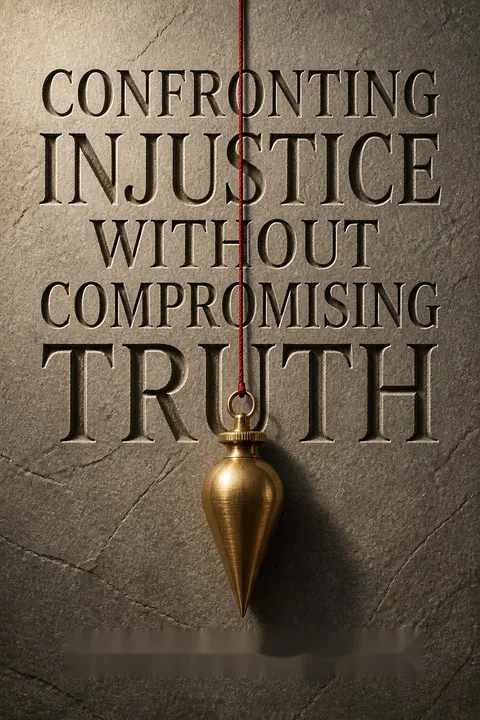
Confronting Injustice without Compromising Truth receives mostly positive reviews for its balanced, biblical approach to social justice issues. Readers appreciate Williams' clear distinction between biblical and secular views of justice, his gospel-centered perspective, and his charitable tone. Many find it helpful for navigating complex cultural debates. Some criticize it as overly conservative or lacking nuance. Overall, reviewers consider it an important resource for Christians seeking to engage with social justice from a biblical standpoint, though opinions vary on its effectiveness in addressing all aspects of the topic.
People Also Read








Glossary
Social Justice A
Biblically compatible justice-seekingWilliams’s label for efforts to confront injustice that he considers compatible with Christian teaching. Examples include opposing slavery and trafficking, caring for poor and vulnerable people, and resisting racism. The category is part of the book’s argument, not a universally agreed definition of social justice.
Social Justice B
Justice ideology Williams critiquesWilliams’s label for approaches to justice that he believes rely on assumptions incompatible with a biblical worldview. He associates these approaches with reducing people to group identities, treating disparities as proof of discrimination, and making activism a substitute for the Christian gospel. The label reflects his analysis and does not describe every movement or person using the phrase social justice.
madness machine
Worldview shaping moral judgmentsWilliams’s metaphor for the underlying convictions through which people interpret events and decide what is just. A person’s worldview affects which facts seem important, what counts as evidence, and which response appears morally required. The metaphor highlights that political conclusions are shaped by deeper beliefs about humanity, reality, and moral authority.
Newman effect
Caricaturing an opponent’s positionWilliams’s name for interpreting another person’s argument in an exaggerated or hostile form, then responding to the distortion instead of the argument actually made. He illustrates it with a televised interview in which a host repeatedly recast a guest’s claims. The effect, he argues, fuels suspicion, self-righteousness, and political division.
immanent frame
A closed, natural-only worldviewA term associated with philosopher Charles Taylor that Williams uses for understanding reality as if everything must be explained by forces within the natural world. In the book, this outlook excludes a transcendent Creator from accounts of human dignity and morality. Williams argues that Christian justice must also consider a reality beyond the natural order.
Tribes thinking
An oppressor-oppressed interpretive lensWilliams’s label for a way of interpreting society chiefly through conflict between groups defined as oppressors and oppressed. He argues that this lens can reveal real harms but can also encourage group blame, discount contrary evidence, and treat individual people as representatives of a category. The term refers to the framework as he critiques it, not to all analysis of group inequality.
standpoint epistemology
Knowledge shaped by social positionA specialized approach to knowledge that emphasizes how a person’s social position and lived experience can affect what they are able to know. Williams accepts the importance of listening to people who have experienced harm, but disputes treating any group’s perspective as authoritative or beyond challenge. He argues that firsthand testimony should be considered alongside evidence and broader moral standards.
concept creep
A concept expanding into more casesA term used in psychology for the widening of a concept so that it applies to an increasing range of experiences. Williams uses it to describe what he sees as the expansion of terms such as racism or oppression to cover more situations, sometimes without sufficient examination of alternative explanations. He argues that overextension can obscure the particular cases of harm a concept was meant to identify.
systemic injustice
Unjust rules or institutional incentivesWilliams’s biblical formulation for a system that requires or encourages people to violate moral commands. He applies the idea to institutions such as slavery and discriminatory laws. He distinguishes this definition from approaches that infer injustice directly from unequal outcomes, arguing that disparities require investigation before their causes can be established.
Creator-creature distinction
Difference between God and humanityA theological distinction between God, understood as the creator and ultimate moral authority, and human beings, understood as created and fallible. Williams uses it to ground human dignity while denying that any person or group has final authority over truth. It also underpins his criticism of political or personal identities treated as ultimate sources of moral worth.
FAQ
1. What is Confronting Injustice without Compromising Truth by Thaddeus Williams about?
- Biblical engagement with social justice: The book explores how Christians can pursue social justice issues faithfully, without compromising biblical truth or the gospel.
- Twelve-question framework: Williams structures the book around twelve critical questions that help readers discern between true, gospel-centered justice and harmful ideologies.
- Contemporary relevance: It addresses pressing topics like racism, identity politics, abortion, socialism, and critical theory, offering a roadmap for Christians to navigate these issues.
- Distinguishing justice approaches: The book introduces the concepts of Social Justice A (biblically compatible) and Social Justice B (ideological and often anti-Christian).
2. Why should I read Confronting Injustice without Compromising Truth by Thaddeus Williams?
- Clarity amid confusion: The book provides a balanced, gospel-centered approach to one of the most divisive issues in the church and society today.
- Biblical and cultural rigor: Williams combines deep scriptural analysis with cultural awareness, making it a trusted resource for Christians seeking to understand social justice biblically.
- Promotes unity and discernment: The book encourages readers to pursue justice and love without falling into divisive or unbiblical ideologies.
- Practical guidance: It offers actionable advice and questions for self-examination, helping readers apply biblical principles to real-world justice issues.
3. What are the key takeaways from Confronting Injustice without Compromising Truth by Thaddeus Williams?
- Justice rooted in God: True justice is commanded by God and must be grounded in reverence for Him as Creator and Redeemer.
- Distinguishing justice types: Not all social justice is biblical; Social Justice A aligns with Scripture, while Social Justice B often promotes division and false ideologies.
- Gospel is central: Justice flows from the gospel but is not identical to it; prioritizing the gospel prevents false gospels and maintains hope.
- Dangers of idolatry and tribalism: Idols like self, state, or social acceptance distort justice, and tribalism undermines Christian unity.
- Epistemology matters: Christians are warned against viewing reality solely through oppressor-oppressed binaries and are urged to pursue truth with humility.
4. How does Thaddeus Williams define Social Justice A and Social Justice B in Confronting Injustice without Compromising Truth?
- Social Justice A: Biblically compatible justice that leads to worship of God, unity in Christ, and the fruit of the Spirit; it acknowledges real oppression but centers on repentance and grace.
- Social Justice B: An ideological, often anti-Christian approach that divides people into identity groups, promotes suspicion, and often dismisses objective truth as a tool of oppression.
- Twelve doctrinal contrasts: Williams outlines twelve key differences, such as Social Justice A affirming life and family, while Social Justice B may celebrate abortion and seek to dismantle the nuclear family.
- Discernment is crucial: Christians must distinguish between these approaches to avoid adopting harmful ideologies that masquerade as justice.
5. What are the twelve critical questions Thaddeus Williams asks in Confronting Injustice without Compromising Truth?
- Framework for discernment: The book is organized around twelve probing questions that address social justice in relation to worship, community, salvation, and knowledge.
- Key areas covered: These questions help readers examine their views on justice, idolatry, unity, epistemology, and the gospel.
- Practical application: Williams encourages readers to use these questions to evaluate their own beliefs and actions regarding social justice.
- Promotes self-reflection: The questions are designed to foster humility, charity, and a gospel-centered approach to justice.
6. How does Confronting Injustice without Compromising Truth by Thaddeus Williams address the relationship between social justice and worship?
- God’s sovereignty as foundation: The book emphasizes that all justice begins with giving God His due as Creator, making worship central to justice.
- Idolatry as root injustice: Williams argues that social injustice stems from idolatry—worshiping self, state, or social acceptance instead of God.
- Image of God in all: True justice recognizes the divine image in every person, rejecting any form of dehumanization or exploitation.
- Justice as an act of worship: Pursuing justice is ultimately about honoring God and reflecting His character in the world.
7. What does Thaddeus Williams say about unity and tribalism in Christian community in Confronting Injustice without Compromising Truth?
- Unity in Christ: Williams highlights that all believers are one in Christ, which should transcend ethnic, economic, or social divisions.
- Dangers of tribalism: The book warns against dividing people into “us vs. them” groups, which fosters suspicion, division, and rage.
- Rejecting divisive narratives: Christians are called to resist propaganda that pits groups against each other and instead pursue genuine reconciliation and unity.
- Early church as model: The unity and diversity of the early church serve as an example for modern believers.
8. How does Confronting Injustice without Compromising Truth by Thaddeus Williams address systemic injustice and salvation?
- Acknowledges real systemic injustice: The book recognizes systemic injustice where laws or systems require sin, such as slavery or apartheid.
- Critiques overgeneralization: Williams warns against equating all disparities with systemic oppression, a tendency of Social Justice B.
- Gospel centrality: Justice must flow from the gospel of Jesus’s death and resurrection; confusing justice with the gospel leads to false gospels and despair.
- Prefers undamning facts: Christians are urged to avoid simplistic, damning narratives and instead seek truth and grace.
9. What is “Tribes thinking” and why does Thaddeus Williams warn against it in Confronting Injustice without Compromising Truth?
- Definition of Tribes thinking: It is an epistemology that interprets reality primarily as oppressors versus oppressed, dividing people into identity groups.
- Strengths and pitfalls: While it can highlight real injustices, it often leads to tunnel vision, seeing oppression everywhere and missing nuance and grace.
- Psychological harm: Williams explains that this mindset can rewire people’s brains for chronic fear, causing them to see themselves as permanent victims.
- Call for humility: Christians are urged to avoid epistemological rigidity and to pursue truth with charity and discernment.
10. How does Thaddeus Williams address the redefinition of key terms like racism, tolerance, and justice in Confronting Injustice without Compromising Truth?
- Redefinition by Social Justice B: Terms like “racism” are redefined as “prejudice plus power,” making it impossible for marginalized groups to be racist, which creates confusion and division.
- Importance of clear definitions: Williams stresses the need for biblical and traditional definitions to avoid twisting Scripture to fit ideologies.
- Impact on the gospel: Redefining terms can obscure the gospel, prevent confession and repentance, and undermine unity and salvation.
- Clarity for justice: Accurate definitions are essential for pursuing true justice and avoiding ideological manipulation.
11. What does Thaddeus Williams say about abortion and economic systems in relation to social justice in Confronting Injustice without Compromising Truth?
- Abortion as major injustice: Williams highlights abortion as a leading cause of death, especially among minorities and the disabled, and critiques common pro-choice arguments.
- Advocacy for the voiceless: Christians are called to defend preborn children as part of true social justice.
- Skepticism of socialism: The book warns against naive support for socialism, citing its tragic history and tendency to undermine voluntary charity.
- Balanced view of capitalism: While acknowledging flaws, Williams notes capitalism’s role in lifting billions out of poverty and encourages biblical discernment in economic matters.
12. What practical advice does Thaddeus Williams offer for Christians engaging with social justice in Confronting Injustice without Compromising Truth?
- Pray for discernment and love: Williams encourages believers to seek God’s help in worshiping Him alone, pursuing unity, and seeking justice with truth and love.
- Ask hard questions: Reflecting on the twelve questions in the book helps readers evaluate their own views and actions.
- Engage diverse perspectives: Williams recommends reading widely, including voices that challenge popular narratives, to avoid echo chambers and better love the oppressed in truth.
- Keep the gospel first: Daily gospel reflection and active participation in local church life are vital for maintaining a gospel-centered approach to justice.
Download PDF
Download EPUB
.epub digital book format is ideal for reading ebooks on phones, tablets, and e-readers.








