

Key Takeaways
Read the conquest as coalition warfare, not a Spanish miracle
A coalition campaign. Cortés arrived in 1519 with roughly five hundred Spaniards, horses, firearms, and a plan to reach the Aztec capital. He did not defeat the empire with that force alone. Totonac, Tlaxcalan, Texcocan, and other Indigenous allies supplied warriors, porters, food, intelligence, and labor. Their numbers eventually dwarfed the Spanish contingent.
A layered victory. Cortés exploited local rivalries, Aztec tribute resentment, Spanish weapons, political fractures, and, later, smallpox. The siege of Tenochtitlán was won through this combination, not by European technology acting alone. The story is therefore not simply two empires colliding. It is also a struggle among Indigenous states, with the Spanish captain turning their conflicts to his advantage.
What's striking is how easily a famous conqueror can eclipse the people who made his campaign possible. The coalition changes the scale of the story: Spanish leadership mattered, but so did Indigenous military power, political judgment, and labor. That distinction also guards against a tidy technological explanation. Horses and guns were frightening and useful, yet they could not carry supplies, negotiate alliances, or surround a city by themselves. The account's central achievement is showing conquest as a contingent political process, not an inevitable triumph of one civilization over another.
Put interpreters at the center of political history
Language made contact usable. Cortés initially relied on Jerónimo de Aguilar, a Spaniard who had lived among Maya speakers and could interpret for him. Malinche, an enslaved woman given to the Spaniards after the Tabascan battle, spoke Nahuatl and Maya. Together, she and Aguilar created a working chain of translation between Cortés and many of the people he encountered.
Translation shaped decisions. Malinche helped conduct diplomacy, convey threats and offers, and interpret the relationships among rival communities. Her warning about a possible Cholula ambush helped Cortés decide how to act there, though the account notes that the story may also have served as a justification for the massacre. Language did not merely carry messages. It helped determine which messages could be believed and what action followed.
The interpreters make visible a kind of power that military histories often leave in the background: control over what can be understood. Translation is never just a neutral bridge when lives and political futures depend on it. Malinche's skill gave her unusual influence, but her status as an enslaved person sharply limited the freedom behind that influence. The episode resists both easy celebration and easy condemnation. It asks readers to notice the expertise of a woman whose choices unfolded inside coercive circumstances.
Treat diplomatic gifts as messages rival cultures can misread
Generosity became provocation. Montezuma sent Cortés spectacular gifts of gold, featherwork, and other valuables, intending to display the ruler's wealth and power and to encourage the strangers to leave. Cortés read the offerings as evidence that still greater riches awaited inland. The same exchange meant different things to each side, and the gifts strengthened the invaders' appetite rather than ending their approach.
Uncertainty shaped the meeting. Montezuma faced unfamiliar visitors, reports of their weapons, and religious interpretations that included the possibility that Cortés was linked to the returning Quetzalcoatl. The book presents this belief as influential but not as a complete explanation for Montezuma's decisions. Accounts of the first meeting differ, and the Spanish version was written to defend Cortés's actions.
The encounter is a vivid case of how diplomacy can fail even when both parties are acting strategically. A gift is not self-explanatory. Its meaning depends on the political system, expectations, and risks each side brings to the exchange. The episode also cautions against reducing Montezuma to either a credulous ruler or a passive victim. He was making decisions with incomplete information, under pressure, and within a worldview the visitors barely tried to understand. Misreading was not an accidental detail. It became part of the conflict.
Cortés made retreat politically impossible before making it physically impossible
A town on paper. When his men debated returning to Cuba, Cortés used legal maneuvering to establish Villa Rica de la Vera Cruz, a settlement with its own officials. He then presented himself as its elected captain-general, shifting his claimed authority from Cuba's governor, Diego Velázquez, to the Spanish king. The new town gave his expedition a legal story that could support actions his original commission did not authorize.
A fleet deliberately lost. After a mutiny plot, Cortés had the ships disabled or sunk and their useful equipment stored. This ended the possibility of an easy return and forced the men to continue inland or face the consequences of defying him. The choice displayed resolve, but it also removed his soldiers' option to withdraw.
Cortés's political skill is inseparable from his willingness to constrain other people. The legal settlement and the scuttled ships worked as leadership tools because they changed what choices remained available to the expedition. This is more complicated than a story about boldness: a leader can create commitment by making alternatives costly or impossible. The maneuver succeeded in keeping the campaign moving, but its effectiveness should not be mistaken for consent. The episode offers a useful distinction between inspiring commitment and imposing it.
Read Indigenous alliances as bargains for local survival, not consent
Old grievances mattered. The Totonacs resented Aztec tribute demands and the taking of people for sacrifice. The independent Tlaxcalans had resisted Aztec control for years. Cortés offered assistance against their rivals, and these communities offered warriors and other support in return. Their cooperation gave the Spaniards a route into the valley and a much larger fighting force.
The coalition had its own terms. Tlaxcalan leaders sought freedom from Aztec tribute and a share of the gains, while Cortés promised political and material rewards. These were strategic bargains, not evidence that the allies shared Spain's goals. The alliances could shift, and some communities resisted or left when they judged the Spaniards vulnerable. Cortés relied on local ambitions, then used them to build Spanish rule.
Alliance is not the same as shared purpose. The Indigenous groups in this account made consequential choices, but those choices were shaped by longstanding coercion, rivalries, and immediate danger. Recognizing their agency should not become a way to transfer responsibility for Spanish conquest onto them. Nor should their participation be dismissed as mere manipulation by Cortés. The harder, more accurate picture holds both facts together: allies pursued their own interests, and their support helped establish a colonial power that would not remain on equal terms with them.
Occupation turned to revolt when Spanish violence struck sacred life
A massacre hardened resistance. In Cholula, Cortés claimed that a plot against his force had been uncovered and ordered a sudden attack in the city's central precinct. Spanish soldiers and Tlaxcalan allies killed thousands, though estimates and accounts differ. The episode helped secure the route to Tenochtitlán, but it also showed what Spanish rule could mean to communities that resisted.
Toxcatl ignited the capital. While Cortés was away confronting Narváez, Pedro de Alvarado attacked an Aztec festival gathering, killing many nobles and warriors. The attack shattered the fragile accommodation in Tenochtitlán and triggered a broad uprising. Alvarado feared a revolt, but the account does not establish that the massacre was necessary or that every detail of his suspicions was true.
These episodes expose the moral asymmetry in the Spaniards' language about violence. Cortés condemned human sacrifice while ordering massacres, executions, and forced religious change. That contradiction does not make Aztec ritual violence unreal, but it does show how moral claims can serve power as readily as conscience. The Toxcatl attack also demonstrates the strategic cost of brutality: violence may create immediate control, yet it can destroy the trust and political cooperation that made occupation possible.
A catastrophic retreat did not end a campaign built to adapt
The escape became a disaster. During La Noche Triste, the Spaniards tried to flee Tenochtitlán at night across the causeways. The portable bridge jammed, Aztec forces attacked from canoes and on land, and many Spaniards, Tlaxcalans, horses, weapons, and most of the captured treasure were lost. Estimates vary, but the retreat nearly destroyed Cortés's force.
The survivors reorganized. Cortés reached Tlaxcala, rebuilt his coalition, and faced the Aztecs again at Otumba. There, on an open plain, Spanish cavalry disrupted the Aztec formations, and Cortés's men killed the commander carrying the army's standard. The victory did not erase the earlier defeat. It showed that terrain, discipline, and rapid adaptation could turn a desperate situation into a chance to continue.
The campaign's reversals matter because they puncture the myth of Spanish invulnerability. In the city, where narrow streets and water favored the defenders, cavalry was limited. On the open plain at Otumba, mounted attacks could disrupt a massed force. The same tools had different value in different settings. Cortés's persistence was real, but so were the costs borne by his soldiers and allies. Survival after a defeat is not proof that the original strategy was sound.
Smallpox weakened the Aztec world, but did not conquer it alone
Disease arrived with the invasion. Smallpox spread through the region after an infected African porter came with the Narváez expedition. Indigenous people had no prior immunity, and the illness killed many while leaving others unable to fight, farm, or care for relatives. The plague, which the book calls the Great Rash, reached Tenochtitlán and killed its ruler Cuitláhuac.
A brutal advantage. The epidemic struck during Cortés's recovery and preparations, weakening the capital and disrupting political leadership and food supplies. It was an enormous advantage for the Spaniards, who had prior exposure and survived the disease. Yet it did not replace the work of alliances, military planning, and the siege. Disease altered the balance of power; it did not make the conquest automatic.
The outbreak shifts the story from individual decisions to biological contingency. Smallpox did not distinguish between combatants and civilians, and its consequences reached far beyond the battlefield. Calling disease an advantage for Cortés describes its military effect, not a moral or strategic achievement. The distinction matters because conquest narratives often turn epidemic death into background scenery. Here, illness becomes a central force that reshaped leadership, labor, and resistance, while leaving room for the political and military choices that also determined the outcome.
The lake siege was won by engineering, logistics, and attrition
A navy moved overland. After the retreat, Cortés concluded that Tenochtitlán could not be retaken by land alone. His builders made thirteen brigantines, small sailing and rowing warships, in Tlaxcala. Thousands of Indigenous laborers carried the disassembled vessels across the mountains to Texcoco, where workers rebuilt them and dug a canal to launch them into Lake Texcoco.
The siege targeted survival. The ships attacked Aztec canoes and supported Spanish troops advancing along the causeways. Cortés's forces also cut the aqueduct that supplied fresh water, blocked food and trade, and gradually demolished buildings and filled breaches. After seventy-five days of siege, the city fell. The outcome depended not only on battle, but on a sustained effort to control transport, water, food, and access.
The brigantines are memorable because they make logistics visible. The boats mattered, but so did the canal, the portage, the labor force, and the ability to keep the ships supplied and operational. Engineering is rarely a lone inventor's achievement; it depends on organized work and political control over resources. The siege also makes clear that cutting infrastructure can decide a conflict while devastating civilians. Tactical ingenuity and human suffering are part of the same account, not separate stories.
Measure conquest by destroyed lives and institutions, not treasure alone
Victory left a ruined capital. Tenochtitlán surrendered in August 1521 after prolonged fighting, starvation, thirst, disease, and destruction. Estimates of deaths vary, but the book cites figures above 200,000 for the siege and its related losses, including disease. Cuauhtémoc, the last Aztec ruler, was captured, tortured for information about the lost treasure, and later executed.
Conquest continued after battle. Cortés rebuilt Mexico City over the former capital, distributed land and Indigenous labor through the encomienda system, and supported Christian institutions that displaced Aztec religious practices. The hoped-for treasure proved far smaller than many soldiers expected. The lasting prize was control of territory and people, alongside a transformed city and the dismantling of political and cultural institutions.
The aftermath changes the meaning of victory. Gold mattered to Cortés and his followers, but the more durable result was the transfer of land, labor, and political authority. Rebuilding on top of the capital made conquest physical as well as symbolic, while forced labor and religious conversion extended it beyond the battlefield. The book's attention to Aztec voices and losses helps resist a triumphal ending. Still, the surviving records are uneven, and the scale of death and cultural rupture cannot be reduced to a single final number.
Analysis
The book's strongest argument is not that Hernán Cortés was a uniquely gifted conqueror, though it vividly portrays his tactical nerve and political calculation. It is that conquest emerged from an unstable convergence: communities resisting Aztec tribute, a ruler trying to manage an unprecedented encounter, an interpreter able to make diplomacy possible, Spanish factions competing for authority, epidemic disease, and a siege that required extraordinary labor and engineering. Cortés's achievement was to turn these separate conditions into a campaign. His success depended on forces he did not create and events he could not control.
That distinction matters because the familiar image of a tiny Spanish army defeating an enormous empire compresses the story into a heroic duel. The book instead shows Indigenous armies and laborers as indispensable, and Indigenous political choices as consequential. It also shows that alliance with Cortés did not mean agreement with Spanish aims. The Tlaxcalans, Totonacs, and Texcocans pursued their own interests, even as their support enabled the destruction of Tenochtitlán and the extension of Spanish rule.
The narrative's vividness should be read alongside its evidence. Cortés's letters were political defenses, Bernal Díaz wrote decades after the campaign, and Indigenous accounts were often recorded after the conquest. The book acknowledges disagreements over episodes such as Cholula and Montezuma's death, and uncertainty in casualty estimates. This matters especially when scenes of suspicion and prophecy appear with dramatic clarity. The sources preserve extraordinary detail, but they do not make every motive or conversation certain.
Ultimately, the work is most compelling when it holds competing truths together. The Aztec empire used conquest, tribute, and human sacrifice; the Spaniards answered with invasion, enslavement, religious coercion, and massacres. Neither reality cancels the other. Cortés's military and political competence is evident, but so is the brutal system his victories helped impose. The fall of Tenochtitlán was not simply the end of one army. It was the violent transfer of sovereignty, labor, and cultural authority, shaped by Indigenous resistance and collaboration, Spanish ambition, and epidemic catastrophe.
Review Summary
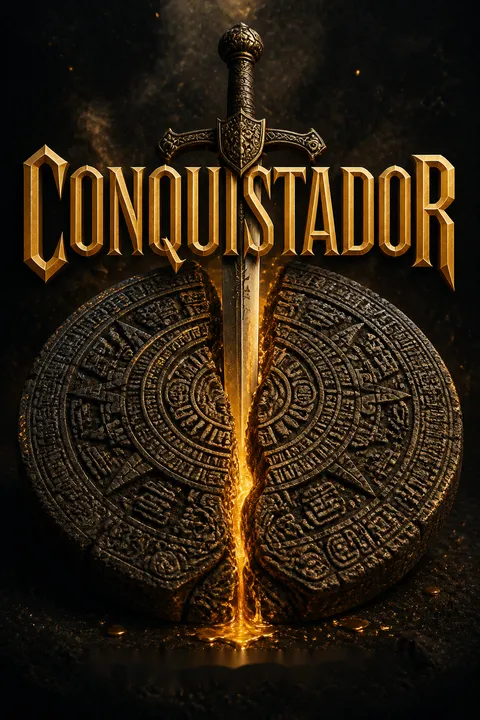
Conquistador by Buddy Levy receives mostly positive reviews (4.31/5) for its gripping narrative of Hernán Cortés's conquest of the Aztec Empire. Readers praise Levy's engaging, accessible storytelling that reads like an adventure novel while maintaining historical detail. The book vividly depicts the clash between Spanish conquistadors and Aztecs, highlighting technological superiority, indigenous alliances, and smallpox's devastating impact. Some critics note Eurocentric bias, repetitive praise of Cortés, and insufficient credit to indigenous allies. Others cite geographical errors and oversimplification. Despite flaws, most find it entertaining and educational, sparking interest in this pivotal historical period.
People Also Read

Glossary
tlatoani
Ruler or great speakerA Nahuatl title for a ruler, often rendered as “speaker” or “great speaker.” The tlatoani held political, military, and religious authority. In the book, Montezuma, Cuitláhuac, and Cuauhtémoc appear in succession as rulers of the Mexica polity, though their power and circumstances changed sharply during the invasion.
requerimiento
Spanish demand for submissionA formal Spanish declaration delivered to Indigenous communities, demanding acceptance of Christianity and the authority of the Spanish crown. It presented submission as a choice while threatening force for refusal. Cortés had the declaration read before the fighting at Tabasco, even though its legal language and intentions could not be meaningfully understood by its audience.
Flower Wars
Ritualized battles for captivesA form of organized combat between rival Mesoamerican polities, including the Aztecs and Tlaxcalans. These encounters provided military practice and prisoners for sacrifice. The book describes them as more controlled than campaigns aimed at conquest, though they remained violent contests within a wider system of rivalry and religious obligation.
La Noche Triste
Spanish flight from TenochtitlánThe name given by the Spaniards to their disastrous nighttime escape from Tenochtitlán in July 1520. Their portable bridge became stuck on a causeway, while Aztec warriors attacked from boats and land. Hundreds of Spaniards and thousands of allies died, and most of the treasure taken from Montezuma was lost.
The Great Rash
Smallpox epidemicThe book's name for the smallpox epidemic that spread through central Mexico after arriving with the Narváez expedition. Indigenous communities had no prior immunity, and the disease caused extensive deaths and disability, disrupting food production and political leadership. It killed Cuitláhuac and weakened Aztec resistance, while Spanish forces had prior exposure to the disease.
brigantines
Small armed sailing shipsThe small, shallow-draft boats Cortés's forces built for fighting on Lake Texcoco. The vessels could use sails or oars and carried guns and soldiers. Built in pieces in Tlaxcala, they were carried over the mountains to Texcoco, reassembled, and launched through a specially dug canal to support the siege of Tenochtitlán.
chinampas
Productive lake gardensCultivated plots built in the shallow lakes of the Valley of Mexico. Farmers created raised fields from lake soil, producing crops near the capital and helping sustain its large population. The book presents chinampas as an important part of the agricultural landscape Cortés and his men encountered around Tenochtitlán.
encomienda
Land-linked Indigenous labor grantA Spanish colonial system that assigned Indigenous communities and their labor to a Spanish grantee, ostensibly in exchange for protection and Christian instruction. It was not officially described as slavery, but it enabled coercive labor and helped reward conquistadors with wealth and status. Cortés used encomiendas to compensate some of his followers after the conquest.
Download PDF
Download EPUB
.epub digital book format is ideal for reading ebooks on phones, tablets, and e-readers.








