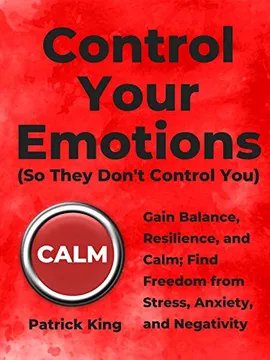


Key Takeaways
Treat emotions as signals, not commands, and stop trying to erase them.
A warning system, not a verdict. Emotions evolved to flag danger, loss, and opportunity, directing attention toward what the brain thinks matters. That fast alarm can help when a real threat appears, but it can also mistake an awkward comment for a crisis. Emotion reflects a mix of bodily changes, past experience, circumstances, and judgments, so its intensity does not prove its interpretation is correct.
Feel first, then choose. The book opens with a teacher who raised students’ confidence before giving critical feedback, helping them hear that an assignment needed work rather than concluding they were failures. The author also cites studies linking emotional suppression with stronger stress responses and the return of avoided thoughts in dreams. The lesson is not to obey every feeling, or bury it, but to notice what it signals and decide what to do with it.
The distinction between a signal and a command is useful because it respects emotion without granting it final authority. An alarm can be informative and still be miscalibrated. The teacher’s approach also shows how feedback lands differently when a person’s sense of worth is not fused with a single performance. The caution is that expression alone is not always safe or helpful; context matters. Naming a feeling privately, seeking support, or waiting until a conversation is safer can be healthier than immediate disclosure.
Trace the trigger to the need it threatens, then name the feeling precisely.
Find the story beneath the spark. A trigger is a cue that produces a strong, often automatic response because of what it represents to a particular person. A supervisor’s disappointment, for example, may feel like a report needs revision, or may awaken an older fear of letting someone down. The useful question is not only “What happened?” but “What did this seem to threaten?” Common needs include respect, acceptance, safety, fairness, and control.
Give the feeling a sharper name. Emotional granularity means distinguishing specific emotional states instead of collapsing them into vague labels such as “bad.” Lisa Feldman Barrett’s work, as described here, found that people used familiar words like “sad” and “angry” to describe different inner experiences. Loneliness, shame, and irritation call for different responses. Naming the feeling can reveal what need is active and what action might address it.
This approach turns self-observation into a form of diagnosis: the same outward event can carry very different personal meanings. That distinction can reduce blame, since the response may be about an old association rather than the other person’s intent. Precision also prevents a single, global label from swallowing a complicated mood. The useful limit is that introspection can generate stories as well as uncover them. A proposed link to the past should be treated as a possibility to examine, not a fact simply because it feels compelling.
Build a pause between the alarm and your chosen response.
Create room to choose. Reacting is an immediate, low-reflection move, like pulling a hand from a hot surface. Responding means allowing time to consider what is happening and which action serves the desired outcome. In most emotional conflicts, there is time for that pause, even when the urge to answer feels urgent.
Regulate in stages. Psychologist J. J. Gross’s five-step approach moves from changing the situation to changing the response:
1. Select a situation that avoids an unnecessary trigger.
2. Modify the situation to reduce its impact.
3. Shift attention away from a fixation.
4. Reconsider the thoughts sustaining the feeling.
5. Change the response when the earlier steps are not enough.
The STOPP Method offers a brief in-the-moment reminder: stop, breathe, observe, pull back for perspective, and practice the action that fits your values.
The sequence is valuable because it offers several points of intervention rather than treating self-control as a single heroic act. Someone can alter the setting, redirect attention, or question an assumption before relying on sheer restraint. The difference between regulation and suppression is especially important: a pause can help a person choose a more fitting response without denying the emotion. Not every situation can be avoided or reframed, however. A genuine threat or mistreatment calls for protection and practical action, not merely a calmer interpretation.
Practice staying with discomfort instead of feeding your escape habits.
Build tolerance through repetition. Distress tolerance is the ability to experience unpleasant thoughts, feelings, and body sensations without automatically escaping into a damaging response. The process begins by identifying triggers and warning signs, such as a tight stomach, rising irritation, or the thought “I can’t handle this.” Next, notice the usual escape move, such as lashing out, overeating, or avoiding a task, and practice a safer alternative while allowing the feeling to crest and pass.
Train in manageable steps. The book describes an exposure ladder: a gradual sequence of encounters with something distressing, rather than a sudden leap into the hardest version. One example is a person who overeats while watching upsetting news, starting with a short segment and gradually extending the time without using food to escape. After each attempt, note what helped. The aim is practice, not perfect calm.
This turns resilience into a learned capacity rather than a personality trait. It also clarifies why repeated avoidance can keep a fear powerful: the person never discovers what happens when the feeling is allowed to run its course. Gradual practice is more humane and sustainable than testing one’s limits for its own sake. Still, “do the opposite” should not mean staying in an unsafe setting or refusing legitimate relief. The key distinction is between escaping a feeling automatically and taking deliberate action to protect oneself.
Map what happens before and after an outburst to find its hidden reward.
Inspect the full sequence. The ABC Loop is a behavioral tool that examines an antecedent, a behavior, and its consequence. In the book’s example, a family conversation about career plans precedes an argument with parents. The behavior includes yelling and personal attacks. The consequence is that a parent leaves and dinner ends. Although the aftermath is unpleasant, ending the visit may feel like a reward, making the argument more likely next time.
Add the inner signals. Emotional dashboarding records the situation, thoughts, emotions, bodily sensations, and impulses or actions. A person might note a tense stomach, the thought “I’m not being heard,” anger, and an urge to shout. Together, these tools reveal where to intervene: change the setting, state a need directly, or pause before the familiar behavior takes over.
The attention to consequences is a strong feature: behaviors persist not only because they feel good, but because they solve something in the short term. A fight that ends an unwanted visit can reinforce conflict even when it damages trust. Recording body sensations and thoughts can also reveal the early parts of a pattern that hindsight alone misses. These maps are not courtroom transcripts, though. Memory is selective, and people may interpret events to defend themselves, so repeated notes and honest attention to other perspectives improve their usefulness.
Build self-esteem through realistic standards, not flawless performance.
Worth is not a score. The book calls self-esteem an emotional immune system because a stable sense of worth can make rejection, criticism, and failure less destabilizing. Low self-esteem can turn one poor test or work review into evidence of global inadequacy. The self-esteem cycle describes how rigid rules, such as “I must never fail,” activate negative beliefs, encourage avoidance or overwork, and then appear to confirm the original belief.
Use evidence fairly. A healthier response is to separate a mistake from identity, question the rule that made the mistake feel catastrophic, and choose a useful next step. The author describes studies in which low self-esteem was associated with stronger reactions to rejection and stress. He also recommends noticing genuine accomplishments, investing in areas of strength, and using the compassion one would offer a friend. The goal is realistic self-respect, not inflated praise.
The immune-system metaphor captures an important asymmetry: criticism hurts more when a person’s entire identity depends on doing one thing well. A broader, more flexible self-concept makes setbacks easier to interpret as information rather than a verdict. That does not mean self-esteem can be willed into existence by changing one’s inner script. Supportive relationships, fair opportunities, and real skill-building also matter. The most credible positive self-talk stays connected to evidence: it acknowledges difficulty while leaving room for learning and repair.
Love people without making their presence responsible for your stability.
Loosen the grip on outcomes. Buddhist nonattachment, as presented here, does not mean indifference or withdrawal. It means caring about people and goals without making personal peace depend entirely on keeping them unchanged. Relationships, work, and circumstances shift; clinging to a specific outcome can turn affection into fear, control, or dependence.
Separate events from judgments. Stoicism adds the practice of distinguishing what happens from the interpretation attached to it, then directing effort toward what remains within one’s control: one’s choices and conduct. A frustrating obstacle can become a chance to practice patience or adaptability. The book presents this as a route out of automatic despair, not a claim that loss is painless. The practical question is: “What can be done now, even if this is not the outcome I wanted?”
These philosophies converge on a useful distinction between caring and controlling. A person can be deeply invested in a relationship while recognizing that another person’s choices are not theirs to command. That stance can reduce possessiveness without reducing affection. The claim that events are neutral, however, needs care: injustice and loss have real consequences, and grief is not simply a bad interpretation. Perspective helps most when it supports action, mourning, or acceptance, rather than pressuring someone to call every hardship an opportunity.
Make emotional resilience a daily practice, not an emergency repair.
Train attention toward what helps. Gratitude means noticing valued parts of one’s own life, while savoring means giving a pleasant experience enough attention to register it. The book cites a study in which people who recorded gratitude reported stronger energy and enthusiasm than those recording daily hassles. It also describes savoring ordinary activities, such as a meal or walk, as a way to deepen enjoyment rather than rush past it.
Put worries on paper. A worry journal can list a concern beside a possible response. In a Pennsylvania State University study described in the book, 51 people with anxiety kept either worry or general-thought journals for 10 days. Most worries reviewed by the worry-journal group, 91 percent, had not come true. Mindfulness complements writing by returning attention to the present instead of replaying the past or rehearsing every possible future.
These habits share a quiet function: they widen attention beyond the most threatening thought in the room. Writing makes a worry concrete enough to examine, while savoring interrupts the tendency to treat every good moment as background scenery. Their modest scale is a strength; a short practice can fit into ordinary life. They should not be sold as cures for serious anxiety or depression, though. When distress is persistent or disabling, these tools can complement, but need not replace, professional care.
Set boundaries by tracking discomfort and resentment, not by controlling others.
Define what is acceptable. Boundaries are personal limits that protect emotional well-being; they are not a list of demands that other people must obey. Start by identifying topics, behaviors, and situations that feel unsafe or draining. Then decide how to communicate a limit in a way suited to the relationship, whether direct conversation or a more measured professional exchange.
Treat reactions as clues. The psychologist Dana Gionta, cited in the book, identifies discomfort and resentment as signals that a boundary may be under pressure. She suggests rating their intensity from one to ten and investigating feelings above six. For example, recurring resentment about being expected to work beyond agreed hours may point to a limit that needs stating. The other person may not change; the boundary helps clarify what the individual will accept and what action follows.
Boundaries are most useful when they describe one’s own choices, not an attempt to manage someone else’s character. That makes them compatible with both connection and self-respect. Tracking resentment can reveal unequal arrangements that have become normalized, while direct communication gives the other person a chance to respond. A negative feeling is a signal, not conclusive proof of a violation: past associations, fatigue, or misunderstanding can also create discomfort. The next step is inquiry, followed by a limit proportionate to the situation.
Analysis
The book’s strongest unifying idea is that emotional steadiness is built by making an automatic process visible. A cue activates an interpretation, the interpretation touches a need or belief, and a familiar behavior produces a consequence that may reinforce the whole sequence. Its tools work at different points in that chain: naming feelings clarifies the signal, regulation creates time to choose, behavior mapping reveals reinforcement, and self-esteem work challenges the beliefs that make a trigger feel existential. Gratitude, mindfulness, and boundaries broaden the project from crisis management to ordinary maintenance.
That architecture is more useful than a promise to “control” emotion. It recasts control as influence over attention, interpretation, and conduct, while allowing feelings to exist. The distinction matters because suppression can intensify preoccupation, whereas acceptance need not entail obedience. The teacher who separates criticism of work from judgment of the student offers a compact model of that principle: preserve dignity while making room for correction.
The approach also has limits. The book sometimes treats interpretation as if it were the main source of suffering, and frames emotional choice too absolutely. People do not choose every feeling, and material conditions, discrimination, illness, or abuse cannot be neutralized by reframing. Moreover, bodily alarm can be informative, so repeated efforts to reinterpret it should not override evidence of danger. The most responsible reading keeps both truths in view: reactions are shaped by personal meaning, and some events genuinely demand protection or change.
A practical sequence follows. After a strong reaction, record the facts, identify the specific feeling and threatened need, notice the body’s warning signs, and ask what the habitual response accomplishes in the short term. Then choose an action consistent with both immediate safety and longer-term values. Repetition matters more than a flawless performance. Emotional resilience is not never being overwhelmed; it is learning to recognize the pattern sooner, recover without self-condemnation, and revise the response with better information.
Review Summary
Readers of Control Your Emotions generally found it helpful and practical, with easy-to-understand strategies for managing emotions. Many appreciated its insights on emotional resilience, self-esteem, and overcoming overreactions. Some praised it as life-changing, particularly for those struggling with negativity or imposter syndrome. However, critics noted it could be lengthy, with unnecessary sections on Buddhism and Stoicism, and some felt the ideas were too obvious or needed better organization and more examples.
Glossary
Emotional granularity
Precise emotion labelingThe ability to distinguish among specific emotional experiences instead of using a broad label such as “bad.” Naming a feeling more precisely, such as loneliness rather than sadness, can help identify the need or situation involved and suggest a more fitting response.
Emodiversity
Range of experienced emotionsThe variety and distribution of emotions a person experiences over time, including both positive and negative feelings. The book presents a study linking a broader emotional range with better regulation and less reliance on alcohol as a coping strategy. The idea is that different emotions provide different information.
A Regulation Framework
Five ways to regulate emotionThe five-step approach attributed in the book to psychologist J. J. Gross: select a situation, modify it, shift attention, change thoughts, and change the response. The steps offer different points for influencing an emotional episode, from avoiding an unnecessary trigger to choosing a different action.
STOPP Method
Pause-and-respond reminderA mnemonic attributed in the book to Carol Vivyan for interrupting impulsive reactions. It stands for stop, take a breath, observe thoughts and feelings, pull back for perspective, and practice what works. The sequence is intended to create enough space to choose a deliberate response.
Distress tolerance
Ability to withstand discomfortThe capacity to experience unpleasant emotional, mental, or bodily sensations without immediately using harmful escape behaviors. The book builds it through recognizing triggers and warning signs, choosing an alternative to the usual escape response, accepting the feeling, and learning from each attempt.
ABC Loop
Behavior sequence analysisA behavioral analysis method that examines an antecedent, the behavior of interest, and its consequence. The antecedent is what comes before the behavior, and the consequence is what follows it. Reviewing all three can show what triggers a behavior and what short-term result may be reinforcing it.
Emotional dashboarding
Record of an emotional episodeA structured review of a difficult situation through five elements: the situation, thoughts, emotions, bodily sensations, and impulses or actions. Recording these details can reveal connections between external events, interpretations, physical warning signs, and habitual responses.
Self-Esteem Cycle
Beliefs reinforced by responsesA recurring pattern in which an at-risk situation activates a negative core belief, encourages biased predictions and harsh self-evaluation, and prompts behaviors that can appear to confirm the belief. The book proposes interrupting the pattern by questioning rigid rules and choosing more adaptive actions.
Nonattachment
Care without dependenceA Buddhist idea presented as changing one’s relationship to people, things, and outcomes, rather than withdrawing from them. Nonattachment allows enjoyment and connection without making inner stability depend on keeping circumstances permanent or getting a desired result.
Savoring
Attending to present enjoymentThe deliberate act of noticing and extending the pleasure of an experience while it is happening, or reflecting on it afterward. The book applies the idea to ordinary activities, such as eating, walking, or completing a routine, rather than reserving appreciation for major events.
Emotional immune system
Metaphor for self-esteemThe book’s metaphor for the way self-esteem can buffer a person against rejection, criticism, and failure. A stable sense of worth may make individual setbacks less likely to become sweeping judgments about one’s value, though it does not eliminate distress or replace external support.
About the Author
Other books by Patrick King







Download PDF
Download EPUB
.epub digital book format is ideal for reading ebooks on phones, tablets, and e-readers.








