

Key Takeaways
Treat attraction as embodied signaling, not an argument you can win
Michael’s mistake was excess. At twenty-nine, he had never had a girlfriend or kissed anyone. He texted a woman he liked three times for every reply, cleared his schedule for her, and kept restarting conversations. He thought generous attention would help. Instead, it made his interest feel overwhelming and left little room for her to wonder about him. The opening lesson is that attraction is not something people can be talked into through perfect words or excessive effort.
Signals precede explanations. The book frames attraction as an embodied response shaped partly by biology and social context. It cites brain-imaging research in which areas associated with judgment and fear became less active when people viewed someone they loved. That does not mean attraction is irrational in every respect, but it helps explain why a reasoned case for one’s own desirability rarely works.
The useful distinction is between communicating interest and trying to control another person’s response. Body language, attention, and emotional tone can make an interaction feel safer and more inviting, but they cannot guarantee attraction. That limit is important: treating people as systems to engineer risks turning ordinary social uncertainty into manipulation. A stronger application is to make signals clearer, notice whether interest is returned, and accept that another person’s preferences are not a puzzle with a guaranteed solution.
Check chemistry, practical fit, emotional ease, and shared futures in sequence
Attraction has several gates. The book presents a four-part model called the Four Sequential Steps to Attraction. In its proposed order, people first notice health and physical appeal, then assess social standing and practical eligibility, then discover whether they enjoy one another, and finally ask whether their values and plans fit. The early filters may start a connection; shared goals and tolerable differences help determine whether it can last. Someone can be appealing at one stage and still be a poor long-term match.
Preferences shift with age. A study cited in the book found that men rated physical appearance and build more highly, while women gave relatively greater weight to traits including trust, education, emotional connection, intelligence, and income. The reported differences narrowed with age as personality and resources gained importance. These are averages, not a rulebook for predicting any one person.
The model is most useful as a diagnostic checklist: it prompts people to ask whether a connection has attraction, everyday compatibility, emotional rapport, and a workable future. Its sequence should not be mistaken for a universal law. Relationships can begin through shared work, friendship, or common values, and the book’s evolutionary account of gender differences is broader than the evidence presented can establish. Individual priorities, culture, sexuality, and life circumstances all complicate the idea of a single dating market.
Signal openness with posture, then let the other person reciprocate
Make approach feel welcome. The book identifies availability as a useful nonverbal signal: an open posture, a genuine smile, and a body oriented toward someone can make conversation seem less risky than crossed arms or an averted stance. Eye contact can also communicate attention, but more is not always better. The text reports that many people prefer mutual gaze in brief intervals of roughly two to five seconds, and suggests looking more while listening than while speaking.
Touch needs calibration. The book distinguishes ordinary social contact from touch that could be read as flirtatious and from unmistakably sexual contact. Its practical point is that touch changes the meaning of an interaction. But a cue is not permission. Keep contact low-pressure, watch for clear reciprocity, and ask when the situation is uncertain. If the other person pulls away or seems uncomfortable, stop.
Nonverbal cues are powerful partly because they are ambiguous. A person may avoid eye contact because of culture, anxiety, disability, or simple concentration, not because of deceit or disinterest. Likewise, an open posture is not an invitation to escalate. The sound principle is calibration: use signals to make engagement easier, then respond to the other person’s actual behavior. Treating consent as an ongoing exchange protects both people and makes flirtation more genuinely mutual.
Build anticipation through a full life, not manufactured hot-and-cold games
Scarcity can raise interest. The book explains the chase partly through intermittent reinforcement, a pattern in which a reward arrives unpredictably. In B. F. Skinner’s experiments, mice given rewards at irregular intervals pressed a lever more often than mice rewarded every time. The book connects this effect to dating: uncertainty can keep someone thinking about a potential partner, while constant attention may feel easy to take for granted.
Stay available enough. Research described in the text found that people rated a moderately available potential partner more attractively than someone always available or someone so unavailable that pursuit seemed pointless. The author’s most constructive advice is not to fake delays or invent plans, but to invest in friends, interests, and responsibilities so that dating does not become the whole of one’s life.
Unpredictable rewards can capture attention, but attention is not the same as trust or affection. The same principle that makes gambling compelling can make relationships anxious and destabilizing when deliberately exploited. A full life offers a healthier version of independence: it preserves personal agency without using silence or mixed messages as leverage. The practical test is whether distance reflects real boundaries and commitments, rather than a tactic designed to make someone insecure.
Match your flirting pace to the setting and the other person's response
Build before escalating. Researchers Timothy Perper and Susan Fox observed successful flirtation in singles bars and described a recurring progression: approach, establish rapport, then introduce touch if interest is mutual. A relaxed smile and a simple comment can open a conversation; moving too quickly into someone’s space can shut it down. The sequence is not a guarantee of romance, and it is especially relevant to settings where people expect social or romantic approaches.
Familiarity takes repetition. For longer-term connections, the book describes Jack Schafer’s Friendship Formula: closeness grows through proximity, repeated contact, time spent together, and interactions that feel meaningful to both people. That makes gradual, low-pressure contact a better fit than instant intensity in contexts such as work or shared activities. In either setting, adjust to the other person’s response rather than following a script regardless of what they signal.
These two models address different social conditions. A bar interaction is brief and openly social; friendship or workplace contact carries different expectations and power dynamics. The larger insight is to pace closeness according to context, not to apply a single technique everywhere. The bar observations describe behavior in a narrow setting, so they should not be treated as a universal sequence. Reciprocity and the freedom to decline matter more than completing any prescribed steps.
Build commitment around shared values, not chemistry alone
Plan for ordinary life. The book contrasts passion-led dating with arranged-marriage practices in which families may screen for practical compatibility, values, and long-term aims before a couple commits. In its example, Neha and Kunal meet to discuss their plans and beliefs, not simply to test chemistry. The argument is not that every arranged marriage succeeds, but that commitment and problem-solving can be considered before infatuation dominates judgment.
Love has three dimensions. Sternberg’s Triangular Theory of Love describes passion, intimacy, and commitment as distinct parts of a relationship. A couple may have strong chemistry and emotional closeness but disagree about commitment, or share commitment while lacking passion. The book also emphasizes similarity in core values and notes that agreeableness and emotional stability were linked with relationship satisfaction in one cited study.
The model shifts attention from the vague question of whether a couple is in love to more answerable questions: Are both people invested? Can they be emotionally close? Do they want compatible lives? Reports in the book that arranged-marriage affection grows over time are suggestive, but they do not establish that arranged marriage itself causes stronger love. Cultural setting, personal consent, and selection effects matter. The framework works best as a conversation tool, not as an endorsement of family pressure or a verdict on one relationship type.
Treat your partner checklist as a hypothesis, not a reliable forecast
Imagined tastes can mislead. Before a speed-dating event, participants in a 2008 study listed the traits they expected to find attractive. After meeting potential partners, there was very little overlap between those stated preferences and the people they actually liked. The book connects this gap to construal-level theory: psychological distance encourages abstract ideals, while direct experience makes judgments more concrete.
Test assumptions in real life. The author’s teenage self wanted a ballerina, someone with a car, and no painters, based on a few narrow experiences and assumptions. Adults can make the same mistake with polished lists of desired traits. Instead of treating a checklist as fact, notice how an actual interaction feels and ask whether your values, routines, and expectations fit. Knowing what sounds good on paper is not the same as knowing what makes a relationship work.
The speed-dating finding is a useful warning against overconfidence in introspection. Stated preferences can reflect social expectations or an imagined future self rather than attraction in a real encounter. Still, momentary chemistry is not a perfect guide either: context, novelty, and mood can shape it. A sound approach combines experience with reflection. Notice who draws interest, then evaluate whether the connection also supports the life and relationship being sought.
Create excitement, but never confuse arousal with compatibility
Arousal can be misattributed. The book uses the term misattribution of arousal for cases in which people mistake bodily excitement caused by one situation for attraction to someone nearby. In a 1974 study by Donald Dutton and Arthur Aron, men who had just crossed a frightening bridge were about twice as likely to contact a woman they met than men who crossed a stable bridge. The researchers proposed that some participants interpreted fear-driven excitement as attraction.
Use excitement honestly. A lively date or shared challenge may make an encounter more memorable, but it cannot establish that two people share values or want the same relationship. The book also describes sexual desire as sometimes responsive to context rather than spontaneously present, especially for many women. Treat this as a prompt to create comfort and interest, not as a fixed gender rule or a reason to pressure someone.
The bridge finding illustrates how bodily states can color interpretation, but it does not show that excitement reliably creates lasting attraction. Arousal is information about activation, not a precise label for its cause. This distinction helps explain why a thrilling date can spark interest while leaving compatibility unresolved. Creating enjoyable experiences is reasonable; manufacturing fear or urgency to influence someone crosses from shared excitement into manipulation.
Make kindness your durable signal, not a dating trick
Care is attractive beyond appearances. A 2013 University of Bristol study cited in the book found that people described as helpful and kind were rated more attractive as potential long-term partners by both men and women. In short-term contexts, kindness mattered less to men in the study, while women continued to value it. The book argues that generosity signals consideration and security, not merely a willingness to please.
First impressions can differ. In a study using photographs, men rated smiling women as more sexually attractive, while women preferred men displaying pride or shame over men displaying happiness. The researchers asked about immediate sexual attraction to images, not who would make a good partner. These results concern narrow first impressions, not a prescription to act cold or conceal one’s personality.
The distinction between initial sexual impressions and long-term partner preferences is valuable: the qualities that catch the eye need not be the qualities that sustain trust. The photograph study is especially limited because it measures reactions to posed images, not actual relationships. Kindness is also different from self-erasure. Respectful generosity paired with boundaries conveys care without turning affection into a performance aimed at earning a reward.
Ask what makes this person feel desired instead of guessing
Desire is personal. A survey of nearly 700 women, cited in the book, identified intimacy, appreciation of differences, and feeling desired as recurring contributors to sexual interest. That is not the same as wanting to be reduced to a body: the book stresses that a partner should feel valued as a whole person. Its practical advice is direct: ask what feels affirming, listen to the answer, and do not assume that one partner’s route to desire works for the other.
Arousal may need context. The book also discusses responsive desire, in which sexual interest emerges after affectionate or erotic cues rather than appearing spontaneously. It reports that this pattern is common among women, while men more often describe spontaneous desire. These are broad tendencies, not a diagnosis of any individual. Partners’ needs can differ, so open conversation is more reliable than stereotypes.
This section’s strongest contribution is replacing mind-reading with curiosity. A partner may want affection, verbal affirmation, novelty, or something else entirely, and the answer can change with stress, health, or relationship context. Gender averages can help people question assumptions, but they should not dictate what a particular person wants. Asking without pressure, and accepting a no without penalty, creates the trust that makes honest answers possible.
Great sex needs attention, trust, and communication more than spectacle
The basics do the heavy lifting. Researcher Peggy Kleinplatz’s work, as summarized in the book, identified eight recurring elements of remarkable sex: presence, connection, intimacy, communication, authenticity, bliss, exploration, and vulnerability. The point is not to memorize a checklist. It is to stay attentive, express preferences without shame, listen, and create enough trust for both people to be themselves. Novelty and technique may add pleasure, but they cannot substitute for mutual care.
Preferences need not match exactly. The book reviews theories that connect kinks to brain associations, conditioning, pain-related neurochemistry, reduced disgust, or individual preference. It also cites research suggesting that sexual satisfaction may depend more on complementary desires than identical ones. Whatever a couple explores, consent and the freedom to stop are essential; curiosity is valuable only when both people feel safe choosing it.
This account usefully resists the idea that satisfying sex depends on performance or elaborate props. Its emphasis on attention and communication also makes sexual wellbeing a collaborative skill rather than a test of technique. The theories of how kinks arise are possibilities, not definitive explanations for any individual’s preferences. More importantly, no explanation is needed to justify a consensual preference. Openness should invite negotiation, not create an obligation to participate.
Analysis
The book’s central arc moves from attraction as an unconscious bodily response toward love and sex as deliberate forms of coordination. Its most useful practical distinction is between creating an opportunity for connection and assuming control over another person’s feelings. Nonverbal openness, gradual flirting, and curiosity about a partner can improve the conditions for mutual interest. None can guarantee it.
The strongest organizing ideas are the movement from initial appeal to long-term compatibility, and the separation of passion, intimacy, and commitment. Both make romantic experience easier to discuss without reducing it to a single feeling. The account of arranged marriage adds a valuable counterpoint to the Western ideal of chemistry as the sole foundation for commitment. Its reported comparisons, however, should be treated cautiously. Cultural context, who enters each kind of marriage, and how studies measure love can shape the results. The book’s evidence also ranges from lab experiments and surveys to observations in bars and personal anecdotes. These sources illuminate different questions and should not be read as equally strong proof of universal rules.
The evolutionary lens provides memorable explanations for signals around health, status, and desire, but it sometimes turns broad averages into confident gender prescriptions. Human beings vary widely, and culture, sexual orientation, personality, and circumstance all shape attraction. Likewise, a study showing that uncertainty or a particular expression affects ratings does not prove that deliberately creating uncertainty is wise in a real relationship.
The most durable interpretation is therefore less about playing a game than becoming attentive: present interest clearly, build closeness at a pace that is welcomed, check practical compatibility, and discuss sexual preferences without pressure. Attraction may begin with fast, imperfect judgments. Trust, shared decisions, and good sex depend on slower mutual work.
Review Summary
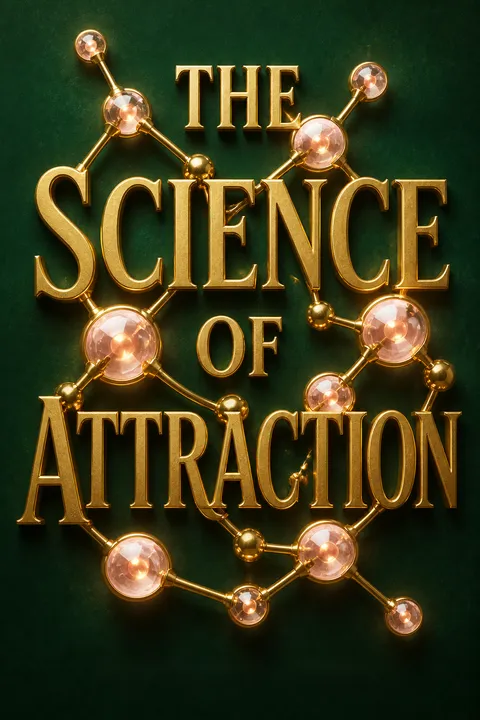
The Science of Attraction receives mixed reviews. Some readers find it informative and well-researched, offering insights into relationship dynamics and flirting techniques. Others criticize its male-centric perspective and lack of depth in certain areas. The book is praised for its readability and interesting concepts like love scales and arranged marriages. However, some reviewers feel it lacks originality and scientific rigor. Critics also note heteronormative bias and questionable generalizations. Overall, it's seen as a basic introduction to attraction psychology, potentially helpful for beginners but less valuable for those with prior knowledge.
People Also Read



Glossary
The Four Sequential Steps to Attraction
A staged attraction modelA model in the book that describes attraction as moving through four broad assessments: physical health and appeal, social or practical eligibility, emotional chemistry, and long-term compatibility in values and goals. It is intended as a way to diagnose where a connection may be strong or weak, not as a universal law that every relationship follows in the same order.
Intermittent reinforcement
Unpredictable rewards sustain effortA learning pattern in which a behavior is rewarded at irregular intervals rather than every time. The book uses B. F. Skinner’s lever-pressing experiments with mice to explain why unpredictable rewards can sustain repeated effort. It applies the idea to romantic uncertainty, while cautioning that genuine independence is healthier than deliberately manipulating someone with inconsistent attention.
Friendship Formula
Conditions that build familiarityJack Schafer’s model for how people may grow closer through proximity, frequent contact, time spent together, and interactions that satisfy each person’s needs. The book applies it to relationships that develop gradually, distinguishing this process from brief, high-intensity flirting. It is a framework for understanding familiarity, not a guarantee that repeated contact will create friendship or romance.
Triangular Theory of Love
Three dimensions of lovePsychologist Robert Sternberg’s framework describing love through passion, intimacy, and commitment. Passion refers to attraction and sexual chemistry, intimacy to emotional closeness, and commitment to the decision to sustain a relationship. The model helps partners identify mismatches, such as strong intimacy without shared commitment, rather than treating love as one undivided feeling.
Construal-level theory
Distance changes mental abstractionA psychological theory proposing that greater distance from an event encourages abstract, idealized thought, while closeness encourages more concrete judgment. The book applies it to partner preferences: people imagining a future match may list broad ideals, then respond differently when meeting someone face to face. It helps explain why stated preferences may not predict actual attraction.
Misattribution of arousal theory
Arousal gets the wrong explanationThe theory that people may interpret bodily excitement as attraction to someone nearby, even when another source caused the arousal. The book illustrates it with a study in which men who crossed a frightening bridge were more likely to contact a woman they met afterward than men who crossed a stable bridge. The effect does not establish long-term compatibility.
Dutton and Aron bridge study
Fear can color attraction judgmentsA 1974 experiment by Donald Dutton and Arthur Aron described in the book. Men encountered a woman after crossing either a frightening, unstable bridge or a stable one. The men from the frightening-bridge group were more likely to contact her afterward. The researchers interpreted the difference as possible misattribution of fear-related arousal to attraction.
FAQ
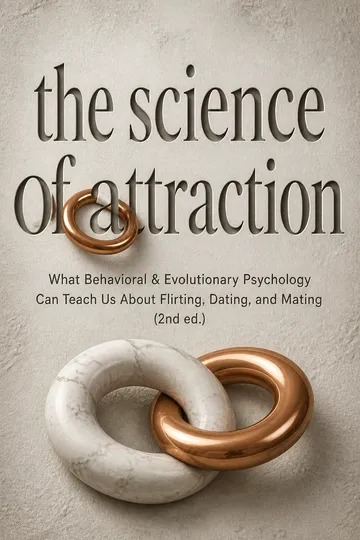
What's "The Science of Attraction" by Patrick King about?
- Exploration of Attraction: The book delves into the science behind attraction, focusing on how behavioral and evolutionary psychology can inform our understanding of flirting, dating, and mating.
- Practical Advice: It offers practical advice on how to engineer chemistry and love, using scientific principles to improve social interactions and romantic relationships.
- Comprehensive Guide: The book covers a wide range of topics, from body language and eye contact to the psychology of the chase and the dynamics of long-term relationships.
Why should I read "The Science of Attraction"?
- Scientific Insights: The book provides insights based on peer-reviewed studies, offering a scientific approach to understanding attraction and relationships.
- Actionable Techniques: It includes actionable techniques and strategies to improve your dating life and social interactions, making it a practical guide for anyone looking to enhance their romantic prospects.
- Broader Understanding: By reading this book, you'll gain a broader understanding of the psychological and biological factors that influence attraction, helping you navigate the complexities of modern dating.
What are the key takeaways of "The Science of Attraction"?
- Four Steps to Attraction: The book outlines four sequential steps to attraction: physical, status, emotion, and logic, which are essential for a fulfilling relationship.
- Nonverbal Communication: It emphasizes the importance of nonverbal communication, such as body language and eye contact, in creating attraction.
- Role of Uncertainty: The book discusses the role of uncertainty and playing hard to get in increasing perceived value and attraction.
How does Patrick King explain the "Four Sequential Steps to Attraction"?
- Physical Attraction: The first step involves physical health and attractiveness, which are initial gatekeepers for attraction.
- Status and Eligibility: The second step focuses on the perceived status and eligibility of a potential partner, assessing their ability to provide and support.
- Emotional Connection: The third step involves developing an emotional connection and chemistry, which is crucial for lasting attachment.
- Logical Compatibility: The final step is about logical compatibility, ensuring shared values and long-term goals align for a successful relationship.
What role does body language play in attraction according to "The Science of Attraction"?
- Nonverbal Cues: Body language is a significant component of attraction, conveying availability and fertility, which are instinctively attractive traits.
- Open and Welcoming: Open body language, such as uncrossed arms and direct eye contact, signals availability and interest, making you more approachable.
- Gender Differences: The book highlights different body language cues for men and women, emphasizing the importance of understanding these differences to enhance attraction.
How does "The Science of Attraction" address the concept of "The Chase"?
- Intermittent Rewards: The book explains that the chase involves creating intermittent rewards, which are more addictive and engaging than consistent reinforcement.
- Unavailability: It discusses how being slightly unavailable can increase your perceived value, as people tend to want what they can't easily have.
- Psychological Underpinnings: The chase taps into psychological principles, such as the thrill of uncertainty and the desire for novelty, to maintain interest and attraction.
What insights does Patrick King provide on arranged marriages in "The Science of Attraction"?
- Focus on Compatibility: Arranged marriages prioritize compatibility and long-term prospects over initial chemistry, which can lead to more stable relationships.
- Commitment and Problem-Solving: The book highlights the importance of commitment and problem-solving skills in arranged marriages, which contribute to their success.
- Cultural Perspectives: It offers a cultural perspective on marriage, contrasting Western ideals of romantic love with the pragmatic approach of arranged marriages.
What is the "Triangular Theory of Love" as discussed in "The Science of Attraction"?
- Three Components: The theory identifies three components of love: intimacy, passion, and commitment, which together form a balanced and successful relationship.
- Balanced Relationships: Successful relationships score highly on all three components, ensuring a well-rounded and fulfilling partnership.
- Compatibility and Overlap: The book emphasizes the importance of compatibility and overlap in these components between partners for long-term relationship success.
How does "The Science of Attraction" explain the concept of "Universal Desires"?
- Biological Imperatives: The book identifies universal desires rooted in biological imperatives, such as excitement, arousal, and gender-specific triggers.
- Misattribution of Arousal: It discusses the misattribution of arousal theory, where people attribute their physiological arousal to the presence of a potential partner.
- Gender Differences: The book highlights differences in arousal triggers between men and women, emphasizing the importance of understanding these nuances in attraction.
What does Patrick King say about the role of selflessness in attraction?
- Universally Attractive: Selflessness, kindness, and altruism are universally attractive traits, signaling security, confidence, and a generous spirit.
- Long-Term Appeal: While selflessness may not be a primary factor in short-term attraction, it is crucial for long-term relationship success and satisfaction.
- Positive Signals: Being selfless communicates positive qualities, such as emotional intelligence and a cooperative nature, which are appealing to potential partners.
How does "The Science of Attraction" address the topic of "Getting Kinky"?
- Exploration of Kinks: The book encourages exploring kinks and understanding their origins, whether through brain structure, conditioning, or personal preferences.
- Complementary Preferences: It emphasizes the importance of complementary sexual preferences over similar ones for greater sexual satisfaction in relationships.
- Safe Exploration: The book advises creating a safe space for discussing and exploring kinks with partners, ensuring open communication and mutual consent.
What are the best quotes from "The Science of Attraction" and what do they mean?
- "The solution for Michael’s texting woes was simpler than most because it played mostly on one pretty common psychological factor—availability." This quote highlights the importance of perceived availability in attraction, suggesting that being less available can increase your perceived value.
- "Arranged marriages work because culturally marriage is seen differently. We have a very romantic view of marriage. Theirs is more pragmatic." This quote contrasts Western romantic ideals with the pragmatic approach of arranged marriages, emphasizing the role of commitment and compatibility.
- "The idea is we must not leave our love lives to chance. We plan our education, our careers, and our finances, but we’re still uncomfortable with the idea that we should plan our love lives." This quote encourages a more strategic approach to love and relationships, suggesting that planning and understanding can lead to more successful outcomes.
About the Author
Other books by Patrick King



Download PDF
Download EPUB
.epub digital book format is ideal for reading ebooks on phones, tablets, and e-readers.








