

Key Takeaways
Charm is attention: make the other person feel accurately understood
Connection starts before words. Mirroring means naturally matching another person’s emotional tone, pace, language, or body language. It signals attention, not imitation for its own sake. If someone shares upsetting news, a breezy response can feel dismissive; a measured tone and attentive posture help show that the emotion has registered. Reflecting the feeling in your own words can do the same.
Keep it responsive. In one negotiation study described in the book, 62 students who mirrored their partners reached agreement 67% of the time, compared with 12.5% among those who did not. That result suggests a useful cue, not a guarantee. Copying someone too closely, especially during conflict, can seem false or amplify tension. The aim is to adjust sincerely and keep noticing how the other person responds.
What's striking is that charm is framed less as a personal performance than as a quality of coordination. Attention becomes visible through timing, tone, and responsiveness, so the other person need not infer goodwill from polished words alone. This also explains why a clever anecdote can fall flat when it ignores the emotional moment. The negotiation result is memorable, but a small study task cannot establish that mirroring works equally well in every relationship or culture. Its strongest use is modest: treat another person’s signals as information, then adapt without abandoning genuine feeling.
Turn small talk into an exchange: anchor, reveal, then invite
Give the opening a shape. The ARE method, created by Carol Fleming, turns a shared situation into a two-way conversation. Start with an Anchor, such as the event you are both attending. Reveal one related detail about yourself, then Encourage the other person to share. The sequence matters: a question alone can feel like an interview, while a personal detail gives the other person something to respond to.
Choose useful subjects. FORM offers four broad areas: Family, Occupation, Recreation, and Motivation, meaning interests, activities, and goals. These are prompts, not a checklist. At a gathering, a comment about the food could lead to a brief story about a favorite dish, then a question about what the other person likes to cook. If the exchange stalls, a polite exit is acceptable; not every opening needs rescuing.
The method works because it distributes conversational risk. The opener is low-stakes, the self-disclosure demonstrates reciprocity, and the invitation leaves control with the other person. FORM is most useful as a source of possibilities rather than a script: family or work can be private, tiresome, or culturally loaded topics. A situational detail is often safer, and the other person’s response can guide what follows. The deeper lesson is not to eliminate awkwardness, which no formula can promise, but to make the first move easy to answer and easy to decline.
Give your listener room by balancing claims with questions and brevity
Share the conversational floor. The Rule of Three, attributed in the book to management coach Karl Albrecht, advises against making three declarative statements in a row. Break up opinions with a sincere question or a qualifier that acknowledges uncertainty. Instead of announcing that a film was terrible, ask what the other person thought of it.
Watch the length, too. The one-minute traffic-light rule is a rough reminder that listeners may tire of an uninterrupted story: the first 30 seconds are treated as green, the next 30 as yellow, and anything beyond a minute as red. The book also applies the Pareto Principle to conversation, suggesting roughly 80% listening and 20% speaking. These are prompts to notice attention, not quotas to enforce. If the listener is engaged, continue; if not, hand the conversation back.
These rules make airtime observable, which helps counter the common mistake of measuring a conversation by how much one has contributed. Their precision should not be mistaken for scientific timing: a minute is not a universal attention limit, and an 80-to-20 split is not a social law. A good explanation or intimate conversation may require more speaking. The practical test is reciprocity. Questions should express real curiosity, not merely disguise a speech, and concise answers should leave space without making the speaker seem guarded.
Share specifics so others meet a person, not a stereotype
Details make identity legible. A bare fact, such as where someone lives, leaves listeners room to fill in assumptions. The book describes a 1989 study by Hilton and Fein in which adding information, even information unrelated to a stereotype, reduced people’s reliance on that stereotype. A few real details can turn a category into a particular person and give others more ways to find common ground.
Disclosure can create closeness. In research by Arthur Aron, participants who discussed 36 increasingly personal questions reported more trust and closeness than participants who stuck to everyday topics. The lesson is not to interrogate strangers or disclose everything. Share preferences, small stories, and feelings, then notice whether the exchange is mutual. A personal story can also reveal a value more vividly than a list of credentials.
Specificity does useful social work: it complicates the snap judgments invited by sparse information and creates more possible points of connection. It also shifts self-presentation away from a polished résumé toward a human account of preferences and experience. Yet disclosure is not automatically safe or welcome. The value of a question depends on context, relationship, and the other person’s freedom to pass. The research supports the potential of mutual openness, not a universal rule that intimacy should be accelerated. Give detail as an invitation, not a demand.
Let trust set how deeply you disclose
Increase intimacy by degrees. The book describes three levels of rapport through disclosure. Light disclosure might be a harmless embarrassment; medium disclosure shares a meaningful belief or personal experience; heavy disclosure reveals serious fears, pain, or vulnerability. Begin with material that fits the relationship, then watch for warmth or reciprocal sharing before going deeper.
Be genuine, not indiscriminate. A connection story is a concise personal anecdote that conveys what matters to you. Rather than reciting achievements, someone might describe a moment that changed how they balance work and family. The story gives listeners a sense of the values behind the facts. Research discussed in the book found that people often enjoy deeper conversations with strangers more than they expect, but that is no reason to force one. Share honestly, without requiring the other person to match your openness.
Calibrated vulnerability is a form of trust-building because it communicates both openness and judgment. The progression protects against two familiar failures: remaining so guarded that relationships stay superficial, or disclosing so intensely that the other person feels cornered. A personal story is especially effective when it illuminates a value without turning into a sales pitch for one’s character. The boundary is important: sincerity does not obligate an audience to reciprocate, and a warm response is not consent to unlimited intimacy.
Leave conversational threads open so you can return to them
Keep a path back. An open loop is an unfinished topic or story that can be resumed if the conversation slows. Someone might mention an unusual trip, shift briefly to another subject, then return to the trip when a natural opening appears. The unfinished detail gives the listener a reason to stay curious and gives both people a shared thread to pick up again.
Use the thread with care. The book compares this to comedians setting up an idea and returning to it for a later payoff. A callback to something mentioned in an earlier conversation can also show that the detail was remembered. But too many abrupt shifts can make a conversation feel scattered, and a deliberately withheld ending can frustrate rather than intrigue. Let a thread rest; return to it only when it fits the moment.
Open loops are less a trick for manufacturing suspense than a way to treat conversation as continuous rather than a series of sealed speeches. Returning to a detail demonstrates memory, while a shared reference can give even a brief exchange a sense of history. The technique depends on restraint: curiosity is productive only when the other person has room to participate. If every anecdote is engineered as a cliffhanger, conversation starts to resemble a pitch. The natural callback matters more than the unfinished plot.
Build on what the other person offers instead of correcting or redirecting
Choose collaboration over scoring points. The improv technique called Yes, and accepts the other person’s contribution and adds to it. In the book’s example, one person mentions wanting to visit Brazil and mistakenly refers to Spanish. A partner who focuses on correcting the mistake shuts down the playful exchange; a partner who accepts the enthusiasm and builds on it keeps the conversation alive.
Agreement is not required. The technique is about receiving the conversational offer, not pretending every claim is true. A disagreement can be stated as an addition rather than a dismissal: acknowledge the proposed route, then explain that another route may avoid traffic. The underlying habit is to notice when the mind is preparing a rebuttal and consider whether the point is worth interrupting the connection for.
The improv analogy usefully separates factual correction from relational response. People often contribute more than information; they also offer a mood, a joke, or a direction for shared play. Accepting that offer can make a conversation more generative. Still, affirmation has limits. False claims, consequential mistakes, or harmful ideas may require a clear correction. The useful distinction is between correcting to protect accuracy or safety and correcting to display superiority. A warm conversation can accommodate disagreement without making every exchange a contest.
Use voice, silence, and pace to make attention audible
Delivery carries emotion. Pitch, volume, pace, and clear articulation shape how words land. A softer voice can create intimacy; a sudden increase in volume may read as aggression. Pauses help listeners process a point, give the speaker time to breathe, and make room to notice how others are responding. They can also replace filler words and rushed explanations.
Respond to the actual exchange. A 2022 study described in the book found that pairs with faster response times were more likely to say they had clicked. It measured perceived connection, not whether speed caused deeper understanding. Quick acknowledgment can signal presence, but anxious interruptions are not responsiveness. Silence is not always a problem to solve: a comfortable pause may be better than forcing a new topic.
Voice and silence are often treated as decoration around the real message, but they help determine whether a message feels attentive, tense, or rushed. Pausing also creates a small interval for social perception: the speaker can check whether the listener is following rather than assuming. The response-time finding is suggestive, not a command to answer immediately. A conversation needs enough ease for thought, and individual differences matter. Responsiveness means showing that a message registered, not minimizing every gap.
Treat your read of someone as a hypothesis, not a diagnosis
Reflect without claiming certainty. Labeling is a way to paraphrase a likely feeling, using tentative language such as it sounds as though the situation was exhausting. If the interpretation is off, the other person can correct it. Cold reading, as described in the book, uses observation and guesses to create a sense of being understood. Broad statements that seem personal can work because many people recognize themselves in them, but they can also be manipulative.
Check the signals. The book describes microexpressions as fleeting facial movements that may reveal emotion, while warning that they are easy to miss or misread. Look for patterns and discrepancies between words and behavior rather than treating one expression as proof of a lie. A careful listener tests an interpretation with the person instead of privately deciding what that person must feel.
This is where social awareness can slide into imagined mind-reading. A tentative reflection is useful because it gives the speaker language while preserving their authority over their own experience. Cold-reading tactics and claims about fleeting expressions are much riskier when used to create an illusion of special insight. One cue rarely has a single meaning, and the same behavior can reflect fatigue, discomfort, or habit. Accuracy improves when interpretations remain revisable and the other person can say no without penalty.
Protect connection before trying to win a disagreement
Notice when dialogue becomes defense. Cognitive dissonance refers here to the strain of holding inconsistent beliefs, which can make people defend their position rather than reconsider it. The book points to signs such as shifting definitions, personal attacks, or difficulty restating the other person’s view. These signs are not a diagnosis, and they can appear in anyone, including the person doing the observing.
Lower the threat. When an exchange turns combative, pushing harder often increases resistance. Pause, breathe, and restore respect before returning to the issue. A non-hostile joke may ease tension, but it should not ridicule the other person. The goal is not to abandon truth or avoid hard topics. It is to stop treating agreement as proof of superiority and disagreement as proof that the conversation has failed.
The chapter’s strongest conflict insight is that argument is also a relationship event. People can become less receptive when they feel that changing their mind means losing status or admitting defeat. Lowering that threat can keep discussion possible. The term cognitive dissonance should be used cautiously, however, because it can become a convenient label for anyone who disagrees. A better test is behavioral and reciprocal: can both people describe the other’s position fairly, and can either revise a claim without humiliation?
End while warmth remains; do not assume the other person wants more
Do not wait for perfect mutual timing. In a study of 932 conversations described in the book, only 2% ended when both participants wanted them to. Almost 70% wanted the conversation to be shorter, often by about half, and people frequently misjudged when their partner wanted to stop. Politeness can conceal fatigue, so a smile or a follow-up question does not guarantee a wish to continue.
Leave clearly and kindly. Look for a natural lull, mention something positive about the exchange, give a brief reason for leaving, and then disengage rather than lingering uncertainly. This closes the interaction without making the other person responsible for ending it. The point is not to flee at the first pause. It is to avoid stretching a pleasant conversation until it becomes an obligation.
Ending a conversation is a coordination problem: each person has private preferences, while social politeness makes those preferences hard to read. A clear, warm exit reduces the need for either person to send increasingly obvious signals. The study’s figures are striking, though one set of conversations cannot establish a universal ideal duration. Some encounters need time, and some people enjoy silence. A useful default is to treat the partner’s wishes as uncertain, rather than interpreting courtesy as unlimited availability.
Analysis
The book’s central move is to redefine conversational charm as a transfer of attention. Its many techniques, from mirroring and questions to pauses and personal stories, work best as ways to notice another person and make that attention perceptible. The organizing principle is less a clever line than a repeated shift: away from performing an identity, toward jointly shaping an exchange.
That coherence is also the book’s main strength. A reader can apply its advice without becoming naturally witty or unusually confident. The frameworks offer concrete prompts for common moments: beginning with a stranger, recognizing a monologue, responding to emotion, or leaving a conversation. The stories and research findings make these skills feel learnable rather than innate.
The main interpretive risk is turning attentiveness into an optimization strategy. Mirroring, disclosure, cold reading, and open loops can sound like tools for producing a desired reaction. Used that way, they undermine the very sincerity the book argues for. The ethical distinction is whether a technique helps someone understand and participate, or covertly steers them toward trust, agreement, or intimacy. Consent and context matter: a question can invite, but it can also intrude; a personal story can humanize, but it can also pressure.
The evidence also varies in strength. Some findings are experimental, some are associations, and some are practical rules of thumb. The negotiation percentages or conversational timing figures are compelling illustrations, not universal guarantees. Likewise, a facial movement is not a transparent window into another person’s mind. The most robust reading of the book is therefore not to memorize metrics, but to use them as reminders to observe, test interpretations, and adjust. Conversation is a shared activity, and its success cannot be measured only by whether one person seems charming. The best outcome is a more mutual exchange in which both people can speak, listen, disagree, and leave freely.
Review Summary
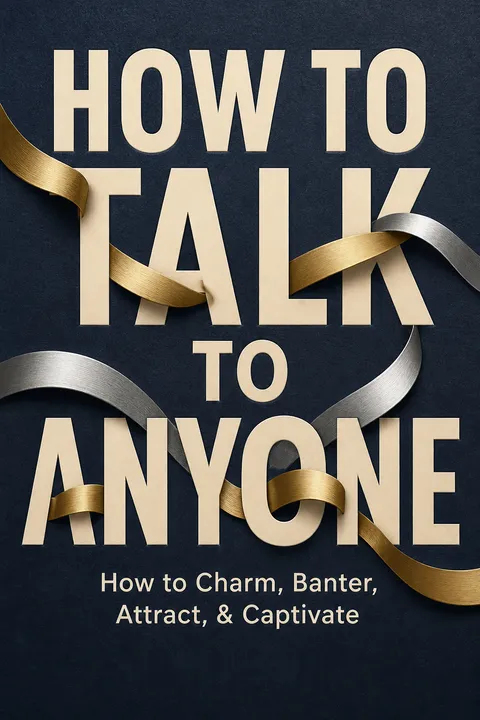
How to Talk to Anyone receives mixed reviews, with an average rating of 3.60 out of 5. Some readers find it informative and packed with useful tips for improving conversation skills, while others criticize it as lacking substance and being more of a list than a book. Positive reviews highlight the book's focus on active listening, empathy, and building deeper connections. Critics argue that much of the advice is common sense or repetitive. Overall, readers appreciate the practical advice but find the depth and originality of content varies throughout the book.
People Also Read









Glossary
Mirroring
Matching another person naturallyMirroring is the natural alignment of one person’s speech, posture, facial expression, or emotional tone with another’s. In conversation, it can signal attention and similarity. It is most useful when subtle and responsive. Deliberate copying, especially in conflict or when a person is not genuinely engaged, can feel artificial or manipulative.
ARE method
A three-step conversation openerThe ARE method is a structure for beginning a conversation: Anchor in a shared situation, Reveal a related detail about yourself, and Encourage the other person to share. It turns an opener into an exchange rather than a one-sided question. The sequence is flexible and should sound natural, not like a memorized script.
FORM
Four broad conversation topicsFORM is an acronym for Family, Occupation, Recreation, and Motivation. It offers topic areas for getting to know someone, including family life, work, hobbies, and goals. These are prompts rather than mandatory questions; relevance and tact matter, since some subjects may be private or unwelcome in a particular setting.
Rule of three
Break up consecutive claimsThe Rule of Three, attributed in the book to Karl Albrecht, advises speakers not to make three declarative statements in a row without adding a question or a qualifier. A declarative presents a fact or opinion as settled. Questions invite the other person in, while qualifiers signal that a view is not the only possible one.
Pareto Principle
A listening-oriented airtime guideThe Pareto Principle is commonly known as the 80-20 rule. The book applies it to conversation as a rough suggestion that about 80% of the exchange should focus on the other person and 20% on oneself. It is a reminder to listen and share the floor, not a literal ratio that every conversation must follow.
Ego suspension
Set aside the urge to dominateEgo suspension is the deliberate choice to put aside the immediate need to be right, tell a competing story, or control the conversation. It means staying curious about another person’s perspective without having to agree with it. The practice gives the speaker room to explain before the listener evaluates or responds.
Three levels of rapport
Disclosure that deepens by degreesThe three levels of rapport describe increasing degrees of personal disclosure: light sharing, such as a harmless embarrassment; medium sharing, such as a meaningful belief; and heavy sharing, such as a serious fear or vulnerability. The framework advises gradual openness, guided by the relationship and by whether the other person responds warmly or reciprocates.
Connection stories
Brief stories that reveal valuesConnection stories are concise personal anecdotes that help listeners understand a person’s character, values, or motivations. Rather than listing accomplishments, the speaker shares a meaningful moment that shows what matters to them. The story should be genuine and focused, and should invite connection rather than function as a flattering advertisement.
Open loops
Unfinished threads to revisitAn open loop is an unfinished topic or story that can be picked up again when a conversation needs a fresh direction. A speaker might mention an intriguing event, move briefly to another subject, and return to it when the moment fits. Open loops can create continuity, but too many can make conversation feel scattered or contrived.
Yes, and
Accept, then addYes, and is an improv technique for accepting another person’s conversational contribution and building on it. In everyday conversation, it means responding to the idea, mood, or playful direction offered rather than reflexively correcting or dismissing it. It does not require agreement with false or harmful claims; disagreement can still be expressed without turning the exchange into a contest.
Cold reading
Guessing from observable cuesCold reading is a technique in which a person observes another’s appearance, language, and behavior, offers guesses, and uses responses to refine them. The book describes its use in conversation as a way to show focused attention, but also notes how general statements can create a false impression of insight. Ethical use requires tentative interpretations and room for correction.
Microexpressions
Very brief facial movementsMicroexpressions are fleeting facial movements described in the book as possible clues to a person’s emotional state. They may occur too quickly to interpret reliably and can be misread without context. They should not be treated as proof of deception or as a substitute for asking, observing broader patterns, and checking one’s interpretation.
Conversational intelligence
Awareness of the shared exchangeConversational intelligence is the ability to notice how an interaction is unfolding, including one’s own blind spots, the other person’s likely needs, and the effect of one’s words and behavior. It involves listening, asking instead of assuming, reading feedback cautiously, and adjusting so that conversation remains a shared activity.
FAQ
1. What is "How to Talk to Anyone" by Patrick King about?
- Practical Conversation Guide: The book is a practical guide offering 27 actionable strategies to improve your conversational skills, charm, and social intelligence.
- Focus on Connection: It emphasizes genuine connection, empathy, and playfulness over performance, competition, or impressing others.
- Applicable to All Situations: The advice is designed for use in professional, romantic, and casual settings, making it broadly applicable.
- Science-Backed Techniques: Patrick King incorporates psychological research and real-world examples to support his methods for becoming more charismatic and likeable.
2. Why should I read "How to Talk to Anyone" by Patrick King?
- Overcome Social Awkwardness: The book provides tools to avoid awkward silences, handle small talk, and navigate difficult conversations with confidence.
- Boost Charisma and Likability: You'll learn how to be more engaging, memorable, and appealing in any social situation.
- Develop Deeper Connections: The focus on empathy, vulnerability, and active listening helps foster more meaningful relationships.
- Actionable, Easy-to-Apply Tips: Each chapter offers clear, step-by-step methods you can start using immediately to improve your interactions.
3. What are the key takeaways from "How to Talk to Anyone" by Patrick King?
- Connection Over Performance: True charm comes from making others feel seen and valued, not from being witty or impressive.
- Active Listening is Crucial: Listening with intent, asking questions, and reflecting emotions are more important than talking.
- Vulnerability Builds Rapport: Gradual self-disclosure and sharing stories create trust and deeper bonds.
- Practical Conversation Tools: Techniques like mirroring, the ARE method, the rule of three, and the 1-minute rule help structure better conversations.
4. What is the "mirroring" technique in "How to Talk to Anyone" and how does it work?
- Definition: Mirroring involves subtly matching another person's verbal, nonverbal, or emotional cues to signal understanding and connection.
- Types of Mirroring: It can be verbal (repeating phrases), nonverbal (matching posture or gestures), or emotional (reflecting feelings).
- Builds Trust and Rapport: Scientific studies cited in the book show mirroring increases negotiation success and makes people feel understood.
- Natural and Subtle: Overdoing it can seem manipulative; mirroring should be natural and responsive to the other person's cues.
5. How does the "rule of three" improve conversations according to Patrick King?
- Balanced Dialogue: The rule states you should never make more than three declarative statements in a row without inserting a question or qualifier.
- Prevents Monologues: This keeps conversations from feeling like lectures and ensures both parties are engaged.
- Shows Respect and Interest: Asking questions or using softeners demonstrates you value the other person's perspective.
- Easy to Implement: Simply become aware of your speech patterns and consciously balance statements with inquiries.
6. What is the ARE method for small talk in "How to Talk to Anyone"?
- Acronym Explained: ARE stands for Anchor, Reveal, and Encourage.
- Step-by-Step: Start with an anchor (shared experience), reveal something about yourself, then encourage the other person to share.
- Moves Beyond Small Talk: This structure helps transition from surface-level conversation to more meaningful topics.
- Flexible and Natural: The method is adaptable and can be combined with the FORM topics (Family, Occupation, Recreation, Motivation) for variety.
7. How can I avoid being boring in conversations, according to Patrick King?
- Emphasize Fun and Playfulness: Boring people are often perceived as negative, self-centered, or overly serious; being open, lighthearted, and engaged is key.
- Share Passions and Stories: Talk about your interests and experiences with enthusiasm to appear more interesting.
- Avoid Stereotypical "Boring" Traits: Traits like being passive, uncreative, or reserved can be countered by showing curiosity and warmth.
- Self-Edit When Needed: If your hobbies or job are stereotypically dull, highlight other aspects of your personality to keep things lively.
8. What role does vulnerability and self-disclosure play in building rapport, as described in "How to Talk to Anyone"?
- Three Levels of Disclosure: Start with light (harmless secrets), move to medium (beliefs and opinions), and only share heavy (deep vulnerabilities) with trusted individuals.
- Builds Trust and Intimacy: Gradual self-disclosure signals trust and invites others to open up, deepening the relationship.
- Creates Connection Stories: Sharing personal anecdotes that reflect your values helps others relate to you.
- Be Selective and Appropriate: Oversharing too soon or with the wrong audience can backfire; calibrate based on the other person's response.
9. What are some advanced conversational techniques from "How to Talk to Anyone" by Patrick King?
- Open Loops: Start stories or topics without finishing them, creating curiosity and opportunities to revisit them later.
- Metaphors and Vivid Language: Use colorful analogies and imagery to make your points more memorable and engaging.
- "Yes, and" Mindset: Borrowed from improv, this technique keeps conversations flowing by affirming and building on what others say, rather than blocking with "but."
- Cold Reading: Make high-probability guesses and observations to show attentiveness and make others feel understood.
10. How does Patrick King suggest handling awkward silences and ending conversations gracefully?
- 1-Minute Traffic Light Rule: Limit your speaking turns to about one minute to avoid rambling and keep the exchange dynamic.
- Responsive and Quick: Fast response times help people feel more connected and keep the conversation lively.
- Graceful Exits: End conversations on a positive note, make a polite excuse, and disengage firmly but warmly.
- Most People Want Shorter Conversations: Research shows most conversations last longer than both parties desire, so it's better to end a bit early than too late.
11. What is "active listening" in "How to Talk to Anyone" and how can I practice it?
- More Than Hearing: Active listening involves comprehending, retaining, and responding to what the other person says, not just passively hearing.
- Nine Techniques: These include restating, reflecting, summarizing, labeling emotions, probing, and using silence effectively.
- Suppress Ego: Focus on the speaker's perspective rather than planning your own response or judging.
- Encourages Deeper Connection: Active listening makes others feel valued and understood, which is essential for building rapport.
12. What scientific research and psychological principles does Patrick King reference in "How to Talk to Anyone"?
- Mirroring and Negotiation: Studies show mirroring increases settlement rates and rapport in negotiations.
- Self-Disclosure and Closeness: Research by Arthur Aron demonstrates that sharing personal information fosters trust and intimacy.
- Similarity-Attraction Effect: People are drawn to those who share their values, interests, or even dislikes, as shown in studies by Newcomb and others.
- Conversation Dynamics: Research on response times, conversation endings, and the impact of vulnerability all inform the book's practical advice.
About the Author
Other books by Patrick King




Download PDF
Download EPUB
.epub digital book format is ideal for reading ebooks on phones, tablets, and e-readers.








