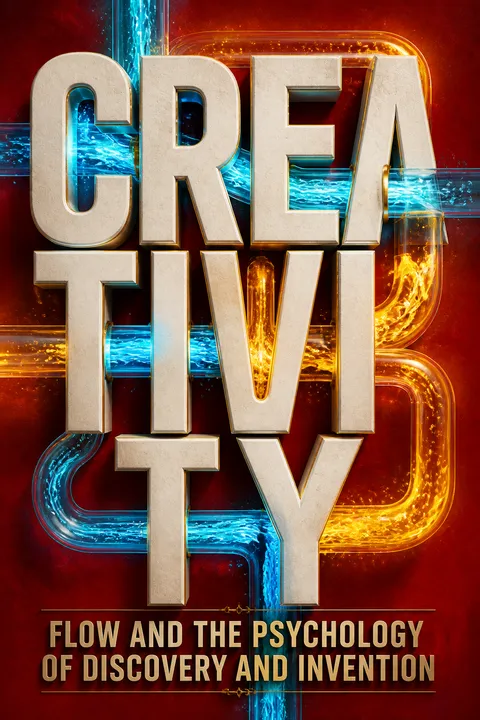


Key Takeaways
Treat creativity as a system, not a spark inside a gifted mind
Creativity has three parts. The systems model describes consequential creativity as a change to a shared cultural domain, not merely an unusual private thought. A domain is an organized body of symbolic knowledge, such as astronomy. A field is the network of knowledgeable judges and institutions that assess new work and help decide what gets preserved. The individual introduces novelty, but all three must interact for it to enter the culture.
Rubin's finding shows the chain. Astronomer Vera Rubin noticed in spectral records that stars in one galaxy moved in opposite directions. Years of studying galaxies made the anomaly visible. Better instruments supplied the evidence, colleagues scrutinized her interpretation, and the astronomy community could incorporate the finding. Neither a lone genius nor a committee alone explains the discovery.
What's striking is how this model shifts the question from who is creative to what conditions let valuable novelty survive. That resembles distributed cognition, the idea that thinking can depend on tools, collaborators, and shared records, not just an individual brain. The model also clarifies why generating ideas is not enough: institutions need ways to test, select, and spread them. Its risk is that existing gatekeepers can mistake authority for truth. Recognition is necessary for cultural impact, but it is not proof that every rejected idea lacked merit.
Master a domain before you try to change its rules
Novelty needs a history. Creative work starts with learning the symbols, techniques, and standards already present in a field. A musician needs the tradition of music; an inventor needs to understand the science and engineering behind existing designs. That knowledge lets people notice genuine gaps, avoid repeating old failures, and distinguish a promising idea from a merely unfamiliar one.
Florence joined old and new. Brunelleschi studied Roman building methods, then combined them with later architectural knowledge to design the dome of Florence's cathedral. The city supported the work with informed patrons and demanding review. The result was not a rejection of tradition, but a fresh solution built from it. The same principle applies across domains: learn the craft deeply, then recombine or challenge it with care.
The useful tension here is between competence and dissent. Expertise provides a map of what has been tried, while distance from convention can reveal assumptions that insiders take for granted. Research on skill acquisition similarly suggests that flexible expertise grows from both structured practice and varied application. Yet mastery can become a moat: established fields sometimes defend familiar methods because those methods protect status or funding. Learning the rules is therefore a prerequisite for informed challenge, not a promise to obey them.
Treat discovery as a loop, not a lightning bolt
Ideas take several passes. The book organizes creative work into becoming immersed in a problem, allowing ideas to combine outside focused awareness, recognizing a possible answer, testing it, and doing the labor needed to complete it. These activities overlap and recur, rather than forming a tidy staircase.
Dyson's insight took a year. Physicist Freeman Dyson spent about six months working to understand two competing approaches to quantum electrodynamics. During a vacation, the relationship between them suddenly became clear on a bus ride. He then spent roughly six more months working through the details and publishing the result. The remembered flash depended on long preparation and further effort. Creative writing can work similarly: a phrase or image may start the work, while later revisions reveal what the piece is really about.
The cycle makes room for intuition without turning it into magic. Breaks can loosen the narrow, deliberate search that keeps attention on familiar routes, while preparation supplies the knowledge that makes a new connection meaningful. Still, a sudden insight is easy to romanticize in hindsight. People often remember the moment of resolution more clearly than the small adjustments that preceded it. The practical lesson is not to wait passively for inspiration, but to alternate focused effort with enough distance to reconsider the problem.
Design work around flow, not prizes
Flow makes effort absorbing. Flow is an intensely focused state in which people become immersed in a demanding activity. It is easier to reach when the goal is clear, feedback arrives quickly, and the challenge matches the person's skills. In that state, attention stays with the task, concern about appearing impressive recedes, and time can seem to pass differently.
Enjoyment can sustain hard work. The researchers, artists, and inventors interviewed described valuing the activity itself, not only fame or money. When a task is rewarding in its own right, it is autotelic, meaning it becomes an end in itself. Flow is not automatically happiness or virtue: gambling or other harmful activities may absorb attention too. The quality of the activity and its consequences matter, not just the intensity of concentration.
This account gives a useful alternative to the idea that meaningful work must feel effortless. Flow can include struggle at the start, followed by deep involvement once the task becomes manageable and feedback is available. Motivation research also distinguishes doing something for its inherent interest from doing it solely for external rewards. That distinction is valuable, although external rewards still matter when they provide security, time, or recognition. The strongest work settings support intrinsic interest without pretending that material conditions are irrelevant.
Practice opposites instead of adopting a creative-personality costume
Creative people are not one type. The book calls their capacity to combine apparently opposite tendencies complexity. Here, complexity means having distinct ways of thinking and acting that can still work together. People may be playful and disciplined, imaginative and grounded, independent and socially engaged, or deeply invested in a project while remaining able to criticize it.
Generate, then judge. Creative work needs both divergent thinking, which produces varied possibilities, and convergent thinking, which tests and selects among them. Inventor Jacob Rabinow described producing many ideas, then discarding those that were ineffective, old, or needlessly complicated. The practical point is not to imitate a stereotype of the eccentric genius. It is to expand one's repertoire: explore freely when seeking possibilities, then apply trained judgment when deciding what deserves effort.
The emphasis on flexibility anticipates a broad finding in psychology: adapting behavior to context is often more useful than expressing a fixed trait at maximum volume. It also explains why the familiar image of the antisocial genius is misleading. Solitary concentration and social exchange can serve different phases of the same project. The list of paired qualities should not be treated as a personality test, however. People have different strengths, and the aim is not to embody every opposite, but to avoid letting one habitual mode block a needed response.
Give original work time, mentors, and a fair route to recognition
Institutions shape the odds. The book identifies training, high but realistic expectations, resources, recognition, hope of a future in the field, opportunities to contribute, and rewards as conditions that help creative work develop. Brainstorming alone is unlikely to help if managers cannot identify good ideas or put them into practice. A field can invite innovation, reject it too narrowly, or admit so much novelty that its standards become confused.
Opportunity can change a career. Several women scientists in the study said World War II opened graduate-school and laboratory positions that would otherwise have been difficult to reach. Their ability mattered, but so did a temporary change in access. Florence's patrons likewise funded artists, set ambitious tasks, and assessed their work. The lesson for organizations is concrete: make room for serious practice, useful feedback, and pathways from promising ideas to real use.
This is a strong corrective to programs that treat creativity as a private skill that workshops can simply install. Organizational research also points to the importance of psychological safety, the shared sense that people can raise questions or take interpersonal risks without punishment. But openness alone is not enough; without sound evaluation, organizations can reward novelty that is flashy rather than useful. Fair access also requires examining who gets mentorship and whose work is taken seriously, since apparently neutral selection systems can reproduce old exclusions.
Nurture curiosity, not prodigy myths, and expect careers to zigzag
There is no single origin story. The book draws on interviews with 91 accomplished people, all at least 60 years old and still active in a field. Their childhoods, schooling, family lives, and career paths varied widely. Some showed early talent; others found their direction much later. One recurring thread was intense curiosity about something specific, supported by opportunities to learn and keep exploring it.
Age can change the advantage. Quick processing and reaction speed often decline with age, while accumulated knowledge and judgment can remain strong or improve. Chemist Linus Pauling said he published twice as many papers between 70 and 90 as in any previous twenty-year period. That is an illustrative case, not a general forecast. The study's older, active participants also represent survivors, so their accounts cannot establish that every career follows this pattern.
The stories resist both the prodigy myth and its opposite, the claim that adversity is necessary for originality. They make a better case for responsiveness: curiosity needs room, while ability needs training, encouragement, and luck. Developmental research supports the distinction between rapid processing and expertise accumulated through experience, though neither follows a universal timetable. The sample's age and success criteria matter: people who died young, lacked access, or were never recognized are less visible here. Their absence limits conclusions about what creativity requires.
Judge innovations by their effects beyond the field that made them
Success can create new problems. Cultural inventions expand what people can do, but they also change habits, institutions, and the environment. The book calls attention to unintended consequences: technologies designed to increase convenience or power can produce costs that their creators did not plan for. A solution that works within one discipline may still damage a wider system.
Commoner widened the frame. Biologist and activist Barry Commoner argued that environmental problems cannot be solved by scientific knowledge alone; public awareness and policy must also shape how technology is used. The book questions whether professional fields or markets can judge long-term public value on their own, since both may favor their immediate interests. Its proposed direction is broader assessment of consequences, while protecting researchers' freedom to explore and criticize.
The central insight resembles systems thinking in ecology: local interventions can produce effects elsewhere, sometimes with a delay that hides the causal link. It is a compelling reason to assess technologies beyond immediate performance or profit. The harder question is who defines public value and how competing harms are weighed. Expert panels can be captured by professional interests, while public opinion can be short-sighted or poorly informed. Better evaluation therefore needs transparent evidence, diverse participation, and room to revise judgments as consequences become visible.
Make daily life a laboratory for attention and enjoyment
Start with what captures you. Personal creativity does not require a celebrated invention. It means reshaping the familiar patterns of one's own life. The book suggests noticing what surprises you, recording memorable observations, following sparks of interest, and trying activities beyond the ones you assume are meant for someone else. A diary can reveal interests that daily routine tends to hide.
Give attention a structure. Review how time is spent and how different activities feel. Experiment with work rhythms, rest, and a space that supports concentration. When facing a problem, consider several explanations before settling on one, then adjust your response as new evidence arrives. These practices cannot guarantee cultural recognition, which depends on training, opportunity, and judgment by others. They can make everyday experience more vivid and give curiosity somewhere to go.
This prescription turns creativity from a rare status into a practice of attention. Keeping notes resembles reflective learning: experience becomes more useful when people revisit it, identify patterns, and test new responses. The method is modest, but its modesty is a strength. It does not promise that a customized room or a daily journal will produce a breakthrough. Nor does every person have equal control over time, space, or safety. Personal experiments can help, but they work best when structural constraints are acknowledged rather than mistaken for failures of imagination.
Analysis
The book's most durable contribution is its change of scale. Creativity is not treated as a mysterious substance lodged in exceptional individuals, but as a cultural event that depends on a person's work, inherited knowledge, and a community capable of evaluating and transmitting novelty. That view connects psychological accounts of attention and motivation to institutional questions about training, patronage, opportunity, and power. It also explains why a bright idea may be personally revelatory yet have no cultural impact, and why a modest individual contribution can become transformative when conditions align.
The narrative method makes this framework memorable. Rubin's astronomical observation, Brunelleschi's dome, Dyson's theoretical synthesis, and the accounts of writers and activists show how different fields share patterns without pretending their practices are identical. The interviews are rich evidence about how accomplished people understand their own work. They are not, however, a representative sample. The 91 respondents were older, active, and already recognized; the group also leaned heavily toward men and Western participants. Survivorship, access, and willingness to be interviewed shape the portrait. The author's cautious goal of disproving simple myths is more defensible than claiming universal laws, but retrospective stories still cannot establish what caused success.
The systems model also raises a political problem it does not fully solve: fields can recognize novelty, but their judgments may reproduce exclusion or protect their own interests. A work can be valuable before institutions notice it, and recognized work can later be judged differently. The framework is strongest when it distinguishes personal insight from public impact, and weaker if recognition is mistaken for objective worth. Likewise, evaluating innovation by its effects on society is essential but invites disputes over whose interests count and over long-term harms that are difficult to predict.
The practical message remains unusually grounded: curiosity needs knowledge, focused effort, recovery time, and environments that make exploration possible. Flow offers a reason to value the process, while the account of cultural consequences warns against equating novelty with progress. Creativity can enrich life and expand culture, but it also creates responsibilities for the people and institutions that choose what to cultivate.
Review Summary
Creativity by Mihaly Csikszentmihalyi explores the nature of creativity through interviews with successful individuals across various fields. The book examines common traits of creative people, the creative process, and how creativity develops over a lifetime. While some readers found it insightful and comprehensive, others criticized its narrow focus on established professionals and lack of diversity. The book offers practical advice for enhancing personal creativity but is sometimes considered dry and repetitive. Overall, it is regarded as an important work on creativity, despite some limitations in its approach and scope.
People Also Read





Glossary
systems model
Creativity as interactionA model in which culturally consequential creativity emerges through interaction among an individual, a domain of shared symbolic knowledge, and a field of people or institutions that assess and transmit new contributions. It shifts attention from a supposedly creative personality alone to the social and cultural conditions that allow an idea or product to affect a domain.
domain
Shared symbolic knowledgeAn organized body of cultural knowledge made up of symbols, rules, and procedures. Astronomy, music, mathematics, and literature are examples. A person must learn a domain to make an informed contribution to it, and a new contribution can alter the domain if it is accepted and incorporated.
field
Domain gatekeepersThe people and institutions that evaluate work within a domain and influence whether it is recognized, supported, preserved, and shared. A field can include teachers, editors, critics, researchers, patrons, or managers. Its judgments help determine which novelties become part of cultural knowledge.
flow
Absorbing focused experienceA state of deep involvement in an activity, often marked by clear goals, immediate feedback, concentrated attention, and a good fit between challenge and skill. People in flow may lose track of time and become less concerned with how they appear to others. Flow is rewarding, but the state alone does not make an activity beneficial.
autotelic
Rewarding in itselfDescribes an activity pursued partly or chiefly because doing it is satisfying in its own right, rather than only as a means to a later reward. Writing, research, music, or another task can become autotelic when the activity itself provides enough interest and enjoyment to sustain attention and effort.
memes
Units of cultural informationUnits of information that people learn and transmit, such as languages, theories, songs, recipes, laws, and values. The book compares their role in cultural change to that of genes in biological evolution: creative contributions modify cultural information, and some modifications are retained and passed on.
discovered problems
Unasked questions identifiedProblems that a person identifies before anyone has clearly formulated or assigned them. Unlike presented problems, which arrive with an established question and require a solution, discovered problems require the creator to recognize what is puzzling or missing and shape that observation into a question that can be explored.
complexity
Integrated, varied capacitiesA quality the book attributes to creative personalities: the ability to use contrasting tendencies, such as imagination and realism or solitude and sociability, in ways that remain coordinated. Complexity does not mean sitting halfway between opposites. It means having a wider repertoire and adapting which capacity is used to the task.
Experience Sampling Method
Random-time self-observationA research method that signals participants at selected random times and asks them to record what they are doing and how they feel. In the book, this method helps reveal patterns in everyday attention, mood, and activity. The author also suggests that people can adapt the basic idea through their own notes or diaries.
FAQ
What's Creativity: Flow and the Psychology of Discovery and Invention by Mihály Csíkszentmihályi about?
- Focus on Creativity: The book explores creativity as a lifelong process, highlighting the experiences of individuals who have firsthand knowledge of creativity.
- Three Main Parts: It is divided into three sections: the creative process, the lives of creative individuals, and the domains of creativity, offering a comprehensive view of creativity in various contexts.
- Cultural and Personal Insights: Csíkszentmihályi discusses how creativity is influenced by cultural factors, personal experiences, and the interaction between individuals and their environments.
Why should I read Creativity: Flow and the Psychology of Discovery and Invention?
- Understanding Creativity: The book provides a deep understanding of creativity, moving beyond simplistic definitions to explore its complexities and nuances.
- Practical Applications: Readers can learn how to enhance their own creativity by applying the insights and methods discussed, making it relevant for personal and professional growth.
- Rich Anecdotes: The author includes interviews and stories from 91 creative individuals, providing real-life examples that illustrate the principles of creativity in action.
What are the key takeaways of Creativity: Flow and the Psychology of Discovery and Invention?
- Creativity is Systemic: Csíkszentmihályi emphasizes that creativity arises from the interaction of the individual, the domain, and the field, rather than being solely an individual trait.
- Importance of Environment: The book highlights how creative environments—both physical and social—can significantly influence the creative process and outcomes.
- Flow Experience: The concept of "flow" is central, describing a state of deep engagement and enjoyment in creative activities that leads to optimal performance.
What is the definition of creativity according to Creativity: Flow and the Psychology of Discovery and Invention?
- Systemic Definition: Creativity is defined as "any act, idea, or product that changes an existing domain, or that transforms an existing domain into a new one."
- Role of the Field: Creativity cannot be separated from the recognition and validation by a field of experts, which is essential for an idea to be considered truly creative.
- Cultural Context: The definition incorporates the cultural context, indicating that creativity involves a broader social and cultural interaction.
How does Mihály Csíkszentmihályi define "flow" in Creativity: Flow and the Psychology of Discovery and Invention?
- State of Immersion: Flow is a mental state where individuals are fully absorbed in an activity, leading to heightened focus and enjoyment.
- Balance of Challenge and Skill: Achieving flow requires a balance between the challenge of the task and the individual's skill level, preventing boredom or anxiety.
- Enhancement of Creativity: Flow is essential for creativity, allowing individuals to explore ideas freely and engage deeply with their work.
What are some methods to enhance personal creativity mentioned in Creativity: Flow and the Psychology of Discovery and Invention?
- Change Your Environment: Altering surroundings can enhance creativity, as different environments can stimulate new ideas and perspectives.
- Embrace Playfulness: Adopting a playful attitude towards work can lead to greater enjoyment and innovation in creative tasks.
- Cultivate Curiosity: Developing a strong sense of curiosity and openness to new experiences is essential for fostering creativity.
What role does luck play in creativity according to Creativity: Flow and the Psychology of Discovery and Invention?
- Significant Factor: Luck is often cited by creative individuals as a crucial element in their success, influencing opportunities and connections.
- Prepared Minds: While luck is important, it often favors those who are prepared and actively engaged in their fields.
- Contextual Influence: Being in the right place at the right time can lead to significant creative opportunities, typically resulting from prior hard work and dedication.
How does Creativity: Flow and the Psychology of Discovery and Invention address the relationship between creativity and culture?
- Cultural Context: Creativity is deeply embedded in cultural contexts, where the acceptance and validation of new ideas depend on societal norms and values.
- Domains and Fields: Different cultures foster or hinder creativity through their domains and fields, affecting what is recognized as valuable or innovative.
- Historical Influence: Historical events and cultural shifts can create fertile ground for creativity, as seen in periods of cultural flourishing like the Renaissance.
What is the significance of the creative process as described in Creativity: Flow and the Psychology of Discovery and Invention?
- Five Stages of Creativity: Csíkszentmihályi outlines a five-stage model: preparation, incubation, insight, evaluation, and elaboration, emphasizing that creativity is not linear.
- Importance of Incubation: The incubation phase allows ideas to develop subconsciously, often leading to unexpected insights and connections.
- Iterative Nature: The creative process is iterative, with individuals revisiting stages as they refine their ideas and work towards a final product.
What are the common traits of creative individuals identified in Creativity: Flow and the Psychology of Discovery?
- Intense Curiosity: Creative individuals often exhibit a profound curiosity about the world, driving them to explore new ideas and experiences.
- Persistence and Resilience: Successful creatives tend to be persistent and resilient, viewing obstacles as opportunities for growth.
- Openness to Experience: Creative individuals are typically open to new experiences and ideas, allowing them to connect disparate concepts and generate innovative solutions.
How does Creativity define the relationship between creativity and culture?
- Cultural Context: Creativity is deeply embedded in cultural contexts, influencing how individuals express their creativity.
- Cultural Evolution: Creativity drives cultural evolution, as new ideas and innovations can lead to significant societal changes.
- Shared Values and Norms: Shared cultural values and norms can either facilitate or hinder creativity, affecting the environment for creative expression.
About the Author
Other books by Mihály Csíkszentmihályi
Download PDF
Download EPUB
.epub digital book format is ideal for reading ebooks on phones, tablets, and e-readers.








