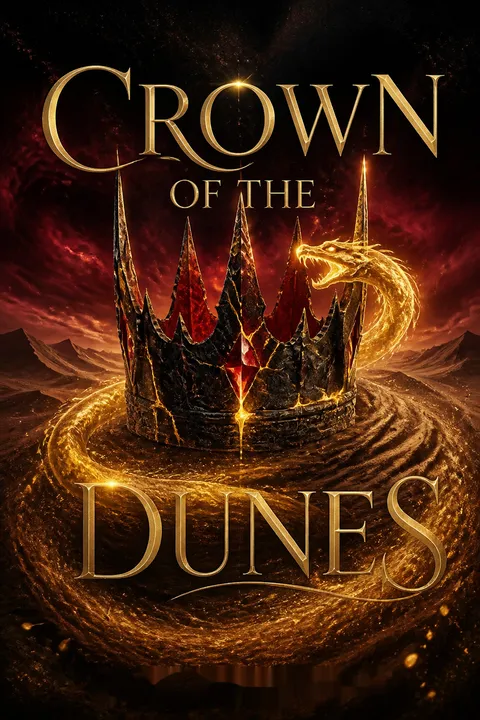


Plot Summary
Prologue
Erix2 hears the desert’s power as a rising chorus. Her Heart is missing, and the land’s distress threatens to overwhelm him. He wants the Heart restored, but he also wants Keera,1 the woman whose presence once quieted the turmoil inside him.
As he feels both desires pulling at him, the prologue establishes the novel’s central bind: repairing the desert may require Erix2 to move away from the person who has become his anchor.
The opening gives the desert an active presence without making its wishes understandable. Erix experiences its distress through his own mind, so ecological damage and psychological instability become intertwined rather than separate problems. His longing for Keera is not merely romantic comfort: it is the one counterforce he has found to the inherited power that threatens to consume him. By placing the missing Heart and the absent beloved side by side, the prologue makes the coming conflict intimate. Healing the land and keeping hold of another person may demand opposite choices.
Keera Wakes Scarred
Weeks after the lava wyrm crushed her, Keera1 wakes in Kelvadan’s infirmary with burns across one side of her body and a weakened leg. The healers keep her sedated because her uncontrolled magic once threatened the palace, but she insists on speaking to Queen Ginevra.3 Aderyn,4 her trusted friend, finally explains that the queen3 is gravely ill.
Keera1 learns that the city sees her as a hero for killing Lord Alasdar, though she acted to stop his cruelty toward Erix,2 not to win public praise. She longs for Erix,2 whose bond with her has gone faint during their separation, yet she also fears he has abandoned her. Her recovery begins under the shadow of a new war.
Keera’s first struggle is not simply physical rehabilitation. Her power has made care itself frightening: the healers sedate her to protect others, while she experiences that protection as another loss of control. Publicly, her survival is converted into a neat heroic story that erases the private reason she fought. The gap between her motives and the city’s interpretation anticipates her uneasy relationship with leadership. Her longing for Erix is similarly double-edged. The bond offers comfort, but his absence reactivates the abandonment she has carried since childhood.
Spiders Climb the Chasm
Across the desert, Erix2 commands the clans gathered on a plateau, cut off by a deep chasm he created during the battle with Kelvadan’s riders. Food and water are running short, and the clan lords question his leadership. Erix2 resists the title of Lord Viper, but Izumi,8 his second-in-command, warns that a show of weakness could split the alliance.
Then bone spiders climb out of the chasm and tear through the camp. Erix2 remembers that fire drives them back and uses his desert magic to burn several, though a rider dies in the attack. A faint tug from his bond with Keera1 breaks his battle trance. He orders the spiders burned for fuel, turning the threat into a grim defense.
The chasm works as both a practical obstacle and an external form of Erix’s self-made imprisonment. He protected the clans from one attack, but the same act now prevents escape and deepens their scarcity. His leadership is therefore measured not by intention but by consequences he must continue to manage. The bone spiders make that burden immediate, while his reliance on remembered tactics shows that competence survives even when his inner control frays. Keera’s brief signal does not solve the crisis; it interrupts his dissociation long enough for him to choose protection over blind violence.
A Mountain Falls
Once strong enough to leave the infirmary, Keera1 meets Queen Ginevra3 and explains what Erix2 told her: the desert’s Heart was stolen and must be returned to its temple. Ginevra3 doubts the account but admits that crops and herds are failing. On the palace stairs, Keera1 also meets Prince Calix,6 an informal envoy from Viltov, and General Warrick7 of Doran, whose earlier ambassador tried to manipulate her.
Later, while riding with Calix,6 Keera1 feels an earthquake begin beneath the irrigated fields. She runs toward a trapped farmer and holds a mountainside avalanche suspended with her magic until the workers escape. The rocks then crash down across almost half Kelvadan’s grain, saving lives but bringing famine closer.
Keera’s rescue exposes the cost of power without making the cost a reason to condemn her choice. She saves people in immediate danger, yet the landscape records the intervention as destroyed food. This binds compassion to material consequences: good intentions cannot feed a city after its fields are buried. The diplomatic arrivals widen the danger beyond the old conflict between Kelvadan and the clans. Calix offers a possible ally, while Warrick carries the memory of Doran’s earlier interference. Keera’s instinct to act first will protect the vulnerable, but it also leaves her governing a crisis she helped intensify.
The Gravehawk Opens Escape
A gravehawk descends on the plateau, drawn by the smoke from the fires used against the bone spiders. Erix2 attacks it, but the creature carries him into the sky with his saber lodged in its shoulder. He turns his hood into improvised reins and steers it back toward camp, then falls when the cloth tears.
A clan archer wounds the bird, and Erix2 realizes the chasm is no longer an absolute prison: the gravehawk can cross it, and so can a bridge built from salvaged wood. Although he could ride straight to Keera,1 he stays to help every clan member and horse cross. He chooses to bear responsibility for the people his magic trapped.
The gravehawk offers Erix an escape route, but the meaningful choice is what he does after discovering it. His longing for Keera remains intense, yet he refuses to treat the clans as disposable obstacles between himself and her. This is a small but consequential break from the role Lord Alasdar shaped for him: Erix begins to define strength through care rather than usefulness as a weapon. The improvised reins also echo the novel’s repeated image of control as a relationship, not domination. Erix survives by learning how to guide a dangerous force without pretending it is tame.
Erix Claims His Name
After the clans cross the chasm, riders from Kelvadan arrive and kneel to Erix2 as the city’s lost heir and the desert’s true Champion. Erix2 admits that he is Queen Ginevra’s son,2 even as Lord Cahir12 questions whether he deserves to lead. When Cahir12 challenges his authority, Erix2 defeats and kills him in a duel.
Badha,10 an Otush rider, stops Cahir’s12 warlord from retaliating; Erix2 then appoints Izumi8 to lead Clan Miran and offers Badha10 its warlord position. The decisions preserve a fragile unity, but they make Erix’s2 command unmistakable. His royal birth, which he spent years trying to escape, now becomes another burden he must carry.
Erix’s identity is revealed in a setting where legitimacy is tested physically as well as politically. The duel establishes that he can command through personal strength, but it also leaves blood on the ground and exposes how easily authority becomes violence in the clans’ political grammar. His appointment of Izumi and Badha is an attempt to prevent a single death from igniting wider retaliation. The scene complicates the idea that rejecting inherited power is enough to escape it. Erix can deny the title privately, yet other people’s needs and expectations keep making his lineage consequential.
Keera Becomes Kelvadan’s Heir
In Kelvadan, Keera1 returns to training and faces the Queen’s3 illness more honestly. When rumors claim Ginevra3 has died, the queen3 appears before the gathered citizens and insists she can still rule. Soon, someone paints a message on the city wall revealing that Erix2 is alive and is Ginevra’s son.2
Keera1 confirms the truth but promises to defend Kelvadan if he attacks. Ginevra3 then names Keera1 her heir, believing the former exile can give the divided city a symbol of hope. Keera1 accepts for Kelvadan’s sake, though the role places her between the people she has learned to love and the man she still yearns for.
The painted message transforms private history into public instability. Erix’s identity is no longer a question of family alone; it becomes a claim that different factions can use to define who belongs in power. Ginevra’s decision to name Keera heir answers that uncertainty with a symbol rather than a settled political consensus. Keera accepts because belonging has become inseparable from service, but the appointment also puts her love and loyalty on opposing sides. Her position is not a reward for becoming less dangerous. It is a demand that she lead while remaining fully aware of what her power can do.
The Blood Glass Holds
Keera1 and Ginevra3 decide to break the blood-glass doors sealing Kelvar and Alyx’s rooms, hoping to retrieve the Heart before the desert’s damage grows worse. Aderyn4 warns that the attempt could overwhelm the already weakened queen,3 but they proceed together. Their combined magic cannot break the barrier.
Ginevra3 collapses and dies beside Keera,1 who is left convinced her own choice caused the queen’s3 death. Erix2 feels the bond with Keera1 vanish and orders the clans to ride for Kelvadan. At the city, he leads the attack, while Keera,1 newly bereaved and still recovering, meets him in the courtyard. She tears off his mask, and Erix2 surrenders to her rather than continue the fight.
The failed attempt turns the search for the Heart into a moral injury. Keera does not merely lose a political ally; she believes that her urgency and her magic helped kill a woman who had trusted her. Erix’s sudden attack is driven by the severed bond, but his arrival confirms Keera’s fear that private love cannot reliably prevent public violence. The mask’s removal briefly restores the person beneath the symbol, while his surrender marks a choice that violence cannot explain away. Their relationship is no longer protected by the fantasy that they can simply reunite and leave the conflict behind.
A Son Hears the News
Held in Kelvadan after surrendering, Erix2 expects Keera1 or Aderyn4 to decide his fate. Instead, his father, Kaius,5 visits and tells him that Ginevra3 died the night before. The news empties Erix2 of the anger he had planned to bring to his mother when he returned as a conqueror.
He had imagined confronting her about his childhood, but now those explanations and apologies are beyond reach. Kaius5 also reveals that Keera1 has been named Ginevra’s3 heir. Erix2 accepts the decision rather than contesting it, then asks his father to leave. The desert’s voices fall briefly silent, leaving him alone with grief he had not prepared himself to feel.
Erix’s grief arrives without the catharsis he had rehearsed. He had built his imagined return around confrontation, a structure that let anger postpone the vulnerability of wanting recognition from his mother. Her death removes the possibility of correction or reconciliation and exposes how much he still wanted from her. Kaius’s presence offers a family connection, but their meeting remains strained by years of silence and mutual regret. Erix’s acceptance of Keera’s succession is significant precisely because he does not make his own lineage the center of the moment. He can recognize her claim while remaining emotionally unresolved.
The Prisoner Chooses Surrender
Keera1 visits Erix2 in his cell and challenges him for attacking the city instead of making peace. Erix2 tells her he sent messages with Zephyr, but the falcon always returned without an answer. Keera1 had believed he chose the clans over her; he had believed she rejected him.
Their mutual misreading breaks open, and Erix2 tells her he would rather suffer than abandon her. Keera1 refuses to execute him, despite the archons’ advice, and orders guards to place him in a room with a window. Their reunion does not resolve their political duties, but it restores trust enough for them to speak honestly and begin working toward the Heart together.
The failed correspondence is a concrete mechanism for turning separation into reciprocal abandonment. Each character interprets silence through an existing wound: Keera expects to be left, while Erix expects rejection. Their reunion does not erase the attack or the losses it caused. Instead, it gives them a more accurate account of each other’s choices, which is the minimum condition for rebuilding trust. Keera’s refusal to execute Erix also separates justice from expedience. She will not let political advisors turn fear of future instability into a death sentence for the man she loves.
A Funeral Becomes a Battle
At Ginevra’s3 funeral, Erix2 stands in chains beside Keera1 and Kaius5 as the queen’s3 body is placed on a pyre. Before the ceremony ends, a gigantic three-tailed scorpion, a tricrith, erupts from the ground and attacks the mourners. Erix2 cuts himself free of his guard’s manacles, and he and Keera1 fight together: he snares the creature’s tails with the chain, while she drives her saber into its exposed mouth.
The crowd cheers their victory. Later, Kaius5 takes Erix2 aside and admits that he regrets not knowing how to help his son. Their conversation does not erase the past, but it gives Erix2 a first opening to imagine a place in Kelvadan beyond prisoner or prince.
The funeral joins personal grief to the desert’s worsening crisis: even the ritual meant to honor the dead cannot remain separate from danger. Erix and Keera’s cooperation is practical before it is romantic. Each uses what is available, and the chain that restrains Erix becomes the tool that makes Keera’s killing blow possible. Their shared defense gives the citizens evidence of a different alliance than the one the invasion suggested. Kaius’s apology matters because it names parental failure without pretending that affection alone repairs it. Erix receives an opening, not absolution.
A Crown Nearly Refused
At Keera’s1 coronation, the Archon of Agriculture, Dravis,16 refuses to place the Champion’s circlet on her head, arguing that she did not fairly win it. Erix2 steps forward, names her the true Champion, and places the circlet on her himself. The crowd accepts her, though the visiting General Warrick7 warns that Doran will oppose an alliance with Viltov.
After the celebration, Erix2 finds Dravis16 dead from a slashed throat and reports it to Aderyn.4 She distrusts Erix2 until she explains that his departure years earlier left her grieving a brother as well as a friend. Erix2 listens instead of defending himself, then agrees to help her identify threats inside the palace.
The coronation shows how public legitimacy is made through visible acts. Dravis’s refusal exposes the weakness in Keera’s claim, while Erix’s intervention supports her without asking to replace her. The ritual succeeds because the crowd can witness him surrendering a claim he might plausibly have asserted. Dravis’s death immediately destabilizes that fragile reassurance and gives Erix a chance to respond through service. Aderyn’s anger adds a relational cost to his past escape: he did not leave only a throne behind. Her accusation forces him to confront harm that cannot be solved by a single grand gesture.
Sanctuary Tests the Queen
Keera’s1 petitioners include a dozen armed clanspeople seeking refuge from monsters and the growing feuds between clans. Though Aderyn4 and the Archon of Trade warn that Kelvadan has too little food and too many enemies, Keera1 welcomes them, honoring the city’s promise to shelter anyone from the desert.
Erix2 is allowed to work outside the walls, helping engineers clear rocks from the irrigation channels. In the city, he also intervenes when a man attacks Adette,15 Keera’s attendant,15 and hurls him against a wall. Adette15 keeps his involvement secret because Keera1 gave her a safe place to live. The acts make Erix2 useful to the city, but they do not end the political disputes over his presence.
Keera’s choice to offer sanctuary makes Kelvadan’s founding promise a testable policy rather than a comforting slogan. It costs food and complicates defense, yet refusing the refugees would reproduce the exclusion she survived. Erix’s work on irrigation similarly converts power into maintenance, an unglamorous form of repair that counters his reputation as a destroyer. His intervention for Adette is impulsive, but her response introduces reciprocal loyalty: she protects him because Keera protected her. These choices create small ties of trust that official titles cannot manufacture, even as scarcity keeps every generous decision politically exposed.
Warrick Draws Blood
During negotiations, General Warrick7 challenges Keera’s1 right to rule and stakes Kelvadan’s horse trade against her victory. She accepts, knowing that refusing a formal challenge could weaken her authority. Warrick’s7 axe nearly overwhelms her saber, but Keera1 uses her speed to cut his cheek. He acknowledges her as Kelvadan’s queen, and the riders salute her.
The victory wins respect but not trust: the Archons remain wary, and Warrick’s7 defeat does not improve Doran’s offer of aid. Keera1 has secured recognition through the desert’s language of strength, yet she has also made diplomacy more dangerous by letting a foreign general turn a negotiation into a test of force.
Keera’s duel solves a problem of recognition while demonstrating the limits of solving political problems through combat. Warrick can be compelled to honor a clear wager, but the outcome does not create food, remove suspicion, or produce a treaty. Keera’s victory also draws on the very model of legitimacy that once made her vulnerable: power is visible when it can wound an opponent. The scene reveals her growing ability to use that model deliberately, rather than merely react to insult. Still, the terms of the challenge leave her political choices constrained by a contest she did not design.
Kelvar’s Missing Pages
Searching the tower library for a way through the blood glass, Erix2 finds Kelvar’s old journal, but crucial pages have been torn out. Nearby lies a scroll describing a ritual that can sever a person’s connection to the desert’s magic. Erix2 remembers finding it as a boy and fleeing Kelvadan because he feared his parents meant to strip him of his power.
He later tells Kaius,5 who explains that Ginevra3 considered the ritual for herself but had not planned to force it on Erix.2 The revelation changes Erix’s2 memory without erasing his pain. He and Keera1 decide the missing pages may be among Lord Alasdar’s belongings, giving them a reason to return to the divided clans.
The old ritual reframes Erix’s escape as a response to a real threat, but not necessarily the threat he believed at the time. His parents’ fear of inherited power was genuine; the conclusion that they intended to violate him was mistaken. This distinction matters because memory can be both protective and inaccurate. Kaius’s explanation does not absolve the parents or undo the years Erix spent away. It does, however, make repair possible by replacing certainty with a more complicated account. The missing pages externalize the same problem: the past is legible only in fragments, and action must proceed before every fragment is recovered.
Grain Costs a Marriage
The irrigated spring is nearly restored, but its channels cannot provide enough food quickly. Calix6 brings word that Viltov will send grain only if he and Keera1 marry, making him a ruler beside her and securing his country’s influence in Kelvadan. Erix2 begs for two weeks to finish the irrigation work. Keera1 grants him the time because she cannot let the city starve.
When the spring finally flows, earthquake damage has contaminated its water with ash, killing the remaining crops. A thief then murders a woman while stealing bread for his children. Faced with hunger becoming violence, Keera1 accepts the marriage arrangement, though she does not want Calix6 and still loves Erix.2
The marriage proposal makes scarcity a political instrument. Calix offers real relief, but the price is not merely ceremonial: his presence would give Viltov a voice in Kelvadan’s rule. Keera’s agreement follows failed alternatives, not a sudden preference for him. The contaminated spring sharpens the distinction between effort and outcome: Erix works hard, yet the land’s condition defeats the repair. The bread theft turns famine from forecast into moral emergency. Keera’s choice is painful because it forces her to trade private possibility for immediate public survival, while Erix must accept that love cannot guarantee exclusive access to her future.
The Clans Split Again
Keera1 and Erix2 ride out from Kelvadan with Lord Dhara9 to find the missing journal pages. They encounter signs of a recent clan battle, then reach Dhara’s9 encampment, where only four clans remain loyal to Erix’s2 aim of healing the desert. The others follow Izumi,8 who now leads Clan Katal and supports another attack on Kelvadan.
Lord Koen’s14 prophetic dreams persuaded Dhara9 and the others to wait, while Lord Elion13 explains that the opposing clans have used bloodshed to answer their desperation. Keera1 and Erix2 agree to reach Alasdar’s former camp. Before the journey continues, the clans welcome Erix,2 and Keera1 joins their rough game of kaman, briefly sharing the community she once lost.
The clans’ division shows that Erix’s earlier surrender did not settle the causes of conflict. Hunger, fear, and competing beliefs about the desert’s needs have made a single alliance impossible to preserve by command alone. Dhara and Elion’s support is conditional, grounded in their reading of Erix’s actions and Koen’s dreams rather than blind loyalty. Keera’s participation in kaman lets her experience belonging outside the city, complicating any simple opposition between clan freedom and urban refuge. The return to Alasdar’s camp also forces both protagonists to enter the physical landscape of the abuse and manipulation they are trying to outgrow.
Badha Guards the Secret
Keera1 frees the horses at Izumi’s8 encampment, sending them stampeding through the camp as a distraction. Erix2 and Dhara9 slip into Alasdar’s tent and find the missing pages of Kelvar’s journal. Badha,10 now Izumi’s8 warlord, catches them, but she listens when Dhara9 explains that they need the papers to heal the desert.
Izumi8 arrives and accuses Erix2 of betraying the clans for Keera.1 Badha10 knocks Izumi8 unconscious before the argument turns fatal, then lets Erix2 and Dhara9 escape with the pages. Erix2 leaves Badha10 behind rather than forcing her to choose sides again. Reading the recovered text, he learns that only something born from the desert’s fury can weaken blood glass.
The rescue of the pages depends on a chain of choices rather than brute force. Keera’s disturbance creates the opening, Dhara appeals to Badha’s obligations, and Badha makes a costly decision of her own. Her intervention keeps the feud from becoming another execution, but it does not dissolve her attachment to Izumi. Erix’s decision to leave her behind respects that divided loyalty instead of treating a useful ally as property. The recovered clue advances the quest while preserving uncertainty: the characters learn the kind of substance they need, not where to find it or whether they can survive the search.
A Tricrith’s Venom
Neven11 notices that tricrith venom has damaged Erix’s2 nearly indestructible mask, and a bestiary confirms the poison can weaken blood glass. Keera1 and Erix2 enter a tricrith burrow to obtain it. The tunnel collapses beneath Keera,1 and Erix2 jumps after her into a maze of passages and bones. Several tricriths attack in the dark.
When one snaps Kelvar’s saber in half, Keera1 channels both her own and Erix’s2 magic into the tunnel roof, burying the creatures and opening a way out. She cuts off a venomous tail before Erix2 climbs to safety and hauls her up. He tells her that he must carry the Heart to the ocean temple without her, separating their shared mission from their shared life.
The damaged mask turns the marks of Erix’s torment into evidence for a practical discovery, linking bodily history to the quest’s solution. In the burrow, Keera’s power saves them but also recreates the danger of losing control; the collapse is both rescue and near-burial. The broken saber gives this transformation a material image: the weapon that once embodied Erix’s identity can no longer be trusted as whole. His declaration that he must leave shifts the conflict from whether they love each other to what their duties will demand of that love. Survival does not remove separation; it makes separation newly imaginable.
The Heart Is Broken
Keera1 scrapes tricrith venom across the two blood-glass panes, and Erix2 joins her in pushing their combined magic against the weakened barrier. The doors finally open. Inside, they find Alyx’s body preserved on a bed and Kelvar’s skeleton seated beside her, reaching toward her hand. Keera1 discovers the Heart in Kelvar’s lap, but the red gemstone is cleft in two.
Erix2 leaves the room in despair, while Keera1 carries the pieces downstairs. The Heart they risked so much to recover cannot yet heal the desert. Their next problem is no longer how to reach the power, but how to mend it before the failing land and the city’s dwindling food supply make further delay impossible.
Opening the sealed room delivers access but not restoration. The preserved Alyx and the decayed Kelvar make their relationship visible as an unfinished reach across time, while the fractured Heart translates that history into the present crisis. Erix has spent much of his life imagining possession of the Heart as the answer to inherited failure; finding it broken denies him a clean redemption. Keera responds by carrying the pieces rather than abandoning them, a practical form of hope that does not depend on knowing the solution. The discovery shifts the story’s central question from retrieval to repair.
Kelvadan Falls to Calix
After Calix’s6 engagement celebration, Keera1 collapses from poison hidden in bath oil he gave her. Calix6 reveals that he intercepted Erix’s2 letters, manipulated the court, and intends to seize Kelvadan and its cavalry. Erix2 blames Warrick7 and attacks him, but Aderyn4 stops the fight and identifies Calix6 as the culprit.
Calix’s6 men invade the palace, capture the riders, and use Neven’s11 crushed hand to force Aderyn’s4 surrender. Erix2 trades one half of the Heart for the antidote, but Keera1 knocks it from Calix’s6 hand before it can save her. Warrick7 supplies another antidote and urges them to flee. Kaius5 takes an arrow covering their escape, then dies in the desert. The survivors reach Dhara’s9 camp as exiles again.
The coup brings the novel’s competing forms of power into one compressed crisis: poison, intercepted communication, military force, hostage-taking, and the symbolic value of the Heart. Calix succeeds because he understands how to exploit trust and scarcity, not because he commands the desert’s magic. Keera’s refusal to let Erix sacrifice the Heart for her preserves the larger mission but costs her the immediate antidote. Kaius’s death turns escape into a genuine defeat rather than a triumphant retreat. The group leaves Kelvadan with no throne, no intact Heart, and no certainty, but with the relationships needed to continue resisting.
Epilogue
Two days after fleeing Kelvadan, Erix2 sits apart from the encampment, trying to join the broken Heart’s halves. Keera1 sits beside him and proposes a clan wedding sealed with blood. She cuts her palm, gives him the dirk, and he cuts his own; together they clasp hands so their blood mixes in the sand.
The bond brings Keera1 a sudden vision of the ocean and confirms their vows. Their home and the desert’s Heart remain damaged, but they choose to face the next uncertain journey as partners rather than leave one another behind.
The epilogue offers commitment without pretending that commitment repairs the plot’s material losses. Kelvadan remains under enemy control, Kaius is gone, and the Heart is still split. Keera and Erix nevertheless make a choice that differs from their earlier pattern of sacrifice in isolation: they bind themselves to one another openly within the clan’s own custom. Blood connects the promise to the land, but the ritual’s emotional force lies in mutual agency. Neither is assigned to the other by inheritance or political need. They choose a shared future while accepting that healing will require more than love alone.
Analysis
Crown of the Dunes makes leadership a problem of competing forms of care. Keera1 and Erix2 both want to protect people, but the roles available to them turn protection into sacrifice: she risks her life and authority to keep Kelvadan fed, while he repeatedly gives up a chance to reach her in order to keep the clans alive. Their romance matters because each recognizes the other’s danger without demanding that it disappear. Yet private understanding cannot substitute for institutions, food, or a repaired landscape.
The novel’s political conflicts are grounded in material scarcity. A collapsed mountain destroys grain; a contaminated spring defeats Erix’s2 labor; Viltov’s promised food comes attached to a marriage that would transfer influence. Under these pressures, affection, diplomacy, and coercion can resemble one another. Calix’s6 plot succeeds initially because he offers a real solution to hunger, not because his offer is obviously absurd. Keera’s1 dilemma is therefore ethically serious: refusing him could preserve her autonomy while exposing thousands to famine.
The desert’s magic develops a related tension between power and control. Keera’s1 emotional intensity can save farmers from an avalanche, but her intervention damages their harvest. Erix’s2 immense force protects the clans, yet his chasm traps them. The narrative does not frame restraint as simple virtue or power as simple corruption. It asks whether power can be used responsively, with other people’s needs in view, rather than as an extension of fear.
Inherited stories also prove unreliable. Erix’s2 reading of his parents’ intentions was shaped by real fear but incomplete information; the city’s account of him as dead and Keera’s1 belief that he ignored her are similarly built from gaps. Recovering lost pages helps, but even the Heart itself is found broken. The ending offers commitment rather than closure: the lovers choose each other and a continuing struggle, while the city remains occupied and the desert unhealed. Their blood vow turns hope into a shared obligation, not a promise that love can repair everything by itself.
Review Summary
People Also Read



Characters
Keera
Exile turned ChampionKeera survived a decade alone in the desert after her uncontrolled magic killed members of her clan and brought about her exile. She is direct, fiercely capable, and more comfortable acting with a blade or a horse than navigating court politics. Her hunger for belonging is shaped by the repeated experience of being treated as dangerous or disposable, yet she resists becoming smaller to reassure others. Her power can protect people and endanger them, so leadership forces her to live with consequences rather than retreat into the isolation she once knew. Her bond with Erix2 offers recognition, but her decisions remain driven by the people who depend on Kelvadan as a refuge.
Erix
Masked heir and warlordErix is the son of Kelvadan’s queen3 and a descendant of its founder, but he has spent years resisting the identity and authority attached to his birth. Lord Alasdar trained him as a weapon, while the desert’s magic presses on his mind with a force he struggles to govern. He hides behind a metal mask, gloves, and the title Viper, using discipline and pain to contain feelings that threaten to overwhelm him. Beneath that hard exterior is a man who finds grounding in horses and longs to be valued beyond his usefulness. His connection to Keera1 brings both calm and vulnerability, while responsibility for the clans keeps drawing him back into leadership.
Queen Ginevra
Ailing ruler and motherGinevra is Kelvadan’s queen, a politically perceptive leader who has spent years concealing the cost of her decisions from the city. Her reliance on lyra leaf tea has damaged her health, and her efforts to heal Keera1 worsen her weakness. As a mother, she fears the destructive magic in Erix’s2 blood and has made choices that estranged him; as a ruler, she prioritizes the safety of the city even when the private cost is severe. She values public belief as a political force and recognizes that a leader’s image can steady a frightened population. Her relationship with Keera1 is marked by guilt, candid conflict, and an effort to entrust the city to someone new.
Aderyn
Commander and steadfast friendAderyn commands Kelvadan’s riders and serves as one of Keera’s1 closest friends. Practical, disciplined, and alert to danger, she often acts before others have finished debating what should be done. Her hard manner protects a deep fear of losing the family she has built. She once trained beside Erix2 and regards his departure from Kelvadan as a personal abandonment, not merely a political choice. With Keera1, she is protective without treating her as helpless, and she makes room for her to fight, lead, and fail. Aderyn’s loyalty is tested by her competing attachments to the city, her husband11, and the people she has chosen as family.
Kaius
Horse master and fatherKaius is Kelvadan’s horse master and Erix’s father5. Warm, wry, and most at ease among horses, he represents the ordinary care Erix2 associates with the possibility of a life beyond politics. He chose Erix’s2 name in the hope that his son might become the kind of leader the desert needed, while carrying regret about his own distance from the demands of queenship. His affection is real, but so is his failure to understand how frightening Erix’s2 power and family history became. Kaius’s relationship with his son rests on shared memories, practical tenderness, and the difficult work of speaking honestly after years apart.
Prince Calix
Viltov’s charming envoyCalix is a younger prince from Viltov, sent to negotiate on behalf of his king. He is informal, curious, and much more comfortable aboard a ship than inside a palace, qualities that make him seem approachable beside the stiff machinery of diplomacy. He enjoys learning about Kelvadan’s horses and desert customs, and his ease with Keera1 helps him cross the distance between them. Yet he is also shaped by a court that measures a person’s value through strategic use. His position as an envoy places friendship, negotiation, and national interest in close proximity, making it difficult for Keera1 to know where personal warmth ends and political purpose begins.
General Warrick
Doran’s hard-edged generalWarrick is Doran’s general and representative in Kelvadan. Scarred, blunt, and openly skeptical of ceremony, he approaches diplomacy as an extension of military calculation. He challenges Keera’s1 authority and warns that alliances with Viltov will carry consequences for Doran. His manner makes him easy to distrust, but he is not simply a courtly foil: he has spent years navigating a war in which every apparent advantage can become a weapon. Warrick values strength and strategic clarity, and he expects other leaders to understand that peace is often negotiated under threat.
Izumi
Erix’s fierce secondIzumi is Erix’s2 longtime second-in-command, a disciplined rider who understands the precarious politics of the clans. She pushes him to project authority because she knows hesitation invites rivals to seize control. Her devotion to the desert is intense, and she measures decisions by whether they can restore the old balance she believes has been lost. That conviction makes her both a valuable ally and a forceful presence when Erix’s2 choices conflict with her own understanding of duty. She has a complicated bond with Badha10, whose loyalty matters deeply to her.
Lord Dhara
Otush’s practical leaderDhara leads Clan Otush and is a capable rider with a keen sense of what her people need to survive. She supports Erix2 when his actions have earned her trust, but she does not confuse loyalty with obedience. Her judgment is shaped by the daily realities of scarcity and the danger of clan division. Dhara is direct, self-possessed, and more comfortable with a weapon than with empty assurances. She recognizes the shared stakes between the clans and Kelvadan while protecting her own people’s interests, making her an important bridge between communities that have learned to distrust one another.
Badha
Rider between divided loyaltiesBadha is an Otush rider whose courage earns her a place among the people shaping the clans’ future. She acts decisively when a fight threatens to spread, but her choices are complicated by her loyalty to Izumi8 and her earlier ties to Dhara9. Badha understands that devotion can become destructive when it is used to justify needless bloodshed. Her restraint is not timidity; she is willing to intervene physically when she believes someone is about to cross a line they cannot uncross. She brings a personal, emotionally grounded perspective to the clans’ arguments over leadership and survival.
Neven
Weaver and Aderyn’s husbandNeven is a gifted weaver, Aderyn’s husband11, and one of the first people in Kelvadan to offer Keera1 a home. Warm, observant, and quietly irreverent, he uses clothing to help people inhabit roles they may not yet believe they can fill. He supports Keera1 without pretending that a crown will make her feel at ease. His marriage to Aderyn4 reveals the softness beneath her commander’s discipline, while his skill with fabric gives him a distinctive place in the palace’s social world. Neven values care as something practical, expressed through shelter, craft, and attention to what others need.
Lord Cahir
Miran’s defiant lordCahir leads Clan Miran and is among the strongest advocates for destroying Kelvadan. He distrusts Erix’s2 succession and is willing to challenge the new lord’s authority openly. His pride and ambition make him an immediate political danger, especially when the clans are already close to dividing.
Lord Elion
Tibel’s cautious leaderElion leads Clan Tibel and favors patience over an immediate assault on Kelvadan. He understands that the clans are vulnerable after their losses and that internal violence could finish what their enemies began. He can be blunt, but he is willing to judge Erix2 by his conduct rather than by rumor alone.
Lord Koen
Jal’s prophetic elderKoen leads Clan Jal and is regarded as unusually wise. His dreams sometimes anticipate events, giving him a reason to counsel patience when other lords demand immediate action. He speaks sparingly, but his visions influence how the clans interpret their chances of survival.
Adette
Keera’s loyal attendantAdette becomes Keera’s attendant15 after seeking a safe place to escape an abusive marriage. She is cautious about accepting help, but remembers who offered it without demanding anything in return. Her observations in the palace help expose the risks surrounding Keera1, and her loyalty grows from direct experience rather than deference to royal status.
Dravis
Agriculture’s anxious archonDravis is Kelvadan’s Archon of Agriculture, responsible for confronting crop failures and the city’s worsening food shortage. He is methodical and concerned with practical limits, but the scale of the crisis tests his confidence in the queen’s3 decisions. His position makes him a visible voice in the debate over how much risk Kelvadan can afford.
Lord Nathaira
Padra’s calculating leaderNathaira leads Clan Padra, Keera’s1 childhood clan. She is politically shrewd and values authority, sacrifice, and control. Her history with Keera1 gives their conflict a personal edge, while her ability to hold power among the clans makes her more than a distant adversary.
Plot Devices
The desert’s Heart
Source of the desert’s balanceThe Heart is a red gemstone stolen from its temple at the ocean and hidden behind the blood-glass doors of Kelvar and Alyx’s rooms. Its absence is associated with the desert’s failing crops, dwindling herds, storms, and rising monsters. Erix2 and Keera1 believe returning it can restore the land, but reaching it requires their combined magic and tricrith venom. When they finally find it, the stone is broken, so possession alone cannot heal anything. The Heart makes ecological repair tangible while resisting the assumption that one recovered object will undo generations of damage.
The bond
A link that steadies and exposesKeera1 and Erix2 share an unexplained magical tether that lets them sense one another’s presence and, at times, their emotional states. Erix2 experiences Keera’s1 touch as a rare quieting of the voices in his mind; Keera1 can sometimes use the connection to bring him back from a battle trance. The bond can also intensify jealousy, fear, and anger, making intimacy a source of risk as well as comfort. When Keera1 is cut off from the desert’s magic, the connection disappears too. It cannot prevent political choices or physical separation, but it gives both characters a way to recognize that the other is still alive.
Blood glass and venom
A barrier with one living weaknessBlood glass seals the chambers containing the Heart and resists ordinary force. The panes were made through desert magic and are tied to blood, giving them both a protective purpose and a history that connects them to Kelvar and Alyx. The characters initially believe their combined power may break the barrier, but their first attempt fails and costs Ginevra3 her life. Later, Erix’s2 damaged mask and an ancient bestiary point them toward tricrith venom, the one substance able to weaken blood glass. This device turns the quest into a chain of discoveries and makes the same desert monsters that threaten the clans necessary to their attempt at repair.
The Champion’s circlet
A public claim to authorityThe circlet marks the Champion chosen through the desert’s Trials. In Kelvadan, it also functions as the nearest thing to a crown, especially because the city’s legitimacy is entangled with the history of its founder, Kelvar. Keera’s1 claim is unstable after she wins through an uncontrolled burst of magic, and Dravis’s16 refusal to crown her makes that instability visible. Erix’s2 decision to place the circlet on her head publicly supports her authority without taking it for himself. The circlet therefore carries political meaning beyond personal achievement: who wears it becomes a question of whom the city will trust to lead.
The gravehawk and tricrith
The desert’s returning terrorsThe gravehawk and tricrith are legendary predators that reappear as the desert’s condition worsens. Their attacks make environmental decline physical and immediate: the gravehawk hunts at the clans’ fires, while the tricrith emerges during Ginevra’s3 funeral and later threatens Keera1 and Erix2 underground. The creatures force characters to improvise with available tools, from a hood used as reins to a chain used to trap three stingers. Their venom also becomes crucial to the blood-glass quest. The monsters are not simply obstacles to defeat; their presence signals that the old balance has failed and that the land’s violence is reaching back into human life.
Download PDF
Download EPUB
.epub digital book format is ideal for reading ebooks on phones, tablets, and e-readers.








